Using Graph Databases to Represent Multi-Agent Workflows
How graph databases model agent workflows, detect transitive risks, and power Aegis’s runtime policy fabric for secure multi-tenant agentic AI.
Graph databases for secure multi-agent workflows
Multi-agent systems introduce complex, transitive relationships: agents call agents, tools, and APIs; approvals cross tenants; parameters carry risk. Modeling those connections as a graph — nodes for agents/tools/tenants/resources and typed edges for allowed_calls, invoked_by, approved_by and provenance traces — turns tangled logs into queryable structure. This post explains why a graph model fits multi-agent security, the data model and queries you need to detect privilege escalation, and how Aegis integrates graph-driven workflows into a runtime enforcement and observability fabric.
Why a graph model for agent workflows
The case for graphs
Flat logs and ad-hoc orchestration metadata make it hard to answer questions like “Which agents can transitively call our payment tool?” A graph encodes reachability, history and policy intent in a single model you can query. Industry surveys show broad interest in agentic AI deployments — many organizations are actively experimenting or piloting agentic systems — and security concerns are high. Recent market research reports place agent experimentation and scaling in the double-digit percentages of enterprises, underlining the need for governance at runtime. (McKinsey & Company)
👉🏻 Streamline data flow across complex agent environments
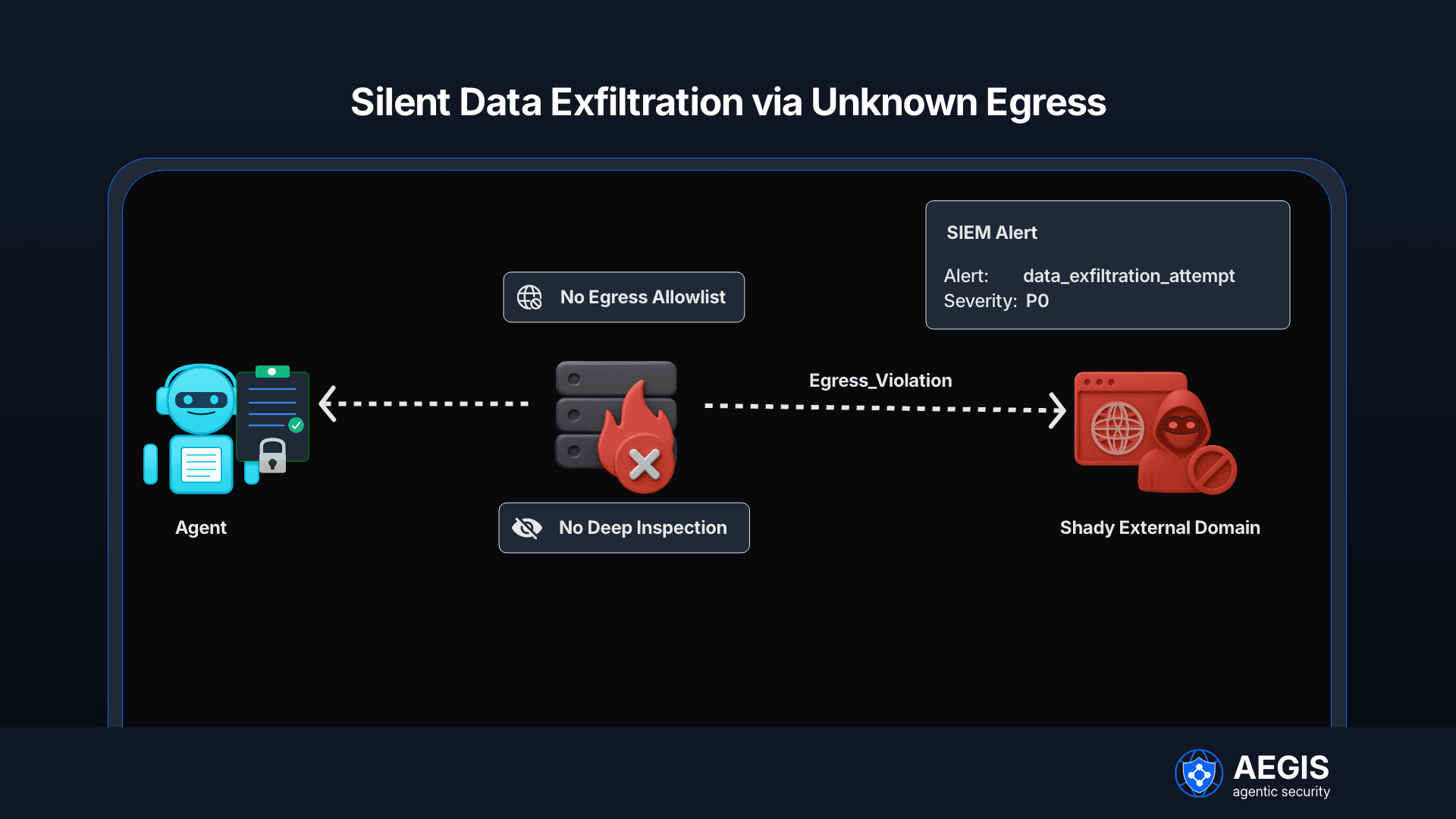
Operational benefits
- Queryability: shortest path, reachability, and pattern detection queries map directly to threat hunting and compliance questions.
- Provenance: append edges for every call trace to create auditable chains.
- Automation: graph patterns can suggest policy changes (e.g., prune a transitive edge creating an escalation path).
Graph databases are also a growing market: the graph DB market was valued in the low billions in 2024 with strong projected growth, indicating the ecosystem and tooling are mature enough for production use. (Fortune Business Insights)
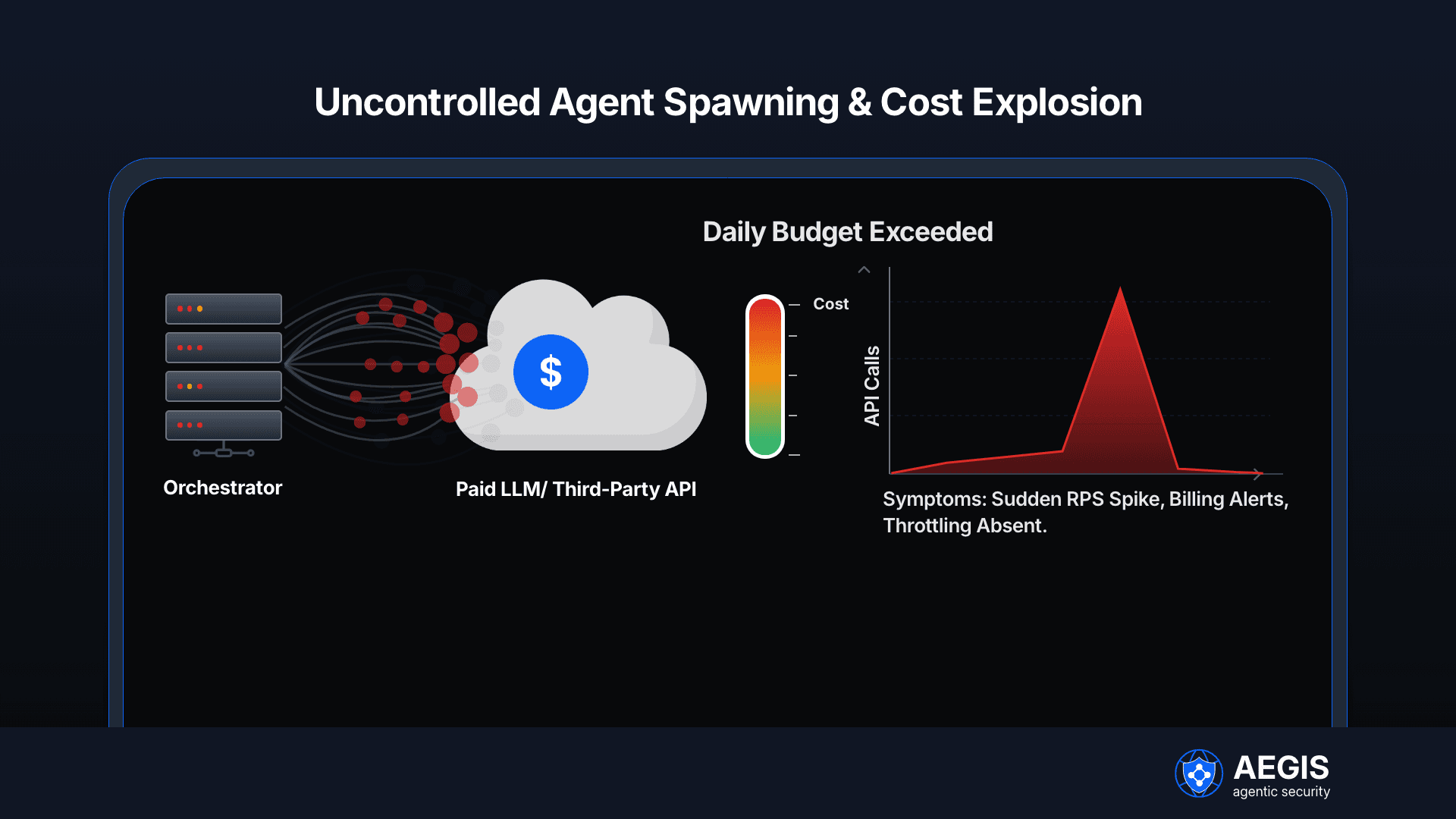
👉🏻 Structure workflows with efficient DAG-based orchestration
Data model: nodes, edges, and provenance
Core entities (nodes)
- Agent (id, role, tenant, metadata)
- Tool / Connector (name, endpoint, resource scopes)
- Tenant / Org (isolation tag, region)
- Resource (sensitive dataset, payment instrument)
Edge types and attributes
- allowed_calls (policy-authorized edge; conditions/ranges)
- invoked_by (runtime call edge; timestamped)
- approved_by (human approval id; approver, timestamp)
- parameter_hash (pointer to sampled parameters for reproducibility)
Table: Minimal schema example
Node type | Key attributes |
Agent | id, role, tenant, version |
Tool | name, endpoint, scopes |
Tenant | id, region, compliance_tag |
Table: Edge example and meaning
Edge type | Description | Use case |
allowed_calls | Policy-declared allowed interaction | Enforce least privilege |
invoked_by | Runtime trace of call | Build audit chains |
approved_by | Human approval linkage | Prove authorization for high-risk actions |
Persist both policy edges (the "intended" graph) and runtime edges (the "actual" call traces). Comparing snapshots lets you detect drift: new transitive edges not present in the policy graph are high-value signals for alerts.
👉🏻 Enable coordinated execution across multiple AI agents
Graph queries that matter for security
Reachability and privilege escalation
A basic but powerful query: find all agents that can transitively reach a payment tool. This is a reachability search with constraint filters (tenant, edge type, conditional attributes like max_amount). Aegis uses such queries to detect unintended paths (e.g., planner → temp_agent → finance → payments) and automatically recommend edge removals or approval rules. Use indexed path searches and cap expansion with depth limits to keep queries performant in large graphs.
Anomaly detection and threat hunting
- Newly created edges between tenants or across privilege boundaries → immediate alert.
- Unusual frequency of invoke_by edges from low-privilege agents to high-risk tools.
- Pattern detection: series of edges that match lateral movement templates.
Metricize: number of unexpected transitive edges found, mean time to remediation, and rate of new edge creation per tenant.
Example detection query (pseudocode): "MATCH path=(a:Agent)-[*1..4]->(t:Tool {name:'payments'}) WHERE NOT EXISTS((a)-[:allowed_calls]->(t)) RETURN path". Add conditionals to evaluate parameters (amount ranges) and approval history.
👉🏻 Combine LLMs with real-time data for smarter agent decisions
Aegis integration: how the gateway populates and uses the graph
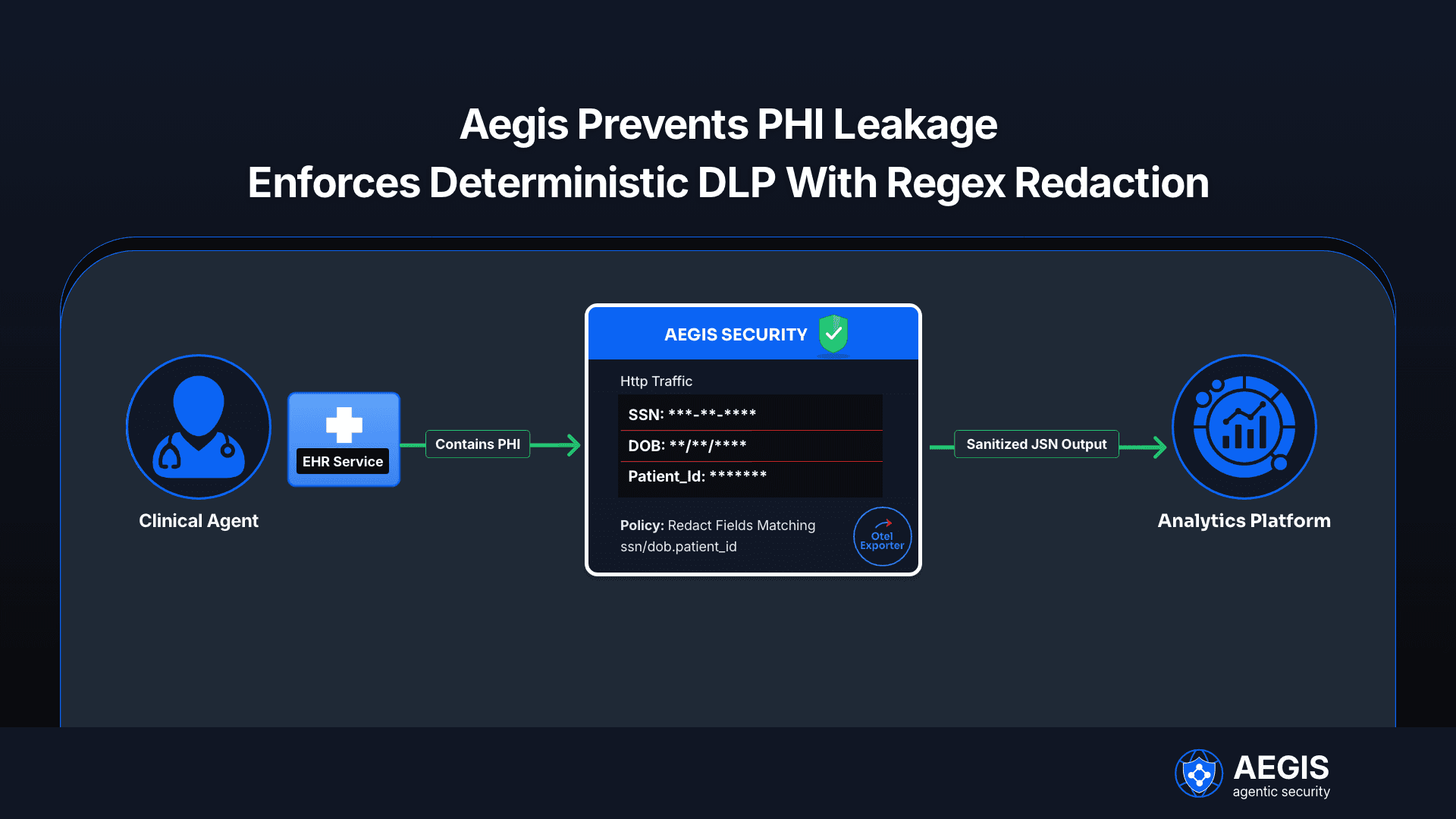
Aegis is designed as a runtime policy and observability fabric that emits structured events to populate a graph DB in near real time and uses the graph as a source of truth for policy impact analysis, anomaly detection and compliance proofs. The product brief and architecture show a sidecar/proxy data plane that enforces per-call policy, emits OpenTelemetry spans, and records structured telemetry suitable for graph ingestion.
Flow: from decision to graph
Placeholder image: Flowchart illustrating the 4-step process of Aegis's agentic response to a runtime threat (1. Agent call intercepted; 2. Policy evaluation; 3. Decision + telemetry emission; 4. Graph update & alert).
(Insert flowchart here)
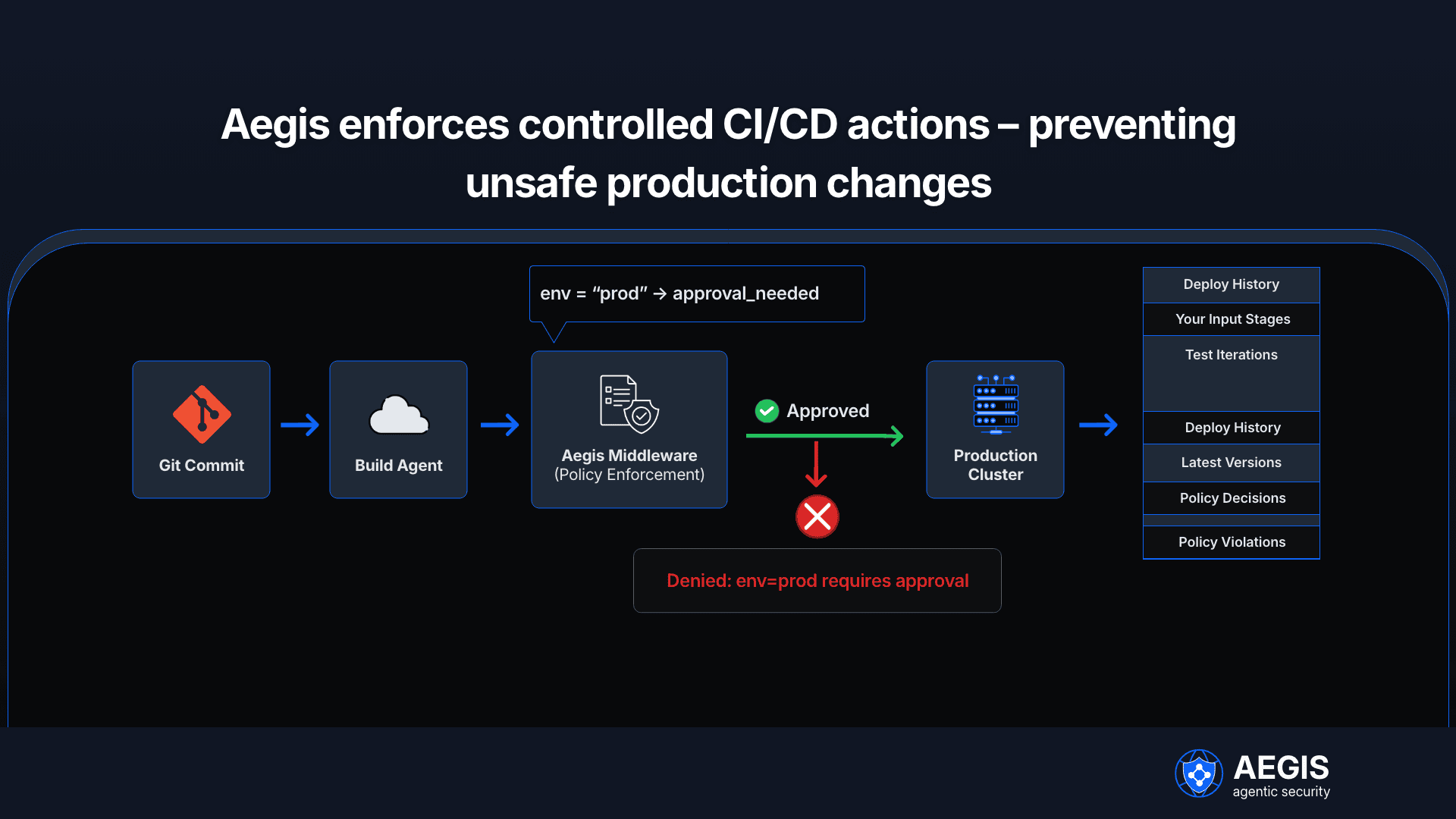
- At call time the Aegis Gateway evaluates: agent_id, tool, parameters and parent chain. Decision outcomes (allow, deny, sanitize, approval_needed) are logged as structured events.
- The ingestion pipeline maps events into graph updates: invoked_by edges are appended for traces; allowed_calls edges are persisted from the policy control plane; approval events append approved_by edges with signer metadata.
- A nightly reconciler compares the policy graph against actual traces to surface drift and create tickets or automated tightens.
Multi-tenant scoping and governance
Partition graphs per tenant or use strong tagging to enforce isolation. Aegis maintains tenant-scoped bundles and issues short-lived signed tokens per agent to ensure traceability between runtime events and graph entries. This design supports MSSP use cases where regulators require tenant-scoped audit extracts.
Examples and operational patterns
Use case: payment ceilings
Policy edge: finance-agent —[allowed_calls amount<=5000]→ stripe-payments
Runtime: planner attempts indirect payment via finance; Aegis blocks when finance-agent's parameter exceeds threshold, logs a PolicyViolation, and appends a would_block trace. Policy dry-run and shadow mode let teams gather would-deny metrics before turning enforcement on.
Use case: compliance proofs
Snapshots of the policy graph (signed manifests) plus the runtime trace graph provide regulators with an auditable lineage showing which agent invoked what, which policy permitted it, and who approved overrides. Exportable graph extracts can be signed and versioned for subpoena or audit requests.
Table: KPI examples
KPI | Target |
Unexpected transitive edges found | < 5 per tenant per month (pilot target) |
Mean time to remediation (MTR) | < 2 hours for high severity |
Policy evaluation p99 latency | ≤ 20 ms |
Implementation notes & pitfalls
- Growth control: append-only call traces make the graph grow quickly. Use TTLs, archiving, and sampled parameter blobs for long-tail storage.
- Indexing: precompute commonly queried patterns and maintain indexes on agent→tool relationships.
- Policy testing: provide a graph-driven test harness that simulates paths to validate policies before rollout.
- Human approvals: design thresholds and bucketing to avoid approval fatigue.
Operational tips: run nightly reconcilers, enforce RBAC for graph modifications, and treat the graph as a source of truth for policy planning and incident investigation.
Frequently Asked Questions
Q: Why not rely on logs and SIEM alone?
A: Logs are high-volume and unstructured; graphs enable compact, semantic queries (reachability, path patterns) that directly map to security questions and policy enforcement.
Q: Which graph DBs are suitable?
A: Any production graph DB with path query support and horizontal scale is suitable. Choose one with good indexing and enterprise features for snapshots and export.
Q: How does Aegis avoid latency from graph operations?
A: Aegis evaluates policy decisions in-memory (OPA prepared queries) at call time; graph updates are emitted asynchronously as structured telemetry. The decision path remains fast while the graph is the analytical layer.
Q: Can graphs help reduce false positives?
A: Yes — using historical edge patterns and provenance reduces noise: new edges flagged against a known baseline are higher fidelity alerts.
Closing Checklist for security teams
- Model agents, tools, tenants and resources as nodes; create typed edges for allowed_calls, invoked_by and approved_by.
- Populate a policy graph from declared policies and ingest runtime traces for provenance.
- Run reachability queries regularly to detect transitive privilege escalation and automate suggested tightens.
Industry momentum and tooling trends (graph DB growth and OPA adoption) make graph-driven security for agentic workflows practical and powerful; integrating a runtime gateway like Aegis with a provenance graph gives teams the auditability and control needed for production agentic deployments.