Orchestrating Agents and Tools with Directed Acyclic Graphs
How Aegis enforces deterministic, auditable DAG orchestration for secure multi-agent workflows—runtime policy, lineage, and approvals.
Aegis: Secure DAG Orchestration for Agentic Workflows
Enterprises adopting agentic AI face a recurring architectural need: coordinate multi-step automations deterministically while keeping security, auditability, and cost control intact. Directed Acyclic Graphs (DAGs) are the right abstraction for modeling multi-agent workflows because they express allowed sequencing, branching and idempotent nodes clearly. This post explains why DAGs matter for agentic systems, modeling patterns you should adopt, how Aegis enforces these patterns at runtime, and operational practices for safe, scalable deployment.
.png&w=3840&q=75)
Why DAGs for Agentic Orchestration
DAGs provide deterministic ordering and clear parent/child lineage. Unlike ad-hoc linear scripts that allow uncontrolled lateral coercion, DAGs make node relationships explicit and enable compensating actions and retry semantics.
Key benefits
- Deterministic sequencing reduces unexpected side effects.
- Clear lineage (parent_agent_id) prevents lateral coercion and privilege escalation.
- Parallel execution of independent branches improves performance while preserving policy constraints.
- Easier observability: map DAG nodes to OpenTelemetry spans for traceability.
Real-world example: a financial flow modeled as gather_invoices → validate_ocr → compute_payment → human_approval → execute_payment is auditable, can insert compensation nodes (refunds or reversals), and restrict payment tool calls to only a finance agent.
👉🏻 Unlock productivity with collaborative multi-agent systems
Modeling patterns for secure DAGs
Design sensible node granularity. Overly fine-grained DAGs are hard to reason about; overly coarse nodes make policy enforcement blunt and brittle.
Recommended patterns
- Node as single responsibility: each node performs a single logical action (OCR, validation, compute, approval).
- Idempotency keys: nodes must be idempotent or accept deduplication keys to avoid double execution.
- Policy conditions on edges: edges carry policy metadata (e.g., risk thresholds that trigger approval paths).
- Compensation nodes: for any node with side effects, define a compensating node to be executed on failure.
- Dynamic branching guarded by policy revalidation: allow runtime branching (e.g., high risk → approval) but require policy evaluation before traversing the edge.
👉🏻 Future-proof your architecture for evolving AI demands
Table: Sample node/edge policy model
Element | Example |
Node | compute_payment |
Allowed agent | finance-agent |
Preconditions | `amount <= 5000 |
Compensation | reverse_payment |
Observability span | dag.node.compute_payment |
Aegis enforcement: the runtime policy & observability fabric
Aegis functions as a lightweight "policy & observability fabric"—an Istio + OPA pattern for multi-agent systems. It sits between orchestrators (LangGraph, AgentKit, LangChain-style middleware) and tools, acting as a decision gateway that enforces runtime policies, validates parent_agent_id lineage, and emits structured telemetry.
Core capabilities
- Agent identity & tokens: short-lived JWTs with agent, tenant and scope claims. Tokens are signed and validated to prevent forged caller identities.
- Policy-as-code: YAML/JSON policies compiled into OPA bundles. Policies express allowed agents, actions, parameter constraints (regex, ranges), rate limits, budgets, and approval rules.
- Runtime enforcement: Aegis intercepts tool calls, validates the agent ID and parent_agent_id header, inspects request parameters, and returns allow/deny/sanitize/approval_needed decisions.
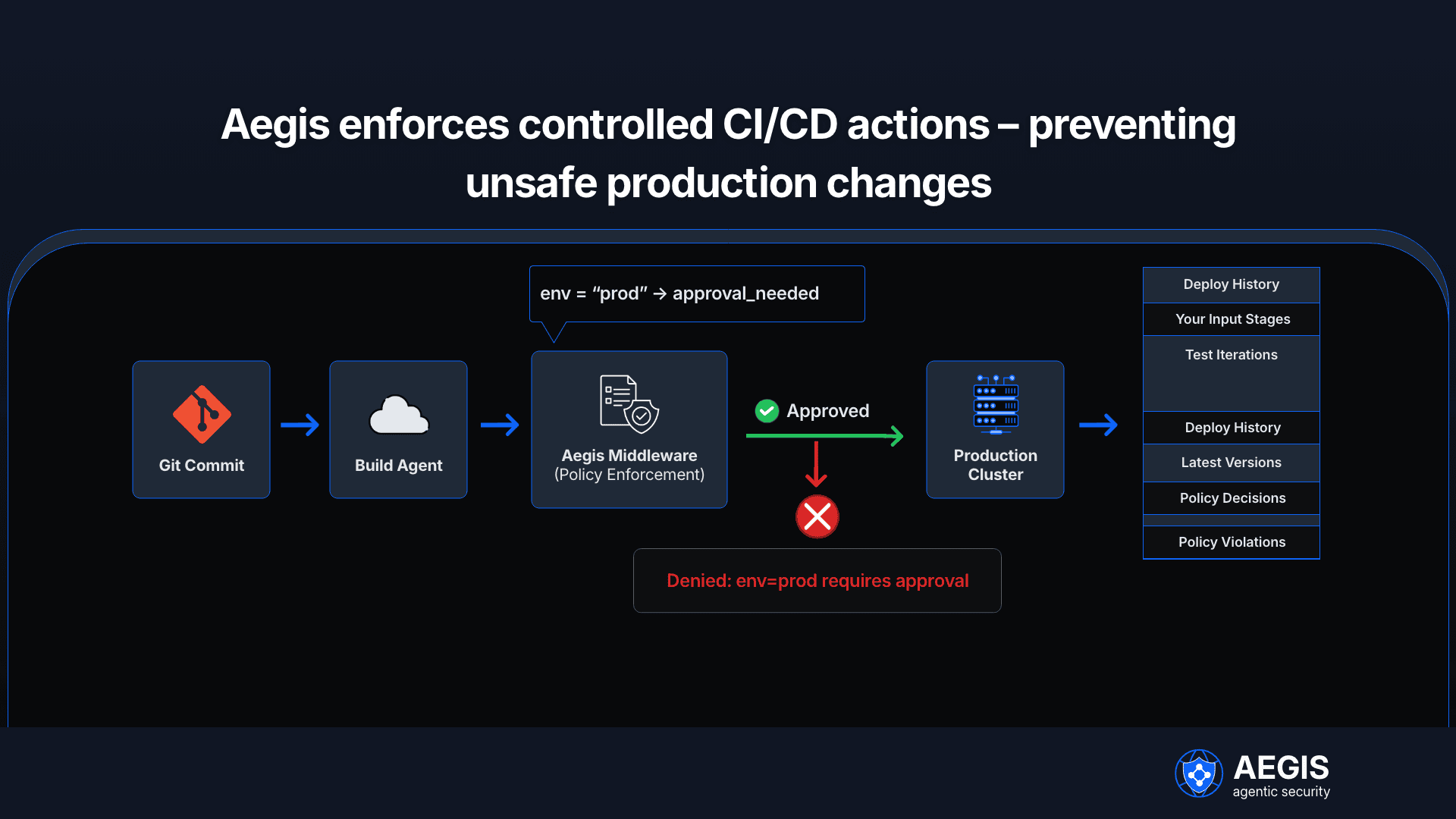
- Approval workflows: For high-risk edges (e.g., compute_payment with amount > threshold), Aegis returns approval_needed, posts an interactive approval to Slack/MS Teams, and issues a one-time override token upon human approval.
- Telemetry & audit: Every decision emits OpenTelemetry spans and structured JSON logs that include agent_id, tool, decision, policy_version, and cost estimate—enabling SOC, compliance, and FinOps dashboards.
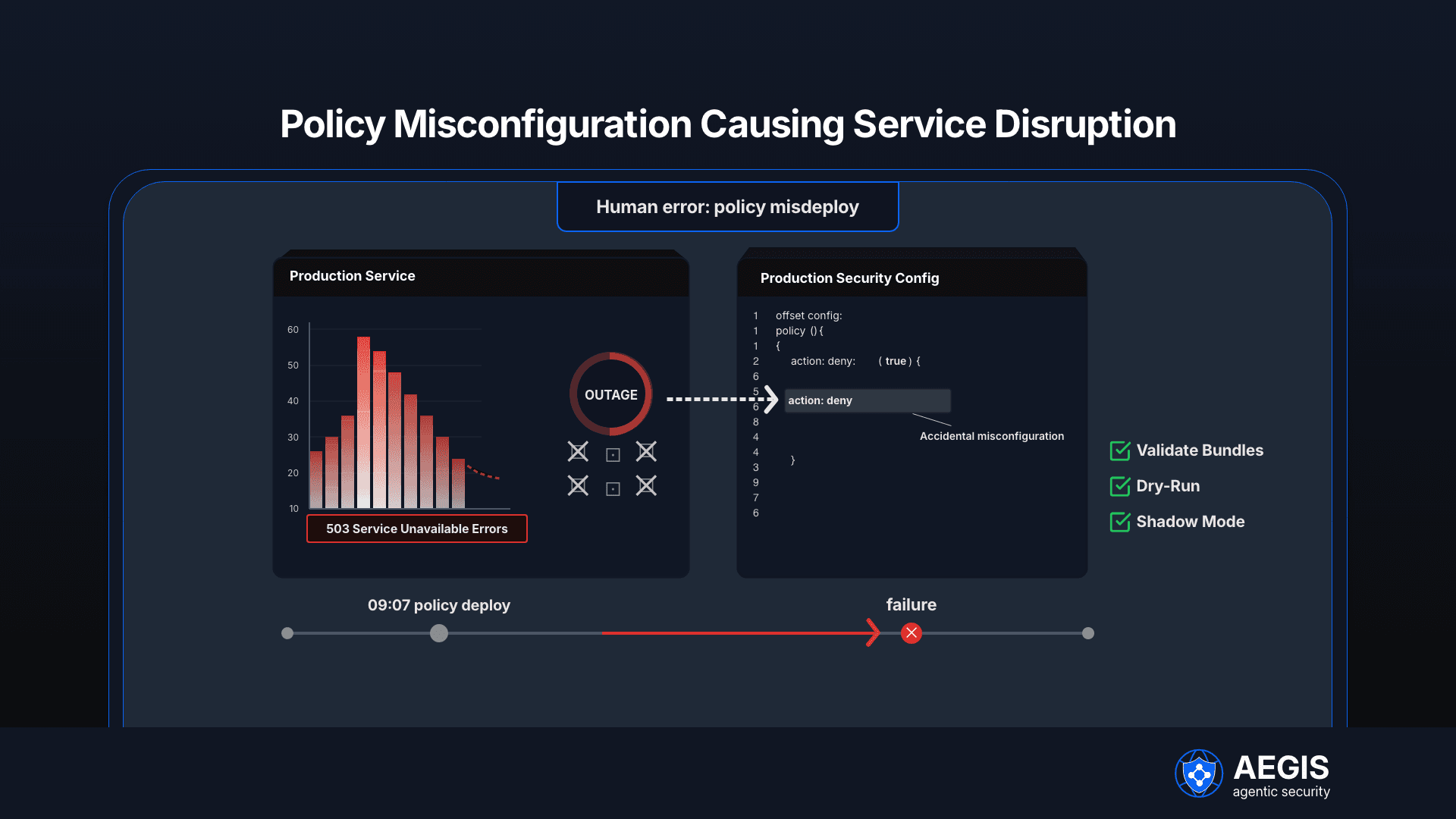
- Shadow mode: Policies can run in observation (shadow) mode to collect would-block telemetry before enforcement, allowing safe tuning.
Table: Enforcement decisions
Decision | Action | Use case |
allow | forward request | routine low-risk calls |
deny | block & log | unauthorized tool access |
sanitize | redact parameters | PII/PHI protection |
approval_needed | pause & notify | high-risk payments or production deploys |
Aegis enforces lineage by requiring a parent_agent_id header for chained calls and validating it against recorded agent registration and the DAG's allowed edges. This prevents a planner or compromised agent from coercing privileged nodes into unauthorized calls.
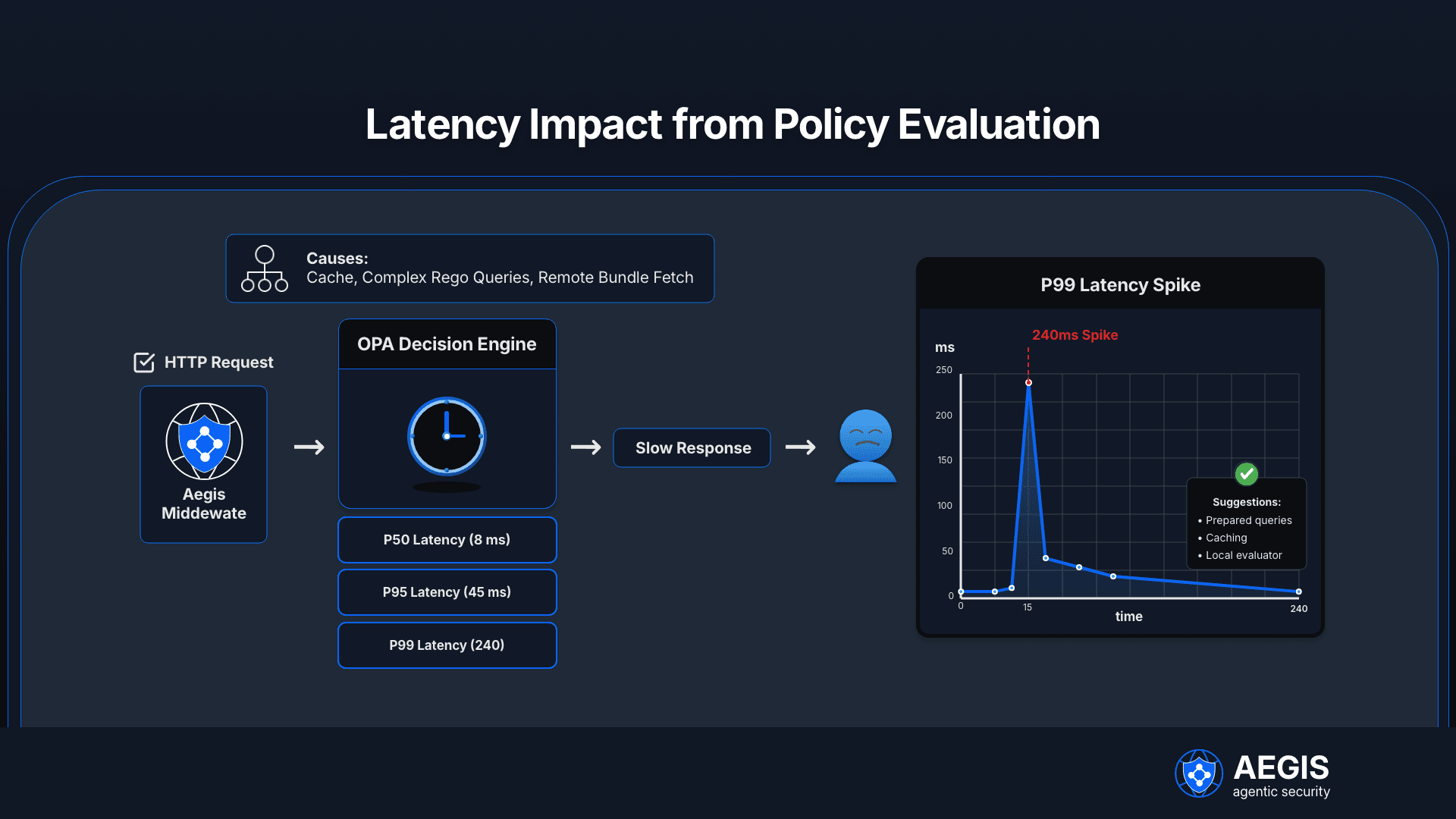
Operationally, Aegis integrates with deploy patterns via a sidecar/forward proxy and small external authorizer service (ext_authz). It leverages prepared OPA queries and in-memory caches to keep decision latency low (target P99 ≤ 20 ms). For enterprises, it provides a control plane for policy versioning, dry-run validation, and rollback, plus SDKs to wire agent frameworks in minutes.
👉🏻 Maintain context and memory for smarter agent decisions
Operational concerns and best practices
Observability & audit
Map each DAG node to an OpenTelemetry span. Store decisions, policy versions, and approval IDs with each span so SOC and compliance teams can reconstruct the full decision path for audits.
Failure handling
Implement exponential backoff, circuit breakers on repeat failing nodes, and explicit manual intervention gates for nodes that touch external billing or production infra. If a payment node fails after partial execution, trigger the compensation node defined in the DAG.
Performance & cost control
Parallelize independent branches while respecting rate limits. Track per-agent budgets and enforce hard stop behavior when budgets are exhausted. Aegis can estimate cost per DAG run and block or sandbox runs that exceed budget.
Security hardening
- Enforce mutual TLS or signed tokens between orchestrator and Aegis.
- Require parent_agent_id validation on chained calls to prevent lateral coercion.
- Use deterministic DLP rules to sanitize PII/PHI fields; redact before forwarding to external connectors.
Secure payment DAG (ops + example)
Flow: gather_invoices → validate_ocr → compute_payment → human_approval → execute_payment
- compute_payment node has a policy: allow finance-agent to call payments.create with amount <= 5000. If amount > 5000 then approval_needed is returned.
- On approval_needed, Aegis posts an approval to Slack; once approved, an override token permits execute_payment to proceed.
- Observability: each node emits a span with policy_version and decision_reason. If execute_payment fails, reverse_payment compensating node is scheduled.
Testing, governance and developer experience
- Policy dry-run: Run policies in shadow mode for 7 days to collect would-deny events, tune regexes and thresholds, and then flip enforcement.
- Fuzz edge conditions: Test for allowed-but-unsafe sequences by fuzzing DAG edges and verifying Aegis blocks illegal traversals.
- Change governance: Require signed approvals for production policy changes and maintain tamper-evident policy version history.
FAQ
- What does Aegis block automatically?
Aegis blocks calls that violate per-agent tool permissions, parameter constraints (e.g., amount ranges), and egress allowlists. It also enforces lineage checks to prevent unauthorized edge traversals. - How does approval flow work?
On approval_needed, Aegis pauses the call, posts an interactive request (Slack/Teams), and issues a one-time override token upon approval to retry the call. - Can policies be tested before enforcement?
Yes—Aegis supports shadow mode to collect would-block telemetry and dry-run validation in the control plane. - How is audit data exported?
Aegis emits OpenTelemetry spans and structured JSON logs that include agent_id, policy_version, decision and reason. These are SIEM-friendly for SOC investigations. - How does Aegis help with FinOps?
Per-agent budgets, per-tool quotas, and cost estimates per DAG run prevent runaway spend and provide visibility into expensive agent behaviors. - Is Aegis multi-tenant ready?
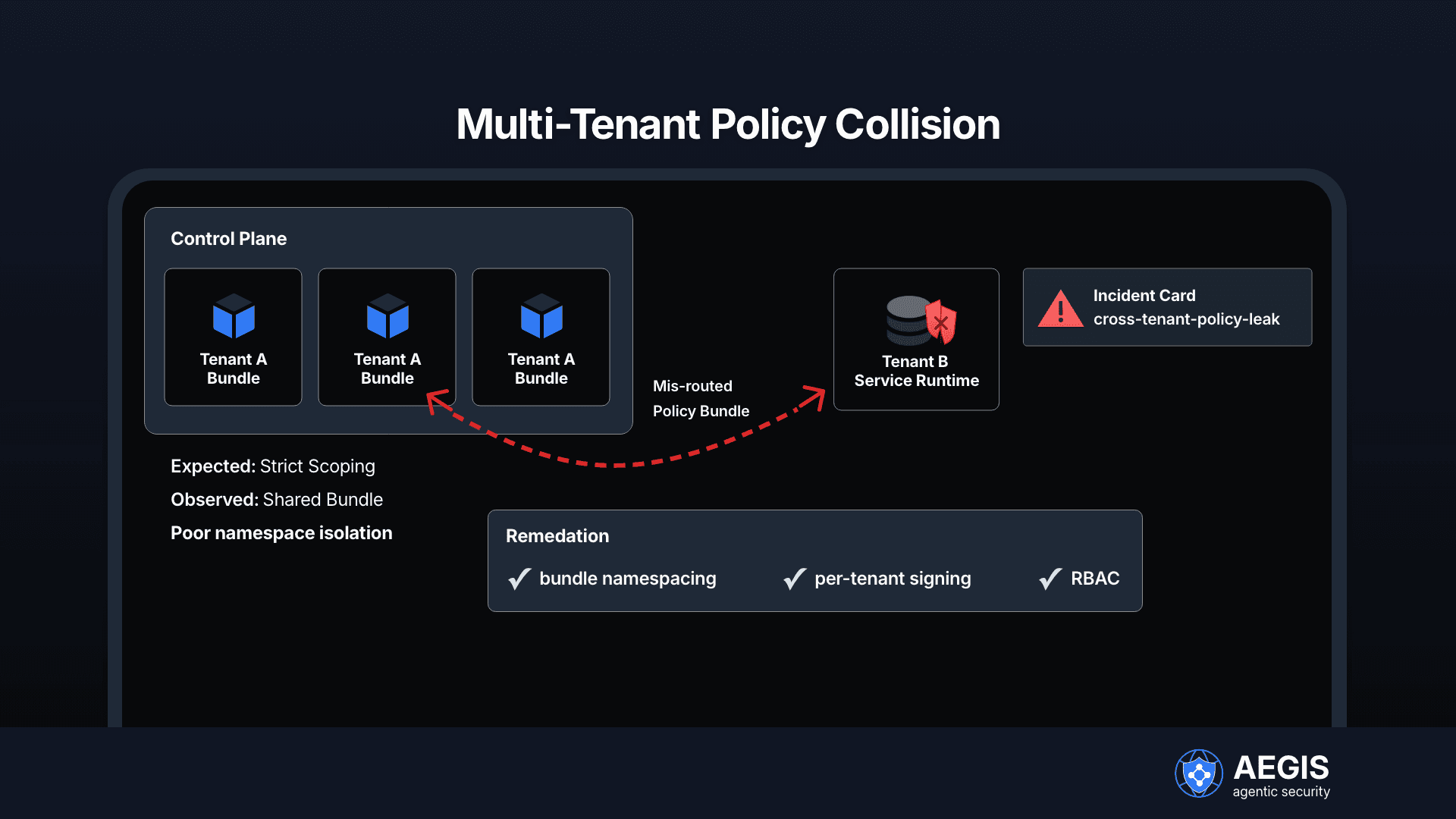
Yes—policies, bundles and token claims are tenant-scoped; policy bundles are versioned and isolated to prevent cross-tenant influence.
Closing
DAG orchestration combined with a runtime enforcement mesh is a practical, operationally sound approach to securing agentic workflows. By modeling workflows as DAGs, enforcing lineage, building compensating transactions, and using policy-as-code with runtime decisions, teams reduce risk and increase observability while preserving automation velocity. Aegis surfaces deterministic policy enforcement, approvals, and telemetry—filling a critical gap for enterprises moving agentic systems into production.