Multi-Agent Workflows Explained: How Agents Collaborate to Complete Tasks
Explore how multi-agent AI workflows function, how to govern them securely and operationally, and how Aegis by AegisSecurity enables enterprise-grade enforcement.
Multi-Agent Workflows: AI Security for Enterprise Scalability
Enterprises increasingly adopt multi-agent workflows — networks of specialist agents collaborating to complete complex tasks — but many struggle with coordination patterns, cost trade-offs and failure modes. Traditional single-agent approaches (monolithic prompt, brittle logic) no longer scale or meet governance needs. In security-sensitive environments (e.g., DevOps, compliance, MSP/MSSP deployments) orchestrating multiple agents with clear roles, tool contracts, observability and identity controls is essential. In this blog we unpack the anatomy of such workflows, explain the security and governance requirements, highlight operational best practices, and present how the solution Aegis from AegisSecurity addresses the key gaps.
Anatomy of a Multi-Agent Workflow
Roles in the Workflow
A multi-agent workflow can be understood as a directed graph of collaborating agents, each assigned a specialist role. Common roles include:
- Planner: breaks down the objective into subtasks and assigns agents.
- Retriever: locates required data, knowledge or context (e.g., via RAG).
- Executor / Worker: performs the actual task or tool invocation.
- Validator / Auditor: checks outputs for correctness, bias, compliance.
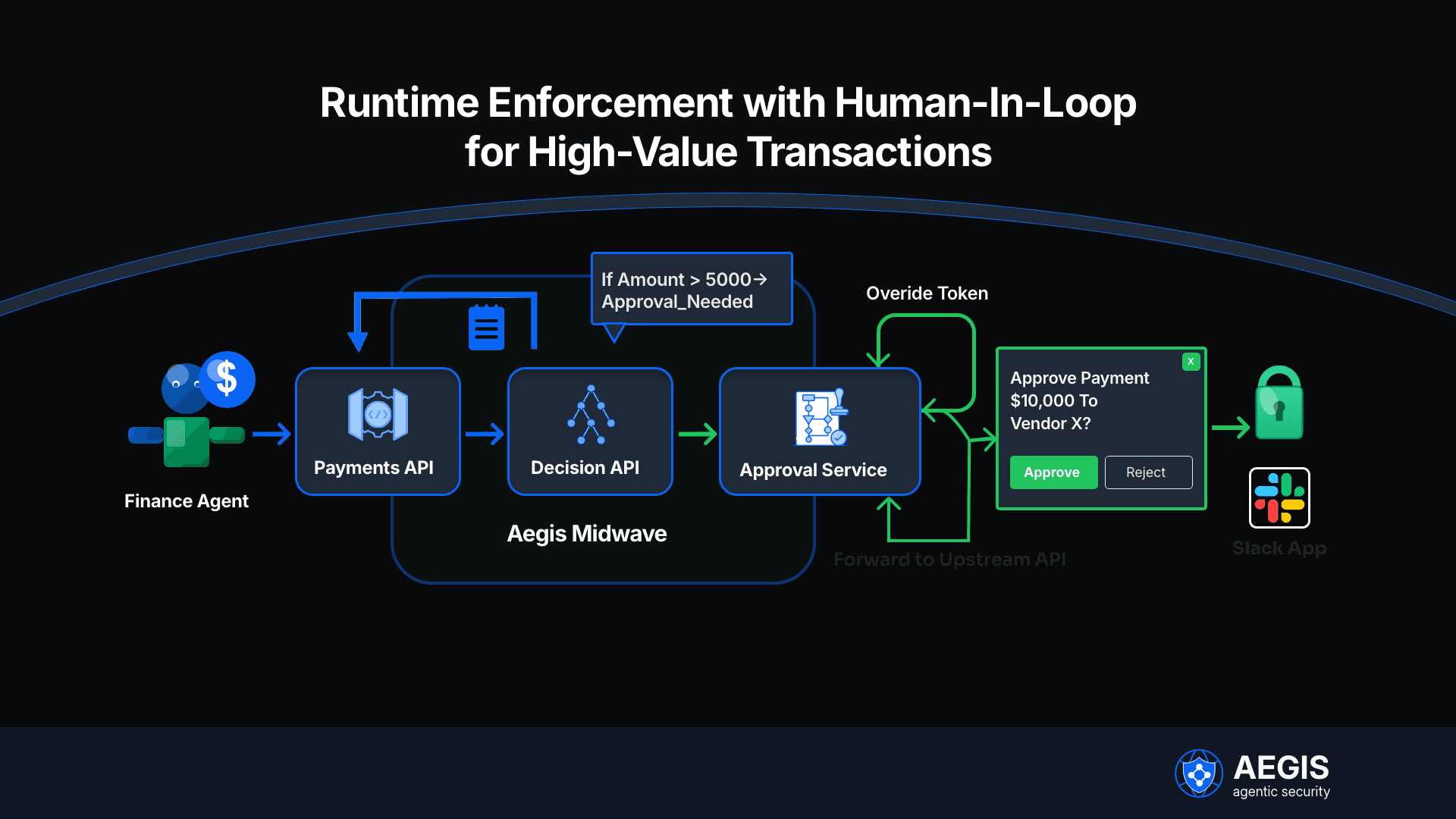
- Approver: human or agent role triggering high-risk transitions or decisions.
For example, in a procurement scenario: the Planner chooses vendor candidates; retriever fetches vendor profiles; executor initiates vendor scoring; validator confirms compliance; approver signs off before payment.
Communication Patterns
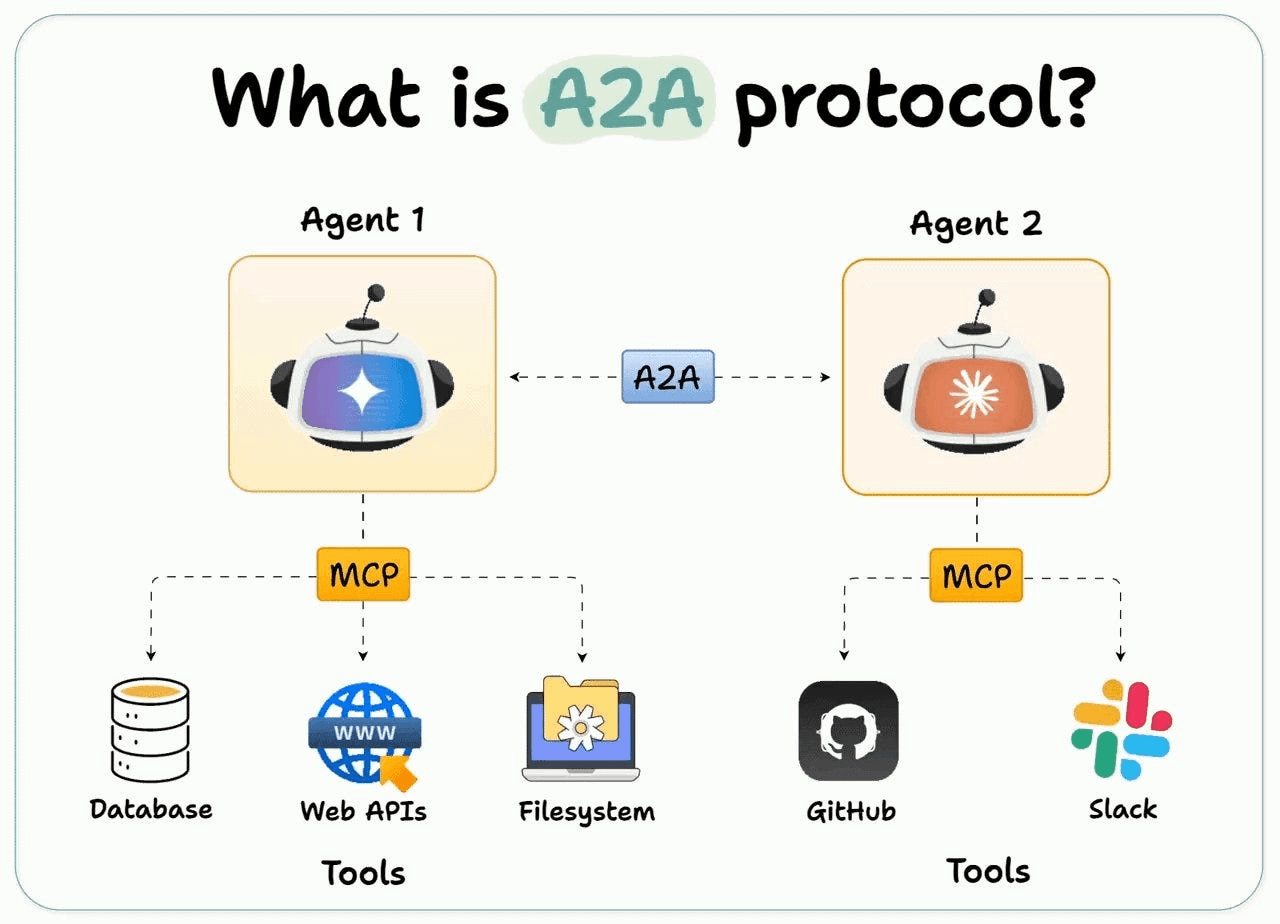
Agents exchange messages, often via structured channels rather than free-text prompts. Two main coordination models commonly emerge:
- Centralised orchestrator: One agent (or service) directs sequence, invokes each sub-agent, monitors status.
- Peer-to-peer messaging: Agents send messages to one another, following contracts and event envelopes.
Key protocol considerations: idempotency (agents may retry without causing duplicate side-effects), retries/back-off, observability hooks, structured JSON payloads, typed tool contracts to reduce injection risk. Use of event envelopes or typed schemas (e.g., with Pydantic) helps validate and enforce the contract boundaries.
Security & Governance for Multi-Agent Systems
Identity & Boundary Enforcement
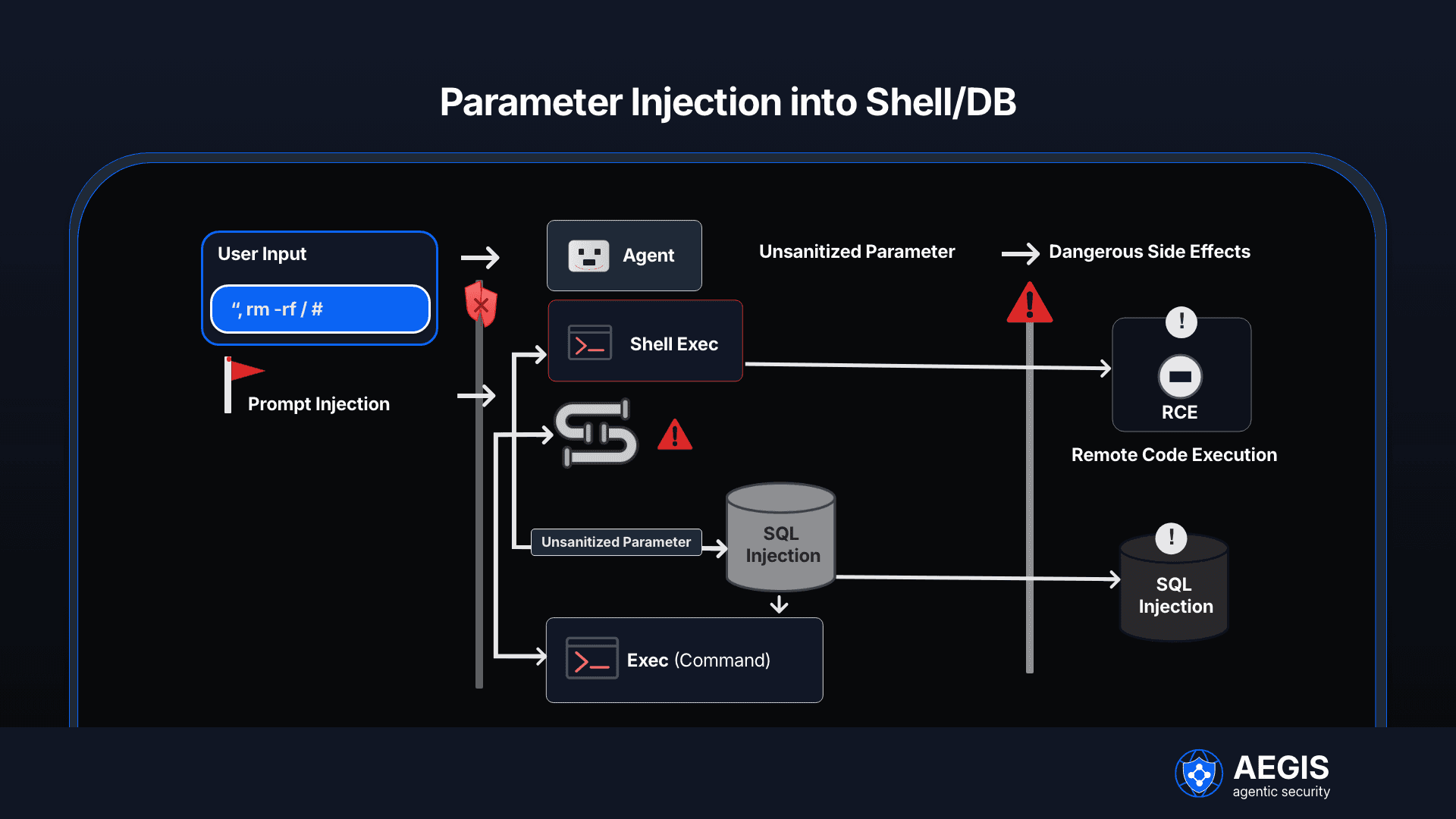
In a system of many agents, each call must enforce agent identity, permissions and boundary conditions. Token leakage across agents, privilege elevation via agent-to-agent message chains, and cross-tenant contamination are real risks. Secure design practices include:
- Strong typing for tool input/output (to reduce injection attacks).
- Data residency controls and PII redaction implemented at each boundary.
- Tenant isolation: separate policies, tokens, and telemetry per tenant in multi-tenant architectures.
Policy Enforcement, Observability & Auditing
Governance must cover human-readable decision logs, rate limiting, back-pressure, hot-reloadable policy bundles and central policy registry. Observability is critical: trace parent-child spans across agents, correlate metrics (completion rate, mean time to remediation, cost per flow). Below is a comparative table of traditional vs tuned governance needs:
👉🏻 Streamline multi-agent data flows with proven orchestration patterns
Feature | Traditional single-agent model | Multi-agent workflow model |
Traceability | Single prompt → result | Directed graph of agents, parent-child spans |
Data contract enforcement | Minimal | Strict schemas, idempotency, typed tool contracts |
Cost / token visibility | Single agent token usage | Multiple chatter paths, budget planning required |
Latency vs resilience | Simple synchronous call | Mixed sync/async, trade-offs across agents |
Failure modes | Agent mis-prompt, hallucination | Stuck planner, bogus updates, elevation chains |
In governance of multi-agent workflows, policies must cover dynamic scaling (safe spin-up/spin-down of agents), rate-limits per agent class, human-approval integration for high-risk transitions, and data/telemetry segregation for multi-tenant support.
Operational Best Practices
Testing, Metrics & Staging
Testing in multi-agent contexts requires simulation harnesses and replayable traces. Shadow-runs (i.e., agents execute in parallel to production flows but without side-effects) help measure “would-blocks” and false positives ahead of deployment. Metrics for operational success include: completion rate, mean approval latency, cost per flow, token usage per task, inter-agent chatter volume.
Table: Sample operational KPIs for MSSP/MSP context
Metric | Target | Explanation |
Completion rate | > 95 % | Percentage of workflows that complete end-to-end without manual intervention |
Mean time to remediation | < 2 hrs | Time from fault detection to resolution in agent chain |
Approval latency (human) | < 30 mins | For workflows requiring human sign-off |
Cost per flow | Budget-driven | Token and compute cost for full multi-agent execution |
Agent-chatter tokens | Monitored | Tracks overhead of inter-agent messaging |
Latency, Cost & Scaling Trade-offs
Inter-agent messages are token-expensive and incur latency. Synchronous hand-offs between agents improve consistency but reduce resilience; async patterns improve throughput and resilience but increase complexity. Budget planning must factor in agent-to-agent chatter. Observability should measure per-agent invocation latencies, retry rates, error causes and escalation triggers. Dynamic scaling policies must ensure safe provision of additional agents in peak load without violating tenant isolation or policy constraints.
Shadow Runs and Staging
Before full rollout, run workflows in “shadow mode”: agents perform their tasks but actions are logged rather than executed (no production impact). Replayable conversation traces allow debugging of edge-cases, stuck planners, bogus updates or privilege chains. Use the trace to simulate multiple failure modes and ensure policy enforcement (rate limit, identity check, tool contract validation) is functioning.
👉🏻 Master state and memory to build more reliable AI agents
Example: Procurement Workflow
Workflow Description
In a procurement scenario:
- Planner agent analyses the purchase request, selects vendors based on spend, policy and risk.
- Retriever agent gathers vendor profiles, compliance records, past performance.
- Executor agent initiates vendor scoring, sends RFQ, collects responses.
- Validator/Auditor agent checks compliance (policy, PII handling, regional data-residency).
- Approver (human or agent) makes final decision, payment is executed only upon approval.
Throughout the workflow: each agent’s call is logged, parent-child spans are recorded, agents adhere to tool contracts, identity is enforced, multi-tenant separation is maintained, and rate-limiting/back-pressure ensures stability.
This end-to-end example demonstrates how multi-agent workflows support enterprise-scale tasks with specialist roles, coordination protocols, governance and observability.
How Aegis Enables Secure & Scalable Agentic Workflows
Aegis is designed by CloudMatos to provide data-plane enforcement, chain-of-call context, and telemetry correlation for distributed agentic systems. It addresses three core challenges of multi-agent workflows:
- Context propagation and chain-visibility: Aegis tracks parent-child invocation chains across agents, linking messages, tool calls and results. This allows full traceability from planner to executor to approver.
- Policy enforcement at every boundary: Aegis enforces typed tool contracts, identity checks, rate limiting, data-residency and PII redaction policies per agent invocation. This ensures each agent cannot bypass controls or escalate privileges.
- Telemetry and analytics across distributed agents: Aegis aggregates completion rate, mean time to remediation, token usage across the agent graph, and supports multi-tenant dashboards for MSSPs/MSPs. This enables costing models, budget planning, and observability hooks into production workflows.
By integrating with the existing enterprise stack and referencing the industry-breadth perspective available on Aegissecurity Aegis aligns with enterprise use-cases in Healthcare, FinTech, Retail and Manufacturing. Its highlights the end-to-end coverage of workflow enforcement, observability and governance.
In practical terms for MSP/MSSP decision-makers and DevOps leads: Aegis allows you to monitor and enforce orchestration models (centralised versus peer-to-peer), measure inter-agent token costs, set policies per agent type, scale agents safely in multi-tenant architecture, and deliver human-readable audit logs required for compliance. The technology layer sits underneath your multi-agent orchestration engine, complementing logic and workflow definition with enforcement, telemetry and governance.
Summary & Outlook
Multi-agent workflows enable the next generation of automation in enterprise settings — but only if designed with specialist agent roles, structured communication, tool contracts, identity controls, data governance, observability and operational controls. According to industry research, only about 14 % of organisations report implementing AI agents at scale. Capgemini The broader survey shows that fewer than one in five organisations has a mature AI infrastructure ready for multi-agent deployment. Capgemini says for those building out agentic workflows, operational best practices like shadow runs, metrics tracking and comprehensive auditing are non-negotiable.
Solutions like Aegis provide the enforcement and telemetry backbone that allows organisations — particularly MSPs/MSSPs and multi-tenant platforms — to safely scale multi-agent workflows and meet regulatory, cost and operational requirements. As agentic AI matures further, the ability to orchestrate, govern and observe these systems will differentiate organisations that “pilot” from those that deploy at scale.
👉🏻 Simplify complex agent workflows using DAG-based orchestration
Frequently Asked Questions
Q1: What differentiates a multi-agent workflow from a single-agent prompt architecture?
A1: In a single-agent architecture you send one monolithic prompt and get a result; the logic is brittle and lacks specialist separation of duties. A multi-agent workflow uses a directed graph of agents with defined roles (planner, retriever, executor, validator, approver) that collaborate via structured messages and tool contracts, providing greater modularity, observability, governance and resilience.
Q2: How do we manage cost and token consumption when multiple agents chat?
A2: Inter-agent chatter adds token cost and latency. It’s essential to budget token usage per workflow, monitor token volume per agent class, adopt async patterns where possible, and implement rate-limits/back-pressure. Tracking metrics like “agent-chatter tokens” and “cost per flow” (see table above) enables cost governance.
Q3: What are typical failure modes in multi-agent orchestration and how can we mitigate them?
A3: Typical failure modes include a stuck planner, bogus updates from retrievers, elevation-of-privilege chains, token leakage between agents, and cascading errors across the graph. Mitigation includes end-to-end simulation, shadow-runs, idempotency controls, strong typing/tool contracts, identity enforcement and observability to trace root-causes.
Q4: How can we structure human-approval steps in high-risk agentic workflows?
A4: Insert a dedicated “approver” agent or human checkpoint in the workflow graph for high-risk transitions (e.g., payment execution, vendor onboarding). Use auditing agents to capture decision logs pre- and post-approval. Interface this step with policy controls and rate-limits to enforce governance.
Q5: What metrics should MSPs/MSSPs focus on to monitor multi-agent workflows?
A5: Key metrics include: completion rate, mean time to remediation, approval latency, token cost per flow, inter-agent chatter volume, and agent invocation latency. Multi-tenant dashboards should track these per-tenant and in aggregate. See table under Operational Best Practices for reference.
Q6: In regulated industries (Healthcare, FinTech, Manufacturing), what specific controls matter for multi-agent workflows?
A6: Crucial controls include data-residency enforcement, PII redaction at agent boundaries, tenant isolation of policies/telemetry, human-readable audit logs for compliance, and identity controls per agent invocation. Deploying a solution like Aegis assists in those controls and provides the enforceability layer.