
Choosing Between Monolithic and Microservice Agent Architectures
Compare security, latency, and operability of monolithic vs microservice agent designs—and how Aegis enforces least-privilege at runtime.
Choosing Between Monolithic and Microservice Agent Architectures
Enterprises building multi-agent systems face a recurring architecture decision: ship a single, multifunctional agent (monolith) or decompose into focused microservice agents. The choice affects security, observability, cost and developer velocity. This article lays out the tradeoffs, concrete operational levers, a migration pattern, and a prescriptive enforcement model using Aegis — a runtime policy & observability fabric for agentic AI. It targets security engineers, DevOps leads, MSSPs and compliance owners evaluating production-grade agent deployments.
The core problem is privilege chaining and blast radius
Agents acting as autonomous decision makers expand attack surface in two ways: (1) they can be coerced into performing actions outside their intended scope via prompt or parameter injection, and (2) complex agents make least-privilege enforcement and auditing hard. A classic incident narrative illustrates the issue: a Planner agent instructs a Finance agent to create a high-value transfer. In a single binary where Planner, Finance and HR live together, privilege-chaining mistakes can let Planner escalate to payment flows. Decomposing responsibilities to micro-agents limits each process to a narrow scope (e.g., finance-agent has stripe:create scope and a max_amount rule), preventing coerced payments.
👉🏻 Build systems designed to scale with growing AI workloads
Operational surveys and industry reports highlight the risk: large enterprise surveys and analyst commentary show security and integration complexity are primary barriers to agent adoption. Recent research notes widespread concern about granting agents autonomous authority and the need for runtime guardrails. (Architecture & Governance Magazine)
Tradeoffs: Monolith vs Microservice agents
Choosing an architecture requires balancing latency, operational complexity, and security. The table below summarizes the practical tradeoffs.
Dimension | Monolithic agent | Microservice agents |
Initial complexity | Low (single binary) | Higher (service mesh, sidecars) |
Blast radius | Large (shared process) | Small (failure isolation) |
Least-privilege enforcement | Hard (coarse scopes) | Easy (per-agent scopes) |
Observability | Lower fidelity | High (per-agent traces & quotas) |
Latency | Lower RPC overhead | Potential RPC latency (needs tuning) |
Developer DX | Single repo, larger cognitive load | Small repos, faster CI/CD |
Cost | Fewer instances | More infra cost, easier autoscale |
Practical guidance: start with a monolithic proof-of-concept but plan an explicit refactor path to micro-agents when policy coverage, multi-tenant isolation or scale requirements grow. Typical KPIs to track: policy coverage %, blocked violations per week, per-agent cost delta after decomposition.
👉🏻 Strengthen system reliability with built-in redundancy layers
Security implications — why micro-agents improve safety
Smaller agents make the security model explicit:
• Least privilege: each agent receives a narrowly scoped identity and token (e.g., finance-agent:stripe:create).
• Parameter validation: policies constrain parameters (e.g., amount ≤ 5000) to prevent dangerous actions.
• Failure isolation: compromised agent affects only its tool set, not the entire stack.
• Multi-tenant isolation: tenant-scoped policies reduce cross-tenant leakage.
But micro-agents introduce new challenges: RPC overhead, state management, and policy distribution. The operational lever is a centralized enforcement fabric that enforces policies at the agent↔tool boundary so that every call is authenticated, validated, and auditable without coupling policy into each agent.
-1.png&w=3840&q=75)
Migration pattern: Monolith → Micro-agents (practical path)
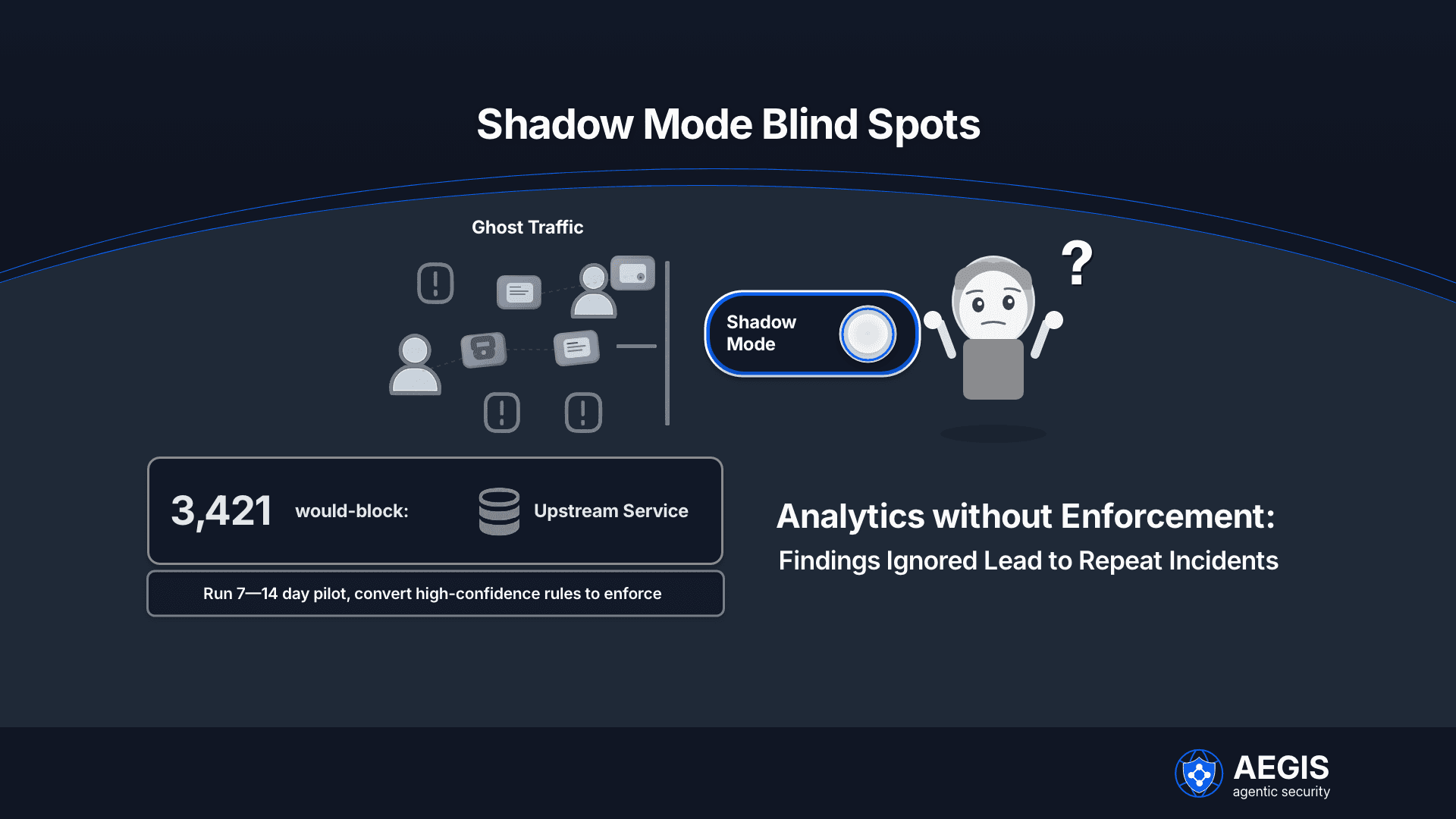
- PoC (Monolith) — validate workflows and orchestration graph. Run policies in shadow mode to collect would-deny events.
- Identify candidates — isolate high-risk functions (payments, data export, infra changes) for early decomposition.
- Define agent contracts — per-agent API schema, identity, budget and SLAs.
- Introduce enforcement fabric — deploy a gateway or ext_authz to centralize decisions. Run in shadow first.
- Split and iterate — extract one micro-agent, run canary tests, measure latency and telemetry.
- Operationalize — CI/CD for each agent, per-agent observability, quota and budgets. Use blue/green or shadow rollouts for each policy.
👉🏻 Drive efficiency through coordinated agent task execution
Aegis enforcement pattern — runtime policy, identity and telemetry
Aegis is built to be the enforcement and observability fabric for multi-agent architectures. It sits between orchestrators (AgentKit, LangGraph, LangChain variants) and tools, acting as a short-lived token issuer, policy evaluator and telemetry emitter. The design decisions map directly to the tradeoffs above:
- Agent identity & short-lived tokens
Aegis assigns each agent a unique identity and issues short-lived JWTs containing tenant, agent and scope claims. This reduces token re-use risk and ties every tool call to a verifiable agent identity. Identity issuance and token claims are the primary levers to enforce agent least privilege.
- Policy-as-code and fast evaluation
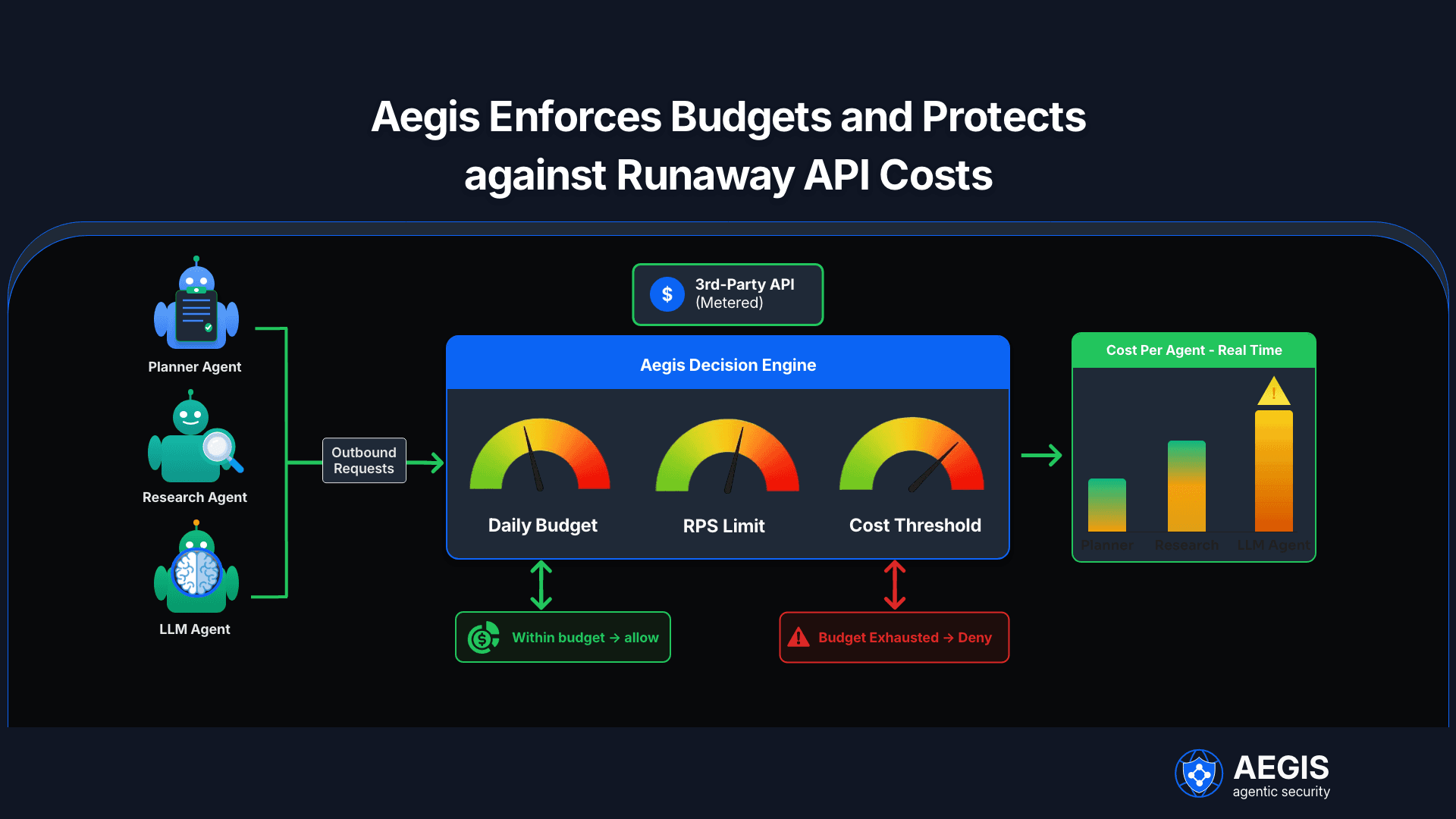
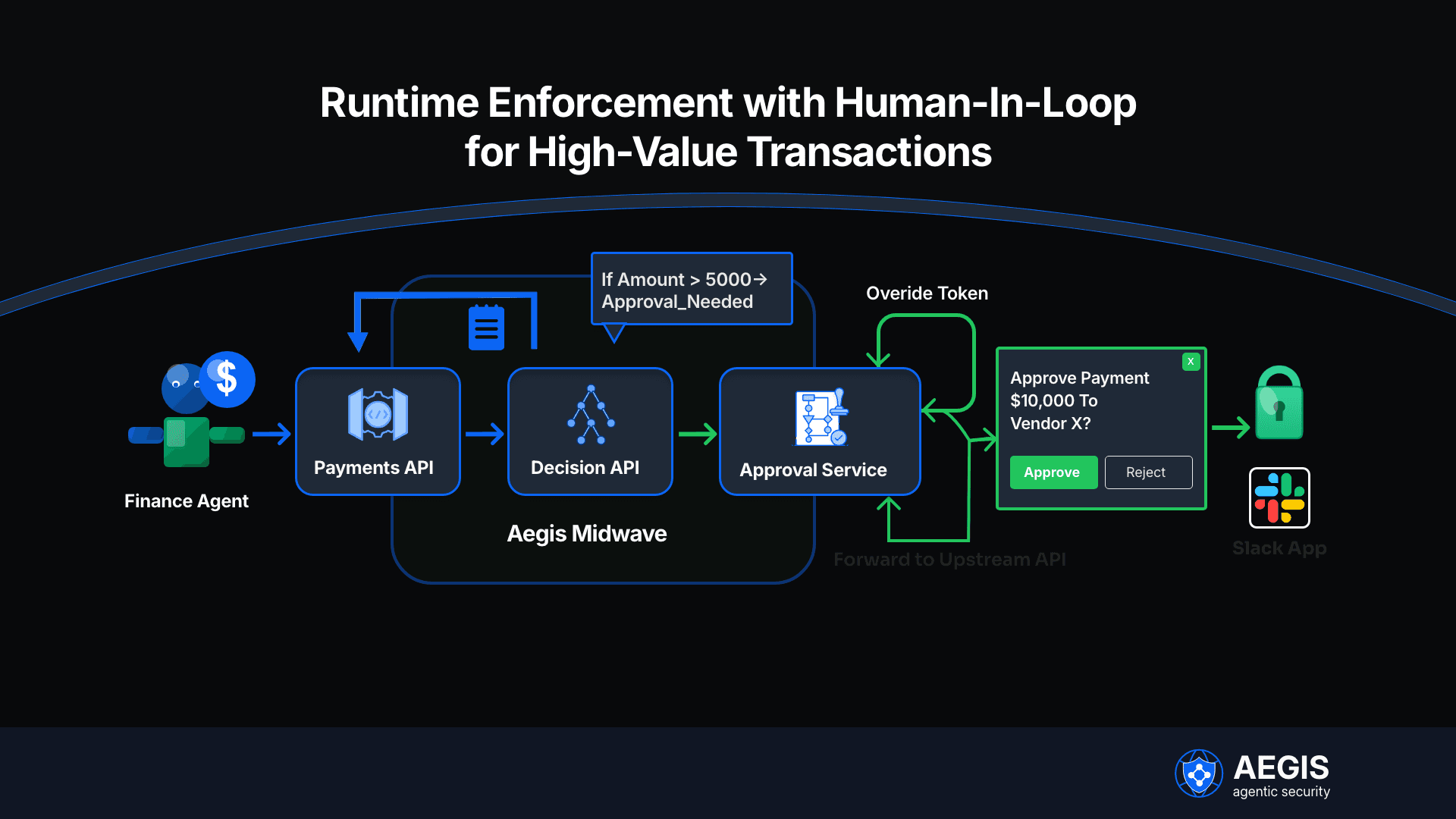
Policies are declared in YAML/JSON and compiled into OPA bundles for evaluation. Aegis targets prepared queries, in-memory caches and optional WASM compilation to keep P99 decision latency under 20 ms. Policies support actions (allow, deny, sanitize, approval_needed), conditions (ranges, regexes) and budgets/rate limits. For high-risk flows (e.g., payments > threshold), Aegis can pause and create an approval request routed to Slack/Teams. - Runtime enforcement at the agent↔tool boundary
The gateway runs as a sidecar/forward proxy (Envoy ext_authz) or a standalone authorizer. It inspects request context (agent_id, tool, parameters, parent_agent_id) and enforces allow/deny decisions. On block it returns a standardized error (PolicyViolation) and emits an OpenTelemetry span describing decision reason, policy_version and latency. This centralized approach minimises per-agent policy duplication while keeping enforcement consistent. - Observability & audit
Aegis emits structured OpenTelemetry spans per decision and ships logs suitable for SIEM ingestion. Dashboards show requests per agent, would-deny vs deny ratios, budget consumption and top offending parameters. OpenTelemetry adoption is widespread in cloud-native stacks and Aegis integrates with the OpenTelemetry ecosystem for trace propagation. See OpenTelemetry project notes for ecosystem trends. (https://opentelemetry.io/). (OpenTelemetry) - Dev experience and safety
Developer SDKs and a CLI let teams register agents, run policy dry-runs, and push validated bundles. Shadow mode (observe only) lets teams tune policies from telemetry before flipping enforcement. The result: faster onboarding, reproducible policy versions, and tamper-proof audit traces for SOC and compliance teams.
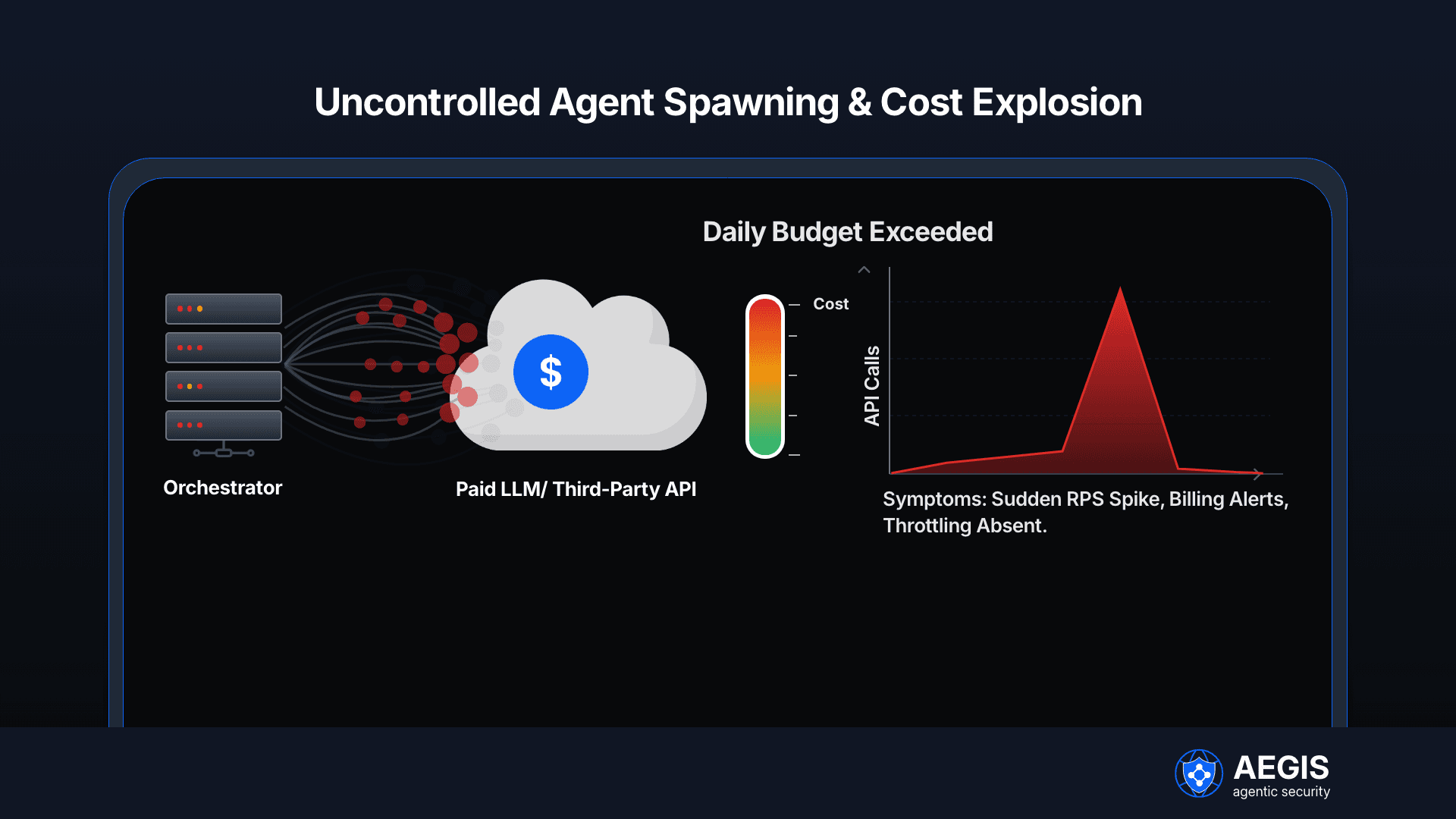
Real-world example: retail automation with enforced boundaries
Scenario: an automated retail flow involves inventory-agent (read), pricing-agent (compute), checkout-agent (charge). Aegis policies enforce:
- inventory-agent only has read scopes for product APIs.
- pricing-agent can compute deltas but cannot call payment endpoints.
- checkout-agent holds payment scopes with max_amount and budget constraints; payments > $5k require human approval.
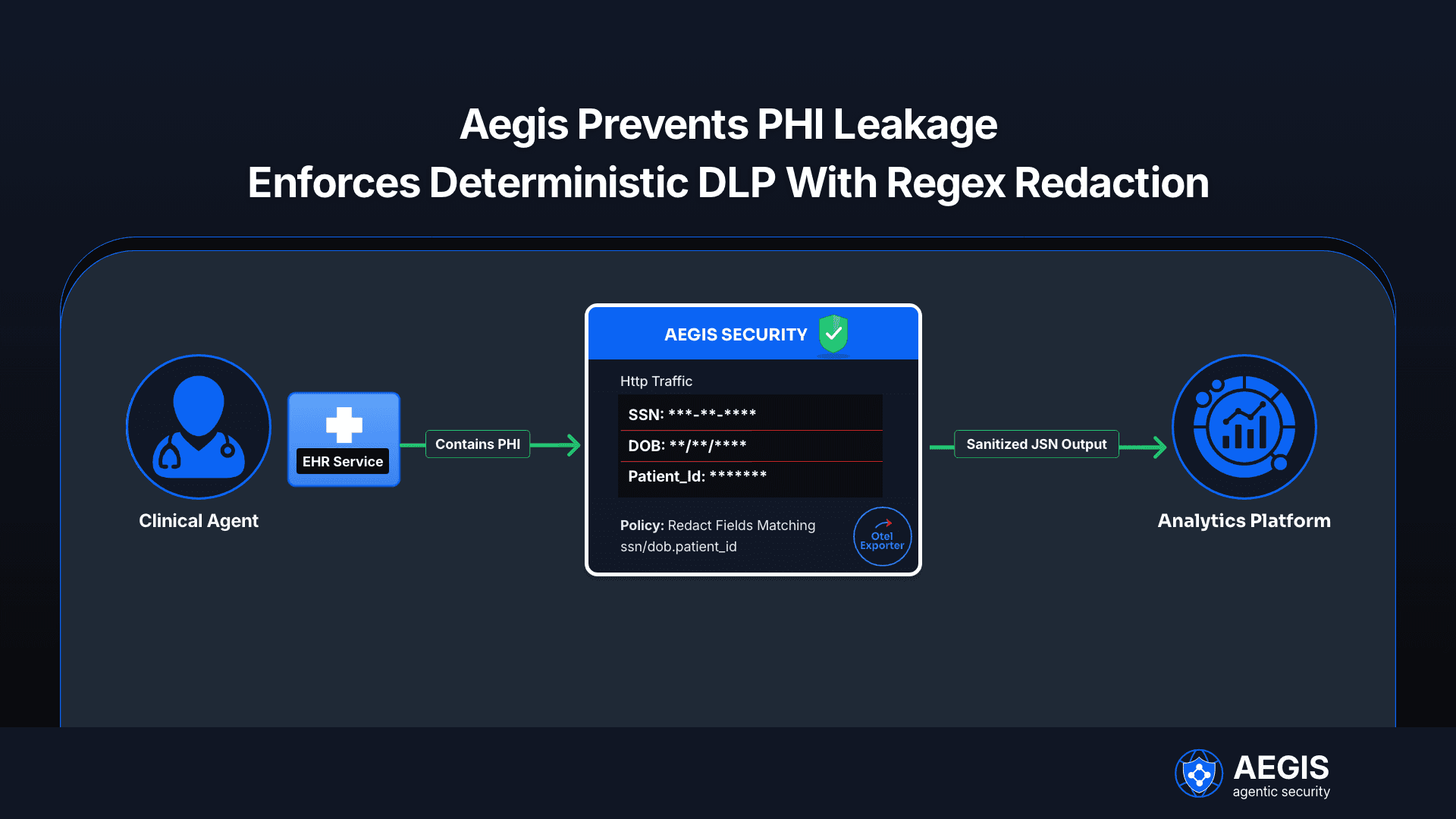
Outcome after decomposition and Aegis enforcement: fewer policy violations, clear per-agent cost visibility, and an auditable chain for compliance. This mirrors practical use cases in FinTech and Healthcare where parameter validation and approvals are essential.
👉🏻 Eliminate integration bottlenecks slowing down AI adoption
Operational checklist and decision matrix
Table: Architecture decision matrix (simplified)
Priority | If security & compliance top priority | If latency & single-team speed top priority |
Choose | Microservice agents + Aegis enforcement | Monolithic agent (PoC) |
Key levers | Per-agent identity, budgets, per-field validation | Single deployment, simpler CI |
Required ops | Service mesh / sidecars, policy distribution | Monolith testing & policy libraries |
Monitoring | Per-agent traces, OTel, budget dashboards | Application logs + integrated tracing |
Performance note: micro-agents need RPC/sidecar tuning; target P99 policy evals ≤ 20 ms using OPA prepared queries or WASM. OPA is a reliable basis for policy engines in cloud-native environments (https://openpolicyagent.org/). (Open Policy Agent)
Table: Example KPIs to track post-migration
KPI | Target |
Policy coverage (critical tools) | ≥ 80% |
Policy enforcement latency (P99) | ≤ 20 ms |
Telemetry coverage (traced calls) | 100% |
Weekly blocked violations | Decreasing trend |
Practical integrations:
- Use Envoy ext_authz or sidecar patterns to intercept HTTP tool calls.
- Emit OpenTelemetry spans for every decision to correlate with distributed traces.
- Compile policy bundles centrally and hot-reload the data plane to minimize rollout friction.
- Run policies in shadow mode for 7–14 days to collect would-deny telemetry before enforcing.
Frequently Asked Questions
Q1: When should I start decomposing a monolith into micro-agents?
A: Decompose once policy coverage and auditing become operational blockers, or when specific responsibilities (payments, EHR access, infra deploys) present clear security or compliance risk.
Q2: Won’t micro-agents increase latency unacceptably?
A: Not if you design for it. Use prepared OPA queries, in-memory caches, efficient sidecars (Envoy) and target P99 eval under 20 ms. Measure P99 and optimize hot paths.
Q3: How does Aegis handle approvals at scale?
A: Policies can include thresholds to reduce human approvals, group low-risk actions, queue approvals, and issue single-use override tokens post-approval to keep automated retries simple.
Q4: Is Open Policy Agent a good fit for agent policies?
A: Yes — OPA provides a proven, language-agnostic policy engine. Aegis compiles policies into OPA bundles for runtime evaluation. See https://openpolicyagent.org/ for reference. (Open Policy Agent)
Q5: How do we audit decisions for regulators?
A: Emit signed, structured logs and OpenTelemetry spans containing agent_id, decision, policy_version and approval_id. Maintain versioned policy bundles to show historical context.
Q6: Where can I learn more about industry adoption and trends?
A: Recent surveys show significant concern about security and integration when deploying agents; architects should plan for guardrails and observability early. Representative reading: industry analyses and surveys on agent adoption. (Architecture & Governance Magazine)
👉🏻 Deploy and manage agents at scale with Kubernetes ecosystems
Conclusion
The decision to adopt monolithic or microservice agent architectures is contextual: start simple, instrument aggressively and extract micro-agents where security, compliance, or scale demand it. A runtime enforcement fabric like Aegis centralizes identity, policy-as-code, approvals and telemetry so teams get consistent, auditable governance without rewriting agent code. For enterprise teams, the most practical route is iterative: shadow policies, measure would-deny events, and migrate high-risk functions to micro-agents protected by a centralized enforcement gateway.