Building Scalable Architectures for Agent Workflows
Learn how scalable, policy-driven agent architectures prevent cost overruns and security risks in AI workflows — powered by Aegis.
Building Scalable Architectures for Agent Workflows
As autonomous AI agents move from research to enterprise deployment, scalability and security emerge as dual imperatives. Modern orchestrators like LangGraph, CrewAI, and AgentKit enable rich multi-agent workflows — but also introduce unpredictable workloads, complex inter-agent dependencies, and expensive API calls that can multiply uncontrollably.
Legacy, monolithic designs struggle to handle this scale. They rely on single orchestrators, static credentials, and manual oversight. The result: bottlenecks, cost overruns, and policy blind spots. To sustain reliability and trust at enterprise scale, organizations must evolve toward scalable, distributed agent architectures — built around sidecar proxies, runtime policy evaluators, and agent-level observability.
This post explores the principles of scalable agent design, the pitfalls of older architectures, and how Aegissecurity Aegis Gateway operationalizes scalable control for agentic AI at runtime.
Why Legacy Architectures Fail at Scale
Monolithic Orchestration Limits Flexibility
Traditional orchestration stacks run all agents under a shared execution context. Every tool call — API, database query, file operation — is handled through a single pipeline, often using static credentials. This design leads to horizontal scaling issues, where latency spikes as more agents compete for shared resources.
For example, if a single orchestrator is managing hundreds of concurrent LLM agents performing REST API calls to external systems, each call competes for bandwidth and credential tokens. A failure or overload in the orchestrator instantly impacts all workflows.
Security and Cost Risks Multiply
With monolithic orchestration, runtime visibility is minimal. Security teams cannot easily attribute costs or policy violations to individual agents. This lack of isolation allows:
- Privilege escalation, where one agent triggers actions beyond its intended scope.
- Runaway spending, when uncontrolled agent loops call paid APIs.
- Compliance failures, because no immutable audit trail ties actions to agent identities.
According to Architecture & Governance Magazine (2024), over 50% of enterprises cite security and observability as their top challenges in adopting multi-agent systems.
👉🏻 Align your architecture with scalability and agility goals
Pattern 1: Sidecar and Forward Proxy Integration
A scalable architecture begins by decomposing monoliths into independent agent execution contexts, each fronted by a proxy or sidecar that governs tool calls.
The Sidecar Pattern
The sidecar proxy sits alongside each agent instance, intercepting its outbound traffic to tools or APIs. Using Envoy’s ext_authz filter, each call is routed through a centralized external authorization (ext_authz) service for real-time policy evaluation.
Key design benefits:
- Minimal app changes — agents continue calling APIs normally.
- Stateless data plane — allows effortless horizontal scaling.
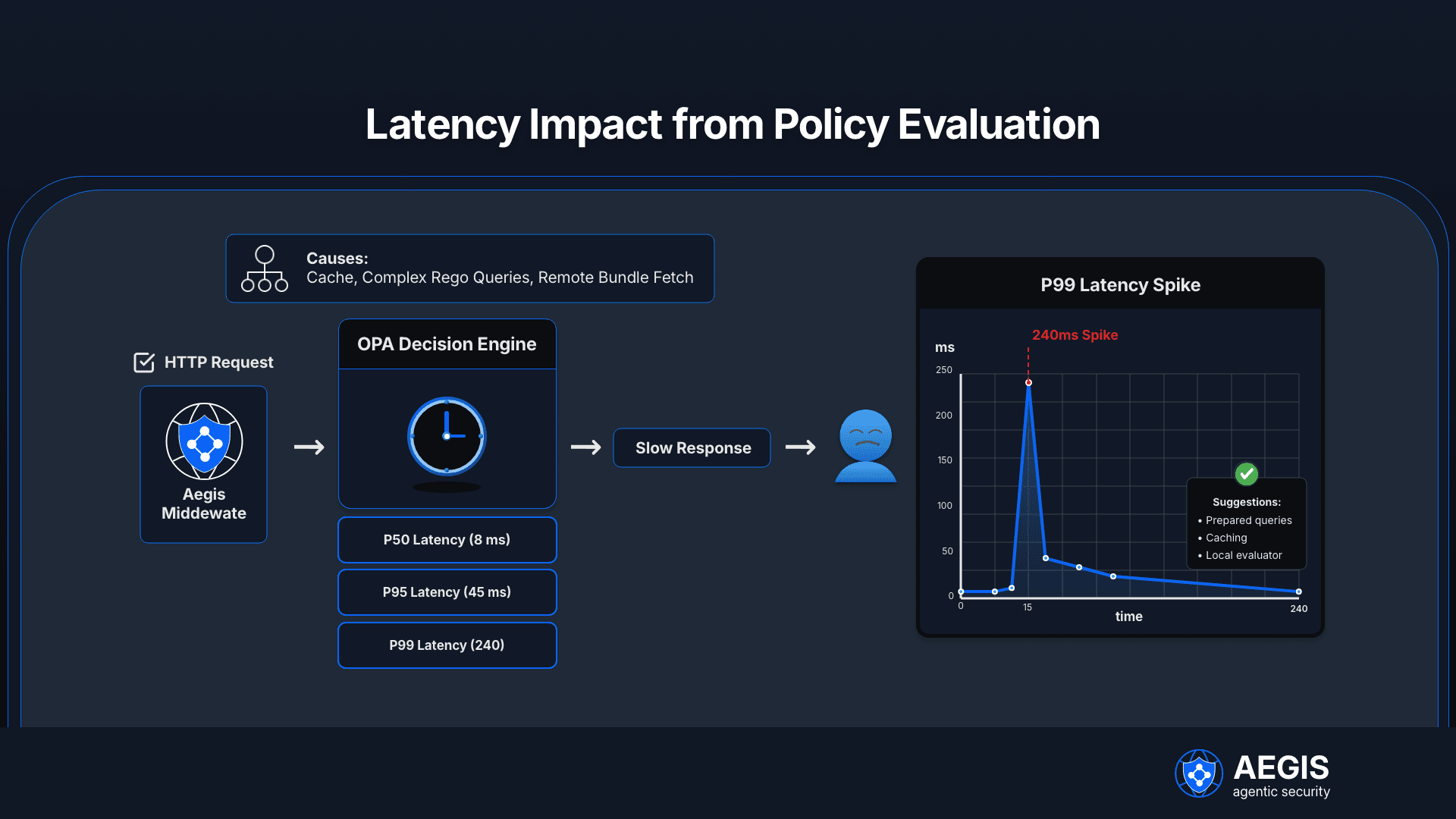
- Sub-20 ms decision latency using prepared queries and cache.
- Separation of concerns — agents focus on logic; the sidecar handles security, rate limiting, and telemetry.
The Forward Proxy Variant
In distributed deployments (e.g., across Kubernetes namespaces or tenants), a forward proxy pattern centralizes decision-making for multiple agents. It supports:
- Tenant-level policies and budgets
- Cross-agent telemetry correlation
- Centralized audit logging
This approach aligns closely with Aegis’s design, where data planes remain stateless while control planes scale independently to handle policy compilation and versioning.
👉🏻 Ensure uptime with fault-tolerant and redundant agent systems
Pattern 2: SDK Decorators and Database Proxies
While sidecars handle HTTP APIs, many agents interact with non-HTTP tools like databases or internal APIs. Here, SDK decorators and database proxy wrappers enforce consistent runtime governance.
SDK Decorators
Aegis provides Python/Node SDKs that wrap existing function calls. Developers can apply decorators to control which tools or functions an agent can invoke, validating parameters against policy before execution.
Example:
@aegis.policy_enforced(agent="finance-agent", tool="stripe", action="create_payment")
def create_payment(amount, currency):
...
Decorators map directly to policies compiled into OPA bundles. This maintains consistency across distributed workloads and simplifies policy enforcement for both HTTP and local calls.
Database Proxy Wrappers
For database-heavy workflows, a proxy layer enforces query whitelists or transaction approvals. Example use cases include:
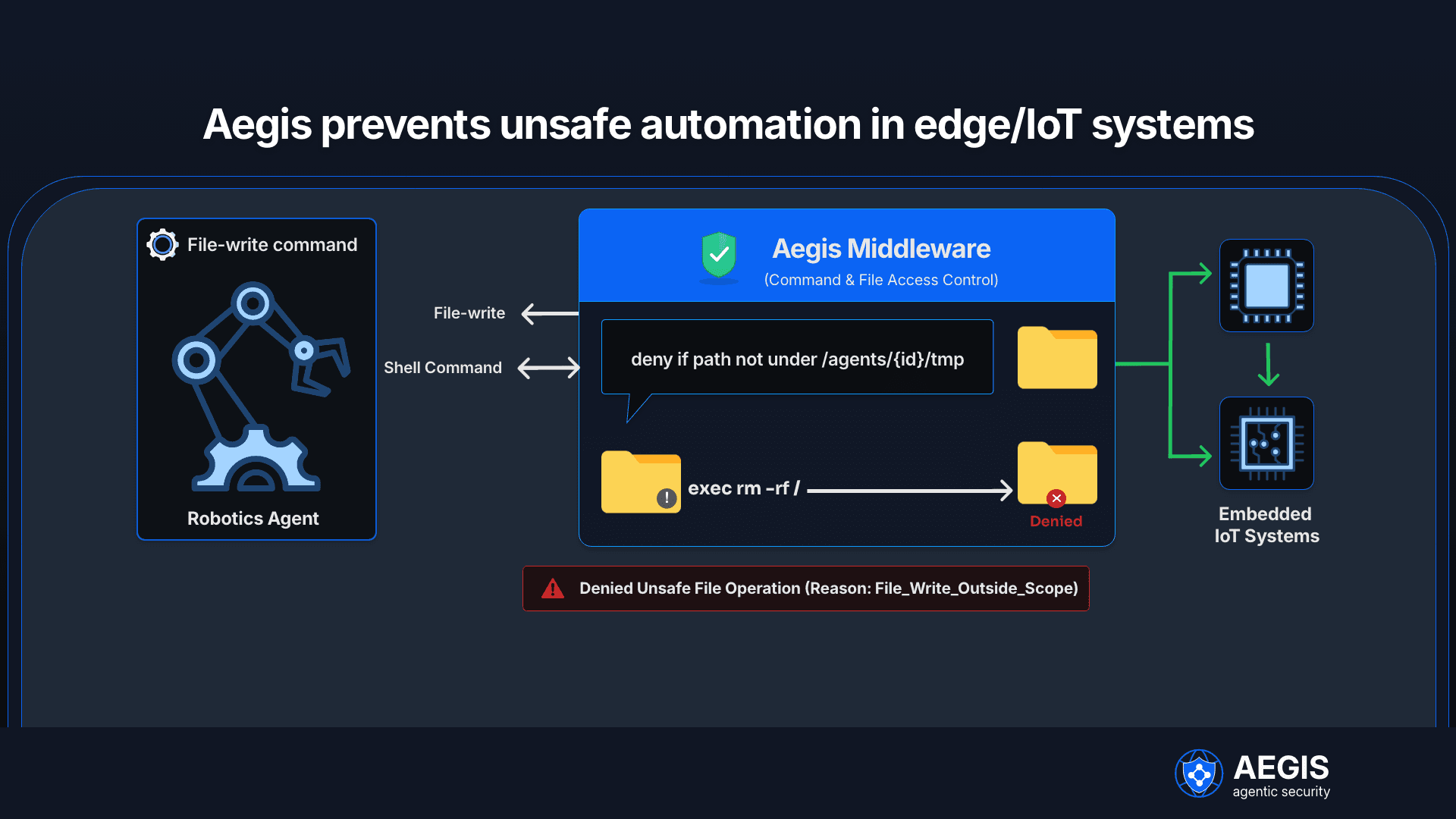
- Restricting destructive operations (DELETE, DROP) without explicit human approval.
- Validating query patterns or parameters (tenant scoping, row-level access).
- Requiring double-approval for high-risk writes.
Operational Controls: Budgets, Rate Limits, and Approvals
Scalable architectures need automated mechanisms to govern cost and risk without human bottlenecks.
👉🏻 Structure data flow to power coordinated agent performance
Rate Limits and Per-Agent Budgets
Using policy-as-code, organizations can define fine-grained limits:
- max_requests_per_second
- max_daily_budget
- allowed_domains
This ensures no single agent can cause cost explosions or API throttling issues. Aegis’s telemetry layer attributes spend to specific agents and surfaces cost breakdowns in dashboards for FinOps teams.
Control Type | Description | Enforcement Layer |
Rate Limit | Cap calls per second per agent | Proxy middleware |
Budget | Dollar or credit threshold per day | OPA policy rule |
Tool Scope | Allowed API domains/endpoints | Policy compiler |
Approval Needed | Pause & await human confirmation | Approvals service |
Approval Flows
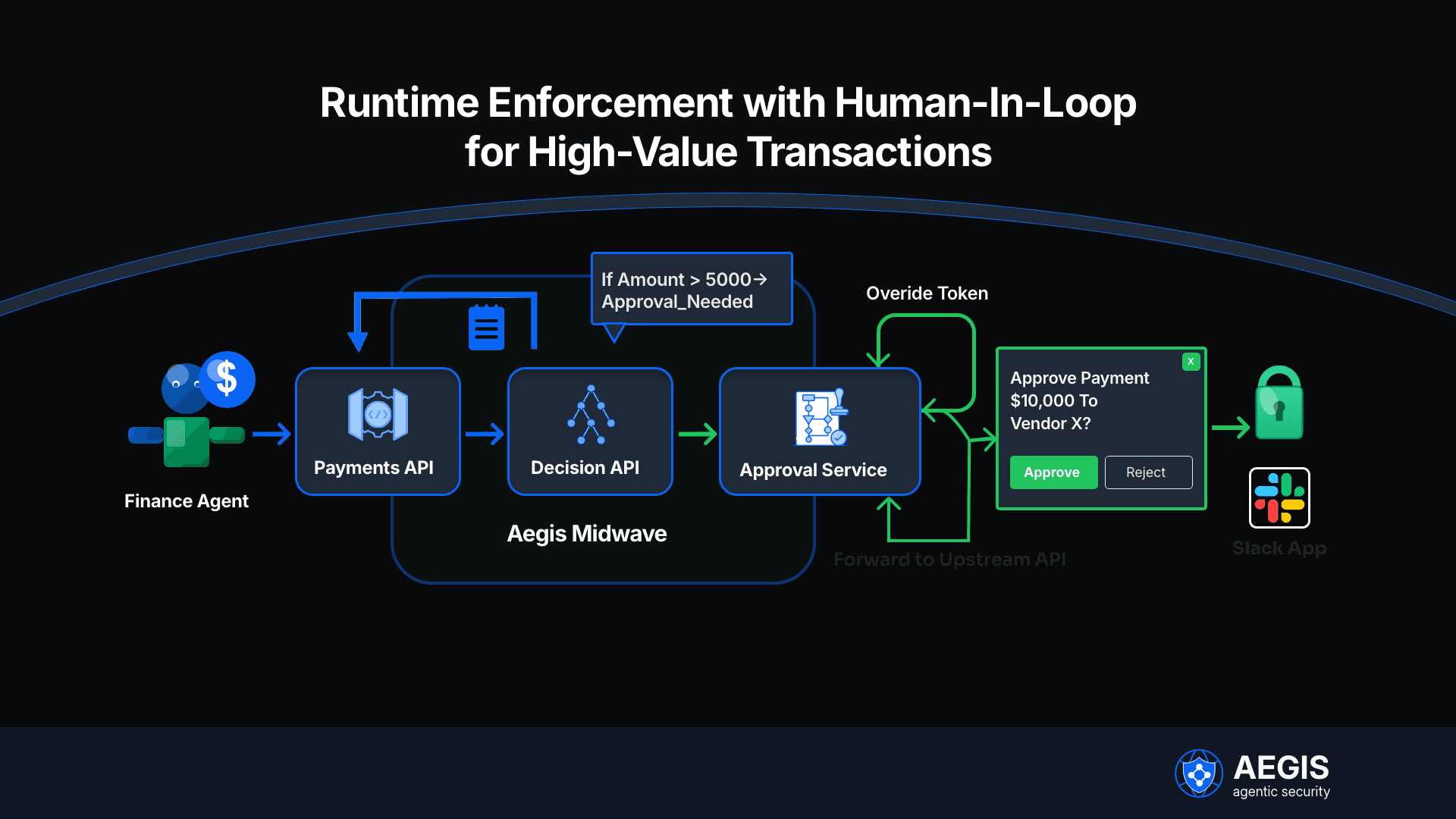
Certain actions — like initiating large payments or accessing PII — may require human-in-the-loop verification. Aegis routes these through Slack or Microsoft Teams, generating override tokens upon approval. This mechanism ensures safe autonomy without operational paralysis.
Short Checklist: Anti-Patterns to Avoid
Anti-Pattern | Impact | Recommended Alternative |
Shared static API keys | No traceability; full compromise risk | Short-lived JWT per agent |
Single global orchestrator | Single point of failure | Distributed orchestration + sidecars |
Ad-hoc validations in code | Inconsistent enforcement | Central OPA-based policy bundles |
Logging without attribution | Audit gaps | Structured telemetry (OpenTelemetry spans) |
Infinite retries on denied calls | Runaway loops | Per-agent rate limit and fallback policy |
How Aegis Implements Scalable Agent Security
Built by CloudMatos, Aegis Gateway operationalizes every concept discussed above into a policy and observability fabric for multi-agent AI systems.
Runtime Enforcement Layer
At its core, Aegis acts as an Envoy-based reverse proxy with a Go authorization server. Each outbound call from an agent is evaluated in real time against compiled OPA bundles. Decisions include:
- allow
- deny
- sanitize (e.g., redact PII)
- approval_needed
With hot-reloaded policy bundles and prepared queries, Aegis achieves sub-20 ms evaluation latency at 10,000 req/s per region — ideal for dynamic multi-agent systems.
👉🏻 Expand globally with scalable multi-region deployment strategies
.png&w=3840&q=75)
Control Plane and Policy Management
Administrators define policies in YAML/JSON. The control plane validates and compiles these into OPA bundles, manages versions, and exposes APIs for CI/CD integration. Aegis supports:
- Policy rollback and dry-run simulation.
- Short-lived token issuance (Ed25519-signed JWTs).
- Multi-tenant scoping for MSSP/Multi-cloud setups.
Observability and FinOps
Every decision emits OpenTelemetry traces enriched with metadata like agent ID, policy version, and estimated cost. These traces populate Grafana or Datadog dashboards, helping teams:
- Detect anomalies in call patterns.
- Track per-agent spend.
- Identify approval bottlenecks.
Use Cases - Scalable and Secure Agent Workflows
- FinTech – High-Risk Payment Authorization
Enforce per-agent payment ceilings (e.g., ≤ $5,000) and trigger human approval beyond thresholds. Ensures planners cannot coerce finance agents into unauthorized payments. - Healthcare – PHI Protection
Redact sensitive fields (SSN, DOB) before EHR export and restrict agents to internal endpoints only. - SaaS – API Budget Governance
Apply per-agent budgets and quotas to control API usage and cost attribution across tenants. - DevOps – Controlled CI/CD Automation
Require approvals for production deployments; enforce image digest and environment whitelists. - MSSP – Multi-Tenant Compliance
Maintain audit trails and ensure tenant-scoped policy enforcement with region-specific routing.
Pilot Playbook: Deploying Aegis for Scalable Agent Systems
A practical rollout involves three phases:
- Integration Phase (Weeks 1–2)
Deploy Aegis sidecars and connect orchestrators via the SDK. Start in shadow mode to collect metrics on potential violations. - Policy Tuning (Weeks 3–4)
Analyze telemetry data; refine budgets, rate limits, and approval conditions. Use dry-run tools to validate before enforcement. - Enforcement and Scaling
Activate enforcement, monitor latency and decision ratios, and expand deployment across additional connectors (e.g., SharePoint, Stripe). Maintain observability dashboards and regular policy reviews.
Frequently Asked Questions
1. How does Aegis differ from traditional IAM or service mesh tools?
IAM decides who can call an API. Aegis decides what each agent is allowed to do per call, with parameter-level enforcement and approvals.
2. What performance overhead does Aegis introduce?
Decision latency averages under 20 ms with in-memory caching and prepared OPA queries — negligible compared to most API response times.
3. Can Aegis integrate with my existing orchestrator (LangChain, LangGraph, etc.)?
Yes. Aegis provides lightweight middleware and decorators that require minimal code changes.
4. How are budgets and rate limits configured?
Through policy-as-code YAML files defining per-agent budgets, tool limits, and throttle conditions, managed in the Aegis control plane.
5. What happens if the authorization service becomes unavailable?
Aegis supports configurable fail-open or fail-closed modes and cached allowlists for resilience during outages.
6. Is Aegis suitable for regulated industries?
Absolutely. It provides audit-ready logs, tamper-resistant policy history, and integrates seamlessly with SIEM and compliance workflows.