
Scalability Considerations: Multi-Region Deployment for Agents
Practical guide: architecting multi-region agent deployments with data residency, low latency, and runtime policy enforcement using Aegis.
Multi-Region Agent Deployments: practical patterns, policy, and Aegis
Enterprises adopting agentic AI must reconcile three hard constraints: low latency for interactive workflows, regional data-residency and compliance, and trusted runtime control of agent behavior. This post explains why multi-region deployments matter for agentic systems, outlines architecture patterns, and shows how Aegis (Aegissecurity) implements policy, routing, and observability to meet SLAs and regulatory requirements.
Key takeaways
- Multi-region deployments reduce user-perceived latency and enable local data residency, but they bring complexity in state, failover and cost.
- Design around regional data planes + central control plane; prefer active-active for availability and active-passive for strict residency.
- Aegis provides a runtime policy & observability fabric that enforces least privilege, regional routing, DLP and auditable traces at the agent↔tool boundary.
👉🏻 Design systems that grow with your agent workloads
Data & market signals
Agentic AI adoption accelerated in 2024–25; enterprise surveys show high interest but growing security concerns: roughly three-quarters of orgs reported privacy/security worries around generative AI in 2024. (TechTarget)
Multi-region is now a mainstream operational requirement—cloud guidance and industry literature stress tradeoffs between latency, consistency and cost when replicating state across regions. (AWS Documentation)
Security teams flag identity and runtime governance for non-human identities (AI agents) as an urgent gap—many orgs lack mature strategies for agent identities. (IT Pro)
Multi-region drivers
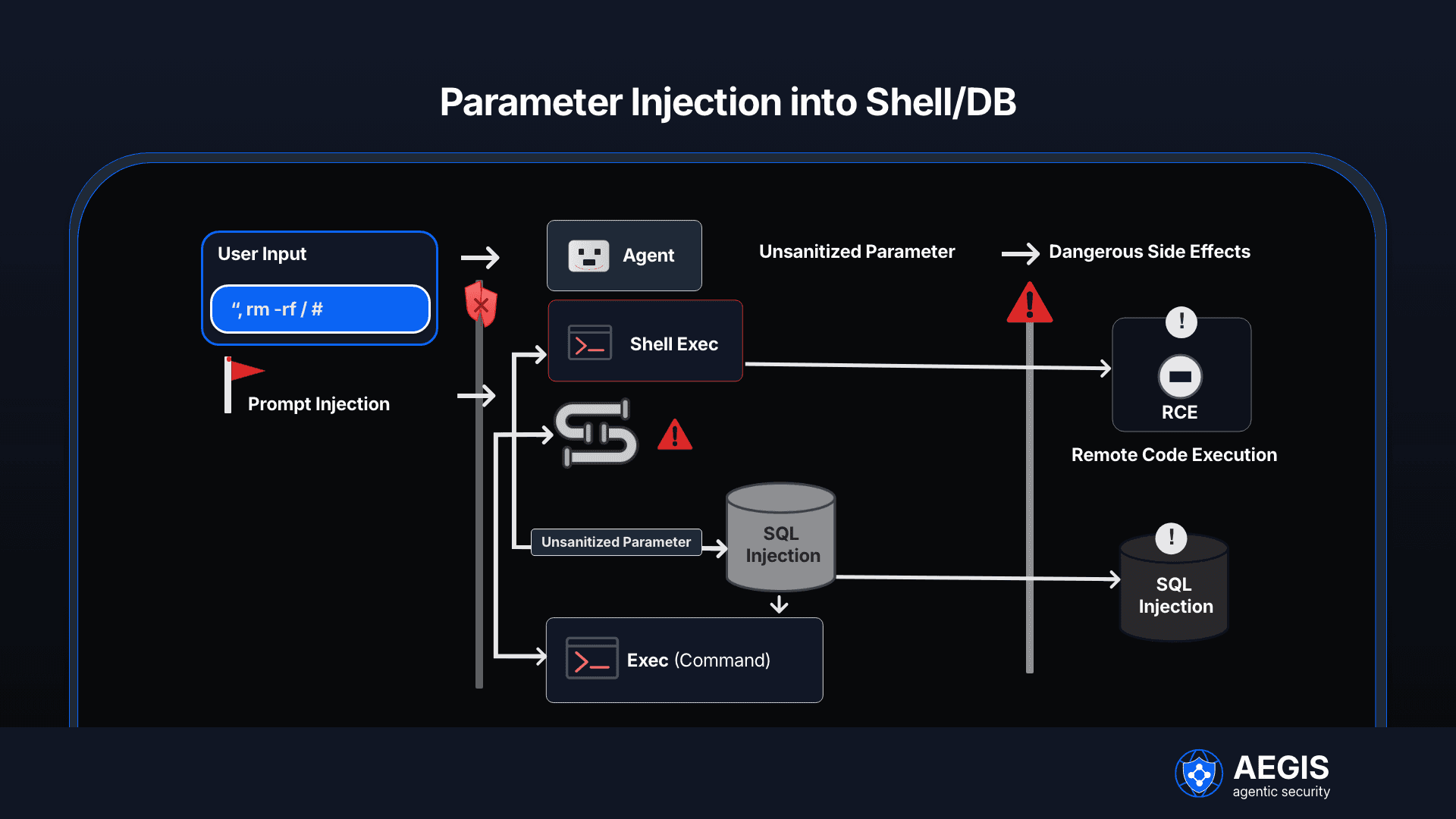
Enterprises choose multi-region agent deployments for four reasons:
- Latency & UX: interactive agents must meet sub-100ms budgets for critical operations; target P95/P99 measurements rather than averages. (Medium)
- Data residency & compliance: regional laws (e.g., GDPR concerns) often mandate that certain tenant data remain in-region. (IBM)
- Availability & resilience: zone/region outages require cross-region failover and geo-routing. (AWS Documentation)
- Cost & FinOps: multi-region increases egress and replication costs; policy controls must limit unnecessary cross-region traffic.
Architecture patterns
Local region data-plane + central control plane
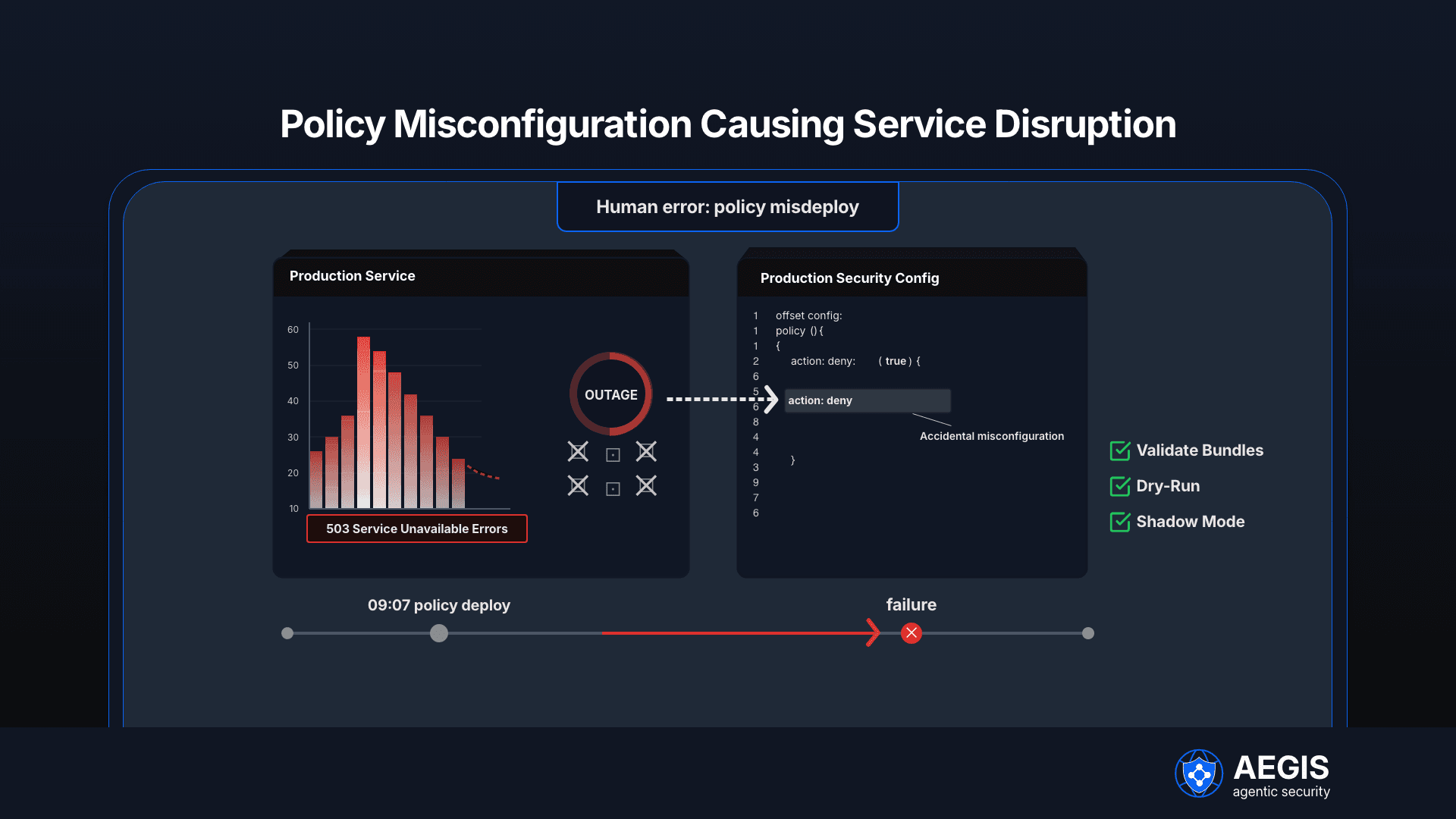
Pattern: each region runs a local agent cluster and regional Aegis data plane (sidecars/proxies + decision services). A single central control plane manages policies, bundles, and the policy compiler. This minimizes cross-region calls for decisions and keeps per-call latency low.
Active-active vs active-passive
- Active-active: good for low latency and availability; requires careful conflict resolution for state (CRDTs/event sourcing).
- Active-passive (region binding): essential when data residency forbids cross-region writes. Failover is planned, with region TTLs and runbooks.
Traffic routing & edge optimizations
Use geo-DNS + edge proxies and prefer local LLM / LLM-proxy endpoints to avoid cross-region egress. Tune DNS TTLs for failover speed vs churn.
👉🏻 Combine cloud, edge, and on-prem for flexible AI deployments
Table: Architecture tradeoffs (simplified)
Pattern | Pros | Cons |
Active-active (stateless agents) | Low latency, high availability | Complex consistency; replication overhead |
Active-passive (region binding) | Strong residency guarantees | Longer failover; potential latency for non-local users |
Edge compute (stateless) | Best UX for latency-sensitive tasks | Limited stateful capabilities; increased deployment footprint |
Policy, data residency & Aegis
At least one-third of this post describes Aegis in depth — here’s how Aegis operationalizes policy, residency, and runtime enforcement.
Aegis overview (solution description)
Aegis is a runtime policy and observability gateway designed for multi-agent AI systems. It sits in the agent↔tool path as a lightweight enforcement layer (sidecar or forward proxy) and provides four tightly coupled capabilities:
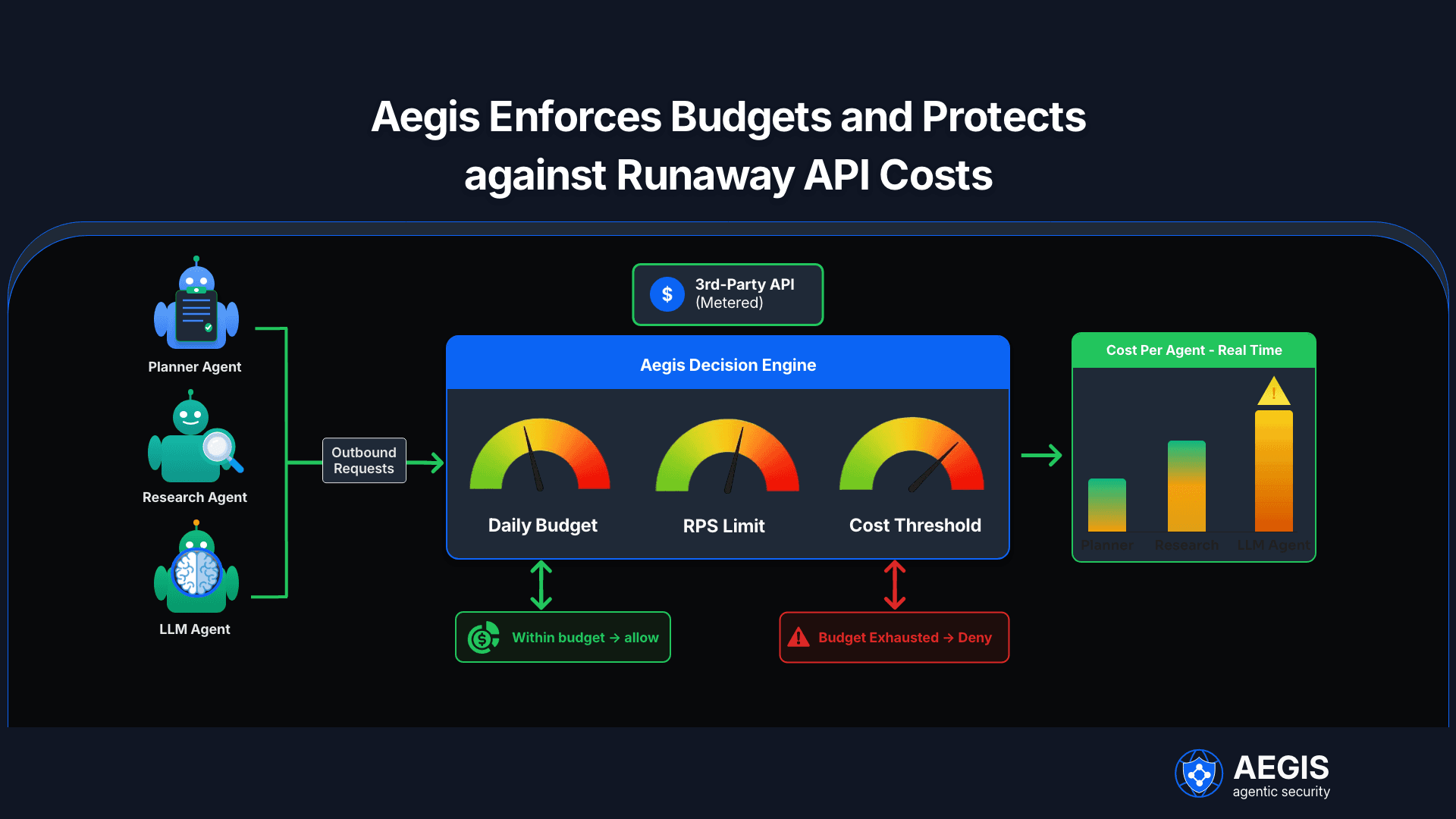
- Policy-as-code compiled to OPA bundles, with hot reload and schema validation. Policies express per-agent allowed tools, parameter constraints, budgets, and approval rules.
- Runtime enforcement: an external authorization service evaluates each call (agent_id, tool, parameters, chain context) and returns allow/deny/sanitize/approval_needed decisions, with minimal latency (engine tuned to P99 ≤ 20ms). (McKinsey & Company)
- Egress control & regional routing: Aegis enforces outbound allowlists and data-residency routing rules so that EU tenants can be bound to EU endpoints and PII is never exported without explicit policy approval.
- Observability & audit: every decision emits OpenTelemetry spans and structured logs (agent_id, decision, policy_version, reason, region tag). These are SIEM-ready for audits and compliance reviews.
How Aegis enforces data residency
- Tenant-scoped routing rules ensure calls from region-tagged tenants go to regional tool proxies or sanitized paths.
- Aegis blocks cross-region calls that would export PII unless a policy explicitly allows it (with approval and attestation).
- JWKS and token services are regionalized or replicated with secure key rotation to avoid cross-region token leakage.
Example policy & runtime flow
When a finance agent requests a payment:
- Sidecar forwards request to Aegis ext_authz.
- Aegis evaluates policy: allowed_tools includes stripe-payments with max_amount=5000.
- If amount>5000 → return approval_needed, pause the call, post to approval channel, and await override token once human approves. Telemetry records approval_id and policy_version. (Example scenario from the MVP spec; see the product docs for more.)
👉🏻 Strengthen reliability with resilient and redundant architectures
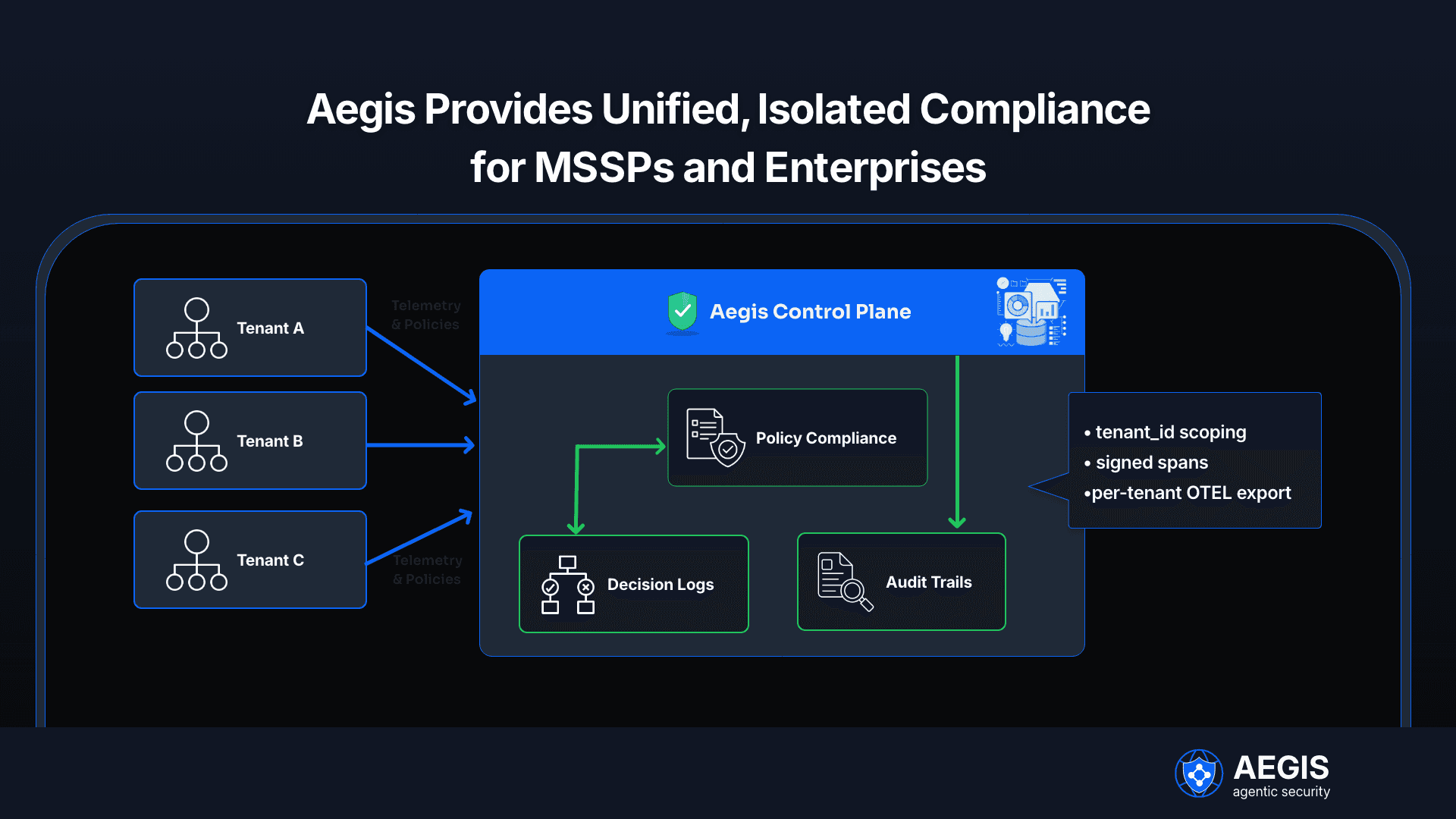
Table: Runtime decision outcomes (examples)
Outcome | Meaning | When used |
allow | Request permitted | Normal validated calls within conditions |
deny | Blocked | Policy violation or residency breach |
sanitize | Parameters redacted | DLP required before forwarding |
approval_needed | Human decision required | High-risk or threshold breach |
Operations & observability
Operationalizing multi-region agents requires runbooks, KPIs and automation:
- KPIs to monitor: P95/P99 decision latency, regional availability %, cross-region call rate, cost per request.
- Runbooks: scheduled DR tests that exercise cross-region failover; TTL tuning for DNS convergence.
- Observability: Aegis emits region metadata in traces and consolidates logs while preserving region tags for compliance queries.
Cost, replication & consistency guidance
Multi-region increases infrastructure and egress costs. Recommendations:
- Only replicate minimal state; store ephemeral state regionally and use CRDTs or event sourcing for eventual consistency.
- Apply per-region autoscaling policies and egress allowlists to limit outbound charges.
- Use shadow mode (policy dry-run) to collect would-deny metrics before flipping enforcement; this reduces false positives and operational disruption.
Migration path & checklist
Start single-region with a regional failover stub, then add regional clusters and an Aegis regional data plane:
- Deploy Aegis sidecars in single region (shadow mode).
- Collect would-block metrics, tune policies.
- Add regional clusters and regional Aegis gateways.
- Enable tenant region binding and test DR runbooks.
Checklist items: token locality, JWKS replication plan, DNS TTL plan, per-region cost caps, and policy versioning.
Use cases & industry fit
Aegis maps to regulated industries where agent actions directly touch PII, payments, or production infrastructure:
- FinTech: per-agent payment ceilings and approval workflows.
- Healthcare: deterministic DLP and regionally bound EHR calls.
- SaaS & MSSPs: multi-tenant audit trails and scoped bundles.
Operational teams (DevOps, Security, FinOps) gain central control and measurable KPIs.
Frequently Asked Questions
- What latency overhead does runtime policy evaluation add?
A well-tuned Aegis data plane targets single-digit milliseconds at median and P99 ≤ 20ms for decision calls when using OPA prepared queries and caching. - How can I enforce GDPR data residency?
Use tenant binding rules to route EU tenants to EU regional gateways; block cross-region PII exports unless policy allows and records approvals. (IBM) - Can I run policies in shadow mode?
Yes—shadow mode collects would-deny events so teams can tune regexes, thresholds and parameter checks before enabling enforcement. - How does Aegis scale across regions?
Deploy regional Aegis data planes with a central control plane for policy bundles; use per-region autoscaling and limit global state replication where possible. (AWS Documentation) - What is the recommended failover pattern?
For strict residency, use active-passive with tested runbooks. For global low-latency services, prefer active-active with conflict-tolerant state mechanisms (CRDTs/event sourcing).
Final note
Multi-region agent deployments are not trivial, but a disciplined architecture—regional data planes, central policy compilation, and runtime enforcement—lets teams satisfy latency, residency, and compliance simultaneously. Aegis (CloudMatos) is designed to be that runtime fabric: policy-as-code, low-latency decisions, regional routing, and SIEM-ready traces so enterprises can run agentic AI with measurable control.