
AI Agents for Healthcare: Patient Onboarding and Records Management
Practical guide: enforcing runtime DLP, data-residency and audit for healthcare AI agents using Aegis Gateway.
Enforcing PHI-safe Agentic AI for Healthcare Onboarding with Aegis
Patient onboarding and records management are prime candidates for automation with agentic AI — but they carry direct exposure to protected health information (PHI). This article maps the compliance landscape, explains concrete policy primitives (DLP, data residency, purpose-bound access), and presents a practical implementation checklist and examples for deploying Aegis Gateway as the runtime policy and observability fabric that sits between orchestrators, agents and EHR/tooling endpoints.
Key takeaways up front
- Healthcare orgs must treat agent↔tool interactions as a runtime enforcement boundary: identity + parameter inspection + egress control.
- Deterministic DLP, purpose claims, and region-tagged routing are the core primitives for PHI-safe agent automation.
- Aegis Gateway implements these primitives with policy-as-code, an ext_authz data plane, deterministic redaction, and tamper-evident telemetry. See Aegis specification and use cases.
Compliance landscape and agent risk
Healthcare automation adoption rose sharply during 2024–2025, but governance and PHI protection remain primary barriers to production deployments. Recent literature and surveys highlight clinician trust, governance and data residency as recurring concerns for AI in care workflows. (humanfactors.jmir.org)
Why agents are a new compliance vector
- Agents act autonomously and can chain calls across tools (e.g., orchestrator → triage-agent → EHR connector → external store). Without runtime checks, parameter injection or lateral coercion can cause silent PHI exfiltration.
- Traditional IAM addresses “who” but not “what” within the call: agents can hold allowed tokens yet attempt disallowed exports or supply risky parameters (SSN, DOB). Legal de-identification guidance still expects technical and administrative controls for re-identification risk. (HHS)
👉🏻 Personalize learning experiences with intelligent AI agents
Operational consequences
- An agent that uploads patient records to an external cloud account can create regulatory incidents and breach contracts.
- SOC teams need structured, signed audit trails linking agent identity, policy version and decision reason for each action — not just logs.
Policy primitives for PHI protection
Effective runtime enforcement requires a small, composable set of primitives. Below are the pragmatic primitives Aegis enforces in practice.
Deterministic DLP (redact & sanitize)
Deterministic DLP inspects parameters and payloads for regex patterns and canonical PHI fields (SSN, DOB, phone, MRN). Decisions: allow, sanitize (redact/tokenize), deny, or approval_needed. Deterministic regex + schema checks provide explainable redaction suitable for audit traces; HHS guidance treats de-identification and technical safeguards as complementary controls. (HHS)
Purpose-bound access & claims
Every sensitive read must include an explicit purpose claim (e.g., purpose=care, purpose=billing). Policies enforce purpose presence and validate that the agent’s role permits that purpose. Missing or mismatched purpose claims cause deny or approval_needed flows.
Data residency & region-tagged routing
Per-tenant region tags ensure reads/writes are routed only to region-approved EHR endpoints (e.g., internal-ehr.eu-west vs internal-ehr.us-east). Attempts to call off-region destinations are blocked and logged as compliance events.
Egress allowlists & destination controls
Block outbound calls to arbitrary domains. Only permit target domains (internal-ehr, approved cloud storage endpoints) and strip or sanitize URL parameters that may embed PHI.
Human approvals & thresholding
For sensitive exports or emergency overrides, the policy can return approval_needed, triggering an approval flow integrated to human channels (Slack/Teams) and minting a one-time override token when approved. This reduces false positives while preserving auditability.
👉🏻 Secure sensitive data across every agent-driven workflow
policy primitives vs enforcement action
Primitive | Typical Policy Check | Enforcement Actions |
Deterministic DLP | regex(ssn | dob), json-schema fields |
Purpose-bound access | header/payload purpose==care | allow, deny |
Data residency | region tag == tenant.region | route, deny |
Egress allowlist | hostname ∈ approved_domains | allow, deny |
Approval workflow | amount > threshold or export=true | approval_needed → override token |
Implementation checklist and audit examples
Follow this checklist to implement PHI-safe agentic workflows with Aegis:
- Agent identity & registration
- Issue per-agent short-lived JWTs that include agent_id, tenant, and scopes.
- Issue per-agent short-lived JWTs that include agent_id, tenant, and scopes.
- Policy-as-code and staging
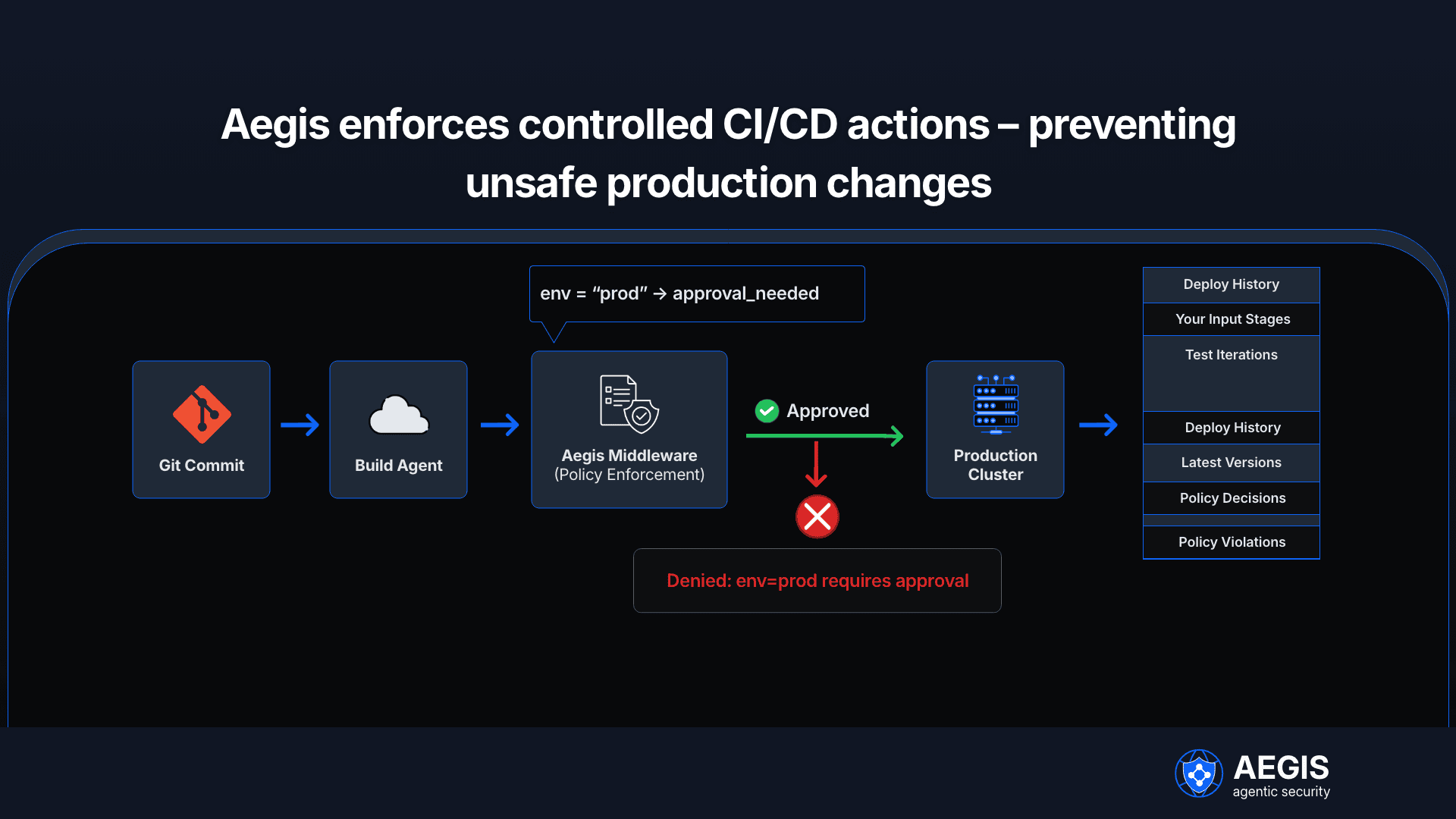
- Author policies as YAML/JSON, run dry-run (shadow) mode for 7 days, tune regex and thresholds.
- Author policies as YAML/JSON, run dry-run (shadow) mode for 7 days, tune regex and thresholds.
- Deterministic DLP ruleset
- Implement canonical regexes for SSN, DOB; map EHR JSON paths to redaction rules.
- Implement canonical regexes for SSN, DOB; map EHR JSON paths to redaction rules.
- Egress allowlist & region routing
- Maintain tenant-scoped allowlists and region endpoints; enforce at proxy.
- Maintain tenant-scoped allowlists and region endpoints; enforce at proxy.
- Observability & signed telemetry
- Emit OpenTelemetry spans with decision metadata (agent_id, policy_version, decision_reason). Sign critical traces if needed for tamper-evidence. (openpolicyagent.org)
- Emit OpenTelemetry spans with decision metadata (agent_id, policy_version, decision_reason). Sign critical traces if needed for tamper-evidence. (openpolicyagent.org)
- Approval & override flow
- Integrate a human approvals service; generate one-time override tokens post-approval.
- Integrate a human approvals service; generate one-time override tokens post-approval.
- Audit retention & SIEM ingestion
- Ship structured logs to your SIEM (indexed fields: agent_id, tool, decision, policy_version, approval_id).
- Ship structured logs to your SIEM (indexed fields: agent_id, tool, decision, policy_version, approval_id).
Real audit example (operational)
- Event: triage-agent attempts to upload patient record to external-storage.com.
- Aegis decision: deny (egress not in allowlist), emit span with reason EgressViolation, store policy_version v1.3, increment tenant compliance counter and create a compliance alert for SOC. The same event in shadow mode would be recorded as “would-deny” without blocking. Aegis design and telemetry model provide these exact behaviors in the MVP spec.
👉🏻 Meet healthcare compliance standards with secure AI agents
Example audit fields emitted per call
Field | Example value |
agent_id | triage-agent-42 |
tenant | hospital-acme |
tool | ehr-read / ehr-write |
decision | deny / sanitize / allow |
decision_reason | PurposeMissing / DLPMatch / EgressViolation |
policy_version | v1.3 |
approval_id | ap-8934 (if applicable) |
Aegis as the runtime solution
Aegis Gateway is specifically designed to be the runtime policy and observability fabric for multi-agent AI — effectively the “Istio + OPA for Agents.” The product implements the primitives above via an ext_authz-style proxy and an external decision service that evaluates policy bundles compiled from policy-as-code. Key Aegis capabilities and how they map to PHI protection requirements:
Identity & scoped tokens
- Per-agent short-lived JWTs encode tenant, agent role and scopes. Tokens enable unambiguous attribution and minimize blast radius for compromised agents.
Deterministic DLP & sanitization
- Aegis performs deterministic DLP at the gateway; rules redact SSN/DOB patterns and can sanitize structured payloads before allowing higher-risk downstream calls. This reduces re-identification risk and produces auditable redaction decisions.
Purpose validation & policy-as-code
- Aegis requires purpose=care claims for clinical reads. Policies are authored in YAML/JSON, compiled into OPA bundles and hot-reloaded. This enables security teams to express context-aware conditions (e.g., clinical-agent read-only unless approval).
Egress & region enforcement
- The gateway enforces allowlists and region-tagged routing, preventing off-region exports and enforcing data residency at the network boundary.
Observable, tamper-evident telemetry
- Every decision emits OpenTelemetry spans and structured logs with policy version, reason and agent identity. Signed traces and versioned bundles provide strong evidence for compliance reviews and SOC triage.
Developer ergonomics and rollout
- SDKs and middleware simplify integrating Aegis into LangChain/LangGraph or custom orchestrators; shadow mode enables safe policy tuning before enforcement. The MVP explicitly targets low latency (P99 ≤ 20 ms) decisioning and developer workflows to reduce friction.
👉🏻 Accelerate legal drafting and review with AI agents
Aegis in typical healthcare flows
Triage agents get read-only scopes and must include purpose=care; any attempt to export records triggers a deny or approval_needed. Fine-grained regex redaction of SSNs and DOBs occurs before any allowed transmissions. Example scenarios and problem statements are collected in the Aegis use-case corpus.
👉🏻 Streamline regulatory submissions with AI-driven automation
Deployment patterns and operational notes
- Shadow-first rollout: run policies in shadow mode for 7–14 days to collect would-deny events and tune patterns.
- Fail-closed for writes: default writes to fail closed to prevent accidental exports; reads may allow configurable fail-open behavior with stricter telemetry.
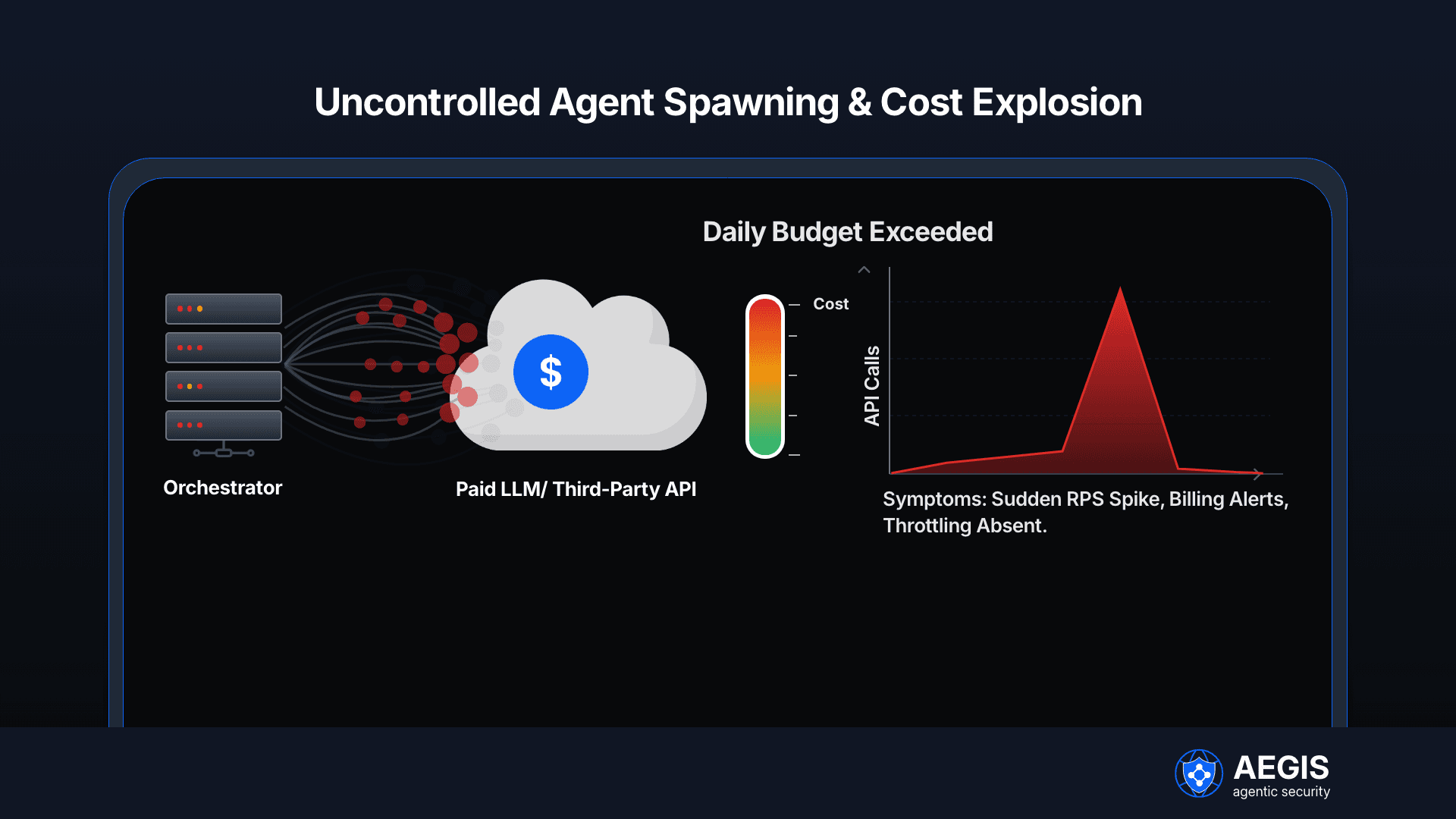
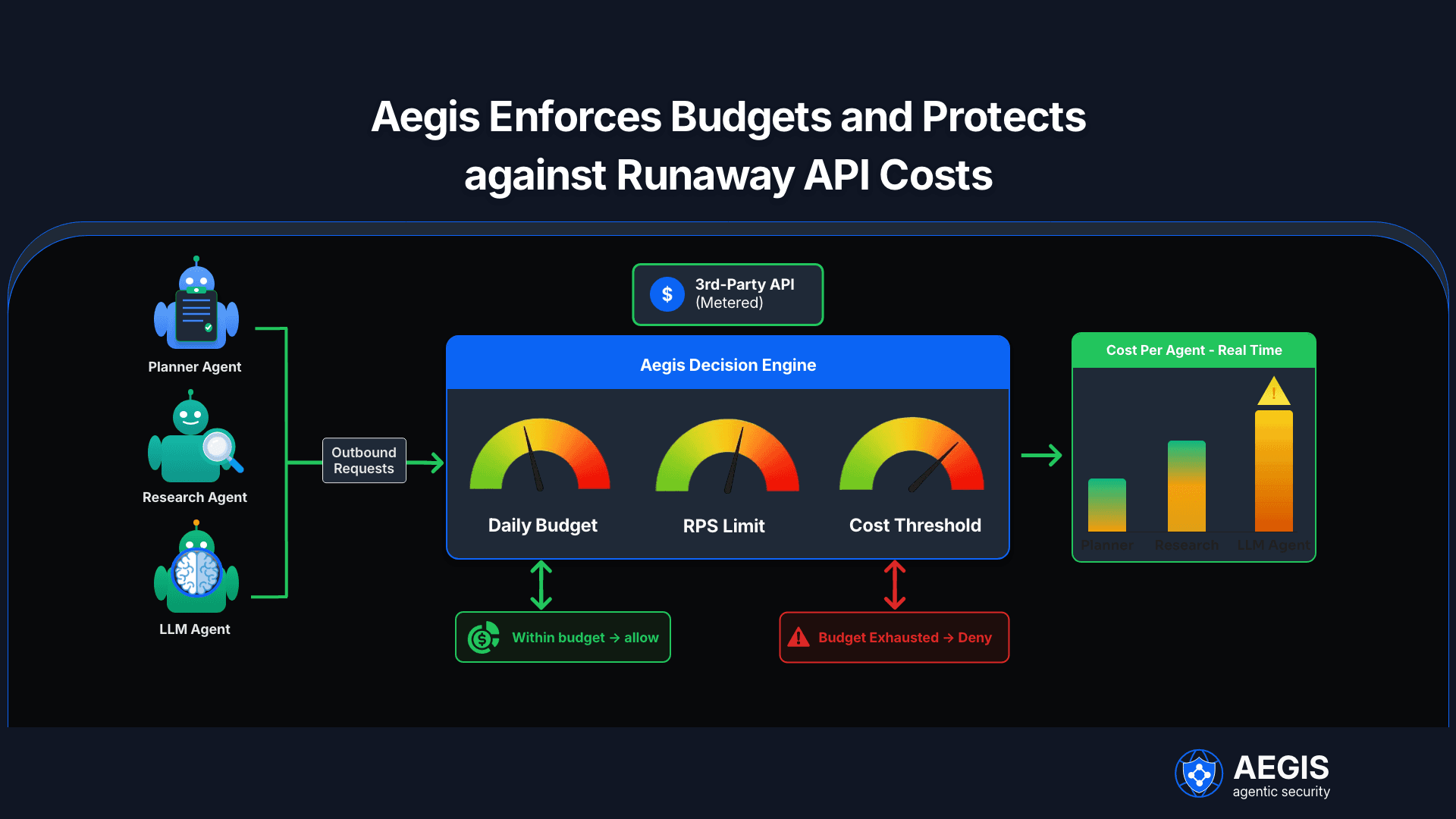
- Rate-limit & budget controls: cap agent call rates and per-agent budgets to limit runaway automation costs.
- Versioned policies & rollback: keep policy history and enable quick rollback for misconfiguration incidents.
Frequently Asked Questions
Q1 — How does Aegis prevent an agent from leaking PHI to an external domain?
A — The gateway enforces egress allowlists and inspects parameters; any destination not on the tenant allowlist is denied and logged. Deterministic DLP also redacts PHI from payloads prior to transit.
Q2 — Can policies require human approval before sending patient data outside the EHR?
A — Yes. Policies can return approval_needed for risky operations; the approval service integrates with Slack/Teams and mints override tokens on approval.
Q3 — Will Aegis add latency to agent workflows?
A — Aegis is architected for low overhead: prepared OPA queries, caching, and optimized ext_authz paths target sub-20 ms decision latency at P99 in the MVP.
Q4 — How do we prove compliance to auditors?
A — Aegis emits structured, versioned telemetry (agent_id, policy_version, decision_reason) and supports signed traces for tamper evidence. Retain logs in SIEM for required retention windows.
Q5 — How do we tune DLP to avoid false positives on clinical notes?
A — Use shadow mode to collect would-deny events, refine regex and JSON paths, and apply contextual conditions (e.g., agent role, purpose claim). Combine deterministic DLP with whitelist patterns for clinical vocabularies.
Q6 — Where can I learn more about policy-as-code foundations like OPA?
A — Start at the Open Policy Agent docs: https://openpolicyagent.org/ and review de-identification guidance from HHS:
External references and further reading
- Open Policy Agent (policy-as-code primer). https://openpolicyagent.org/ (openpolicyagent.org)
- HHS de-identification methods for PHI. https://www.hhs.gov/hipaa/for-professionals/special-topics/de-identification/index.html. (HHS)
- Analysis of AI adoption barriers in healthcare (2024 review). (humanfactors.jmir.org)
- Gartner reporting on agentic AI project risk (context on agent maturity). (Reuters)
Closing practical notes
Agentic automation can materially shorten patient onboarding time and reduce clinician friction — but only when runtime enforcement is treated as part of the control plane. Aegis implements the necessary primitives (deterministic DLP, purpose-bound reads, region routing, and signed telemetry) while offering developer-friendly SDKs and shadow-first rollout patterns to reduce operational risk.