Multi-Agent AI for Legal Document Drafting and Review
How Aegis enforces runtime policy, human approvals, and audit trails for safe, scalable agentic contract automation.
Aegis: Secure Agentic AI for Contract Drafting and Review
Contract drafting and review are high-volume, detail-sensitive workflows that remain a bottleneck for in-house legal teams. Agentic AI—multiple specialised agents collaborating to draft clauses, run compliance checks, and prepare negotiation notes—promises major productivity gains but introduces new risks: parameter injection, PII leakage, jurisdictional errors and opaque decision trails. This article explains the operational problem, describes safe agent workflows, and spends one third of the piece detailing Aegis — a runtime policy and observability gateway built to secure multi-agent legal pipelines. Relevant technical claims and design specifics are drawn from Aegis product documents.
Problem: Why agentic contract drafting increases risk
AI can draft routine contract language quickly, but raw LLM output is not inherently safe for production legal documents. Common failure modes:
- Incorrect or incomplete clauses — agents may omit jurisdiction-specific boilerplate or mis-handle indemnities.
- Parameter injection & PII exfiltration — free-text inputs can be passed into API parameters (e.g., participant SSNs) and sent to third-party services.
- Unauthorized actions — planners or negotiation agents may coerce privileged agents (e.g., payments or signature requests) to act outside policy.
- Lack of auditability — regulators and SOC teams need tamper-proof traces that show which agent made what call and why.
Key operational metrics lawyers care about are reproducibility (who approved what), accuracy (clause correctness), and auditability (signed logs). Industry research shows AI saves legal professionals hundreds of hours on routine tasks, but operationalizing that safely requires governance layers.
👉🏻 Deploy healthcare AI confidently with compliance built into every workflow
Agent workflows that make sense for legal teams
Designing safe multi-agent pipelines for contract drafting requires clear separation of duties, parameter validation and human approval gates.
Agent roles and responsibilities
- Clause Generator Agent: drafts clause text from templates and clause parameters.
- Compliance Reviewer Agent: runs rule-based checks (jurisdiction, regulatory flags, mandatory language).
- Negotiation Agent: manages redlines and preserves change history; prepares negotiation playbooks.
- Execution Agent: triggers signing or export but must be blocked if PII/unredacted fields remain or if approval thresholds are exceeded.
Example runtime flow
- Clause Generator outputs a clause with metadata (jurisdiction=CA, type=indemnity).
- Compliance Reviewer evaluates clause against tenant policy; produces “pass”, “flag”, or “require signoff”.
- Negotiation Agent collates redlines and sends a “submit-for-signature” request.
- Aegis gateway inspects the signature request: if PII fields are present or the indemnity exceeds thresholds, the gateway returns approval_needed and routes to a human reviewer.
Policy examples (practical templates)
Per-agent parameter policy (YAML/JSON)
- ClauseGenerator: allowed_templates: [standard-indemnity, limited-liability]
- ComplianceReviewer: allowed_actions: [validate_clause]
- ExecutionAgent: allowed_actions: [initiate_signature], conditions: {unredacted_pii: false, indemnity_amount_max: 100000}
These policies are compiled into runtime bundles and hot-reloaded so security teams can adjust thresholds without redeploying agents. The policy-as-code model ensures deterministic, auditable enforcement.
👉🏻 Process claims faster and more accurately with intelligent insurance agents
Security & compliance: Runtime enforcement, telemetry, approvals
A secure legal pipeline needs a runtime enforcement fabric that operates at the agent↔tool boundary. Aegis provides that enforcement.
What Aegis enforces (summary)
- Identity & least privilege: assign unique agent IDs and issue short-lived signed tokens.
- Parameter inspection: validate and sanitize request parameters (e.g., redact SSNs, check currency/amount ranges).
- Approval workflows: return approval_needed for high-risk actions and integrate with human channels for override tokens.
- Telemetry & tamper-evident logs: emit OpenTelemetry spans and store policy version with each decision for audits.
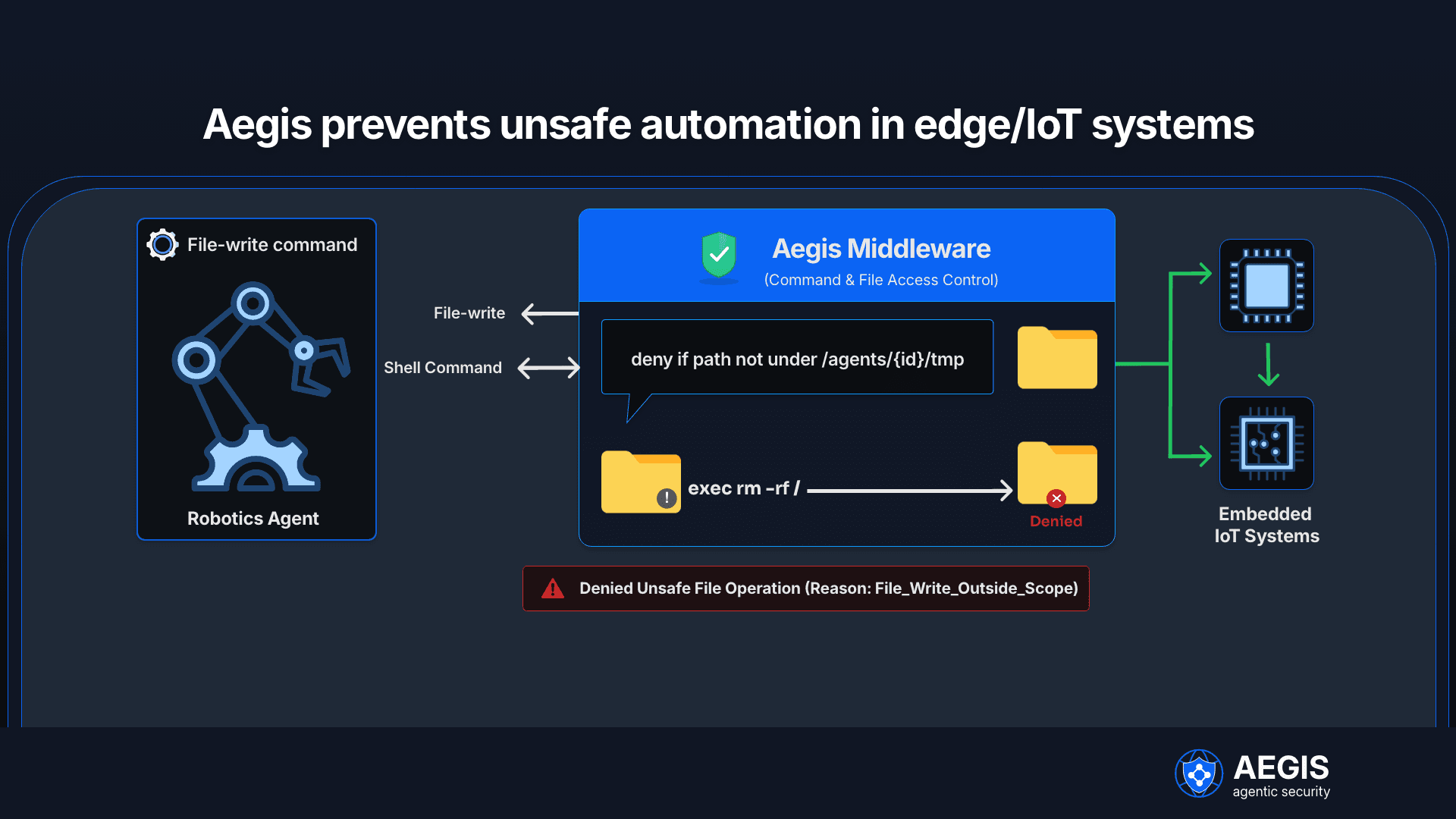
Aegis's runtime decision API returns one of: allow, deny, sanitize, approval_needed. For legal operations, sanitize and approval_needed are critical — they prevent leak paths and enforce lawyer oversight before signatures or exports.
👉🏻 Modernize government workflows with responsive AI-powered service agents
Aegis as a solution
Aegis is designed as a lightweight policy and observability gateway for multi-agent architectures. It sits between orchestrators and tools (proxy/sidecar model) and evaluates each agent call against tenant-scoped policy bundles, returning deterministic allow/deny/sanitize/approval_needed outcomes while recording structured telemetry for SOC and compliance reviews. The product brief details architecture, controls and operational modes.
Core capabilities relevant to legal workflows
- Agent identity & tokens — Agents are registered with unique IDs and receive short-lived JWTs that include tenant and scope claims. This prevents rogue agent spawning from inheriting privileges.
- Policy-as-code with hot-reload — Policies are written in YAML/JSON and compiled into OPA-style bundles. Security teams can update clause whitelists, signoff thresholds, and PII redaction rules without redeploying agents.
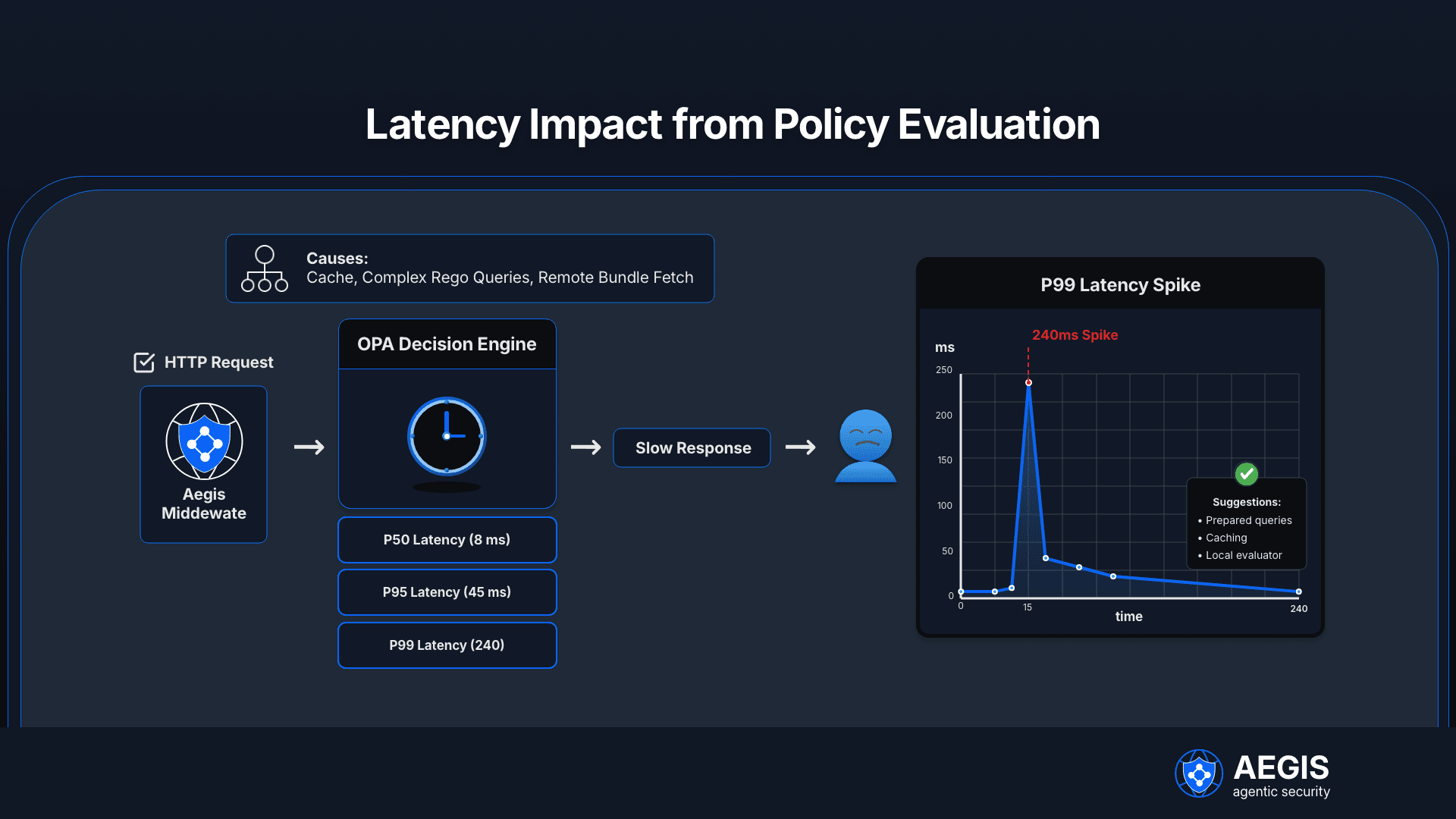
- Deterministic DLP & parameter checks — Aegis performs regex-based redaction, enforces numeric ranges (e.g., indemnity caps), and blocks egress to unapproved domains to stop exfiltration. This is essential when a negotiation agent might try to attach sensitive documents.
- Approval integration — When a submission triggers approval_needed, Aegis issues an interactive approval to Slack/Teams and, upon approval, mints a one-time override token. This prevents signature steps from proceeding without lawyer signoff.
- Observability for audits — Every decision includes policy_version, decision_reason and an attestation signature. OpenTelemetry spans and structured logs are exported to SIEMs so incident responders and auditors have a full provenance trail.
Operational modes for legal teams
- Shadow mode: run policies in observation-only to collect would-block events and tune regexes or signoff thresholds.
- Enforce mode: block or sanitize calls based on tuned policies.
- Dry-run & rollback: test new policies with CLI tooling and roll back if misconfiguration causes false positives.
-1.png&w=3840&q=75)
Why Aegis fits legal automation
Aegis explicitly addresses the tension between automation velocity and regulatory assurance. By enforcing per-agent privileges and parameter-level checks, Aegis allows legal teams to automate routine drafting and negotiation while preserving human control for high-risk clauses and executed agreements.
Case studies & time savings
Estimated time saved per 100 contracts (hours)
Task | Traditional (hours) | Agent-assisted (hours) | Estimated hours saved |
Initial draft (boilerplate) | 250 | 40 | 210 |
Compliance review (manual checks) | 120 | 30 | 90 |
Negotiation cycles (first pass) | 200 | 120 | 80 |
Final legal signoff | 50 | 30 | 20 |
Total | 620 | 220 | 400 |
Aegis reduces risk and preserves auditability while enabling many of those draft and review savings through enforced automation and human approval gates. Use-case specifics like blocking send-for-signature when unredacted PII exists are part of operational checklists in Aegis design docs.
Policy examples mapped to legal controls
Policy Type | Examples | Enforcement Action |
Clause whitelist | Only approved indemnity templates | deny / require signoff |
PII redaction | Remove SSN, DOB in payloads | sanitize |
Amount thresholds | Indemnity > $100k or payment > $5k | approval_needed |
Egress controls | Only allow calls to approved signers | deny |
Integration and rollout checklist
- Register agents and issue scoped tokens.
- Deploy Aegis sidecar or proxy in dev and run policies in shadow mode for 7 days.
- Tune regexes and thresholds from observed would-blocks.
- Flip to enforce for non-production tenants; progressively expand to production with critical policies (signature gating, PII sanitization) enabled.
- Configure dashboards and SIEM exports for auditability.
Frequently Asked Questions
Q1: Can Aegis block agent calls to external signing platforms?
Yes — egress allowlists and domain controls prevent agents from calling unapproved domains; high-risk calls can be blocked until human approval.
Q2: How does Aegis support multi-tenant MSSP scenarios?
Policies are tenant-scoped and bundles are versioned per tenant; telemetry includes tenant and agent IDs for per-tenant audit trails.
Q3: What happens when a policy misconfiguration blocks legitimate workflows?
Use dry-run and shadow modes to collect would-blocks, then roll back policy versions via the control plane; draft policies can be validated against schema before publishing.
Q4: Can approval workflows scale for high-volume pipelines?
Policies support thresholds and budgets to reduce unnecessary approvals; approvals can be batched or automated for low-risk actions.
Q5: How are logs protected for compliance?
Aegis can sign audit logs and store versioned policy history; OpenTelemetry spans include policy_version and attestation signatures for tamper evidence.
This operationally focused approach closes the gap between legal teams wishing to accelerate contract drafting and security teams insisting on control and auditability. Aegis provides the middle layer — policy, enforcement, and telemetry — that lets organisations scale agentic automation while keeping lawyers and auditors firmly in the loop.