
Versioning and Rollback Strategies for Policy Changes
Practical guide to policy versioning, canary/shadow rollouts, and automated rollback for agentic AI with Aegis.
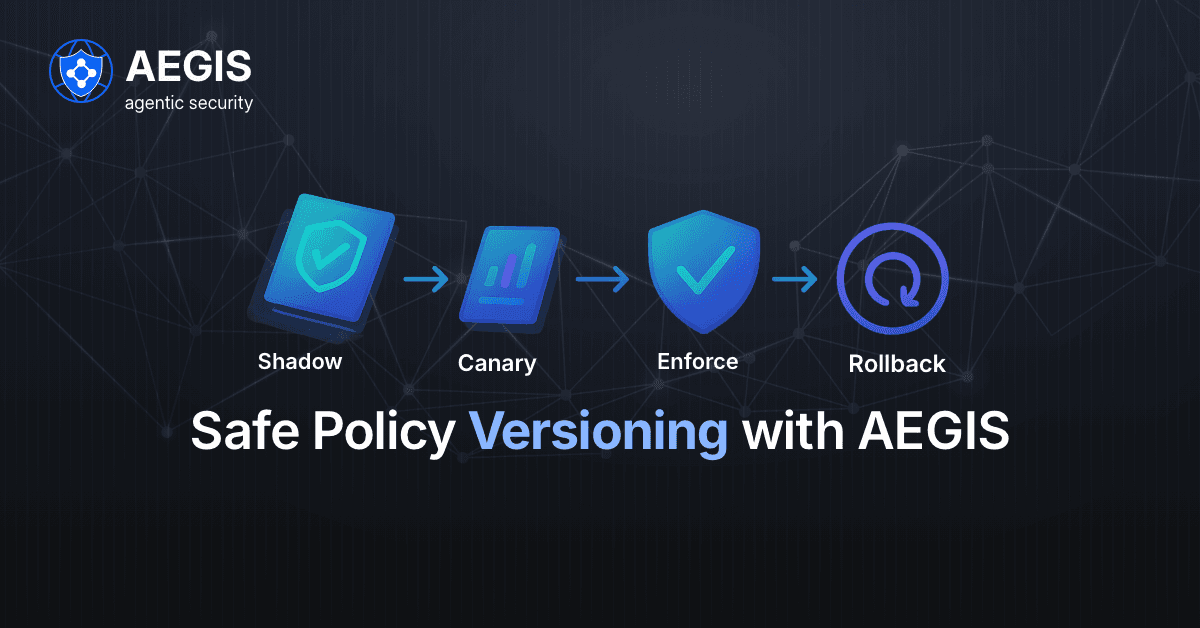
Safe Policy Versioning and Rollback Strategies for Agentic AI (Aegis)
Modern agentic systems demand runtime policy controls that are as operational as the agents themselves. Misconfigured policies can break production flows, cause outages, and open regulatory exposures. This article explains a pragmatic, operations-first approach to policy versioning, shadow and canary promotion, and automated rollback — framing Aegis as the operational solution for enterprises deploying multi-agent workflows. Where helpful, the article references Aegis design and MVP notes.
Why policy versioning is non-negotiable
Enterprises must treat policies like code. Policies that change without traceability or atomic rollback create two failure modes: silent drift (control-plane policy ≠ data-plane bundle) and brittle enforcement that can break runtime workflows. A robust versioning model solves both.
Key requirements:
- Atomic, signed bundles stored in immutable object storage (S3/GCS) with ETags and signed manifests.
- Per-bundle metadata: changelog, author, risk tier, and associated CI results.
- Versioned telemetry so every decision references policy_version.
Aegis’s specification explicitly mandates policy-as-code, compiled bundles, signed manifests, and storage with version keys — design choices that make rollback and audit straightforward.
👉🏻 Deliver policy updates faster with secure CI/CD pipelines
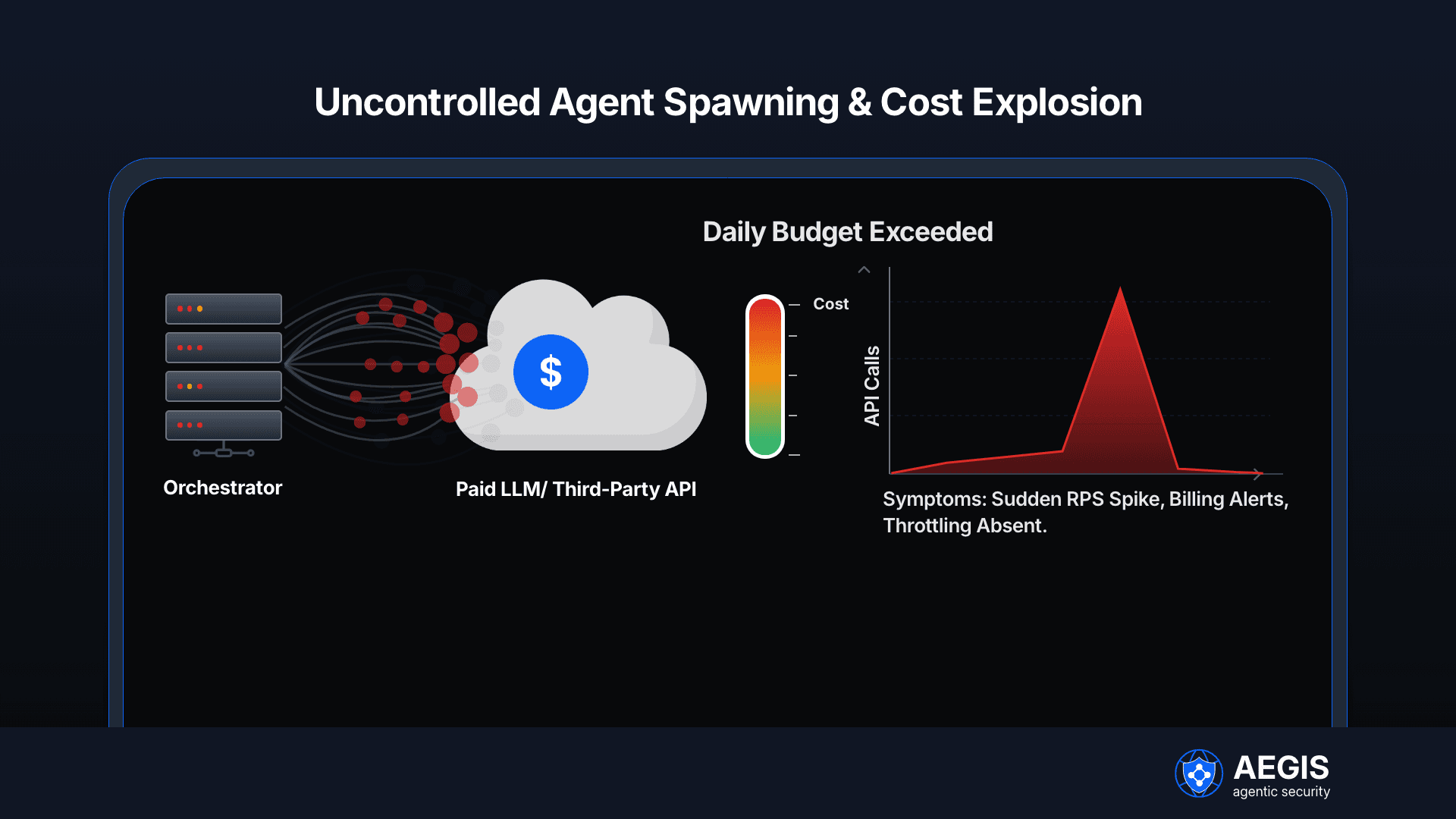
Versioning primitives and signing
A sound versioning primitive is simple and deterministic: compile policy YAML → produce a signed bundle (bundle_v{N}.tar/zip) → emit a manifest JSON that includes an ETag, signature, CI status, and changelog.
Recommended fields in the manifest:
- policy_version (semantic or monotonic integer)
- author, timestamp, change_note
- etag, signature (Ed25519)
- risk_tier, canary_percent (if applicable)
- CI results (unit tests, prepared query benchmarks, latency P99)
Store manifests and bundles in a versioned object store and publish a lightweight index (control-plane API) that agents and gateways can query for the latest approved version. Aegis’s control plane and bundle store model follows this pattern in the MVP spec.
👉🏻 Centralize governance to simplify policy management at scale
Table: Example manifest fields and purpose
Field | Purpose |
policy_version | Unique, monotonic identifier referenced in telemetry |
etag | Integrity & caching control for data-plane clients |
signature | Non-repudiable approval of the bundle |
ci_status | "pass" / "fail" with link to test artifacts |
risk_tier | Guides rollout strategy and approval workflow |
Canary, shadow, and rollback workflows
A predictable rollout process combines shadow mode, canary promotion, staged enforcement, and a callable rollback API.
- Shadow mode (observe-only): Deploy candidate bundle in shadow for 7–14 days. Collect would_block telemetry and would-block context analysis. Shadow mode is a low-risk way to surface false positives and tune regexes/conditions. Aegis explicitly recommends shadow mode for early deployments.
- Canary promotion: Apply policy to a subset of agents (e.g., 5–10%). Use canary_percent in the manifest; the data plane evaluates canary membership at runtime. Monitor SLOs and would-block rates.
- Staged rollout: 5% → 25% → 100% with SLO guardrails (error rate, latency, business metric thresholds). Use automated promotion if KPIs remain within thresholds; require human approval for high-risk policy changes (risk_tier “high”).
- Automated rollback: Provide an API to revert to a prior signed bundle. Rollback must be atomic: publish the previous manifest as active and emit an audit event. Emergency “freeze” capability should disable non-critical policy changes and block promotions during incident response.
Canary rollout guardrails (example)
Stage | Canary % | Key checks | Action on failure |
Canary | 5% | No increase in would-blocks >5x baseline, latency Δ < 10ms | Pause & notify |
Ramp | 25% | SLOs stable, no business metric degradation | Auto-promote or manual review |
Full | 100% | Final audit / approval for high risk | Finalize and archive old version |
Operational playbook: preflight, CI, and post-mortem
Operationalizing policy changes requires tooling at every stage.
Preflight checks (CI):
- Policy unit tests (schema checks, rule coverage).
- Prepared-query benchmarks for latency (P99 target e.g., ≤ 20 ms).
- Preflight simulator: run real traces (or replayed production traces) against the candidate bundle to generate would-block statistics.
- Linting and style rules to prevent common misconfigs.
Promotion & approval:
- Risk-tiered approval workflows (minor vs major changes).
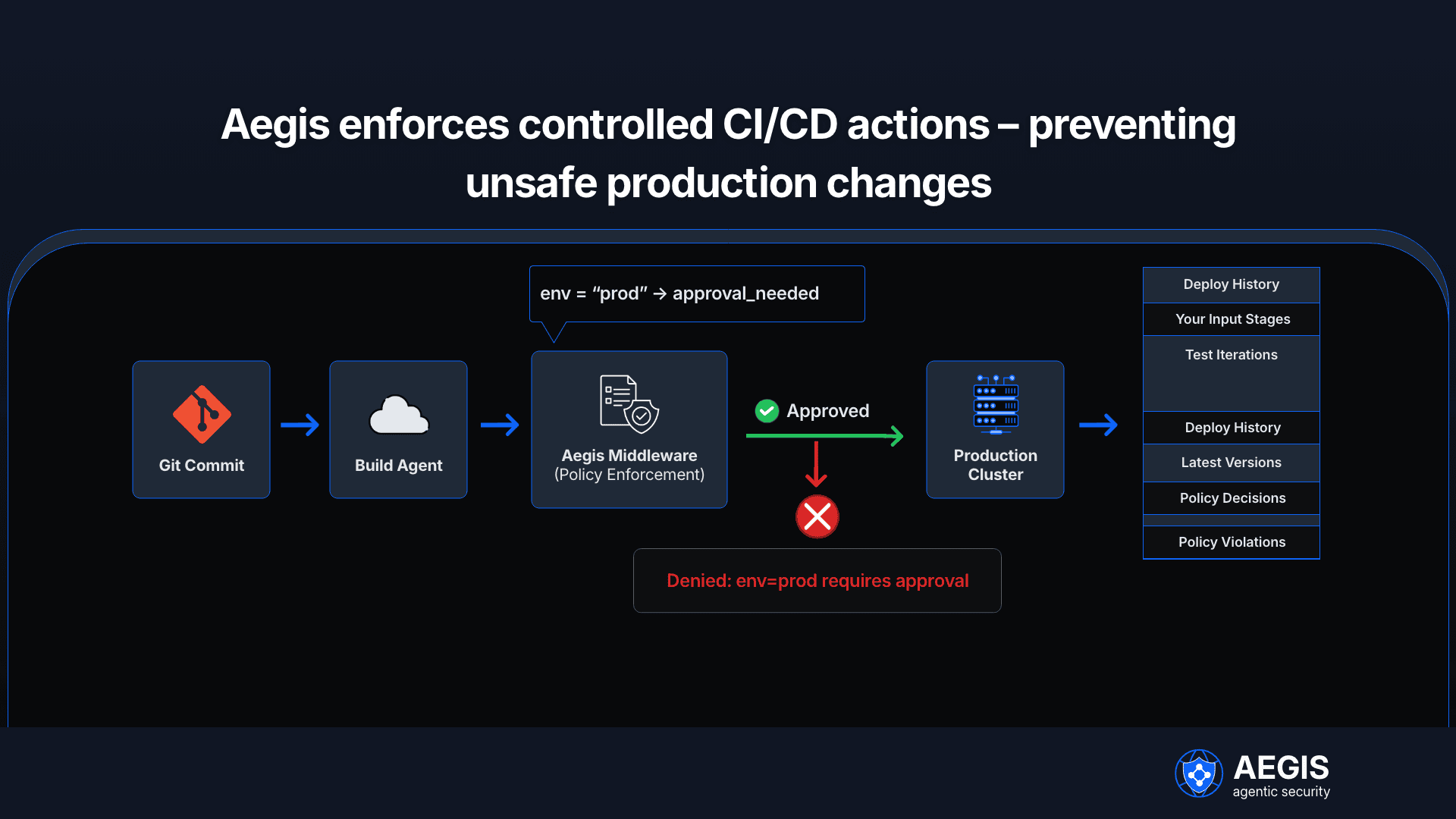
- Integrations with human approval channels (Slack/Teams) for approval_needed decisions.
- Canary percentage and staged rollout timelines encoded in manifests.
Rollback & incident response:
- Automated rollback API that reverts to the prior manifest and emits audit events.
- Drift detection between control-plane policy and data-plane bundles, with periodic reconciliation.
- Rehearsal orgs for high-risk changes to validate behavior before production deployment.
Postmortem checklist:
- Was there a shadow run and for how long?
- Which would-block traces occurred and were they correlated with a change?
- Was the rollback API used and how long to restore?
- What CI or linting gaps allowed the misconfiguration?
- Remediation and policy author training items.
Aegis’s brief includes a full 20-point checklist for safe policy rollouts — this operational playbook maps directly to those items.
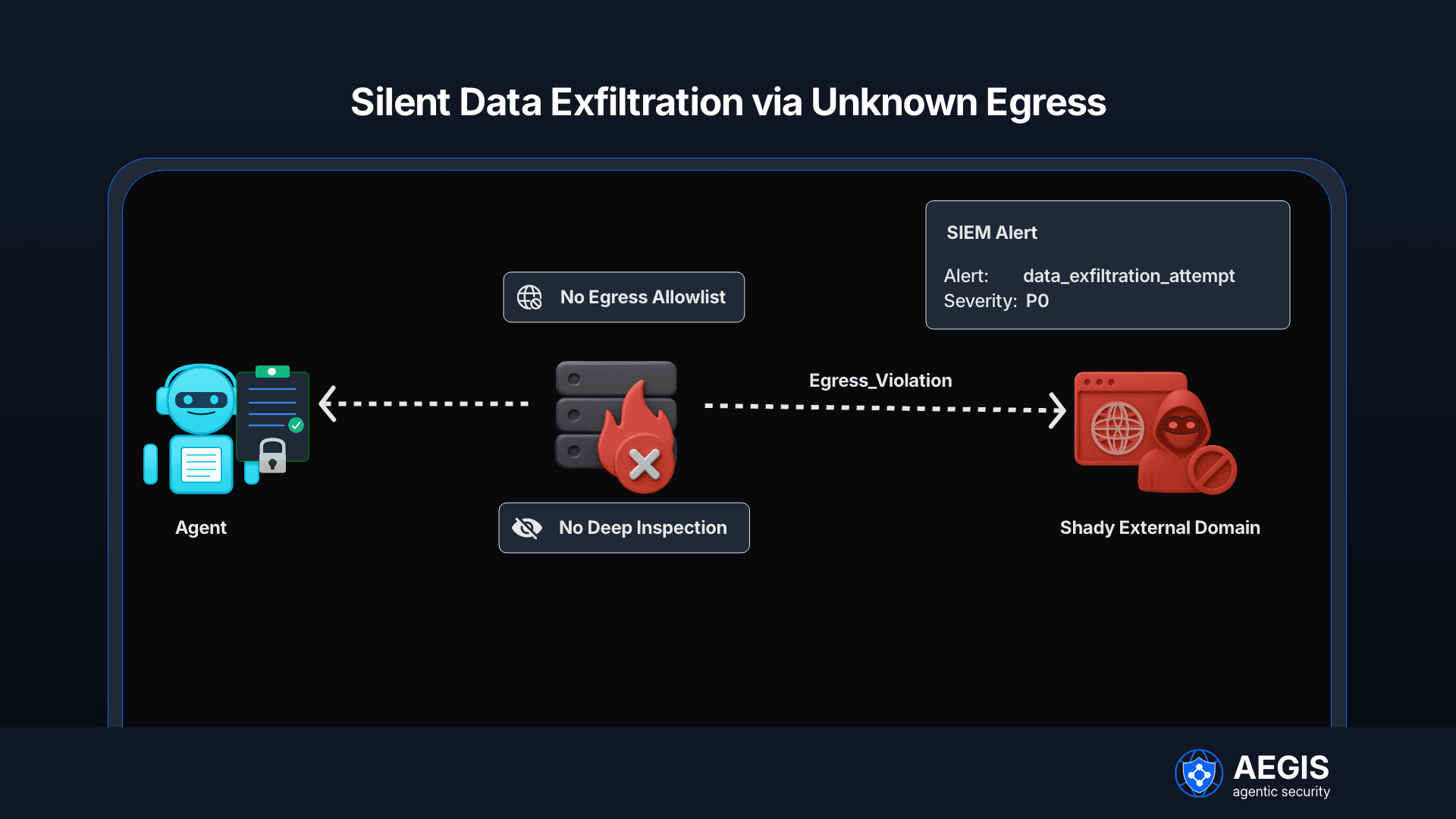
How Aegis implements these patterns
Aegis Gateway implements the primitives required for safe versioning and rollback at three levels: control plane, compiler/bundle store, and data plane.
👉🏻 Optimize agent efficiency without weakening controls
Control Plane
- Policy-as-code model with YAML/JSON policies, schema validation, and approval workflows.
- Policy compiler that emits versioned OPA bundles and signed manifests stored in S3/GCS.
- CI hooks that run unit tests and prepared-query latency checks before allowing promotion.
Bundle Store & Signing
- Bundles are signed (Ed25519) and stored with ETags. Signed manifests include changelog and risk tier.
- The control plane exposes an API to query bundles, request promotions, and trigger rollbacks. The design specifies immutable storage and manifest signing to make rollbacks auditable.
Data Plane & Enforcement
- Aegis’s runtime (sidecar/proxy + authorisation server) hot-reloads bundles and evaluates decisions with OPA prepared queries for sub-20ms P99 goals.
- Shadow mode toggles and canary membership are enforced at the gateway, and telemetry includes policy_version and decision_reason for every span.
- Rollback is an atomic control-plane operation that updates the active manifest and triggers data-plane hot-reload; an audit event is emitted for SOC/Compliance.
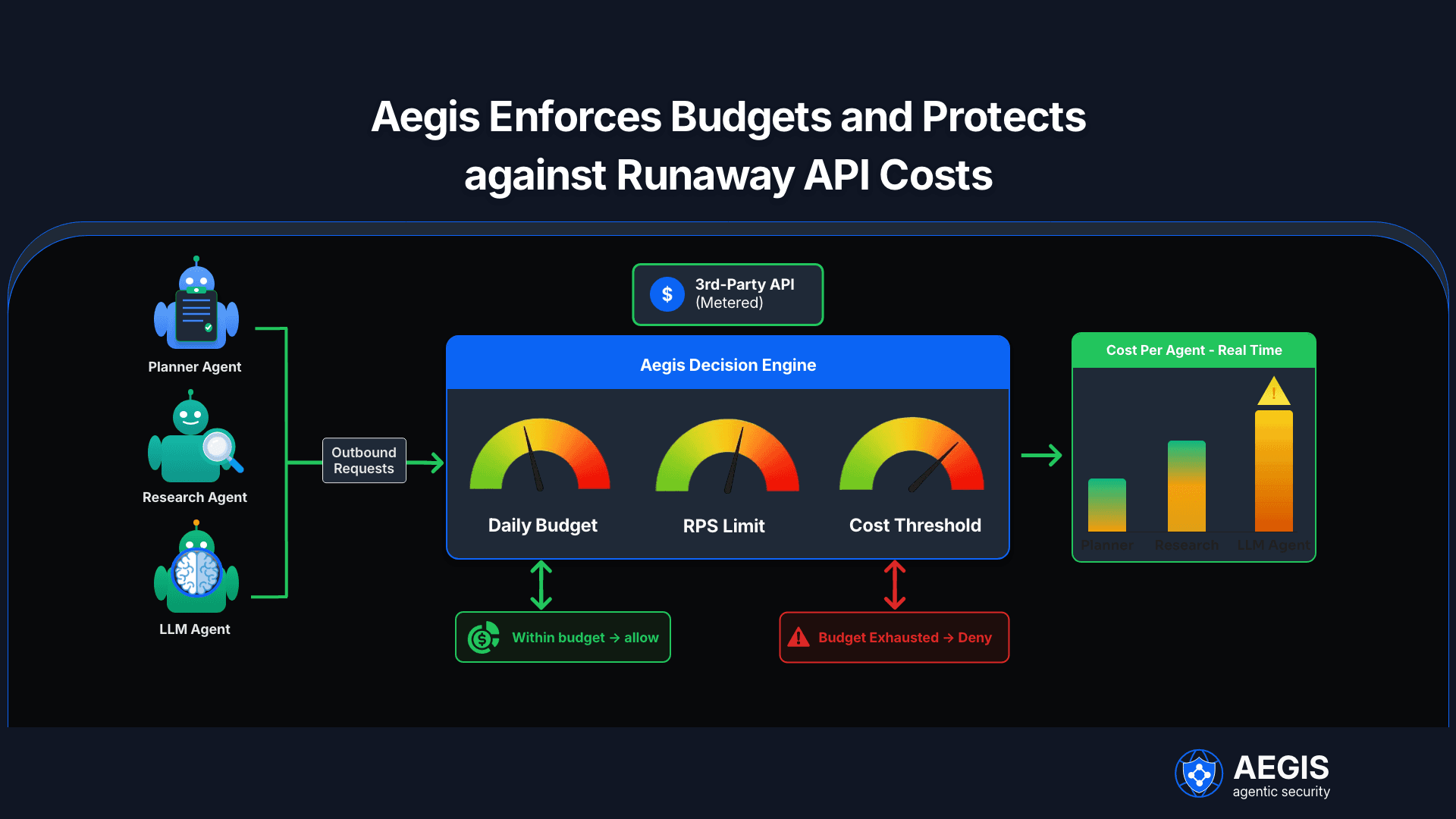
Practical checklist for safe policy change rollouts
- Store policies in Git and enforce policy-as-code.
- Compile and sign bundles; store manifests in versioned object storage.
- Run policy unit tests and prepared-query latency checks in CI.
- Deploy in shadow mode for 7–14 days, collect would-block telemetry.
- Promote via canary percentages with SLO guardrails.
- Provide approval workflows for risk-tiered changes.
- Support automated rollback and emergency freeze.
- Archive old versions but retain signed manifests for compliance.
Resources and further reading
- Open Policy Agent (technical reference for bundles and Rego): https://www.openpolicyagent.org/
- OpenTelemetry (tracing and telemetry best practices): https://opentelemetry.io/
Frequently Asked Questions
Q: How long should I run a policy in shadow mode?
A: Typically 7–14 days to capture representative traffic patterns and rare event distributions. Longer shadow durations for low-frequency but high-risk flows are recommended.
Q: Can rollbacks be automated?
A: Yes. Provide an atomic rollback API that sets the prior manifest as active, triggers data-plane hot-reload, and emits audit events. Automations can trigger rollback if key SLOs breach guardrails.
Q: What metadata should a manifest include?
A: At minimum: policy_version, etag, signature, author, timestamp, risk_tier, ci_status, and canary_percent.
Q: How do we prevent approval overload?
A: Use thresholds inside policies (e.g., only require human approval above a monetary or risk threshold), aggregate similar approvals, and implement per-agent rate limits and budgets.
Q: How do we reconcile control-plane and data-plane drift?
A: Periodic reconciliation jobs should detect mismatches, alert owners, and optionally auto-rollback the data plane to the last known-good manifest.
Q: Are there compliance benefits to signed bundles?
A: Yes. Signed manifests and tamper-resistant storage provide non-repudiable evidence of what was deployed and when — useful for audits.
Closing
Policy versioning, shadowing, canary promotion, and automated rollback together form an operational foundation that reduces risk and makes agentic deployments sustainable. Aegis’s architecture aligns these patterns into a practical product model — signed bundles, CI-validated manifests, runtime shadowing, canary promotions, and atomic rollback — making safe, auditable policy change rollouts achievable for regulated enterprises. For a deeper look at architecture and product details, see the Aegis solution brief and design notes.