
Continuous Delivery for Agent Policies: CI/CD Practices
Practical guide to policy-as-code CI/CD for agentic AI: testing, shadow runs, canaries, rollback and Aegis implementation.
Aegis: Policy-as-Code CI/CD for Agentic AI — Safe, Auditable Policy Delivery
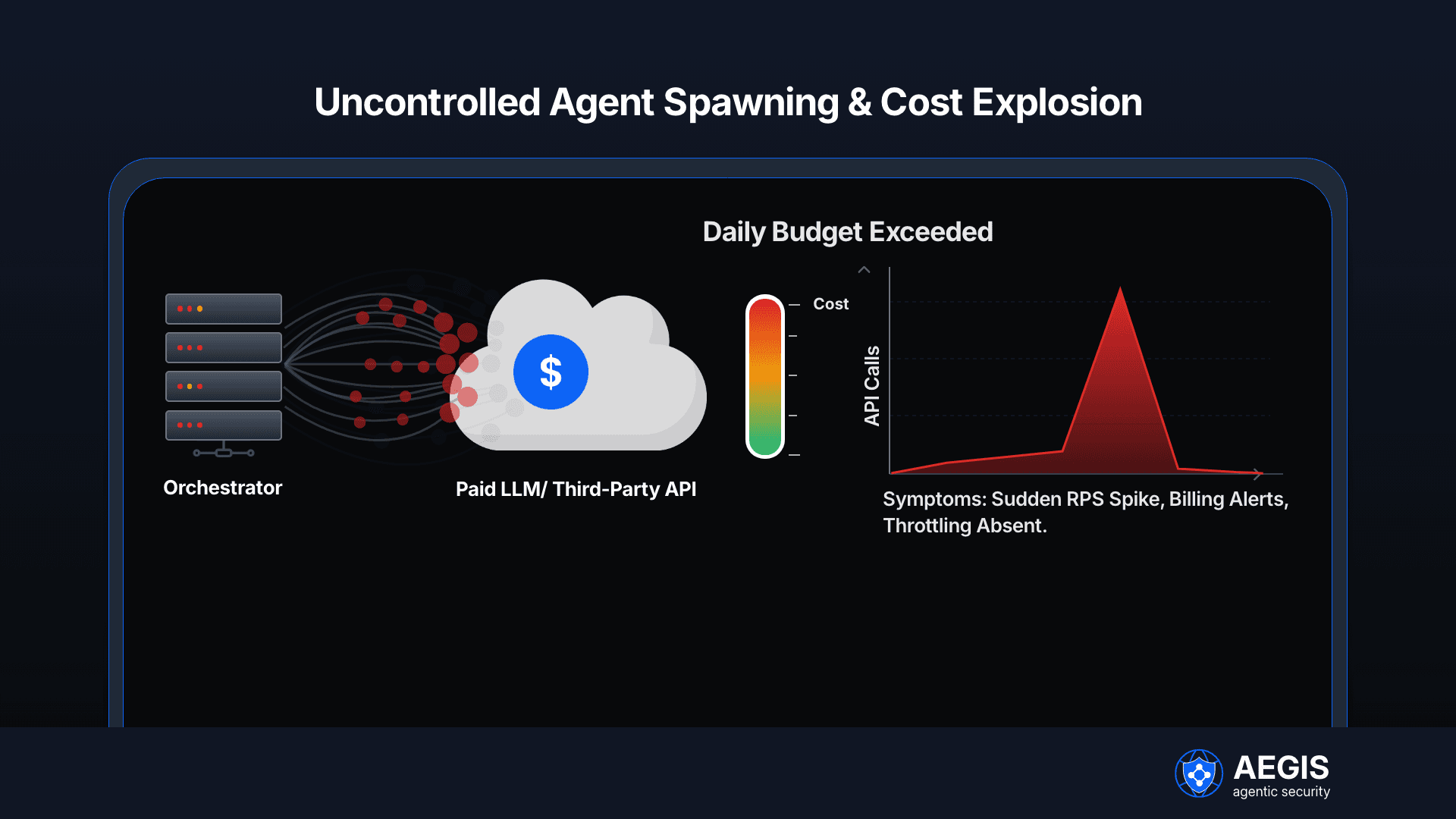
Agentic AI brings automation and speed — and new, high-impact risk vectors. Policies are the guardrails that prevent autonomous agents from taking unsafe actions (unauthorized payments, data exfiltration, runaway costs). But policies are also code: they must be tested, versioned, staged and observable. This article lays out a practical, operational policy-as-code lifecycle for agentic AI, CI/CD patterns and Rego test suites, pragmatic canary & shadow rollout templates, rollback strategies, and how Aegis implements these controls in production. Where helpful, I reference Aegis technical details and operational best practices from the product brief.
Policy-as-code lifecycle
The policy lifecycle maps directly onto modern SDLC patterns: author → lint → unit test → simulate → staged rollout → monitoring & rollback. For agentic AI this lifecycle must include rich input modeling (agent identity, tool, parameters, call chain) and runtime modes (shadow/dry-run, canary, enforce). Aegis treats policies as first-class code artifacts: a schema-validated YAML → compiled OPA bundle → versioned manifest stored in a bundle store with hot reload and rollback APIs.
👉🏻 Deploy policy changes confidently with built-in versioning and instant rollback controls
Practical lifecycle steps
- Author: YAML/JSON policy with strong schema (agent, allowed_tools, actions, conditions, budgets).
- Lint: schema validation, style linters, Rego formatting.
- Unit tests: Rego unit tests against representative input fixtures.
- Simulation: Dry-run against recorded traces / synthetic traffic.
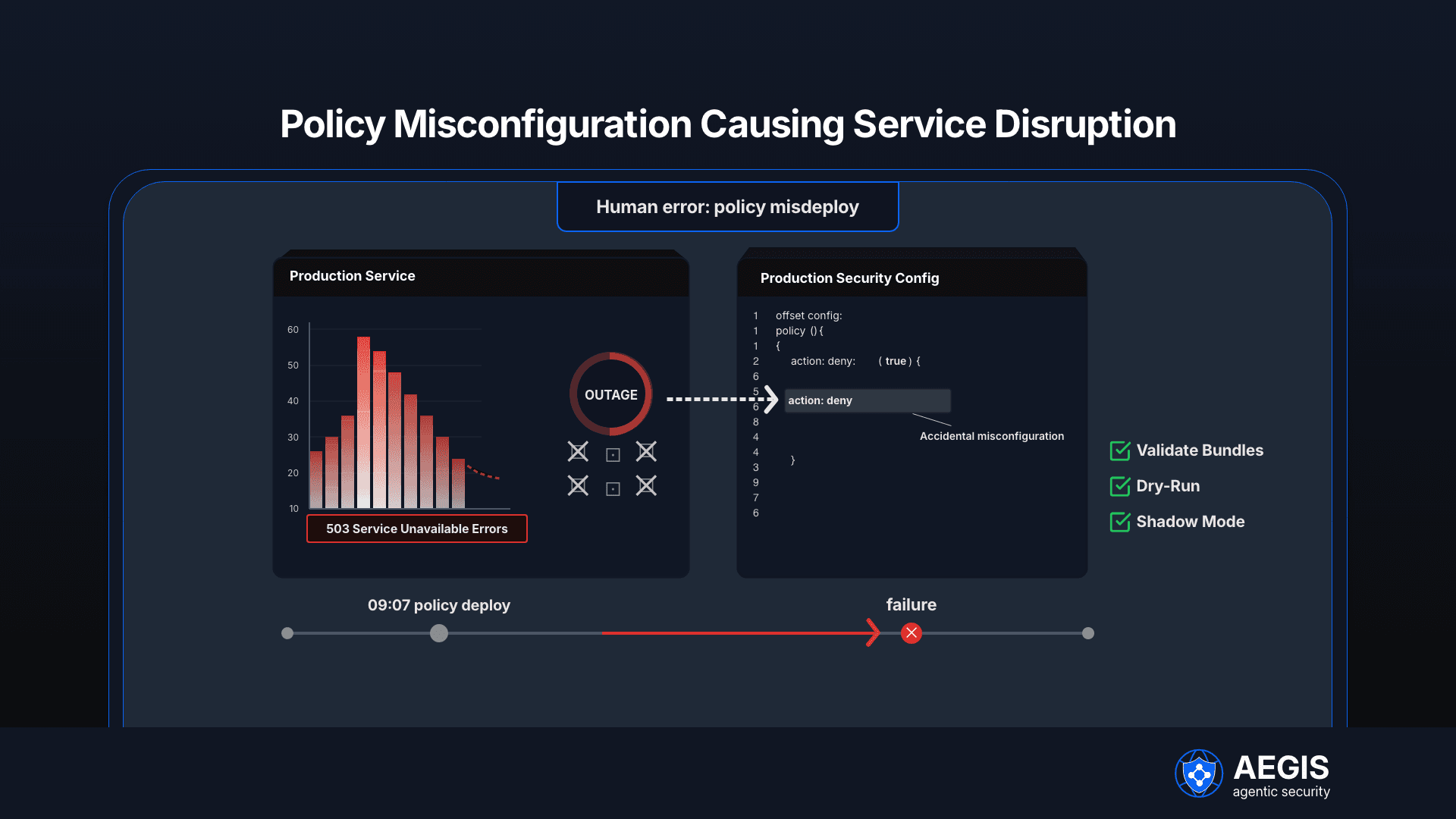
- Shadow (7 days recommended): collect would-deny metrics before flipping enforcement. (Aegis advocates a 7-day shadow period for accurate baseline metrics.)
- Canary & rollout: low-risk agents → staged promotion → global enforcement.
- Audit & sign: immutable manifests and policy signing for tamper evidence.
Table 1 — Policy lifecycle artifact examples
Stage | Artifact | Tooling / Check |
Author | YAML policy | Schema validation (JSON schema) |
Lint | formated Rego & YAML | rego fmt, schema linters |
Unit test | Rego tests | opa test with fixtures |
Simulation | Dry-run results | Sample traces, would-deny counts |
Rollout | Bundle vX | Signed manifest, hot reload |
Audit | Signed logs | OpenTelemetry spans + signed manifests |
CI patterns and test suites for Rego
Embed policy checks directly into your CI pipeline so a PR never promotes a bad policy to production.
Recommended CI job steps (example)
- PR → run YAML/JSON schema validation.
- Lint Rego / check formatting.
- Run Rego unit tests (opa test) with representative inputs and negative cases.
- Performance check: run prepared query profiling to ensure predicates are indexed and queries complete under budget.
- Dry-run simulation: feed a sample trace set (real traces or synthetic) and collect would-deny metrics.
- Produce an artefact: compiled OPA bundle + signed manifest → push to bundle store.
- Promote to staging shadow → monitor.
Example GitHub Actions snippet (conceptual)
jobs:
test-policy:
runs-on: ubuntu-latest
steps:
- checkout
- run: npm ci && npm test # linting step
- run: opa test ./policy -v
- run: ./simulate-dryrun.sh traces/2025-10-*.json
- run: ./compile-and-sign.sh --out bundle-v${{ github.sha }}
- uses: actions/upload-artifact@v3
with: name: policy-bundle
Rego test patterns
- Positive/negative fixtures for each rule.
- Edge cases: missing headers, truncated parameters, parent-agent chaining absent.
- Performance fixtures: large JSON inputs to validate prepared queries.
Why performance tests matter: runtime evaluation adds latency; use prepared queries and caching. OPA prepared queries and WASM can keep P99 in the low-tens of ms when bundles & caches are tuned. For enterprise-scale agentic traffic, aim for P99 ≤ 20 ms for decision calls. External sources recommend similar OPA hardening patterns. (CNCF)
👉🏻 Operationalize security with scalable policy-as-code frameworks
Canary and shadow rollout templates
Shadow runs and canaries are the safest path to enforcement.
Shadow template (recommended)
- Duration: 7 days (collect weekday + weekend traffic).
- Scope: all agents in non-production tenant; include a 1% sample of production traffic.
- Metrics: would-deny rate, top blocked agents, top rule triggers, false positive signals.
- Output: remediation backlog (regex relaxed, condition widened), updated unit tests.
Canary policy template
- Phase 0: Shadow (7d) — baseline.
- Phase 1: Canary low-risk agents (5–10 agents) in staging tenant — monitor 48–72 hours.
- Phase 2: Canary medium-risk agents (10–50) — monitor 3–5 days.
- Phase 3: Global enforcement — flip to enforce for all agents.
Automation considerations
- Use rollout orchestration in the control plane: auto-promote when "would-deny" < threshold for X hours.
- Attach automatic rollback: if denied-error rate spikes > threshold or approval backlog increases beyond capacity, rollback bundle to previous signed manifest.
Table 2 — Canary thresholds (example)
Phase | Traffic sample | Would-deny threshold | Monitoring window |
Shadow | 100% (non-blocking) | — | 7 days |
Canary 1 | 1% prod / 5 agents | < 0.1% | 48 hours |
Canary 2 | 5% prod / 50 agents | < 0.5% | 3 days |
Global | 100% prod | < 1% (alert) | ongoing |
Rollback strategies and metrics to watch
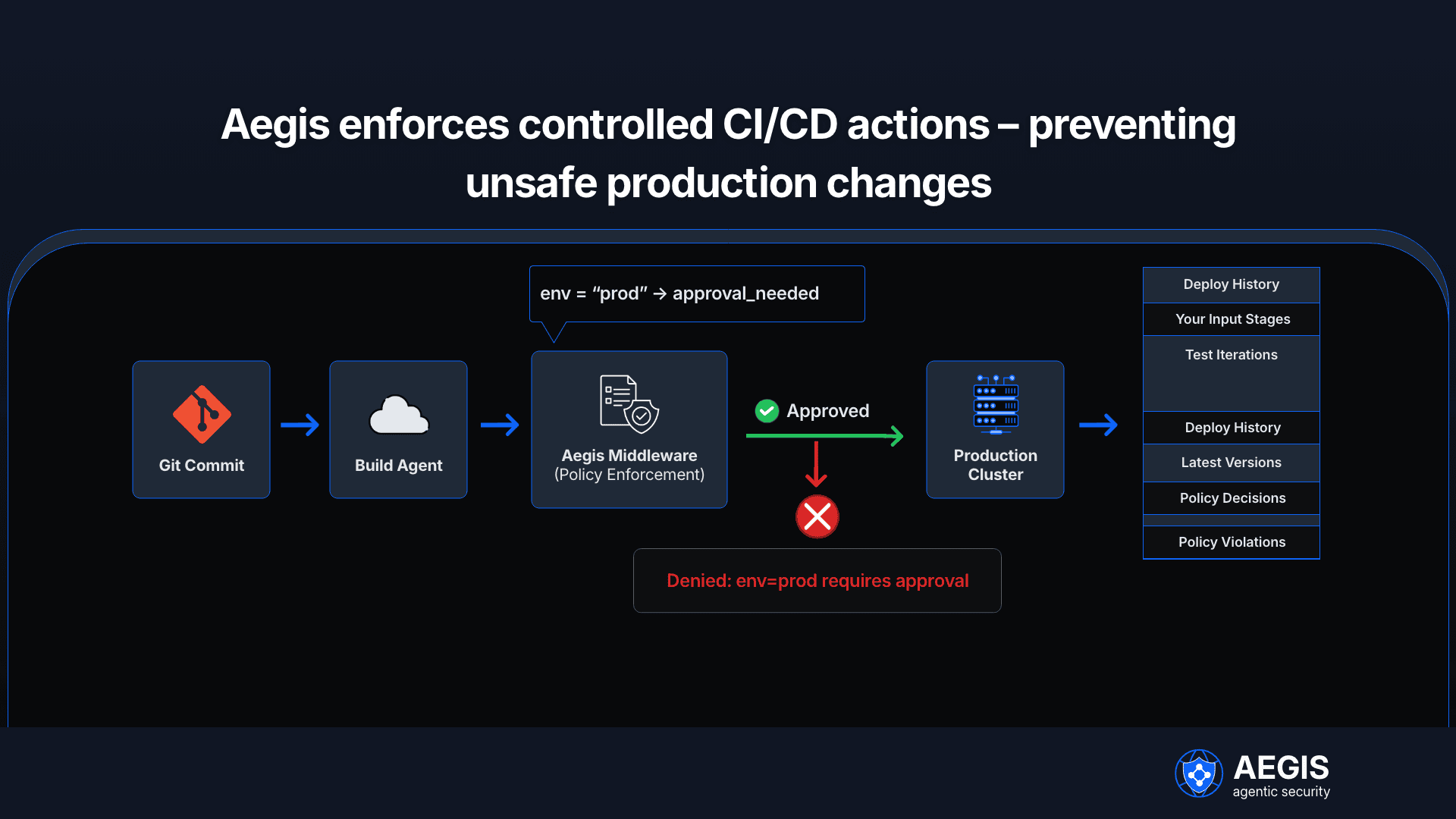
Rollback must be automated and auditable. Aegis provides hot-reload and rollback APIs and stores bundles with ETags and signed manifests enabling fast reversion.
Rollback triggers (examples)
- Latency spike: decision P99 increases > 2x baseline.
- Functional impact: user-facing error rates increase beyond SLA threshold.
- Approval overload: approval_needed queue grows unprocessed (alert-driven).
- Business metric decline: key transaction volume drops post-policy.
Automated rollback pattern
- Alerting system detects trigger (Grafana/Prometheus).
- Control plane calls rollback API → deploy previous signed bundle.
- Emit audit span with rollback reason and operator ID.
- Create a post-mortem ticket and link traces/affected agents.
Key metrics to monitor
- Would-deny rate (shadow)
- Block rate (enforce)
- Decision latency (p50/p95/p99)
- Approval queue length & mean time to approve
- Top offending policies and parameter distributions
- Per-agent cost & budget consumption (FinOps)
How Aegis fits
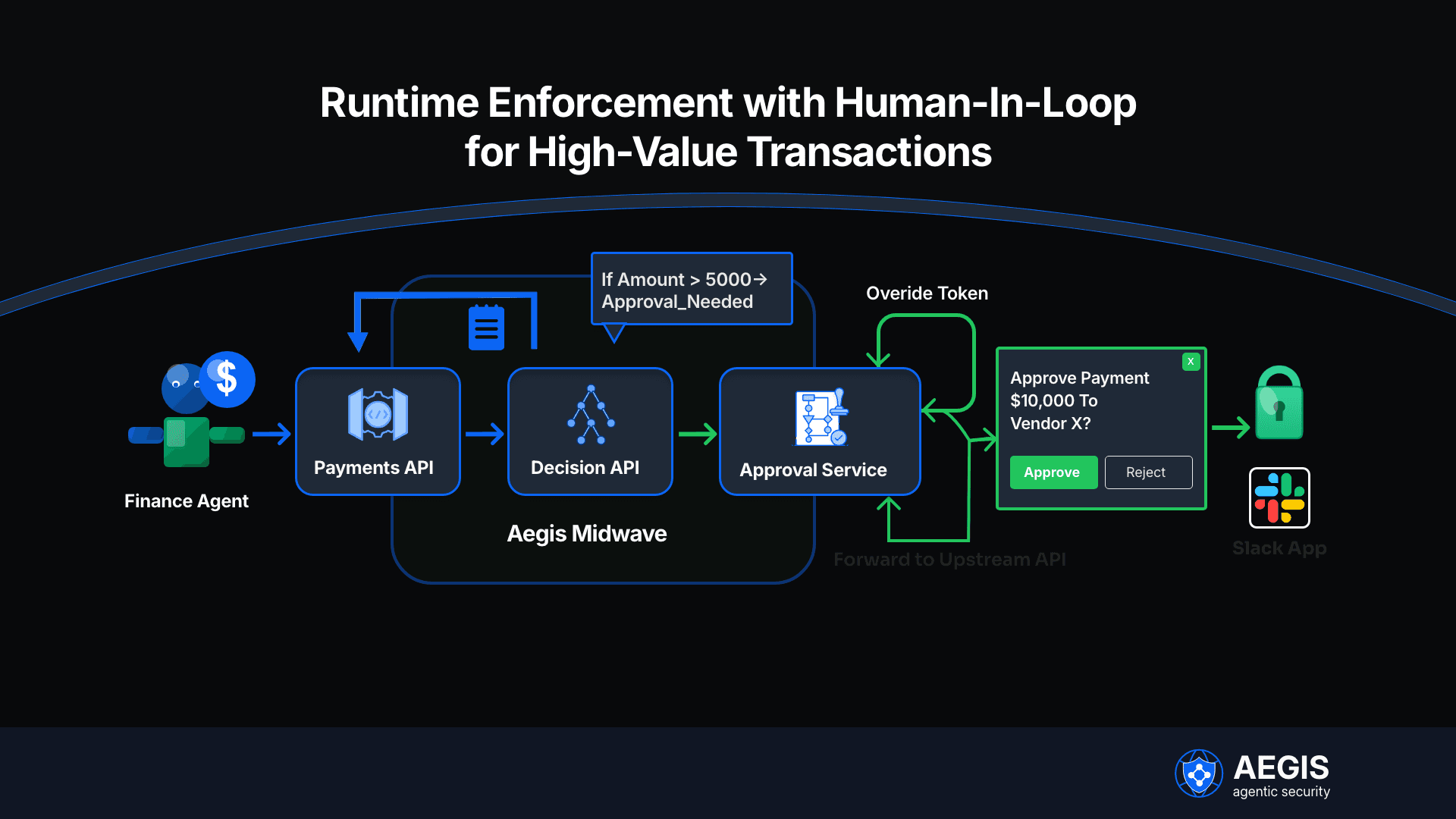
Aegis implements the lifecycle and controls above as an integrated policy compiler + runtime gateway. It compiles YAML/JSON policies to OPA bundles, stores versioned bundles in a bundle store, supports dry-run/shadow modes, provides hot reload and rollback APIs, and emits OpenTelemetry spans for every decision — all designed for enterprise environments. The product brief details a sidecar/forward-proxy architecture with an external authorisation server and prepared-query OPA evaluator for low latency.
👉🏻 Eliminate policy drift with a unified control plane for all agents
Operational highlights (Aegis)
- Policy compiler & bundle store: immutable, signed manifests and ETags for integrity.
- Shadow mode + 7-day recommendation: observe would-deny events before enforce.
- Canary & staged promotion APIs: integrate with CI/CD to push bundles from PR → lint → unit test → dry-run → staging shadow → monitor → enforce.
- Runtime enforcement: allow/deny/sanitize/approval_needed decisions and standardized error responses.
- Observability: OpenTelemetry spans, Grafana dashboards and SIEM-ready logs for audit and compliance.
Aegis is built to integrate with existing orchestrators and developer workflows — drop-in middleware for LangChain/LangGraph and CLI/SDK tooling that maps cleanly into GitOps pipelines.
Practical operational checklist (final)
- CI: require schema lint, opa test, performance gating and signed bundle production.
- Shadow: run for 7 days by default; collect parameter histograms.
- Canary: progressive scope with automated rollback thresholds.
- Auditing: sign manifests, emit OTel spans with policy_version & decision_reason.
- Governance: automate policy approval flows for production-only rule changes.
- Safety nets: budget & rate limits per agent; fail-closed for writes; configurable fail-open for reads.
External references & further reading (examples used in this article)
- OPA best practices and secure deployment guidance. (CNCF)
- Industry trend reports on agentic AI growth and enterprise adoption. (Capgemini)
Frequently Asked Questions
Q: How long should I run shadow mode?
A: Minimum 7 days is recommended to capture weekday + weekend behavior and rare edge cases. Aegis documents and practice notes support a 7-day default.
Q: Can Rego tests live in the same repo as policy YAML?
A: Yes — store Rego unit tests and fixtures alongside policy YAML to ensure PRs validate both semantics and expected inputs.
Q: What triggers an automated rollback?
A: Common triggers are decision latency spikes, surge in blocked legitimate traffic, or approval queue saturation. Rollbacks should be auditable and signed.
Q: How do we prevent approval fatigue?
A: Use thresholds in policies to limit approval_needed to genuinely high-risk actions and aggregate approval requests. Use canaries to tune thresholds before wide enforcement.
Closing note
Policy-as-code for agentic AI is not optional; it is the operational requirement for safe automation at scale. Build policies as code, test them in CI, simulate with real traces, and promote with canaries + signed bundles. Aegis implements these patterns end-to-end — compiler, bundle store, runtime enforcement, and observability — enabling enterprises to run agentic workflows with predictable safety and auditable governance.