
Role-Based Access Control (RBAC) for AI Agents
Learn how Aegis brings policy-driven RBAC to AI agents with scoped permissions, runtime enforcement, and audit-ready control.
%2520for%2520AI%2520Agents.png&w=3840&q=75)
RBAC for AI Agents: Policy-Driven Role Control in the Age of Agentic AI
As enterprises adopt agentic AI architectures, traditional access control models are being stress-tested. Agents can now invoke APIs, process payments, modify infrastructure, or move sensitive data across domains—autonomously. In this context, Role-Based Access Control (RBAC) must evolve to handle dynamic, parameter-aware, and multi-tenant scenarios.
This article explores the emerging need for fine-grained RBAC for AI agents, the limitations of legacy IAM systems, and how Aegis, Aegissecurity Agentic AI Security platform, provides runtime enforcement through short-lived identity tokens, policy-as-code, and contextual approval gates.
1. Why Classic RBAC Breaks Down in Multi-Agent AI Systems
1.1. The Identity Problem in Agentic AI
AI agents today act as semi-autonomous entities: a DevOps agent may deploy infrastructure; a Finance agent may issue payments; a Support agent may access CRM data. In traditional IAM, permissions are scoped to users or service accounts, not autonomous models. As a result, agents often inherit broad, static privileges, violating the principle of least privilege.
Surveys from Architecture & Governance Magazine (2024) show that 54% of enterprises cite “security and compliance risk” as the primary barrier to agent adoption. Without clear identity boundaries, it’s impossible to determine who initiated an action—or whether it was policy-approved.
1.2. Why Coarse-Grained RBAC Fails
Classic RBAC assigns fixed roles (admin, operator, viewer). For AI agents, this isn’t enough. Example:
- A Planner agent shouldn’t trigger production deployments.
- A Finance agent can create payments but only within predefined limits.
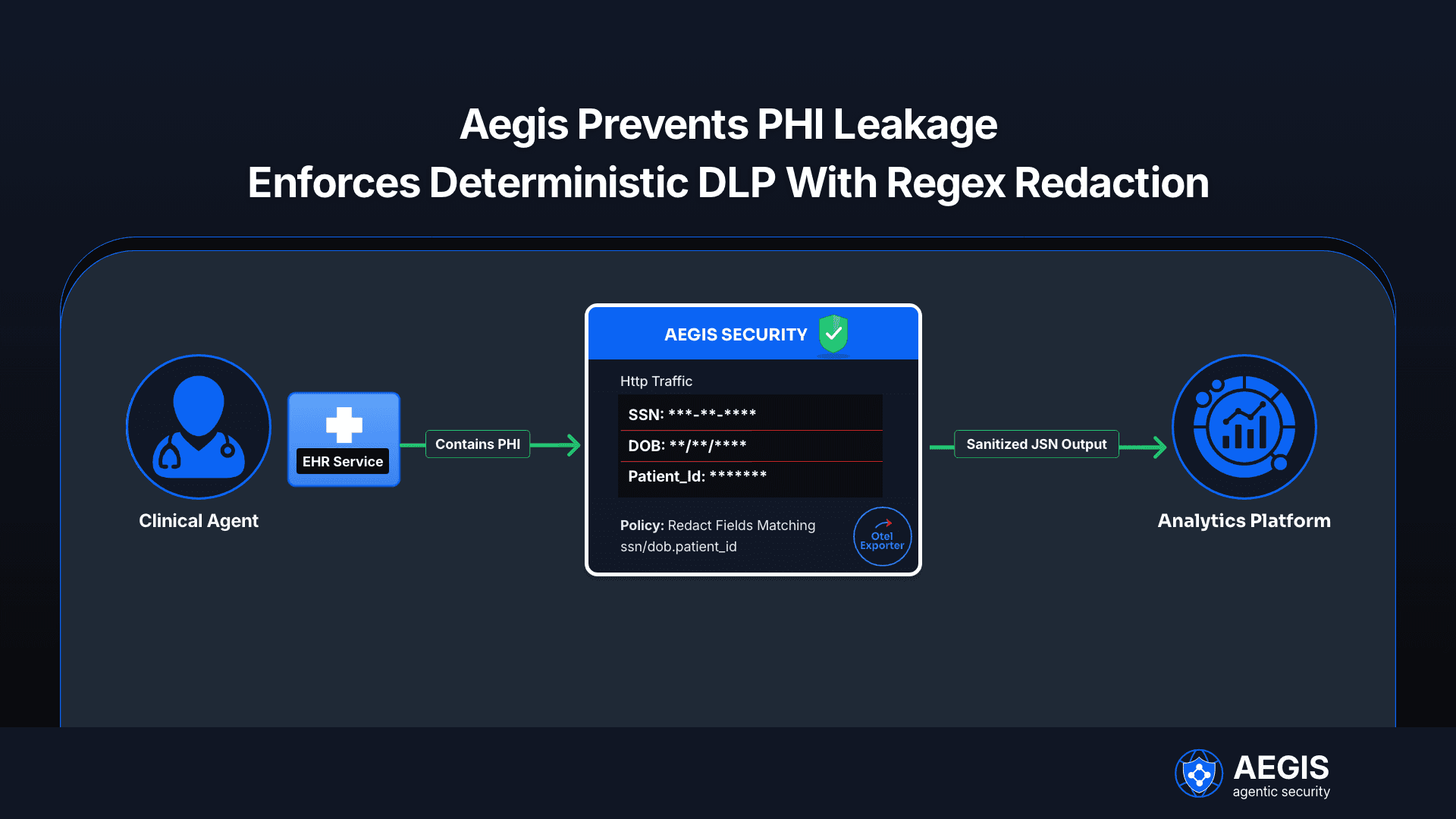
- A Clinical agent can read patient records but never export them externally.
Legacy RBAC can’t express parameter-level rules, such as amount <= 5000 or destination == internal-ehr.myorg. It also lacks contextual awareness—e.g., requiring human approval for sensitive operations.
Aegis addresses this by combining RBAC with policy-as-code for conditional enforcement, bringing runtime intelligence into access control.
👉🏻 Protect sensitive data and prevent privilege misuse in agent systems
2. Evolving RBAC: From Roles to Runtime Context
2.1. Hybrid RBAC + ABAC Model
Modern agent security blends Role-Based Access Control (RBAC) for coarse boundaries and Attribute-Based Access Control (ABAC) for parameter-level constraints.
Policies may define both:
Control Type | Example Rule | Enforcement Target |
Role-based | agent_role == finance | Finance API access |
Attribute-based | amount <= 5000 | Payment parameter validation |
Contextual | approval_required == true | Human gate for high-value actions |
This hybrid model enables conditional logic—allowing actions only when roles, attributes, and contexts align.
2.2. Agent Identity Lifecycle
Security teams must treat agents as first-class identities. Each agent requires a defined lifecycle:
Phase | Description | Example |
Registration | Agent identity creation with org/tenant metadata | agent_id=finance-001 |
Rotation | Regular key/token rotation to reduce exposure | Token TTL = 1 hour |
Revocation | Immediate deactivation if compromised | Policy blocks on revoked IDs |
Audit | Continuous validation and attestation | “Who approved this elevation?” |
3. Introducing Aegis: Role Enforcement for Agentic AI
3.1. Identity-Aware Enforcement
Aegis acts as a runtime policy and observability gateway for multi-agent AI architectures such as LangGraph, AgentKit, or CrewAI. It issues short-lived JWTs per agent, embedding claims like org, tenant, agent_id, role, and scopes. Each call passes through the Aegis Gateway, which evaluates:
- Who is making the request?
- What tool and parameters are being invoked?
- Does the policy allow this action?
If conditions fail, Aegis returns a PolicyViolation error—instantly blocking unauthorized or risky agent behavior.
👉🏻 Strengthen accountability with clear separation of agent responsibilities
3.2. Policy-as-Code
Policies are declared in YAML or JSON, compiled to Open Policy Agent (OPA) bundles, and hot-reloaded without downtime. Example policy snippet:
agent: finance-agent
allowed_tools:
- name: stripe-payments
actions:
- create_payment
conditions:
max_amount: 5000
approval_needed_if: "amount > 5000"
This provides runtime flexibility—security engineers can update limits, add new roles, or modify approval gates without code redeployment.
3.3. Enforcement Flow
Aegis enforces policy decisions at the agent↔tool boundary:
- Agent sends a request (e.g., create_payment).
- Gateway verifies JWT and extracts metadata.
- Policy engine (OPA) checks conditions and returns a verdict:
- allow
- deny
- approval_needed (triggers Slack/MS Teams approval)
- Gateway logs decision and emits OpenTelemetry spans for auditing.
3.4. Observability and Auditability
Every decision—approved or denied—is logged with:
- Agent ID, role, policy version
- Decision reason
- Timestamp and approver identity
Audit logs integrate with SIEMs for continuous compliance. Security teams gain dashboards showing top denied actions, stale tokens, and role misuse patterns.
4. Practical RBAC Use Cases for AI Agents
4.1. FinTech: Payment Enforcement
In finance, least privilege enforcement prevents agents from overstepping authority.
Example: a Planner agent attempts to coerce the Finance agent to send $50,000.
Aegis denies it since the policy caps payments at $5,000 unless an approved override token is presented.
4.2. Healthcare: PII Protection
Aegis intercepts data exfiltration attempts by ensuring EHR access policies only allow internal endpoints. Sensitive identifiers like SSNs are redacted via deterministic DLP before transmission.
4.3. SaaS: Cost Governance
By enforcing per-agent budgets and rate limits, Aegis prevents runaway API calls and manages spend visibility for FinOps teams. Dashboards display budget exhaustion alerts and top costly agents.
4.4. DevOps: Controlled Automation
In CI/CD pipelines, Aegis ensures that deployment agents cannot modify production unless explicitly elevated via approval. Parameter validation enforces image digest and environment whitelists.
4.5. MSSP: Multi-Tenant Role Isolation
For managed security providers, Aegis enforces tenant-scoped policies, producing tamper-resistant traces (policy version, signature, agent identity) for SOC reviews.
Industry | Agent Role | Key Policy Feature | Result |
FinTech | Finance Agent | Amount ceilings & approvals | Prevents fraud |
Healthcare | Clinical Agent | DLP + EHR domain control | Blocks PHI leaks |
SaaS | LLM Agent | Budget/rate enforcement | Stops cost overflow |
DevOps | Deploy Manager | Role + environment gates | Prevents accidental prod deploys |
MSSP | SOC Agent | Tenant isolation | Ensures compliance integrity |
5. The Mechanics: Inside Aegis RBAC Enforcement
5.1. Token Model
Each AI agent receives a short-lived JWT (15–60 minutes) containing:
- org, tenant, agent_id, role, scopes, exp, and jti claims
- Signed with Ed25519
- Validated at runtime via JWKS endpoint
- Replay prevention via Redis-stored jti
Aegis’s token exchange flow supports cross-orchestrator handoffs, ensuring consistent trust even across multiple AI frameworks.
5.2. Role Hierarchies and Temporary Elevation
Security teams can define hierarchies (e.g., viewer < operator < manager).
Temporary role elevation—called break-glass mode—is time-boxed and triggers extra auditing.
5.3. Monitoring and Compliance Metrics
Aegis continuously measures RBAC hygiene through role audit KPIs:
KPI | Description | Target |
Privileged Agents | Count of agents with elevated roles | < 5% |
Overdue Revocations | Expired tokens not yet revoked | 0 |
Policy Coverage | Tools under enforced policies | ≥ 80% |
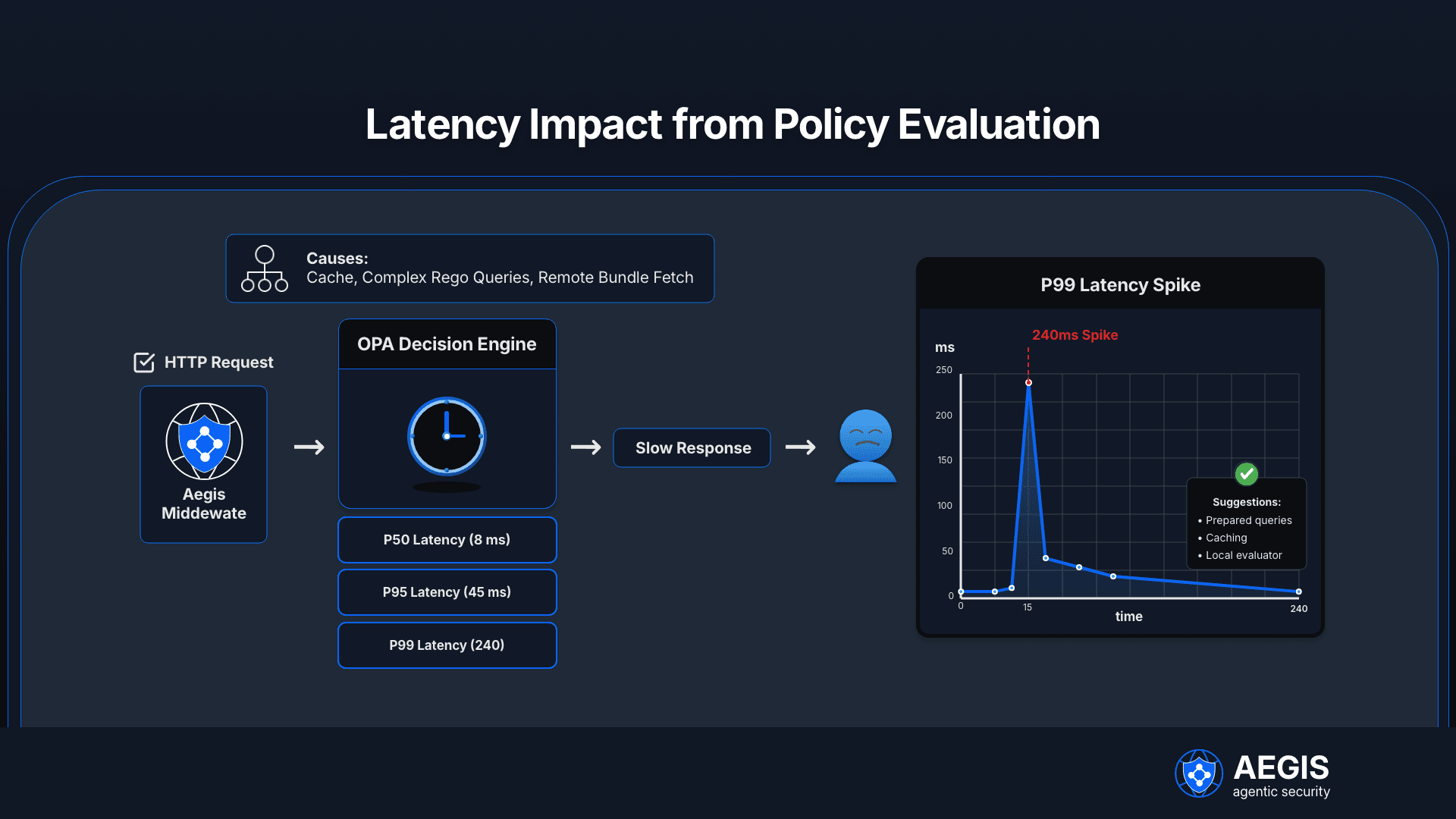
Avg Enforcement Latency | Added overhead per request | < 10 ms |
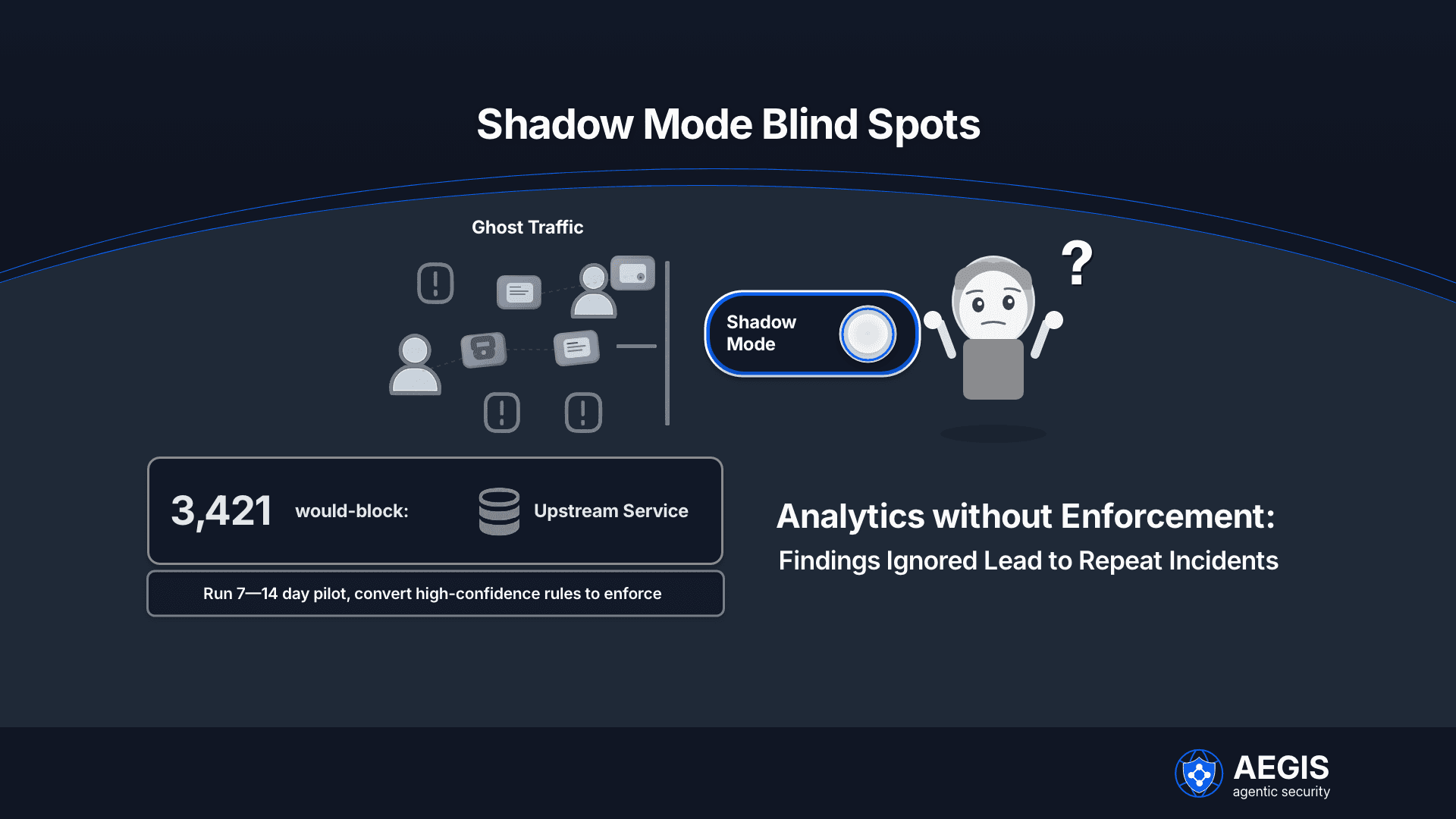
Shadow Mode Drift | % of unenforced would-block events | < 2% |
These metrics form part of compliance evidence—demonstrating least privilege and continuous enforcement under frameworks like SOC 2 or ISO 27001.
-1.png&w=3840&q=75)
6. Policy-as-Code: Shifting RBAC Left
6.1. Declarative Policy Authoring
Security engineers define RBAC+ABAC logic as code—checked into Git, peer-reviewed, and version-controlled.
This “Shift-Left Security” approach ensures roles and conditions evolve alongside applications.
6.2. Automation & Least-Privilege Discovery
Aegis automatically discovers used roles and unused permissions, recommending tighter mappings.
It also generates a least-privilege test matrix, verifying that agents can only access required resources.
6.3. Human-in-the-Loop Approvals
For high-risk actions (e.g., exceeding budget or production deployment), Aegis routes approval requests to Slack or Microsoft Teams. Once approved, a one-time override token allows the retried action.
7. Migration to Fine-Grained RBAC + Policy
Migrating from coarse IAM to policy-driven RBAC involves structured steps:
Step | Action | Outcome |
1 | Inventory all agent roles & tools | Baseline access map |
2 | Define coarse RBAC roles | Initial containment |
3 | Add policy-as-code for conditions | Parameter safety |
4 | Integrate Aegis Gateway | Runtime enforcement |
5 | Enable telemetry & shadow mode | Observe before enforce |
6 | Gradually enable enforcement | Safe rollout |
This process ensures minimal disruption while increasing precision and auditability across multi-agent systems.
8. Future of RBAC for AI Agents
The future of AI governance lies in runtime context-aware authorization. As autonomous agents gain more control, static IAM models will continue to fail at expressing intent, accountability, and safe automation boundaries.
Aegis bridges this gap—offering identity-first control, real-time observability, and compliance-grade traceability for multi-agent ecosystems.
👉🏻 Build trust boundaries that continuously validate agent behavior
Frequently Asked Questions
1. Why can’t traditional IAM systems handle AI agents?
IAM systems manage human users and static service accounts. Agents require dynamic, contextual enforcement on every tool call—something legacy IAM lacks.
2. What’s unique about Aegis’s RBAC model?
Aegis combines RBAC with policy-as-code and runtime telemetry, ensuring that actions are authorized at both role and parameter levels.
3. How does Aegis prevent privilege escalation between agents?
Aegis inspects the parent_agent_id header to validate context, blocking lateral coercion attempts such as a Planner agent tricking a Finance agent into executing unauthorized actions.
4. Can Aegis integrate with existing orchestrators like LangGraph or AgentKit?
Yes. Aegis provides lightweight middleware and sidecar proxies compatible with most orchestrators, requiring minimal code changes.
5. What happens if Aegis is unavailable?
Aegis supports configurable fail modes—fail closed for critical actions and fail open for low-risk reads—ensuring continuity without sacrificing safety.
6. How does Aegis support multi-tenant environments?
Each tenant’s policies and tokens are cryptographically scoped, preventing cross-tenant interference or data leakage.