Addressing Privacy and Privilege Compromise in AI Agents
Practical guide to preventing agent privilege escalation and enforcing per-agent privacy controls with runtime policy, DLP, and auditability.
Aegis: Agent Privacy & Privilege Controls
Introduction — Agentic AI is moving fast into production, but the security model for autonomous agents is not the same as for human users. Agents need short-lived identities, per-field policy checks, DLP, and tamper-proof audit trails. This post explains why privacy and privilege are different with agents, the technical controls you must deploy, compliance proofs auditors will expect, and how Aegis — as a runtime policy & observability gateway — implements these controls in practice. References and implementation notes are included for security engineers and DevOps leads.
Why privilege and privacy are different with agents
When we talk about "privilege" for humans, we rely on IAM, MFA, approved delegations and periodic reviews. Agents introduce new dimensions:
Agent identity lifecycle
Agents are ephemeral, may spawn programmatically, and often chain calls to other agents or tools. Treat each agent as a distinct principal: register it, issue short-lived credentials, and bind a minimal scope. Aegis assumes each agent has a lifecycle: registration → short-lived token issuance → active enforcement → revocation/audit. The control point is the agent↔tool boundary where every call can be inspected and decided.
Practical implication: do not reuse human user tokens for agents; instead mint per-agent JWTs with scoped claims and short expiry, and ensure revocation/rotation is automated. Aegis issues per-agent JWTs with agent id, tenant, scopes and expiry and uses JWKS for verification.
👉🏻 Limit risk exposure with least-privilege access controls
Technical controls
This section details the runtime controls that directly prevent escalation and exfiltration.
Token claims, scope-limited tokens and JIT access
Short-lived tokens must include agent_id, tenant_id, allowed_tools, and optional parameter constraints as claims. Tokens should be minted by a control plane and validated by the runtime gateway. Just-in-time issuance reduces standing privilege and ensures a broken agent cannot reuse broad credentials. Aegis issues scoped JWTs and supports jti replay protection and Ed25519 signatures for attestation.
Table: Example token claims and enforcement actions
Claim | Example value | Enforcement use |
agent_id | finance-agent-42 | Map to policy bundle; telemetry tag. |
allowed_tools | stripe:create_payment | Gate which tool endpoints are allowed. |
max_amount | 5000 | Deny or approval_needed if exceeded. |
regions | eu-west-1 | Enforce data-residency routing. |
DLP & parameter redaction
Parameter-level controls are necessary because agents forward natural language into structured API fields. Implement deterministic DLP (regex for SSNs, card numbers), contextual filters (deny export flags), and conditional sanitizers that redact sensitive fields before egress. Aegis performs deterministic DLP and returns a sanitize decision when needed; it can redact payload fields or return approval_needed.
Runtime policy evaluation (OPA + prepared queries)
Use a high-performance policy engine with prepared queries and caching (e.g., compile policy bundles to OPA or WASM). Evaluate agent_id, tool, parameters, and chain context; return allow/deny/sanitize/approval_needed. The prepared-query approach keeps P99 latency low (target ≤ 20 ms). See OPA docs for policy-as-code patterns. https://openpolicyagent.org/docs/ (Open Policy Agent)
Table: Policy decision outcomes and actions
Decision | Action taken by gateway | Operator visibility |
allow | Proxy forwards call; emit OTel span | trace + logs |
deny | Block; return PolicyViolation | policy version + reason |
sanitize | Redact fields; forward | sanitized payload + audit |
approval_needed | Pause and post request to approvers | approval id + retry token |
Aegis as the practical enforcement layer (≈500 words — solution focus)
- Aegis is designed as a policy & observability fabric sitting between orchestrators (LangGraph, AgentKit, etc.) and downstream tools. It is a lightweight runtime gateway that enforces least-privilege, inspects parameters, and produces auditable telemetry for SOC and compliance teams. Key Aegis capabilities relevant to agent privacy and privilege:
- Agent-scoped identities and tokens — Aegis mints short-lived JWTs that encode tenant, agent, and scopes; tokens are signed and verifiable via JWKS. This ensures provenance for every request and supports just-in-time access patterns that reduce standing privilege.
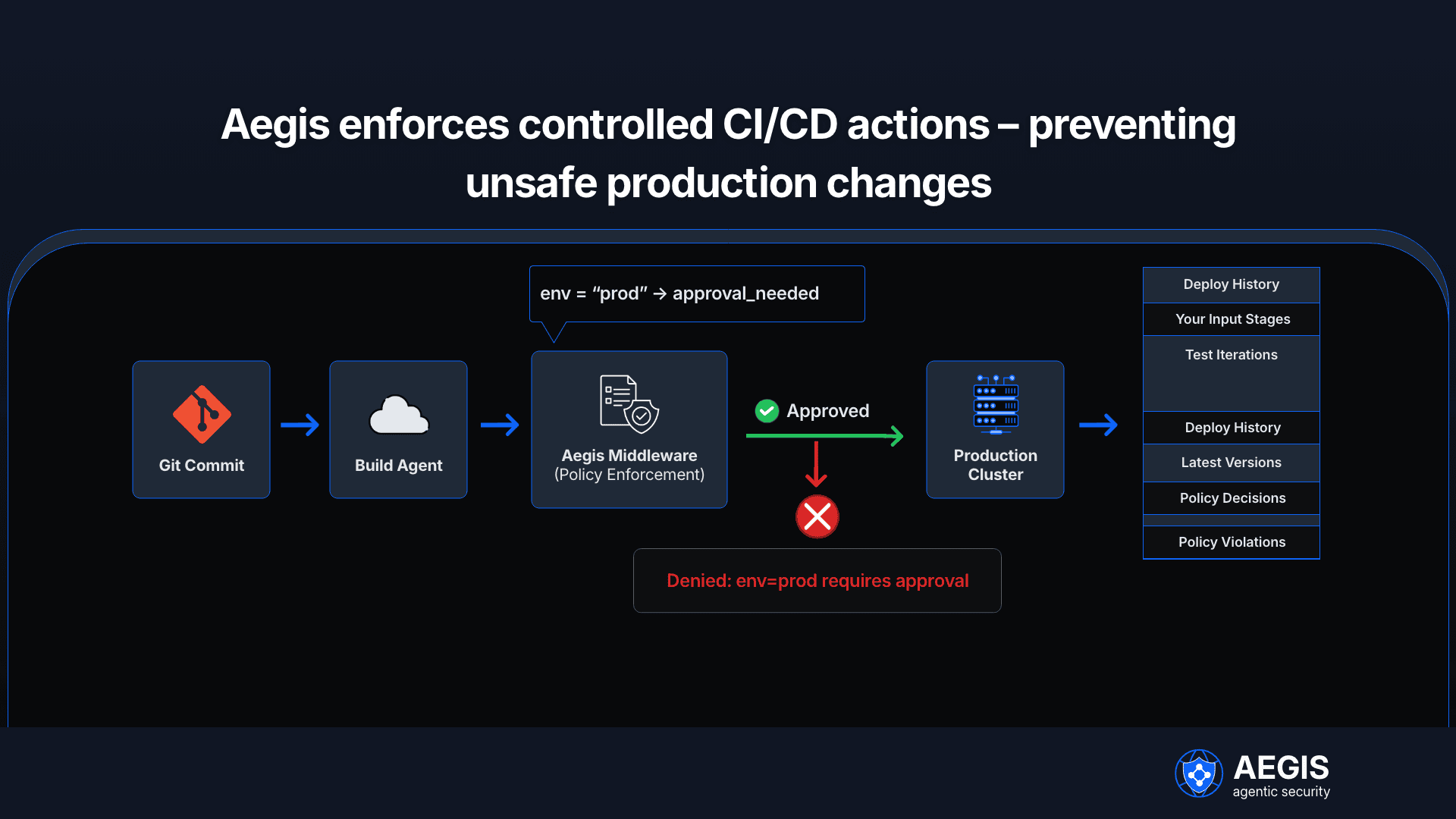
- Policy-as-code & runtime enforcement — Policies are authored in YAML/JSON, compiled into OPA bundles, and hot-reloaded by the control plane. Runtime decisions are deterministic and expressed as allow/deny/sanitize/approval_needed, enabling a clear operational model for security teams. The gateway implements ext_authz patterns (Envoy sidecar / forward proxy) to inspect and control outbound calls with minimal overhead.
- Parameter inspection & DLP — Aegis applies parameter-level constraints (e.g., deny SSNs in any outgoing post, enforce max_amount on payments), and performs deterministic redaction. For compliance-sensitive connectors (EHR, payment handlers), Aegis can route requests to region-tagged endpoints and redact PII before the message reaches a third-party channel.
Human approvals & override tokens — For high-risk actions (payments > threshold, exports of PHI), Aegis can pause the call, deliver an approval message to Slack or Teams, and mint a one-time override token upon approval to allow the original request to be retried. This preserves an auditable approval trail that maps to a specific agent action.
Observability & auditability — Every decision emits OpenTelemetry spans and structured logs including agent_id, policy_version, decision_reason, and estimated cost. These feeds integrate into SIEMs for incident response and compliance evidence. OpenTelemetry adoption data shows broad enterprise use for collectors and tracing; integrating OTel makes Aegis telemetry consumable by existing observability stacks. (OpenTelemetry)
👉🏻 Enforce secure access with role-based control mechanisms
Operational controls for MSSPs & multi-tenant environments — Aegis supports tenant scoping for policy bundles, region-aware routing, and per-agent budgets and rate limits. For MSSPs, this means you can enforce tenant separation, restrict egress per region, and produce signed audit trails for each tenant.
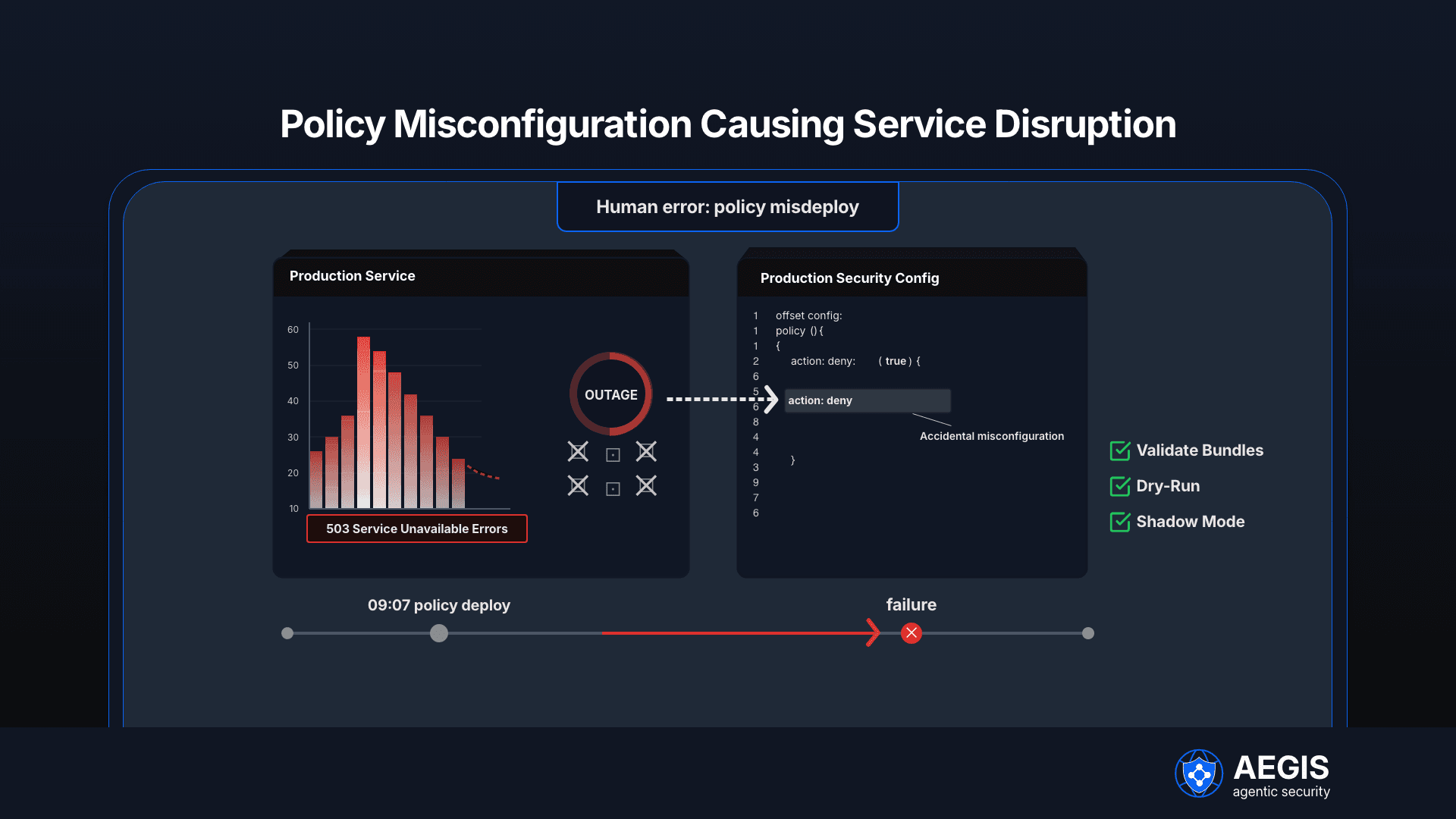
Implementation note: run policies in shadow mode first for 7 days to capture would-deny events and tune your regexes and conditions; flip to enforce only after validation. Shadow rollouts improve safety and reduce false positives that would otherwise cause outages.
👉🏻 Secure sensitive credentials across agent workflows
Compliance & audit proofs
Regulators treat agent actions like human actions when those actions access regulated data. For HIPAA/PCI/GLBA compliance you need:
- Identity & least privilege (per-agent tokens and scoped access).
- Tamper-evident audit logs (signed spans, immutable storage).
- Data minimization & DLP (redaction, retention rules).
- Human approval records for high-risk transactions.
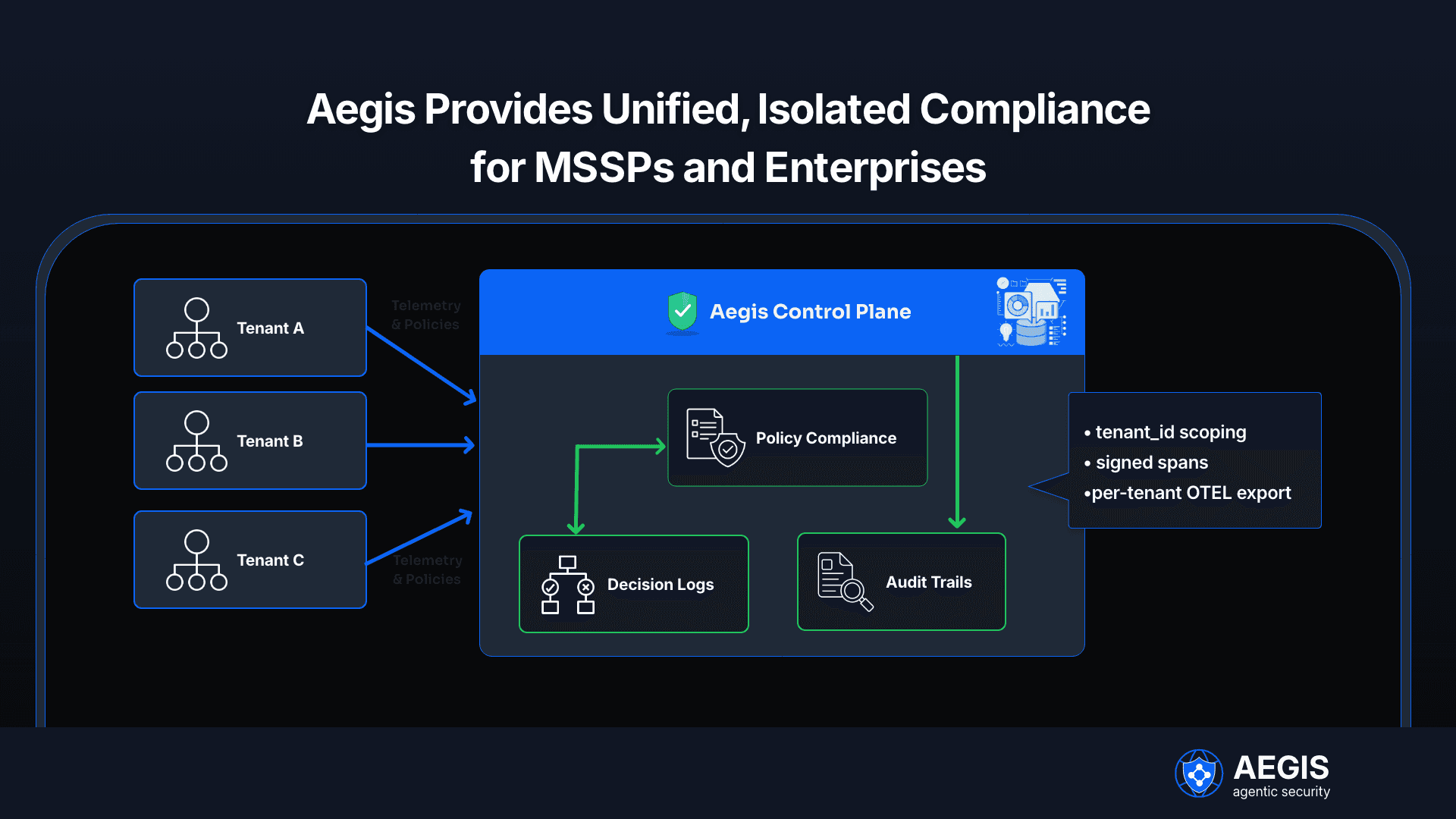
Aegis generates tamper-evident logs (hash chains, signed manifests), and can implement retention and purge policies to meet data-residency laws. For auditors, provide a package: policy versions, sample decision traces, approval records, and OTel traces for key flows.
Practical checklist: privacy design for agents
- Data minimization: only include fields an agent needs.
- Just-in-time access: short token lifetimes, no standing credentials.
- Encrypted memory: store agent state encrypted at rest and in transit.
- Retention & purging: automate purge windows and support compliance holds.
- Approval workflows: thresholds and human-in-the-loop for risky operations.
This checklist maps directly to policy controls you should encode in Aegis-style bundles.
Two quick comparison tables
Table 1 — Agent gating: legacy vs Aegis approach
Concern | Legacy (IAM + per-service roles) | Aegis (runtime gateway) |
Parameter inspection | Minimal | Deterministic DLP + filters |
Human approvals | Manual processes | Approval_needed + override token |
Auditability | Siloed logs | Signed spans + policy version |
Per-agent scoping | Coarse roles | Per-agent tokens & policy |
Table 2 — Typical high-risk controls and enforcement mapping
Risk | Enforcement point | Example policy condition |
Unauthorized payment | Gateway decision | max_amount: 5000 OR approval_needed |
PHI export | DLP sanitize | deny if destination != internal-ehr |
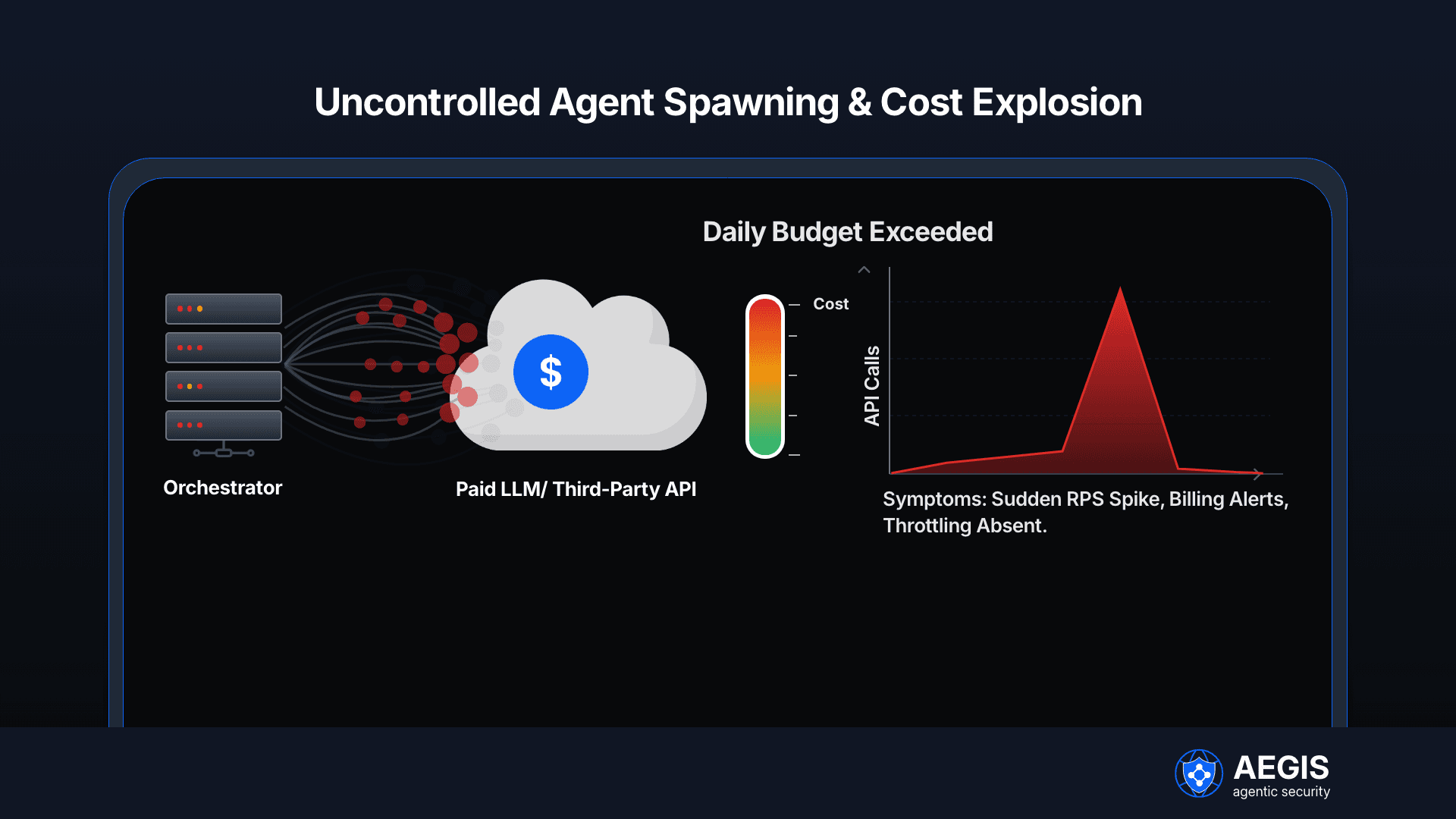
Cost runaway | Budget throttle | daily_budget: $20 → return BudgetExceeded |
Privilege chaining | Parent agent validation | require parent_agent_id header + validate |
FAQs
Q1: How do you prevent a planner agent from coercing a finance agent to make payments?
Enforce per-agent policies that validate caller identity (parent_agent_id) and parameter ranges (max_amount). If a call exceeds policy, return denial or approval_needed. Aegis supports parent chain validation to block lateral coercion.
Q2: Can Aegis redact PII before posting to Slack or external channels?
Yes — deterministic DLP rules can redact SSNs, card numbers, or other sensitive fields before allowing the message to be sent.
Q3: What latency overhead should we expect?
With prepared OPA queries and caching, target P99 for policy decisions is ≤ 20 ms. Design your proxy to minimize re-originations and keep most decisions fast.
Q4: Which observability formats are supported?
OpenTelemetry traces and structured JSON logs are emitted for each decision; these integrate with existing SIEM and APM stacks. See OpenTelemetry documentation for collector and exporter options. https://opentelemetry.io/ (OpenTelemetry)
Q5: How should I roll out policies safely?
Use shadow mode to collect would-deny events, tune rules for false positives, then flip to enforce. Maintain versioned policies with rollback support.
Q6: Where can I find industry guidance on agent risk and adoption?
Research and analyst coverage highlight rapid interest and risk: Gartner and other reports note rapid growth in agentic AI interest and caution around scrapped projects without governance. (Reuters)
Closing — next steps for security teams
Start by inventorying agent interfaces and classifying which agents require sensitive tool access. Draft per-agent policy templates (payments, EHR, deployments), deploy Aegis-style gateway in shadow mode, and iterate.