
Rate Limiting and Budget Guardrails for Agent Calls
Practical guide to per-agent rate limiting, per-tool budgets and enforcement patterns for secure, cost-controlled agentic AI.
Aegis: Implementing Rate-Limiting and Budget Guardrails for Agentic AI
Deploying autonomous agents in production introduces a new class of operational and financial risk: agents can spawn, cascade calls to LLMs or third-party APIs, and quickly drive unexpected spend or security incidents. This post explains why per-agent rate limits and budget guardrails are necessary, presents enforcement modes and monitoring patterns, and describes how Aegis — Aegissecurity agent security mesh — applies these controls in production.
Why guardrails matter for agentic AI
Agentic AI is moving from pilots into production; recent surveys show a meaningful share of enterprises experimenting with or scaling agentic systems. McKinsey reports that roughly 23% of organizations are scaling agentic AI, with many more experimenting. (McKinsey & Company) At the same time, analysts warn that many agent projects will fail because of cost and unclear value — Gartner estimates over 40% of agentic projects may be scrapped by 2027 due to cost and value shortcomings. (Reuters)
From a FinOps perspective, cloud and API overspend is real: industry reports note average budget overruns in the low-double digits and frequent cases of sudden spend spikes from automation or misconfiguration. Deloitte observed that about half of organizations overspent last year with average overruns near 15%. (딜로이트)
Because LLM and third-party API calls are billable at per-call or per-token rates, an uncontrolled agent (or a misbehaving test) can produce large bills in minutes. Aegis addresses this with three levers: per-agent daily budgets, per-tool RPS limits, and adaptive throttles with graceful degradation and clear UX for operators. Core product rules and architecture are defined in the Aegis design brief.
👉🏻 Enforce least privilege to reduce risk without slowing innovation
Enforcement modes: allow, throttle, queue, deny, degrade
.png&w=3840&q=75)
esigning policy behavior requires choosing enforcement semantics that balance safety, cost control, and usability. Below is an operational matrix teams can use to pick defaults.
Enforcement mode | User/Agent UX | FinOps impact | When to use |
Allow (monitor) | Calls proceed; events logged | Minimal | Shadow/observability rollouts |
Throttle (RPS) | Calls delayed/limited | Reduces burst costs | When spikes are bursty |
Queue (graceful) | Requests queued; processed later | Smooths cost, maintains delivery | Best for non-interactive flows |
Deny (hard stop) | Immediate error with reason | Strong cost control | Exhausted budget or high risk |
Degrade (lower fidelity) | Fallback to cheaper model or cached response | Significant savings | When fidelity can be reduced |
Decision example: allow llm-tool up to $20/day for agent X; once exhausted, return a clear error (BudgetExceeded) and optionally queue non-critical requests. Aegis stores per-agent budget and policy versions, and emits telemetry for cost attribution.
👉🏻 Control agent access and egress with intelligent API governance
Modeling rate patterns: bursty vs sustained
Policies must treat burstable and sustained patterns differently:
- Burstable: short spikes that exceed RPS but are short-lived — best handled with token-bucket throttles (burst allowance + refill rate).
- Sustained: continuous high volume — require daily budgets and quota resets, plus alerts and auto-suspend.
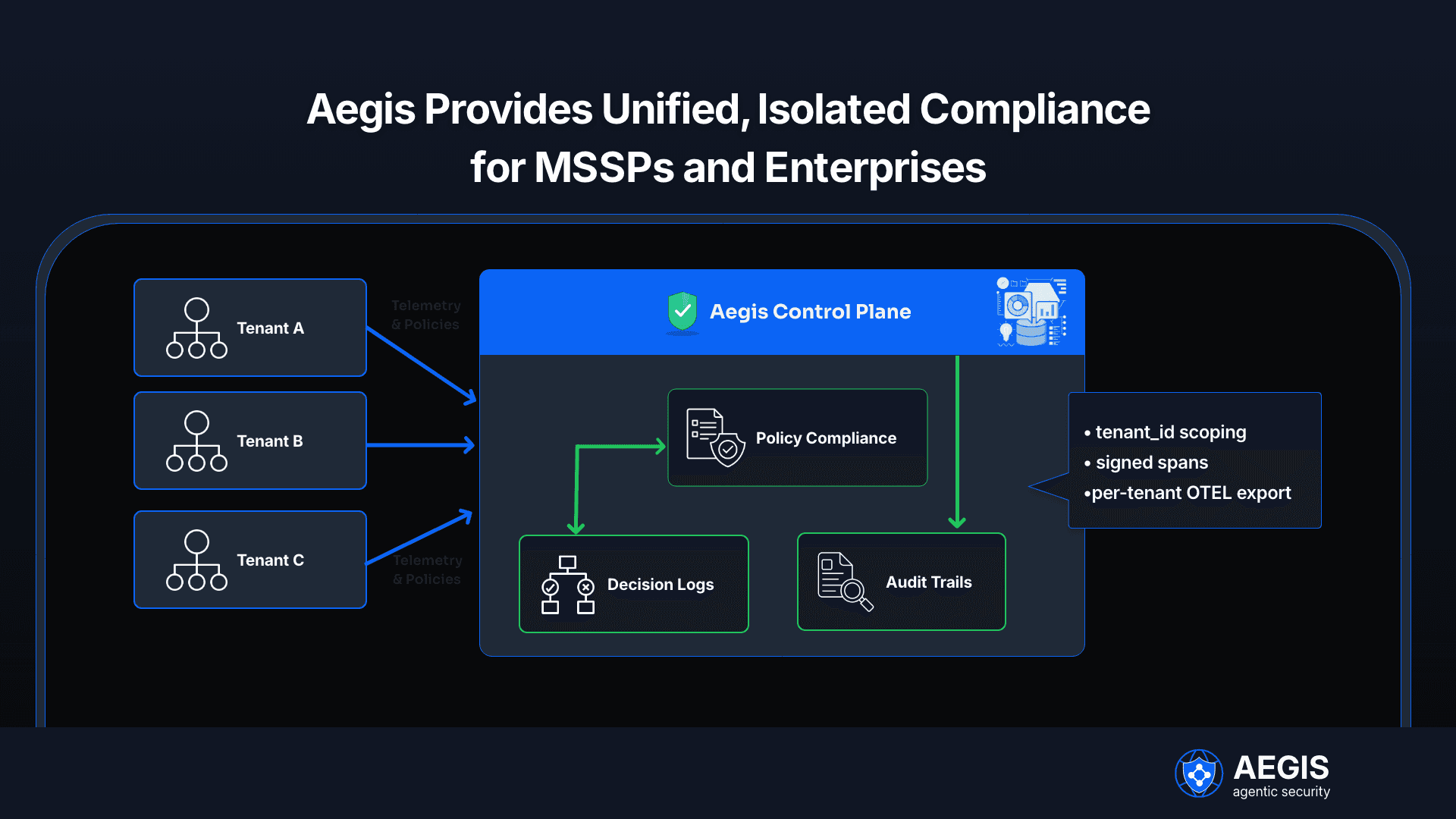
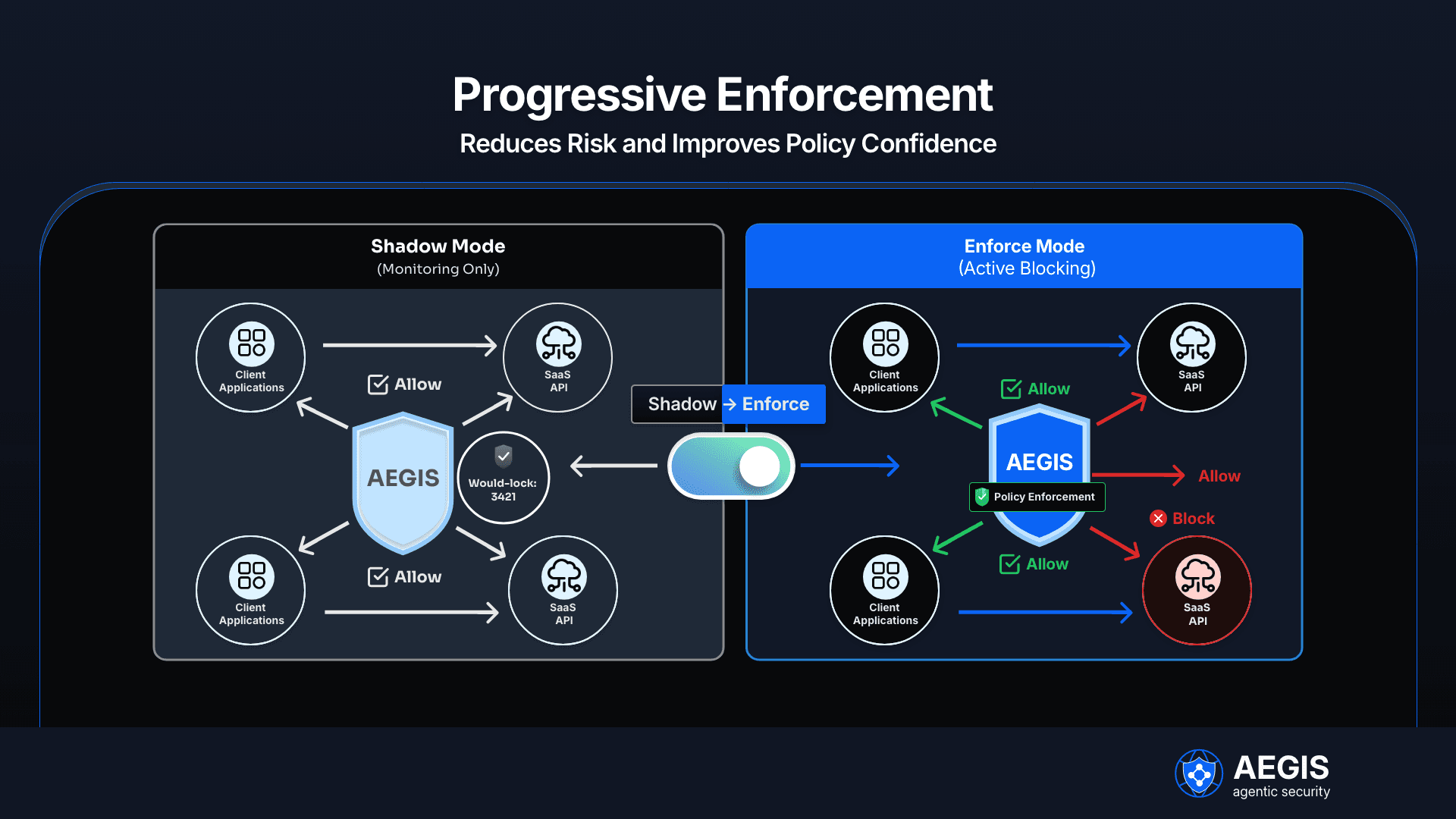
Test both patterns with targeted simulation (simulate heavy LLM workload and measure latency, throttle behavior, and UX). Aegis supports dry-run/shadow mode to collect would-deny metrics before enforcing.
Monitoring, alerting, and FinOps integration
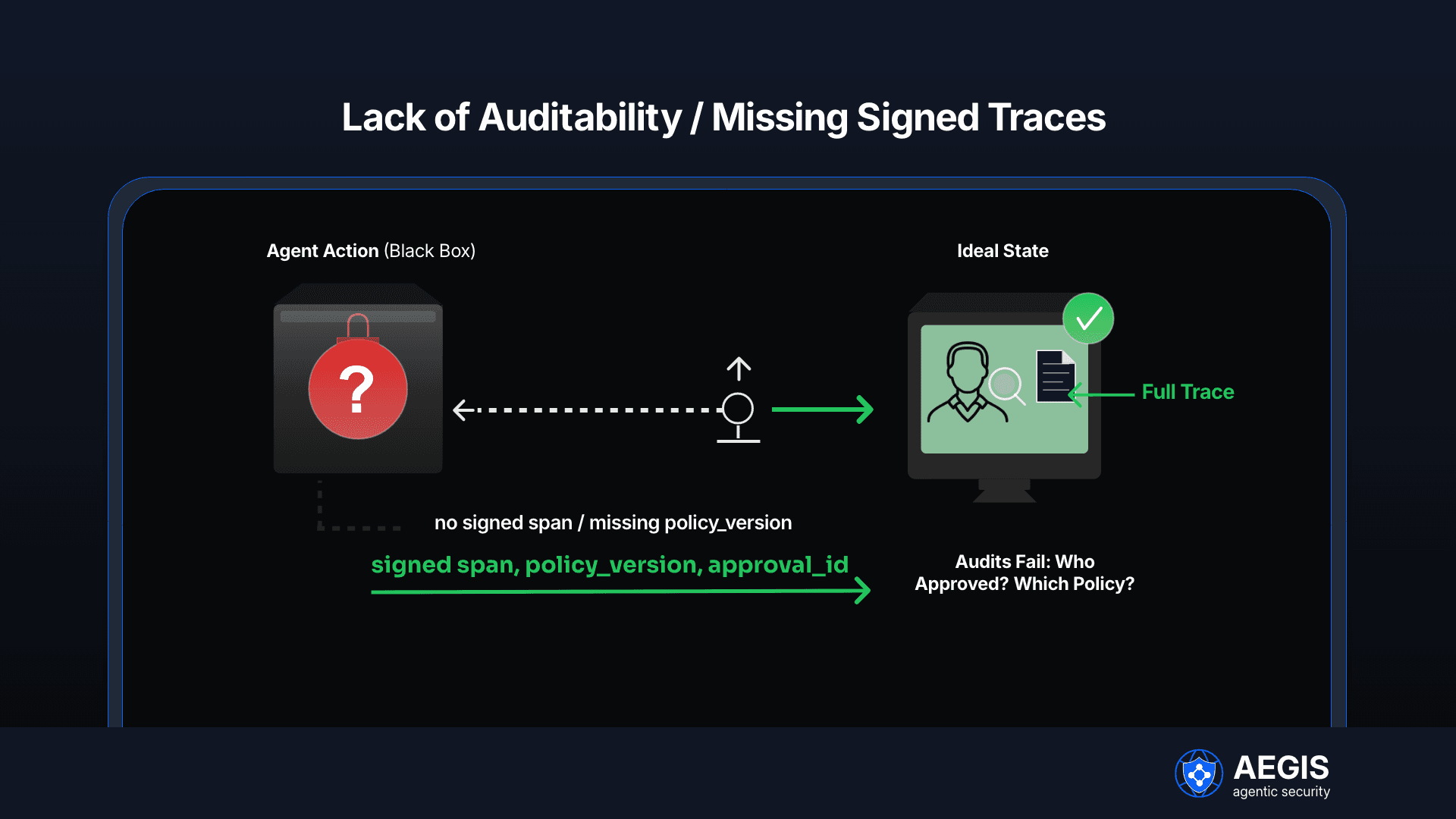
Observability is essential: export OpenTelemetry spans and cost estimates per call so FinOps dashboards can tag spend by cost center, agent ID, and tool. Aegis emits structured spans with decision_reason, policy_version, and estimated cost to integrate with downstream dashboards and SIEM.
Practical alerting thresholds:
- 75% of daily budget: informational alert + rate reduction recommendation.
- 90%: high-priority alert with optional auto-queue or require manual override token.
KPI | Measurement | Target |
Cost saved | % reduction vs baseline | > 20% in first 30 days |
Alerts fired | # budget/override alerts | < 3 per week per tenant |
Override requests | # manual approvals | Track & trend monthly |
Policy latency | P99 decision latency | ≤ 20 ms. |
Industry context: organizations are increasing FinOps focus as AI spend grows; FinOps communities and surveys document that enterprises with practiced FinOps reduce waste and improve predictability. (data.finops.org)
Designing clear error UX and override flows
When an agent is throttled or denied, return a standardized JSON error with:
- error: BudgetExceeded / RateLimited
- message: human-readable guidance
- current_spend, budget_limit, reset_at
- override_instructions: how to request an emergency override
Example:
{ "error":"BudgetExceeded",
"message":"Agent daily budget reached. Requests denied.",
"current_spend":19.52, "budget_limit":20.00, "reset_at":"2025-11-10T00:00:00Z",
"override_instructions":"Request override via FinOps with approval token." }
Allow temporary override tokens (single-use, short TTL) minted by an approvals service. Aegis implements manual approval flows (Slack/Teams integration) for high-risk or emergency overrides.
👉🏻 Balance speed and security with adaptive policy enforcement
Testing & rollout: shadow mode and progressive throttling
FinOps playbook:
- Identify top 10 spenders; apply conservative budgets in staging.
- Run policies in shadow mode for 7–14 days; collect would-deny metrics.
- Introduce staged throttling (soft limits → hard limits).
- Iterate budgets using observed spend projections from Aegis telemetry.
Automation tip: auto-suspend agents matching fraud patterns and require manual reactivation to prevent noisy retries. The Aegis CLI and dry-run tools simplify this workflow.
Aegis as the enforcement solution
Aegis is built as a lightweight runtime policy and observability gateway for multi-agent architectures. It sits between orchestrator and tools as a proxy/sidecar and evaluates policies per call. Core capabilities relevant to guardrails:
- Per-agent budgets and RPS limits with enforcement actions (allow, throttle, queue, deny).
- Policy-as-code with hot-reloadable bundles compiled to OPA for fast evaluation and low latency (P99 target ≤ 20ms).
- OpenTelemetry spans for cost attribution, decision reasons, and auditability that map to FinOps cost centers and tags.
- Approval flows and override tokens integrated with Slack/Teams for human-in-the-loop exceptions.
Real example (operational): a misbehaving automated test once spiked LLM spend in a pilot; Aegis budget guardrails capped the loss to $30 by denying calls after budget exhaustion and alerting FinOps. This pattern — per-agent budget + thresholds at 75%/90% — is effective operationally and minimizes surprise bills.
Mode | UX | FinOps impact | Notes |
Soft throttle | Increased latency | Lowers burst cost | Good for interactive agents |
Hard deny | Immediate failure | Strong cost stop | Use for budget exhaustion |
Queue | Deferred success | Smooths spend | For non-urgent tasks |
Degrade | Lower-cost model | Reduces cost per call | For acceptable fidelity loss |
Edge cases and objections
Objection: “Limits interrupt workflows.” Mitigation: staged throttling, priority lanes (high vs low priority agents), and user-visible guidance + override tokens reduce operational friction.
Edge case: cooperative agents that queue requests vs fail fast. This is a policy tradeoff — queueing keeps user experience but can shift cost; failing fast prevents additional cost but requires callers to handle retries gracefully. Choose per-agent enforcement based on SLA and cost appetite.
Frequently Asked Questions
Q: When do budgets reset?
A: Daily budgets reset at the configured UTC boundary (configurable per tenant) — include explicit reset_at in errors.
Q: How do override tokens work?
A: Human approver issues a single-use override token via the approvals service (Slack/Teams) to retry a denied call.
Q: What metrics should FinOps consume?
A: per-agent spend, calls per tool, budget usage %, alerts, override counts.
Q: Can policies run in shadow mode?
A: Yes — use shadow for tuning and dry-run before enforcement.
Q: How do we handle chained calls and privilege escalation?
A: Enforce parent_agent_id headers, validate call chain, and restrict tool access by identity to prevent coercion.
Aegis combines policy-as-code, runtime enforcement, and FinOps-grade telemetry to protect enterprises from runaway agent spend and parameter-level risk.