Privacy Impact Assessments for Autonomous Workflows
Practical guide to updating PIAs for multi-agent systems and how Aegis enforces runtime data minimization, redaction, routing, and auditability.
Aegis: Runtime Privacy & PIAs for Agentic Workflows
Autonomous agents change how data flows through enterprise systems. Privacy Impact Assessments (PIAs) designed for monolithic projects no longer capture the chained, dynamic behavior of agentic workflows. This article lays out a practical, flow-level approach to PIAs for multi-agent systems and explains how Aegis — a runtime policy and observability gateway — supplies the controls and evidence teams need to meet modern privacy requirements.
Why PIAs must change for agentic workflows
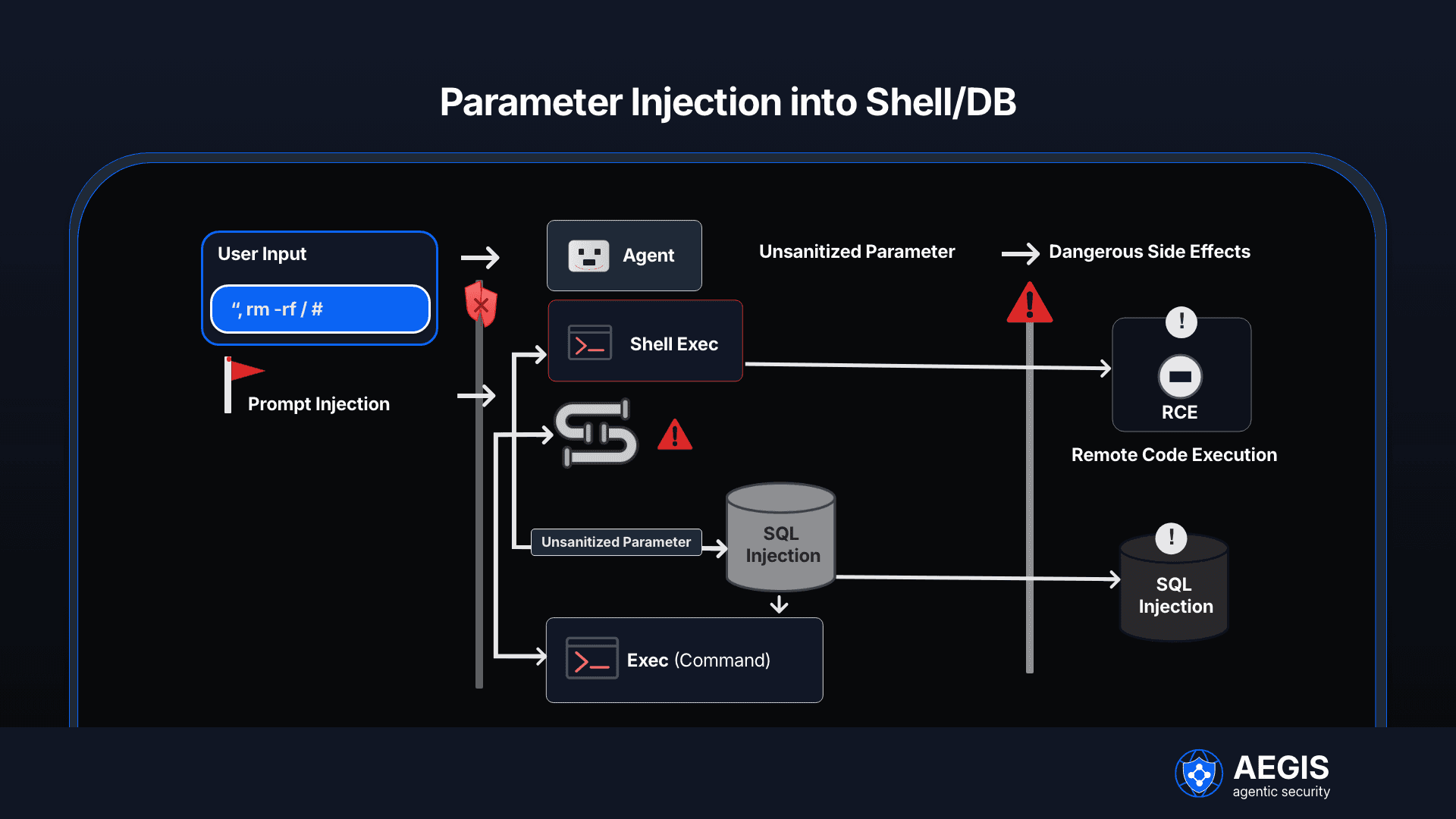
Traditional PIAs treat a system as a single, static boundary. Agentic architectures instead produce dynamic call chains: planner → finance agent → payments API; or clinical agent → summariser → EHR connector. Each agent can access different data classes, and chained outputs create emergent risk (e.g., PII slipthrough to an unapproved external connector).
Hardened PIAs for agentic systems should:
- Move from project-level to flow-level analysis (per agent action, per connector).
- Map each agent to data classes and sinks.
- Quantify impact (severity × likelihood) per flow, not just per system.
Require technical mitigations: DLP, redaction, purpose binding, and approval gates.
Statutory guidance and PIA templates were updated in 2024 to address AI-specific risks; enterprises must reflect those changes in their internal PIA process.
👉🏻 Strengthen your data protection strategy for complex agent ecosystems
Flow-level PIA checklist (operational)
Start each PIA with: use case, stakeholders, and a data flow diagram.
Essential items:
- Map agents → data classes (PII, PHI, confidential).
- Identify high-risk flows and external sinks (connectors).
- Define mitigations per flow: DLP, redaction, tokenization, routing.
- Specify legal basis and retention rules per data class.
- Quantify risk per flow (severity × likelihood).
- Run shadow-mode telemetry to measure exposure during pilot.
- Integrate PIA outputs into policy conditions (block/approve thresholds).
- Publish summary PIA for transparency where required.
- CI gates: re-run PIA tests when policies or models change.
- Maintain sign-off from privacy, legal, and InfoSec.
Practical tip: embed PIA checks into onboarding for any new agent or connector; include vendor assessments for third-party endpoints.
👉🏻 Classify and manage data effectively to reduce security risks
How Aegis maps to PIA requirements (solution overview)
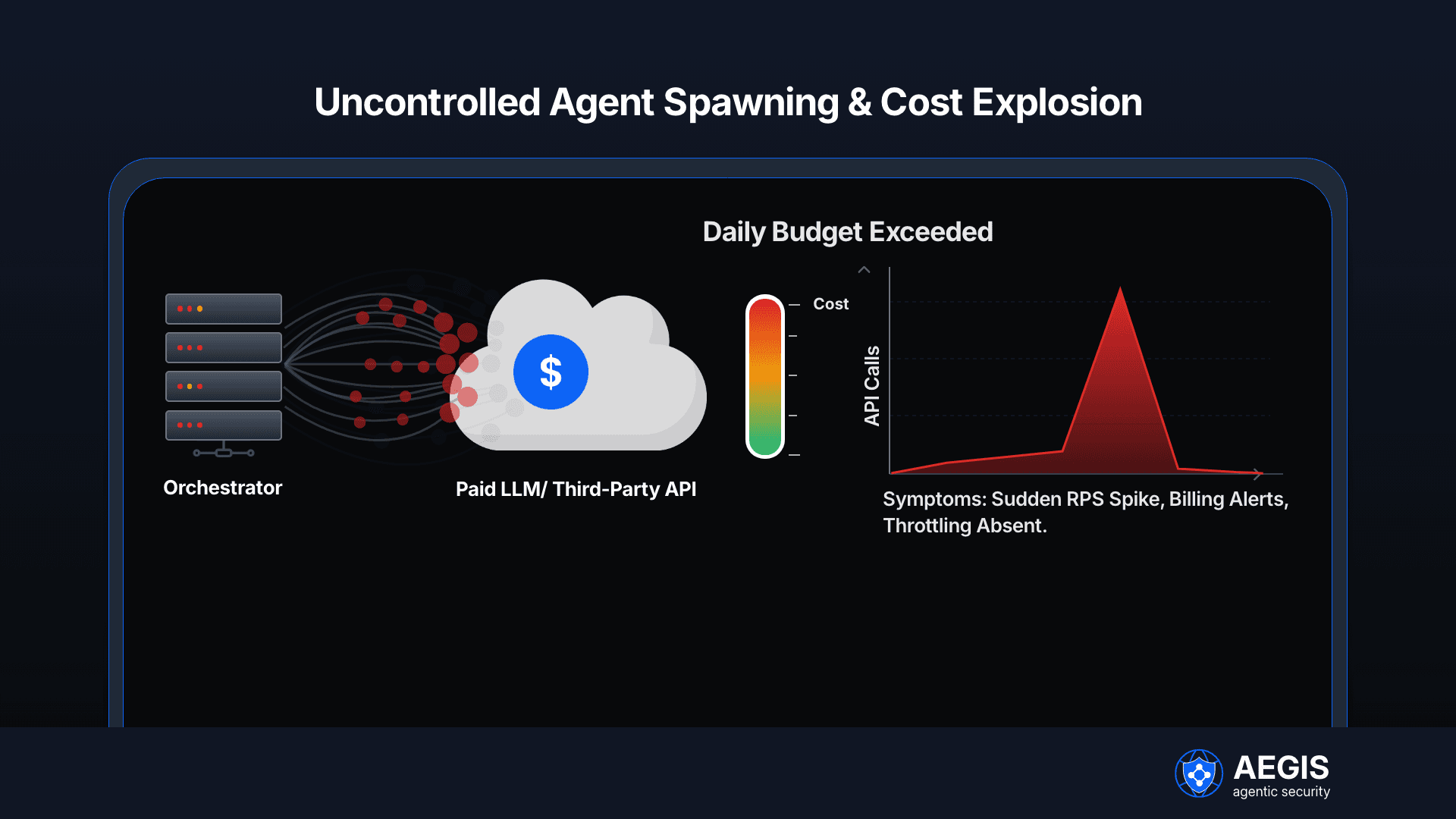
Aegis provides runtime evidence and controls that modern PIAs demand: least-privilege enforcement, deterministic redaction, egress routing, and auditable traces.
Aegis capabilities that address PIA needs:
- Agent identity & policy: per-agent identities and policy-as-code that binds agents to allowed tools and parameter schemas.
- Runtime enforcement: allow/deny/sanitize/approval_needed decisions for each agent→tool call.
- Deterministic DLP & redaction: regex tokenization, hashing, and redact-on-transit for sensitive fields.
- Egress controls & routing: per-tenant routing to enforce data residency and block unapproved domains.
- Observability & audit: OpenTelemetry spans that capture agent_id, policy_version, decision_reason, and approval metadata.
These runtime controls let privacy teams convert PIA mitigation statements into enforceable, versioned policies and provide the evidence regulators request: signed traces, policy versions, and approval logs.
👉🏻 Safeguard healthcare data with HIPAA-compliant AI practices
Deep dive: three critical Aegis controls for PIAs
1) Data minimization & redaction (technical detail)
Aegis enforces purpose binding and field-level minimization at the gateway. Policies can specify which fields are necessary for a tool call; any extra fields are automatically redacted or hashed. Redaction runs deterministically (regex, tokenization) with configurable retention and reversible vs irreversible options logged in audit trails.
2) Approval gates & human-in-the-loop
For high-risk actions (payments > threshold, PHI exports) Aegis can return approval_needed. The call is paused and an approval request is routed to Slack/Teams. After approval, Aegis issues a one-time override token allowing the retry. Approval metadata is attached to the trace for compliance audits.
3) Egress routing & data residency
Policies can enforce per-tenant routing: route EU tenant data to EU connectors or block cross-border transfers. If an unapproved external connector is attempted, the call is denied and the incident is logged for remediation.
Example PIA artifacts and Aegis evidence
PIA Artifact | What privacy teams need | Aegis evidence |
Data flow diagram | Per-flow mapping, sinks | Runtime call traces with parent_agent_id |
Mitigation: redaction | Proof PII redacted before egress | Sanitized request payload + redaction rule id |
Approval control | Audit of human approvals | Approval record + override token id |
Retention rule | Enforce retention across connectors | Routing decision + retention claim in token |
-1.png&w=3840&q=75)
Where Aegis fits into enterprise operations
Aegis sits as a runtime policy fabric between orchestrators and tools (sidecar or proxy), making minimal changes to developer workflows. It supports shadow mode for pilot tuning and can export structured logs to SIEMs for SOC reviews. Integrations with orchestrators and SDKs reduce developer friction and enable CI-driven PIA revalidation when policies or models evolve.
Table: PIA metric examples to track in dashboards
Metric | Why it matters | Target |
Number of high-risk flows | Operational exposure | Decrease month-over-month |
Redaction success rate | Efficacy of DLP | ≥ 99% |
Would-block events in shadow | Tuning indicator | Converge to < 5% false positives |
Approval latency | Operational impact | < 15 min median for high risk |
Cross-border denies | Compliance enforcement | 100% for restricted classes |
Implementation guidance (practical steps)
- Start PIAs with an agent inventory and flow diagrams (map parents/children).
- Classify data per agent; identify high-risk sinks (external connectors).
- Define policies in YAML/JSON and run Aegis in shadow mode for 1–2 weeks.
- Use shadow metrics to tune regex redactors and approval thresholds.
- Flip enforcement on gradually; maintain CI checks to re-run PIA tests on policy or model changes.
- Maintain an issues register and periodic re-assessments for model or connector updates.
For enterprise rollout, align Aegis policy versioning with your change control process so policy updates are auditable and reversible.
Use cases that highlight privacy impact prevention
- FinTech: Block planner→finance coercion by enforcing per-agent payment ceilings and approval for higher amounts.
- Healthcare: Enforce read-only access to EHR unless purpose=care; redact SSN/DOB in any outbound summaries.
- MSSP: Multi-tenant scoping, tenant routing, and signed traces provide SOCs with tamperproof evidence.
FAQ — Frequently Asked Questions
Q1: How does Aegis support PIA evidence requirements?
A: Aegis emits structured, signed traces that include agent identity, decision reason, policy version and any approval metadata—matching regulator expectations for auditable evidence.
Q2: Can we run policies in shadow mode before enforcement?
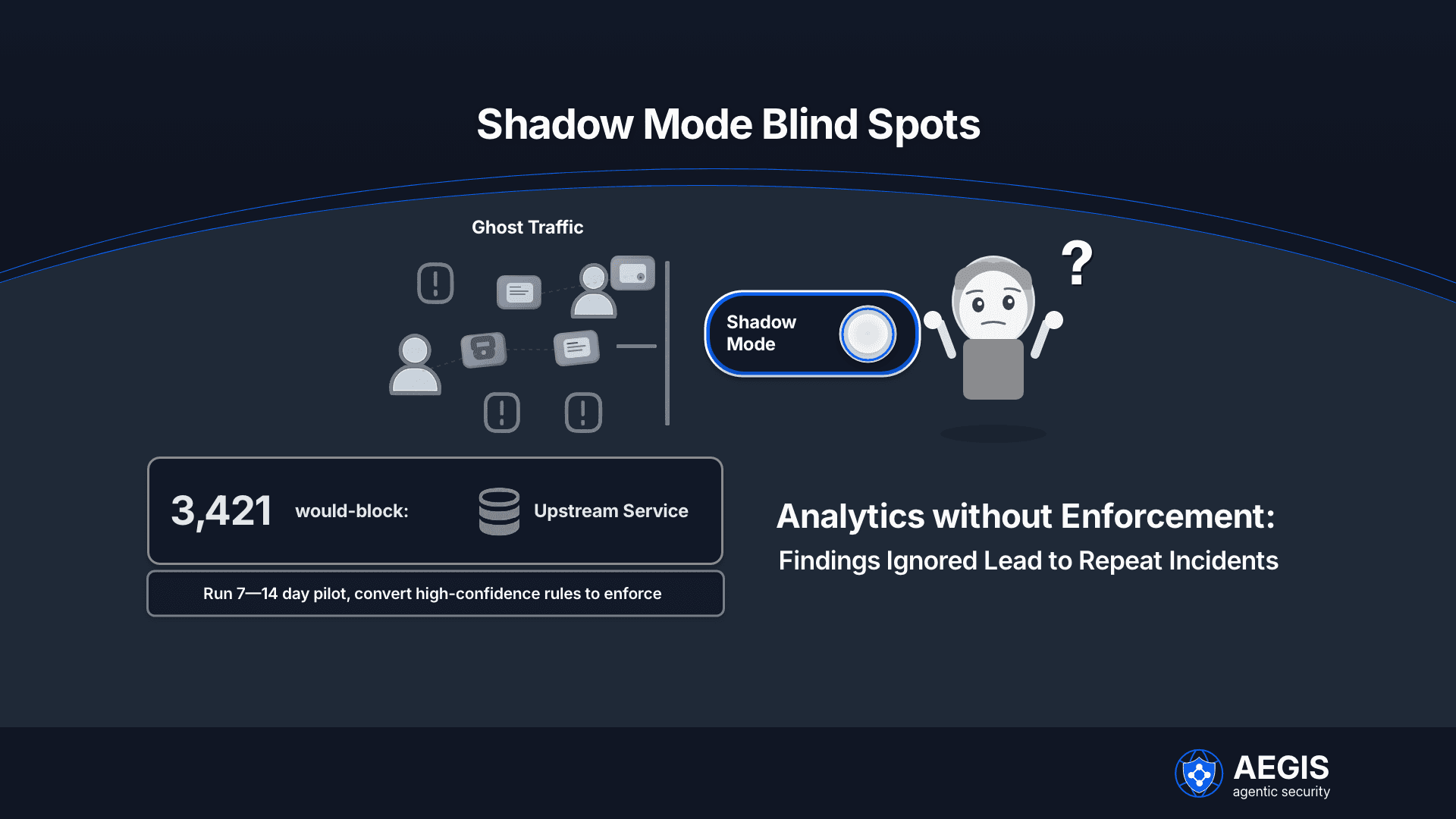
A: Yes. Shadow mode surfaces would-block events with telemetry so teams can tune redaction and approval thresholds without disrupting production.
Q3: How are cross-border transfers controlled?
A: Policies can route calls by tenant/region and deny outbound connections to disallowed domains, preventing inadvertent data residency violations.
Q4: How do we integrate Aegis with CI/CD and PIA automation?
A: Exported telemetry and policy version metadata integrate with CI gates. Re-run PIA tests automatically when a policy or model changes to maintain continuous compliance.
Q6: What evidence should be published for transparency?
A: Publish a summary PIA—redacted where necessary—that describes the flow-level approach, major mitigations and the metrics you track.
Operational privacy, not just paperwork
Updating PIAs for agentic workflows is a practical, technical exercise: map flows, enforce minimization and approvals at runtime, and produce auditable evidence. Aegis turns PIA mitigations into enforceable policies, deterministic redaction, and signed telemetry so privacy teams and auditors can verify that controls work in production. Embed PIA checks into onboarding and CI, run shadow pilots, and use metrics to demonstrate reduced exposure.
Frequently revisit your PIA playbook as agents, models and connectors evolve; keep a measurable, enforceable fabric—rather than a static document—to manage privacy risk in agentic systems.