
Preparing for the EU AI Act: Steps to Take Now
Learn how enterprises can prepare for the EU AI Act with proactive compliance, governance, and runtime evidence using Aegis
Preparing for the EU AI Act: Steps to Take Now
The EU AI Act—the world’s first comprehensive regulatory framework for artificial intelligence—will soon enter into effect. For organizations deploying autonomous or “agentic” systems, compliance is not optional. The Act mandates governance, traceability, human oversight, and risk management for AI systems, especially those considered high-risk or autonomous decisioning models.
Traditional compliance models—reactive audits and static documentation—are no longer sufficient. Modern AI environments are dynamic, distributed, and often powered by multi-agent systems. Enterprises must prepare by implementing continuous compliance, runtime observability, and policy enforcement that generate verifiable audit evidence.
This guide outlines what the EU AI Act requires, the gaps in today’s practices, and concrete steps enterprises can take now.
Overview of Relevant EU AI Act Obligations
The EU AI Act introduces strict obligations for high-risk and autonomous AI systems, focusing on risk management, governance, technical documentation, and post-deployment monitoring. For enterprises deploying LLM-based or agentic systems, these translate into continuous operational controls.
Key Obligations
Obligation | Description | Practical Implication |
Risk Classification | Systems must be categorized as minimal, limited, high, or unacceptable risk. | Requires inventory of all AI systems and mapping to tiers. |
Governance & Oversight | Human-in-the-loop mechanisms and defined accountability structures. | Establish AI governance boards and sign-off workflows. |
Transparency | Explainability and decision provenance for automated outcomes. | Maintain traceable, interpretable decision logs. |
Technical Documentation | Maintain records of datasets, models, versions, and decisions. | Adopt structured telemetry and tamper-evident logging. |
Post-Market Monitoring | Continuous risk assessment and incident reporting. | Integrate runtime observability and policy drift detection. |
The Act’s scope includes AI systems making decisions with legal or financial impact, such as credit scoring, medical diagnosis, or automated hiring. For these, compliance evidence must be machine-verifiable, signed, and retained for audit.
👉🏻 Turn EU AI Act requirements into a competitive advantage
Gap Analysis Checklist for Agentic Systems
AI teams often underestimate the difference between “compliant by documentation” and “compliant by design.” The EU AI Act expects living controls—governance that’s enforceable and auditable.
Common Gaps in Current AI Operations
- No central inventory of deployed agents or their permissions.
- Policies defined informally or embedded in code (non-auditable).
- Logs stored in plain text without provenance or signatures.
- Lack of human approval for high-risk actions.
- No process for cross-border data review or residency assurance.
- Fragmented evidence across teams and systems.
Self-Assessment Framework
Domain | Old Way | Required Under EU AI Act |
Risk Management | Ad-hoc reviews before go-live | Continuous monitoring and re-assessment |
Policy Enforcement | Local scripts, manual reviews | Runtime enforcement and audit trails |
Documentation | Static spreadsheets | Structured, versioned records with signatures |
Oversight | Periodic internal audits | Ongoing governance boards and accountability |
Evidence | Logs and dashboards | Signed telemetry with decision reasons |
Without runtime control and traceability, organizations risk falling short of demonstrable compliance, even if their systems are technically safe.
👉🏻 Design systems that are always ready for regulatory scrutiny
Technical Controls You Need Now
1. Runtime Observability and Evidence
A compliant AI environment must produce signed telemetry—cryptographically verifiable records showing who, what, why, and when. This is where Aegis introduces a new paradigm: runtime evidence.
Aegis automatically records every agent decision as a signed span, capturing:
- Agent identity and policy version
- Decision outcome and rationale
- Approval IDs (if human-in-loop)
- Latency and cost metrics
These spans form a tamper-resistant audit trail aligned with auditor expectations for traceability and non-repudiation.
2. Policy-as-Code Enforcement
Instead of manual approvals or inconsistent agent rules, Aegis applies Policy-as-Code using structured YAML/JSON definitions. Policies can specify:
- Allowed tools and parameters
- Maximum transaction limits
- Approval requirements for high-risk operations
- DLP rules for redacting PII/PHI
Policies are compiled into Open Policy Agent (OPA) bundles for low-latency enforcement (<20 ms). This provides the “runtime governance” the EU AI Act requires—deterministic, transparent, and auditable.
3. Shadow Mode and Pre-Enforcement Evidence
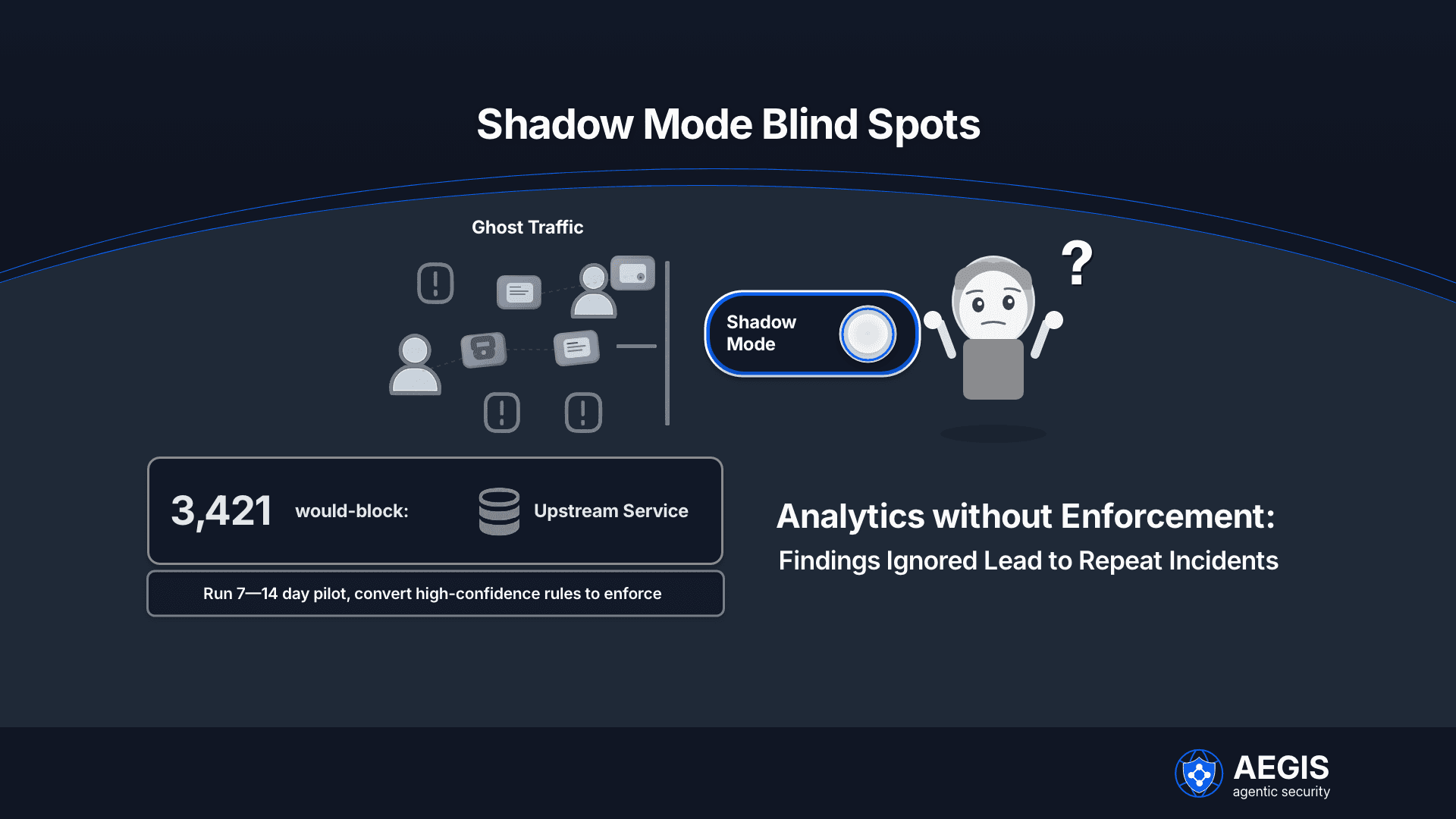
Aegis’s Shadow Mode lets enterprises run policies in observation-only mode for two weeks. It collects would-block telemetry, helping compliance teams understand potential violations before enforcement begins—crucial for low-risk, high-visibility rollout.
Example Timeline and Shadow Mode Playbook
Preparing for EU AI Act compliance requires a phased, evidence-driven rollout. Below is a model timeline.
Phase | Duration | Objective | Aegis Role |
1. Inventory & Risk Classification | Week 1 | Identify all agentic systems, classify by AI Act tier | Agent registry and policy tagging |
2. Governance Setup | Week 2 | Define AI owners, establish review board | Policy ownership and approval workflows |
3. Shadow Deployment | Weeks 3–4 | Enable Aegis Shadow Mode to collect would-block data | Evidence collection without disruption |
4. Enforcement Enablement | Weeks 5–6 | Convert validated shadow policies into enforced rules | Runtime enforcement and telemetry signing |
5. Audit Preparation | Week 7 | Compile compliance evidence package | Automated report export with signed spans |
This structured approach mirrors regulators’ expectations: test before you enforce, collect evidence before you certify.
Audit Evidence and Documentation Templates
The EU AI Act explicitly calls for traceability and explainability of decisions. Aegis automatically generates artifacts that map directly to audit templates.
Core Audit Evidence Outputs
Evidence Type | Description | Source |
Signed Telemetry Spans | Each agent action with decision reason and signature | Aegis Telemetry Engine |
Policy Versions and Notes | Change records with rationale and author | Policy-as-Code Repository |
Approval Logs | Slack/Teams approvals linked to override tokens | Approval Service |
DPIA-like Risk Assessments | Runtime data informing risk tier classification | Shadow Mode Reports |
Retention & Deletion Records | Policy-defined log retention and proof of deletion | Aegis Storage Layer |
By maintaining cryptographic attestations and policy version histories, enterprises can easily demonstrate compliance during audits.
For instance, when regulators request “proof that a human approved a high-value transaction,” Aegis provides:
- A policy hash
- The corresponding signed span
- Approval ID and approver identity
- Timestamped trace linking decision to policy version
- This moves compliance from “trust us” to “verify cryptographically.”
-1.png&w=3840&q=75)
How Aegis Enables Proactive EU AI Act Compliance
One-third of compliance readiness lies not in documentation—but in real-time assurance. Aegis was designed precisely for this new landscape.
Aegis Capabilities Aligned to EU AI Act Requirements
EU AI Act Requirement | Aegis Capability |
Risk Management | Agent registry with policy classification and telemetry analysis |
Technical Documentation | Policy-as-code with version history and signed evidence |
Human Oversight | Slack/Teams approval workflows with override tokens |
Data Governance | Deterministic DLP, regional routing, and egress control |
Post-Market Monitoring | Continuous runtime telemetry and compliance dashboards |
Aegis also integrates seamlessly with popular agent orchestration frameworks like LangChain, LangGraph, and AgentKit, making adoption frictionless for DevOps and MLOps teams.
👉🏻 Test, learn, and innovate safely within regulatory boundaries
25 Steps Enterprises Should Take Now
A practical checklist to prepare for EU AI Act readiness using Aegis principles.
- Inventory all agentic and autonomous systems.
- Map systems to EU AI Act risk tiers.
- Establish AI governance boards and owner registries.
- Adopt policy-as-code templates for high-risk flows.
- Enable Aegis Shadow Mode for initial evidence collection.
- Assign unique identities and short-lived tokens to agents.
- Define budgets and rate limits per agent.
- Configure human approval thresholds and SLAs.
- Implement deterministic DLP for PII and PHI.
- Capture provenance metadata and explainability artifacts.
- Export OTel traces into SIEM for policy retention.
- Digitally sign logs and telemetry.
- Maintain change records with rationale.
- Conduct DPIA-style assessments for high-risk operations.
- Review cross-border data flow and residency requirements.
- Test incident reporting workflows.
- Red-team potential policy bypasses.
- Train SOC and compliance analysts on interpreting Aegis telemetry.
- Transition from shadow to enforcement for top violations.
- Build an auditable compliance evidence package.
- Validate third-party connectors for auditability.
- Document human oversight and approval roles.
- Establish retention and deletion timelines.
- Begin certification roadmap planning (ISO/AI Act alignment).
- Automate compliance report generation from Aegis dashboards.
These actions combine governance, observability, and enforcement, ensuring that compliance is not a one-time project but an operational discipline.
Industry Implications: Who Benefits Most
The industries most affected by the EU AI Act—Finance, Healthcare, and SaaS—already face stringent oversight under GDPR and other frameworks. For them, Aegis provides a unified control surface to enforce both data and decision compliance.
- FinTech: Prevent unauthorized transactions and demonstrate approval lineage.
- Healthcare: Enforce deterministic redaction of PII/PHI in real time.
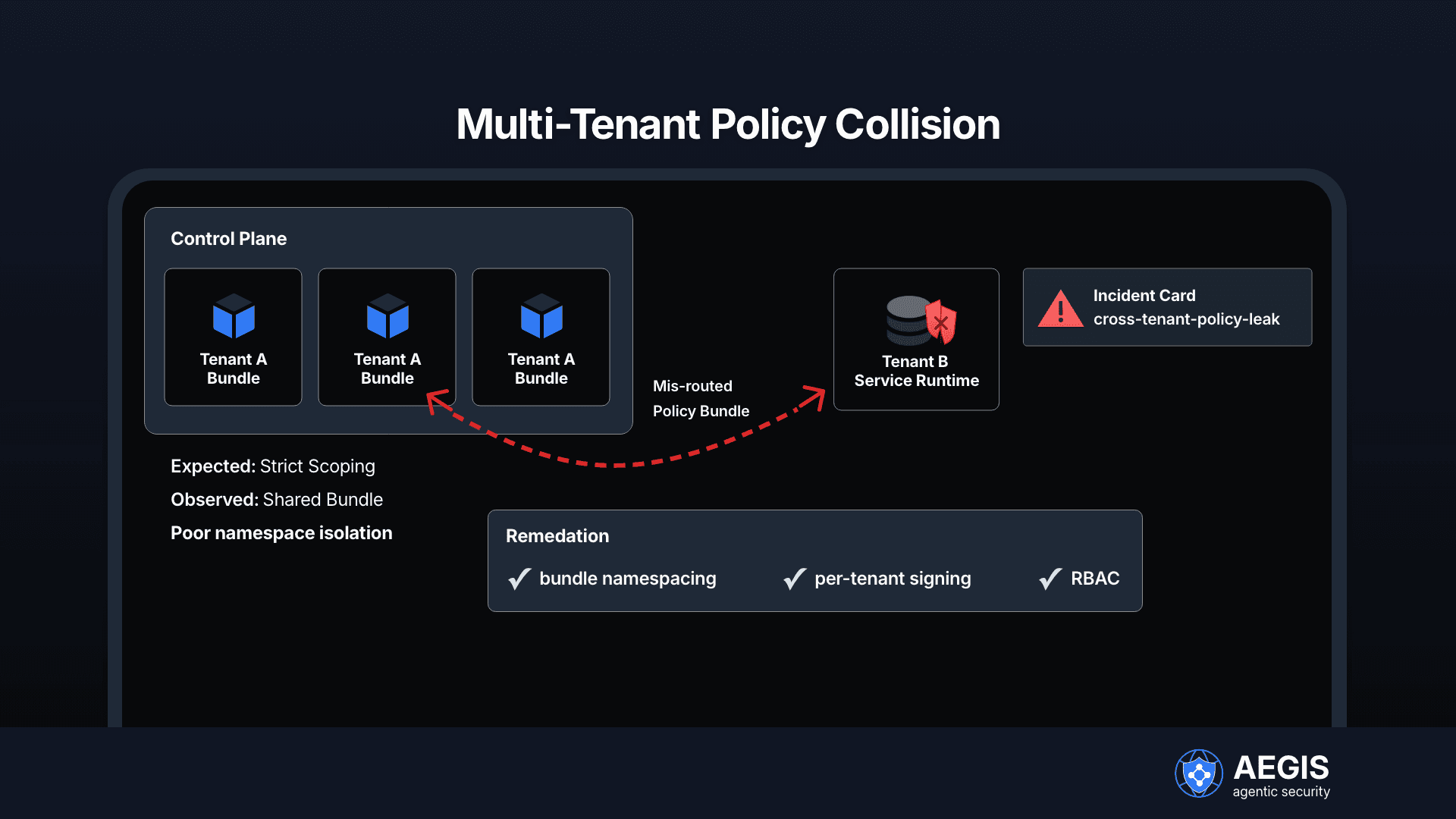
- SaaS & MSSP: Offer multi-tenant audit trails and runtime policy isolation across customers.
Frequently Asked Questions
1. What is the EU AI Act and who does it apply to?
The EU AI Act regulates the design, deployment, and monitoring of AI systems operating in or impacting EU citizens. It applies to developers, importers, and users of AI systems, including multi-agent and decision automation platforms.
2. What makes Aegis different from traditional compliance tools?
Traditional tools validate configurations or scan logs post-deployment. Aegis enforces compliance in real time, generating signed telemetry and approval traces for each agent action.
3. How does Aegis handle explainability and audit traceability?
Every policy decision includes a decision_reason, policy_version, and optional approval_id, forming a verifiable chain of accountability for auditors.
4. Can Aegis be deployed in shadow mode without affecting operations?
Yes. Shadow mode captures all would-block events without enforcing them, allowing safe tuning of policies before enforcement.
5. Does Aegis support data residency and cross-border compliance?
Absolutely. It enforces region-based routing and prevents agents from calling off-region domains, aligning with data localization requirements.
6. How soon should enterprises begin preparing for the EU AI Act?
Now. With enforcement expected in 2026, enterprises need at least 6–12 months to establish governance boards, gather evidence, and deploy runtime controls like Aegis.