Preparing for the EU AI Act: Implications for Agentic Systems
Practical guide for security teams to map agentic workflows to EU AI Act obligations and produce audit-ready evidence using Aegis.
Preparing Agentic Systems for the EU AI Act: Practical Readiness with Aegis
Agentic AI — autonomous workflows composed of multiple cooperating agents — introduces new regulatory and operational risk vectors that security, compliance and DevOps teams must address now. The EU Artificial Intelligence Act (AI Act) imposes risk-based obligations (including documentation, human oversight and incident reporting) that directly affect agentic systems classified as high-risk. This article provides a concise, practical playbook for technical teams to map agentic workflows to the Act’s requirements and shows how Aegis Aegissecurity supplies the runtime policy, traceability and evidence packaging necessary for audit-ready compliance.
Why agentic systems trigger AI Act obligations
The AI Act creates a tiered risk model: unacceptable-risk systems are banned, high-risk systems face comprehensive obligations (risk assessment, technical documentation, human oversight) and lower tiers face lighter transparency duties. The Commission, and associated guidance, make transparency and human-oversight central to high-risk compliance. Enforcement phases accelerated through 2024–2025 mean organisations running agentic workflows must document decision pathways and evidence now to avoid late remediation and possible sanctions (including administrative fines referenced by the Commission). (Digital Strategy)
👉🏻 Take proactive steps today to meet upcoming EU AI regulations
.png&w=3840&q=75)
Practical signals for security teams:
- Enforcement activity and staged obligations escalated during 2024–2025; prepare documentation and governance now. (HackerOne)
- Industry adoption is growing but immature: analyst surveys indicate many agentic projects will be scrapped or reworked without proper governance; that increases the urgency for risk-first controls. (Reuters)
Key compliance mapping for agentic workflows
Risk & documentation requirements (what you must produce)
Risk tiering per workflow
Perform a workload-level risk assessment for every agentic workflow (payments, EHR access, automated deployments). For an agentic payment workflow, classify data sensitivity, economic impact, and potential for misuse; record the assessment and the residual risk mitigation measures.
Documentation checklist
Maintain versioned artifacts for each workflow: system architecture, model cards or model summaries, training data provenance (where feasible), policy lists and change logs, DPIAs when personal data processing is involved, and signed traces of decisions for incident timelines. The EU guidance emphasises human oversight and traceability as key evidence. (Artificial Intelligence Act)
👉🏻 Build audit-ready systems aligned with EU regulatory expectations
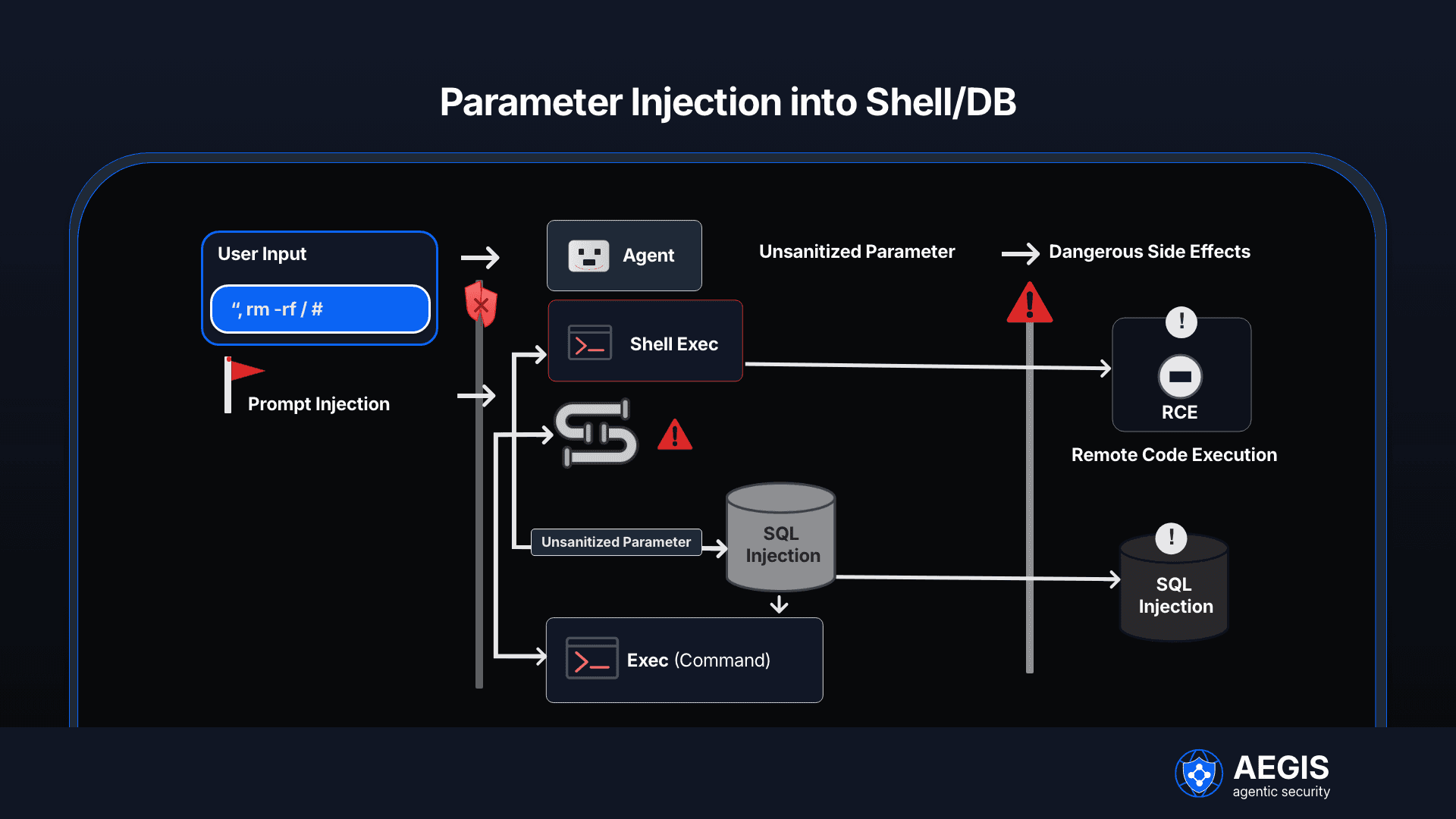
Table 1 — Minimal documentation pack per agentic workload
Artifact | Purpose | Responsible role |
System architecture diagram | Explains components & data flows | Architect / SRE |
Model summary / model card | Records model capabilities & limits | ML Engineer |
Policy list & versions | Shows rules governing agent behavior | Security Engineer |
Decision traces (signed) | Audit trail of actions & approvals | Aegis / SOC |
DPIA / data mapping | Required if personal data processed | DPO / Legal |
How Aegis maps to EU AI Act obligations
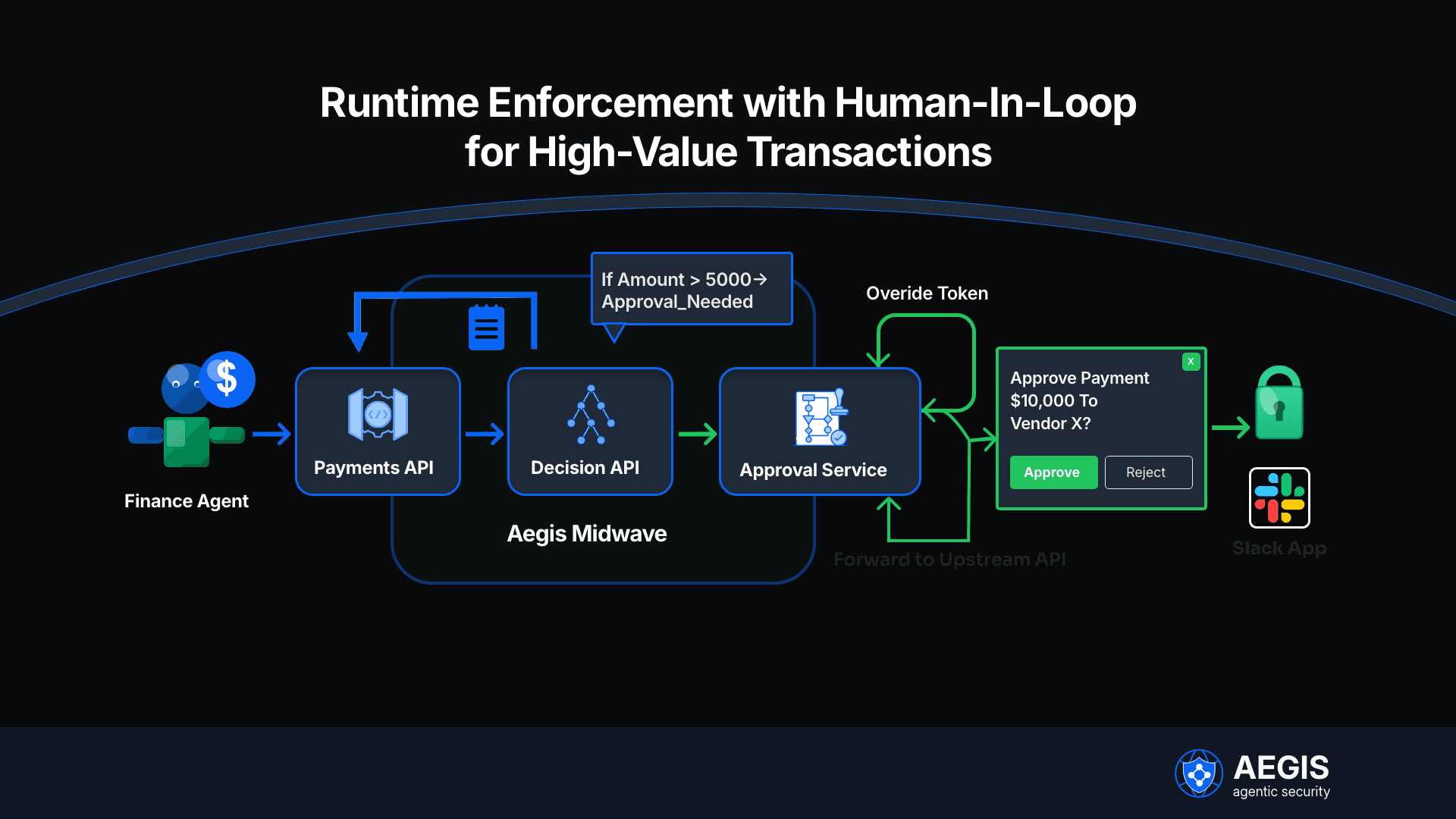
Aegis is designed as a runtime policy and observability fabric for multi-agent systems: a gateway that enforces least privilege, inspects parameters, and emits tamper-resistant traces suitable as regulatory evidence. The next sections describe how Aegis meets the Act’s main evidence and control needs.
Traceability & signed evidence
Aegis records a structured, signed trace for every agent → tool call (agent ID, tool, policy version, decision reason, parent/chain headers, timestamps). These traces are exportable as audit artifacts for regulator requests or internal audits; when combined with versioned policy bundles, they directly support transparency and incident timelines required by the AI Act.
Policy-versioned decisions and tamper resistance
Policies are stored as versioned bundles and compiled to a fast evaluation format (OPA bundles/WASM). Each decision includes the policy version and signed attestation so auditors can verify what rule set applied at the time of action. This supports mitigation claims and can materially reduce exposure during enforcement reviews.
Human oversight & approval workflows
Aegis supports approval_needed outcomes: for high-risk calls (e.g., > threshold payments, EHR exports) the gateway can pause, create an approval ticket (Slack/Teams), and issue a one-time override token when a human approves. The resulting approval artifacts—who approved, when, and the override token—become part of the incident evidence package.
Data protection & DPIA triggers
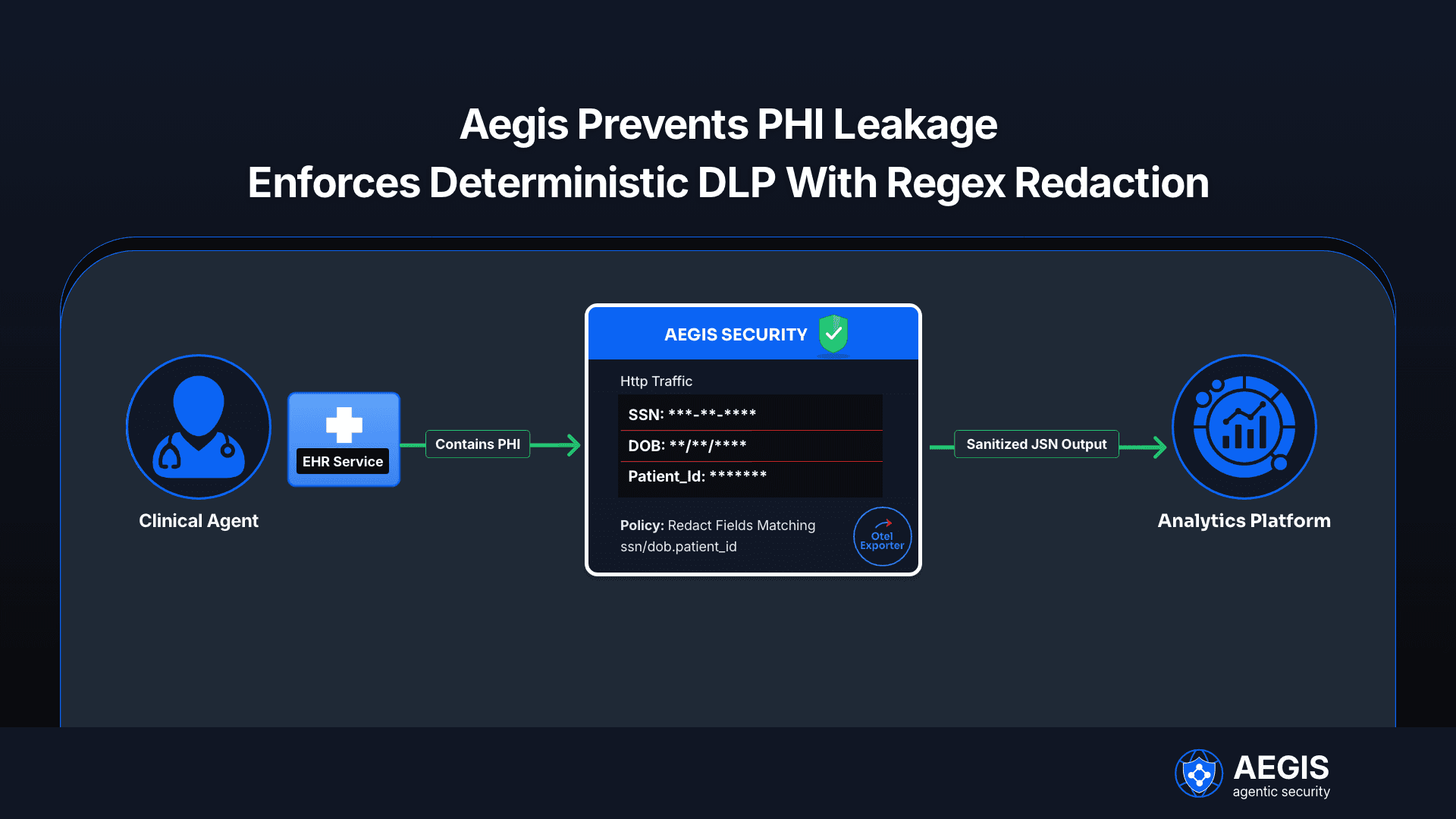
Because Aegis enforces per-field redaction and deterministic DLP at runtime, it helps teams trigger DPIAs when personal data flows are observed or when particular connectors cause cross-border routing. It also supports region-tagged routing to enforce residency constraints at egress time.
Operationalization — shadow mode and testing
Aegis supports a shadow (dry-run) mode so teams can gather would-deny telemetry before enforcing policies. This mapping from shadow findings → policy tuning → enforceable rules is a repeatable path for meeting pre-deployment evaluation expectations in the AI Act.
👉🏻 Simplify EU compliance with automated reporting solutions
Table 2 — Aegis capabilities mapped to AI Act obligations
AI Act requirement | Aegis feature | Evidence produced |
Human oversight (Article 14) | approval_needed workflow | Approval logs + override tokens |
Documentation & transparency | policy versioning, model summaries | Policy bundles + trace exports |
Incident reporting | signed traces & telemetry | Timestamped, signed incident pack |
Risk mitigation measures | runtime enforcement + DLP | Policy rule sets + enforcement metrics |
Operational playbook: onboarding an agentic payment workflow
- Readiness assessment: inventory agents, connectors, and data flows; classify high-risk features (payments, PII).
- Shadow rollout: deploy Aegis in shadow mode for 7–14 days; collect would-deny metrics and parameter distributions.
- Policy tuning: write policy-as-code (YAML/JSON); compile to bundles and validate with dry-run simulation.
- Pilot enforcement: enable enforcement for low-risk actions first; require approvals for high-risk thresholds.
- Audit package: generate a regulator Q&A packet with system diagrams, policy versions, signed traces and DPIA summary.
This cadence aligns with suggested governance cadences (quarterly RMF reviews) and creates clear checkpoints for legal and GRC teams to review before full production rollout.
Practical KPIs & monitoring
Track these KPIs to demonstrate readiness:
- Documentation completeness (%) — percent of workflows with full doc pack.
- Policy coverage (%) — percent of high-risk tool calls governed by Aegis policies.
- Signed trace coverage (%) — percent of calls with attested trace.
- Average approval turnaround (mins) — responsiveness metric for oversight.
Aegis emits OpenTelemetry spans and metrics that feed dashboards for these KPIs.
Common pitfalls and mitigations
- Pitfall: Relying only on pre-deployment checks. Mitigation: Enforce runtime policies and DLP.
- Pitfall: Overzealous policies blocking business flows. Mitigation: Shadow mode and dry-run tuning.
- Pitfall: Missing versioning for policies and models. Mitigation: Use bundle/version metadata and sign artifacts.
Additional resources & links
For industry guidance and platform-level resources:
For official regulatory text and EU guidance: the EU AI Act summary and Commission press materials. (Digital Strategy)
ph
Frequently Asked Questions
- What agentic features commonly trigger high-risk classification?
Answer: Actions that affect fundamental rights, process sensitive personal data, or execute high-impact operations (payments, automated hiring, justice/legal decisions) often fall under high-risk scrutiny. - Can we rely on logs from orchestrators alone for evidence?
Answer: No — orchestrator logs may lack policy version context, attestation signatures, or parameter-level redaction required by auditors. A runtime evidence fabric (like Aegis) complements orchestrator telemetry. - How does Aegis help with incident reporting timelines?
Answer: Aegis produces signed traces with timestamps and policy versions; those artifacts form the core of an incident package that meets reporting timelines and evidentiary needs. - Is shadow mode sufficient for compliance?
Answer: Shadow mode is essential for tuning but does not substitute for enforceable controls. Use shadow mode to refine policies, then enforce with audit traceability in place. - How do we handle third-party connectors & processors?
Answer: Treat connectors as processors in your documentation; enforce per-connector policies in Aegis and capture third-party contract attestation alongside runtime traces. - Will policy evaluation add significant latency?
Answer: Properly implemented (prepared OPA queries, in-memory caches, WASM) target P99 latencies in the ~10–20 ms range; Aegis architecture aims to keep proxy overhead minimal.