
Policy-as-Code for Multi-Agent Systems: Best Practices
Practical guide to policy-as-code for agentic systems: best practices, runtime enforcement, and how Aegis compiles policies to OPA bundles.
Aegis — Policy-as-Code for Multi-Agent Systems
Multi-agent systems introduce new operational and compliance risks because agents can act autonomously, chain calls, and pass parameters that bypass traditional IAM checks. This post explains why policy-as-code is the correct architectural approach for secure agentic deployments, lays out operational best practices for authoring, testing and running policies at scale, and describes how Aegis — Aegissecurity policy and observability gateway — implements these practices in production. Where appropriate I link to public reference material such as Open Policy Agent and CNCF guidance, and to Aegissecurity product pages for deeper product detail.
Key takeaways in brief:
- Treat policies as first-class, versioned artifacts (author → test → publish → observe → iterate). (Open Policy Agent)
- Use OPA/Rego bundles or WASM for low-latency, prepared queries at runtime. (CNCF)
- Run policies in shadow/dry-run first, collect telemetry, then flip enforcement with signed bundles and rollback paths.
Why multi-agent systems need policy-as-code
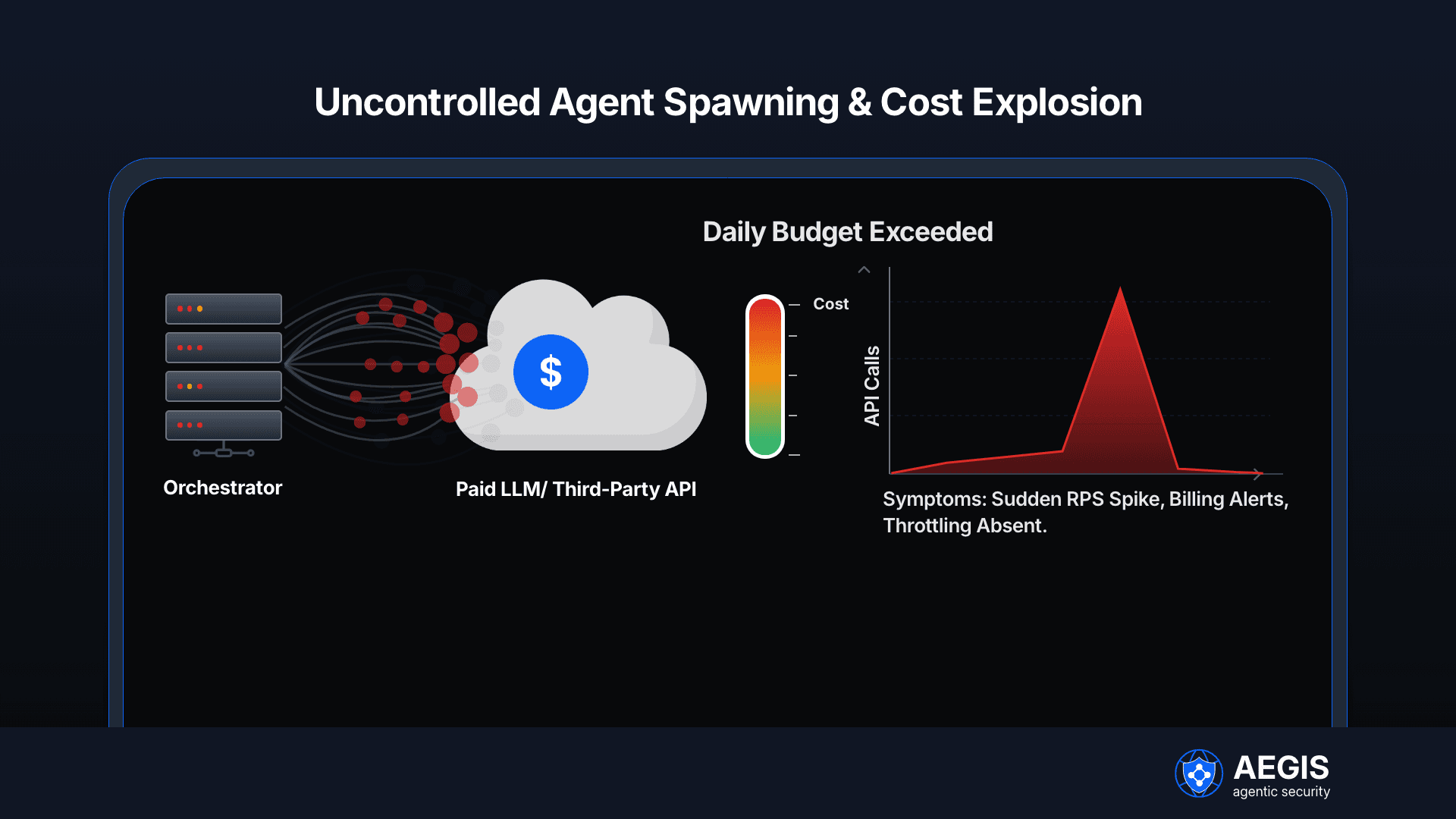
Ad-hoc checks inside agent code are brittle, inconsistent and un-auditable. Agents may be spawned dynamically, act on behalf of different tenants, and chain decisions across multiple services. The result: lateral coercion (planner → finance agent), parameter injection (unvalidated payment amounts or file paths), and silent data exfiltration via unapproved egress.
The policy-as-code pattern separates decision logic from agent implementation. Policies become versioned, testable artifacts; enforcement is performed by a well-known runtime evaluator (e.g., OPA) rather than scattered runtime checks. CNCF and OPA guidance has codified many of these best practices and demonstrates their operational and security benefits. (CNCF)
Core principles and policy types
Design policies around a small set of actionable policy outcomes and composable types:
Allow / Deny — binary decisions for access control and egress.
Sanitize — deterministic redaction (PII/PHI) or parameter transformation.
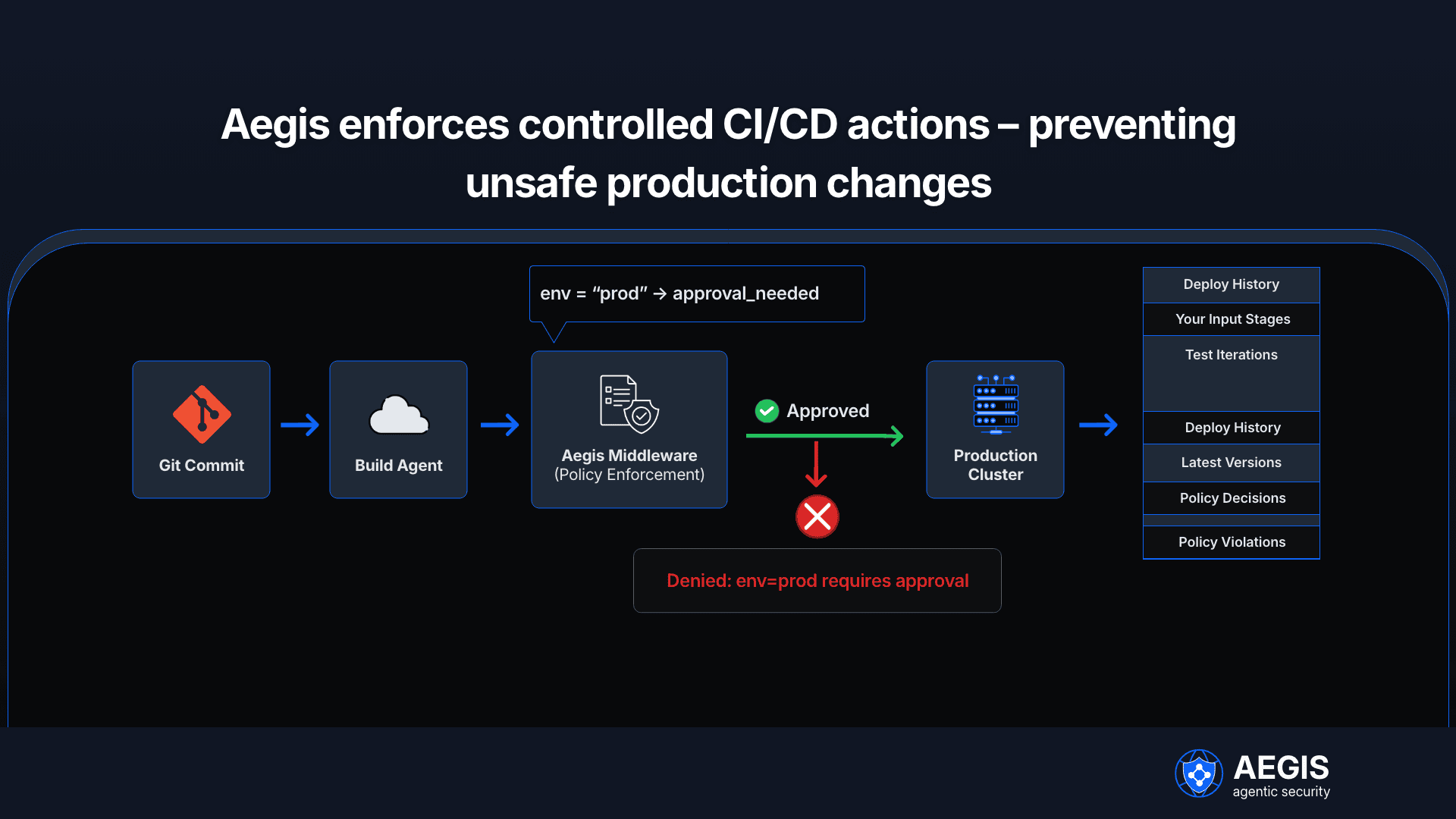
Approval_needed — block and require human override for high-risk actions.
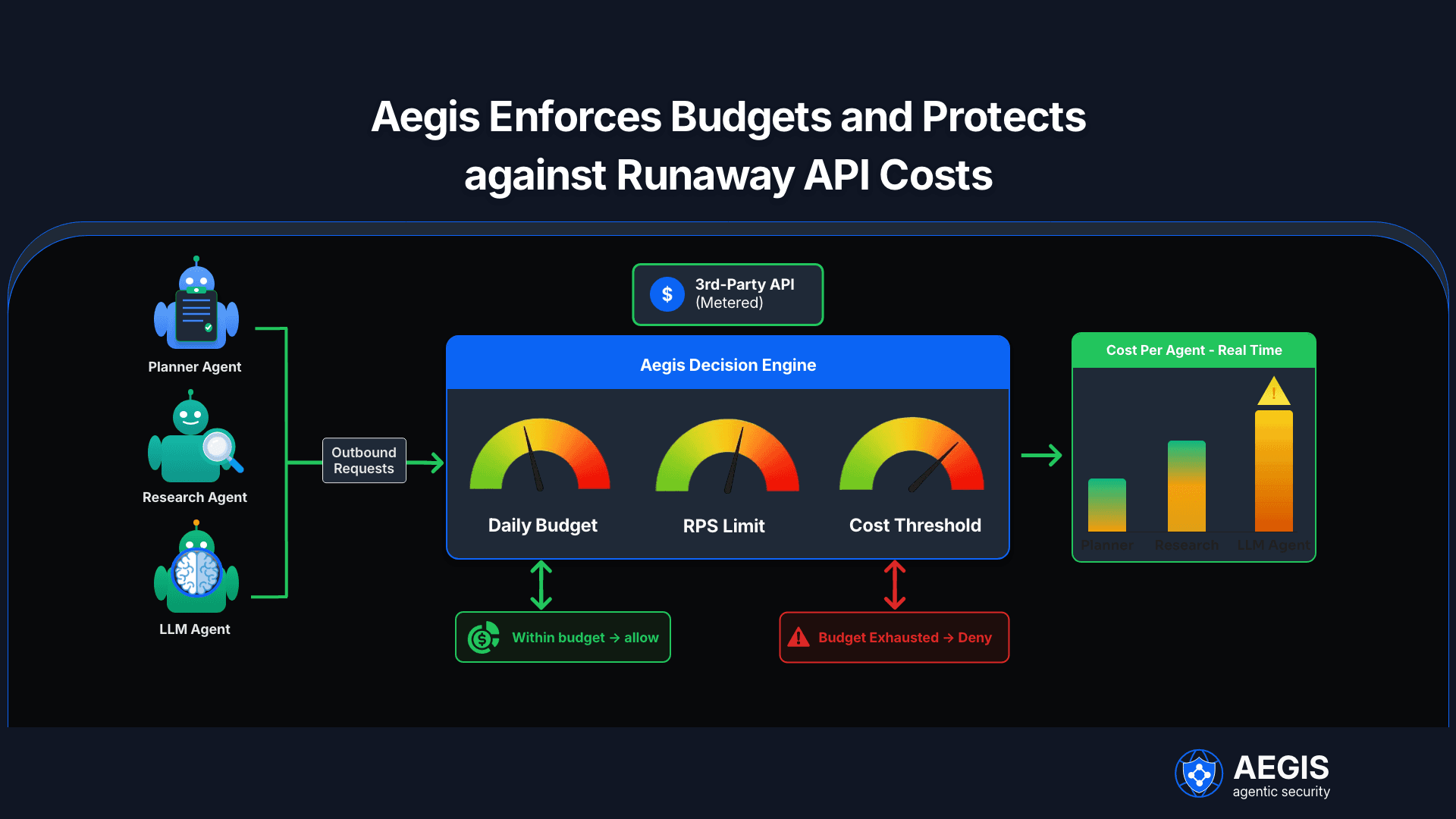
Rate_limit / Budget — per-agent quotas and spend ceilings.
Principles:
- Keep policy language separate from application logic; policies express what rather than how.
- Author in human-friendly YAML/JSON templates, compile to OPA bundles at CI time.
- Require schema validation, unit tests, and pre-commit hooks to avoid misconfiguration.
Aegis in the AI Security stack
Aegis is a runtime policy and observability gateway designed to enforce policy-as-code for multi-agent architectures. It sits between orchestrators (AgentKit, LangGraph, LangChain variants) and downstream tools as a lightweight policy data plane and a control plane for policy management. The architecture includes:
- Sidecar / forward proxy: intercepts outbound tool calls and forwards ext_authz requests.
- External authorization server: loads compiled OPA bundles, runs prepared queries, and returns allow/deny/sanitize/approval_needed decisions.
- Control plane & bundle store: validates YAML/JSON policies, compiles to OPA data + shared Rego, stores signed bundles with ETags and manifest metadata.
👉🏻 Enforce fine-grained policies using OPA and Rego
Operational features:
- YAML → OPA compile: security teams author in templates (conditions, regexes, ranges). Aegis compiles and signs bundles, enabling tamper evidence and rollback.
- Hot reload & prepared queries: bundles hot-reload with cache priming to meet P99 latency budgets (typical target ≤20 ms). (Open Policy Agent)
- Shadow mode and dry-run: collect would-deny telemetry and tune conditions before enforcement.
- Approval workflows: for approval_needed decisions Aegis can post interactive approvals to Slack or Teams and mint a one-time override token when approved.
- Observability: emits OpenTelemetry spans with policy_version, decision_reason, agent_id and estimated cost; integrates with Grafana/Prometheus and SIEMs.
Authoring, testing and CI for policies
Authoring:
- Provide YAML templates with schema validation. Example fields: agent, allowed_tools, actions, conditions (max_amount, regex).
Testing matrix:
- Unit tests (Rego unit tests / small input sets).
- Integration tests (API calls via local env).
- Edge/adversarial tests (prompt injection, malformed input patterns).
- Dry-run/Shadow tests for production traffic.
CI checklist:
- Linting and schema validation.
- Compile to OPA bundle and run prepared queries against canonical datasets.
- Sign bundle, publish to artifact store, update manifest and ETag.
Table 1 — Policy lifecycle checkpoints
Stage | Gate | Outcome |
Author | Schema lint, template validation | Reject invalid fields |
Test | Unit + integration + adversarial | Fail on false negatives |
Publish | Sign bundle, ETag | Immutable published version |
Observe | Shadow metrics, would-deny rate | Tune thresholds |
Runtime considerations: performance and safety
Prepared queries, in-memory caches, and optional WASM compilation of Rego logic are the operational levers for predictable latency. Target P99 decision latency ≤20 ms; aim for minimal proxy overhead. For high throughput, Aegis supports caching of prepared queries and tenant-scoped bundles to avoid cross-tenant contamination. (Open Policy Agent)
Emergency escape patterns:
- Fail-closed for writes; configurable fail-open for read-only low-risk actions.
- Safe rollback: signed manifests and README with rollback steps.
- Approval throttles and rate limits to avoid human overload.
Table 2 — Runtime safety knobs
Knob | Purpose | Default action |
Fail mode | Availability vs safety | Fail-closed for writes |
Shadow mode | Observability before enforcement | Collect would-deny events |
Approval thresholds | Reduce human fatigue | Aggregated rules + budgets |
Bundle signing | Integrity | Ed25519 signed manifests |
Policy composition and multi-tenant governance
Compose policies by scope: tenant → agent → tool → parameter. Use inheritance and overrides: tenant defaults are broad, agent policies narrow. Audit every decision with policy_version and decision_reason in traces to meet compliance requirements. For MSSPs and regulated enterprises the manifest should record the author, change reason, and signature.
Policy governance KPIs to track:
- would-deny rate (shadow → enforce flip readiness)
- approval latency (median human response)
- false positives (blocked legitimate calls)
- policy_version per trace (audit completeness)
Practical example: FinTech payment policy
Policy YAML (conceptual):
- agent: finance-agent
- allowed_tools: stripe-payments
- actions: create_payment
- conditions: max_amount: 5000, currency: USD
- failure_action: deny / approval_needed (if >5000)
Mapped to Rego and compiled into an OPA bundle, this policy guarantees any finance agent call with amount > $5,000 either fails or triggers approval. Aegis enforces this at runtime and emits a signed trace showing decision, policy_version, and whether an approval was used. This prevents planner coercion and creates an auditable trail suitable for SOC reviews.
👉🏻 Centralize policies for consistent agent governance
Migration playbook from ad-hoc checks
- Inventory: identify agent→tool flows and top high-risk connectors.
- Template library: create policy templates for common connectors (payment, EHR, egress).
- Shadow rollout: run for 1–2 weeks, collect would-deny telemetry.
- Tune and enforce: lower false positives, sign bundles, flip to enforce.
- Continuous monitoring: automated drift detection and periodic policy reviews.
FAQs
Q1: Why use OPA/Rego rather than in-code checks?
A: Centralized, testable, versioned policies with consistent runtime evaluation. OPA is a proven CNCF project and a natural fit for policy-as-code. (Open Policy Agent)
Q2: Can policies meet strict latency budgets?
A: Yes — prepared queries, caching and WASM compilation allow P99 decision latency under 20 ms when tuned. (Open Policy Agent)
Q3: How do approvals scale?
A: Use thresholds to reduce low-risk approvals, aggregate similar requests, and provide override tokens valid for a single retry. Aegis integrates with Slack/Teams for interactive approvals.
Q4: How to prevent policy drift between tenants?
A: Tenant-scoped bundles, signed manifests, and CI gating prevent accidental cross-tenant policy leakage.
Q5: Where can I find example policies and templates?
A: Aegis ships sample templates and a sandbox for authors; for foundational reference see the Open Policy Agent docs at https://openpolicyagent.org/ and CNCF best-practice posts. (Open Policy Agent)
👉🏻 Build reusable policy libraries for enterprise-wide consistency
Takeaways
Policy-as-code is a necessary control for safe, auditable agentic AI. Adopt a disciplined lifecycle — author, test, publish, observe — and use a runtime enforcement fabric like Aegis to implement policies consistently across orchestrators and tools.
Further reading / references:
Open Policy Agent — https://openpolicyagent.org/. (Open Policy Agent)
CNCF Best Practices: Open Policy Agent secure deployment. (CNCF)
Gartner/industry trend coverage on agentic AI evolution and attrition. (Reuters)