
How to Use OPA/Rego to Enforce Policies on Agent Calls
Practical guide to using OPA/Rego for runtime agent policies with examples, performance tips, and how Aegis compiles and enforces bundles.
Aegis: Enforcing OPA/Rego Policies on Agent Calls
Enterprises deploying agentic AI require runtime, auditable, low-latency policy enforcement that reasons about agent identity, parameters, budgets and call-chains. This guide explains why OPA/Rego is the right fit, walks the policy lifecycle from authoring to hot-reload, provides Rego examples for common rules (amount caps, allowlists), and shows how Aegis compiles and operates OPA bundles at runtime. It includes performance and benchmarking guidance, practical YAML→Rego examples, two tables of comparisons/statistics, and two diagram placeholders for designers.
Why OPA/Rego for agent policies
Agent calls are not simple "who can call this API" checks — they require conditional logic on agent identity, message context, call chain and parameters (amounts, file paths, domains). OPA/Rego offers:
- Policy-as-code: human-readable Rego + versioned bundles.
- Extensibility: support for complex predicates (regex, ranges, sets).
- Integrations: Envoy ext_authz, SDKs, WASM compilation for constrained runtimes. (Open Policy Agent docs provide performance & integration guidance: https://openpolicyagent.org/docs/envoy/performance). (Open Policy Agent)
Industry context: recent research shows a rapid increase in agentic AI experimentation — McKinsey reports 23% of organizations scaling agentic systems and another 39% experimenting as of 2025 — underscoring the need for runtime governance. (McKinsey & Company)
👉🏻 Simplify policy enforcement using scalable tools like OPA and Rego
Policy lifecycle: author → compile → bundle → hot-reload
Authoring and schema validation
Start with a constrained YAML schema for agent policies (agent id, allowed tools, actions, conditions, budgets, approval rules). Aegis accepts this YAML, validates it against a JSON schema, and rejects misconfigurations during publish — preventing accidental broad denies.
Compile to OPA bundle
Aegis compiles validated YAML into:
- data.json (tenant/agent-specific data)
- policy.rego (generic evaluation logic)
- prepared queries metadata
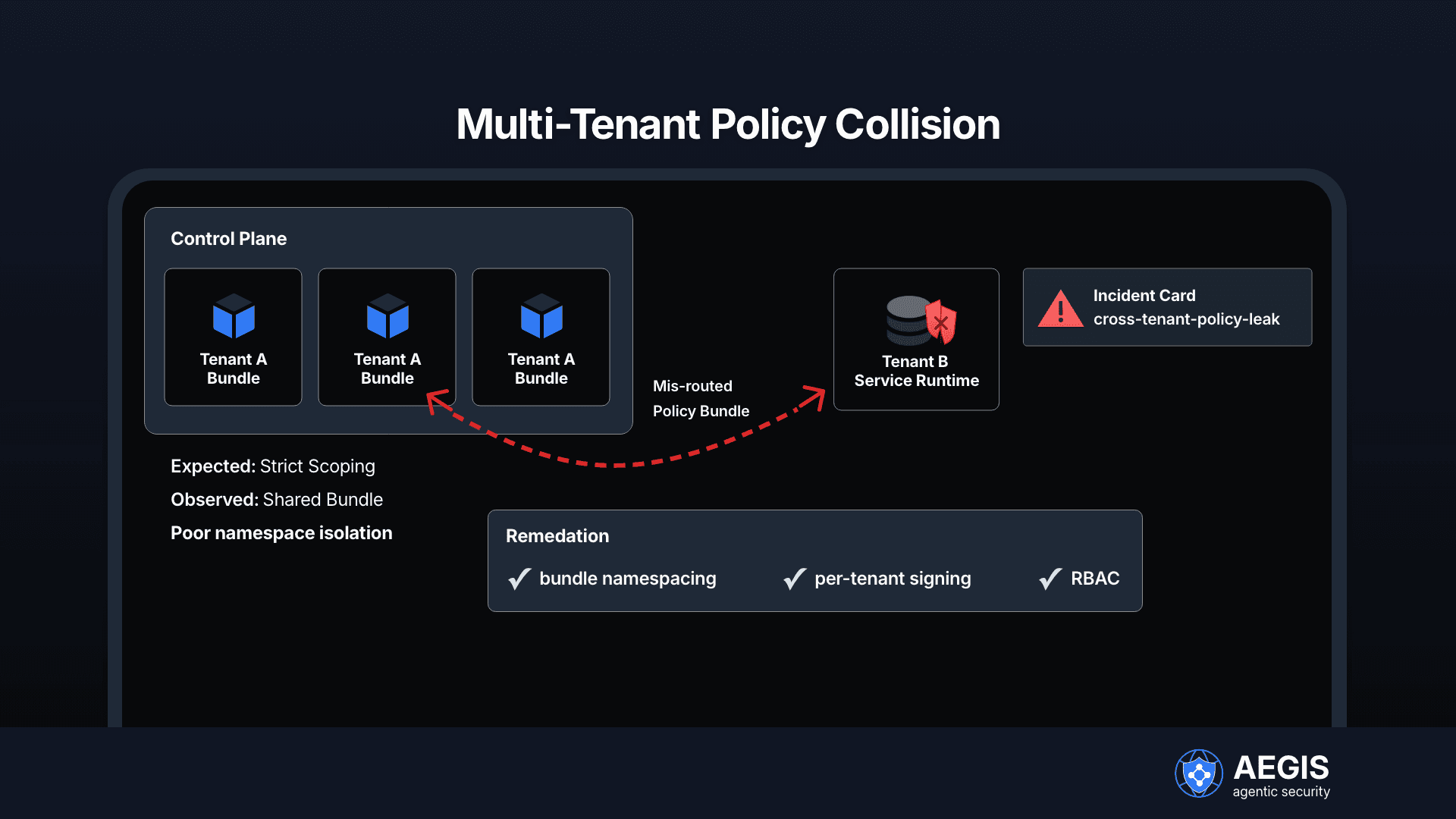
Bundles are stored with signed manifests and ETags for integrity and caching. Hot-reload allows the decision service to swap bundles without restart — essential for rapid iteration and incident response. (See Aegis design notes: policy compiler and bundle store).
👉🏻 Enforce consistent governance with automated policy frameworks
Runtime evaluation & decision
The data plane proxy (Envoy ext_authz or SDK middleware) forwards auth requests to the Aegis decision service. Using prepared queries and in-memory caches, Aegis aims for low P99 decision latencies (target ≤ 10–20 ms). If a rule returns approval_needed, the service triggers an approval workflow and returns a standardized PolicyViolation or approval_pending error to the caller.
Rego pattern examples
Below are compact, production-minded Rego examples derived from typical YAML policies.
Example: Max amount rule (deny > threshold; approval_needed if near threshold)
package aegis.decisions
default decision = {"allow": false, "reason": "no_match"}
# prepared query: data.aegis.allow_payment
allow_payment[resp] {
input.agent == data.agents[input.agent].id
input.tool == "stripe-payments"
amount := input.params.amount
max := data.agents[input.agent].max_amount
amount <= max
resp := {"allow": true, "reason": "within_limit"}
}
allow_payment[resp] {
input.tool == "stripe-payments"
amount := input.params.amount
max := data.agents[input.agent].max_amount
amount > max
amount <= max * 10
resp := {"allow": false, "reason": "approval_needed", "action":"approval_needed"}
}
allow_payment[resp] {
amount := input.params.amount
amount > data.agents[input.agent].max_amount * 10
resp := {"allow": false, "reason": "blocked_over_hard_limit"}
}
Example: Domain allowlist (egress control)
package aegis.egress
allow[true] {
domain := input.request.host
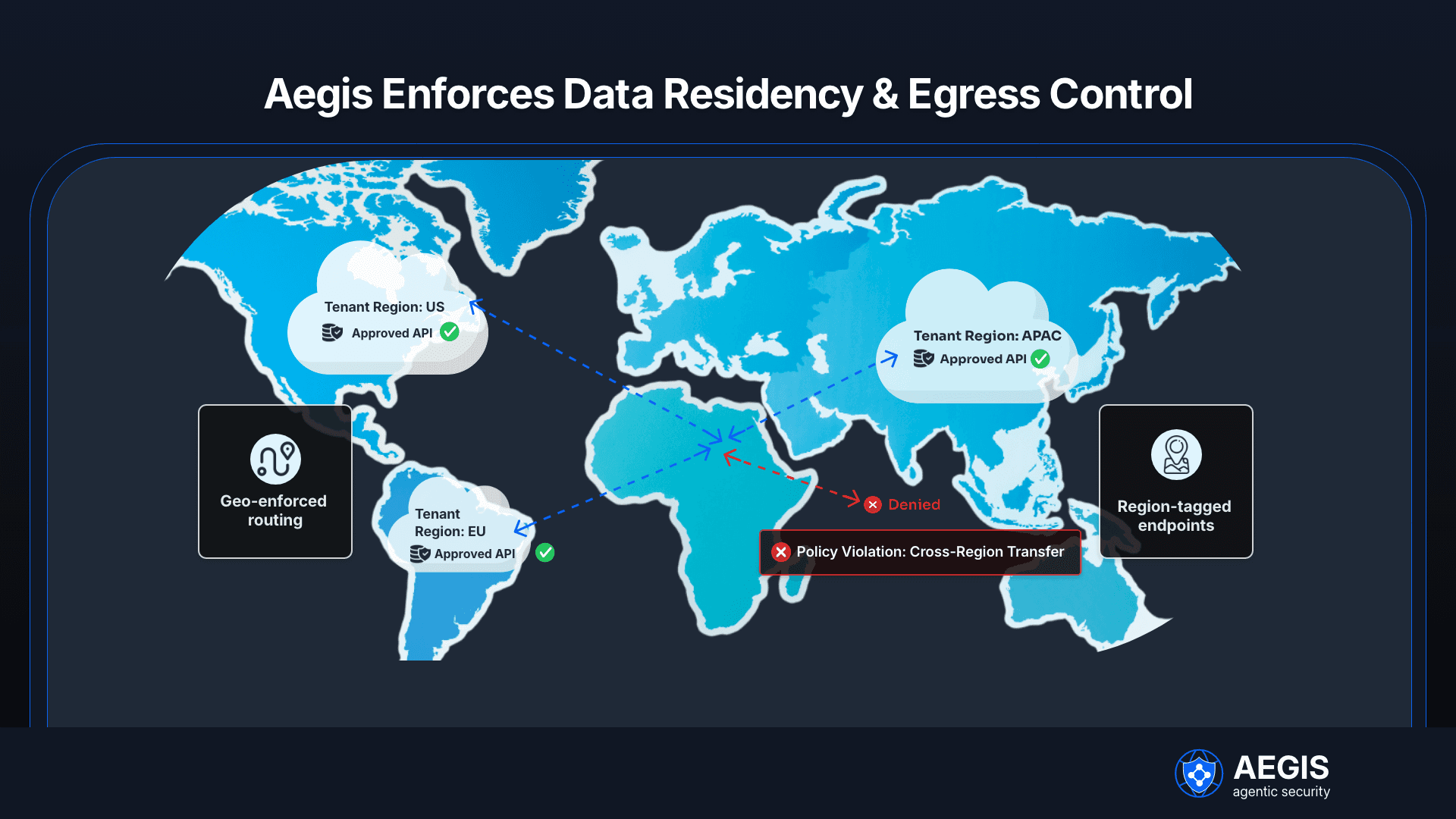
domain == data.tenants[input.tenant].egress_allowlist[_]
}
YAML → Rego practical flow (short example)
YAML:
agent: finance-agent
allowed_tools:
- name: stripe-payments
actions:
- create_payment
conditions:
max_amount: 5000
approval_threshold: 5000
Aegis compiler transforms the conditions into data.json and generates policy.rego with prepared queries like data.aegis.allow_payment. Prepared queries are the recommended production pattern for low-latency evaluation.
👉🏻 Optimize performance without compromising on security controls
Best practices and performance tuning
- Use prepared queries: compile hot paths into prepared queries; cache their results where safe. OPA supports benchmarking via opa bench — use it to measure microsecond-level query costs. (Open Policy Agent)
- Keep data separate from logic: store agent/tenant parameters in data.json to avoid recompiling Rego on every change.
- Use WASM when embedding policy evaluation in constrained environments (sidecars, edge).
- Shadow mode: run new policies in shadow for 7 days to collect would-deny telemetry before flipping to enforce (Aegis supports shadow/dry-run).
- Benchmarks: aim for P99 decision latency ≤ 10–20 ms with prepared queries and in-memory caches; include the proxy round-trip in total P99 budget. Community guidance and OPA docs provide benchmarking patterns. (Open Policy Agent)
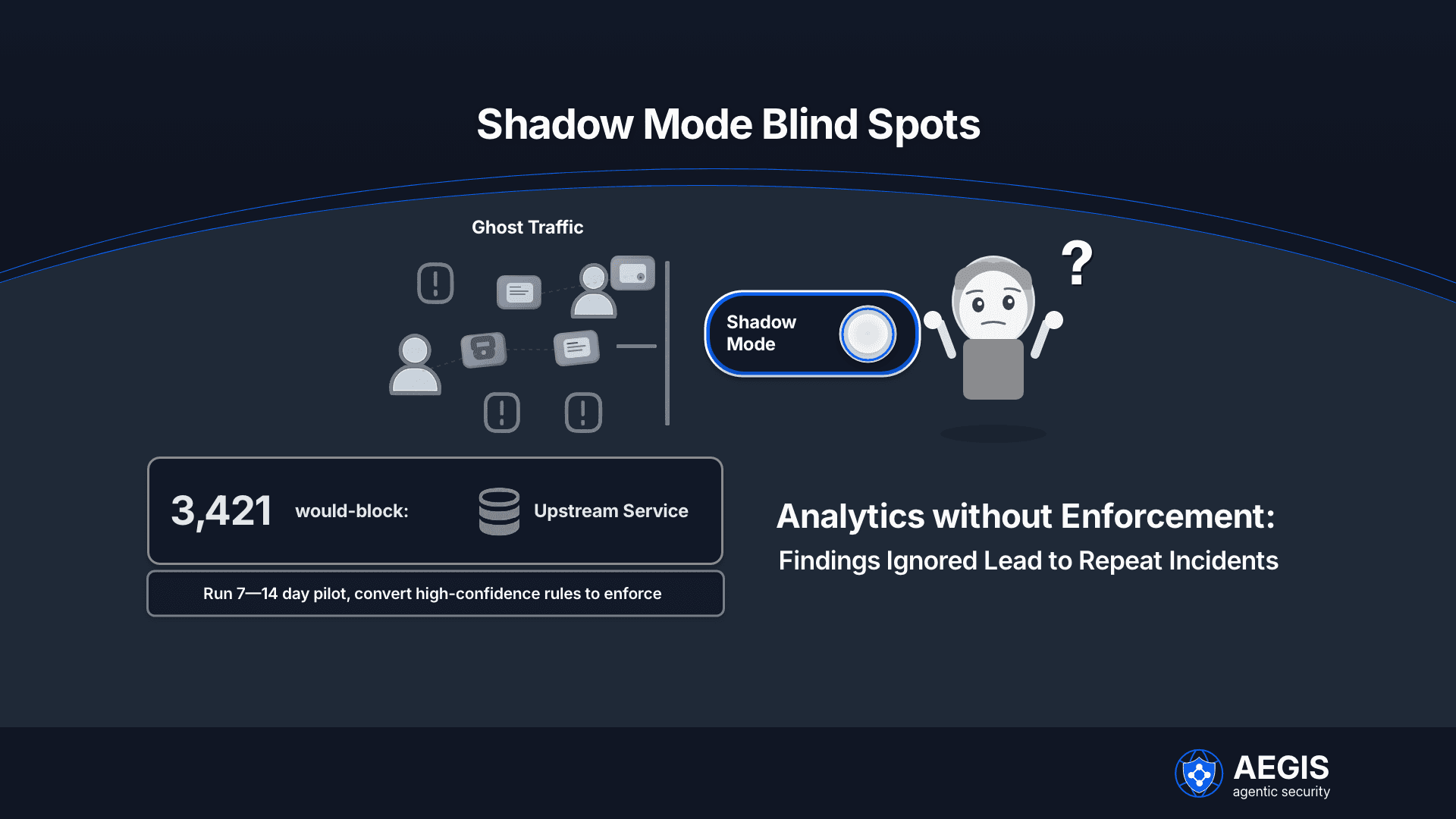
Table 1 — Policy decision outcomes & consequences
Outcome | Typical action | Telemetry fields emitted |
allow | Forward request to tool | agent_id, tool, policy_version, decision, latency |
deny | Return PolicyViolation error | agent_id, tool, rule_id, reason, hashed_audit_id |
sanitize | Redact params & forward | redaction_mask, rule_id, decision |
approval_needed | Pause + notify human | approval_id, approver_channel, pending_queue_pos |
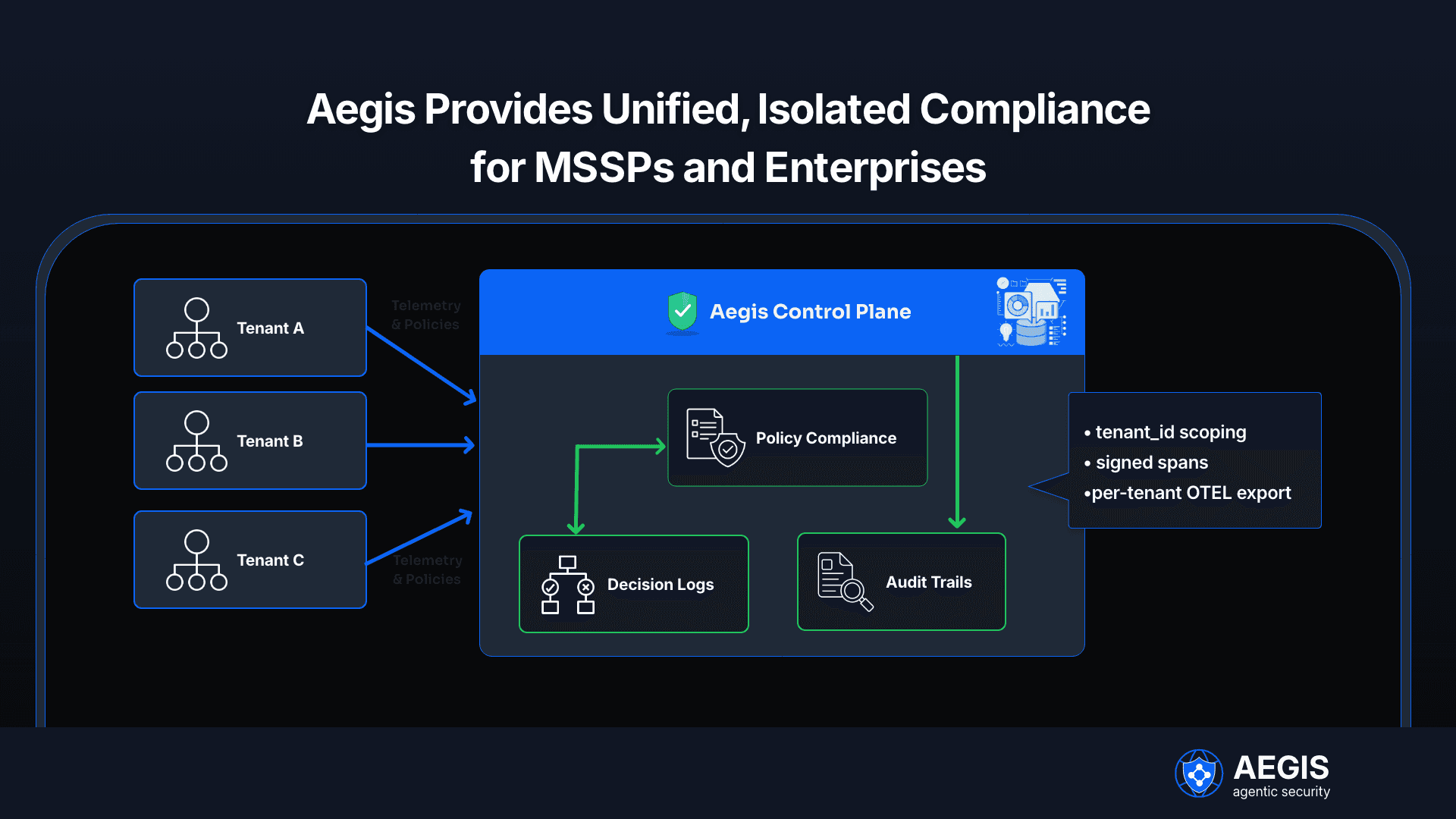
Table 2 — Tuning knobs for low latency
Tuning area | Recommendation | Expected impact |
Prepared queries | Use for hot paths | reduce Rego eval cost by 3–10× |
In-memory caches | Cache agent metadata | lower read latency; careful TTLs |
WASM | Compile Rego to WASM (edge) | lower startup cost in constrained hosts |
Bundle hot-reload | Pre-warm bundles | avoids cold-start spikes |
How Aegis fits
human-friendly YAML policies, compiles them into OPA bundles, serves those bundles via a signed bundle store, and exposes a low-latency decision service for Envoy ext_authz or SDK middleware. Key Aegis capabilities:
- Policy compiler & bundle store: converts YAML→OPA bundles, signs manifests, supports ETags and hot-reload.
- Decision service: prepared queries, in-memory caches, optional WASM for constrained runtimes; targets P99 ≤ 20 ms.
- Approvals and human-in-the-loop flows: integrated Slack/MS Teams approvals with override tokens for one-time retries.
- Observability: emits OpenTelemetry spans with decision metadata (policy_version, approval_id, estimated_cost) — useful for SOC/Audit and FinOps. OpenTelemetry adoption continues to grow in 2024–25; nearly half of surveyed cloud-native orgs have adopted the project. (OpenTelemetry)
Aegis’ runtime model enforces per-agent budgets, egress allowlists, per-field sanitization, and call-chain validation (parent_agent_id). The product brief defines the gateway as an “Istio + OPA for Agents”: a lightweight enforcement fabric that prevents planner→finance coercion, enforces budgets, and produces SIEM-ready traces.
Operational playbook — rollout checklist
- Author sample policies for 2 critical connectors (e.g., payments, document store).
- Deploy Aegis in shadow mode for 7 days; collect would-deny telemetry.
- Tune regexes, budgets and approval thresholds based on observed distributions.
- Flip to enforce for pilot agents; monitor P99 latency and blocked rates.
- Iterate and add more tools/agents; maintain rollback-ready bundles.
Frequently Asked Questions
Q1: How do I prevent agent privilege escalation through chained calls?
A: Enforce and validate parent_agent_id headers in policy conditions; require parent-agent attestation and tombstone tokens to prevent forged chain headers. Aegis supports call-chain validation in its MVP.
Q2: What latency should I expect for policy decisions?
A: With prepared queries, in-memory caches and optimized bundles, target P99 decision latency ≤ 10–20 ms (including OPA eval). Proxy overhead adds modest RTT — benchmark in your environment with opa bench. (Open Policy Agent)
Q3: Can policies be tested safely before enforcement?
A: Yes — run policies in shadow/dry-run mode to collect would-deny events and tune rules before enabling enforcement. Shadow mode and rollback support are core Aegis features.
Q4: How does Aegis help with compliance audits?
A: Aegis emits signed OpenTelemetry spans and structured logs containing agent_id, policy_version, decision, and approval_id — enabling tamper-evident traces for SOC and compliance teams.
Q5: How to handle approval workflow scale?
A: Use thresholds to reduce low-risk approvals, queue aggregations, and automatic batch approvals for pre-approved patterns. Aegis integrates Slack/MS Teams and issues one-time override tokens after human approval.
Q6: What are first-step integrations?
A: Start with 2 critical connectors (payments and document storage), enable shadow mode, validate budgets, and onboard a small set of agents/tenants. Aegis provides SDKs/CLI and Helm charts for quick pilot deployment.