
Handling State and Memory in Agent Orchestration
Practical guide to agent memory management, poisoning defenses, and runtime enforcement with Aegis for secure multi-agent AI.
Aegis: Secure Agent Memory & Runtime Policies
Multi-agent systems unlock automation but introduce new attack surfaces: persistent agent memory, parameter injection, and inter-agent coercion. This article describes memory models and safe patterns for agent orchestration, evaluates storage choices, and explains how Aegis—Aegissecurity policy and telemetry gateway for agents—operationalizes safety, auditability, and containment for production deployments.
Introduction
Agent memory and state are powerful: they enable context, planning, and complex workflows. They are also risky when memory persists sensitive context, becomes poisoned, or drifts away from intended semantics. This post lays out a practical operational model for memory, a set of engineering safety patterns, storage tradeoffs, and how Aegis integrates telemetry, policy enforcement, and rollbacks to make agentic AI safe at scale.
Memory models: transient vs persistent
Agents need two distinct memory types.
Transient context (per call)
This is ephemeral state used only during a single run: request-scoped variables, intermediate planning outputs, or temporary embeddings cached in memory for latency. Treat as TTL'd, non-persistent, and never stored in append-only traces as raw text.
Persistent memory (task history)
Longer lived: user preferences, task logs, checkpoints, or embeddings for retrieval. Persistent memory must be versioned, auditable, and subject to retention and DLP controls.
👉🏻 Enhance agent intelligence with real-time knowledge retrieval
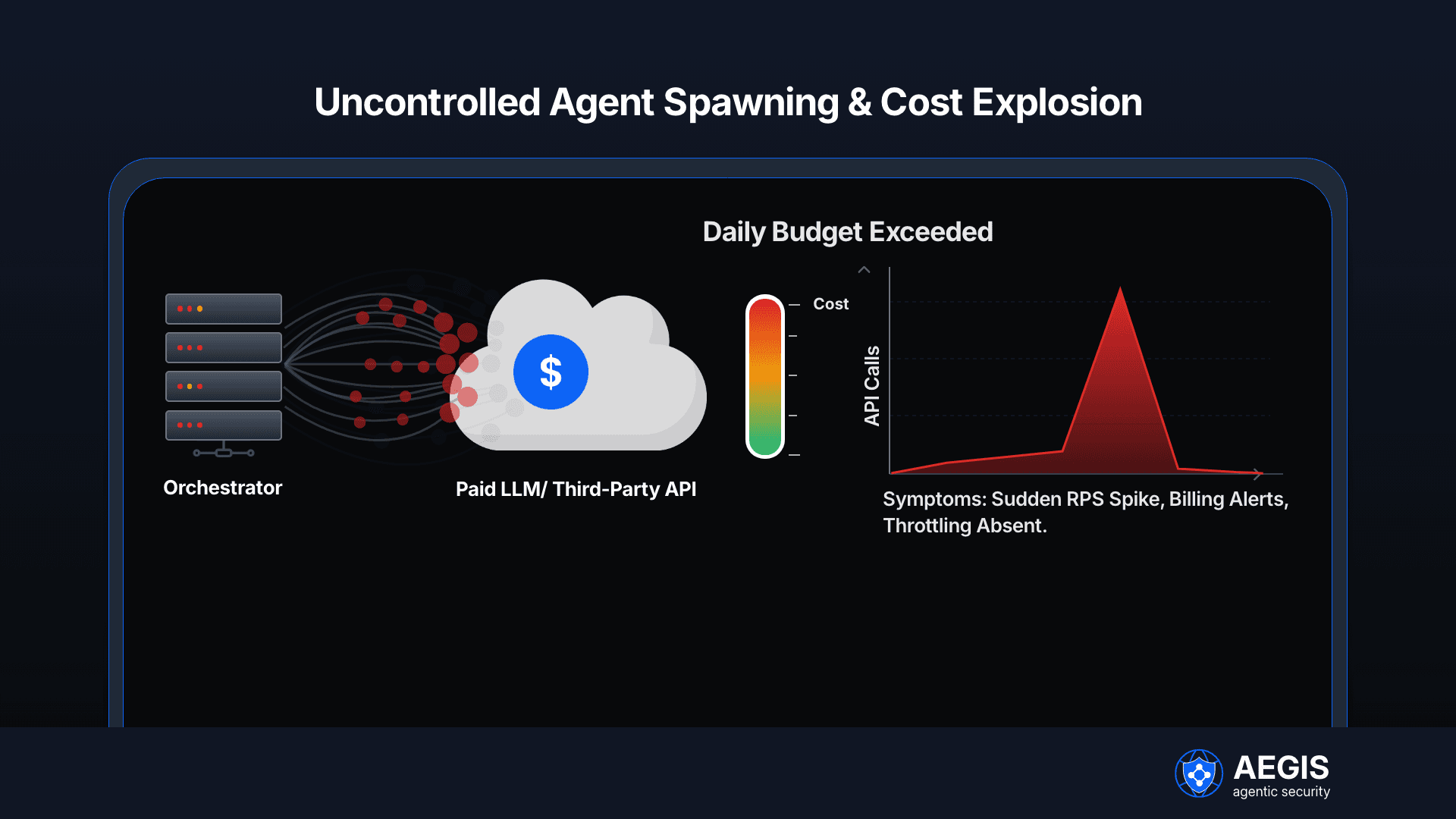
Table 1 — Memory model comparison
Characteristic | Transient context | Persistent memory |
Lifetime | milliseconds–minutes | days–years |
Storage | in-memory cache | versioned DB / append-only traces |
Risk | lower (short-lived) | higher (poisoning, exfil) |
Controls | TTL, sandbox | DLP, versioning, audit spans |
Safety patterns for preventing memory poisoning
Memory poisoning occurs when untrusted inputs become part of persistent context and later influence decisions. Use these patterns:
Policy-driven sanitization
Sanitize writes with regex, DLP, and schema checks. Block or transform writes containing PII unless explicitly authorised.
Provenance & append-only traces
Write-only append logs plus linked memory snapshots provide immutable provenance. Each memory write should record agent_id, parent_span, policy_version, and a content hash.
Versioning and checkpoints
Store immutable snapshots with version tags and quick rollback procedures. Snapshots reduce blast radius when corruption occurs.
Record & replay for debugging
Adopt a Record & Replay approach: Aegis trace records allow reproduction of agent decisions for debugging and root cause analysis without reintroducing unsafe live state.
Access control & least privilege
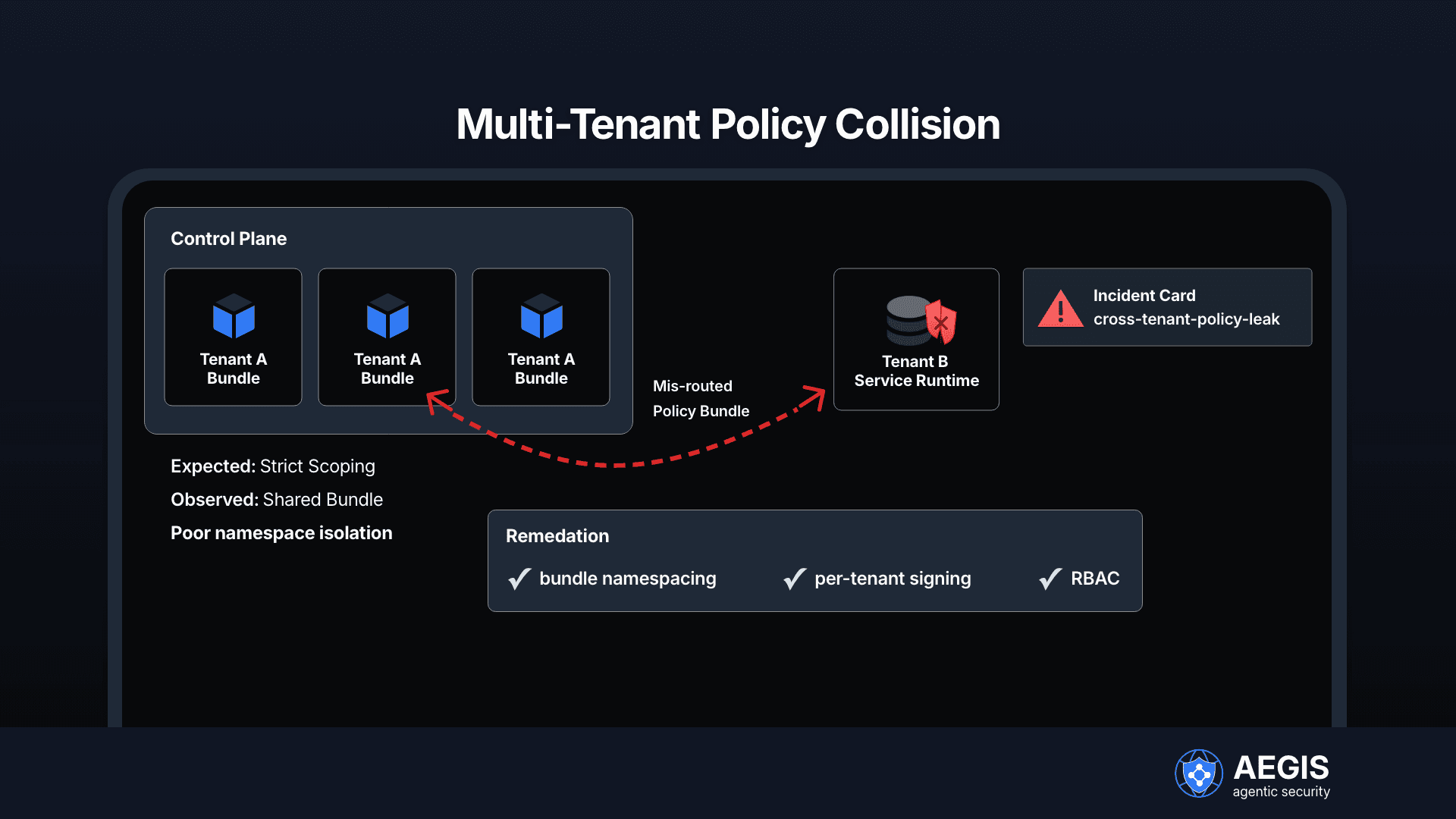
Use per-agent identities and scoped tokens. Agents read only sanitized views, not raw memory, unless authorised.
m
Storage choices and operational tradeoffs
No single store fits every need. Choose components by SLA, cost, and threat model.
Vector DBs with access policies
Vector embeddings enable retrieval-augmented generation (RAG). Enforce access policies per-agent and per-query budget. Store only non-sensitive embeddings or use reversible hashing for sensitive vectors.
Redis & hot caches
Cache hot context for low latency with short TTLs. Always fall back to persistent store for authoritative data.
Append-only traces & audit stores
Use object stores (S3/GCS) or write-once databases for append-only traces. Store signed manifests to prevent tampering.
Table 2 — Storage quick reference
Store type | Use case | Security controls |
Redis (in-memory) | Hot context, low latency | TLS, ACLs, TTLs |
Vector DB | RAG retrievals | Per-agent RBAC, budgets, encryption |
Object store (S3) | Append-only traces & snapshots | Versioning, signed manifests |
Postgres | Transactional state | Row-level encryption, transactions |
Aegis: telemetry, governance, and enforcement
Aegis is designed as a runtime policy and observability fabric for multi-agent AI systems. It enforces least-privilege between agents and tools, prevents inter-agent coercion, and emits structured telemetry for SOC and compliance teams. Operationally, Aegis sits between your orchestrator (AgentKit/LangGraph/custom) and downstream tools as a data-plane gateway and control-plane policy manager.
👉🏻 Visualize relationships across agents for better orchestration
How Aegis treats memory and state
Aegis does not store raw agent memory by default. Instead, it:
- Emits signed, append-only trace records for each memory write request, containing metadata: agent_id, memory_key (hashed for PII), policy_version, and content_hash. These traces are stored in an immutable audit store to support forensics and rollback without keeping raw PII accessible.
- Supports sanitization hooks at write-time. When an agent attempts to persist context, Aegis runs deterministic DLP and policy checks; sensitive fields are redacted or replaced with reversible handles available only to authorised agents.
- Versions snapshots and records snapshot hashes. This enables safe rollbacks: if a poisoned memory snapshot is detected, security teams can revert to the last clean snapshot and replay only approved events.
👉🏻 Streamline workflows with efficient DAG-based execution models
Runtime enforcement for agent↔tool calls
Aegis implements runtime enforcement with low-latency policy evaluation. The gateway inspects agent identity, call parameters, and call chain context. Decisions include allow, deny, sanitize, or approval_needed. For high-risk actions (e.g., payments), Aegis can pause the execution flow and initiate a human approval workflow integrated with standard collaboration tools.
Key runtime behaviors:
- Per-field condition checks: Enforce ranges, regex patterns, or enumerations on parameters (e.g., payment amounts).
- Per-agent budgets & rate limits: Prevent runaway API spend by throttling or blocking when budgets are exhausted.
- Shadow mode: Observe would-blocks and tune policies before enforcement is enabled.
Observability & audit
Aegis emits OpenTelemetry spans for every decision: agent_id, tool, decision, reason, policy_version, latency, and estimated cost. These spans feed dashboards for security, compliance and FinOps. For compliance, Aegis provides signed logs and tamper-evident manifests to prove decision provenance.
Example: stopping a poisoned memory incident
Imagine a poisoned memory caused 100k erroneous email sends. With Aegis you: 1) identify the offending memory via trace hashes, 2) rollback to the previous snapshot, 3) replay approved events with sanitized inputs, and 4) notify SOC with a forensic report linking the agent, policy version, and approval chain—restoring operations with minimal damage.
Developer patterns & integration
Developers interact with Aegis through SDKs and policy-as-code. Practical patterns:
- Use client SDKs to call safe_write/safe_read APIs that perform policy checks and emit traces.
- Run policies in shadow mode for 7 days, track would-blocks, and iterate.
- Model workflows as finite-state machines and persist state transitions with explicit transaction semantics for concurrent writes.
- Test memory writes in staging with fuzzing tools to detect injection vectors.
Testing, governance, and KPIs
Operational KPIs to track:
- Memory write rate and sanitized write percentage.
- Restore success rate after snapshot rollbacks.
- Number of policy violations blocked vs allowed.
- Approval workflow latency and approval queue depth.
- Per-agent budget adherence and cost variance.
Governance controls: retention policies mapping to legal/regulatory requirements, TTL enforcement for sensitive memory, and encrypted-at-rest storage.
Practical checklist for implementation
- Distinguish per-call context vs persistent memory; enforce TTLs for the former.
- Use append-only traces with content hashes and versioned snapshots.
- Sanitize and DLP memory writes before persisting; require reversible handles for PII.
- Enforce per-agent identity, budgets, and parameter limits at runtime.
- Run policies in shadow mode and iterate using telemetry.
- Provide fast rollback and replay tooling for SOC investigations.
-1.png&w=3840&q=75)
Frequently Asked Questions
- How do I stop memory poisoning without losing useful context?
Answer: Enforce write-time sanitization, record-only handles for PII, versioned snapshots and strict access control so agents can read only sanitized views unless explicitly authorised. - Should I store embeddings for RAG?
Answer: Yes, but with caveats: enforce per-agent access control, budgets for embedding calls, and avoid embedding raw PII. Use reversible hashes or tokenization where necessary. - What’s an acceptable retention policy for agent memory?
Answer: It depends on compliance: retain minimal necessary context, TTL sensitive fields (days–weeks), and keep append-only traces (hashes/metadata) longer for audit, using encryption and legal review. - How does Aegis integrate with orchestrators?
Answer: Aegis provides SDK middleware and a sidecar/proxy model that requires minimal changes to existing orchestrators and supports shadow mode rollouts. - Can Aegis pause executions for human approvals at scale?
Answer: Yes — policies can define approval thresholds and integrate with Slack/Teams. To scale, tune thresholds, use per-agent budgets, and pipeline approvals for batch human decisions. - What KPIs should my SOC track?
Answer: Blocked policy violations, sanitized write ratios, rollback success rates, approval latency, and per-agent spend.
Closing
Agent memory management and runtime enforcement are engineering problems requiring the right mix of policy, telemetry, and storage design. Aegis provides a practical runtime fabric that combines policy-as-code, deterministic DLP, low-latency enforcement, and signed telemetry so enterprises can deploy multi-agent workflows with confidence while meeting security, compliance, and operational goals.