
Open vs Closed Source Solutions for Autonomous Agents
Explore how open and closed agent platforms differ in control, compliance, and policy transparency — and how Aegis bridges both securely.
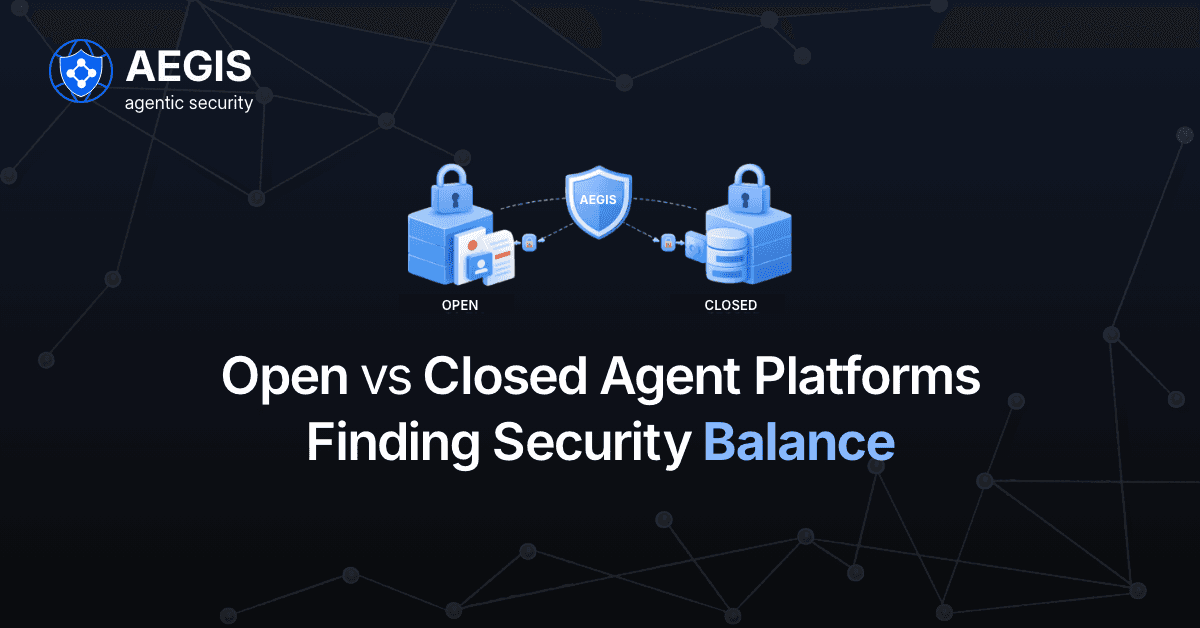
Open vs Closed Agent Platforms: Finding Security Balance
As multi-agent AI architectures mature, enterprises face a pivotal choice: should agent orchestration run on open frameworks or within closed vendor ecosystems? Both approaches promise scalability and innovation—but diverge sharply on transparency, compliance, and security posture.
This decision is no longer academic. Autonomous agents now initiate payments, deploy infrastructure, and access sensitive data. According to recent research, over 50% of enterprises experimenting with agentic AI list security and compliance as their top blockers (Architecture & Governance Magazine).
The Landscape: Open vs Closed Agent Ecosystems
Autonomous AI platforms can be broadly categorized into open and closed ecosystems.
👉🏻 Explore the top open-source tools shaping the future of agentic AI
Open-Source Architectures
Open orchestrators (LangChain, LangGraph, CrewAI, etc.) offer full visibility and control. Their codebases and APIs are auditable, flexible, and align naturally with policy-as-code models like Open Policy Agent (OPA).
This transparency allows engineers to embed granular guardrails—validating parameters, controlling egress, and enforcing compliance within custom workflows.
Advantages of Open Architectures:
- Complete auditability and extensibility
- Policy portability across environments
- Community-driven innovation and integration flexibility
- No vendor lock-in
Closed Vendor Platforms
Closed platforms trade flexibility for speed and managed scaling. These environments provide pre-built security, SLAs, and integrated monitoring—but often hide enforcement mechanisms. While faster to deploy, they can obscure decision rationales, telemetry, and policy enforcement logic.
Advantages of Closed Platforms:
- Rapid deployment and turnkey support
- Built-in compliance certifications and managed hosting
- Simplified user experience and maintenance
Tradeoffs:
Opaque policy enforcement, limited egress control visibility, and dependency on vendor roadmaps.
👉🏻 Evaluate deployment models to match your scalability and control needs
Table 1. Comparison: Open vs Closed Agent Platforms
Factor | Open Source Orchestrators | Closed Vendor Platforms |
Policy Transparency | Full access; OPA/JSON-based rules visible | Opaque or hidden decision logic |
Telemetry Export | Native OTel traces supported | Often limited to dashboards |
Performance Tuning | Customizable and tunable | Fixed infrastructure |
Compliance Reporting | Full audit logs possible | Restricted visibility |
SLAs and Support | Community-based or custom | Vendor-managed |
Total Cost of Ownership (3 yrs) | Lower license cost, higher maintenance | Higher subscription, lower ops cost |
Security and Compliance Implications
The Transparency Gap
Auditors increasingly expect traceable decision chains—from policy input to action result. Closed systems may deliver performance and SLA guarantees but rarely expose raw OpenTelemetry traces or policy bundles.
This black-box enforcement hinders external validation and breaks compliance narratives where every autonomous decision must be attributable.
Attack Surface Reality
Open components aren’t immune to risk. Poorly configured APIs, missing authentication, or unvalidated inputs can make open frameworks vulnerable to prompt injections, tool chaining exploits, and data exfiltration.
Therefore, even open architectures demand runtime identity checks, least-privilege enforcement, and observability—all areas where Aegis excels.
👉🏻 Leverage cloud ecosystems to scale and manage agent workloads
The Hybrid Model: Merging Flexibility with Assurance
Forward-looking enterprises are adopting a hybrid orchestration model: using open orchestrators for logic and experimentation, while pairing them with vendorized security or managed control planes.
This model combines open policy extensibility with enterprise-grade SLAs, creating the best of both worlds.
Implementation Pathway:
- Start with an open orchestrator (e.g., LangGraph).
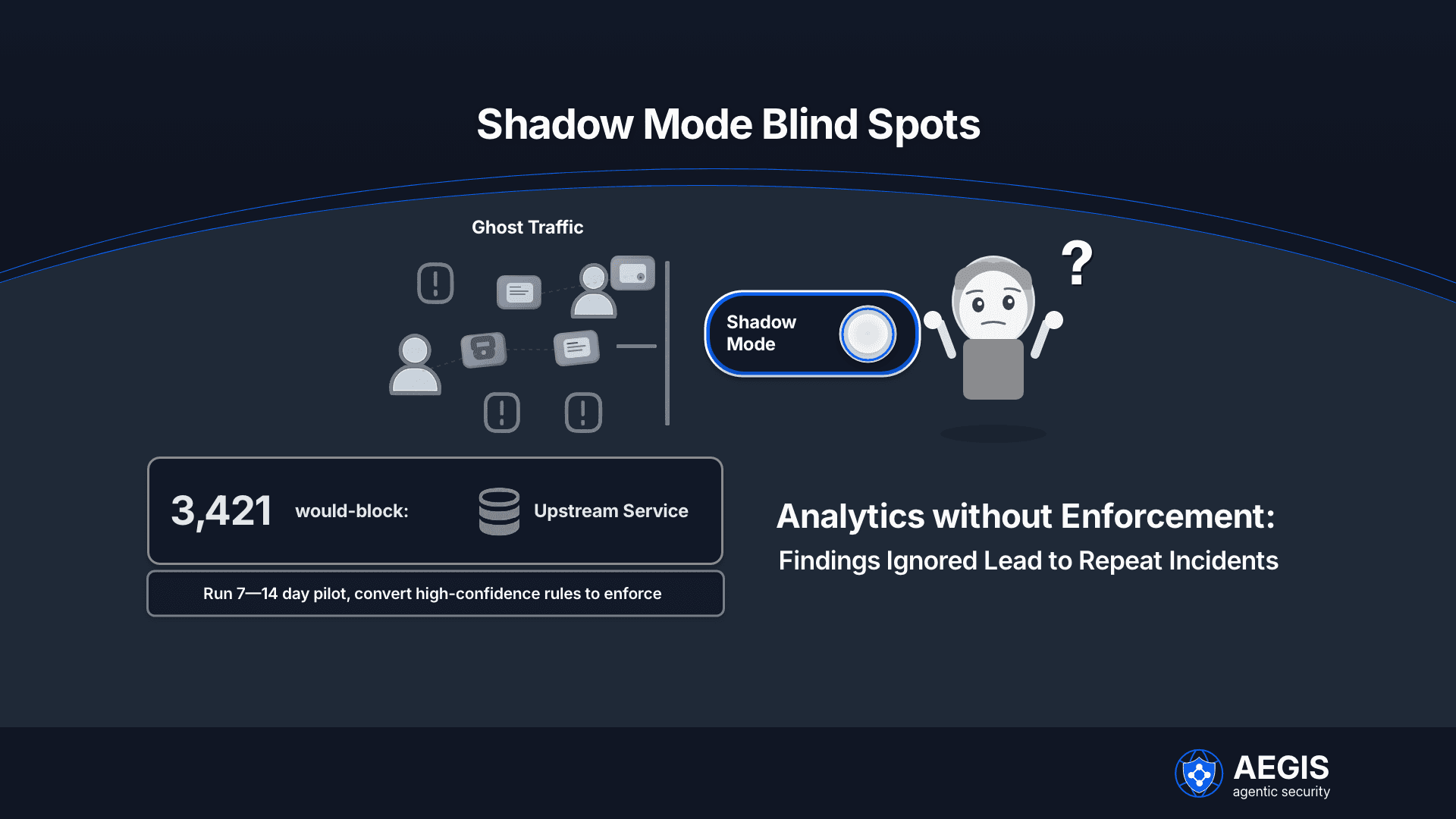
- Deploy Aegis Gateway in shadow mode—observe, don’t enforce.
- Review telemetry and fine-tune policies.
- Move to enforced mode with policy signing and audit integration.
-1.png&w=3840&q=75)
Table 2. Cost-Driven Decision Matrix (3-Year TCO Estimate)
Cost Driver | Open Source Stack | Closed Vendor Stack | Hybrid (Open + Aegis) |
Engineering Setup | High (custom orchestration) | Low | Moderate |
Ongoing Maintenance | Medium | Low | Low |
Compliance Audit Overhead | High | Medium | Low |
Runtime Policy Visibility | Full | Limited | Full |
SLA Coverage | Community / internal | Full | Full |
Vendor Lock-In | None | High | Minimal |
Recommended Use | Regulated FinTech, Healthcare | Rapid POCs, internal ops | Enterprise hybrid deployments |
Introducing Aegis: The Security Mesh for Agentic Systems
Aegis is Aegissecurity’ AI Security Mesh built for multi-agent, hybrid AI ecosystems. It functions as a runtime policy gateway and observability fabric, sitting between your orchestrator and external tools.
Runtime Enforcement
At its core, Aegis intercepts each agent-tool interaction via a lightweight proxy or SDK. Every call is evaluated against predefined OPA-compatible policies—determining whether to allow, deny, sanitize, or request human approval.
Example:
A Finance agent attempting to execute a payment over $5,000 triggers an approval_needed event sent to Slack. Once approved, Aegis issues a one-time override token for execution.
Policy-as-Code and OPA Integration
Policies in Aegis are written in YAML or JSON and compiled into OPA bundles for fast evaluation. This preserves portability and auditability, key requirements for enterprises comparing open vs closed architectures.
Policy versions are immutable and can be validated, rolled back, or run in shadow mode before enforcement.
Observability and Auditing
Aegis integrates with OpenTelemetry, emitting structured spans for each decision: agent ID, tool, policy version, latency, and cost estimate. These traces can be streamed to SIEMs or Grafana dashboards, ensuring continuous compliance.
Example Use Cases:
- FinTech: enforce per-agent payment ceilings and human approvals.
- Healthcare: redact PII before data egress.
- SaaS: implement per-agent API budgets and rate limits.
- DevOps: gate agent-triggered deployments via policy checks.
- MSSPs: provide multi-tenant audit trails across customers.
Architecture of Aegis Gateway
Aegis architecture is divided into Data Plane and Control Plane components:
Data Plane
- Envoy Proxy + ext_authz: Routes outbound calls and triggers Aegis for decision evaluation.
- Policy Evaluator (OPA): Determines outcomes (allow, deny, sanitize, approval_needed).
- Telemetry Engine: Exports OTel traces and JSON logs for all calls.
Control Plane
- Policy Compiler & Store: Converts YAML/JSON policies into normalized OPA bundles.
- Token Service: Issues short-lived JWTs identifying tenant and agent.
- Approvals Service: Integrates with Slack or MS Teams for override workflows.
- CLI & SDK: Developer tools for validation, publishing, and rollback.
This modular design allows Aegis to function independently of orchestration choice, ensuring interoperability between open and closed environments.
Compliance and Multi-Tenancy Advantages
Aegis strengthens compliance by generating tamper-proof, tenant-scoped telemetry—every decision is logged with signatures and version metadata. This provides verifiable audit evidence and simplifies certification workflows for SOC 2, HIPAA, or PCI DSS readiness.
Multi-Tenancy Benefits:
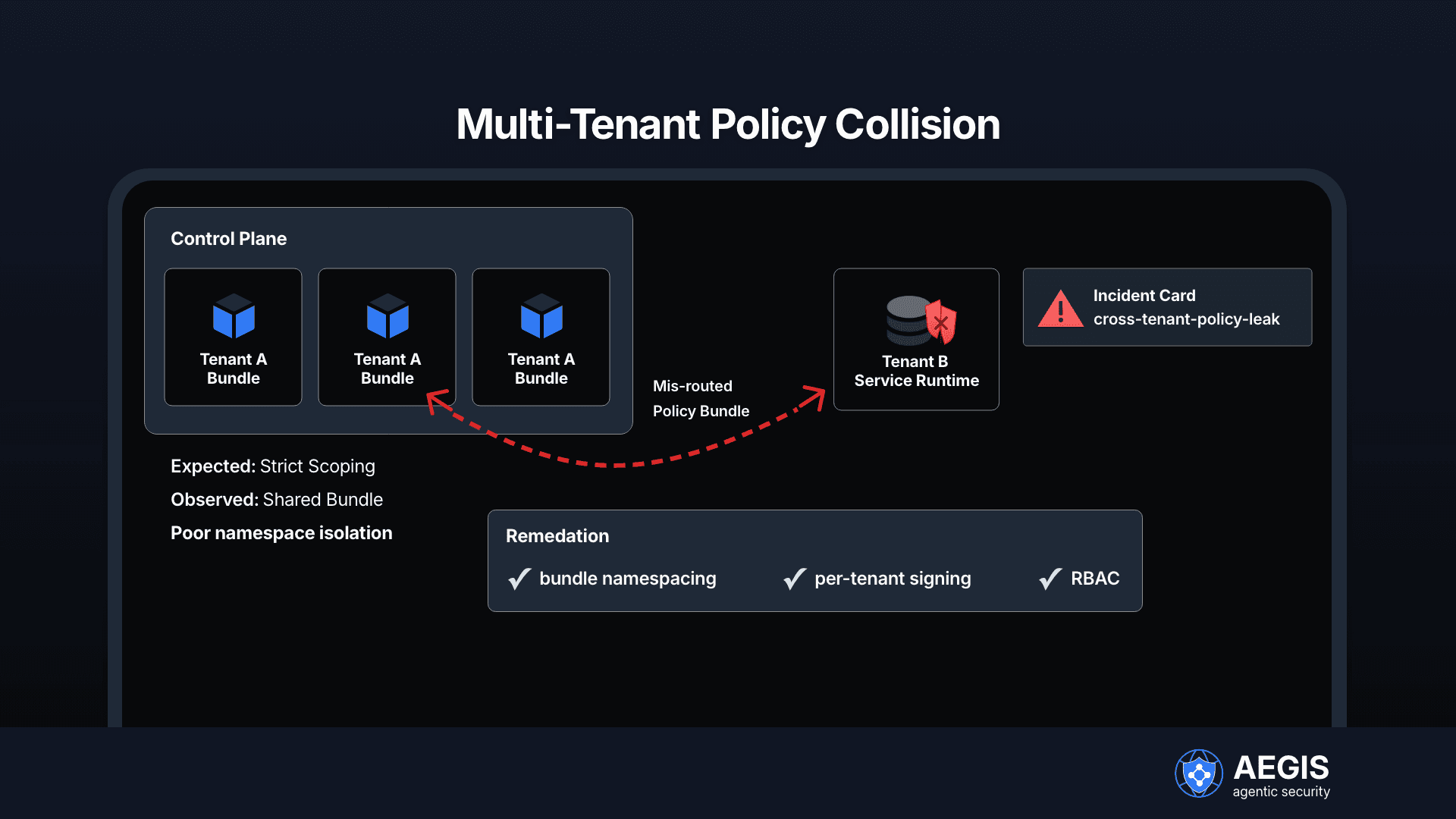
- Policy isolation per tenant
- Regionally routed data for residency requirements
- Signed logs ensuring cross-tenant integrity
Such isolation is critical for MSSPs and large SaaS vendors managing hundreds of agent clients simultaneously.
Avoiding “Agent Washing” and Hidden Risks
As agentic AI gains momentum, some vendors market superficial “agent safety” features as agentic governance. This “agent washing” masks the lack of runtime enforcement or explainable decisions.
Buyers should validate:
- Whether the platform supports OPA-compatible bundles
- If OpenTelemetry traces are exportable
- Whether policy outcomes are verifiable externally
Solutions like Aegis ensure these fundamentals are first-class citizens, not afterthoughts.
The Pragmatic Path Forward
The most successful enterprises adopt a phased hybrid approach:
- Deploy open-source orchestrators for experimentation.
- Integrate Aegis in observation mode to collect telemetry.
- Define and enforce least-privilege policies.
- Gradually integrate managed control planes for compliance and SLAs.
This approach provides control, speed, and scalability without forfeiting transparency or compliance.
Frequently Asked Questions (FAQ)
1. Can policies move between providers?
Yes. Aegis compiles policies into OPA bundles, making them portable across orchestrators and platforms.
2. What policy formats should enterprises standardize on?
Use OPA/Rego with JSON data models for cross-platform compatibility and auditor clarity.
3. Does Aegis integrate with both open and closed agent frameworks?
Yes. It supports Envoy ext_authz, REST middleware, and SDKs for orchestrators like LangGraph or closed SaaS frameworks.
4. How does Aegis maintain audit integrity?
Every policy decision emits a signed OpenTelemetry span containing version, agent ID, and rationale—stored for compliance verification.
5. What is the performance overhead of Aegis enforcement?
Decision latency is typically under 20 ms (P99) thanks to cached queries and in-memory evaluation.
6. How does Aegis help MSSPs and large enterprises?
It enforces tenant-isolated policies, provides central dashboards, and exports SIEM-ready logs across multi-tenant environments.
Practical takeaway:
In the debate between open and closed agent ecosystems, policy transparency and runtime enforcement outweigh convenience. Aegis provides a neutral, portable, and auditable security layer—empowering enterprises to innovate confidently while meeting stringent compliance demands.