
Choosing Between SaaS and Self-Hosted Multi-Agent Platforms
Compare SaaS and self-hosted multi-agent platforms, weigh risks, and see how Aegis enforces runtime policy, budgets, and audit trails for agentic AI.
Choosing SaaS vs Self-Hosted Multi-Agent Platforms: a practical guide for security & ops teams
Teams designing multi-agent AI systems face a recurring question: adopt a vendor-hosted SaaS orchestrator for speed, or run a self-hosted stack for control? The right choice hinges on risk, compliance, latency and operational maturity. This article walks through the decision axes, gives practical criteria for each path, and — crucially — shows how Aegis (the runtime policy & observability mesh) reduces risk in both deployments and makes either option viable for regulated or cost-sensitive environments. The guidance is operational: checklists, YAML policies, migration patterns and concrete controls.
The choice explained
Risk & cost axes
When teams weigh SaaS vs self-hosted, evaluate the tradeoffs across five axes: data residency & compliance, control (policy granularity), latency, operational cost (including hidden egress/token costs), and upgrade cadence. Gartner predicts over 40% of agentic AI projects will be canceled by the end of 2027 due to rising costs and unclear business value — a reminder that premature platform choice can sink programs. (Gartner)
Key short checklist:
- Legal: can your data cross vendor regions? (PCI/HIPAA/sovereignty)
- Security: do you need per-call parameter validation and per-agent least-privilege?
- FinOps: will third-party API spend scale unpredictably?
- Ops: does your SRE team have capacity for patching, scaling and upgrades?
Quick comparative view (summary table)
Axis | SaaS (vendor-hosted) | Self-hosted |
Control over data residency | Limited | Full |
Parameter-level policy enforcement | Often limited | Flexible (but ops heavy) |
Time-to-value | Fast | Slower onboarding |
Patch & infra ops | Managed by vendor | Customer responsible |
Predictable costs | Subscription; hidden egress possible | More transparent per-resource; ops cost shifts |
Vendor lock-in | Higher | Lower |
When to pick SaaS
SaaS can be the correct default for teams that prioritize time-to-value, have low regulatory constraints, and want a managed experience.
Practical SaaS fit criteria:
- Non-sensitive workloads or carefully tokenized data flows.
- High tolerance for vendor egress rules and limited parameter inspection.
- Small teams without strong SRE capacity who need fast iteration.
👉🏻 Tap into cloud capabilities to scale and optimize agent ecosystems
Operational controls that make SaaS safer
Even when you choose SaaS, you can reclaim runtime controls: deploy an enforcement layer as a reverse proxy (sidecar or gateway) in front of SaaS connectors to add policy checks, parameter sanitization, and telemetry. Aegis can operate as a Gateway reverse proxy to provide these runtime controls without migrating to self-hosted orchestrators. This layered approach preserves SaaS UX but adds enforcement and auditability.
When to pick Self-hosted
Self-hosting is appropriate when data residency, strict compliance, deterministic latency or tight cost controls are non-negotiable.
Practical self-hosted fit criteria:
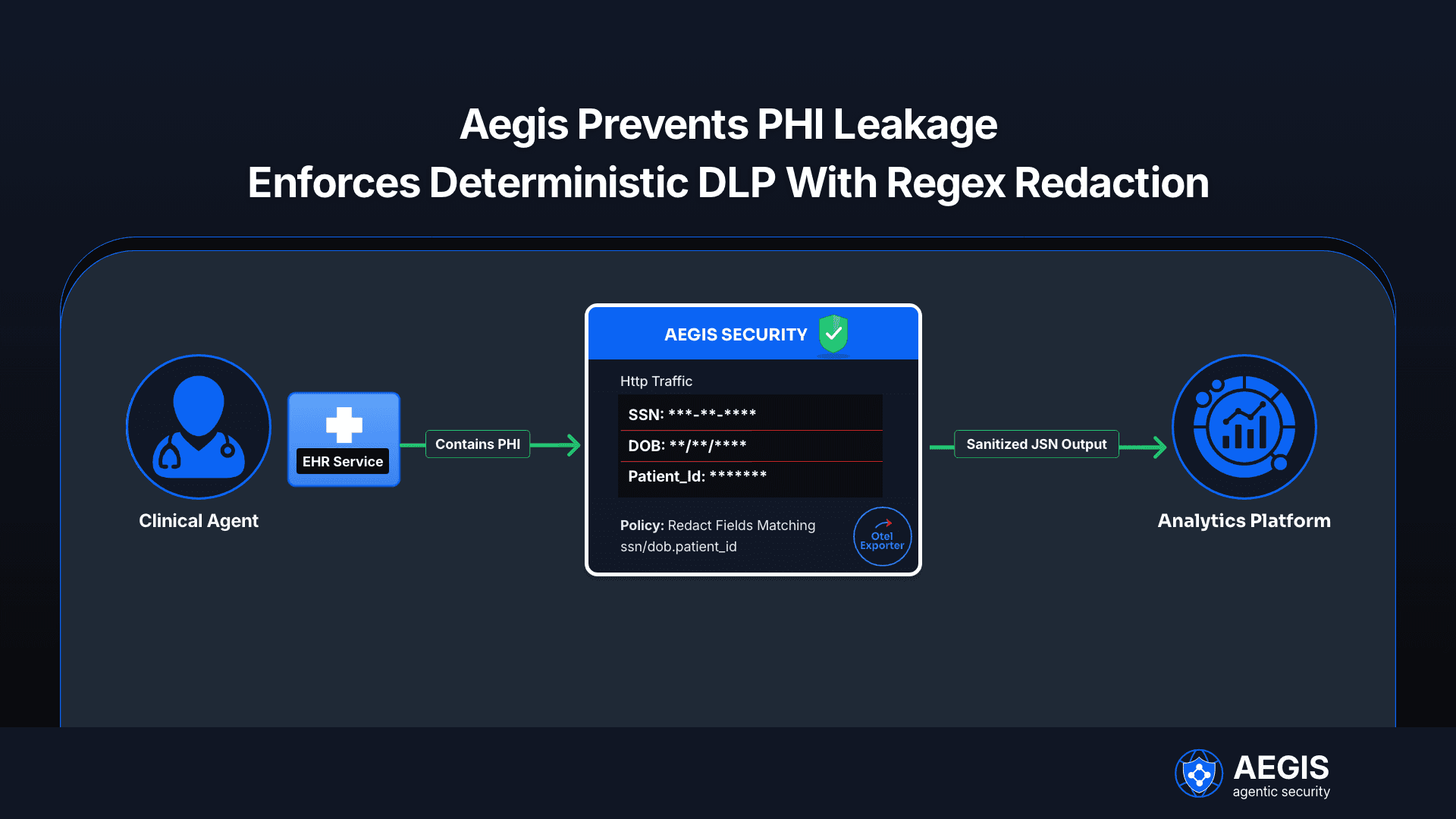
- Regulated verticals: PCI in payments, PHI in healthcare, or government data sovereignty.
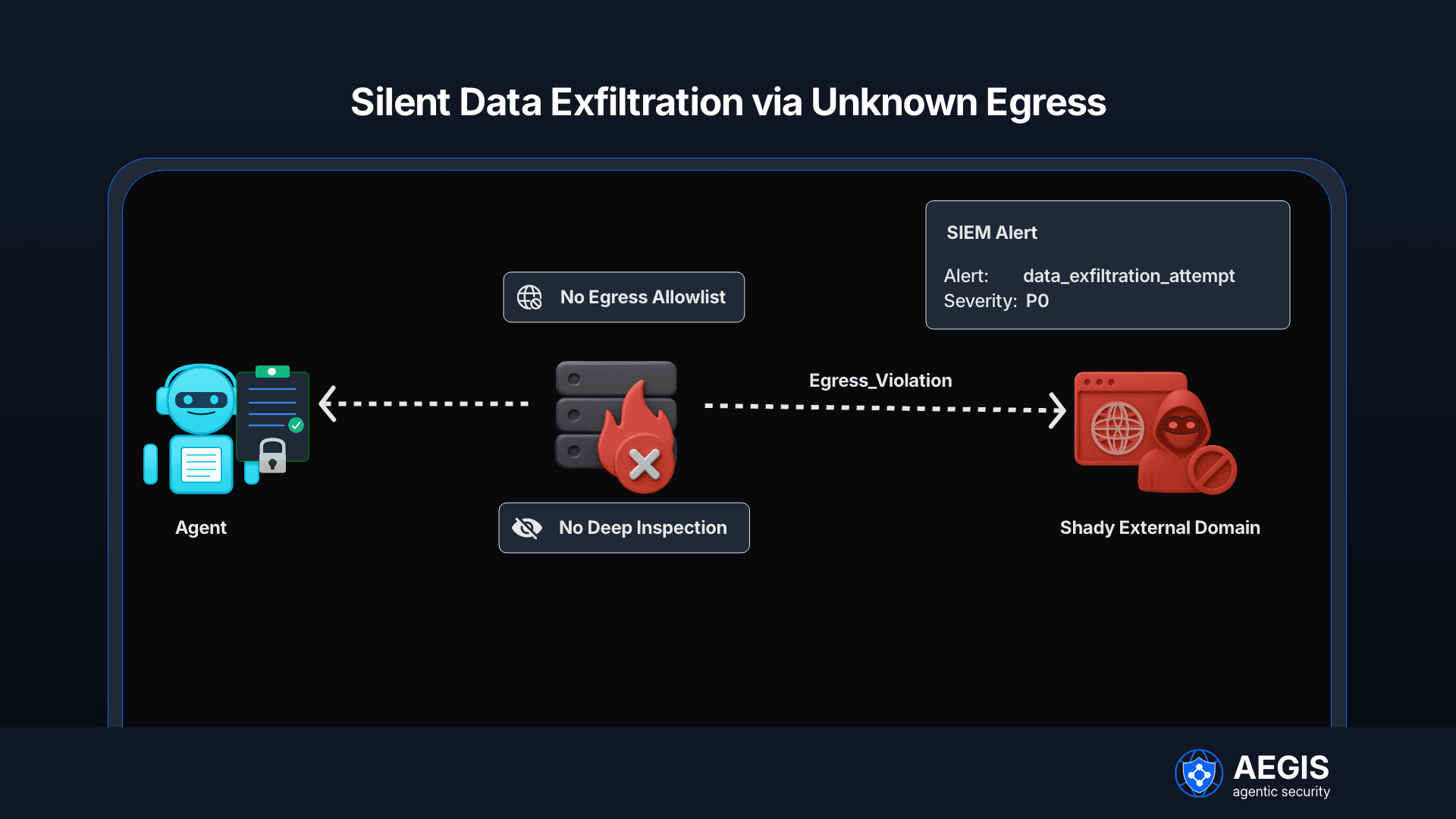
- Need for deep parameter inspection (e.g., payment amounts, export flags).
- Teams with strong ops maturity and capacity to maintain patch cadence.
Operational costs to model
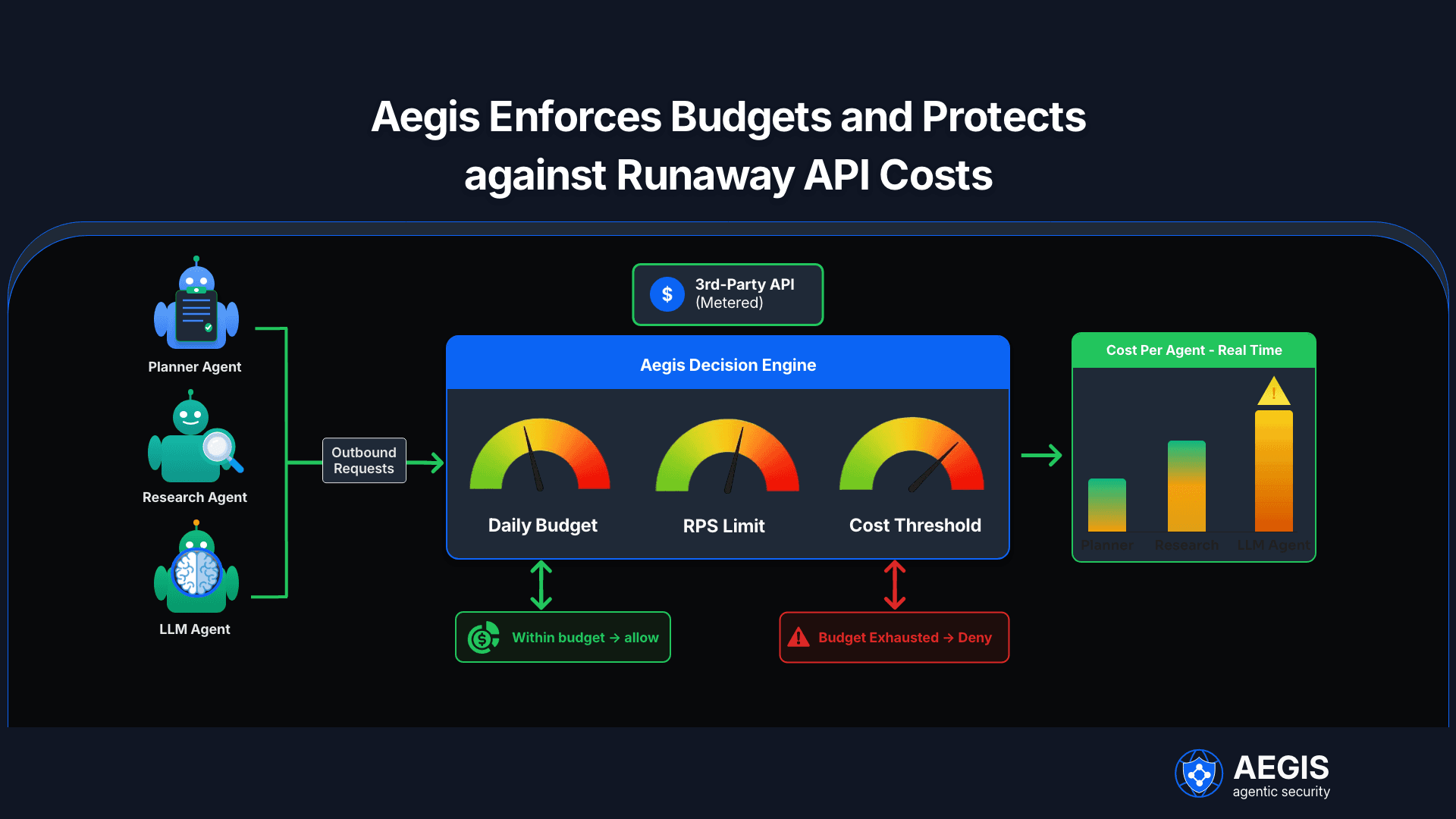
Account for runtime infra, patching, backups, and network egress. Add FinOps assumptions: per-agent budgets, rate limits, and orphaned-agent cleanup. Hidden costs (data transfer, egress to third-party LLMs) often dominate.
Sample decision flow (short)
- Map constraints (legal, latency, SSO, compliance).
- If strict constraints → self-hosted + Aegis in-cluster ext_authz/token issuer.
- If lax constraints → SaaS + Aegis Gateway reverse proxy in front of SaaS connectors.
👉🏻 Choose between flexibility and control with the right AI model strategy
How to mitigate risks with Aegis (at least one-third of the article)
Aegis is designed as a policy-and-observability fabric that sits at the agent↔tool boundary. It enforces least-privilege, inspects parameters, issues short-lived tokens, and produces SIEM-friendly telemetry — whether you run SaaS or self-hosted orchestrators. The technical design and MVP goals are summarized below.
What Aegis enforces (concrete controls)
- Agent identity & registration (unique IDs, short-lived JWTs tied to agent/tenant).
- Policy-as-code (YAML → OPA bundles) with hot-reload and dry-run shadow modes.
- Parameter validation and action thresholds (e.g., max_amount checks for payments).
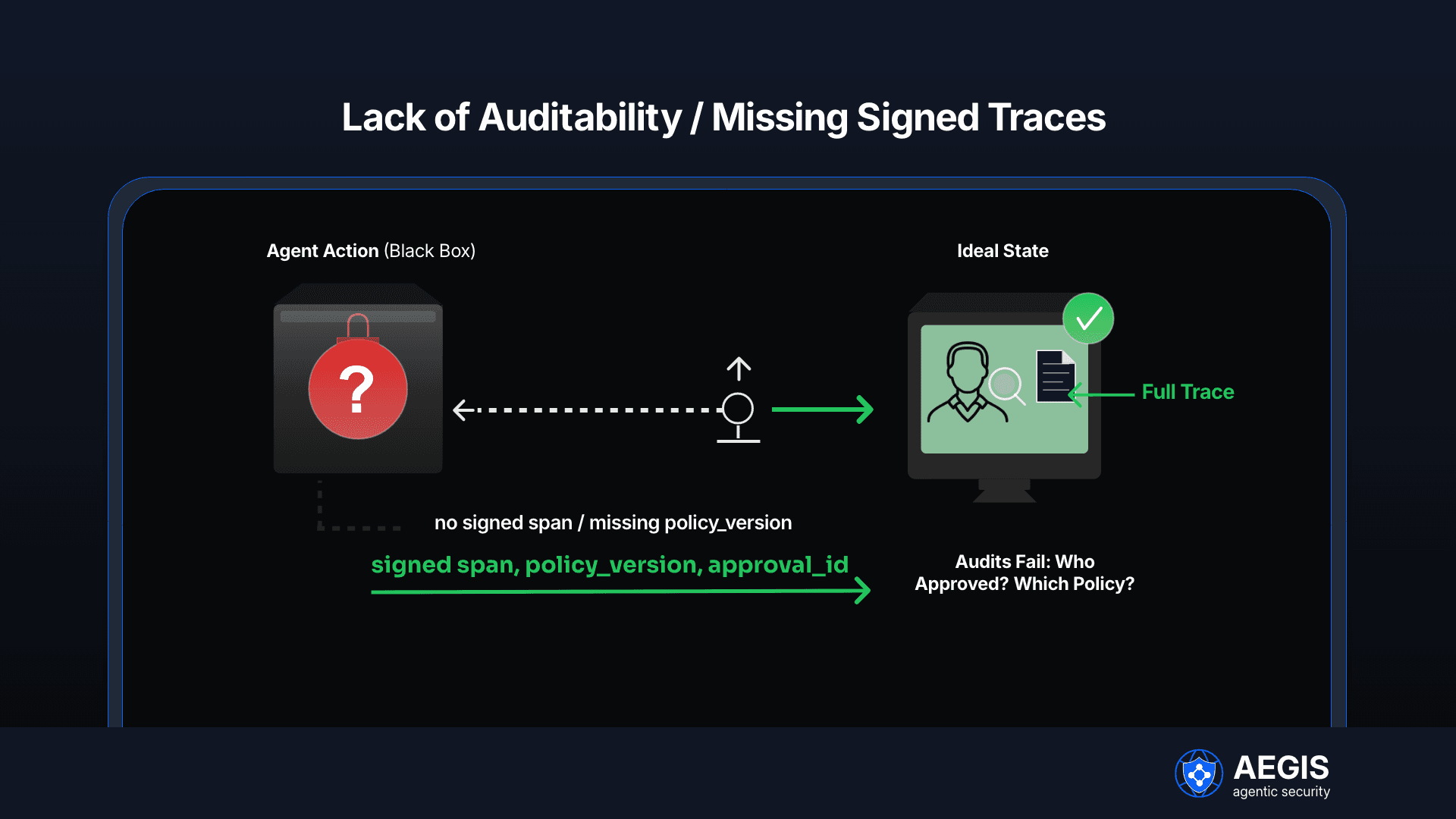
- Approvals service (human approval via Slack/Teams for high-risk calls) and immutable audit traces.
Runtime pattern examples (how it looks in each deployment)
- SaaS: Aegis Gateway runs as a reverse proxy before outbound SaaS connectors; it issues signed decisions and telemetry while keeping vendor-hosted UX.
- Self-hosted: Aegis integrates as an in-cluster ext_authz and token issuer for Envoy (or similar), centralizing policies across tenants with fine-grained enforcement.
Policy example (sample YAML)
agent: finance-agent
allowed_tools:
- name: stripe-payments
actions:
- create_payment
conditions:
max_amount: 5000
currency: ["USD","EUR"]
on_violation: deny
rate_limits:
requests_per_minute: 60
budgets:
daily_usd: 1000
This policy compiles to an OPA bundle at publish time and can run in shadow mode for 7 days before enforcement.
Two tables: risk tradeoffs & performance expectations
Security tradeoffs (detailed)
Factor | SaaS | Self-hosted | How Aegis helps |
Control | Lower | Higher | Adds parameter-level policy and tokenization to SaaS flows. |
Patching | Vendor | Customer | Aegis centralizes policy updates; hot-reload reduces restart needs. |
Compliance | Harder (egress) | Easier (local) | Provides signed audit trails and region routing. |
Latency | Generally lower for control plane | Varies by infra | OPA prepared queries & caching target P99 ≤ 20ms; tune per deployment. (Open Policy Agent) |
Cost predictability | Subscriptions + egress | Infra + ops | Per-agent budgets and FinOps dashboards from Aegis help quantify spend. |
Deployment performance & maturity metrics (example targets)
Metric | Target (MVP) |
Decision latency (P99) | ≤ 20 ms (OPA prepared queries + in-memory caches). (Open Policy Agent) |
Policy hot-reload | Seconds |
Telemetry coverage | 100% agent→tool calls traced. |
Policy coverage in pilot | ≥ 80% of critical connectors |
Migration pattern: how to move safely
Recommended phased rollout:
- Shadow mode (observe would-deny events for 7–14 days).
- Shadow + alerts (notify owners of repeat violations).
- Phased enforcement: start with low-risk endpoints → high-risk.
- Audit and iterate; maintain the ability to rollback policy versions.
Practical checklist for decision-makers
- Legal & compliance signoffs (list explicit regulations and acceptable data flows).
- SOC & PCI constraints mapped to connectors and regions.
- SSO & RBAC integration (SSO, SCIM or similar).
- Patch cadence & runbook for policy rollback.
- FinOps model: per-agent budgets, egress cost assumptions, monitoring.
- Incident response runbook for blocked critical flows.
Integrations & further reading
- For policy engine performance background see Open Policy Agent docs. https://openpolicyagent.org/
- Gartner’s guidance on agentic AI project risk is an essential read for program sponsors. https://www.gartner.com/en/newsroom/press-releases/2025-06-25-gartner-predicts-over-40-percent-of-agentic-ai-projects-will-be-canceled-by-end-of-2027. (Gartner)
👉🏻 Bring AI agents into legacy systems without disrupting operations
Frequently Asked Questions
1) Can Aegis prevent prompt-injection or chain coercion between agents?
Yes — by enforcing per-agent allowed_tools and validating parent_agent_id headers, Aegis prevents an agent from coercing another into actions outside its policy scope.
2) How do we manage approvals at scale?
Policies can set thresholds to reduce noisy approvals; Aegis integrates queueing and Slack/Teams workflows and can mint one-time override tokens after human approval.
3) What’s the latency overhead for policy checks?
With OPA prepared queries and caching, targets are P99 ≤ 20ms for decision time; proxy overhead is typically small but must be benchmarked per deployment. (Open Policy Agent)
4) Can we run Aegis with a SaaS orchestrator?
Yes — deploy Aegis as a Gateway reverse proxy in front of SaaS connectors to add policy enforcement and observability without forcing a migration.
5) How do we model FinOps for agents?
Track per-agent budget, RPS limits and tool cost; include egress and third-party LLM charges. Aegis exposes dashboards for spend by agent/tool and can block calls when budgets are exhausted.
6) What’s a safe rollout pattern?
Start in shadow mode → shadow+alerts → phased enforcement → full enforcement with monitoring and rollback capability.
Conclusion
Choosing between SaaS and self-hosted multi-agent platforms is not binary: it’s a risk profile decision. For many teams, the middle path — keep vendor-hosted orchestration for speed but insert a runtime policy mesh such as Aegis — gives the best balance of control, auditability and operational manageability. For regulated or latency-sensitive workloads, self-hosting plus Aegis provides the tight controls required. Use shadow mode, policy-as-code and per-agent FinOps to avoid the common pitfalls Gartner highlights and ensure your agentic AI program delivers measurable, auditable value. (Gartner)