Navigating Vendor Lock-In and Interoperability in Agentic Platforms
Practical guidance for security and procurement teams to prevent vendor lock-in in agentic AI stacks using interoperability patterns and a runtime gateway.
Navigating Vendor Lock-In and Interoperability in Agentic Platforms
Agentic AI—collections of planners, specialists and tool-wrapping agents—promise automation at scale. But when vendors bundle models, connectors and orchestration with proprietary hooks, enterprises risk long-term lock-in, costly migrations and opaque policy semantics. This article explains common lock-in vectors, practical interoperability patterns, a migration-friendly architecture and how Aegis (the Aegissecurity runtime gateway) functions as a neutral enforcement layer that preserves policy portability, auditability and operational velocity.
Lock-in vectors in agentic stacks
Agentic stacks create several adhesion points that cause lock-in.
Proprietary APIs and connectors
Vendor SDKs frequently expose bespoke agent APIs and connector interfaces. If tool calls embed vendor-specific headers, token formats or orchestration callbacks, replacing the orchestrator also means rewriting every connector integration and many policies.
Embedded orchestration logic and policy
Orchestrators often bake orchestration rules—retry logic, chaining semantics, or policy primitives—into their runtime. When policies live inside the orchestrator rather than as portable bundles, moving to a new orchestrator requires re-expressing policy semantics in a new language.
Token formats, attestation and metadata
Closed token formats or opaque attestation schemes (nonstandard claims, proprietary signatures) make identity portability costly. If tokens carry policy context the new runtime must reproduce claim issuance, expiry semantics and replay protection.
Observability and telemetry lock-in
Vendor telemetry that relies on closed formats or proprietary log schemas prevents migration of historical evidence or easy SIEM ingestion.
(Industry context: surveys and analyst reports indicate growing agentic adoption—McKinsey found ~23% of organizations scaling agentic systems and another ~39% experimenting—and Gartner warns over 40% of agentic projects may be canceled by 2027 absent proper controls. (McKinsey & Company))
Old vendor choices and consequences
Early procurement decisions—choosing an orchestrator or agent bundle because it "just works"—can be rational. But the consequences are real:
• Policy rewrite costs: Re-authoring hundreds of rules when policies are embedded raises migration costs and operational risk.
• Audit and compliance debt: If logs and attestations are vendor-specific, regulators and SOC teams face additional work to validate past actions.
• Operational fragility: Tight coupling to a vendor’s connector model or token exchange increases blast radius during outages.
Real customer problem statements surface these outcomes: silent data exfiltration due to arbitrary egress, agent privilege escalation by tool chaining, and uncontrolled spend from ungoverned agents. These are precisely the problem patterns Aegis addresses by introducing neutral, enforceable boundaries.
👉🏻 Compare platforms strategically to choose the right foundation for your AI ecosystem
Interoperability patterns and standards
Interoperability is practical when you standardize boundaries and use portable artifacts.
Protocol boundaries and adapters
Design around standard protocols: HTTP/gRPC for synchronous calls, MQTT for evented messaging, and signed JWTs for identity. Use adapters to translate vendor-specific connectors to these common protocols so orchestration changes affect only the adapter layer, not policies.
Policy as signed bundles
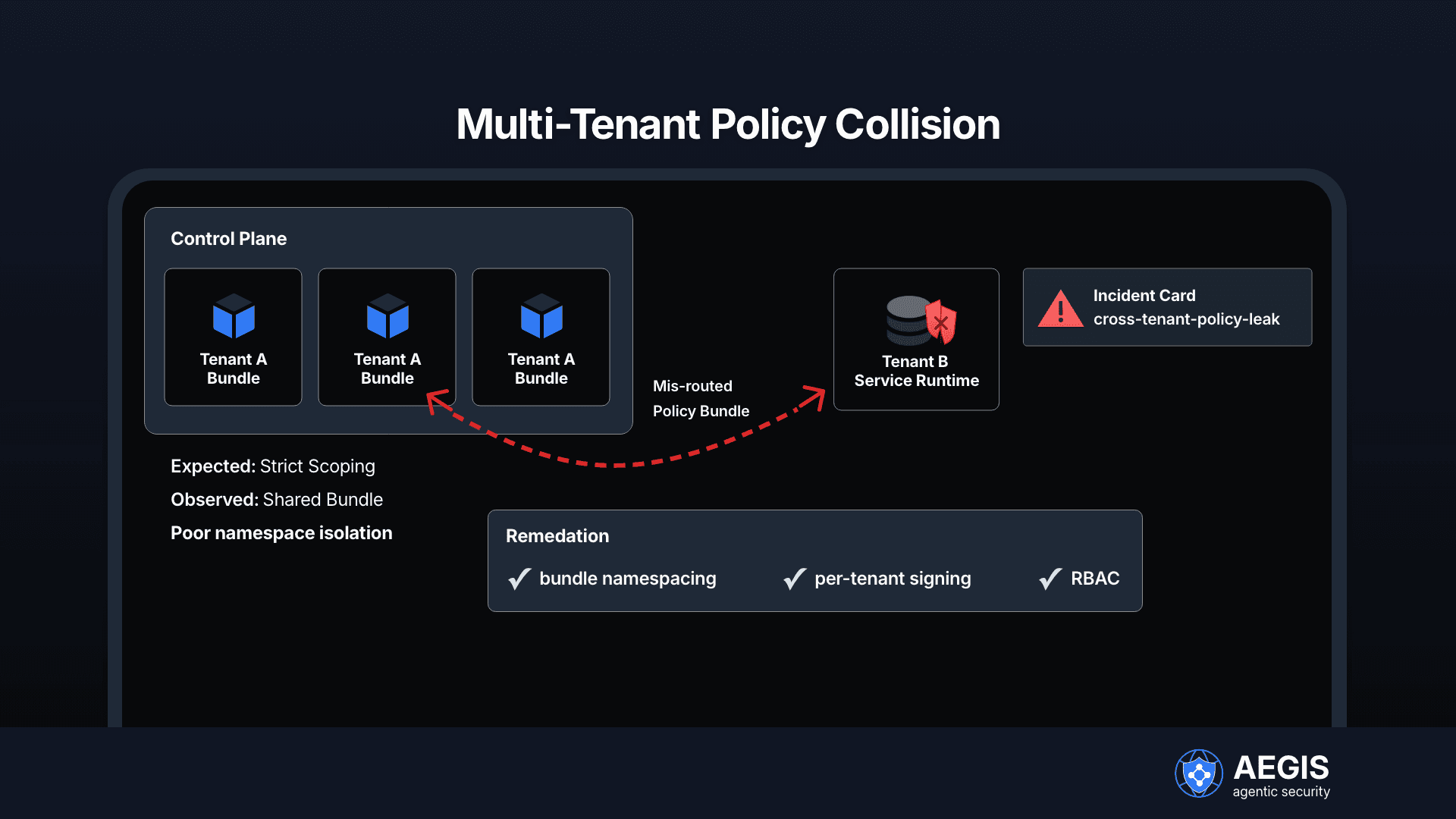
Store policies externally in neutral formats (OPA bundles, signed JSON manifests). Signed bundles with versioning (ETags, manifest signatures) provide integrity and allow any runtime to fetch, verify and evaluate the same rules.
Externalized authorization
Use an ext_authz pattern (Envoy ext_authz / external authorisation) so the runtime consults a neutral decision API for allow/deny/sanitize decisions. This separates policy logic from orchestration and connector code.
Neutral telemetry
Emit OpenTelemetry spans and structured logs for every agent→tool decision, including agent_id, tool, decision, policy_version and reason. Use a neutral schema so SIEMs and FinOps tools can ingest traces without vendor transformation.
Signed attestation and token exchange
Adopt short-lived JWTs with standard claims (iss, sub, aud, exp) and use JWKS for verification. Offer token-exchange endpoints so adapters can mint tokens that downstream tools accept, avoiding proprietary token formats.
These patterns map directly to the Aegis design: a sidecar/forward proxy (Envoy) that uses ext_authz to call an external authorisation service and a bundle store serving signed OPA bundles.
Aegis as an interoperability gateway
Aegis functions as “Istio + OPA for agents”: a lightweight runtime boundary that locks policy and telemetry outside orchestrators, so switching orchestrators requires adapter changes only.
How Aegis enforces neutrality
Aegis exposes a simple runtime boundary: orchestrators and agent SDKs call tools via the Aegis gateway. The gateway performs three core actions per call:
- Identity & token exchange — issues short-lived JWTs tied to agent and tenant claims.
- Policy decision — consults an OPA-compiled bundle and returns allow/deny/sanitize/approval_needed decisions.
- Telemetry & attestation — emits OpenTelemetry spans and can sign attestation for approved actions.
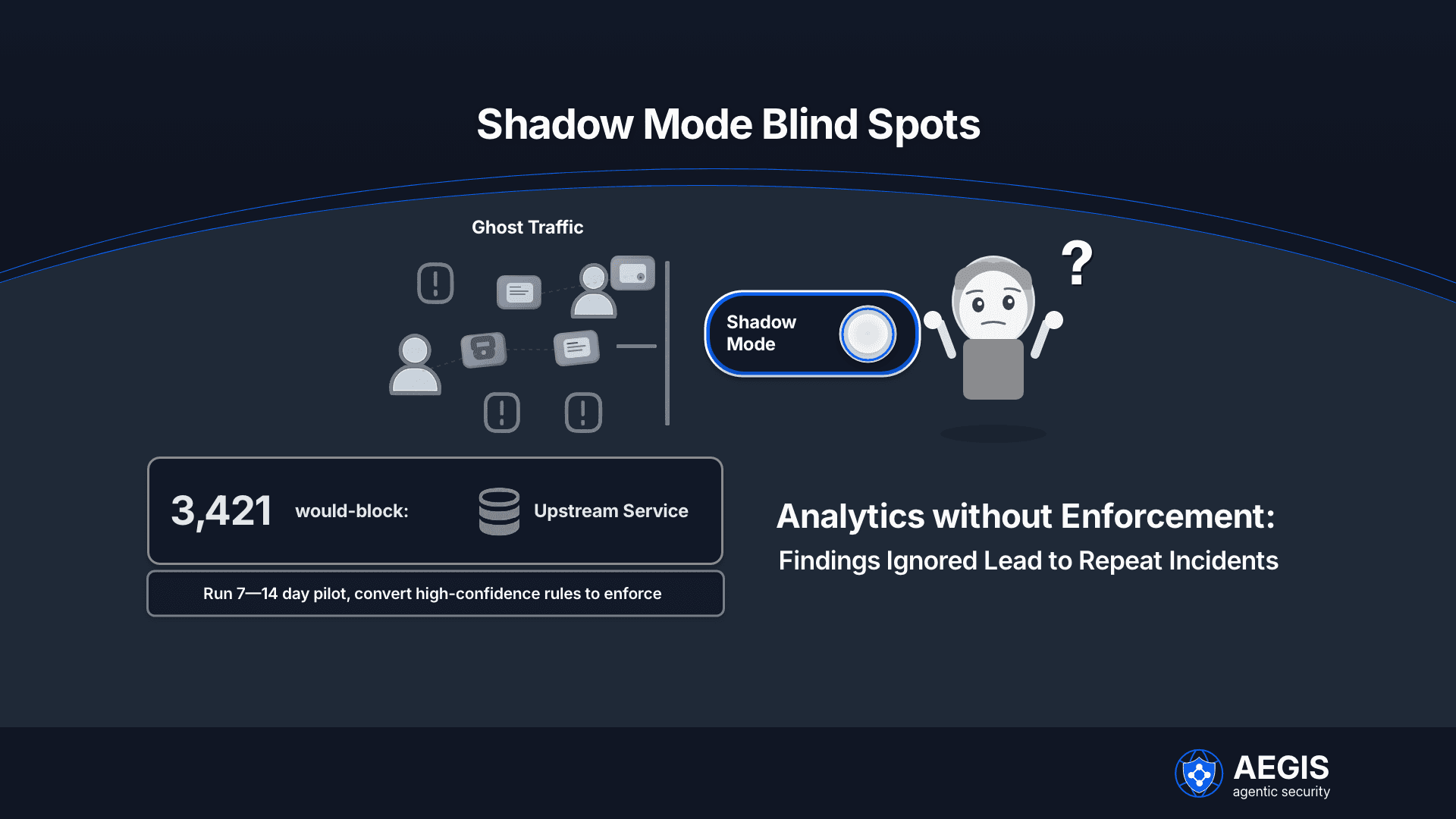
Aegis supports hot-reloadable, versioned policy bundles and a shadow mode for dry-run tuning. It integrates with Slack/Teams for approval workflows, enforces egress allowlists, and applies deterministic DLP where required. The data-plane/control-plane split ensures policies and telemetry remain portable across orchestrators. Operational metrics (P99 decision latency ≤ 20 ms target) and workloads scale horizontally to support thousands of requests per second.
👉🏻 Select vendor solutions that strengthen security without limiting scalability
.png&w=3840&q=75)
Example: migrating an orchestrator
Migration becomes:
Adapter for LangGraph → Aegis gateway (unchanged policies) → new orchestrator adapter
Only the adapter layer changes; policies in the Aegis bundle store remain valid. This minimizes rewrite effort and preserves audit trails.
Governance & procurement checklist
Use this checklist during procurement and architecture reviews.
Requirement | Why it matters |
ext_authz / external authz integration | Enables neutral runtime decisions independent of orchestrator |
Signed OPA policy bundles | Ensures policy portability and integrity |
Standard token exchange endpoints (JWT + JWKS) | Avoids proprietary token formats |
Documented connector interfaces & SDKs | Reduces adapter effort during migrations |
Exportable logs & OTel spans (neutral schema) | Preserves auditability and SIEM compatibility |
Sandbox/export of logs & policy history | Supports evidence for compliance audits |
Example migration plan (high level)
Step | Action |
1 | Inventory agent connectors, policies and token formats |
2 | Deploy Aegis in shadow mode; route a percentage of calls through gateway |
3 | Validate would-block events and tune policies |
4 | Implement orchestrator adapter to call Aegis (LangGraph → Aegis) |
5 | Flip enforcement on, monitor telemetry and roll back if needed |
Aegis lowers migration risk by letting teams run in shadow mode before enforcement, and by compiling and serving signed OPA bundles so policies require minimal rewriting.
👉🏻 Stay ahead by aligning your AI systems with the standards shaping the future
Practical procurement language
• Supplier must support ext_authz or an equivalent external authorization API.
• Policies must be exportable as signed OPA bundles.
• Tokens must use standard JWT claims and expose a JWKS endpoint.
• Logs and traces must be exportable in OpenTelemetry format and support S3/Elasticsearch retention.
Operationalizing interoperability
Agentic AI will continue to deliver value—in McKinsey’s 2025 survey many organizations are already scaling or experimenting with agents—but governance, portability and cost controls will decide long-term success. Neutral runtime boundaries, signed policy bundles and neutral telemetry are practical, actionable ways to avoid vendor lock-in. Aegis’s pattern—policy as code compiled to signed bundles, ext_authz enforcement via a gateway, and neutral OTel telemetry—gives security, FinOps and compliance teams the controls they need without stifling developer velocity.
Frequently Asked Questions
Q: Can I use Aegis with any orchestrator?
A: Yes—Aegis is adapter-based. It supports middleware/SDKs for popular orchestrators and uses ext_authz/SDK hooks to integrate with non-HTTP tools.
Q: How do I avoid policy misconfiguration?
A: Use schema validation, dry-run/shadow mode, and staged rollouts with monitoring for would-block events. Aegis supports policy dry-run and versioned bundles.
Q: What telemetry does Aegis provide?
A: OpenTelemetry spans per decision (agent_id, tool, decision, policy_version, reason) plus structured logs suitable for SIEM ingestion.
Q: How much latency does policy evaluation add?
A: With OPA prepared queries, caching and optimized queries Aegis targets P99 decision latencies under 20 ms; proxy overhead is minimized by an Envoy sidecar pattern.
Q: What if I need regional data residency?
A: Policies can include region routing and the control plane supports region-tagged bundle stores and token services to honor residency requirements.
(Additional industry context about adoption and risk from Gartner/Reuters and analyst reports helps justify governance requirements. (Reuters))