
Evaluating Vendor Solutions for Multi-Agent Security
Practical rubric for evaluating agent security vendors with a policy-as-code, runtime enforcement, and observability focus.
How to evaluate agent security vendors: a practical rubric and an Aegis exemplar
Enterprises evaluating vendor claims about “agentic” security face two simultaneous realities: a flood of marketing claims and a real, urgent need for defensible runtime controls. Gartner and Reuters have flagged “agent washing” and warned that many agentic projects will fail without proper risk controls. (Reuters)
This post gives a reusable evaluation rubric, concrete test cases, procurement language, and a worked exemplar — Aegis — which demonstrates how a policy-as-code, sidecar/proxy model addresses the key buyer needs. Sections: why the old approach fails, core evaluation axes, concrete test suites and SLA language, Aegis as a solution (technical deep dive), tables for quick scoring, and an FAQ.
Why feature lists and demos are dangerously incomplete
Traditional vendor evaluation — feature checklists, marketing slides and an unscoped PoC — misses three critical dimensions that matter in production:
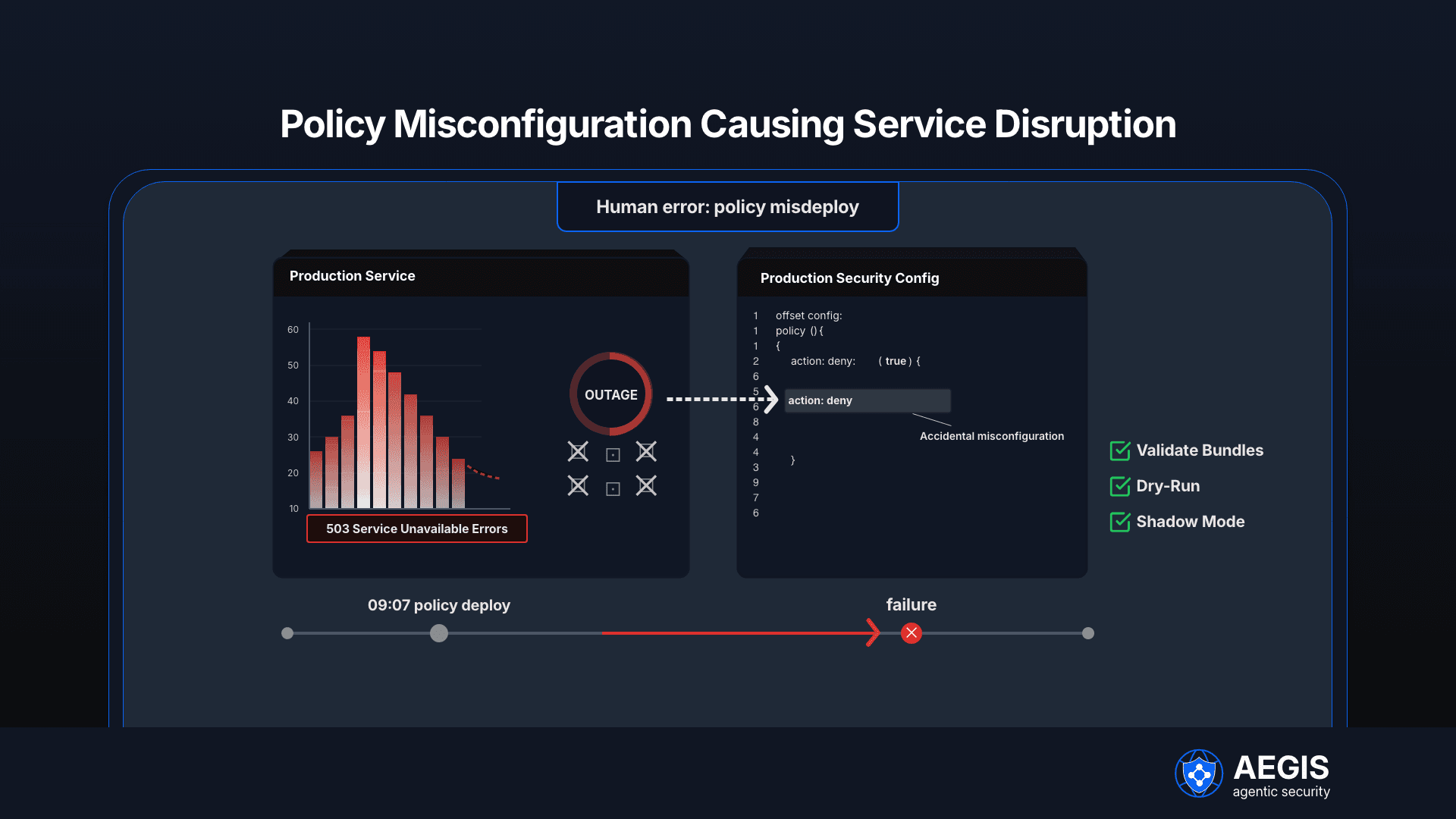
- Runtime enforcement fidelity: Does the product block or just alert? Can it operate in shadow mode and flip to enforce safely?
- Telemetry and auditability: Are decisions traced with OpenTelemetry spans and signed audit trails for compliance? (OpenTelemetry adoption as an observability baseline continues to rise in 2024–25). (OpenTelemetry)
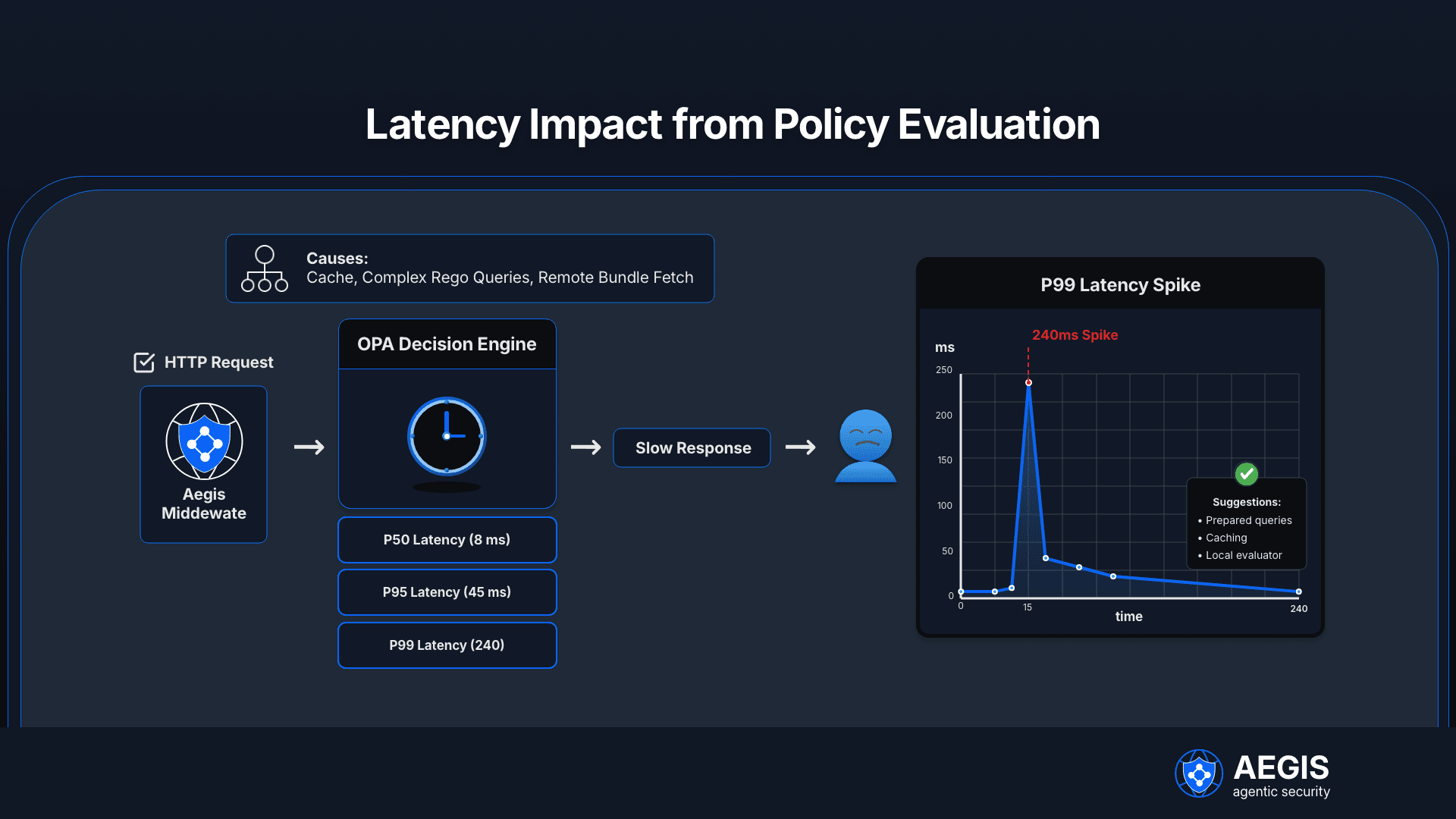
- Decision latency at scale: P99 decision latency must be explicit and measurable — aim ≤20 ms as a procurement target. Requiring vendor-provided P99 benchmarks under realistic load prevents accepting optimistic demo numbers.
Vendors that omit shadow mode, per-agent identity, or detailed telemetry are red flags. Ask for signed benchmark artifacts rather than slides.
👉🏻 Compare platforms strategically to find the best fit for your AI goals
Core evaluation axes (scorecard you can apply)
Use these axes during RFPs, PoCs and procurement negotiations. For each axis, require a demo artefact (logs, OTel traces, signed manifests).
- Enforcement model — allow/deny/sanitize/approval_needed semantics; shadow mode; fail-closed semantics for writes.
- Telemetry fidelity — OpenTelemetry spans, decision_reason, policy_version, parent_agent_id, attestation signatures.
- Policy-as-code & versioning — YAML/JSON policies compiled to OPA bundles, schema validation, hot-reload and rollback.
- Latency & scalability — P99 decision latency targets (≤20 ms recommended); support for WASM/OPA prepared queries, in-memory caches.
- Integrations — middleware for LangChain/LangGraph, Envoy ext_authz, OpenTelemetry export, Slack/Teams approvals.
- Multi-tenancy & isolation — tenant-scoped bundles, region routing, data residency controls.
- Auditability & legal controls — signed audit chains, retention, right to audit logs and export formats (JSON, CSV, SIEM hooks).
- Operational controls — per-agent budgets, rate limits, and FinOps reporting.
Example minimum procurement asks
- Provide P99 decision latency under representative load (signed benchmark).
- Demonstrate shadow→enforce hot flip.
- Export OpenTelemetry spans and SIEM-ready logs.
- Show per-agent identity and parent_agent_id chaining.
- Provide signed policy bundle manifests and a policy diff history.
Security & compliance test suite (SDET-friendly)
Automate these cases as part of your PoC harness:
- Parameter injection: send malformed / crafted parameters (amounts, SQL, shell constructs). Expect deterministic rejection or sanitization.
- Chain coercion: craft planner → finance chain attempts to exceed budget. Verify parent_agent_id validation and block.
- Egress & exfiltration: attempt calls to unauthorized domains and verify deny and tracing.
- Token replay & short-lived tokens: validate JTI replay protection and short expiry.
- Compliance tests: tamper-proof logs (signed chains), policy version history, and export sample audits.
Aegis — architected example and how it meets the rubric
Aegis is presented here as an exemplar implementation that you can use as a reference in procurement language. The architecture unites a sidecar/forward proxy (Envoy), an external authorization server, a policy compiler (OPA bundles), and an observability fabric exporting OpenTelemetry — a pattern built for production, multi-tenant environments.
Key capabilities mapped to evaluation axes:
- Policy-as-code: Aegis ingests YAML/JSON policies and compiles them into OPA bundles. Policies express allowed tools, parameter constraints (ranges, regex), budgets and actions (allow, deny, sanitize, approval_needed). Bundles are versioned and hot-reloaded, enabling rapid iteration without restarts.
- Runtime enforcement & modes: The data plane uses Envoy ext_authz to intercept calls; the Aegis decision service evaluates prepared OPA queries with in-memory caches and, if necessary, WASM acceleration to hit P99 targets (≤20 ms). Shadow mode collects would-deny events for tuning before enforcement. Fail-closed is the default for writes; reads can be configured fail-open for resilience.
- Observability & audits: Every decision emits OpenTelemetry spans that include agent_id, tool, decision, policy_version and decision_reason. The control plane stores signed policy manifests and supports tamper-proof audit chains for compliance requests. These spans feed dashboards for SecOps and FinOps.
- Approval workflows & developer DX: Aegis integrates with Slack/Teams for human approvals; approved overrides mint one-time tokens. Developer SDKs and CLI enable local dry runs, policy validation and sample policy templates for common use cases (payments, EHR, CI/CD).
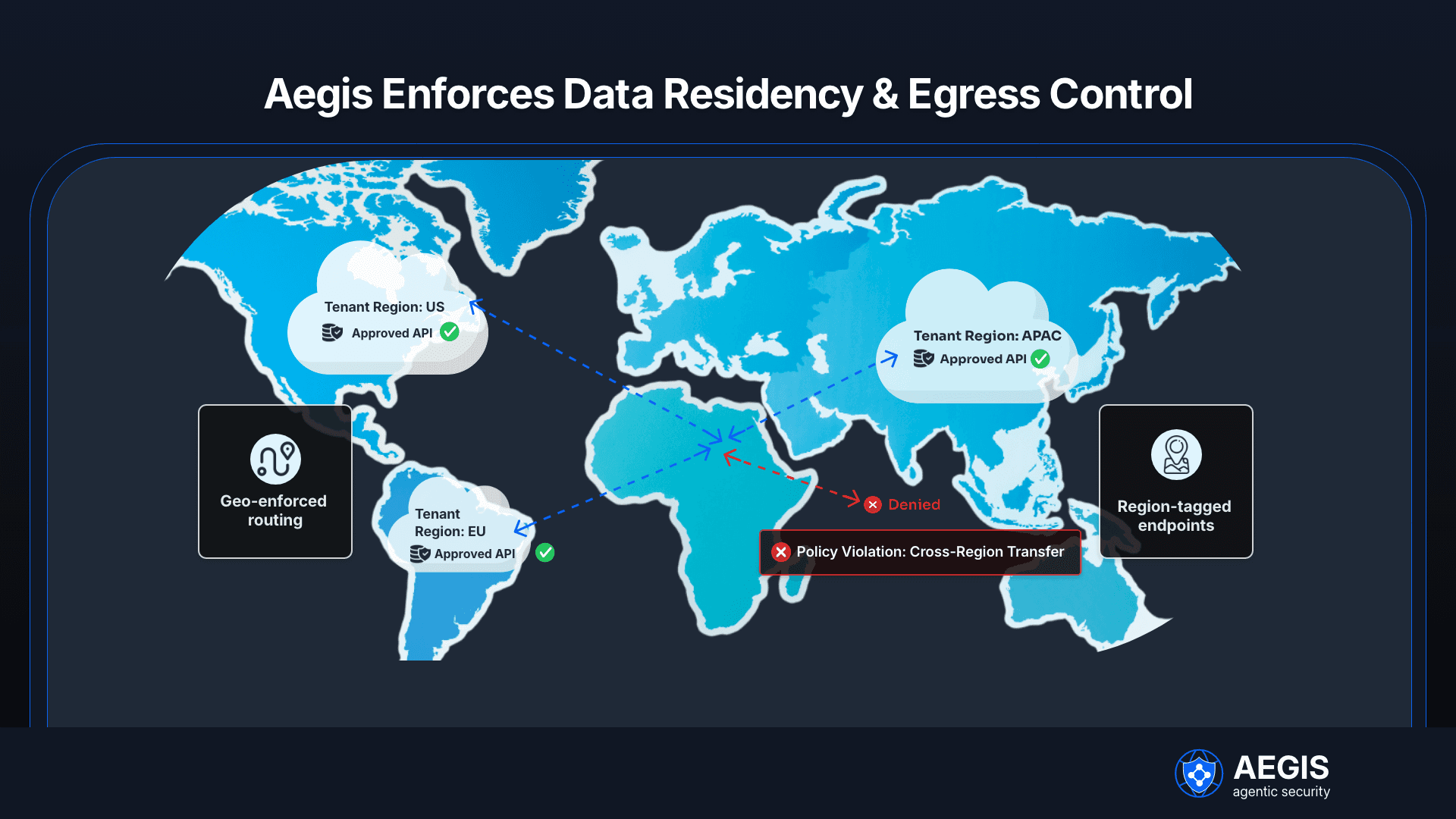
- Multi-tenancy & data residency: Bundles are scoped per tenant and served from a bundle store (S3/GCS) with signed manifests and ETAGs to ensure integrity. Configurable routing supports region-tagged endpoints for data residency enforcement.
For procurement, Aegis provides demonstrable artifacts: shadow-mode reports, OTel traces for blocked transactions, P99 benchmark reports, and sample OPA bundles — exactly the sort of evidence you should demand from any vendor.
👉🏻 Avoid lock-in risks by building for interoperability from the start
Two quick comparison tables
Vendor scoring (capabilities → must / have / bonus)
Capability | Must | Have | Bonus | Aegis (exemplar) |
Shadow mode | ✓ | ✓. Shadow + reports. | ||
Per-agent identity | ✓ | ✓. Short-lived JWTs, JTI replay. | ||
OpenTelemetry export | ✓ | ✓. Full spans + metrics. (OpenTelemetry) | ||
P99 decision latency ≤20ms | ✓ | ✓. Prepared queries + cache. | ||
Human approval integration | ✓ | ✓. Slack/Teams approvals. | ||
Policy-as-code & OPA | ✓ | ✓. Compiler → bundles. |
Enforced actions vs vendor support
Enforced Action | Allow | Deny | Sanitize | Approval_needed |
Payment > threshold | ✓ | ✓ | ||
Export PII to external domain | ✓ | ✓ (redact fields) | ||
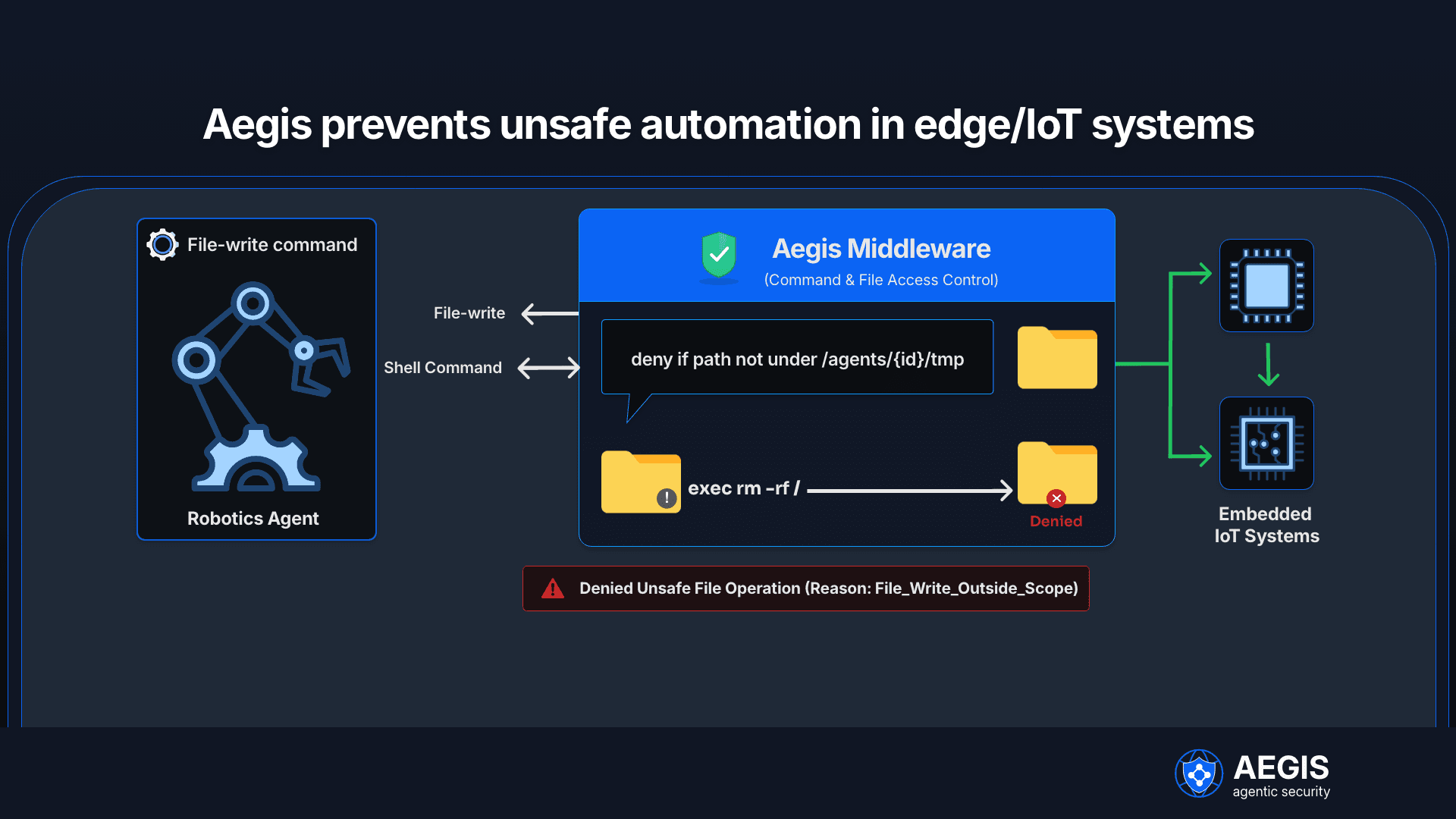
Write to protected path | ✓ | |||
Post to Slack outside business hours | ✓ (remove PII) | ✓ |
Demo script (concise checklist for PoC)
- Deploy policies in shadow for 7 days; collect would-deny metrics.
- Run security tests: parameter injection, chain coercion, unauthorized egress.
- Push a policy hot-reload and flip to enforce on a selected connector.
- Trigger a high-risk payment to confirm approval_needed flows and obtain override token.
- Export OTel traces and signed audit manifest for a blocked event.
Procurement language & contract items
- Require signed P99 latency benchmarks under realistic load.
- Right to audit logs and request export in JSON/CSV and SIEM formats.
- Fail-closed behaviour for write actions; configurable for reads.
- Data residency controls and encryption at rest/in transit.
- Delivery of sample OPA bundles and an evaluation test harness.
Two short external citations to back market context
Gartner and Reuters signal market caution about “agent washing” and a non-trivial failure rate for agentic projects if governance is absent. (Reuters)
OpenTelemetry remains the practical observability baseline for tracing decisions and integrating with SIEM and dashboards. (OpenTelemetry)
👉🏻 Drive long-term success through strong vendor and enterprise partnerships
Frequently Asked Questions
Q: What’s the difference between a policy engine and a full gateway?
A: A policy engine evaluates decisions (OPA), but a gateway provides data-plane interception, identity, token handling, DLP, and enforcement semantics. Ask vendors to show both evaluation latency and proxy overhead.
Q: When should I require human approval?
A: Use approval for high-risk, high-cost or sensitive writes (payments, EHR exports, production deploys). Policies should support thresholds and automated routing to Slack/Teams.
Q: How do I validate a vendor’s P99 claim?
A: Require a signed benchmark run (with request mix and concurrency), OpenTelemetry spans, and replayable test scripts. Run your own load test in parallel during PoC.
Q: What legal language should procurement include?
A: Right to audit logs, retention windows, encryption standards, data residency, and escrow of policy bundles for portability.
Q: Is shadow mode essential?
A: Yes — it prevents operational disruption while collecting actionable would-deny signals.
Q: What’s a practical ROI framing?
A: Frame licensing against prevented incidents, FinOps savings (per-agent budgets), and reduced incident MTTR from auditable traces.