Multi-Agent Systems in Procurement and Supply Chain Management
Secure multi-agent procurement: runtime policies, approvals, egress control and auditable telemetry for production agent workflows.
Aegis: Runtime Policy Mesh for Secure Agentic Procurement
Procurement workflows are moving from manual approvals and brittle system handoffs to multi-agent automation: sourcing, negotiating, and issuing purchase orders (POs) can now be coordinated by distinct autonomous agents. That velocity brings efficiency — and new runtime risks: unauthorized PO creation, supplier-bank detail manipulation, and silent data egress. This article explains the procurement-specific risks that arise in agentic workflows, the policy controls that mitigate them, and concrete Aegis implementation patterns (policy examples, rollout guidance and operational metrics) for security, Compliance and FinOps teams.
👉🏻 Automate finance operations with intelligent payment agents
Procurement risks in agentic workflows
Agentic workflows stitch together ERPs, supplier portals, payment APIs and human approvals. Key risks include:
- Prompt/parameter injection: an attacker or mis-specified prompt alters an agent’s payload (e.g., changes payee bank details or PO amounts).
- Lateral coercion: a low-privilege planner agent induces a finance agent to call payment APIs with elevated parameters.
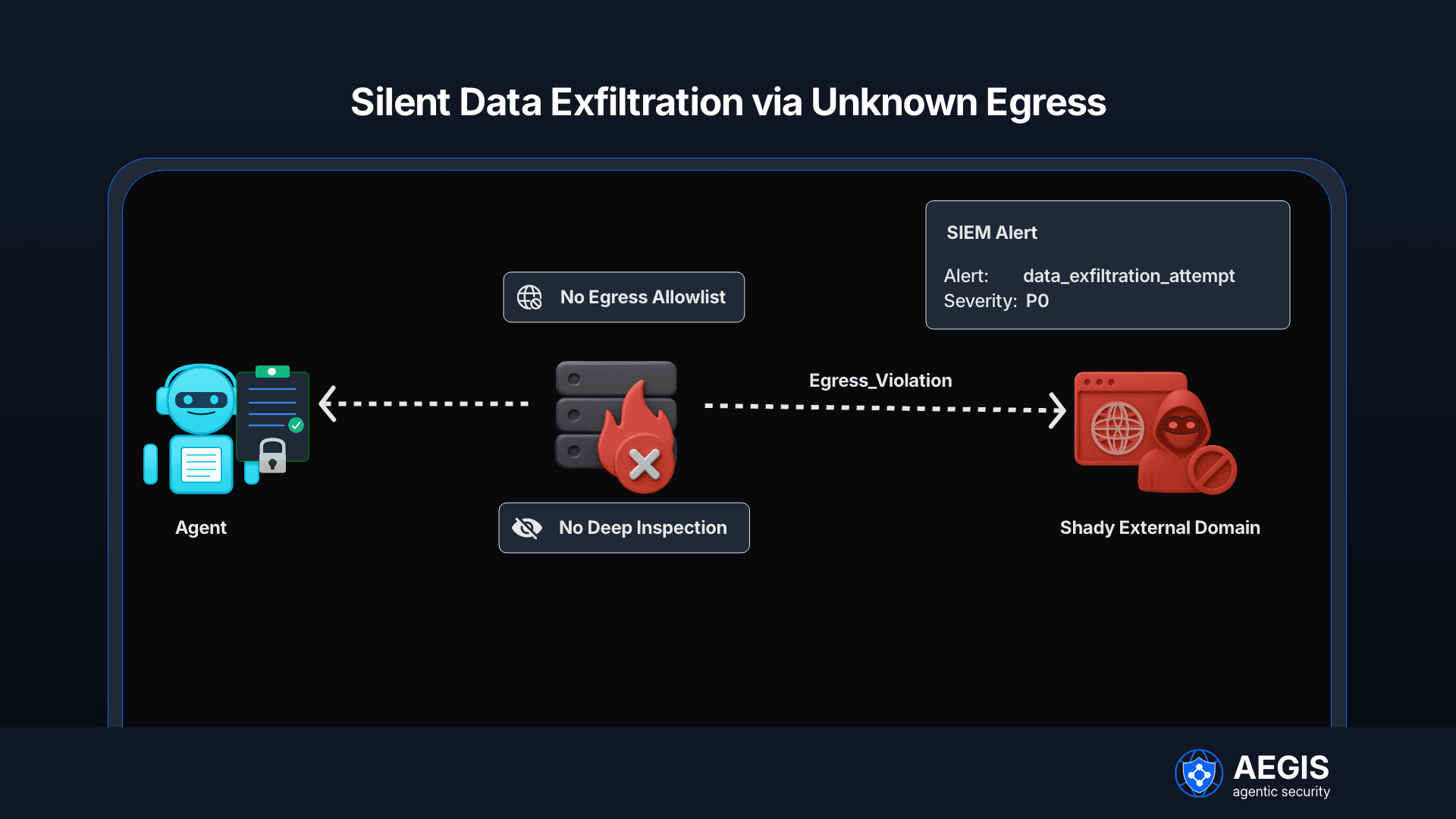
- Uncontrolled egress & exfiltration: agents push supplier pricing or PII to arbitrary domains.
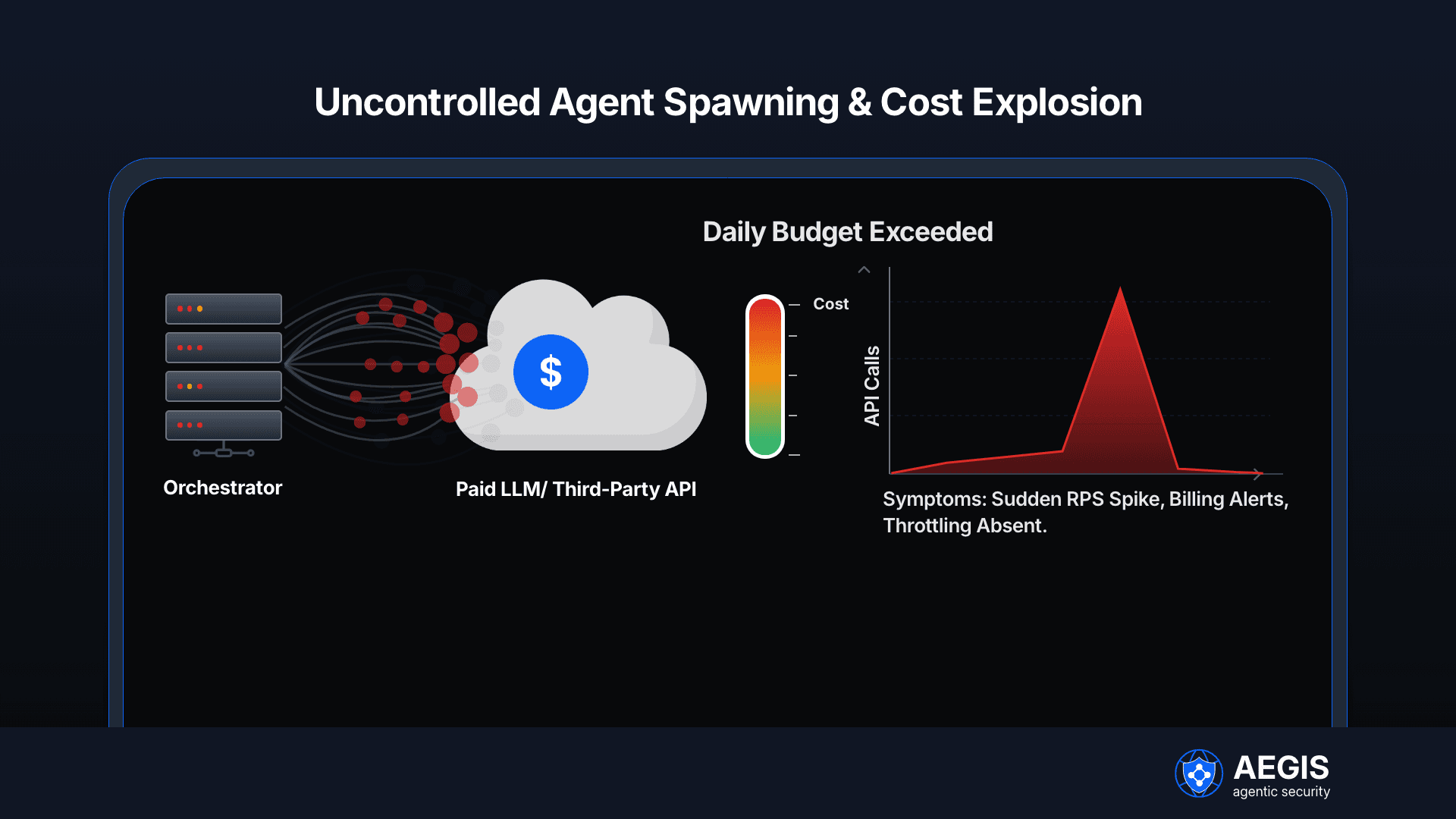
- Silent cost/scale explosions: agents spawn or call costly third-party APIs without budgets or rate limits.
- Lack of runtime auditability: without signed telemetry and policy evidence, dispute resolution and compliance reporting are fragile.
Market context: enterprises are increasing automation budgets and RPA/hyper-automation adoption. The global RPA market was estimated at roughly USD 3.79B in 2024 with strong multi-year growth expectations. (Grand View Research) Surveys of data and security leaders also show governance and security are top barriers to AI adoption, making runtime controls a priority. (Immuta)
Policy controls that matter
Effective runtime controls for procurement agent workflows are those that operate at call-time (agent→tool), inspect parameters, and emit tamper-resistant telemetry.
Field validation (why it matters)
Field-level checks prevent prompt-injected or user-input fields from silently taking effect. Examples:
- Bank account regexes, IBAN checksums, and cross-field verification (payee name vs. account holder).
- Amount ceilings and currency validation.
- Mandatory document checks: W-9 or VAT evidence before PO issuance.
Supplier verification & egress control
Supplier identity is a first-class entity in policies. Enforce:
- Approved supplier allowlists (domain and portal-level).
- Block egress to non-approved supplier portals or external storage endpoints.
- Require human approvals for new payees or changes to stored supplier payment details.
Aegis implementation patterns for supply chain
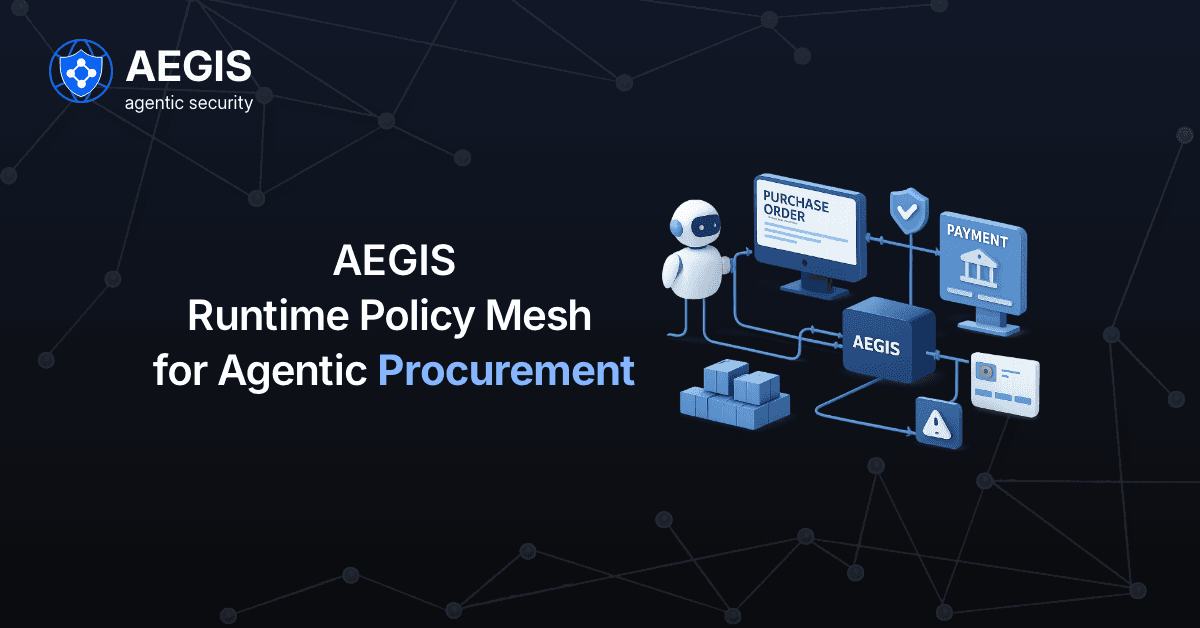
Aegis implements a runtime policy mesh that intercepts each agent→tool call, evaluates parameterized policies, and emits signed OpenTelemetry spans and structured logs for audit. The following sections show concrete policy examples, expected business outcomes, and recommended rollout patterns. The technical brief and MVP spec for Aegis define the gateway, policy-as-code, and telemetry model in detail.
👉🏻 Drive revenue growth with AI-powered sales automation
Table: policy examples vs. business outcome
Policy example | Enforcement action | Business outcome |
finance-agent: create_payment amount <= 5,000 | allow; >5,000 → approval_needed | Prevents high-value unauthorized transfers; auditable approval trace |
supplier.change_bank_details | approval_needed + timebound override token | Blocks immediate fraudulent payee changes; preserves human control |
egress: allowlist domains = {approved portals} | deny & log | Reduces exfiltration risk and enforces data residency |
agent budgets: daily_budget = $20 (per-LLM-agent) | block when exhausted | Controls FinOps spend; prevents runaway API costs |
(See also Aegis Use Cases for additional scenarios: FinTech payments, EHR controls, and multi-tenant MSSP patterns.)
👉🏻 Improve contract efficiency with end-to-end automation
Table: technical enforcement primitives
Primitive | Purpose | Runtime behavior |
Agent identity token (short-lived JWT) | Tie actions to agent identity | Token includes org, tenant, agent, scopes (Ed25519 signed) |
Field-level regex & range checks | Prevent injection | Request inspected; sanitized or blocked |
Approval workflow | Human-in-the-loop for high risk | Pause call; send approval to Slack/Teams and issue one-time override token |
Shadow mode | Safe tuning | Record would-blocks without blocking; collect telemetry |
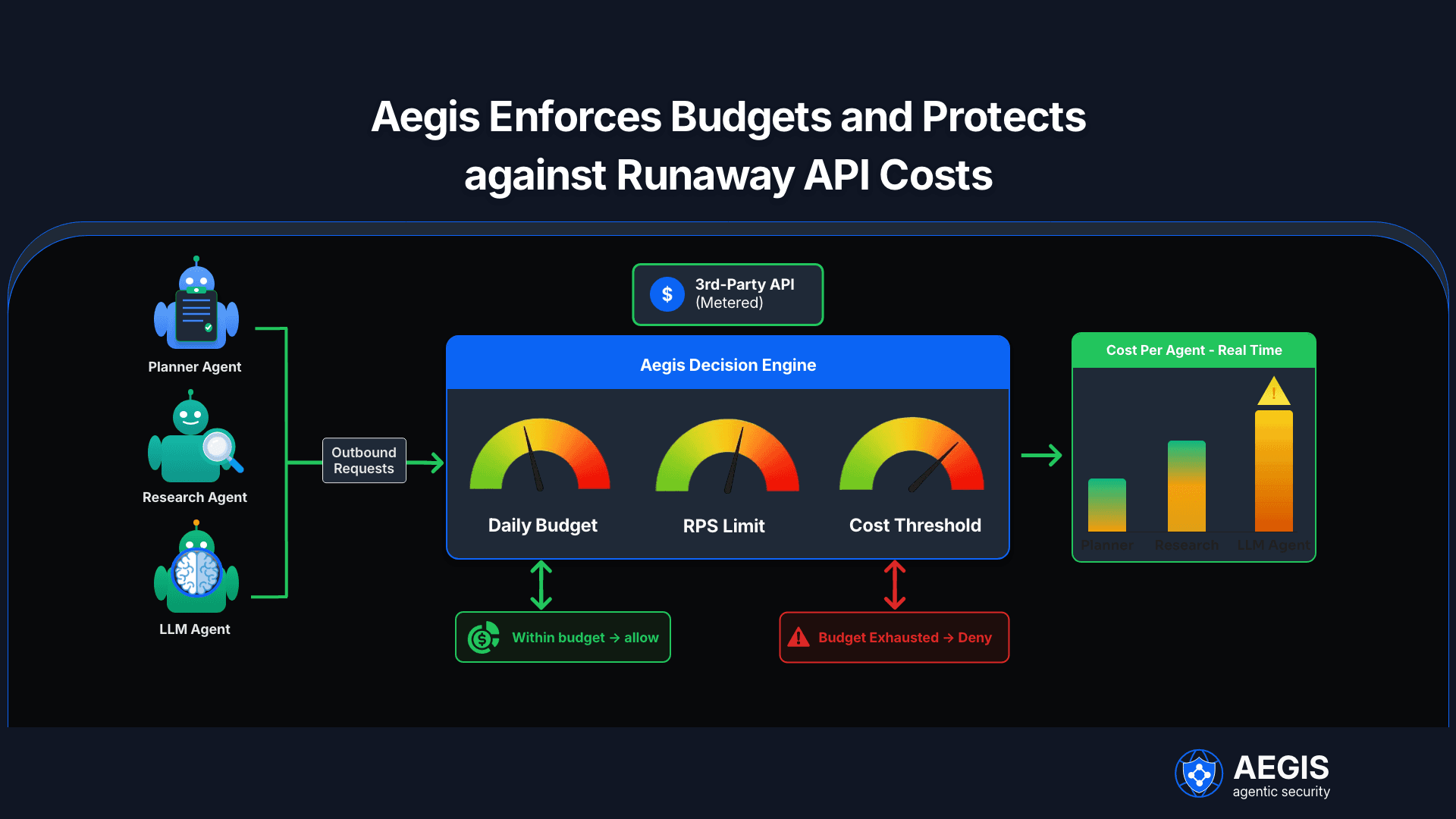
Aegis — what it is and why it matters
Aegis is a runtime policy mesh and observability gateway designed specifically for multi-agent AI systems. It is intentionally lightweight: a data-plane runtime (sidecar/forward proxy + external authz service) and a control plane for policy-as-code, bundling and versioning. The design priorities are low latency, high fidelity telemetry, and operational controls that map directly to procurement risk scenarios.
Key solution capabilities (practical, production-ready):
- Per-agent identity & least-privilege — agents must register and receive short-lived tokens. Policies map allowed tools, actions and parameter constraints to each agent identity.
- Parameter-aware enforcement — Aegis inspects body/query parameters and call chain context; it can allow, deny, sanitize (redact), or return approval_needed.
- Approval workflow & override tokens — for new payees or high-value POs, Aegis pauses the call, routes an approval request (Slack/Teams), and upon approval issues a one-time override token that’s valid for a single retry.
- Egress control — outbound allowlists prevent agents from reaching unknown supplier portals or external storage.
- Telemetry & audit — every decision emits OpenTelemetry spans and structured logs including agent_id, tool, decision, reason and policy_version; logs can be signed and chained to support dispute resolution.
- Shadow mode & dry-run — teams can collect would-block events before enforcement, reducing false positives on day one.
Aegis maps directly to the procurement problems in the brief: preventing unauthorized POs, enforcing dual approvals for new payees, blocking egress to non-approved supplier portals, and enabling shadow rollouts to tune policies before enforcement. The product spec emphasizes low overhead (targeting sub-20ms decision latency at P99) and practical DX (CLI, SDKs, sample policies) to make adoption feasible for existing orchestrators such as LangGraph/AgentKit.
Case studies and rollout guidance
Practical rollout steps for procurement teams and MSSPs:
- Inventory & agent registration — register current agents and map the top 10 mission-critical tool connectors (ERP, payments, supplier portals).
- Shadow deployment — deploy Aegis in shadow mode for 7–14 days to collect would-blocks for supplier-bank changes, PO amounts and egress attempts.
- Policy cookbook — implement a small set of policies: new-payee approval, per-agent spend ceilings, egress allowlists, and required-documents checks (W-9). Use the policy schema and dry-run validation in the control plane.
- Approval routing & SLOs — integrate approval workflow with existing Slack/MS Teams channels and define approval SLAs (e.g., 2 hours for > $5k).
- Flip to enforce & iterate — after tuning, flip high-risk policies to enforce. Monitor telemetry dashboards for false positives and outages.
- Audit & compliance — export signed telemetry and policy-versioned logs to SIEM for audits and vendor dispute resolution.
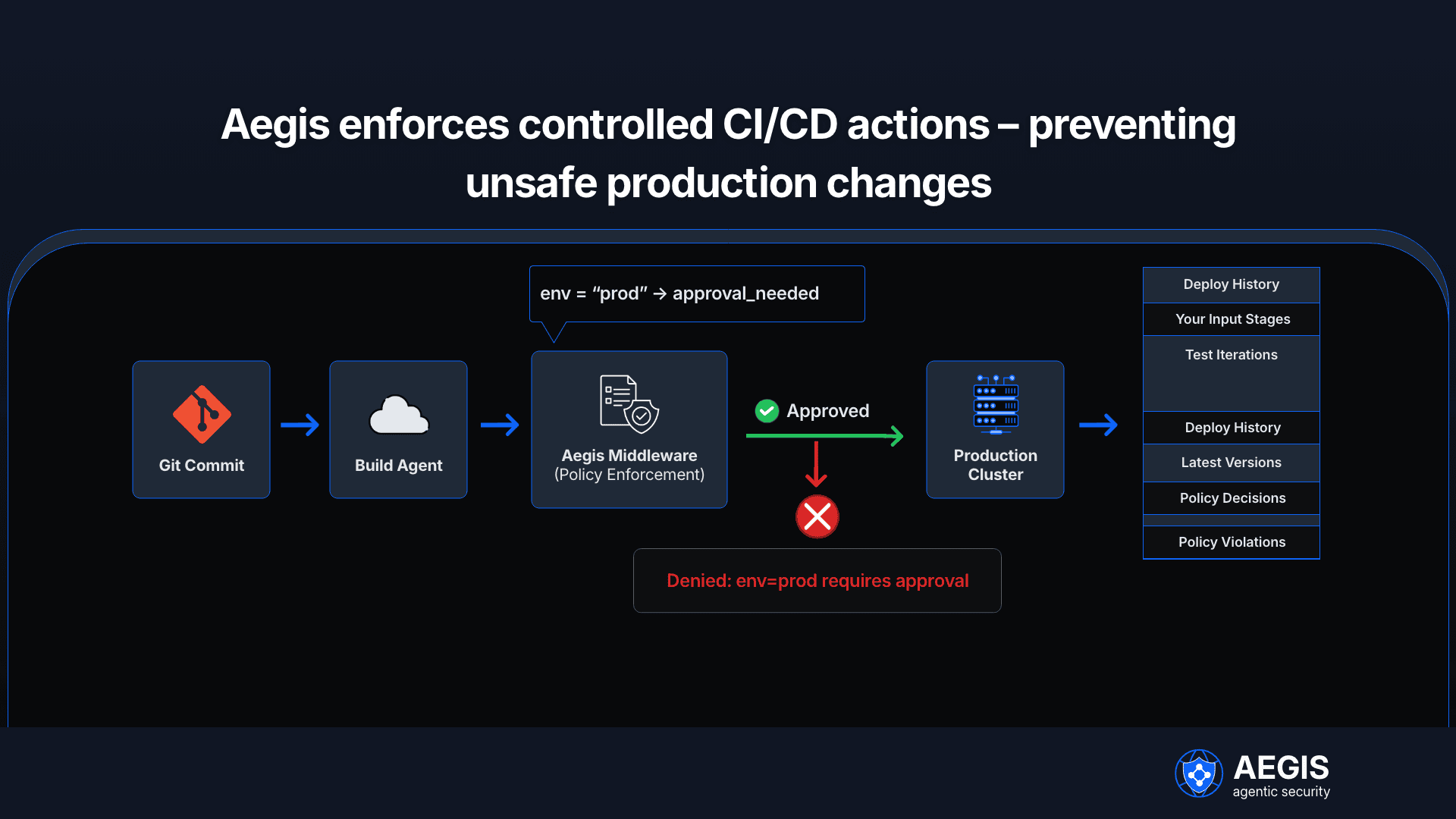
Operational checklist (short):
- Ensure token rotation and mTLS between orchestrator and Aegis proxy.
- Start with per-agent ceilings before enabling approval workflows at scale.
- Use shadow mode for connectors undergoing schema variability (e.g., supplier portals with inconsistent field names).
AI Security metrics & rollout timeline
Metric | Target (MVP) |
Decision latency (P99) | ≤ 20 ms. |
Policy coverage (pilot) | ≥ 80% critical tools |
Telemetry completeness | 100% agent→tool calls traced |
Policy authoring time | < 5 minutes for a standard rule |
Rollout phase | Duration | Key deliverable |
Phase 0 — Discovery | 1 week | Agent & connector inventory |
Phase 1 — Shadow | 1–2 weeks | Shadow telemetry, would-block report |
Phase 2 — Enforce | 1 week | Flip policies, enable approvals |
Phase 3 — Operate | Ongoing | Dashboards, audits, policy iteration |
Frequently Asked Questions
Q: How does Aegis prevent a planner agent coercing finance into a payment?
A: Aegis enforces per-agent action scopes and parameter conditions at runtime; the finance agent’s policy can include max_amount and require approvals above thresholds, blocking coercion.
Q: Can Aegis integrate with existing orchestrators?
A: Yes — Aegis provides middleware and SDKs for common orchestrators and a sidecar/proxy model to minimize code changes.
Q: What evidence does Aegis provide for audits or vendor disputes?
A: Aegis emits signed OpenTelemetry spans and structured JSON logs including policy_version, decision_reason and approval_id to enable forensic review.
Q: How do we test policies without blocking live workflows?
A: Use shadow mode to collect would-block events and tune regexes/thresholds before flipping to enforce.
Q: Which industries should prioritize Aegis for agentic procurement?
A: Regulated industries with automated payments and PHI/PII concerns — FinTech, Healthcare, Government contractors, and MSSPs — benefit most due to audit and compliance needs.