Multi-Agent AI in Sales: Generating Leads and Quotes
Enforce quoting rules, prevent runaway discounts, and produce tamper-proof audit trails for multi-agent sales automation.
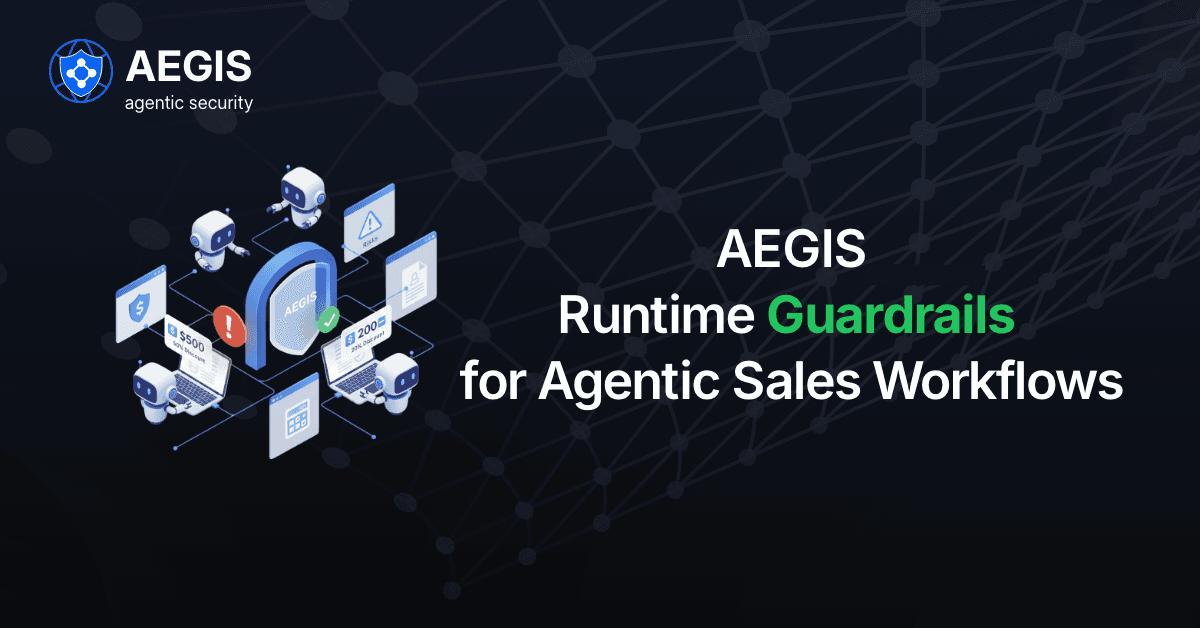
Aegis: Runtime Guardrails for Agentic Sales Workflows
Sales teams increasingly use agentic AI to draft outreach, build quotes, and accelerate deal flow. That velocity brings two competing demands: speed and controls. Without runtime guardrails, agents that chain through CRMs, pricing engines, and quoting systems can deliver bad quotes, leak confidential pricing, or escalate discounts outside policy. This article maps where agentic AI fits into sales workflows, the policy guardrails you must enforce, and how Aegis — a runtime policy and observability gateway — closes the gap with low-latency enforcement, tamper-proof auditing, and operational controls suitable for enterprise and MSSP environments.
Where agentic AI fits in sales workflows
Agentic AI is being used across the funnel: prospect discovery, list cleansing, outreach personalization, opportunity qualification, and quote drafting. In modern stacks agents routinely:
- Query the CRM for account context.
- Pull pricing and SKU data from product catalogs.
- Assemble quotes and route approvals.
- Send prospecting lists to outreach platforms (risk: PII leakage).
Typical orchestration chains let multiple agents (planner, composer, finance-agent) talk to tools in sequence. That flexibility is powerful — and dangerous when unchecked. A planner agent could, intentionally or via prompt injection, cause a finance agent to issue excessive discounts or even trigger payments. Centralized, runtime enforcement at the agent↔tool boundary is therefore essential to maintain least-privilege, parameter validation, and human-in-the-loop approvals.
👉🏻 Optimize procurement and supply chain decisions with coordinated AI agents
Policy guardrails for quotes and leads
Effective guardrails are precise, enforceable, observable, and minimally invasive to developer workflows.
Minimum runtime policies to enforce
- Agent identity & least privilege: each agent has a unique identity and allowed tool list.
- Parameter constraints: enforce numeric ranges (e.g., discount ≤ 25%), regex checks for account IDs/SKUs.
- Approval gates: require finance approval for exceptions (override tokens for one retry).
- DLP / PII redaction: deterministic rules to redact email, SSN, phone numbers in outbound lists.
- Egress allowlists: agents may only call approved domains or internal connectors.
Example policy (YAML pseudo)
agent: sales-composer
allowed_tools:
- name: pricing-api
actions: - generate_quote
conditions:
max_discount_percent: 25
require_canonical_sku: true
- generate_quote
These runtime checks must execute at the call boundary (the gateway) so that even if an agent chains or misbehaves, policy decisions are enforced consistently and logged.
Aegis as a solution: architecture and operational detail
Aegis is designed as a lightweight policy + observability fabric for multi-agent systems. Architecturally it sits between the orchestrator and tools as a gateway (sidecar or forward proxy) that evaluates per-call policies and emits auditable telemetry. The core responsibilities:
- Identity & registration: each agent is registered with a unique ID and short-lived token.
- Policy-as-code: security teams author YAML/JSON policies that compile into OPA-ready bundles.
- Runtime enforcement: the gateway evaluates calls and returns allow/deny/sanitize/approval_needed outcomes in real time.
- Telemetry & audit: OpenTelemetry spans and structured logs attach policy_version, decision_reason, agent_id, and optional attestation signatures.
Key design elements:
- Sidecar / proxy pattern (Envoy ext_authz or middleware) intercepts outbound requests from agents to tools and instruments both request metadata and parameters.
- Policy engine uses prepared queries and in-memory caches to meet tight latency targets (P99 ≤ 20 ms).
- Approval flows integrate with chatops (Slack / Teams) for human overrides; approved overrides issue a one-time token for retry.
- Tamper-resistant audit trails: all policy decisions and overrides are versioned and optionally signed for compliance teams.
Aegis solves sales-specific problems:
- Enforce max_discount per agent and route exceptions to finance.
- Validate SKU IDs against the canonical product catalog before a quote is issued.
- Prevent PII exposure in outbound prospecting lists through deterministic regex redaction or block rules.
- Provide FinOps controls: per-agent budgets and rate limits for expensive connectors (LLM calls, paid APIs).
For product and example specifics, see the Aegis product brief and the MVP specification.
Runtime example flow (operational)
- Sales composer agent calls /pricing/generate with discount=40% and sku=ABC123.
- Aegis Gateway inspects call: agent_id=sales-composer, tool=pricing-api, parameters.
- Policy evaluation finds max_discount_percent=25 → decision: approval_needed.
- Approval service posts to Slack; finance approves.
- Aegis mints one-time override token; agent retries and call succeeds. All steps are logged with trace-id and policy_version.
Implementation and metrics: deal velocity, quote error rate, and operational KPIs
Measuring impact requires instrumenting both business and technical metrics.
Technical KPIs (examples)
- Policy enforcement latency (target P99 ≤ 20 ms).
- Policy coverage: percent of critical tool actions covered by runtime policy.
- Block ratio: % of total calls blocked or sanitized.
- Approval volume and mean time to approve.
- Telemetry completeness: % of calls with OTel spans and signed audit entries.
Business KPIs (sales-focused)
- Deal velocity: time from draft to signed quote (A/B test before/after Aegis).
- Quote error rate: percentage of quotes needing rework due to pricing/SKU errors.
- Unauthorized discount incidents: count and dollar exposure prevented.
- Compliance incidents resolved with audit trail.
.png&w=3840&q=75)
Table: Example metrics and post-Aegis targets
Metric | Baseline | Target after Aegis (90 days) |
Quote error rate | 3.5% | ≤ 0.8% |
Unauthorized discount incidents | 12 / month | 0 |
Mean approval TTA (human) | 18 hrs | ≤ 2 hrs (SLAs + automation) |
Policy eval latency (P99) | 35 ms | ≤ 20 ms |
Table: Policy enforcement outcomes (example)
Decision | Typical trigger | Action |
allow | discount ≤ max_discount & valid SKU | pass-through |
approval_needed | discount > max_discount | pause + notify approver |
sanitize | PII detected in payload | redact fields + allow/block per policy |
deny | forbidden tool or agent | return PolicyViolation error |
Deployment considerations and developer experience
Make rollout low-friction:
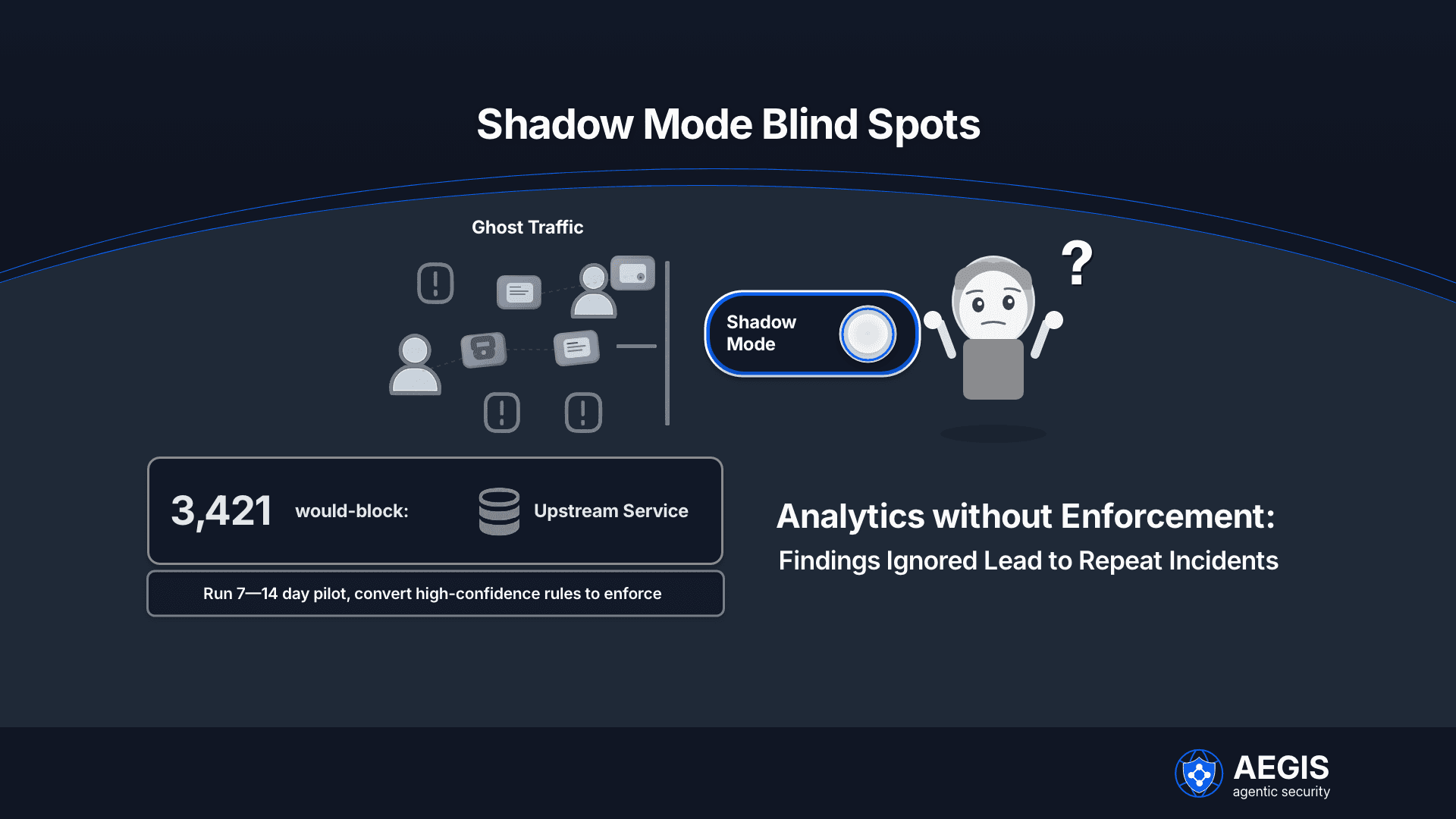
- Shadow mode: run policies in observe mode to collect would-block signals before enabling enforcement.
- SDKs & middleware: provide Python/Node SDKs and decorators for LangChain/LangGraph so existing code requires minimal change.
- Policy dry-run and simulation: allow security teams to test policies against historical traces.
- Hot-reload policies & versioning: policy bundles must be hot-swappable and versioned for audit and rollback.
Operational notes:
- Choose fail-closed defaults for write actions; optionally allow fail-open for read-only flows during early rollout.
- Integrate telemetry into existing SIEM and dashboards (OpenTelemetry → Grafana / Splunk).
- Use short-lived JWTs and mTLS for agent identity to prevent token replay and enforce least privilege.
Two practical sales use cases
- Enforcing discount thresholds
- Policy: sales-composer may apply discounts up to 25%; any larger discount triggers finance approval.
- Outcome: prevents rogue or coerced finance calls that cause margin leakage.
- SKU validation before sending a quote
- Policy: validate SKU against canonical product catalog (exact-match) before quoting.
- Outcome: prevents shipping quotes with obsolete SKUs or bad pricing IDs.
Additional use cases extend to PII redaction in prospect lists, rate-limiting expensive LLM calls per agent to control spend, and multi-tenant scoping for MSSPs.
👉🏻 Streamline finance operations with secure and efficient payment automation
Frequently Asked Questions
- How does Aegis affect agent latency?
Aegis is designed to evaluate policies in-memory with prepared queries; typical P99 targets are ≤ 20 ms. Shadow mode lets teams measure would-blocks and tune policies before enforcement. - Can Aegis require human approval for specific thresholds?
Yes — policies can return approval_needed. Aegis integrates with Slack/Teams to collect approvals, mint a one-time override token, and record the attestation in the audit trail. - How are policies authored and versioned?
Policies are authored as YAML/JSON (policy-as-code), validated, compiled into OPA bundles, and stored with versioning and metadata for rollback and audit. - What visibility do SOC/compliance teams receive?
OpenTelemetry spans and structured logs include agent_id, decision, policy_version, and optional attestation signature. This produces SIEM-ready data for investigations. - Can we test policies without blocking production?
Yes — Aegis supports shadow (observe) mode and a dry-run CLI to validate real traffic and tune policies before flipping enforcement. - Does Aegis support multi-tenant deployments for MSSPs?
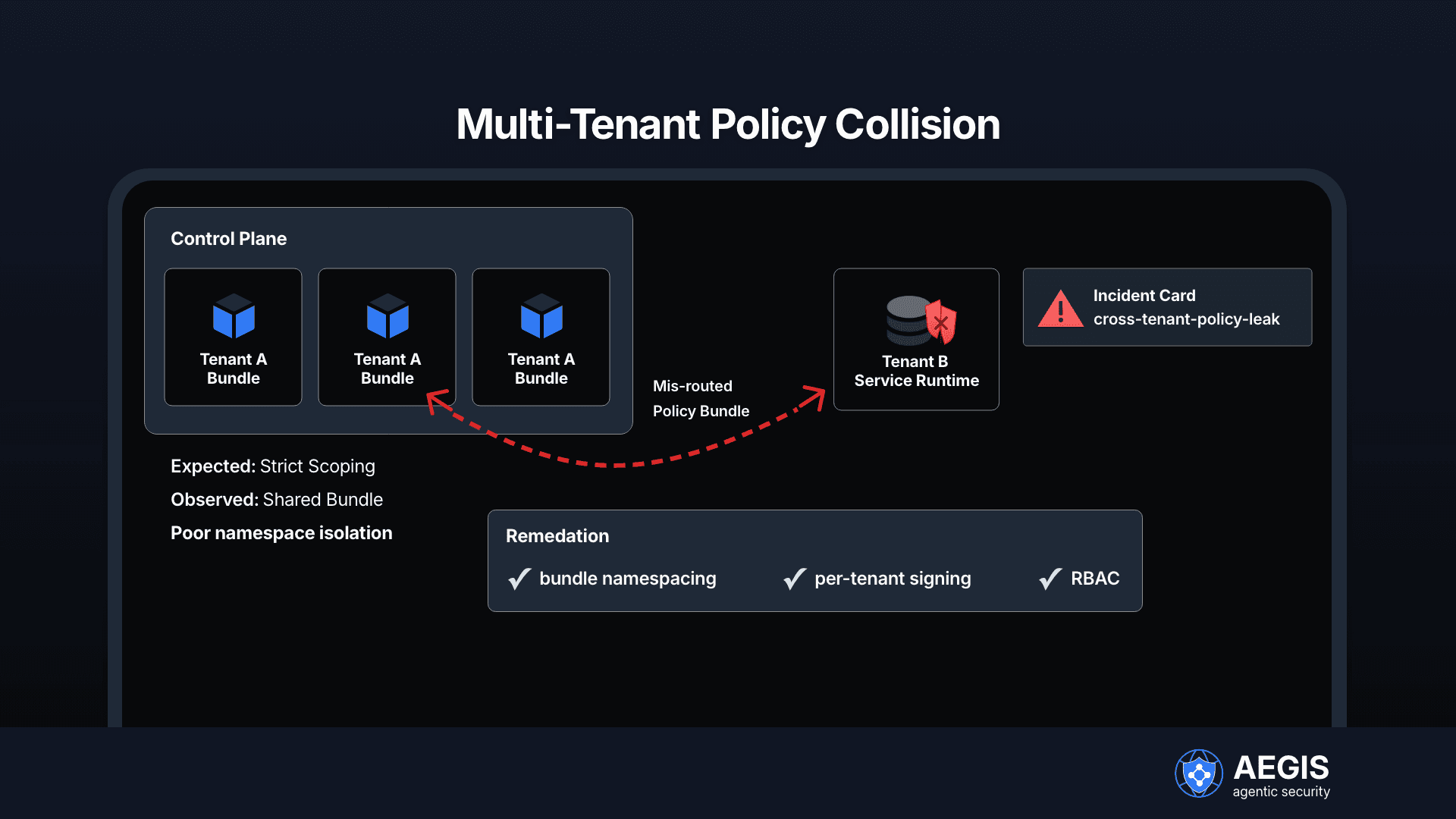
Aegis is architected to scope bundles per tenant and route data by region. Tenant isolation and signed audit trails support MSSP operational models.
Concluding note: Sales automation yields clear velocity gains but introduces new runtime risk vectors — parameter injection, unauthorized discounting, and PII leakage among them. A runtime policy and observability fabric like Aegis enforces least privilege, validates parameters against canonical sources, and preserves a tamper-resistant audit trail — reducing quote errors, protecting margins, and enabling compliant scale for agentic sales automation.
👉🏻 Improve decision-making with smarter enterprise search powered by agents