
Managing Configuration and Secrets for Agentic AI
How to secure configs and secrets for agentic AI: ephemeral tokens, runtime injection, audit trails, and Aegis integration for compliance.
Managing Configuration and Secrets for Agentic AI
Autonomous agents need access: to APIs, databases, and cloud services. If those credentials are stored poorly, an otherwise harmless agent can become an avenue for large-scale credential leakage and regulatory failure. This post lays out the operational risk, a practical ephemeral-first model, implementation patterns, concrete runbook elements — and how Aegis, 'Aegissecurity agent security mesh, integrates to deliver secure, auditable secrets handling for multi-agent deployments.
Secret risks in agentic systems
Agentic architectures expand the attack surface. Agents spawn, chain calls, and act on behalf of users; each action may require a credential. Traditional patterns — embedding keys in code, long-lived env vars, or ad-hoc secrets in CI artifacts — scale poorly and fail compliance and forensics. Surveys continue to show credential leakage remains widespread: in many surveys over 2023–2024, ~70% of organizations reported secret leaks and under half used a dedicated secret store. (Akeyless)
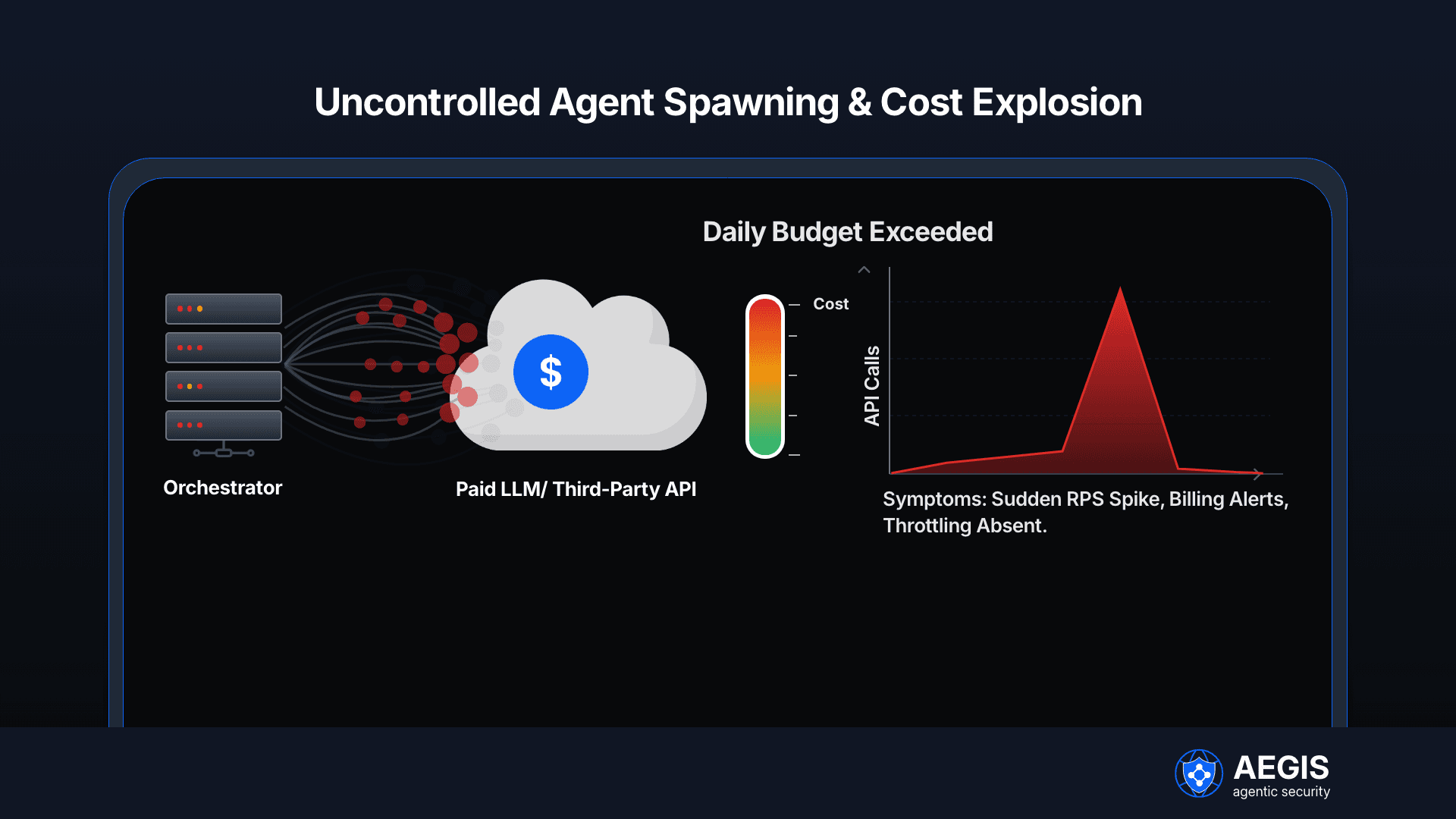
Operational consequences include undetected exfiltration, runaway third-party spend, and failed audits. Breach timelines show credential compromises take the longest to remediate; organizations that rely on static secrets face prolonged exposure windows. (Varonis)
The ephemeral model — principles and benefits
Shift the default: never bake long-lived credentials into agent images or repos. Replace with a short bootstrap secret (limited scope) that exchanges for ephemeral tokens at runtime. Core principles:
• Bootstrap secrets are stored only in hardened vaults (KMS/Vault/Cloud KVs) and used solely to mint ephemeral tokens.
• Tokens are short-lived (minutes to hours), scoped per-agent, and bound to agent identity and attestation.
• Secret injection happens at runtime (sidecar/local socket) and into process memory — not environment variables or disk.
• All secret issuance and access are logged with policy context and attestation data for SOC2/HIPAA audits.
Research and vendor guidance increasingly favor short-lived credentials because they shrink the attacker window dramatically and simplify rotation. (HashiCorp | An IBM Company)
👉🏻 Lock down secrets while protecting sensitive data across workflows
Implementation patterns (practical)
Below are concrete, operational recommendations and examples you can implement immediately.
1) Vaults and bootstrap secrets
Use a central vault for bootstrap secrets only. Bootstrap entries are high-value and should be rotated infrequently but protected by strict access controls and HSM/KMS wrapping. Use brief, single-purpose bootstrap tokens that can only mint ephemeral tokens for a specific agent class.
2) Token exchange & attestation
At agent startup, the bootstrap secret is exchanged for a short-lived JWT from a token service. The minting service requires attestation (e.g., signed agent ID, workload identity, or an enclave attestation) before issuing tokens. This prevents an attacker with a stolen bootstrap secret from easily minting broad credentials.
3) Injection: sidecar and in-memory delivery
Inject ephemeral tokens via a local sidecar socket or localhost API. Avoid env vars and files. Example: a sidecar performs token fetch, exposes a localhost HTTPS socket, and writes tokens only into the agent process memory region using secure APIs or SDK calls. Tokens are cached in memory with TTL and never persisted.
.png&w=3840&q=75)
4) Per-agent roles and narrow scopes
Mint tokens constrained to an agent’s least privileged path. Example: DB write permission restricted to /agents/{id}/store. Include budget claims and capability limits directly in token claims to prevent misuse of downstream paid APIs.
5) Rotation, revocation & emergency playbook
Automate rotation and support immediate revocation (denylist/jti blacklist). An emergency playbook should describe steps to: rotate bootstrap keys, revoke tokens organization-wide, denylist token JTIs, and redeploy sidecars with fresh attestation.
6) Local dev and CI/CD
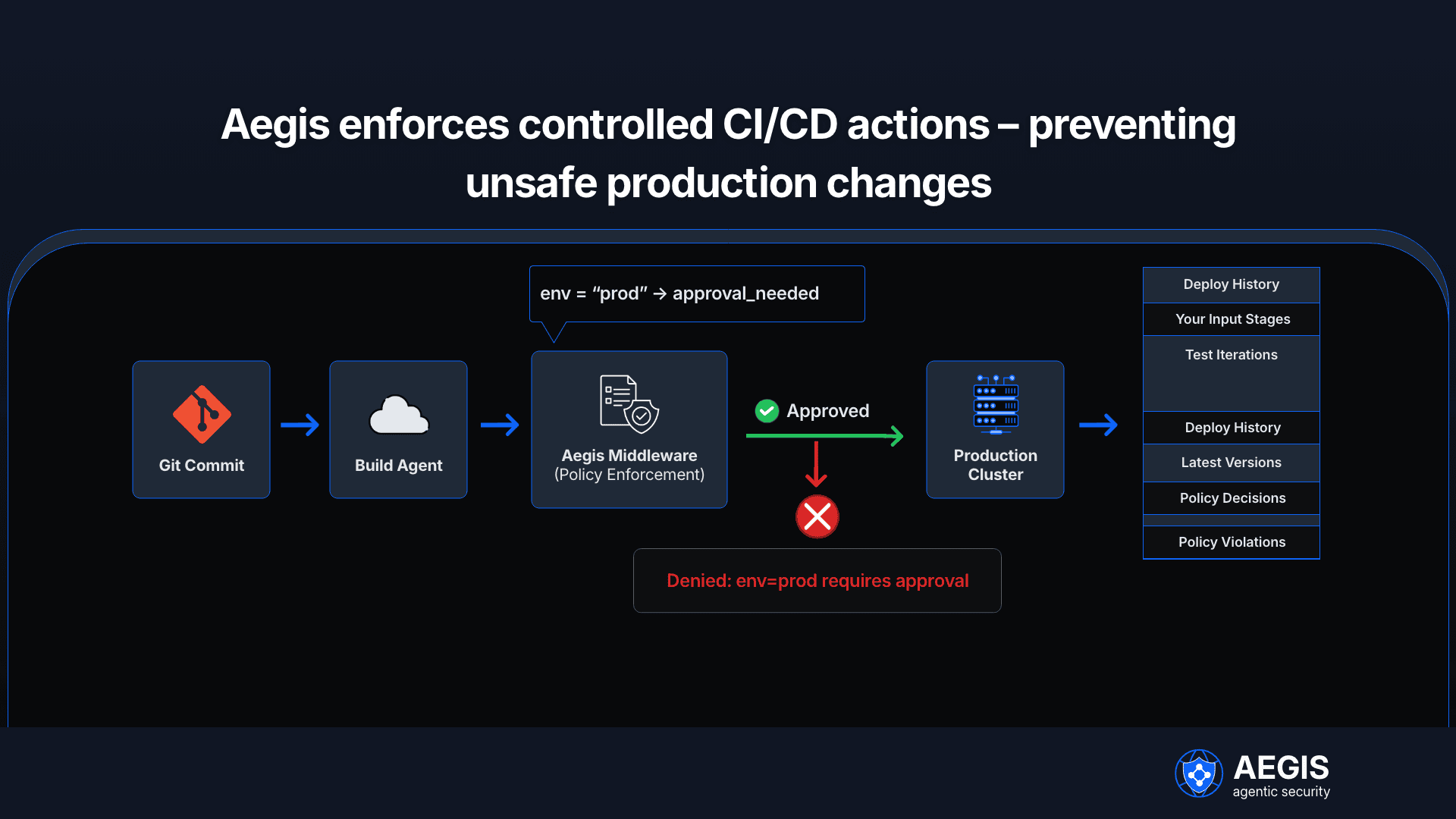
Use dev tokens with limited capabilities for local development; require manual approval for production scopes. For CI/CD, use ephemeral pipeline tokens that expire post-run and are never stored in artifacts.
👉🏻 Prevent exposure by securing configurations alongside DLP enforcement
Old vs New secret handling (quick comparison)
Aspect | Old pattern (risk) | Ephemeral-first pattern (recommended) |
Storage | API keys in code/env | Bootstrap in vault; ephemeral tokens at runtime |
Lifetime | Long-lived (months/years) | Minutes–hours, auto-rotated |
Injection | Env vars / files | Sidecar localhost socket / SDK in-memory |
Auditability | Sparse logs | Every issuance & access audited with policy context |
Compromise window | Days–months | Minutes–hours |
Dev DX | Easy but unsafe | SDK transparent calls; slightly more setup but automatable |
Example secret lifecycle (bullet flow)
- Developer registers agent and requests a bootstrap secret (control plane approval).
- Agent starts; sidecar exchanges bootstrap secret + attestation for ephemeral token (token service).
- Sidecar injects token into agent process memory via SDK.
- Agent calls tool; Aegis Gateway enforces policy, logs trace, and passes call if allowed.
- Token expires after TTL; sidecar requests refresh; control plane logs issuance.
Aegis integration — runtime enforcement and auditability
One third of this post focuses on how Aegis plugs into the ephemeral model and operationalizes the controls above.
Aegis is a runtime policy and telemetry gateway that sits at the agent↔tool boundary. It issues short-lived, scoped JWTs, enforces per-agent policies, and logs policy decisions and token issuance for compliance. The Aegis control plane manages agent registration, policy bundles, and token services; the data plane (sidecar / ext_authz) executes low-latency decisions and emits OpenTelemetry spans for each call. See Aegis product and architecture materials for deeper integration examples.
Key Aegis capabilities aligned to secure secrets management:
• Token service: exchange bootstrap keys for short-lived tokens bound to agent identity and scopes.
• Policy enforcement: per-agent scopes, parameter validation (e.g., payment amounts), and approval workflows for high-risk actions.
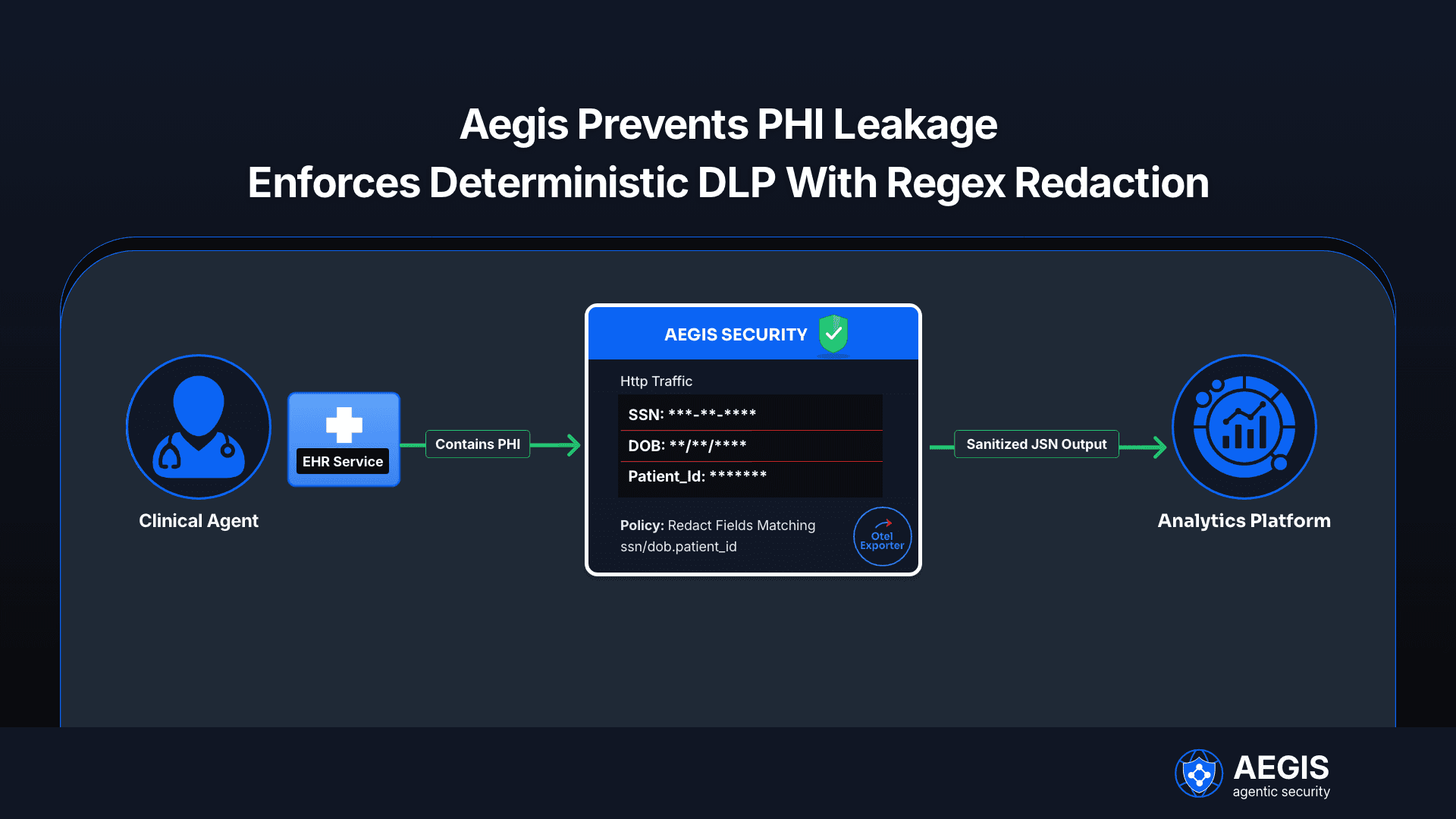
• Audit & telemetry: signed spans and structured logs for every token mint and secret access — suitable for SOC2/HIPAA evidence.
KPIs & operational metrics
KPI | Why it matters | Target (example) |
Secrets rotated / month | Measure active hygiene | ≥ 50 for critical assets |
Number of leaked keys detected | Incident signal | 0 ideally; track and trend |
Secret access latency (ms) | Performance impact | < 20 ms for token mint + decision |
Token issuance volume | Scalability | Support 10k TPS per region (scale target) |
Approval queue age | Operational friction | < 10 minutes SLA for high-risk workflows |
(These KPIs should be instrumented in control plane dashboards and exported to SIEM; Aegis emits OpenTelemetry for each metric and decision. )
👉🏻 Align secret management with data classification for stronger governance
Operational runbook
- Pre-deploy: enable shadow mode policies for 7 days; collect would-deny events.
- Deploy sidecars + token service in staging; validate TTL and renew flows.
- Simulate bootstrap compromise: validate attestation prevents token mint for unauthorized hosts.
- Incident: rotate bootstrap secrets, denylist JTIs, escalate approvals, and redeploy sidecars.
- Post-mortem: compute time-to-rotate, number of tokens revoked, and exposure window metrics.
Common pitfalls & mitigations
• Env var leakage — enforce sidecar injection and scanning of container images.
• Approval fatigue — tune thresholds, add rate limits and budget constraints in tokens.
• Shadow-to-enforce drift — iterate policy tuning during shadow mode and run dry-run reports.
• Multi-tenant collisions — scope bundles by tenant and validate bundle isolation in control plane. Aegis’s policy bundling approach supports tenant scoping and versioning to avoid cross-tenant influence.
Industry context & trend data
Agentic AI adoption is accelerating but maturity varies; a recent industry study reported that 23% of respondents are scaling agentic systems while many are still experimenting. This makes runtime security and secret hygiene a differentiator between successful pilots and safe production rollouts. (McKinsey & Company)
Frequently Asked Questions
Q: Can ephemeral tokens fully eliminate breaches?
A: No — ephemeral tokens reduce exposure windows and limit blast radius but do not eliminate other risks (e.g., privileged agent compromise). Use layered controls: attestation, policy enforcement, DLP and ROI-based budgets.
Q: How short should token TTLs be?
A: It depends on latency and renew frequency. Typical TTLs range from 5 minutes (high-security) to 1 hour (lower friction), with automatic refresh via sidecar. Monitor renewal latency and traffic patterns.
Q: What about audit evidence for compliance?
A: Collect signed spans and token issuance logs with policy version, agent ID and approval artifacts. These form the core evidence for SOC2/HIPAA reviews. Aegis emits structured telemetry to SIEM and retains policy history.
Q: How do we handle development workflows?
A: Provide dev tokens with restrictive scopes and expiration. Use manual approvals for promoting artifacts to production. CI tokens must be ephemeral and revoked after runs.
Q: Where do I start?
A: Inventory secrets, move bootstrap items to a vault, deploy sidecar+token service in staging, then enable Aegis policies in shadow mode to collect telemetry. Iterate using shadow insights and flip to enforce.
Operational Takeway
Securing secrets for agentic AI is an engineering problem with operational controls: central vaults for bootstrap secrets, ephemeral, attested tokens, sidecar injection, per-agent scoping, and robust audit trails. Aegis ties these pieces together by issuing scoped tokens, enforcing runtime policies, and producing compliance-grade telemetry — turning secrets from a liability into a controllable asset.
References and further reading:
• McKinsey — The State of AI (2025). (McKinsey & Company)
• HashiCorp — Why We Need Short-Lived Credentials (2025). (HashiCorp | An IBM Company)
• Secrets management survey (2024) — industry report. (Akeyless)
• Verizon DBIR / IBM breach metrics (2024). (Verizon)