Integrating Vector Databases for Contextual Retrieval
How Aegis enforces safe, low-latency vector retrieval and runtime policy controls for multi-tenant agentic AI at scale.
.png&w=3840&q=75)
Aegis: Secure Vector Retrieval and Policy Controls for Agentic AI
Agentic AI—collections of autonomous agents working together to complete tasks—depends on rapid, high-precision retrieval from vector databases for contextual grounding. When retrieval is slow, stale, or cross-tenant, agents hallucinate or leak sensitive data. This post explains operational patterns (hybrid retrieval, freshness, schema design) and shows how Aegis, Aegissecurity runtime policy gateway for agents, enforces limits, audits access, and sanitizes retrieved context for multi-tenant deployments. It draws on market context and practical engineering patterns to guide security and platform teams.
Why retrieval matters for agentic workflows
Retrieval-Augmented Generation (RAG) is foundational for agentic accuracy: agents append retrieved context to prompts, and the quality of that context directly affects model outputs. The RAG market was estimated at about USD 1.2B in 2024 and is on a high-growth trajectory. (Grand View Research) Hybrid retrieval (sparse + dense) is now a standard practice to balance recall, precision and latency. (Weaviate)
👉🏻 Combine LLMs with real-time data for smarter agent decisions
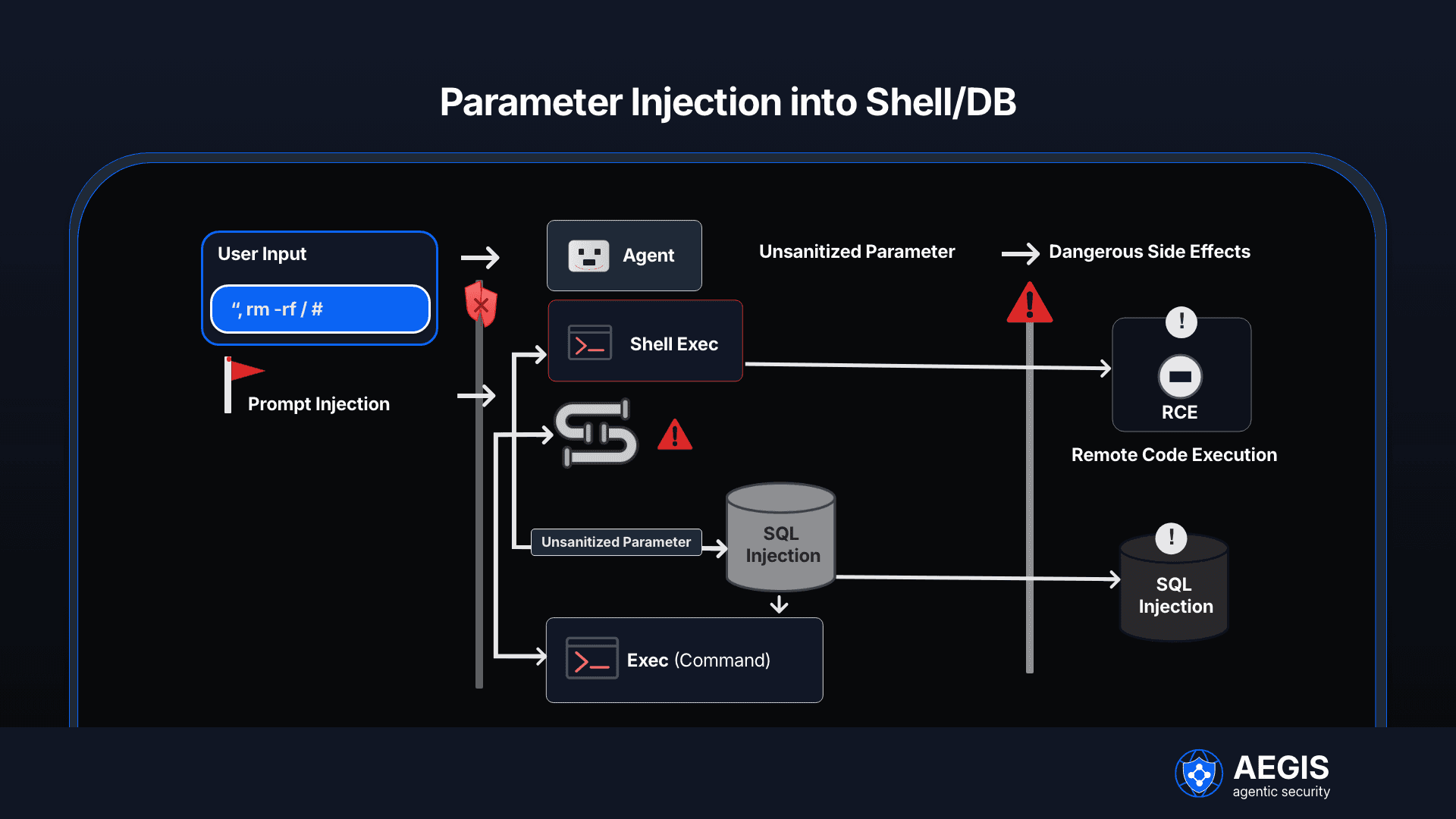
Key failure modes platform teams see in production:
- Cross-tenant leakage due to weak namespace isolation.
- Cost spikes from unbounded dense searches called by many agents.
- Staleness and versioning errors when indices lag content changes.
- Hallucination due to low similarity thresholds or poor reranking.
These are operational, not theoretical—Aegis is designed specifically to intercept these failure modes at runtime and at the retrieval gateway. For the product and technical design details referenced throughout, see the Aegis briefs and use-case files.
👉🏻 Explore the top open-source tools shaping the future of agentic AI
Hybrid retrieval architecture: patterns that scale
Hybrid pattern (metadata → dense → rerank)
- Pre-filter on metadata (tenant, doc_version, doc_type, timestamp, access_labels).
- Dense vector search against a tenant-scoped index (top-k).
- Cross-encoder rerank or reciprocal rank fusion (RRF) to improve precision. (Medium)
Practical add-ons:
- Keep short TTLs for time-sensitive indices; use incremental upserts for new/updated docs.
- Cache top-k results per agent for a short period to accelerate repeated queries.
- Pin embedding model version in metadata (emb_model) for reproducibility and drift detection.
Retrieval design checklist
Concern | Pattern / Control | Operational metric |
Latency | Local pre-filter + cached top-k | p95 lookup ≤ 50–200ms (depends on SLA) |
Freshness | TTL + incremental upserts + doc_version | Time to reflect update (s) |
Multi-tenancy | Tenant namespace + per-tenant keys | Zero cross-tenant hits |
Cost | Per-agent quotas, gateway rate limits | Cost per 1,000 queries |
Accuracy | Dense → rerank (cross-encoder) | Top-1 relevance, similarity thresholds |
Aegis: enforcement, observability and sanitization
Aegis is a runtime policy and observability gateway that sits between orchestrators and vector stores / agent toolchains. It enforces least privilege, cost budgets, rate limits, and content sanitization for retrieval-augmented workflows. The design principles and MVP goals are documented in Aegissecurity internal briefs and spec files.
What Aegis enforces
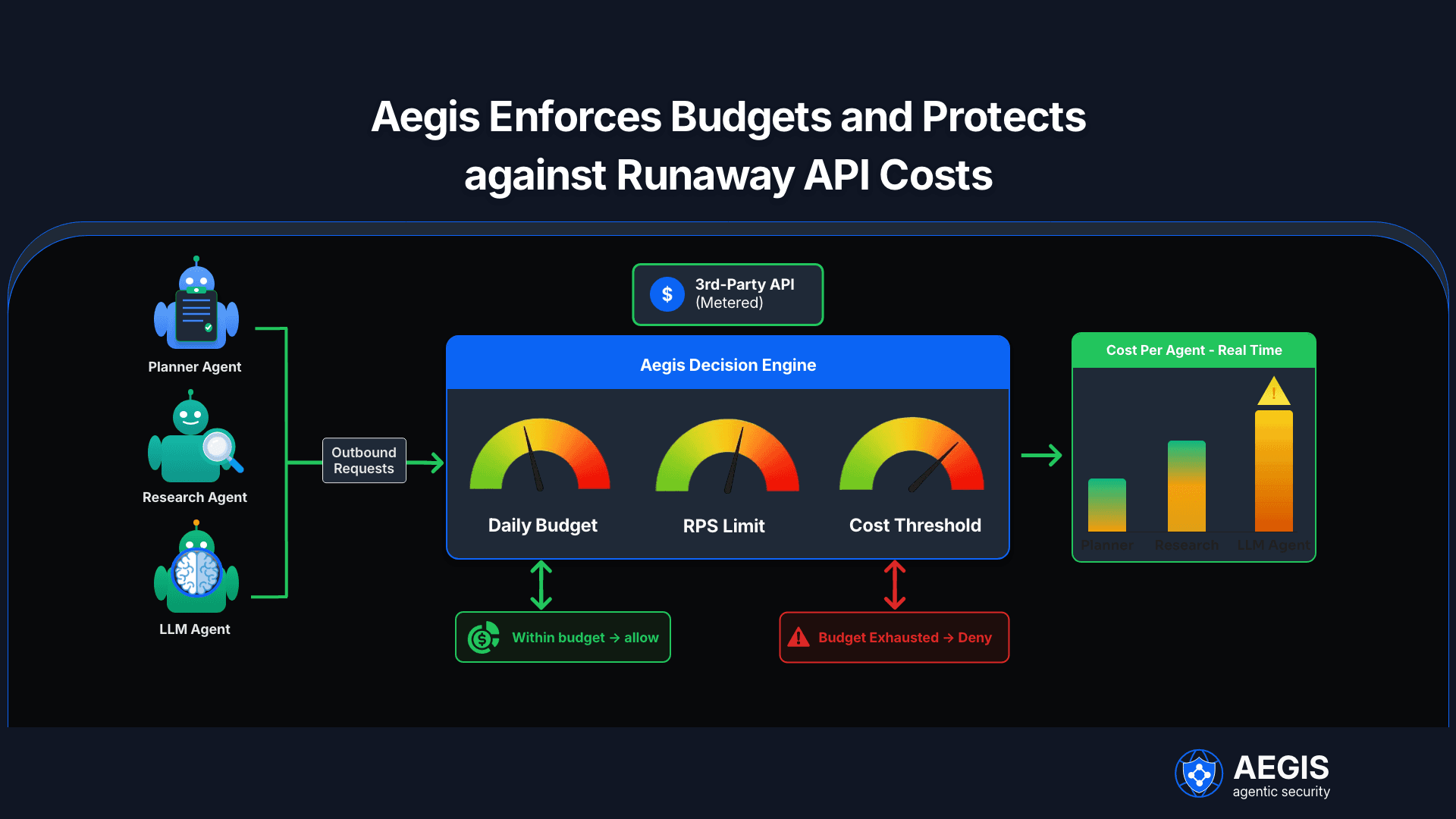
- Per-agent quotas & rate limits for expensive vector queries; throttles or fails gracefully when budgets are exhausted.
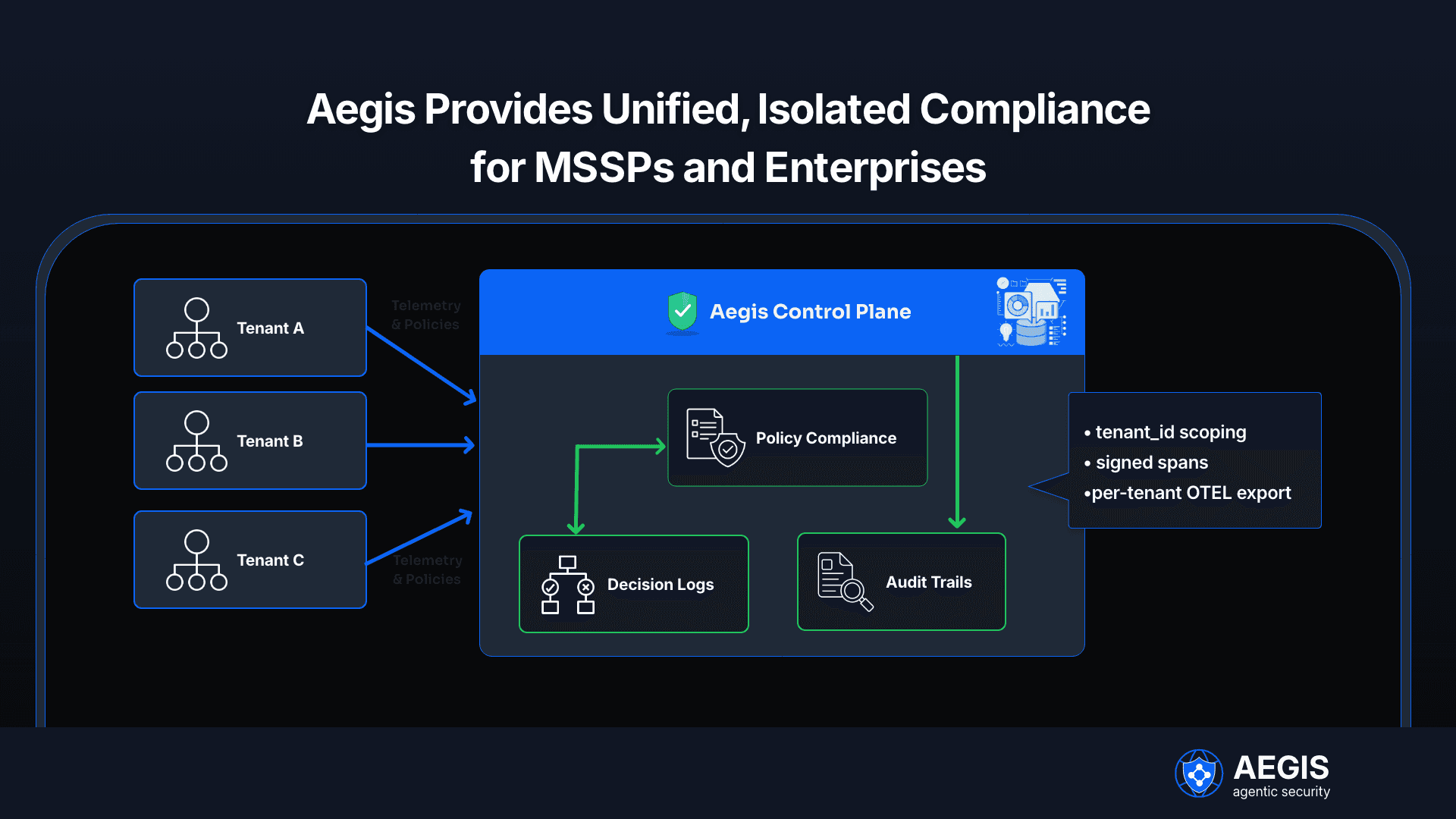
- Tenant isolation via scoped index aliases and per-tenant keys; gateway blocks cross-tenant retrieval attempts.
- Freshness controls: Aegis audits retrieval timestamps and can prefer recent documents or trigger reindexing workflows when staleness is detected.
- Sanitization/DLP: deterministic redaction for PHI/PII before agent consumption; policies can mark fields for redaction or pseudonymization.
- Audit & FinOps linkage: Each vector call is traced (retrieval_id, agent_id, embedding_model, top_scores) and attributed to tenant/agent for cost dashboards.
How Aegis integrates into the retrieval pipeline
- Aegis exposes a decision API that the orchestrator or SDK calls before invoking a dense retrieval. The decision includes allow/deny, quota tokens, and optional sanitization instructions. When an agent requests vectors, Aegis can redact sensitive fields from returned context or substitute placeholders.
- For high-risk lookups (e.g., queries likely to return PHI), Aegis can require approval or elevate logs for SOC review. This runtime gate eliminates many classes of prompt injection and memory-poisoning attacks described in operational incident patterns.
Designing vector schema and freshness strategies
Schema essentials
Include these attributes in each vector record:
- tenant_id, doc_id, doc_version, emb_model, timestamp, access_labels, region_tag.
These fields allow policy filters at the gateway and enable correct TTL semantics. Embedding model pinning (emb_model) ensures retrieval reproducibility and enables embedding drift detection.
👉🏻 Integrate agents seamlessly with your existing tech stack
Freshness & reindexing cadence
- Use incremental upserts for near-real-time content; enforce soft deletes to handle rollbacks.
- Maintain a reindex cadence tracked by document churn: high-update feeds (news, pricing) → shorter TTLs; static knowledge (manuals) → longer TTLs.
- Monitor hit/miss ratios and a freshness score (e.g., last_update_age) to trigger reindex pipelines or epoch reindexing.
Operational controls and observability
Recommended logs & metrics
Record retrieval_id, agent_id, tenant_id, query_embedding_model, top_scores, hit/miss, retrieval_latency, policy_version. Aegis emits OpenTelemetry spans so traces join application flows for SOC/FinOps teams.
Table: Key telemetry for teams
Metric | Purpose | Alert threshold example |
Top-k similarity avg | Detect weak matches → hallucination risk | avg < 0.35 → flag |
Retrieval cost per agent/day | FinOps control | > budget % → throttle |
Cross-tenant retrieval attempts | Security incidents | any non-zero → incident |
Index lag (secs) | Freshness monitoring | > TTL → reindex job |
Implementation checklist & migration plan
- Start in shadow mode (observe would-block events). Tune filters and thresholds.
- Migrate connectors one at a time in shadow mode; validate no cross-tenant aliasing.
- Introduce per-agent quotas and cost attribution; feed FinOps dashboards.
- Flip enforced mode for low-risk queries first, then expand to PHI/PII protected retrievals.
- Add approval workflows for high-risk retrievals and automate reindex triggers when embedding drift is detected.
Common failure modes and mitigation
- Stale indices: Mitigate with TTLs + incremental upserts + index lag alerts.
- Cross-tenant leakage: Enforce namespace keys and validate aliases at gateway; block reads outside tenant scope.
- Cost spikes: Per-agent budgets and gateway rate limits; fail-gracefully with cached fallback.
References & further reading
- Grand View Research — Retrieval Augmented Generation market estimate and projections. https://www.grandviewresearch.com/industry-analysis/retrieval-augmented-generation-rag-market-report. (Grand View Research)
Hybrid search patterns and best practices. https://weaviate.io/blog/hybrid-search-explained. (Weaviate)
Frequently Asked Questions
Q1: Can Aegis prevent cross-tenant leakage from misconfigured index aliases?
A: Yes. Aegis enforces tenant namespaces and will reject retrievals that reference indices outside the agent’s tenant scope; policy rules map agent IDs to allowed index aliases.
Q2: How does Aegis affect retrieval latency?
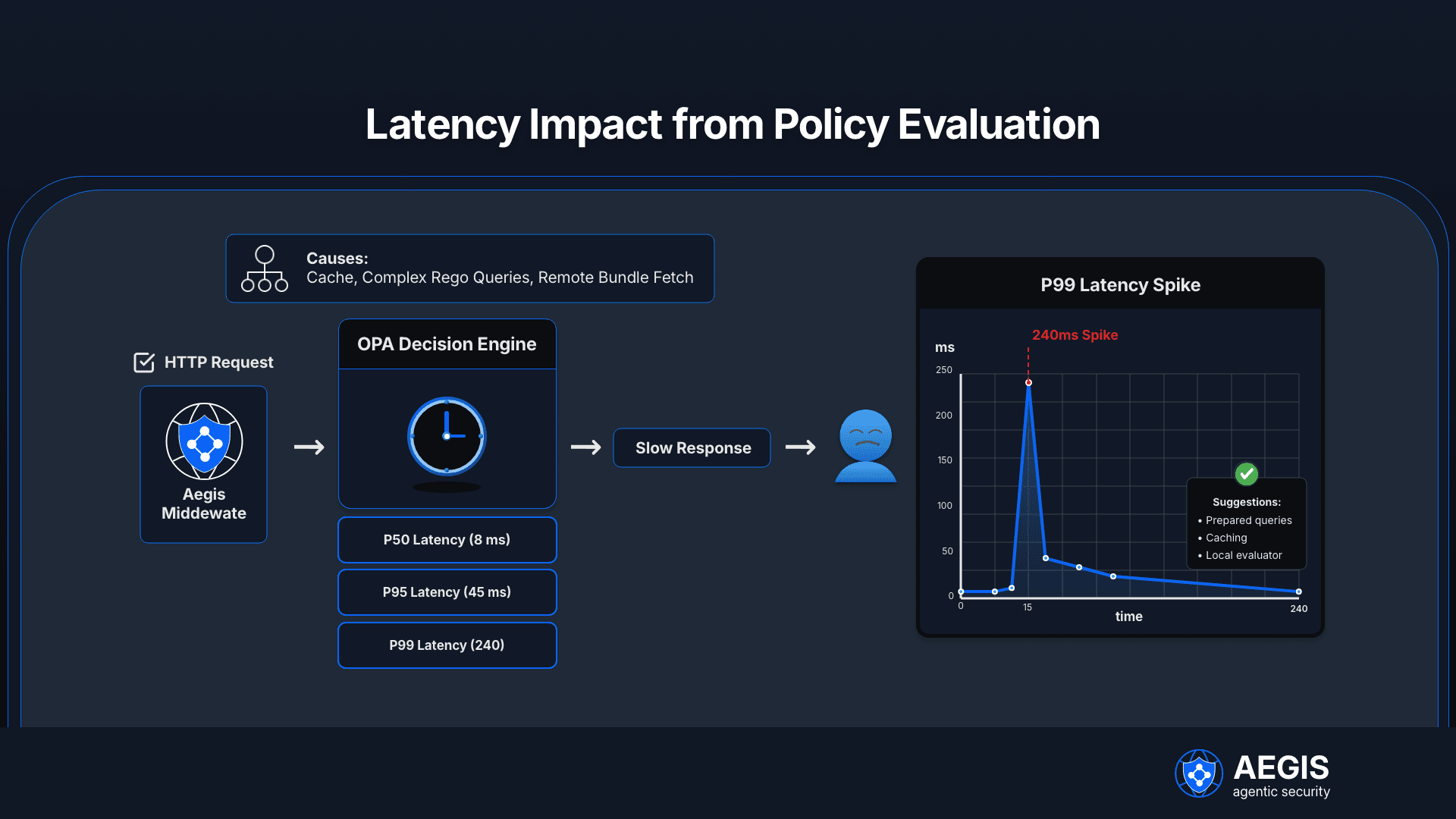
A: Aegis is designed as a lightweight decision gateway; it caches decisions and uses prepared policy bundles to keep decision latency low (target P99 under 20 ms for policy eval). Retrieval latency depends on vector DB SLAs and cache strategies.
Q3: How do you handle embedding drift?
A: Pin embedding model versions in document metadata, monitor similarity distributions over time, and schedule reindexing when drift crosses thresholds. Use sample re-embeddings and compare top-k stability metrics.
Q4: What’s the recommended per-agent budgeting model?
A: Budget by cost per 1,000 vector lookups + cross-encoder reranks; enforce daily quotas and soft-threshold alerts. Attribute calls to agent_id and tenant for FinOps dashboards.
Q5: How to test policies safely in production?
A: Run Aegis in shadow mode to collect would-deny metrics, tune regexes and thresholds, then promote to enforce. Shadow mode preserves production traffic patterns without blocking.
Q6: What are immediate next steps to evaluate Aegis?
A: Run a shadow deployment for one connector, collect retrieval telemetry for 7 days, then add per-agent quotas and a single DLP rule. See the Aegis MVP spec for a rollout plan.