
Integrating Slack or Teams for Agent Approval Notifications
Implement human approvals for high-risk agent actions using Aegis: interactive Slack/Teams workflows, single-use override tokens, and auditable traces.
Aegis: Agent Approval Workflows for Safe Automation
Enterprises running agentic AI need a reliable, low-latency way to interpose human judgment on elevated-risk actions without breaking automation. This article describes practical UX patterns, an implementation recipe, operational metrics, and how Aegis—Aegissecurity agentic AI security mesh—maps to the problem with concrete technical details and deployment guidance.
👉🏻 Add human oversight where it matters most in agent decisions
Why approvals matter
Agentic systems can combine planning, tool access, and parameter synthesis. Without runtime checks, a planner or prompt chain can coerce a privileged agent into executing high-risk actions (unauthorised payments, PHI exports, infra changes). Runtime approvals solve three core needs:
• Stop unsafe actions pre-execution (prevention)
• Capture human context and rationale (auditability)
• Keep automation velocity for low-risk paths (scale)
Market signals show agentic AI adoption is accelerating—23% of surveyed organizations reported scaling an agentic system and many more are experimenting—so approval controls are a practical gating capability for production readiness. (McKinsey & Company)
👉🏻 Reduce risk with structured approvals for critical agent actions
UX pattern: policy → approval_needed → interactive message
At its core the UX pattern is simple and repeatable:
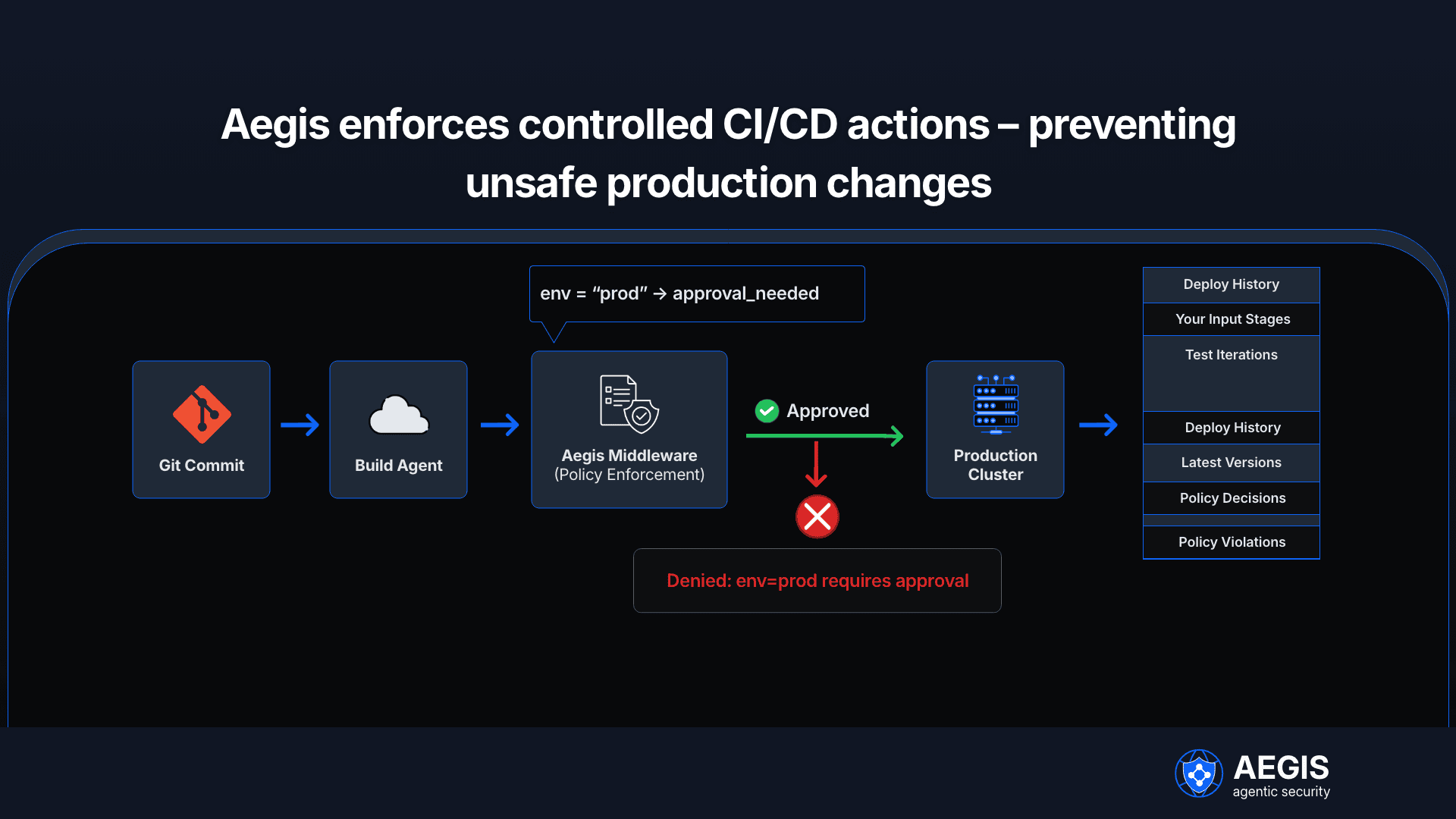
- Policy evaluation returns approval_needed for a call (includes reason and risk score).
- Aegis posts a structured interactive message to Slack or Teams (Blocks / Adaptive Cards) summarizing context. Payload contains: agent_id, requested_action, sanitized parameters, risk_score, policy_version, approval_id.
- Approver clicks Approve / Deny (or issues a one-time override with a justification).
- On approve, Aegis mints a single-use override JWT tied to approval_id; client retries call with override token; Aegis validates replay/expiry and re-executes.
- This pattern preserves automation for routine tasks while inserting a deterministic human gate for high-risk operations.
Implementation recipe
Decision service & policy signal
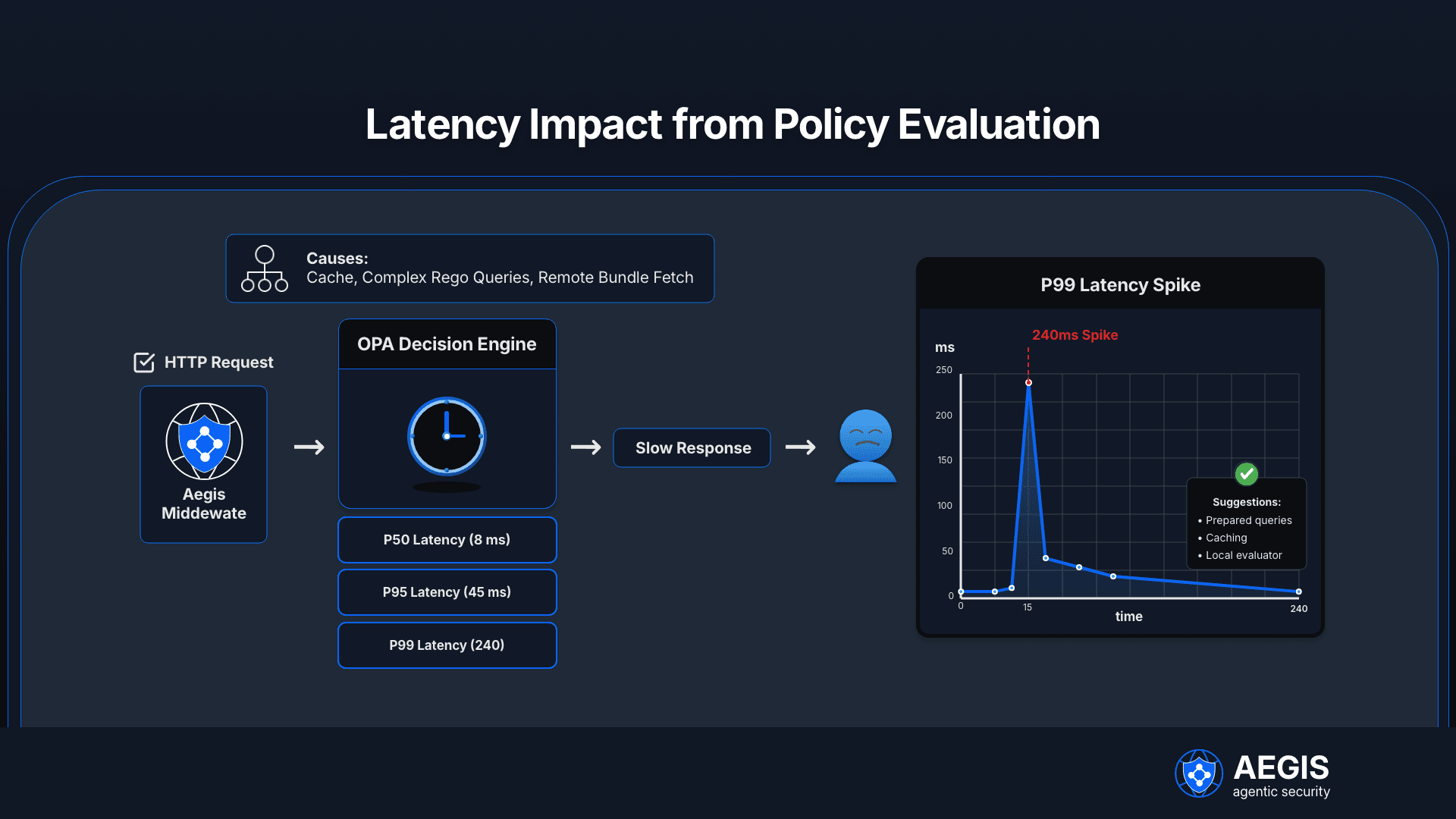
Policies are policy-as-code (YAML/JSON) compiled to OPA bundles. The policy returns one of: allow, deny, sanitize, approval_needed. Use prepared OPA queries and in-memory caches to achieve low latency (P99 target ≤20 ms). (Open Policy Agent)
Approval message design (Slack / Teams)
Use Slack Blocks or Teams Adaptive Cards to present:
• Minimal sanitized parameters (PII redacted)
• Approval ID and expiry
• Risk score and policy version
• Approve / Deny buttons that call the control plane API
Security: redact PII, sanitize potentially dangerous strings (shell/SQL patterns), and avoid embedding raw credentials or tokens.
Override token mechanics
On approval, mint a one-time JWT (short TTL, jti recorded) that includes approval_id, approver_id, and scopes. Enforce replay protection: mark jti consumed on first use. Fail closed if the approval service is unavailable.
Approver identity & SSO
Map Slack/Teams IDs to control plane approver roles and require enterprise SSO + MFA for approvers. Sign approvals server-side and store signed events in the audit trail.
Rate limiting & batching
To avoid approver fatigue, group low-risk approvals into batched messages or delegate to approver pools with round-robin or queue semantics. Allow policy thresholds to auto-approve under preset conditions (e.g., amount < X). Shadow mode helps measure expected human load before enforcement.
👉🏻 Equip your teams with the skills to govern and secure AI agents effectively
Aegis mapping — how Aegis delivers the pattern
Aegis implements the decision and approval services in the control plane while the data plane enforces decisions in-flight. Key components:
• Policy Engine: Policy-as-code compiled to OPA bundles; hot reload and versioning.
• Approvals Service: Sends interactive Slack/Teams messages, mints single-use override tokens on approval, signs events for audit.
• Gateway (runtime): Sidecar/forward proxy intercepts agent→tool calls, queries decision service, enforces allow/deny/sanitize/approval_needed.
• Telemetry: OpenTelemetry spans for every decision (agent_id, tool, decision_reason, policy_version, approval_id) to correlate approval spans and traces. (OpenTelemetry)
Practical deployment notes: use short-lived agent JWTs, mutual TLS between orchestrator and gateway, and a replay store (Redis) for jti checks. If approvals service is down, fail closed for high-risk actions; allow configurable fail-open for low-risk reads.
Table 1 — Approval workflow comparison
Feature | Email/webhook (legacy) | Interactive Slack/Teams (Aegis pattern) |
Latency | Hours | Minutes |
Traceability | Poor | Signed events with approval_id |
Replay safety | Weak | Single-use override tokens |
Approver ergonomics | Low | Approve in context (buttons) |
Automation compatibility | Low | High (override + retry) |
Ops & metrics — what to measure
Target KPIs that reflect both security posture and operational friction:
• Median approval time (goal: minutes for typical approvals)
• Approval conversion rate (approved / total requests)
• Approvals per day per approver (fatigue indicator)
• Would-block rate in shadow mode (tuning metric)
• Policy evaluation latency (P99 decision time)
• Number of override token replays detected (security signal)
Table 2 — Sample operational metrics and thresholds
Metric | Measurement | Suggested threshold |
Policy eval P99 | ms | ≤ 20 ms |
Median approval time | minutes | ≤ 10 min (business SLA) |
Approvals/day/approver | count | < 50 (investigate fatigue) |
False approvals (revoked) | count/day | 0 |
Edge cases and security controls
• Compromised approver: Enforce MFA, enterprise SSO, and revoke approver mappings on suspicion. All approvals are signed and replay-checked.
• Approval storms: Use throttle policies requiring additional justification fields or escalate to delegation flows.
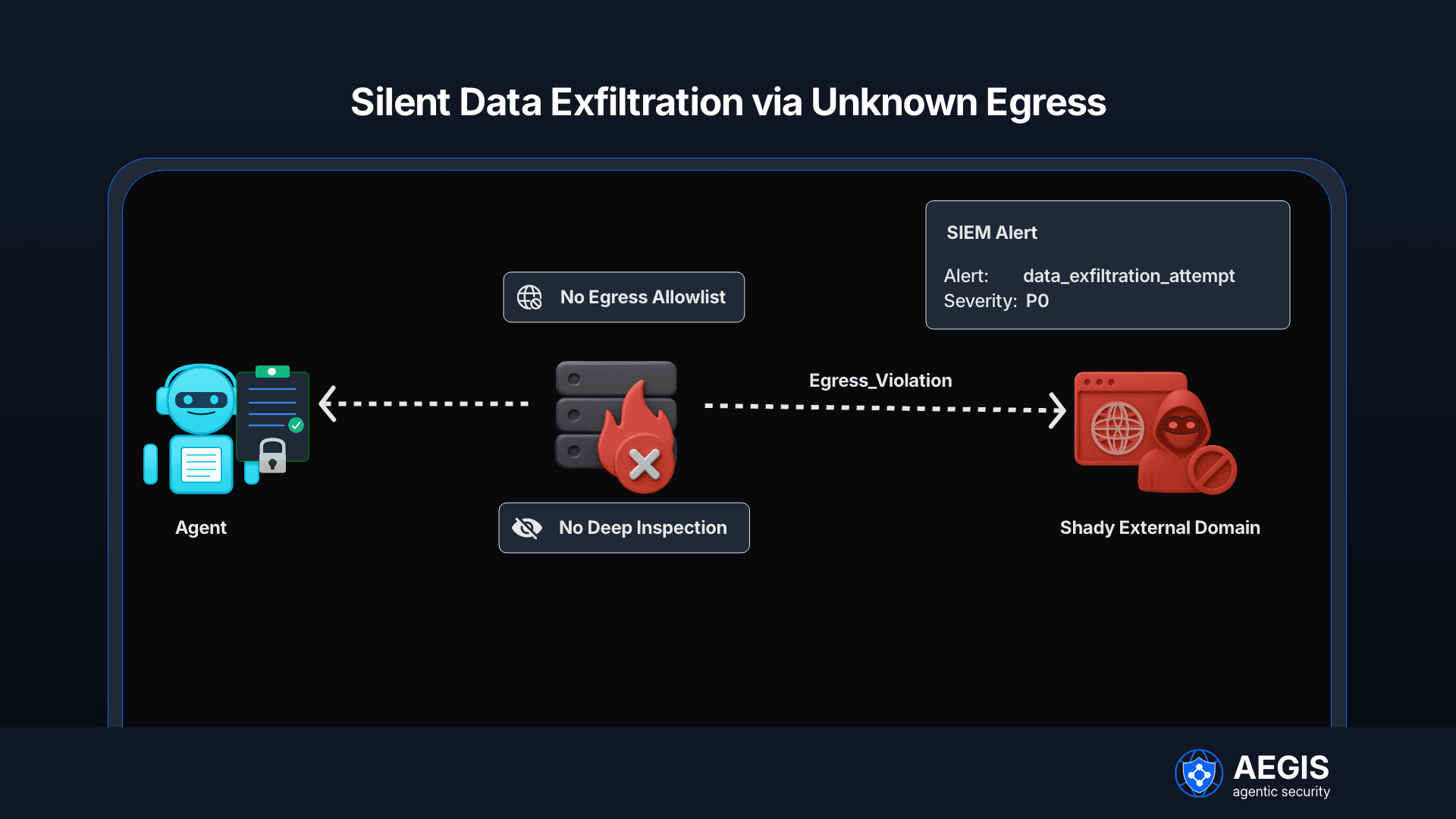
• Parameter injection: Sanitize and apply deterministic DLP before sending messages.
• Failover: Configurable policy for fail-closed vs fail-open; default to deny for high risk.
Example: retail refunds flow (operational)
Policy: refunds:create allowed if amount ≤ 200 else approval_needed. Flow: agent attempts refund → Aegis returns approval_needed → posts Slack card with order id, reason, previous refunds → CFO approves → Aegis mints override token → agent retries and succeeds. This exact flow is in our template library and easily adapted to finance, HR, DevOps, or PHI access cases.
Implementation checklist (practical)
- Define policies with approval thresholds and shadow mode.
- Deploy Aegis gateway sidecars and connect the control plane.
- Map approver IDs and enable SSO/MFA.
- Configure Slack/Teams integration using Blocks / Adaptive Cards.
- Rollout in shadow mode for 7 days; collect would-block traffic and tune regex/thresholds.
- Flip to enforce and monitor KPIs.
Why this matters operationally
Approval workflows are not just a security checkbox — they enable enterprises to push agentic automation into production with controlled risk and auditability. Studies and industry reports show enterprise AI adoption accelerating; embedding human judgment where risk concentrates is a practical safeguard while the ecosystem matures. (Stanford HAI)
Frequently Asked Questions
Q: How do override tokens prevent replay?
A: Tokens are single-use (jti stored) with short TTLs; the control plane marks jti consumed on first use and rejects subsequent attempts.
Q: Can approvals be batched to reduce approver fatigue?
A: Yes — policies can group low-risk approvals into batches or delegate to approver queues. Shadow mode helps size human load before enforcement.
Q: What happens if the approval service is down?
A: Aegis supports configurable fail modes; for high-risk actions the default is fail-closed (deny). Low-risk reads can be configured to fail-open. Audit logs include failure events.
Q: Which telemetry should we collect to prove compliance?
A: Collect OpenTelemetry spans for each decision (agent_id, tool, decision, policy_version, approval_id), signed approval events, and SIEM-ready structured logs. (OpenTelemetry)
Q: Can this pattern scale for MSSPs or multi-tenant environments?
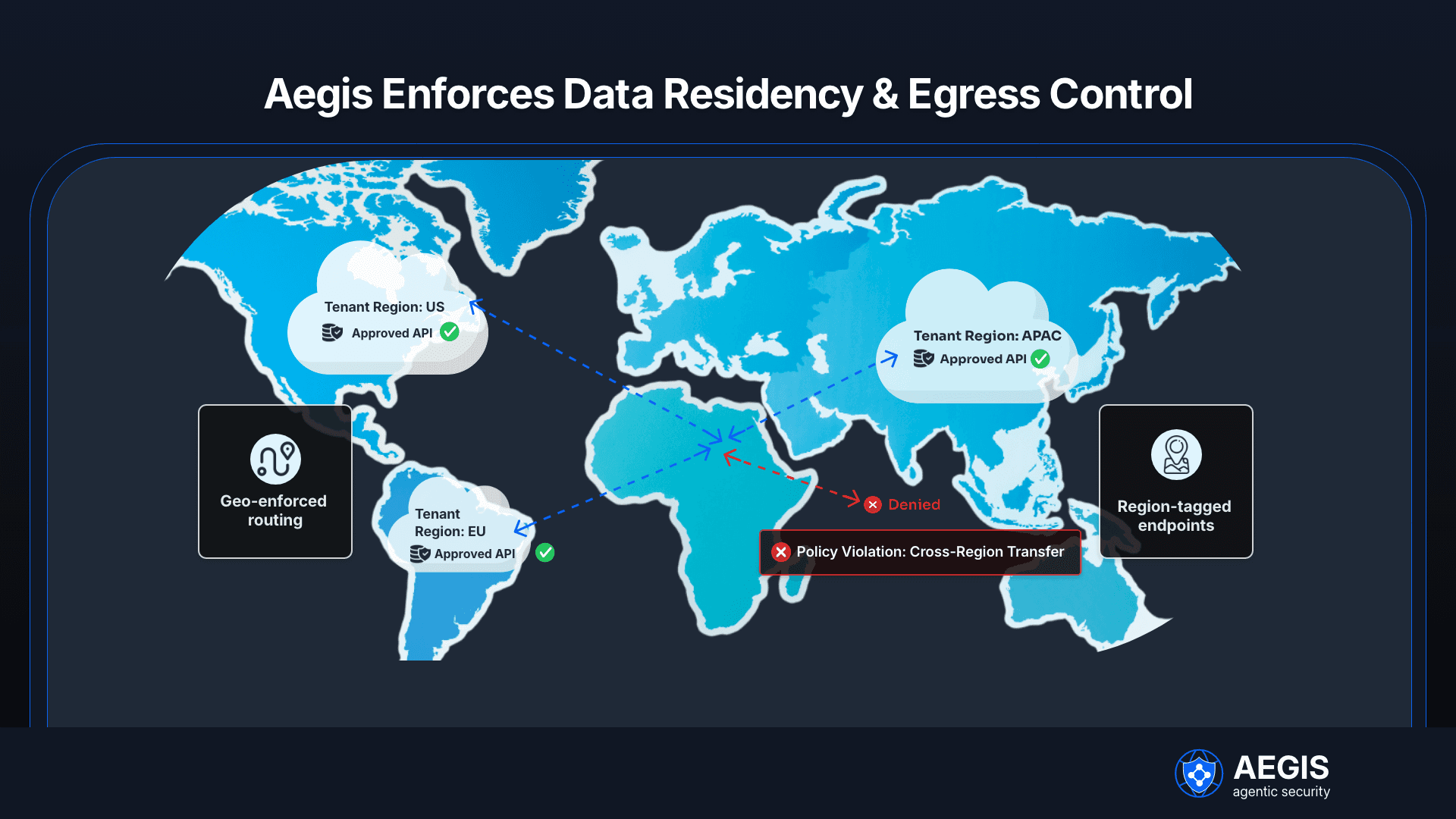
A: Yes — Aegis supports tenant-scoped bundles, per-tenant approver mappings, and multi-tenant auditing to meet MSSP needs.
Closing
Approval workflows are a pragmatic lever for safely scaling agentic automation. By using policy-as-code that returns approval_needed, structured interactive messages, single-use override tokens, and strong telemetry, teams can retain automation velocity while meeting security and compliance obligations. Aegis centralizes these controls into a runtime policy and observability fabric so enterprises can deploy multi-agent systems with measurable risk controls and operational visibility.