
Designing Human Approval Processes for High-Risk Agent Actions
Design fast, auditable human-in-the-loop approvals for agentic AI — patterns, policies, and how Aegis implements secure, fatigue-resistant workflows.
Aegis: Designing Fast, Auditable Human Approval Workflows for High-Risk Agent Actions
Enterprises running agentic AI face a narrow but critical problem: when an autonomous agent wants to perform a high-risk action (pay funds, export data, deploy to production), you need a human in the loop — fast, fatigue-resistant, and auditable. This article lays out an operational design for human approvals tied to runtime enforcement, illustrates concrete primitives, and explains how Aegis implements them as a first-class capability in an agent security mesh. It draws on market signals from 2024–2025 and the Aegis product brief and MVP documentation. (McKinsey & Company)
Why approvals matter now
Agentic AI is moving from pilots to production: market estimates put enterprise agentic AI market size in the low billions in 2024 with rapid growth expected into 2025, and analyst forecasts underline both opportunity and risk. Gartner warned that many early agentic projects will be scrapped unless governance improves, while surveys show technology leaders regard agents as a growing security risk. (Grand View Research)
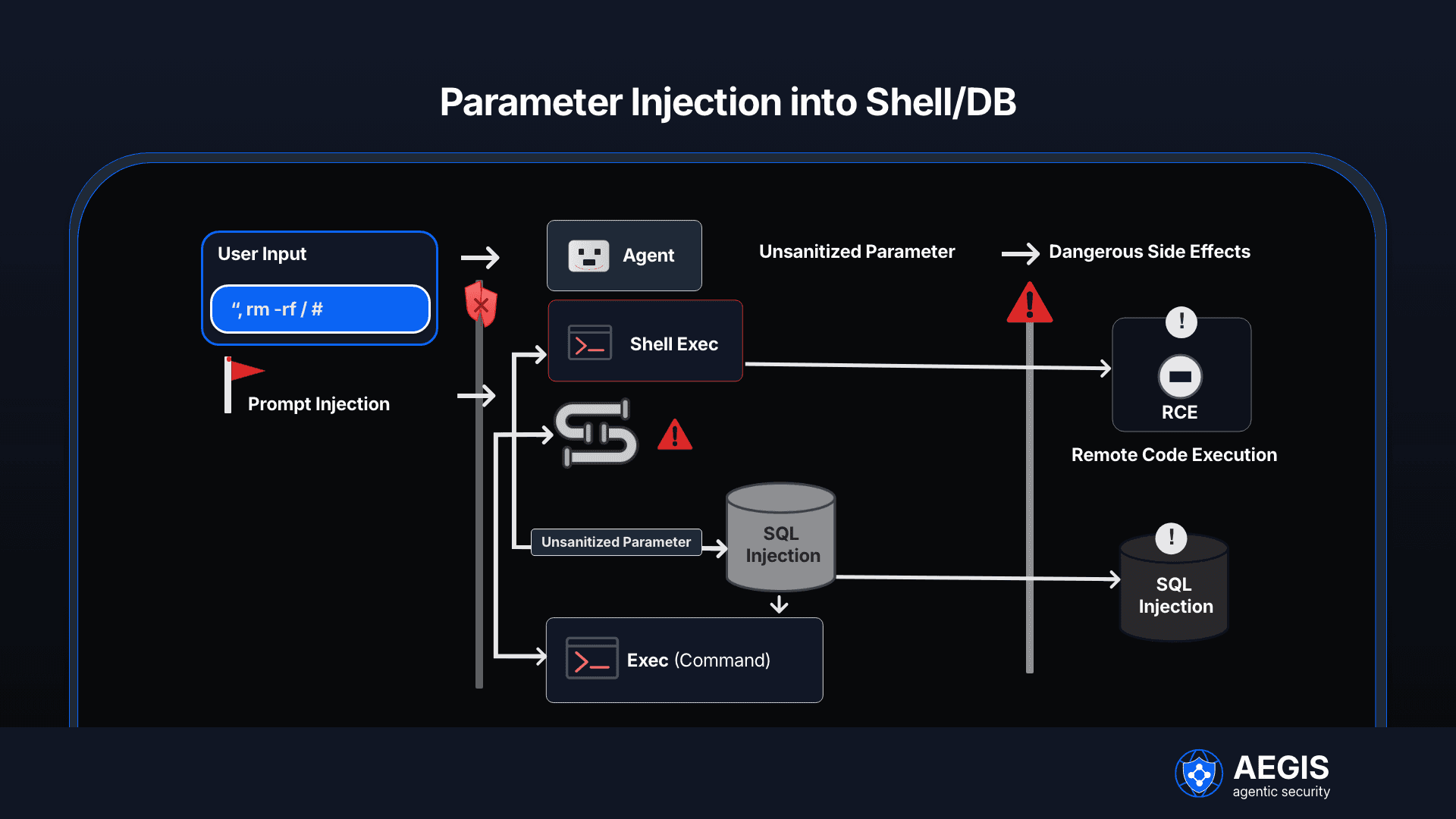
Operationally, the failure modes are stark: an agent chain can coerce a privileged tool-agent into an unauthorized payment; or an automation agent can exfiltrate PII to an unapproved domain. A runtime approval primitive reduces blast radius by pausing execution until a human validates the intent and context. Aegis implements that primitive as part of a policy-driven gateway that enforces decisions, emits telemetry, and mints short-lived override tokens when approvals are granted.
👉🏻 Combine automation with human judgment for critical workflows
.png&w=3840&q=75)
Core design goals for approvals
Design a system that meets these constraints:
- Speed: Single-click approvals with minimal context reduce latency and cognitive load.
- Audibility: Every approval is recorded, versioned, and linkable to the executed action.
- Fatigue resistance: Rate limits, escalation, delegation, and shadow simulation prevent approver overload.
- Security: Override tokens must be single-use, short TTL, and cryptographically verifiable.
- Privacy: Approval cards redact PII by default and include only the minimal context required to decide.
These goals inform both policy semantics and UX design.
Approval primitives (what the policy needs)
At runtime, policies must be able to express approval requirements with simple, auditable primitives:
- approval_needed decision flag — returned by the policy engine when an action crosses a risk threshold.
- approval_id — unique identifier for the approval request, used to link traces and eventual actions.
- override_token semantics — one-time tokens minted after approval, bound to approval_id, agent, tenant, and a short TTL.
- minimal_context_card — contains agent_id, reason, redacted payload, risk_score, and policy_version.
- decision_tokens and retry_token — allow controlled retries without re-approval for intermittent failures.
Aegis exposes these primitives through its external authorisation API and approvals service, enabling orchestrators and agents to integrate without changing core agent code.
👉🏻 Match approval layers to the risk level of each agent action
Approval UX: minimal, actionable context
Approvals succeed when they’re fast and clear. The approval card should present:
- One line reason (e.g., “Payment request: finance-agent → $20,000 to ACME Corp — masked”).
- Risk score and policy version.
- Redacted payload link (expand for auditor view).
- Single-click Approve / Deny buttons; optional “Escalate” or “Ask for More Info”.
- Metadata: approver identity (SSO bound), timestamp, TTL for override_token.
Design anti-patterns to avoid: free-text audit notes, overloaded payloads, multi-step forms. Keep cards concise and attach the full trace to the audit log rather than the card.
Approval flow (4-step pattern)
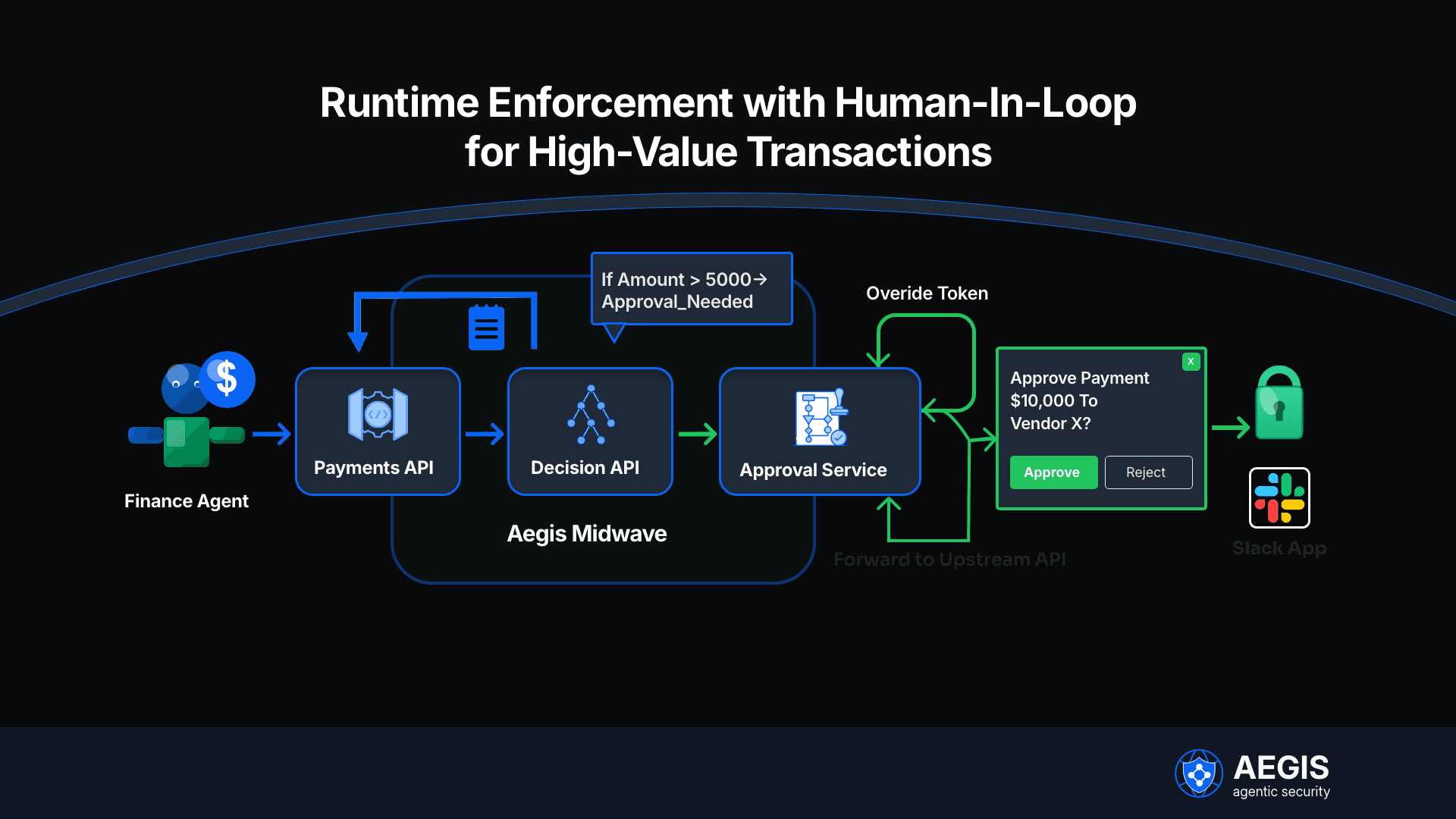
- Agent requests a high-risk action. Gateway evaluates policy (allow/deny/approval_needed).
- If approval_needed, Aegis sends an interactive approval card to Slack/MS Teams (or email fallback) with approval_id.
- Approver clicks Approve; Aegis mints a single-use override_token and records the event.
- Agent retries the original call with override_token. Gateway validates token, executes the action, and links the trace to approval_id.
This flow guarantees that actions only proceed after explicit, auditable human consent.
Handling scale & fatigue
Approvals can overwhelm humans if not managed:
- Policy thresholds: Only require approvals above policy-defined risk bands (e.g., amounts > $X, external egress to unknown domains, production deploys).
- Rate limiting and batching: Group low-impact approvals or present digestible batches to approvers.
- Delegation & SSO mapping: Approvals map to role-based approvers; support temporary delegations and escalation rules for missed approvals.
- Shadow mode & simulation: Run approval rules in “would-need” mode for a pilot window to quantify load before enforcement. Aegis supports dry-run and shadow rollouts to capture expected approval counts.
Token semantics: minimal attack surface
Tokens are the linchpin. Implement the following:
- Single-use tokens (revoked after first successful retry).
- Short TTLs (minutes) and binding claims (approval_id, agent_id, tenant, jti).
- Replay protection (jti store) and cryptographic signatures (Ed25519 or equivalent).
- Audit trail linking token mint to approver SSO identity and trace context.
Aegis implements JWT-style override tokens issued by a token service; tokens are verified at the proxy layer and logged to OpenTelemetry spans for SIEM ingestion.
Enforcement, observability, and compliance
Approvals are useful only if they’re auditable:
- Link approval_id to the OpenTelemetry span for the executed action.
- Export signed audit events and policy_version to SIEM/EDR.
- Provide exports for regulators (CSV/JSON) of approval timelines, median approval latency, pending queue depth, and approver identity.
Table 1 — Key approval KPIs
KPI | Why it matters | Target |
Median approval latency | Operational delay introduced by approvals | < 2 minutes for urgent actions |
Pending queue depth | Indicates approver backlog | < 10 items per approver |
Approval reuse rate | % of approvals needing retries | < 5% (retries should be rare) |
Shadow to enforce conversion | % of would-need approvals that require enforcement | Measured during pilot |
Policy comparison & technical examples
Table 2 — Example policy snippets and outcomes
Policy rule | Condition | Decision outcome |
finance-agent.amount <= 5000 | amount ≤ 5000 | allow |
finance-agent.amount > 5000 | amount > 5000 | approval_needed |
agent.egress.dest !in allowlist | dest not on allowlist | deny |
deploy-agent.env == production | production deploy | approval_needed + escalation |
Technical example (JSON approval card skeleton):
{
"approval_id":"apr_20251103_0001",
"agent_id":"finance-agent",
"reason":"Payment draft ($20k) to vendor",
"redacted_payload":"{account: ****1234, amount: 20000}",
"risk_score":0.87,
"policy_version":"v1.3.2",
"ttl_seconds":600
}
How Aegis implements approvals
Aegis integrates approvals as a core feature of its gateway and control plane. When a policy evaluates to approval_needed, the Aegis Approvals Service:
- Publishes an interactive card to Slack or Teams with minimal context and decision buttons.
- Records the approval decision and mints a cryptographically signed one-time override_token.
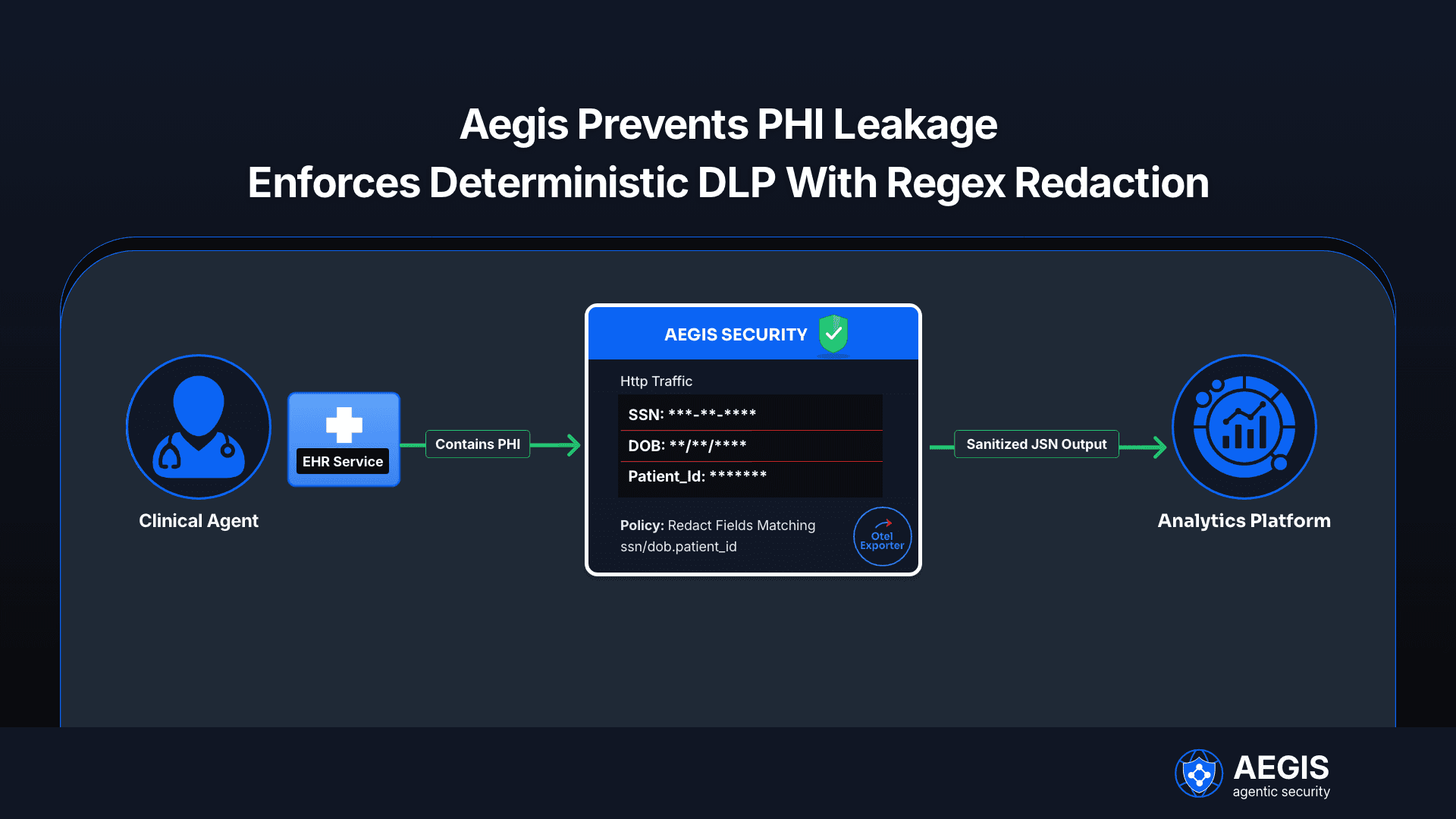
- Stores the audit trail and attaches approval_id to the corresponding OpenTelemetry spans so SOC and compliance tools can query the exact decision and payload.
- Supports fallback email delivery and SSO-linked approver identities, ensuring approver ergonomics across desktop and mobile. Aegis also supports shadow simulations to estimate approval volumes before enforcement.
Operational benefits for MSSPs and enterprise security teams include multi-tenant scoping of approvals, per-tenant policy versions, and exports for SIEM integration. The Aegis Gateway’s runtime enforcement makes approvals meaningful — decisions are enforced by the proxy, not just logged.
👉🏻 Improve explainability and build trust in agent-driven decisions
Governance and auditability
Policy governance should specify who can approve what. Recommendations:
- Role mappings (e.g., finance-approver, devops-release-manager) enforced by SSO bindings.
- Approval delegation policies and expiration (temporary delegations auto-revoke).
- Regular audit exports and post-approval retrospective reviews for all emergency bypasses.
- Approval simulations to tune thresholds and avoid blocking legitimate workflows
Implementation checklist
- Define risk bands and approval thresholds.
- Instrument agents to retry with override_token.
- Configure Slack/Teams integrations and SSO mapping.
- Run shadow mode for one week and collect KPI metrics.
- Enforce tokens at the proxy and export audit spans to SIEM.
Frequently Asked Questions
- What actions should always require approval?
High-risk financial transfers above a threshold, exports of regulated data, production deployment to live environments, and any action that changes tenant billing or egress beyond allowlists. - How long should an override token live?
Short — typically 5–15 minutes. Tokens must be single-use and bound to approval_id and agent identity to reduce replay risk. - Can approvals be automated for low risk?
Yes. Policies may include automation clauses (auto-approve under lower risk or within budgets). Use shadow mode first to measure safety. - How do we prevent approver fatigue?
Use rate limits, batching, escalation, and clear thresholds. Run shadow simulations to measure would-need approvals and adjust rules before enforcement. - Are approval records admissible for compliance audits?
If signed and exported with attached traces and policy_version, they provide strong evidence of human authorization and can be integrated with SIEM exports. - How does Aegis integrate with existing orchestrators?
Aegis acts as a gateway / proxy with SDKs for LangChain/LangGraph and works with common orchestrators via middleware and ext_authz patterns.
Closing
Human approvals remain a pragmatic control for high-risk actions in agentic workflows. The correct design balances speed, context, and auditability — minimizing friction while preserving security. Aegis implements approvals as a runtime, policy-driven primitive that integrates enforcement, telemetry, and ergonomics to make human-in-the-loop decisions both practical and auditable in production.