Integrating Multi-Agent AI into Corporate Innovation Labs
Practical playbook for governing and scaling multi-agent AI in corporate innovation labs.
Multi-Agent AI in Innovation Labs: A Practical Playbook for Secure Pilots
Innovation labs are running faster than governance. Multi-agent systems — composed of planner, finance, data, and tool agents — unlock complex automation but introduce new runtime risks. This post provides a concise operational playbook, measurable KPIs, and a concrete description of how Aegis (the Aegis Gateway) functions as the runtime policy and observability fabric that lets labs move from ad-hoc POCs to gated pilots and production safely.
Problem statement & why labs matter
Innovation labs accelerate discovery by running many parallel proofs-of-concept (POCs). Labs are where new orchestrators and agent ensembles get wired to internal tools and external APIs. That speed is essential, but it amplifies risk: uncontrolled agents can exfiltrate data, initiate unauthorized payments, or create cascading automation incidents across systems.
Why labs matter:
- They create the pipeline from concept → pilot → production.
- Lab failures become expensive or regulatory incidents if not contained.
- Proper governance at the lab stage reduces friction for scaling.
The old model of siloed POCs and manual governance
Typical failure modes
Labs often use single-agent POCs, ad-hoc mocks, and manual sign-offs. Policies are embedded inside agent code or rely on team conventions. This leads to:
- Fragmented audit trails.
- No uniform policy enforcement across agents and tools.
- Slow signoff cycles that either block innovation or allow shadow automation.
Operational consequences
A single unauthorized API call can cost money, privacy, and trust. Shadow POCs with no runtime checks produce noisy telemetry and unclear handoffs to engineering teams.
👉🏻 Build the right team foundation to scale your internal agent platform with confidence
.png&w=3840&q=75)
The new model: multi-agent POCs + runtime governance
Multi-agent POCs scale lab throughput but require a different control plane: an orchestrator-agnostic enforcement and telemetry layer that sits between agents and tools. Key principles:
- Policy-as-code: declarative YAML/JSON policies that cover allow/deny, parameter constraints, budgets, and approval rules.
- Agent identity: short-lived tokens and agent_id binding to a tenant and owner.
- Shadow mode: collect would-block metrics for 7–14 days before enforcing.
- Runtime enforcement: a gateway that inspects agent→tool calls and enforces policies with sub-20ms decision latency at P99.
Practical stat: surveys in 2024–2025 show rapidly increasing agentic AI adoption; roughly 25–35% of organizations reported active experiments, driving large lab funnels and a need for repeatable controls.
👉🏻 Use past AI lessons to make smarter decisions for your agentic AI journey
Operational checklist & sample lab playbook
Stepwise lab playbook
- Discovery: map use cases and risk ladder; classify by data sensitivity and action impact.
- Orchestrator selection: pick a lightweight orchestrator or adapters; prefer integrations with minimal code changes.
- Identity model: register agents with agent_id and short-lived JWTs; tag tenants and owners.
- Policy templates: start with allow/deny lists, parameter regexes, budget ceilings, and approval thresholds.
- Shadow run: run policies in would-block mode for 7–14 days; collect metrics.
- Refine and enforce: iterate policy rules and flip to enforcement.
- Promote: move mature POCs into gated pilots with additional monitoring and SLA checks.
Quick policy checklist (operational)
- Agent registration complete with owner and tenant tag.
- Policies cover sensitive tools (payments, EHR, storage).
- Shadow telemetry collected and baseline would-block ratio < 5% .
- Approval flows configured for high-risk actions.
- OpenTelemetry traces forwarded to SIEM and dashboards.
Aegis role and sample lab scenarios
Approximately one-third of this post focuses on Aegis. Below is a detailed description of Aegis as the runtime solution labs need.
What Aegis is
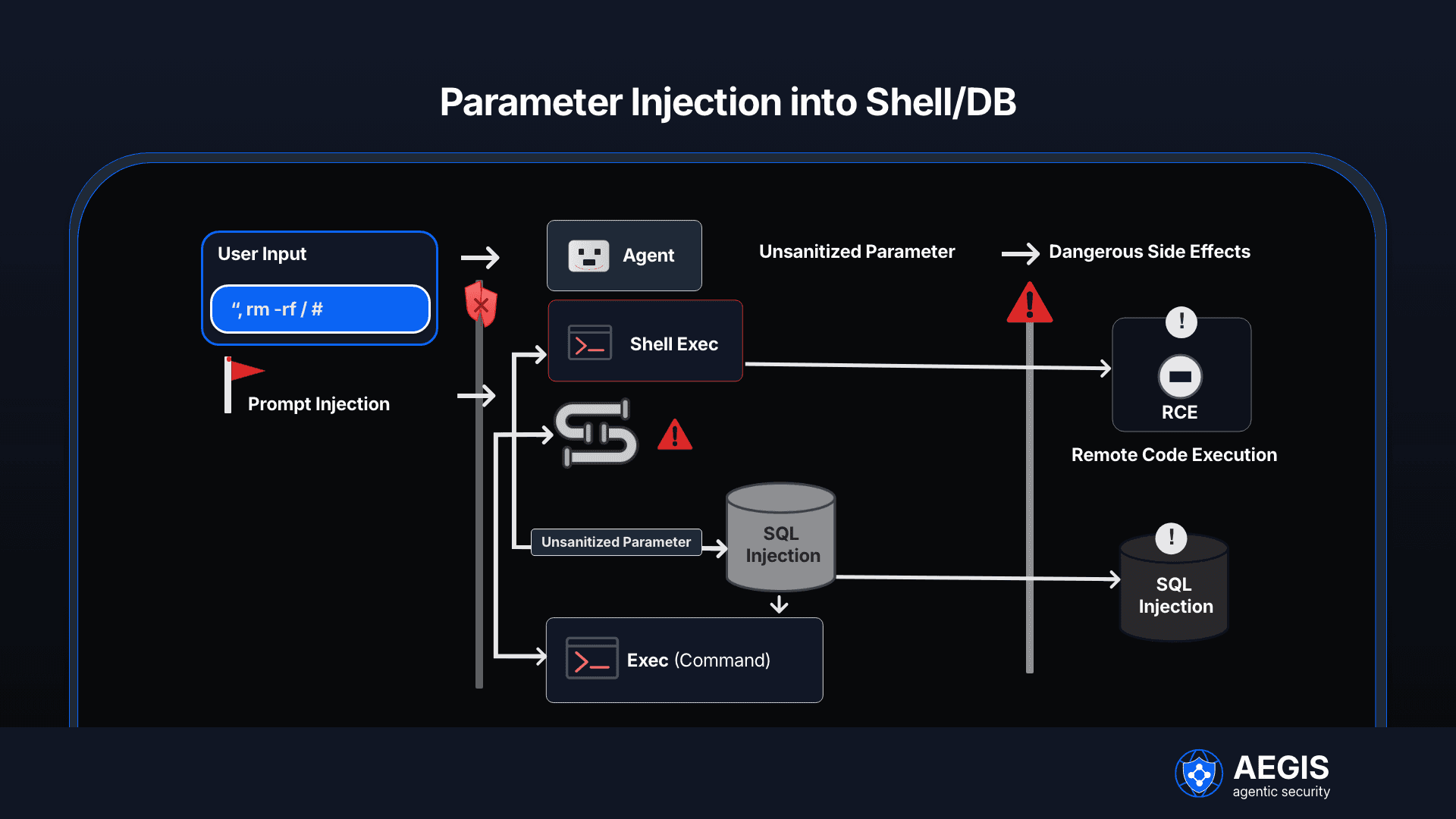
Aegis Gateway is a runtime policy and observability fabric for multi-agent AI systems. It acts as a reverse-proxy / sidecar layer between orchestration frameworks (AgentKit, LangGraph, etc.) and downstream tools (payment APIs, document stores, internal services). Aegis enforces policy decisions, emits structured OpenTelemetry spans for every call, and provides approval workflows when human oversight is required.
Core Aegis capabilities (operational detail)
- Agent identity and short-lived JWT issuance tied to tenant and owner claims.
- Policy-as-code (YAML/JSON) compiled into OPA bundles for fast Rego evaluation.
- Runtime enforcement decisions: allow, deny, sanitize (PII redact), approval_needed.
- Shadow mode for dry-run telemetry: would-allow/would-block metrics used to tune rules.
- Integrations with Slack / Microsoft Teams for approval flows and override tokens.
- OpenTelemetry emission and SIEM-ready structured logs for audit and compliance.
How Aegis fits a lab POC
Example: Automated procurement planner.
- Planner agent drafts purchases; finance agent is responsible for payments.
- Aegis policy for finance-agent includes max_amount: 5000 and require_approval for amounts > 5000.
- If planner coerces finance to call payments with amount 50,000, Aegis blocks the call, returns PolicyViolation, and emits an audited span showing policy_version, decision_reason, and parent agent chain.
- In shadow mode, the would-block event is visible in dashboards permitting tuning before a hard block.
This operational model ensures labs can iterate quickly while ensuring actions with regulatory or financial impact are controlled and auditable.
👉🏻 Prepare your organization for the evolving roles created by agentic AI
KPIs, artifacts, and handoff to engineering
Measurable KPIs
- Policy coverage % for critical connectors (target ≥ 80% pre-pilot).
- Would-block : would-allow ratio during shadow runs.
- Average time to remediate top offending parameters.
- Budget burn rate per agent and per tool.
- Percent of high-risk actions routed to approvals and approval latency.
Sample artifacts for handoff
- Policy bundle versions and changelogs.
- OpenTelemetry traces for representative POC scenarios.
- Agent registry export (agent_id, owner, tenant, allowed_tools).
- Test harnesses and dry-run simulation outputs.
Example KPI targets and metrics
KPI | Shadow target | Pilot target |
Policy coverage (critical tools) | 75% | 90% |
Would-block ratio (shadow) | < 10% | < 3% |
Approval latency (median) | 15 min | 5 min |
P99 decision latency | < 25 ms | < 20 ms |
Governance primitives and technical controls
Governance primitives you should implement in the lab:
- allow/deny at agent→tool granularity
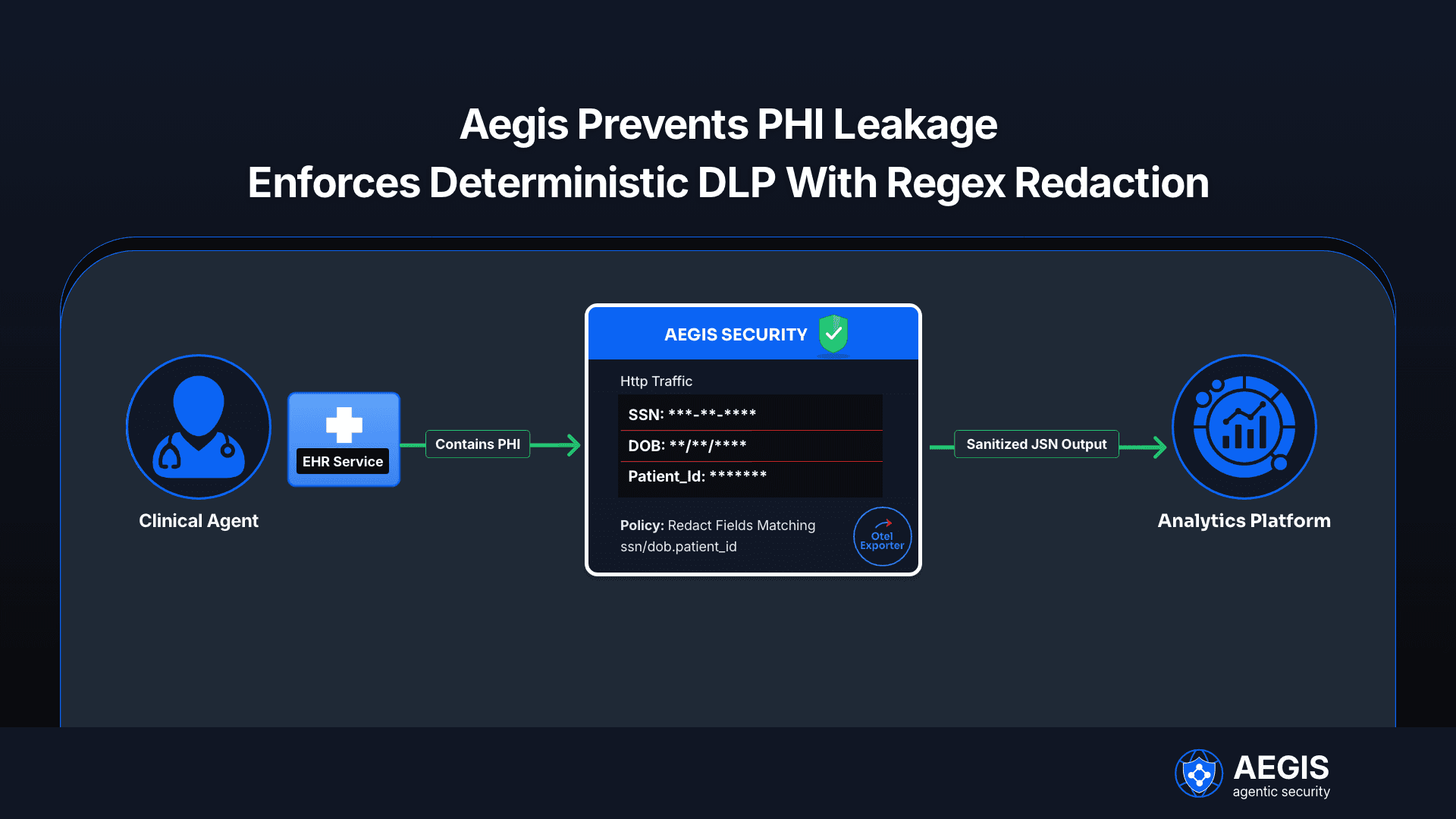
- parameter sanitation (regex DLP, redact PII)
- approval_needed for thresholded actions
- budget enforcement and rate limits
- egress allowlist and domain restrictions
- parent_agent validation to prevent coercion
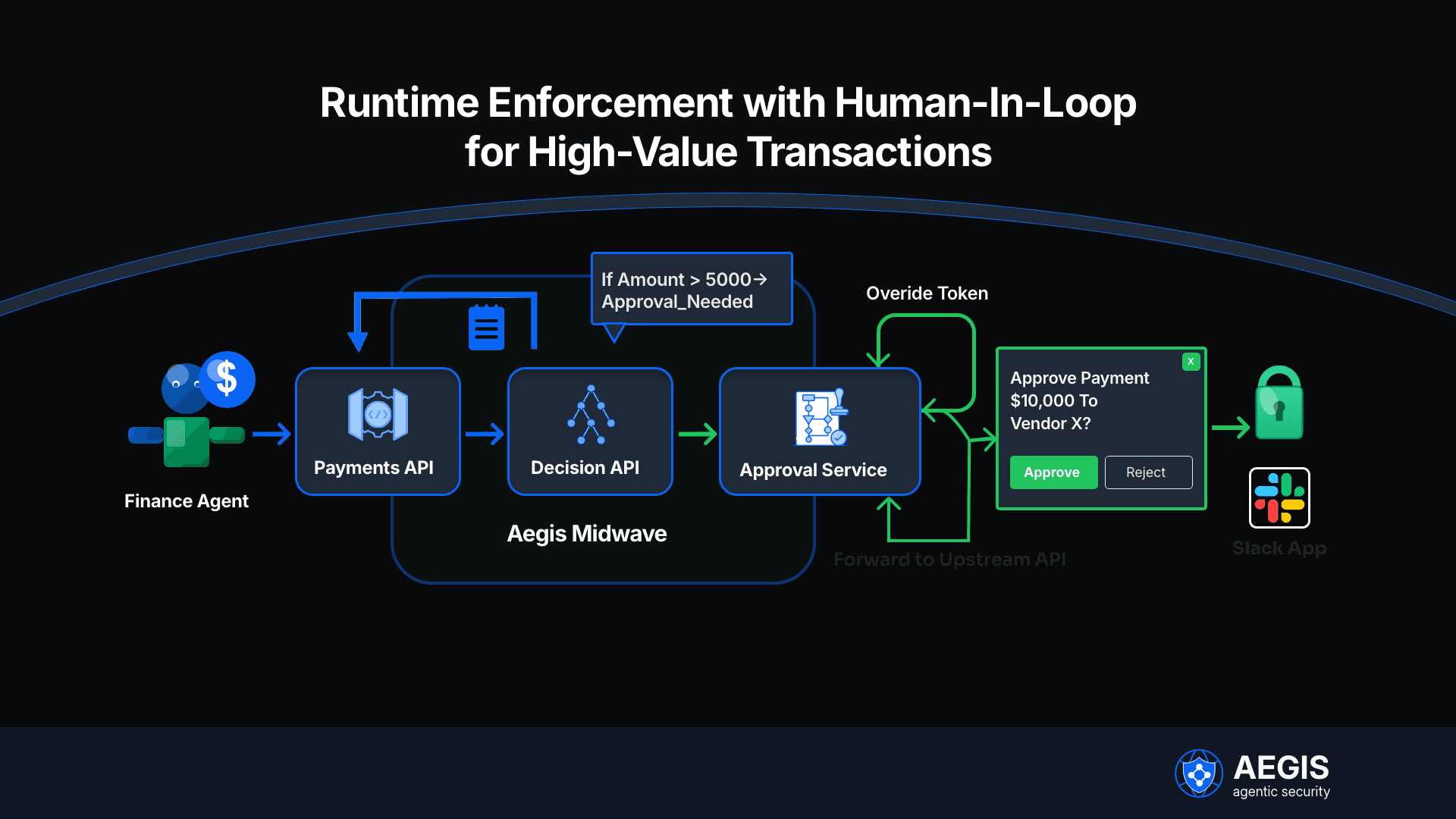
Risk ladder mapped to controls
Risk | Example | Control |
Sandbox escape | Agent writes to arbitrary FS path | File path whitelisting, write limits |
Data exfiltration | Upload EHR to external domain | Egress allowlist, DLP redact |
Unauthorized payment | Payment above threshold | Max_amount policy + approval flow |
Lab scenarios and sample policies
- High-risk payments: finance-agent allowed stripe:create_payment with amount ≤ 5000 else approval_needed.
- EHR reads: clinical-agent read-only to tenant EHR endpoint; redact SSN/dob fields.
- FinOps cost control: llm-agent daily budget $20 and RPS ≤ 5; return BudgetExceeded when hit.
Handoff and scaling to production
To move from lab to pilot to production:
- Promote tested policy bundles and freeze schemas.
- Ensure multi-tenant scoping of bundles to avoid policy collisions.
- Add tamper-proof log signing and retention policy for compliance.
- Include SLOs for decision latency and availability for the data plane.
Frequently Asked Questions
- What is shadow mode and why use it?
Shadow mode logs would-block events without enforcement so teams can fine-tune policies with real telemetry before blocking live traffic. - How does agent identity work?
Agents register with agent_id and receive short-lived JWTs with tenant and owner claims; tokens are used by the gateway for decision context. - How long should a shadow run last?
7–14 days is typical to capture representative traffic across work cycles. - What metrics matter for SOC and FinOps?
OpenTelemetry spans with decision_reason, policy_version, agent_id, and cost estimates are essential. Track would-block ratios and budget burn per agent. - Can policies be hot-reloaded?
Yes. Policy bundles should support hot-reload with versioning and rollback capability. - Which integrations are essential for approvals?
Slack and Microsoft Teams integrations are commonly used to deliver approval_needed flows and one-time override tokens.
Closing operational bullets
- Start small: protect the riskiest connectors first (payments, EHR, internal admin APIs).
- Automate identity and registration to avoid shadow agents.
- Run shadow mode until would-block patterns stabilize, then enforce with gradual rollouts.
- Instrument everything: OTel traces, structured logs, and policy version metadata are non-negotiable for compliance.
This playbook gives labs a practical path to balance velocity with security: adopt multi-agent POCs to explore capabilities while using a runtime policy fabric like Aegis to keep risk contained, provide auditable trails, and create clear handoffs to engineering for scale.