HR Onboarding Agents: Streamlining Hiring with Autonomy
How Aegis enforces DLP, scoped identities, and auditable approvals for safe, compliant agentic HR onboarding.
Secure HR Onboarding Agents - Streamlining Hiring with Autonomy and Governance
Automated onboarding reduces busywork—but it also concentrates sensitive flows (identity provisioning, payroll, benefits and PII/PHI handling) inside agentic workflows. Without runtime controls, an autonomous onboarding agent can export personal data, over-provision privileges, or cause compliance gaps through approval fatigue. This article explains why onboarding is a governance priority, the policies you must enforce, an implementation checklist with metrics, and how Aegis — Aegissecurity runtime policy & observability gateway — closes the gap between automation and compliance.
Why onboarding is a governance priority
Onboarding touches multiple systems (HRIS, IAM, payroll, benefits, storage) and handles sensitive attributes like SSNs, bank details and health identifiers. Two forces make governance urgent:
- Automation growth: Digital onboarding and HR automation adoption accelerated in 2024–2025; automated onboarding commonly yields large time savings and faster productivity ramp — some reports cite ~50% faster time-to-productivity for automated onboarding workflows and average HR time savings measured in hours per hire. (Deel)
- Increasing attack surface: Data breaches and credential misuse continue to drive long detection windows and regulatory exposure; enterprise breach lifecycles still measured in months, and credential-based incidents remain common. Runtime controls reduce the risk that an automated flow is the vector for exfiltration. (varonis.com)
Operationally, onboarding requires cross-system orchestration plus human approvals for high-risk steps. That combination — autonomy + sensitive data + privileged actions — is exactly where agentic systems need a runtime guardrail.
Policies to enforce
Policy design for onboarding agents must be precise, enforceable at runtime, and auditable. Below are core policy categories with example enforcement actions.
👉🏻 Turn scattered information into searchable enterprise intelligence
DLP & content sanitation
- Deterministic redaction rules (regex-based for SSN, bank account, health IDs) applied before egress to connectors.
- Block any agent attempt to export employee PII to non-approved domains or external connectors.
- Sanitize transient artifacts (offer letters, attachments) when placed into shared folders.
Example policy action: sanitize: {fields: ["ssn","bank_account"], method: "redact"}.
Privilege elevation & approval flows
- Per-agent least-privilege scopes: agents receive only the specific IAM actions they need (e.g., directory:write:/employees/{tenant}/onboard).
- approval_needed for high-risk grants (production admin roles, cross-tenant access).
- Time-boxed credentials and one-time override tokens after human approval.
Example policy action: allow for add_user to onboard group; deny for grant_admin unless approval_needed satisfied.
Egress control & scope limiting
- Enforce domain allowlists; block outbound requests to unknown domains.
- Limit filesystem writes to tenant-scoped directories and max file sizes.
- Per-agent budgets and rate limits to prevent runaway costs.
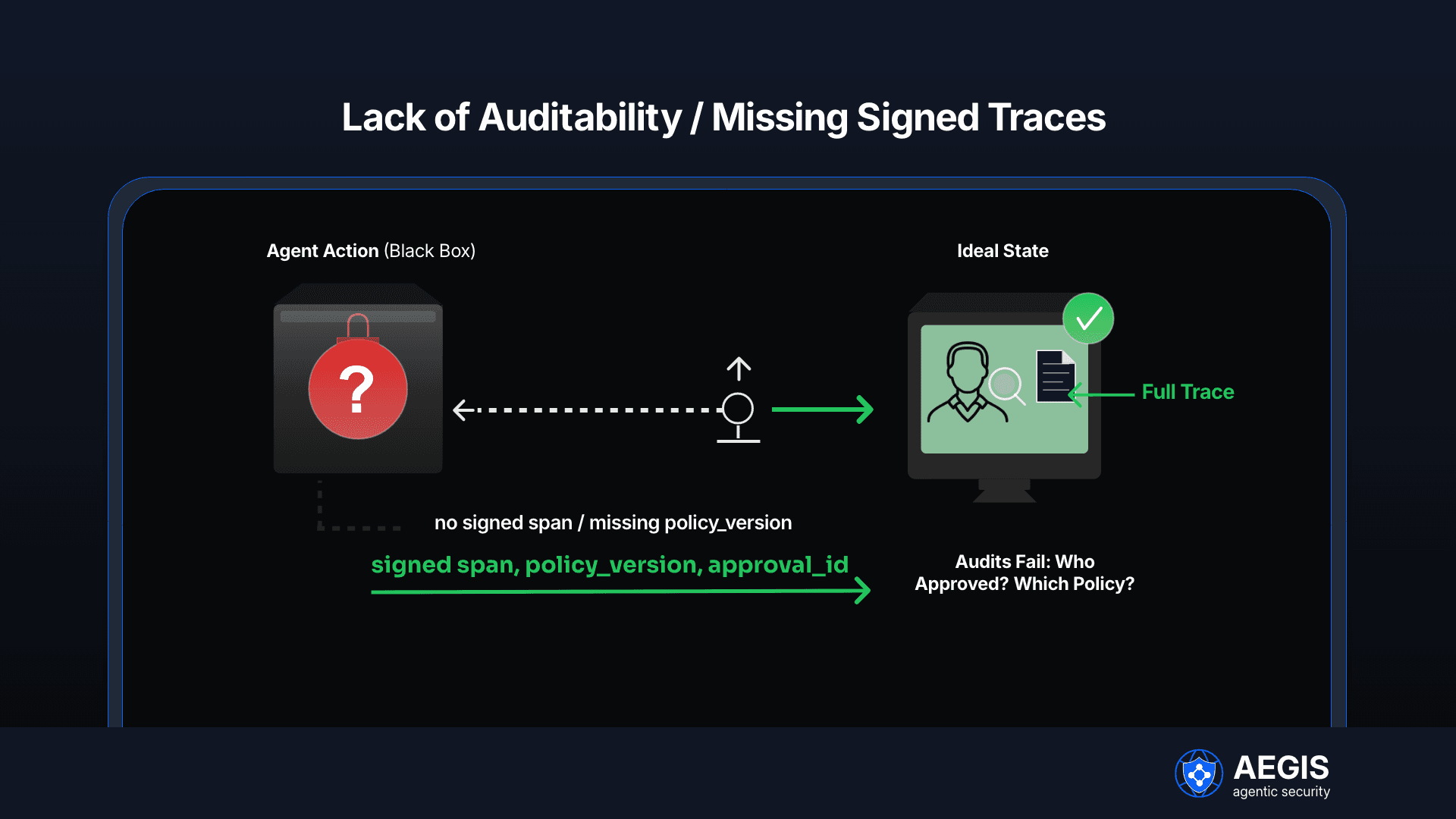
Observability & tamper-proof audit
- Every decision emits structured telemetry (agent_id, tool, policy_version, decision, reason).
- Optionally sign audit entries (hash-chain) for regulatory evidence.
.png&w=3840&q=75)
Implementation checklist and metrics
Below is a practical checklist for piloting secure onboarding agents. Implement items in order to reduce blast radius while preserving developer velocity.
👉🏻 Improve service desk performance while avoiding common automation pitfalls
Phase | Action | Success Metric |
Discover | Inventory orchestrators, connectors, and sensitive fields | 100% connector inventory |
Policy design | Create per-agent YAML policies (DLP, scope, approvals) | < 2 policy iterations per connector |
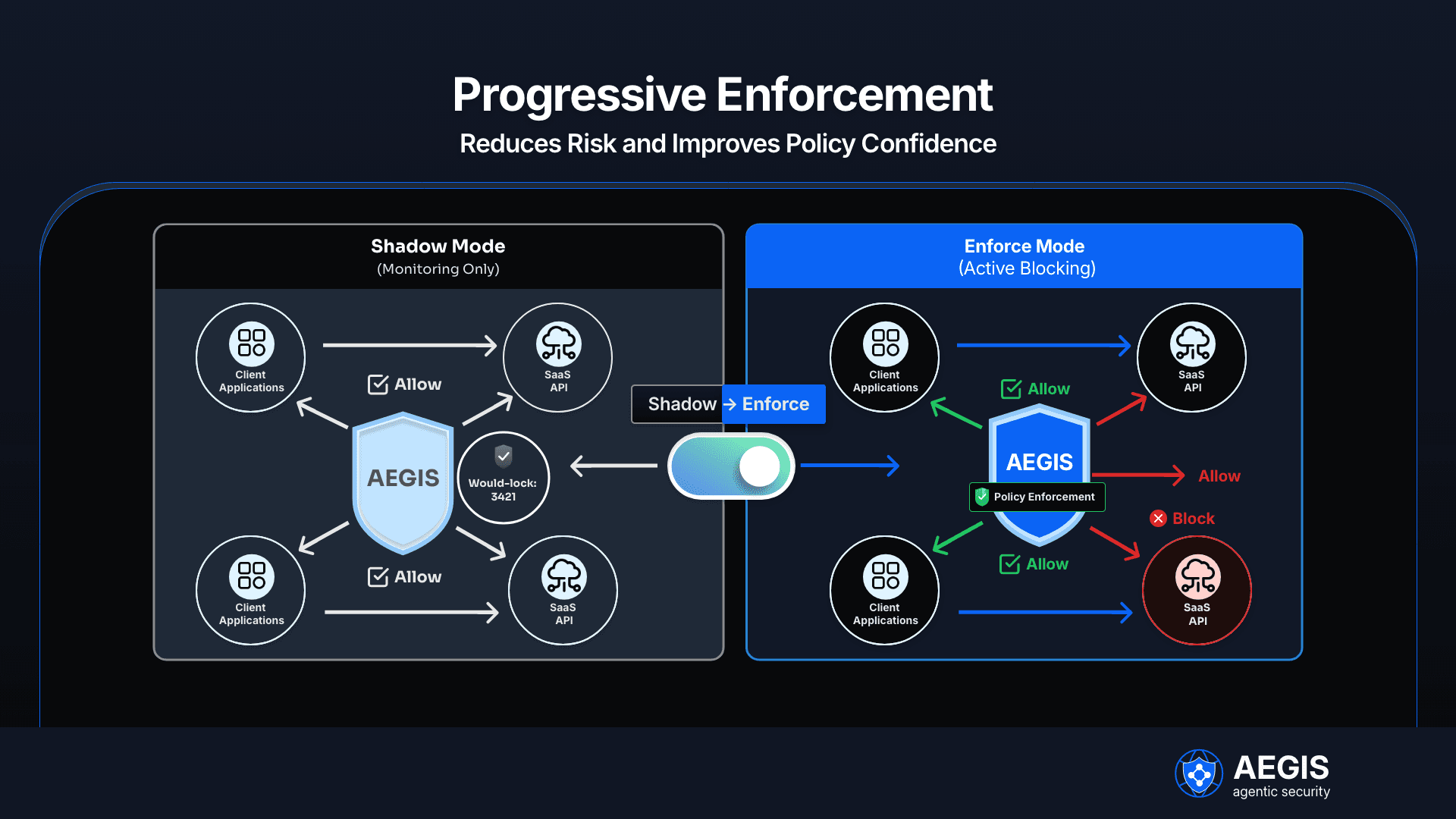
Shadow rollout | Run policies in shadow mode 7–14 days | Collect would-block metrics |
Enforce | Flip to enforce, enable approvals for high-risk actions | <1% user friction incidents |
Monitor | Export OTel spans to SIEM, enable dashboards | 100% agent-tool calls traced |
Key operational metrics to track:
- Time saved per hire (hours) and percent reduction in manual entries.
- Blocked policy violations (count), approvals requested/completed, and average approval latency.
- Incidents avoided (measured by would-block vs actual incidents post-enforcement).
- Policy evaluation latency (P99 target ≤ 20ms).
A second table compares example enforcement actions:
Risk | Example trigger | Aegis enforcement |
PII exfiltration | Agent posts offer letter to external domain | Sanitize SSN, block egress, emit audit |
Privilege escalation | Agent attempts to add user to prod-admin | Return approval_needed, block until approval |
Unbounded spend | Agent calls paid LLM beyond budget | Deny with BudgetExceeded reason |
Unauthorized read | Agent reads other-tenant records | Deny + audit, alert SOC |
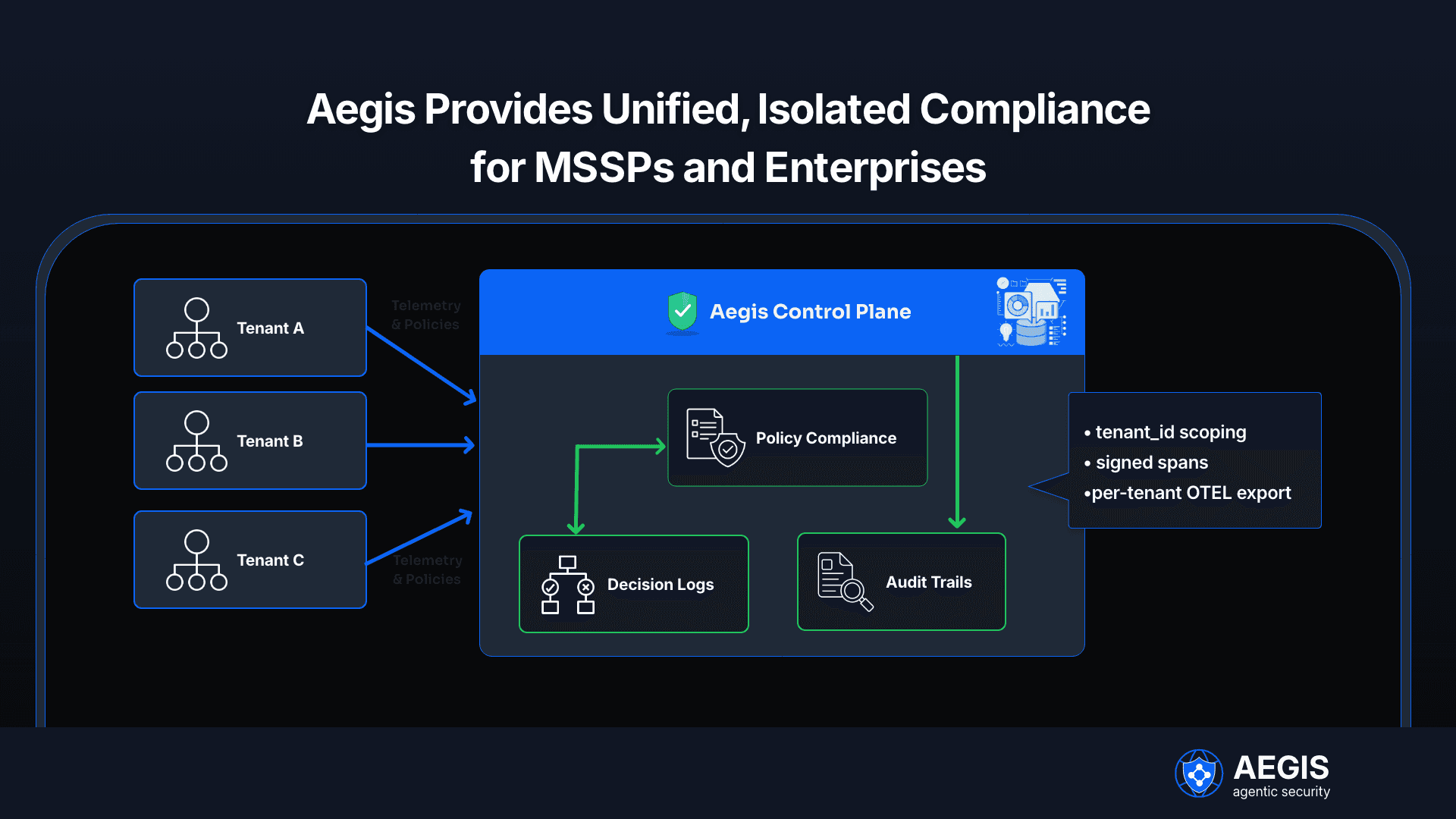
How Aegis enforces safe, compliant onboarding (solution deep-dive)
At least one-third of operational strategy must describe the solution: Aegis is a runtime policy and observability gateway placed between orchestrators (AgentKit, LangGraph, etc.) and downstream tools. It implements:
- Per-agent identity & scoped tokens: Agents register with unique IDs; short-lived JWTs carry agent, tenant and scope claims. Tokens are minted by a token service and include expiry and scope constraints.
- Policy-as-code with OPA: Policies are authored in YAML/JSON, compiled to OPA bundles and hot-reloaded. Policy outcomes: allow, deny, sanitize, or approval_needed.
- Runtime enforcement via proxy/sidecar: An Envoy-style forward proxy (or middleware SDK) intercepts every agent→tool call, sends the request to the external authorization server, which evaluates policy and returns a decision. Denied calls are blocked immediately; sanitize responses are applied before data leaves the environment.
- Deterministic DLP: Regex- and schema-based redaction runs deterministically inside the authorizer so sensitive fields (SSNs, bank numbers) are never sent to unapproved endpoints.
- Approval workflow: When approval_needed triggers, Aegis posts an approval request to Slack/MS Teams (or internal workflow), and only after human approval does it mint a one-time override token for the retry.
- Observability & audit: Every decision emits OpenTelemetry spans with policy_version, decision_reason and agent identity. Optionally, audit logs are signed (hash chain) for tamper-evidence.
Practical onboarding examples:
- An onboarding agent auto-generates an offer letter; Aegis redacts SSN fields automatically before the document is placed into the shared folder and records the redaction event.
- An agent requests to add a user to a production admin group; policy returns approval_needed, the approval is recorded, and the override token is logged and signed.
Deployment & operational considerations
- Shadow mode first: Run policies in shadow to collect would-block events and produce baseline dashboards. Shadow rollouts reveal parameter distributions and reduce false positives.
- Gradual scope tightening: Start with allowlists for connectors and narrow API parameter regexes over time.
- Approval ergonomics: Avoid approval fatigue by tuning thresholds and bundling low-risk approvals into batched reviews.
- Latency budget: Optimize OPA prepared queries and caching; aim for P99 evaluation latency ≤ 20ms so interactive onboarding doesn't degrade UX.
FAQ — Frequently Asked Questions
Q1: Can Aegis redact SSNs and bank details automatically?
Yes. Aegis supports deterministic DLP (regex and schema-based) that sanitizes or redacts specified fields before any egress to connectors.
Q2: How does approval_needed scale with many requests?
Policies can set thresholds and rates to reduce low-risk approvals. Integrations with Slack/MS Teams enable quick approvals and one-time override tokens; dashboards show pending queues for SOC/HR.
Q3: Will runtime policy evaluation add significant latency?
Properly tuned OPA prepared queries and in-memory caches target P99 latency under 20ms. Shadow mode helps tune policies before enforcement.
Q4: Can I scope agents per-tenant in a multi-tenant MSSP model?
Yes. Aegis issues tokens with tenant claims and enforces tenant-scoped policies; control plane enforces bundle scoping to prevent policy leakage across tenants.
Q5: What integration work is needed for existing orchestrators?
Drop-in middleware/SDKs are available for common orchestrators; an Envoy ext_authz pattern supports sidecar deployments with minimal app changes.
Closing — practical next steps
- Inventory onboarding connectors and sensitive fields.
- Draft minimal shadow-mode policies for high-risk connectors.
- Run a 7–14 day shadow rollout and collect would-block metrics.
- Tune regexes and thresholds, then enable enforcement with approval workflows for critical actions.
👉🏻 Reduce manual processing with AI agents built for document automation
Adopting agentic HR automation is valuable—but only with a runtime guardrail that enforces least privilege, DLP, approvals and auditable telemetry. Aegis provides the policy fabric, enforcement plane and observability you need to scale safe onboarding across tenants and teams while keeping compliance evidence intact.
External references and further reading: Gartner on intelligent agents and enterprise adoption, Verizon DBIR for breach lifecycle context, and industry reports on onboarding automation time-savings. (Gartner)