How Multi-Agent AI Transforms Data Extraction and Document Processing
How multi-agent RAG + OCR with runtime policy enforcement secures IDP workflows — architecture, policy patterns, and the Aegis gateway in production.
Multi-Agent IDP: Securing OCR + RAG with Runtime Policy and Audit Trails
Document processing at scale now blends OCR, retrieval-augmented generation (RAG), and multi-agent orchestration. That combination delivers parallelism and specialization — but it also raises concrete security and compliance questions: which agent touched which document, was PII exposed, and who approved exports? This article explains why legacy OCR pipelines fail for modern IDP, shows practical multi-agent pipeline patterns, and details how a runtime policy and observability gateway like Aegis enforces least-privilege, redaction, and auditable egress in production.
Intelligent Document Processing (IDP) is rapidly growing: multiple industry reports place the market in the low-to-mid billions in 2024–2025 with double-digit CAGRs through the decade. Mordor Intelligence estimates the IDP market at about USD 2.69B in 2025 with ~18% CAGR; other research shows similar multi-billion valuations and aggressive growth assumptions. (Mordor Intelligence)
Limits of legacy OCR and why IDP needs agents
Legacy OCR pipelines typically follow: image → OCR engine → regex post-processing → human QA. They struggle for three reasons:
- Accuracy drift: template or font variations and noisy scans cause brittle regexes and manual edge-cases.
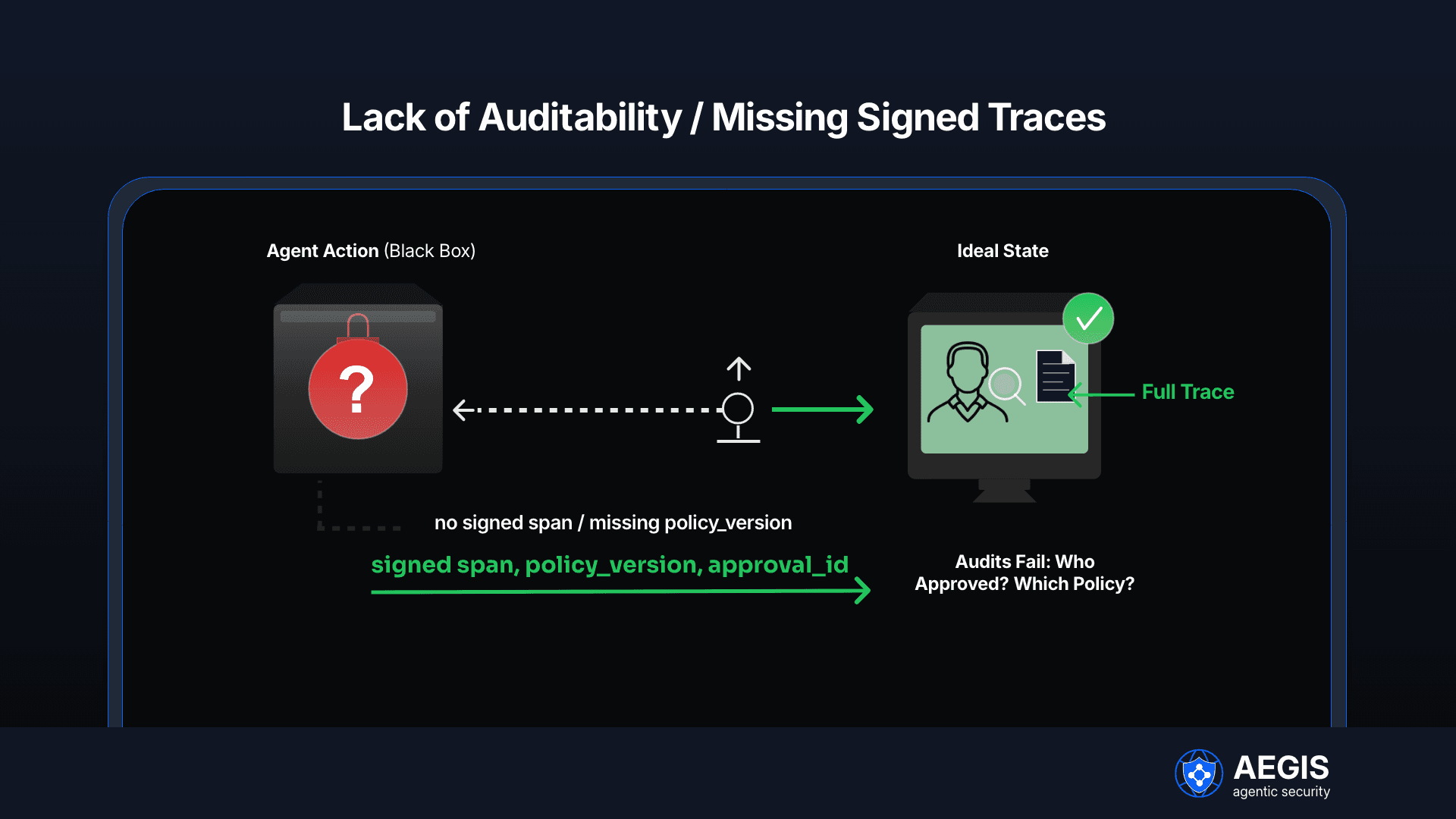
- Poor auditability: ad-hoc logs don't map extracted fields back to source spans or redaction events.
- Hard egress controls: once structured fields exist, any downstream service can access them, making PII exfiltration easy.
Agentic IDP replaces brittle linear flows with specialized agents (OCR agent, parser agent, validator agent, redaction agent, export agent). Each agent runs a focused task and produces structured telemetry (doc_id, OCR_confidence, redaction_status) that a central gateway evaluates in real time. This model improves throughput and maintainability, but only if a runtime policy layer governs agent privileges and egress.
👉🏻 Accelerate contract workflows with intelligent agents that reduce delays and manual effort
Multi-agent pipeline patterns for extraction and redaction
Typical agent roles and a recommended pattern:
- OCR agent — raster → text + bounding boxes; attach OCR_confidence.
- Parser agent — map text to domain fields (invoice_number, amount) using templates + NER.
- Validator agent — cross-checks fields against master data (vendor IDs, GL codes).
- Redaction agent — deterministic (regex) + ML detectors redact PII at field and span level.
- Export agent — prepares allowed exports (sanitized payloads) and requests approval if needed.
Design notes:
- Split + Embed + Retrieve + Answer (RAG) should be policy-aware: retrieval returns only allowed embeddings per tenant; response generation must mark any included PII spans.
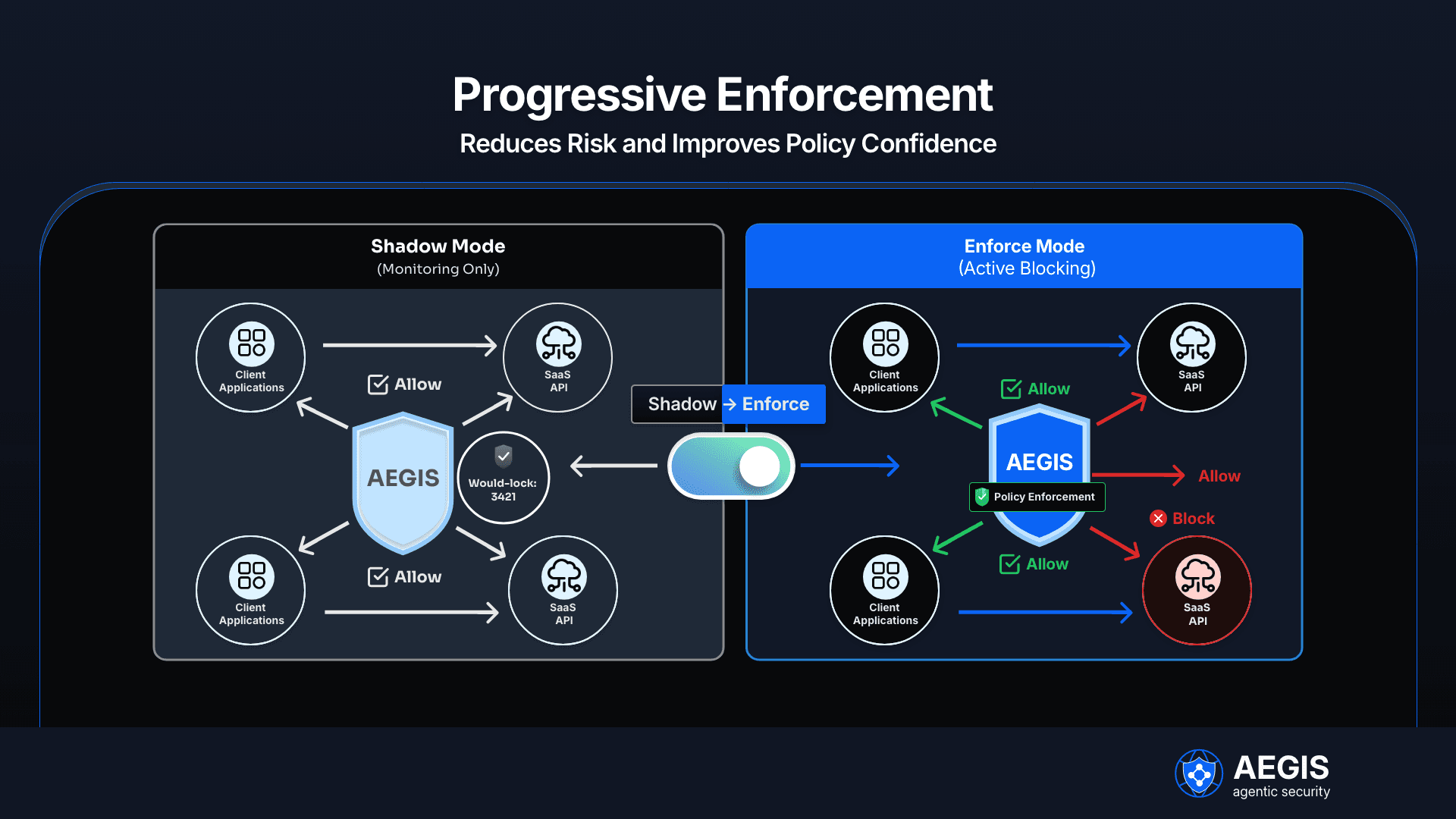
- Shadow mode: deploy policies in shadow to capture would-blocks and tune rules without causing outages.
- Parent_agent_id validation: require the orchestrator to pass a signed parent_agent_id header so the gateway can validate chains and prevent privilege escalation.
Policy controls and auditability (Aegis example)
Aegis is a runtime policy + telemetry gateway purpose-built to secure multi-agent IDP. Below are core capabilities and how they map to document-processing requirements.
👉🏻 Unlock enterprise knowledge faster with AI-powered search and discovery
Identity & per-agent least privilege
Each agent is registered with a unique identity and short-lived JWT that includes organisation, tenant, and agent claims. Policies declare which agents can call which tools and which parameters are allowed (e.g., export.amount ≤ 5000). This prevents a planner agent from coercing a finance/export agent into unauthorized actions.
Parameter inspection and deterministic DLP
Aegis inspects call parameters at the gateway. Policies can return: allow, deny, sanitize (redact fields), or approval_needed (pause and request human sign-off). Deterministic regex rules are augmented by ML detectors for fuzzy PII (e.g., account-like sequences). Every decision emits OpenTelemetry spans with structured fields: agent_id, tool, decision, policy_version, doc_id, OCR_confidence, redaction_status. This makes redaction and export trails auditable for auditors and SOC teams.
Shadow mode & dry-run policy rollout
Run policies in shadow to collect would-block statistics and tune regexes and ML thresholds against sandbox corpora. Only flip enforcement after would-block rates fall to an acceptable level.
Compliance & per-tenant routing
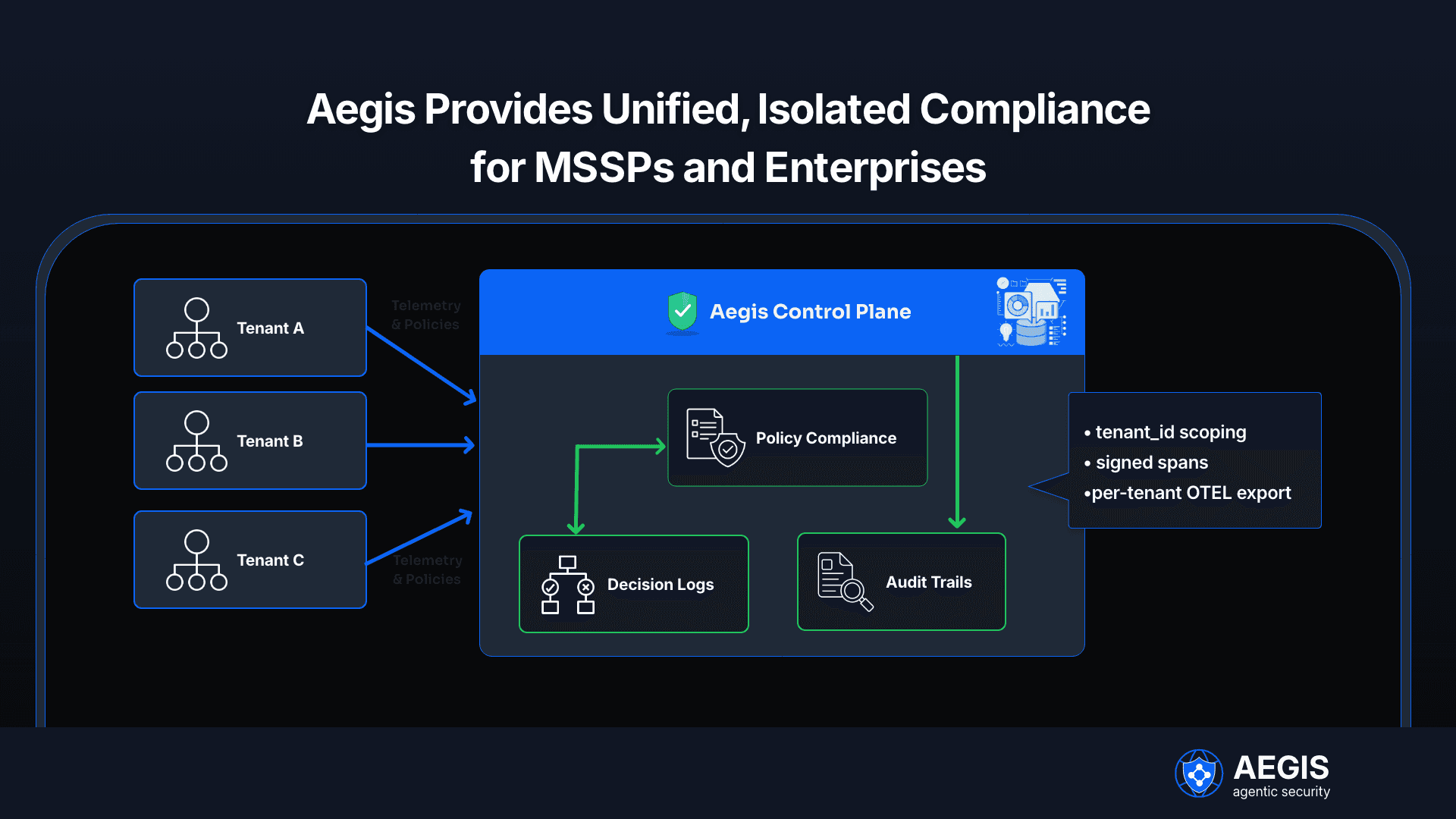
Aegis supports per-tenant routing so documents for region-tagged tenants never leave their allowed region. It also supports tamper-evident audit logs and optional hash-chaining for policy change history.
Legacy OCR vs Multi-Agent IDP (key operational metrics)
Capability | Legacy OCR (typical) | Multi-Agent IDP (with Aegis) |
Accuracy (field extraction) | 70–85% (depends on templates) | 90%+ with validator agent + master data checks |
Throughput | Limited by sequential processing | Parallel agent execution; higher throughput |
Auditability | Fragmented logs | Structured spans per call (doc_id, policy_version) |
Egress control | Post-hoc and manual | Policy-enforced at runtime (allow/deny/sanitize) |
PII redaction | Manual or after extraction | Deterministic + ML at gateway, enforced before egress |
(Values indicative; customize per deployment.)
Aegis in practice — architecture and example pipeline
Aegis Gateway sits between the orchestrator and tools as a lightweight policy and telemetry fabric. Its architecture layers:
- Sidecar / forward proxy: Envoy ext_authz or SDK middleware routes agent calls through the gateway.
- External authorization server: evaluates policies (OPA/Rego or compiled bundles), performs deterministic DLP, and returns decisions.
- Telemetry engine: exports OpenTelemetry spans and structured logs to SIEM.
- Control plane: policy compiler, bundle store, admin API and SDK/CLI for policy lifecycle.
Example: Invoice processing with fraud & budget checks
- OCR agent extracts fields and posts a traced span to Aegis with doc_id and OCR_confidence.
- Parser agent maps line items; validator agent cross-checks vendor and GL codes.
- Redaction agent runs regex for bank account patterns and ML for other PII; Aegis sanitizes payloads before any export.
- Export agent requests export to external accounting SaaS. Policy evaluates: per-tenant egress allowlist, max_export_amount, and a fraud flag check. If amount > threshold or fraud flag set → approval_needed; Aegis posts approval request to Slack/Teams and blocks until override token is presented.
Operational telemetry includes P99 latency for OCR + policy eval (Aegis targets ≤20 ms decision latency at P99), blocked policy counts, and would-block ratios from shadow mode. These metrics feed security, compliance, and FinOps dashboards. (McKinsey & Company)
👉🏻 Simplify onboarding and improve hiring efficiency with autonomous HR agents
Telemetry fields and operational targets
Telemetry field | Purpose | Target / Note |
doc_id | Link spans to document | Required for audits |
OCR_confidence | Assess extraction quality | Use thresholding for validator agent |
decision | allow/deny/sanitize/approval_needed | Persist with policy_version |
latency_ms | Total decision time | P99 ≤ 20 ms goal |
approval_id | Reference for human approvals | Link to Slack/Teams message |
Measurement, rollout and risk controls
Measurement:
- Use shadow mode for 7–14 days; collect would-deny events and false positives.
- Track P99 latency and tune OPA prepared queries and caching.
- Monitor would-block → actual block delta; aim to reduce by iterating regexes and validator rules.
Controls:
- Parent_agent_id validation prevents privilege escalation by ensuring call chains include signed context.
- Egress allowlists and domain-level controls prevent raw image or document egress to unapproved endpoints.
- Per-agent daily budgets and rate limits prevent runaway costs from LLM calls.
Risks and mitigations:
- Misconfigured policies can block workflows — provide schema validation, dry-run, and rollbacks.
- Approval fatigue — tune thresholds and add granular conditions so only true high-risk actions require human approval.
Links & further reading
- For market context on IDP growth see Mordor Intelligence and Grand View Research. https://www.mordorintelligence.com/industry-reports/intelligent-document-processing-market, https://www.grandviewresearch.com/industry-analysis/intelligent-document-processing-market-report. (Mordor Intelligence)
Frequently Asked Questions
Q: How does Aegis prevent an agent from exfiltrating raw images?
A: Aegis enforces egress allowlists and inspects payloads. Policies can deny binary/image egress to external domains and require sanitized exports. Logs include the decision and reason for audit.
Q: What is shadow mode and why use it?
A: Shadow mode records would-deny events without blocking. It’s essential to tune regexes/ML detectors and avoid production disruption before turning on enforcement.
Q: Can Aegis handle multi-tenant deployments?
A: Yes. Policies and bundles are scoped per-tenant; per-tenant routing ensures data residency and separate audit trails.
Q: How does approval_needed work?
A: For high-risk actions Aegis returns approval_needed, posts an interactive request to Slack/Teams, and, upon human approval, issues a one-time override token for the retry.
Q: What telemetry should SOC/Compliance expect?
A: OpenTelemetry spans with agent_id, doc_id, decision, policy_version, OCR_confidence and approval_id. These fields make the redaction and export trail auditable.