How Startups are Innovating with Agentic AI
How startups can secure agentic AI deployments and win enterprise customers with runtime policy controls and auditability.
Building Trust for Agentic Startups: How Aegis Makes Multi-Agent AI Safe, Auditable, and Sale-Ready
Startups racing to productize agentic AI face a paradox: speed is their competitive edge, but enterprises demand control, auditability, and predictable cost. This article explains why agentic stacks are attractive, what enterprise buyers require, and how Aegis — a runtime policy and observability gateway — provides practical controls (identity, budgets, approvals, telemetry) that let startups scale into regulated customers.
Why startups pick agentic stacks
Value patterns
Agentic architectures (multi-agent orchestrations, tool-enabled agents, planner/actor patterns) let startups verticalize faster by composing generic LLM capabilities into domain flows: payments, EHR sanitization, incident remediation. The payoff is faster productization and differentiated workflows with less bespoke engineering per customer. McKinsey and others report rising enterprise interest in such systems. At the same time, market signals show heavy investment: private generative AI funding hit $33.9B in 2024. (Stanford HAI)
But the same attributes that enable speed create three enterprise red flags: unpredictable actions (agent coercion / tool chaining), uncontrolled spend, and lack of auditable decisions. Gartner expects a significant failure rate for immature agentic projects unless governance improves. (Gartner)
👉🏻 Innovate confidently by balancing speed with effective risk controls
Building trust for enterprise
Policies, identities, and approvals
Enterprises ask four questions when evaluating agentic solutions: Who initiated that action? What policy allowed it? Was any human approval required? Can I prove it in an audit? Aegis answers each at runtime.
Aegis enforces per-agent identities and short-lived tokens, evaluates policy-as-code at the agent→tool boundary, and returns allow/deny/sanitize/approval_needed decisions. Policies express conditions (e.g., amount ≤ 5,000; target domains must match an allowlist; only read access to EHR endpoints) and can run in shadow mode to collect would-deny metrics before enforcement. This pattern prevents a planner agent from coercing a finance agent into unauthorized transfers and prevents silent data exfiltration. (Example policies and templates speed enterprise trials and sales.)
Telemetry and auditability
Aegis emits OpenTelemetry spans for each decision, including agent_id, tool, policy_version, decision_reason, latency, and estimated cost. Spans are signed and can be exported to SIEMs to create tamper-resistant evidence for compliance reviewers and SOC teams. These traces turn vendor conversations from abstract assurances into concrete artifacts for procurement and security questionnaires.
👉🏻 Stay competitive by adopting the standards driving the future of agentic AI
Aegis as a practical solution
Runtime enforcement and developer experience
Aegis is a gateway: a lightweight policy and telemetry fabric that sits between orchestrators (LangChain/LangGraph/AgentKit-style systems) and tools (APIs, connectors). Agents call tools through the gateway (sidecar or forward proxy). The gateway evaluates an OPA-style policy bundle and either allows, blocks, sanitizes parameters, or requests human approval. Policies are authored in YAML/JSON and compiled into bundles that hot-reload without restarts. Aegis provides a CLI, SDKs (Python/Node), and middleware to integrate with common orchestrators with minimal code changes; teams can run policies in shadow mode during trials to build trust before flipping to enforcement.
Cost governance and per-agent budgets
Aegis tracks per-agent cost and enforces budgets and quotas at runtime. If an LLM or downstream API spend exceeds a tenant or agent budget, the gateway returns BudgetExceeded or triggers approval flows. Dashboards show spend by agent and by tenant, enabling sales and FinOps teams to align trials with predictable pricing and to avoid surprises during pilot phases.
Approvals and safe chaining
For high-risk actions (payments above thresholds, exports of PHI, production deployments), policies can require approval_needed. Aegis routes approval requests to Slack/MS Teams and issues single-use override tokens once approved. Crucially, Aegis validates chain headers (parent_agent_id) to prevent lateral coercion where one agent tricks another into performing a forbidden action.
Observability and enterprise artifacts
Aegis generates SIEM-ready logs, signed policy versions, and dashboards mapping policy coverage to customer value (safety, cost, compliance). These artifacts are essential during procurement and security reviews and materially shorten enterprise sales cycles by providing demonstrable compliance evidence.
Go-to-market playbook for startups adopting Aegis
Tactical plays and trial patterns
Below are practical plays that startups and MSSPs can implement while integrating Aegis.
Play | Why it matters | Expected outcome |
Ship with shadow mode for trials | Lowers friction for enterprise pilots | Faster acceptance, measurable would-deny events |
Per-tenant policy defaults | MSP multi-tenant isolation | Reduced cross-tenant risk |
Embedded budget controls | FinOps predictability | Avoided unexpected charges |
Policy-aware connectors (Stripe, SharePoint) | Parameter enforcement at tool boundary | Reduced injection and misuse |
(Each play can be implemented quickly using Aegis SDKs and policy templates; see sample policies and templates in the control plane.)
Case examples
Industry | Problem | Aegis policy |
FinTech | Planner tries $50k payment | finance-agent allowed_if amount ≤ 5,000; approval_needed otherwise |
Healthcare | Agent extracts EHR fields | clinical-agent read-only to internal EHR; redact SSN/DOB |
MSP | Multi-tenant automation | tenant-scoped bundles; region routing for data residency |
Integration patterns and operational considerations
Deployment and performance
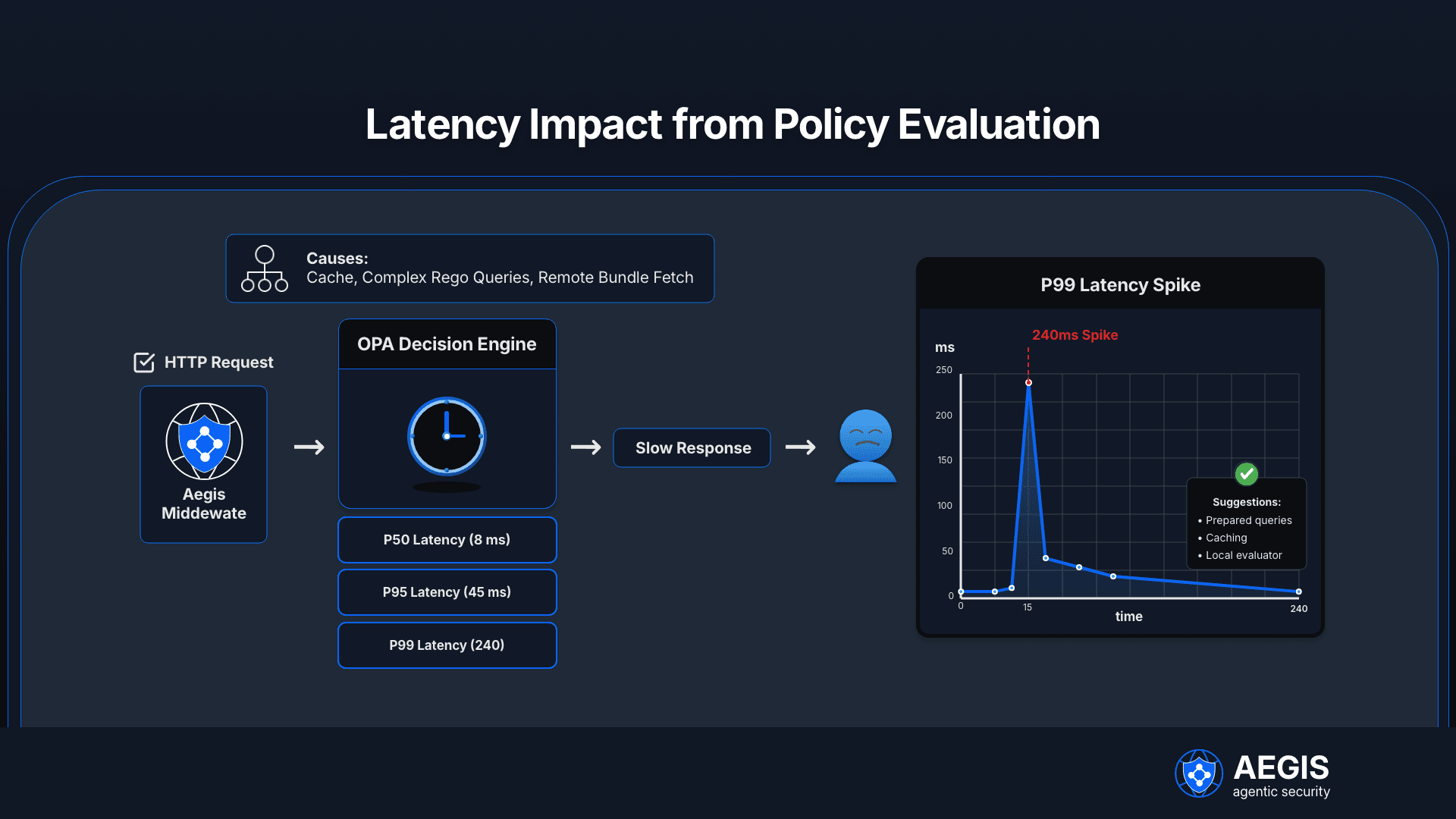
Aegis targets low latency (P99 ≤ 20 ms for decision calls) by using prepared OPA queries, in-memory caches, and optional WASM evaluation. It supports Envoy ext_authz sidecar and lightweight middleware for non-HTTP tools, with Helm charts and Terraform modules for pilot deployments.
Safety, failure modes, and scaling
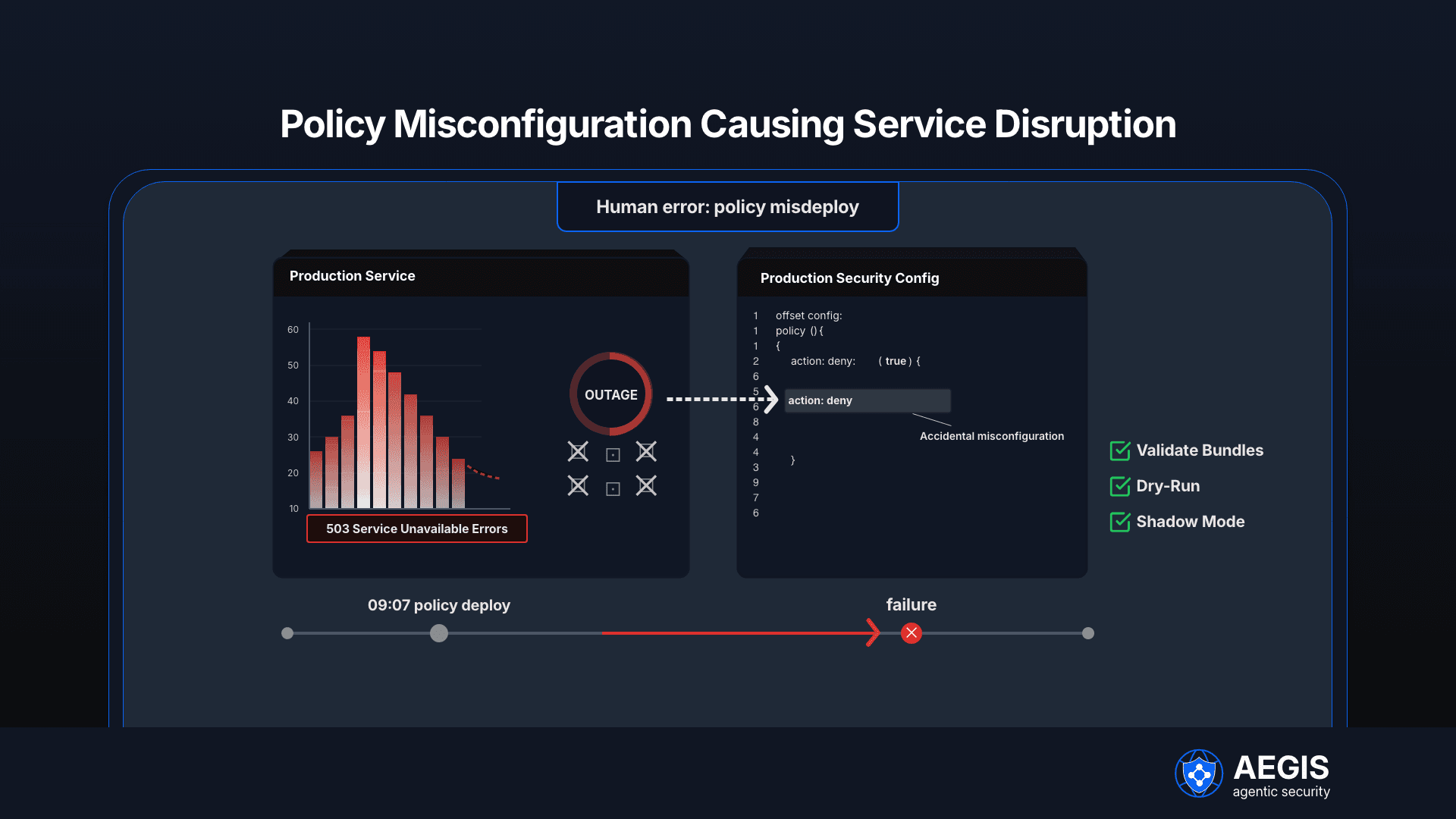
Aegis is configurable to fail-closed for writes and fail-open for low-risk reads where needed. Approval queues and budget throttles avoid human overload. Policies support dry-run outputs and versioning to enable rollbacks and safe policy evolution.
👉🏻 Unlock better outcomes through stronger collaboration between vendors and enterprises
Measurement: ROI and success metrics
Startups should measure both operational and commercial impact when using Aegis.
Metric | Target for pilots |
Policy enforcement latency | ≤ 20 ms P99 |
Policy coverage for critical tools | ≥ 80% |
Pilot-to-enterprise conversion lift | measurable reduction in security review time |
Avoided incidents | quantified via prevented high-risk actions |
Using Aegis typically reduces approval cycles and shortens procurement by providing concrete compliance artifacts that security and procurement teams can evaluate.
Practical recommendations for product and GTM
- Ship sample policies for verticals (FinTech, Healthcare, SaaS) and document expected audit outputs.
- Start pilots in shadow mode and present would-deny metrics in the second week.
- Map policy templates to security questionnaire items and include signed spans as attachments for RFP responses.
- Provide per-tenant defaults for MSSPs and white-label templates for reseller partners.
- Track market signals (Gartner, McKinsey, Stanford) and build content showing how Aegis mitigates common failure modes. (McKinsey & Company)
Frequently Asked Questions
- What is Aegis and where does it sit in my stack?
Aegis is a runtime policy and telemetry gateway that sits between orchestrators and external tools; it enforces policy decisions, manages identities and budgets, and emits signed telemetry for audits. - Can I run policies in non-blocking mode?
Yes — shadow mode records would-deny events so teams can tune rules before enforcement. - How does Aegis help sell to enterprises?
Aegis produces signed audit traces, policy version histories, and deployment artifacts that directly align with procurement and security review requirements, reducing time to procurement. - What integrations are typical?
Common initial connectors include payment APIs, document stores, LLM endpoints, and messaging systems; Aegis provides policy-aware connector patterns and SDK middleware. - Is Aegis multi-tenant?
Yes — Aegis supports tenant-scoped bundles, per-tenant policy defaults, and regional routing for data residency.
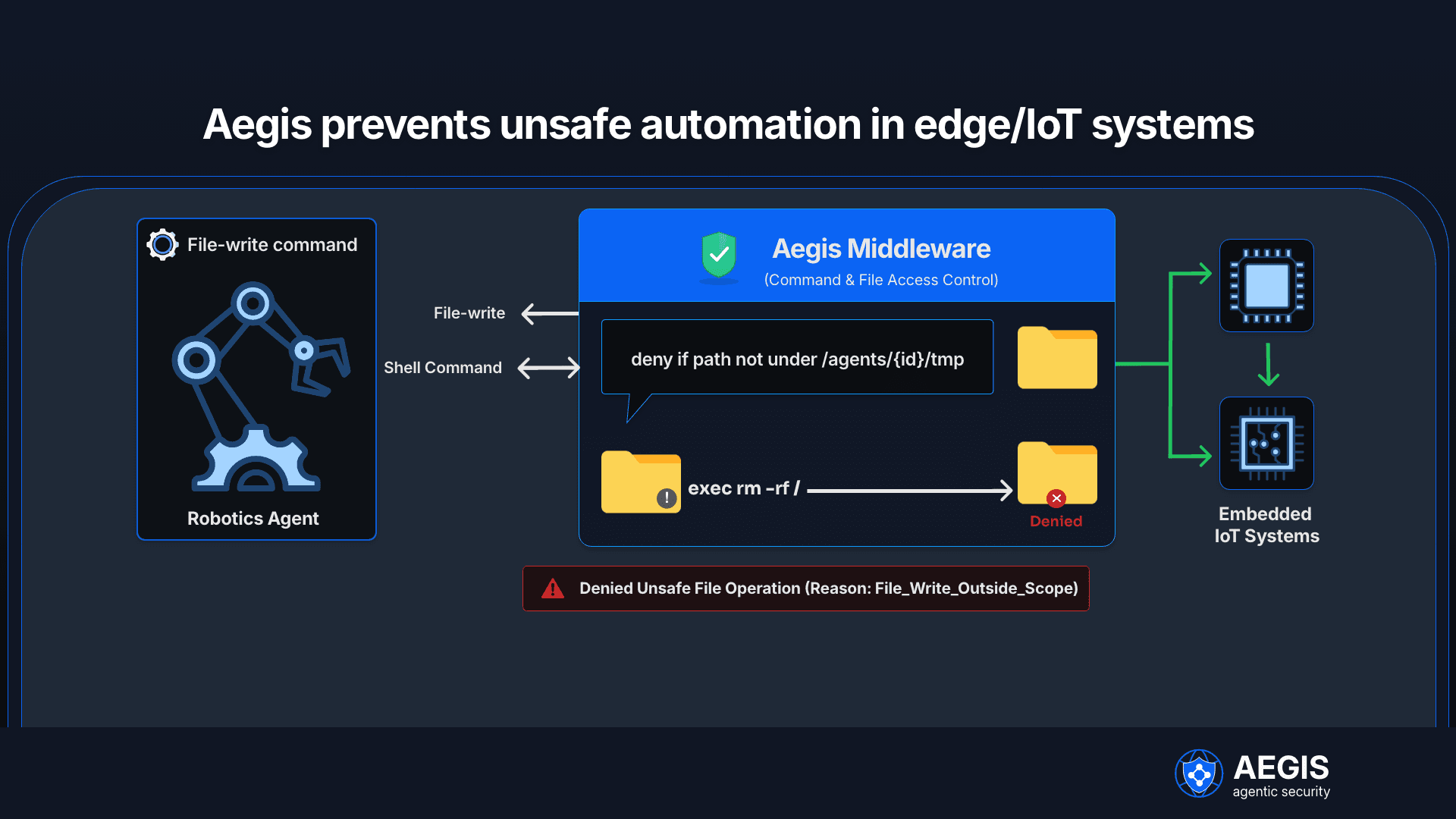
Operationalize safety without slowing product velocity
Startups deploying agentic AI can keep their speed advantage while meeting enterprise control requirements by adopting a runtime enforcement fabric. Aegis provides pragmatic building blocks — identity, policy-as-code, budgets, approvals, and signed telemetry — that shorten sales cycles, reduce risk, and make agentic products sale-ready. For startups targeting regulated industries or MSP customers, making these artifacts available during pilots is the difference between an exploratory conversation and a closed enterprise contract.
Additional reading and data sources: Stanford AI Index (generative AI investment 2024), McKinsey State of AI reports, and Gartner analyses on agentic AI project risk. (Stanford HAI)