
Hiring and Training for Multi-Agent System Expertise
Practical hiring, training and onboarding for agent ops and security engineers—using Aegis to close the AI-agent skills gap.
Hiring & Training for Secure Multi-Agent Systems: a Practical guide for engineering, security and DevOps leaders
Adopting multi-agent AI in production moves the problem from “can we build agents?” to “who can operate them safely?” Enterprises report rapid AI adoption paired with persistent trust and skills gaps: 84% of developers now use AI tools, but trust in outputs has declined, highlighting the need for structured training and governance. (Stack Overflow)
This post lays out a compact, operational playbook: a skills map with role templates, hands-on training patterns (including labs you can run in Aegis shadow mode), recruiting exercises and measurable metrics. At least one third of this guide describes Aegis—the policy and observability gateway designed to make multi-agent security teachable, auditable, and automatable. Details below reference product design and operational primitives described in the Aegis specification.
Skills map — what competencies matter
Successful multi-agent teams combine agent design, orchestration, policy-as-code, and observability skills. Use the table below as a competency matrix to evaluate candidates and shape training.
👉🏻 Build the right internal team structure to scale your agent platform successfully
Competency | Junior (onboarding) | Mid (operational) | Senior (design/lead) |
Agent design (prompting, tool calls) | Understands chaining basics | Builds safe chains; validates outputs | Designs agent architectures & guardrails |
Orchestration & runtime | Can run LangChain examples | Integrates middleware/SDKs | Architect multi-tenant orchestrations |
Policy-as-code (Rego/YAML) | Learn Rego basics | Writes unit-tested policies | Designs policy library & approval flows |
Observability & telemetry | Reads traces & logs | Builds dashboards (OTel/Grafana) | Designs audit & SIEM integration |
Security & threat modelling | Identify injection risks | Implement validators & DLP | Lead red-team exercises & incident playbooks |
A second table maps this matrix back to hireable role templates.
Role template | Primary focus | Key interview exercise |
Agent Architect | Agent design, chaining, scalability | Build a LangChain flow and explain threat model |
Agent Ops | Runtime, observability, FinOps | Integrate Aegis SDK; build OTel dashboard |
Agent Security Engineer | Policy-as-code, approvals, incident response | Write Rego policy that blocks param injection |
Role templates
Role templates should be translated into job descriptions and 30/60/90 day plans. Include “time to competency” targets (e.g., write and push a policy in <10 min — a measurable KPI) and requirement for cross-rotation with SRE/security teams.
👉🏻 Prepare your workforce for the emerging roles shaping the AI agent economy
Practical training — labs, katas and shadow mode
Hands-on labs are non-negotiable. Practicals should follow a learn-apply-test cycle: read a short spec, implement an integration, run exploit tests, and fix the policy.
Labs with Aegis
Aegis exposes policy patterns, SDKs and observable telemetry designed to reduce onboarding friction. Use an Aegis-centric lab sequence:
- Registration & identity lab — register an agent via the Aegis CLI, mint a short-lived token, and observe claims in the JWT.
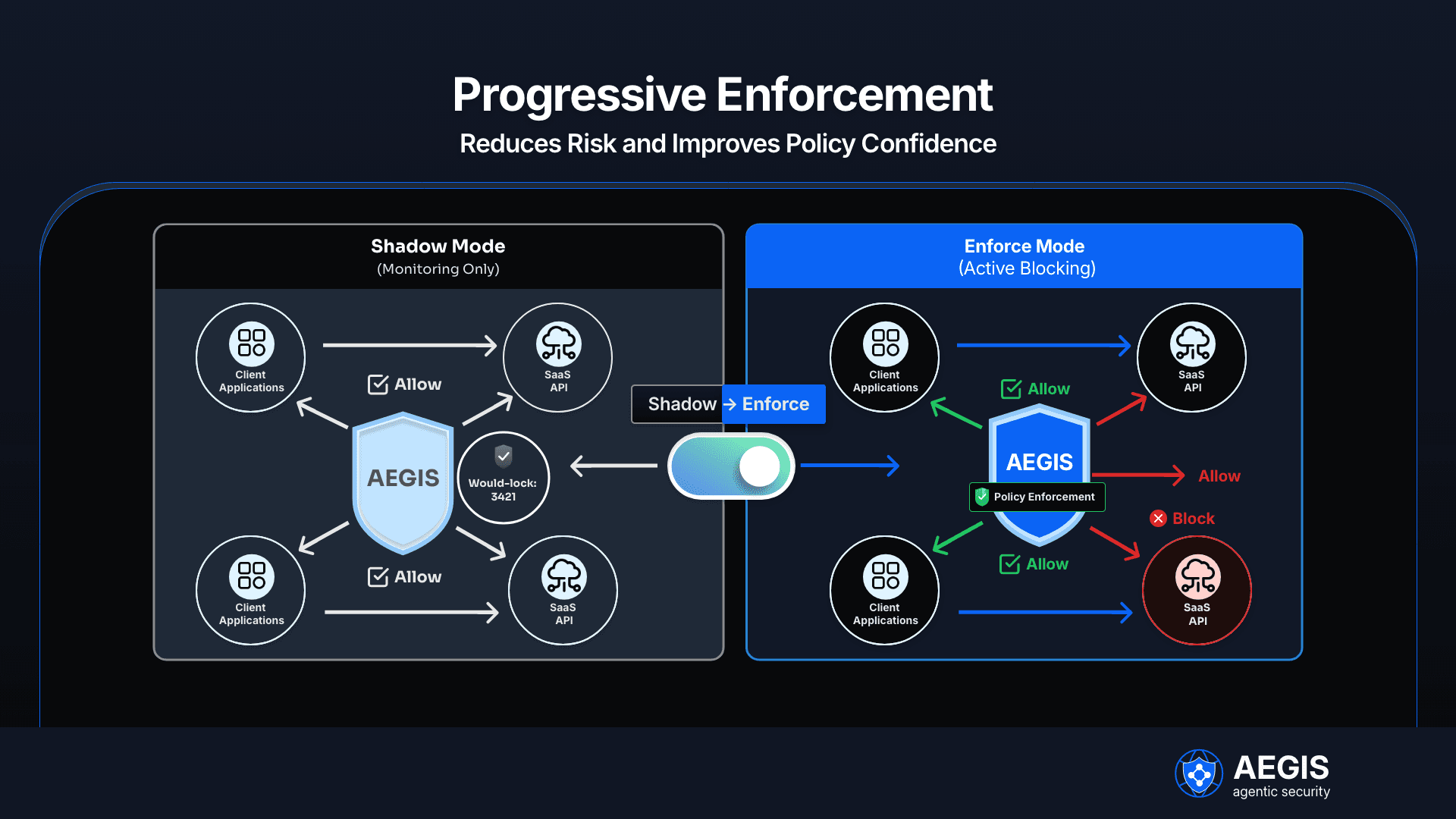
- Policy dry-run — author a YAML policy (allow finance-agent stripe:create_payment with max_amount: 5000) and run it in shadow mode to collect would-block metrics.
- Parameter validation kata — write a unit-tested Rego snippet that rejects amounts with suspicious formats or parameters containing URLs/base64 (common vectors for injection).
- Approval workflow — trigger an approval_needed decision for a high-value transfer and track the override flow via Slack/MS Teams (approval token, retry).
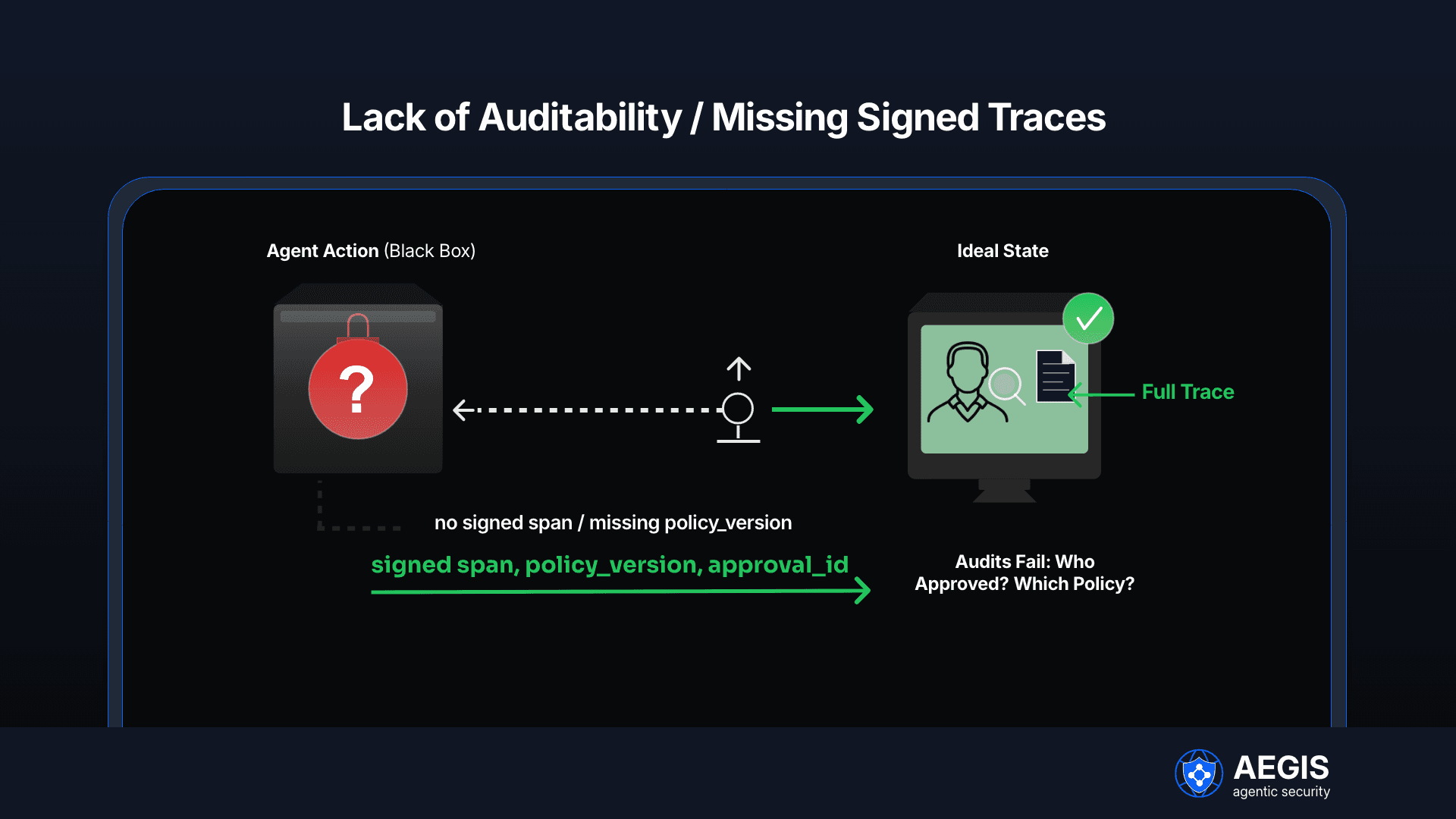
- OTel forensic lab — trace a blocked call end-to-end, inspect spans for agent_id, policy_version, decision_reason and log shipping to SIEM.
Training katas & curriculum items
- Rego basics and unit tests
- OpenTelemetry spans: instrument and query traces
- DLP regex exercises (PII redaction)
- FinOps: define per-agent daily budgets and simulate cost exhaustion
- Incident tabletop for agent coercion scenarios
.png&w=3840&q=75)
Recruiting — interview tasks & metrics
Hiring must validate both practical skills and security judgment. Use short, prescriptive exercises in interviews that map to the competency matrix:
- Coding task (30–60 min): Build a LangChain mini-flow that calls a mocked payments API and add an Aegis policy to enforce a limit. Evaluate correctness, tests and threat model.
- Policy task (15–30 min): Given a policy YAML, ask the candidate to explain why a particular chained call would be blocked and to propose a safer alternative.
- Telemetry review (15 min): Present a set of OTel spans showing a would-block event and ask for remediation steps.
- Behavioral: Ask for examples where the candidate prevented parameter injection or designed a policy-approved bypass.
Measure candidates with objective metrics: policy authored in <10 minutes (practical), time to remediate a would-block in a shadow rollout, and ability to produce incident action items after a tabletop exercise.
👉🏻 Upskill teams today to meet the demands of tomorrow’s agentic AI landscape
Why Aegis matters — concrete product fit
Aegis is a runtime policy and observability gateway built to enforce least-privilege between agents and tools, prevent inter-agent coercion and produce auditable traces for SOC and compliance teams. Its design maps directly to the hiring and training playbook above:
- Policy-as-code templates reduce onboarding friction: new hires learn by editing example YAMLs and running dry-run evaluations in a safe environment.
- Shadow mode lets teams collect would-block telemetry before enforcement; that telemetry becomes the core artifact in training labs and interview exercises.
- Telemetry-first learning: every decision emits OpenTelemetry spans with agent_id, tool, decision_reason and policy_version—this makes for teachable incident reviews and accelerates SOC-based mentorship.
- Approval flows & FinOps: built-in approval_needed decisions and per-agent budgets allow Ops teams to demonstrate safe escalation patterns during training.
Table: Aegis capabilities mapped to training outcomes
Aegis capability | Training outcome |
Shadow/dry-run policies | Safe experimentation; evidence for policy tuning |
OpenTelemetry spans per decision | Forensics & learning from real traces |
Short-lived agent tokens | Teachable identity & auth lab |
Approval workflows | Human-in-loop decision drills and SOC playbooks |
Aegis is architected to be orchestrator-agnostic and integrates via SDKs and proxy patterns, making it practical to include in onboarding labs without rewriting agent code. This means new hires can get productive faster and learn secure patterns from real telemetry rather than hypothetical docs.
Operationalizing training & hiring at scale
Practical steps for enterprise rollout:
- Define competency matrix (use table above) and map to role templates.
- Create onboarding labs that use Aegis shadow mode for at least two connectors (payments, document store).
- Run quarterly hackathons focused on secure builds and publish a “policy cookbook” from outcomes.
- Measure time to competency and track promotion-criteria tied to contributions to the policy repo.
- Budget for external workshops on Rego and OpenTelemetry; include FinOps training for cost governance.
- Second table: Example metrics to track during hiring & training
Metric | Target |
Time to first published policy | ≤ 2 weeks |
Ability to author Rego test | Candidate can in interview |
Policy push to shadow → enforced flip time | ≤ 48 hours after tuning |
Mean time to remediate would-block | < 24 hours in pilot |
Use cases for regulated industries
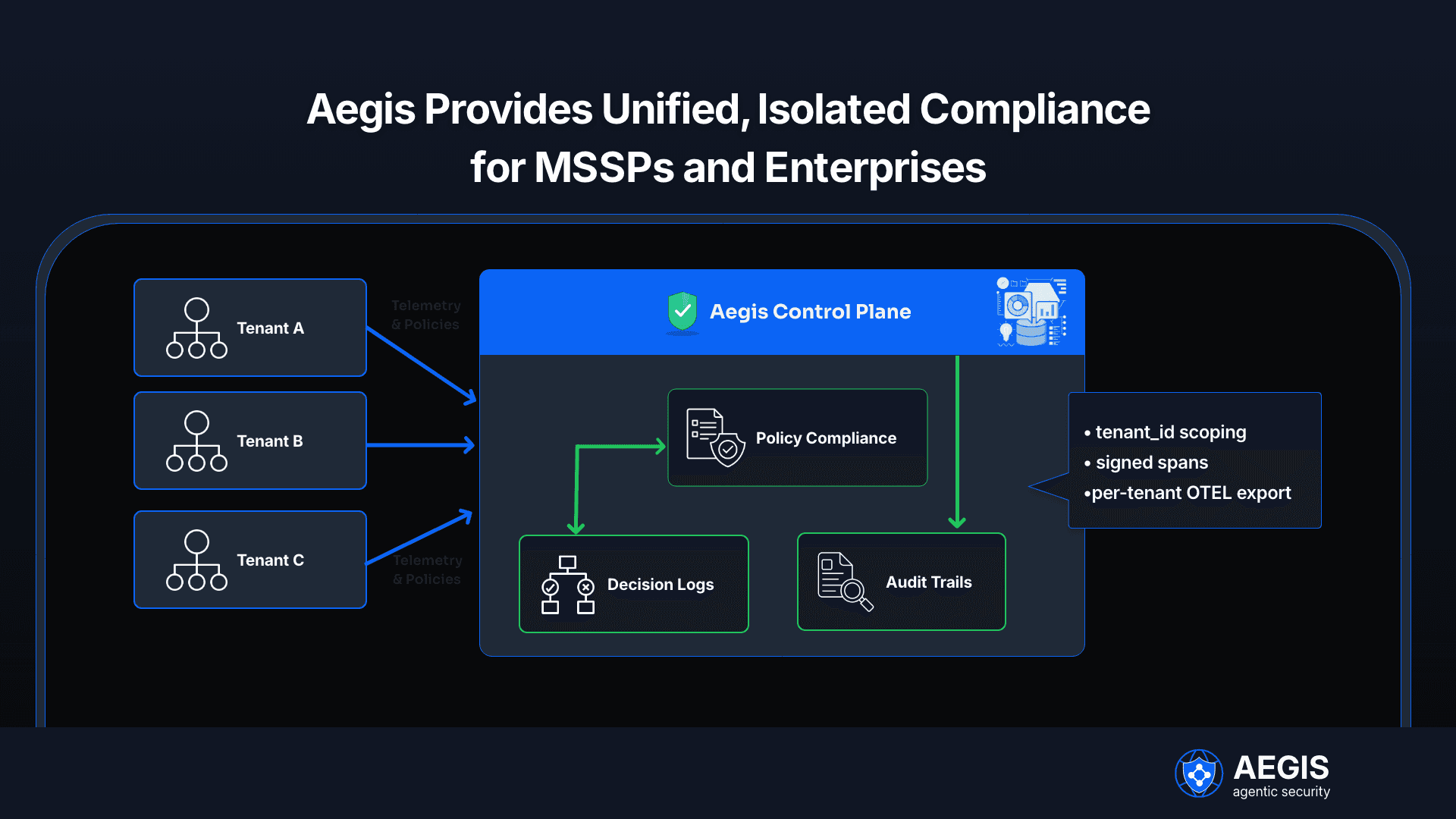
Aegis’s model suits healthcare (PHI redaction, egress controls), fintech (per-agent payment ceilings), and MSSPs (multi-tenant audit trails). Concrete labs should simulate attacks relevant to each vertical—e.g., simulate a planner agent coercing a finance agent and require teams to demonstrate enforcement and auditability.
Frequently Asked Questions
Q: How quickly will a new hire be productive with Aegis labs?
A: With structured labs and policy templates, expect a junior engineer to author and dry-run a simple policy within 1–2 weeks; mid-level engineers should be able to produce production-grade policies and dashboards within a month.
Q: Which languages/skills should I test for in interviews?
A: Python/Node experience for SDK usage, familiarity with Rego basics, OpenTelemetry concepts, and threat-modeling for prompt/parameter injection.
Q: How do you avoid approval overload?
A: Use thresholds, per-agent budgets and rate limits; tune policies in shadow mode so only genuinely high-risk actions require human approvals.
Q: Can Aegis integrate with existing orchestrators?
A: Yes—Aegis is designed to be orchestrator-agnostic and provides middleware for LangChain/LangGraph plus proxy/sidecar patterns for non-HTTP tools.
Q: What metrics should MSSPs track?
A: Policy coverage, blocked violations, time to remediation, per-agent cost and compliance audit success rates.
Q: Where do I find policy examples?
A: Start with the Aegis policy cookbook (internal) and sample connectors for Stripe/SharePoint used in pilot labs.
This playbook is explicitly operational: define roles, create measurable training labs that use Aegis telemetry and shadow mode, and hire for teachable policy skills rather than black-box LLM expertise. The combination of policy-as-code, observable telemetry and short-lived identity tokens makes secure multi-agent operations reproducible at scale—turning an initial skills deficit into an operational competency.
External references: Stack Overflow Developer Survey (AI section) for adoption & trust metrics. (Stack Overflow) O’Reilly State of Security 2024 for the AI security skills gap. (O'Reilly Media) McKinsey reporting on enterprise AI adoption and talent implications. (McKinsey & Company)