
Education and Training: Preparing the Workforce for Agentic AI
Practical curriculum and runtime tooling to train, govern, and scale agentic AI safely with Aegis.
Preparing the Workforce for Agentic AI: Practical Training, Measured ROI, and Runtime Support with Aegis
Agentic AI moves fast. Organisations are experimenting, piloting, and sometimes rushing agent rollouts without the policy, telemetry, or human workflows required to keep critical operations safe. This post lays out an enterprise curriculum for agent literacy, measurable rollout steps, and how Aegis — a runtime policy and observability gateway — both powers training labs and enforces safety in production.
The skills gap created by agentic AI
Enterprises now face two simultaneous pressures: scale agent deployments to unlock automation, and prevent agents from performing unsafe actions (payments, data exfiltration, dangerous deployments). Recent research shows adoption is accelerating — McKinsey reports ~23% of respondents are scaling agentic systems and many more experimenting — while skills, governance and security remain material barriers. (McKinsey & Company)
Surveys and industry reporting reinforce the risk: a large proportion of security and IT teams list security, integration complexity and lack of skills as primary obstacles to deploying agentic workflows. Gartner highlights that many agentic initiatives will fail without better governance and value definition; analysts also flag high cancellation risk for immature projects. (Reuters)
These gaps show up in concrete failures: misconfigured access that lets one agent coerce another into performing a payment, agents that call unknown egress domains, and teams without a standard process to write, dry-run and audit policies. Training is not optional — it's required to move from proof-of-concept to safe, compliant scale.
👉🏻 Build expert teams that can design, manage, and scale agentic systems
A practical curriculum for enterprise readiness
A curriculum must be tightly practical: policy-as-code fundamentals, secure agent identity, approval workflows, FinOps guardrails, and forensic trace analysis. Below I outline core tracks, labs, and measurable outcomes.
Core learning tracks
- Policy Engineering — YAML/JSON policy authoring, compilation to OPA bundles, conditions, ranges, and parameter constraints.
- Agent FinOps — per-agent budgets, rate limits, budgeting policies, and cost trace analysis.
- Approver UX & HITL — fast, contextual approvals (Slack/Teams), override tokens, and reducing approval fatigue.
- Telemetry & Observability — OpenTelemetry spans, SIEM ingestion, auditing and tamper-evidence.
- Incident Response for Agents — tabletop exercises, signed traces, and rollback procedures.
- Privacy & Legal for Agents — deterministic DLP and region-based routing.
Labs, assessments and certification
Deliverable lab formats (hands-on, simulated, and shadow-mode):
- Sandbox orchestrator + Aegis Gateway preconfigured with sample connectors (Stripe, SharePoint).
- Dry-run module: write a policy that would-block a 50k payment and simulate shadow-mode traces.
- Approval drill: role-play approver workflows under time pressure with full trace context.
- Forensic lab: analyze attested spans to reconstruct a chained-agent incident.
Assessment formats:
- Timed policy authoring (write a policy and compile into OPA bundle).
- Policy debugging (given a would-block trace, find the misconfiguration).
- Forensic trace review (reconstruct the attack chain and recommend remediations).
Certification example: “Certified Agent Policy Engineer” — practical exam that requires writing, dry-running, and auditing a policy in Aegis sandbox.
👉🏻 Anticipate emerging roles and prepare your workforce for the AI agent economy
Example curriculum metrics (sample)
Track | Lab exercise | Success metric |
Policy Engineering | Write policy, compile, dry-run | < 10 min to author & 0 critical errors |
Agent FinOps | Configure budget, simulate spend | Detect & block overspend in shadow-mode |
Approver UX | 5 approval drills | 60% reduction in approval latency (cohort) |
Telemetry | Reconstruct 3-step chain from spans | Trace completeness ≥ 95% |
Organizational rollout and ROI
Rolling out training and runtime controls across security, SRE, DevOps and compliance units requires both curriculum and production-ready runtime controls.
Pilot → expand model
- Pilot cohort: 6–12 engineers from security, SRE and compliance. Use Aegis sandbox with two connectors.
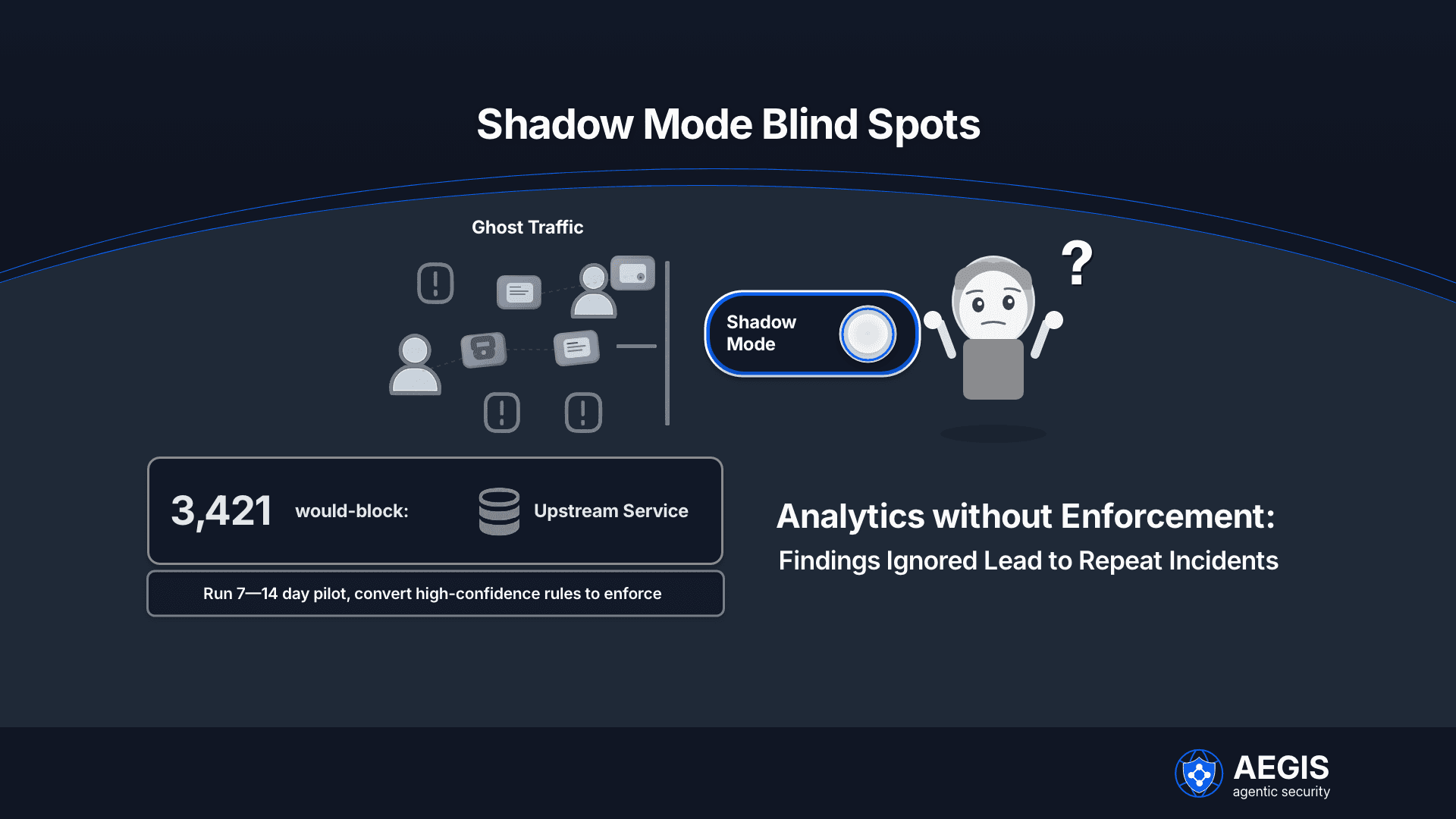
- Shadow mode: run policies in shadow for 1–2 weeks to gather would-blocks and telemetry.
- Tune & enforce: promote policies to enforce, monitor false positives and iterate.
- Scale: rotate SREs through an Agent Platform team, maintain certification pathways and keep modules current for new connectors or regulation changes.
Business metrics to track:
- % workforce trained (target: >30% of security/SRE within 3 months of pilot).
- Incident reduction (target: measurable drop in misconfiguration incidents vs baseline).
- Time to competent policy authoring (target: median <10 minutes for basic policy).
- Approval latency reduction for routine approvals (target: 50–60% via UX training and threshold tuning).
-1.png&w=3840&q=75)
Sample ROI calculation
Item | Baseline cost / month | Post-Aegis cost / month | Annual saving (est.) |
Misconfiguration incidents | $30,000 | $12,000 | $216,000 |
Runaway API spend | $15,000 | $6,000 | $108,000 |
Operational approvals (time) | 400 hrs | 220 hrs | $120,000 |
Total estimated annual saving | $444,000 |
How Aegis supports training with sandboxes and sample policies
At least one-third of this playbook concerns Aegis: its sandboxing, developer experience, and policy dry-run features make it both a training platform and a production enforcement layer.
👉🏻 Champion agentic AI adoption with leadership that drives long-term impact
Aegis as a training substrate
Aegis Gateway provides:
- Sandboxed policy execution: policies written in YAML are compiled to OPA bundles; sandbox runs simulate would-block events without production impact. This lets learners iterate safely and see the exact OpenTelemetry spans they need for forensic drills.
- Sample connectors and policies: pre-built samples for payment connectors (Stripe), file stores (SharePoint) and Slack/Teams make labs realistic and repeatable.
- Dry-run and shadow mode: run policies in observation-only mode, gather would-deny metrics, tune regex/parameter constraints and then flip to enforcement with low friction.
Runtime enforcement and governance
Aegis enforces agent identity and decision-time policies at the agent↔tool boundary, returning allow/deny/sanitize/approval_needed results and emitting signed telemetry spans for audit. Key capabilities valuable to training and production:
- Agent identity + short-lived tokens (Ed25519 signing) and a simple CLI/SDK to register agents.
- Policy hot-reload and versioning for quick curriculum iterations.
- Approval workflow integrations (Slack/Teams) for HITL drills and override tokens for controlled retries.
Practical implementation notes for trainers and operators
- Start with narrow scope connectors (payments, internal docs) and high-value policies (payments thresholds). Use shadow mode to collect would-deny events before enforcement.
- Teach policy-as-code: require every trainee to author a small policy daily; compile to OPA and run a dry-run. This reduces misconfigurations.
- Build approval UX playbooks: define thresholds for automatic approvals, batched approvals, and escalation policies to prevent fatigue.
- Instrument everything: collect OpenTelemetry spans and feed to existing SIEM so SOC and FinOps have the same forensic data. Aegis supports OTel and structured logs for this.
Frequently Asked Questions
Q: Should we teach vendor-specific orchestrator tooling or a vendor-neutral approach?
A: Start vendor-neutral: policy fundamentals and policy-as-code translate across orchestrators. Use one runtime layer (Aegis) for labs to keep exercises consistent.
Q: How long before trainees are productive policy authors?
A: With focused labs and Aegis dry-run tooling, teams typically reach baseline competency in days; deeper certification takes weeks. Target median policy authoring <10 minutes for basic policies.
Q: How do we measure training effectiveness?
A: Track time-to-author, % workforce trained, reduction in misconfiguration incidents, and approval latency. Use shadow-mode telemetry to quantify would-block rates pre/post training.
Q: What does a scalable rollout look like for MSSPs or multi-tenant orgs?
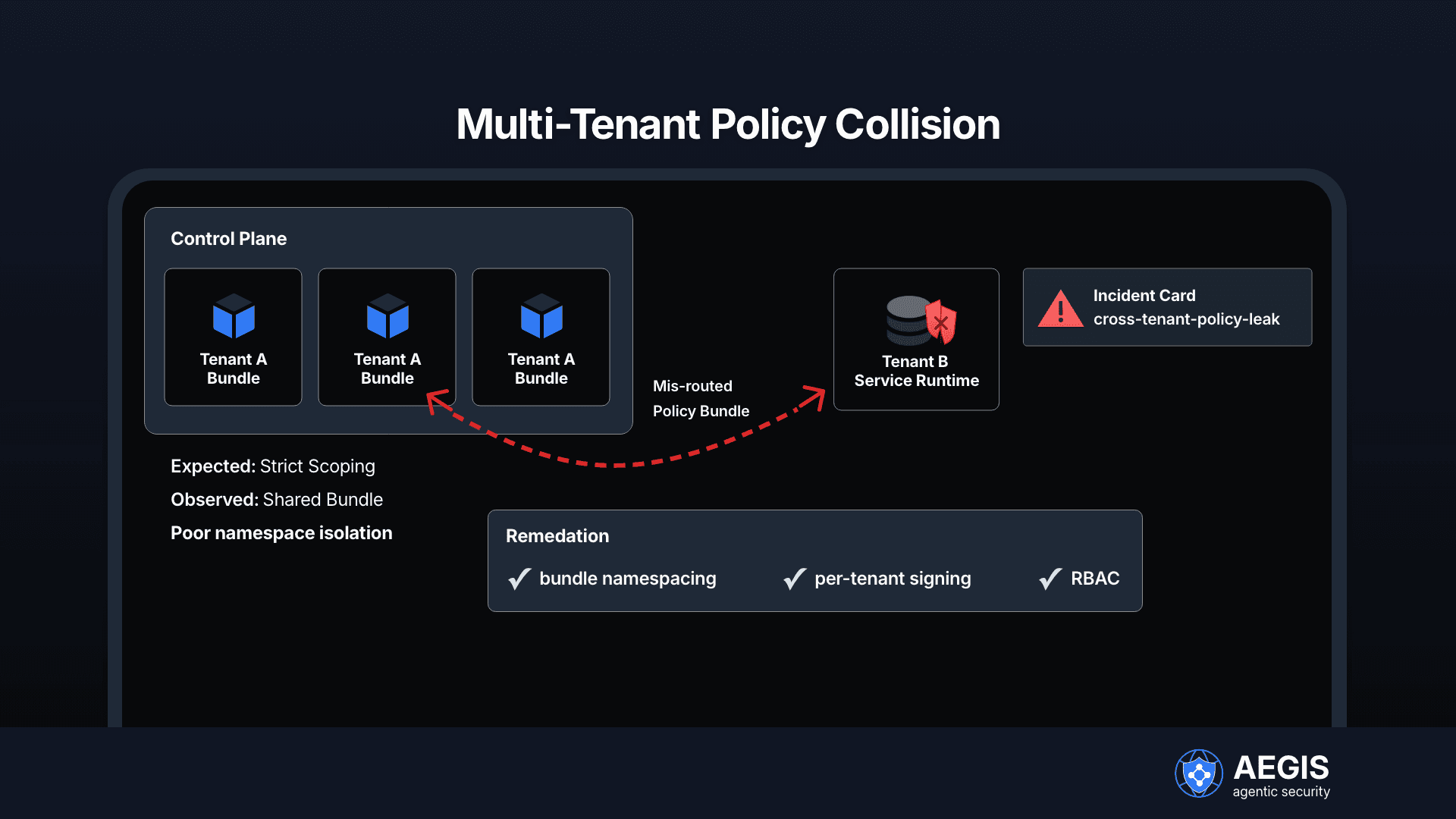
A: Start with pilot tenants, enforce strict scoping in bundles, enable region-tagged routing and per-tenant budgets. Use signed traces for SOC audits.
Practical next steps
- Run a two-week pilot with Aegis sandbox and a 6–12 person cohort. Include shadow-mode policies for Stripe and SharePoint connectors.
- Measure: % trained, policy authoring time, would-block rate, and cost savings from controlled spend.
- Iterate: convert successful sandbox policies to enforced production bundles, scale certifications, and incorporate modules into career ladders.
Aegis is both a training substrate and a runtime guardrail — the combination that turns ad-hoc workshops into measurable, auditable maturity for agentic AI deployments. For sample policies, integration patterns, and to map this curriculum into an organisational pilot, see Aegissecurity solution and industry pages (linked above). (McKinsey & Company)