
Exploring Agent Protocols: A Guide to MCP, A2A, and ACP
Learn how MCP, A2A, and ACP protocols unify multi-agent communication, boost interoperability, and enable secure runtime governance with Aegis.
Exploring Agent Protocols: A Guide to MCP, A2A, and ACP
Autonomous and agentic AI systems are accelerating enterprise automation — from financial decision-making to IT operations. Yet, as multi-agent architectures scale, their interoperability challenges multiply. Each orchestrator and vendor introduces new message formats, schema versions, and security primitives, creating an ecosystem fragmented by incompatible agent protocols.
The result? Integration friction, inconsistent security enforcement, and limited observability across agent workflows. Standardized agent protocols—such as MCP (Message/Metadata Control Protocol), A2A (Agent-to-Agent), and ACP (Agent Connector Protocol)—are emerging to fix that. Together, these frameworks enable structured, verifiable, and secure communication among AI agents and the tools they use.
👉🏻 Kickstart your first AI agent with the right tools and frameworks
Why Protocols Matter for Multi-Agent Safety
As autonomous agents proliferate, they must exchange data, delegate tasks, and make decisions—often across toolchains and organizations. Without consistent communication protocols, these interactions become opaque and insecure.
Security and Policy Integrity
Each agent message should declare its origin, purpose, and required privileges. Without identity validation or replay protection, malicious or compromised agents can spoof messages or escalate privileges.
For instance, a “Planner” agent might trick a “Finance” agent into executing unauthorized payments. Protocol-level attestation, mutual TLS, and signed tokens mitigate these risks by ensuring message authenticity and provenance.
Furthermore, idempotency and replay guards prevent double execution of sensitive operations. With structured envelopes, requests include unique IDs and timestamps—enabling systems like Aegis to reject stale or replayed messages.
Observability and Traceability
Without standardized trace metadata, security teams struggle to audit cross-agent workflows. Protocol-level trace IDs, span parents, and event annotations enable full lifecycle visibility: who initiated an action, which agent approved it, and what policy governed the outcome.
A central benefit of adopting MCP or ACP is that observability becomes first-class. Every message carries headers describing its lineage and decision reason—an essential feature for compliance frameworks like SOC 2 or ISO 27001.
See how Aegis applies observability and runtime governance in enterprise AI environments.
Core Protocol Primitives
Identity and Authentication
Each protocol defines how an agent identifies itself and verifies peers. MCP embeds signed identity tokens, while A2A uses capability exchange to negotiate permissions dynamically. ACP extends this model to tool connectors, embedding metadata about the tool’s capabilities, organization ID, and signing authority.
👉🏻 Integrate agents seamlessly with your existing systems and tools
Table 1: Key Identity & Security Primitives in Modern Agent Protocols
Feature | MCP | A2A | ACP |
Identity Token | Signed JWT | Peer certificate | Tool manifest |
Mutual TLS | Yes | Optional | Required |
Attestation | Field-level | Header-level | Envelope-level |
Replay Protection | Nonce + timestamp | Request ID | Sequence ID |
Governance | Consortium | Decentralized | Vendor-neutral registry |
Such structure ensures that even when agents span multiple orchestrators (e.g., LangGraph, AgentKit), their trust relationships remain cryptographically verifiable.
Tracing, Schema, and Attestation
Protocol schemas specify message structures, type systems, and versioning policies. Each schema includes typed payloads, parent-child chain IDs, and schema registries that validate message compatibility.
- Tracing: Messages propagate correlation IDs through every agent-to-tool call, enabling end-to-end observability.
- Attestation: Protocols can include digital signatures per field, validating integrity even within nested payloads.
These primitives enable not just communication—but trustworthy communication. In runtime, this allows enforcement systems like Aegis to evaluate every envelope for authenticity and compliance before execution.
Adoption and Best Practices
Adopting MCP, A2A, and ACP is not just a technical exercise—it’s a governance transformation. Enterprises must establish policies, testing harnesses, and runtime enforcement to ensure protocol conformance.
Conformance Testing and Schema Governance
Every enterprise implementation should maintain a schema registry for message definitions. This registry serves as a single source of truth for version negotiation, backward compatibility, and conformance tests.
Testing Layer | Description | Example Artifact |
Envelope validation | Verify message signatures, timestamps | envelope_test.json |
Compatibility check | Ensure schema version compatibility | schema_diff.yaml |
Policy mapping | Confirm identity & capability scope | policy_matrix.csv |
Protocol governance bodies or consortia (such as emerging AI safety groups) may eventually standardize these registries, ensuring interoperability across platforms.
Gateway Enforcement and Runtime Observability
Even with well-defined schemas, runtime enforcement is critical. That’s where Aegis Gateway excels. Acting as a policy and observability fabric for multi-agent systems, Aegis validates each message envelope, verifies identity, and applies organization-specific policies before execution.
This approach ensures safety, auditability, and scalability without forcing developers to rebuild their orchestration logic.
Aegis Gateway: Enforcing Agent Protocol Safety at Runtime
Modern agentic systems need more than static schema validation—they need dynamic runtime control. Aegis Gateway, part of the Aegissecurity platform, delivers precisely that. It serves as an AI Security Mesh for multi-agent environments, enforcing protocol-level invariants and validating every MCP, A2A, and ACP message before execution.
Runtime Policy Enforcement
Aegis operates as a sidecar or reverse proxy between orchestrators and tools. It inspects each request’s metadata—agent ID, tool ID, payload schema, and chain context—to ensure compliance with defined policies. Policies are written in YAML/JSON, compiled into OPA bundles, and hot-reloaded for zero-downtime updates.
For example:
agent: finance-agent
allowed_tools:
- name: stripe-payments
actions:
- create_payment
conditions:
max_amount: 5000
If a Planner agent tries to initiate a $50,000 transfer, Aegis blocks the request instantly and emits an OpenTelemetry event for compliance teams.
👉🏻 Leverage cloud ecosystems to scale your multi-agent architecture
Observability and Telemetry
Every decision in Aegis—allow, deny, sanitize, or approval_needed—is recorded as structured telemetry. OpenTelemetry spans include the agent ID, tool, policy version, and decision reason.
Dashboards display request rates, blocked violations, latency, and per-agent budgets—enabling real-time visibility across thousands of agent interactions.
Compliance and Audit
By verifying attestation, token validity, and schema compliance at runtime, Aegis provides the missing enforcement layer MCP and ACP require in enterprise deployments. It ensures every autonomous decision is traceable, attributable, and policy-compliant—an essential capability for industries like FinTech, Healthcare, and MSSPs.
Operational Use Cases of Aegis with Agent Protocols
The practical impact of integrating Aegis with MCP, A2A, and ACP protocols is immense. Below are real-world operational scenarios where this integration secures agentic systems:
- Secure Payment Workflows (FinTech)
Enforce transaction ceilings and approval workflows through ACP-validated envelopes. - PHI/PII Protection (Healthcare)
Use Aegis’s deterministic DLP and MCP field-level attestation to redact patient data in EHR automation. - API Cost Governance (SaaS)
Combine A2A negotiation headers with Aegis rate-limiting policies to prevent runaway API spend. - Controlled CI/CD Deployments (DevOps)
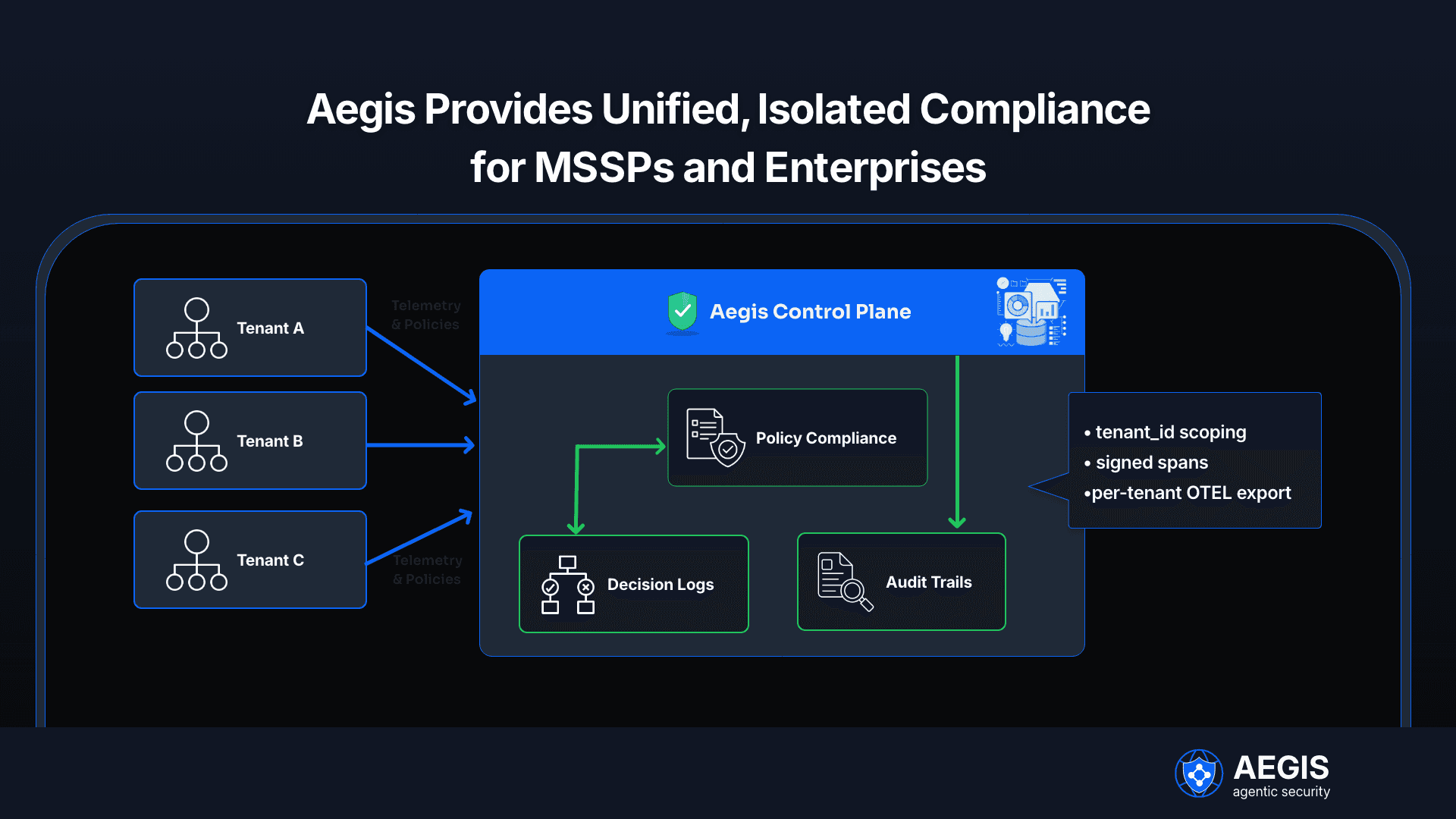
Apply capability exchange (A2A) plus approval gates (ACP) for production deployments. - Multi-Tenant Audit (MSSPs)
Leverage Aegis’s signed telemetry and schema validation to maintain tenant-isolated traces.
Use Case | Protocol Focus | Aegis Enforcement |
FinTech Payment Guardrails | ACP + Attestation | Human approval + Budget enforcement |
Healthcare PHI Control | MCP | DLP + Policy deny for PII leakage |
SaaS API Spend Limits | A2A | Rate & quota governance |
DevOps Safe Deployments | A2A + ACP | Approval_needed for prod actions |
MSSP Multi-Tenancy | MCP | Signed trace spans + per-tenant policy bundles |
Best Practices for Adopting Agent Protocols Securely
To ensure consistent interoperability and safety:
- Use typed payloads and schema registries for validation before deployment.
- Enable version negotiation in headers to prevent breaking changes.
- Implement backpressure tokens to avoid message floods.
- Attach replay guards and trace IDs for each request.
- Deploy an enforcement layer like Aegis to verify message envelopes, identity, and attestation before tool execution.
This layered defense—protocol hygiene plus runtime enforcement—forms the backbone of secure, scalable agentic AI architectures.
Frequently Asked Questions
1. Why do multi-agent systems need standardized protocols like MCP or ACP?
Because agents from different frameworks must exchange structured and verifiable messages. Standardized protocols define identity, schema, and attestation patterns that ensure trust and interoperability.
2. What’s the difference between MCP, A2A, and ACP?
MCP governs message metadata and control, A2A focuses on peer negotiation and capability exchange, and ACP standardizes tool connector interactions.
3. How does Aegis Gateway complement these protocols?
Aegis enforces protocol compliance at runtime—validating message envelopes, applying policies, and generating auditable telemetry for compliance teams.
4. Does Aegis introduce latency to agent workflows?
Aegis targets sub-20 ms P99 latency using in-memory policy caches and OPA prepared queries, ensuring negligible runtime overhead.
5. How does Aegis handle multi-tenant environments?
Each tenant has isolated policy bundles, signed telemetry, and scoped tokens to prevent cross-tenant interference, crucial for MSSP and SaaS deployments.
6. Can Aegis operate in observability-only mode?
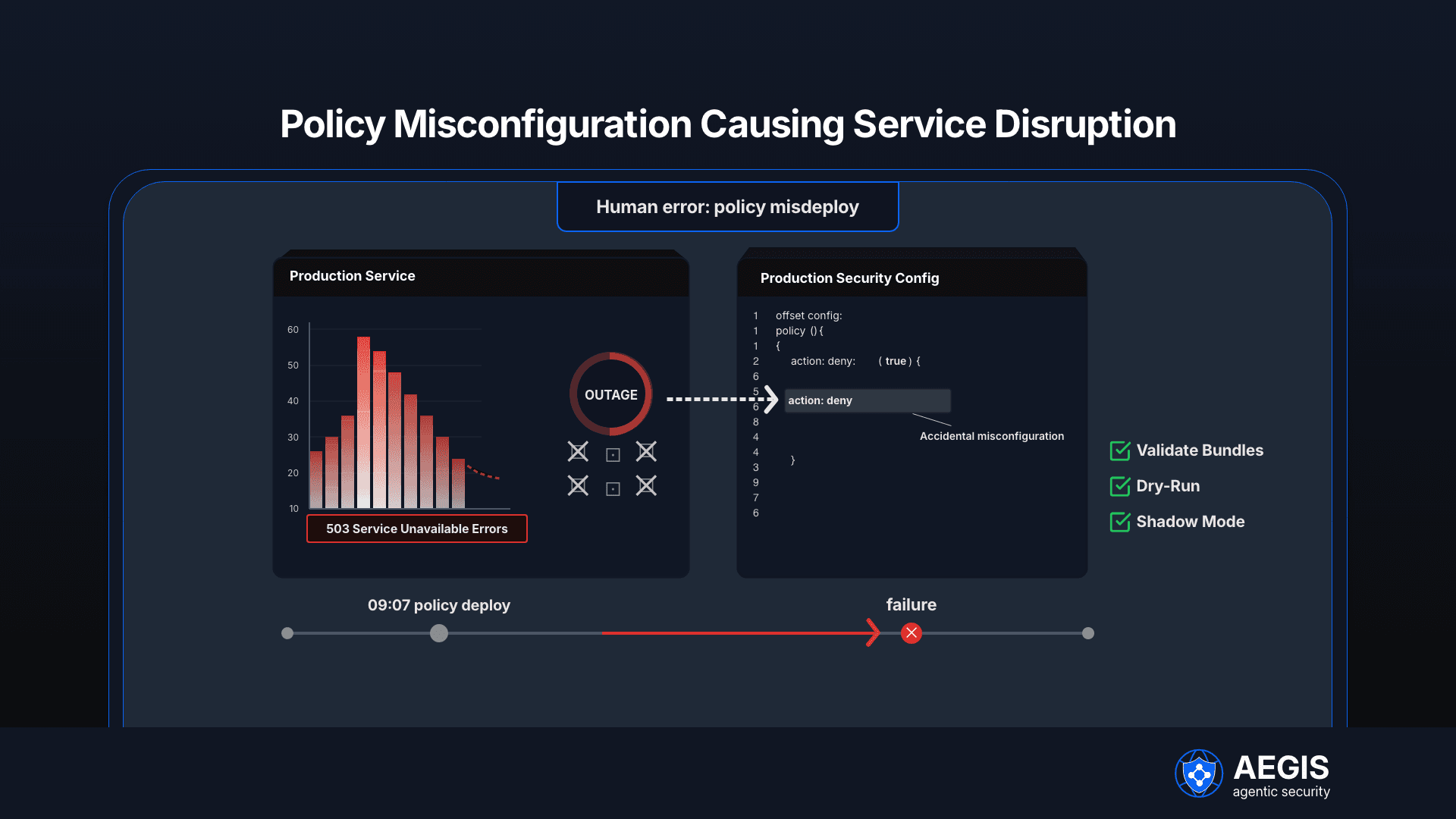
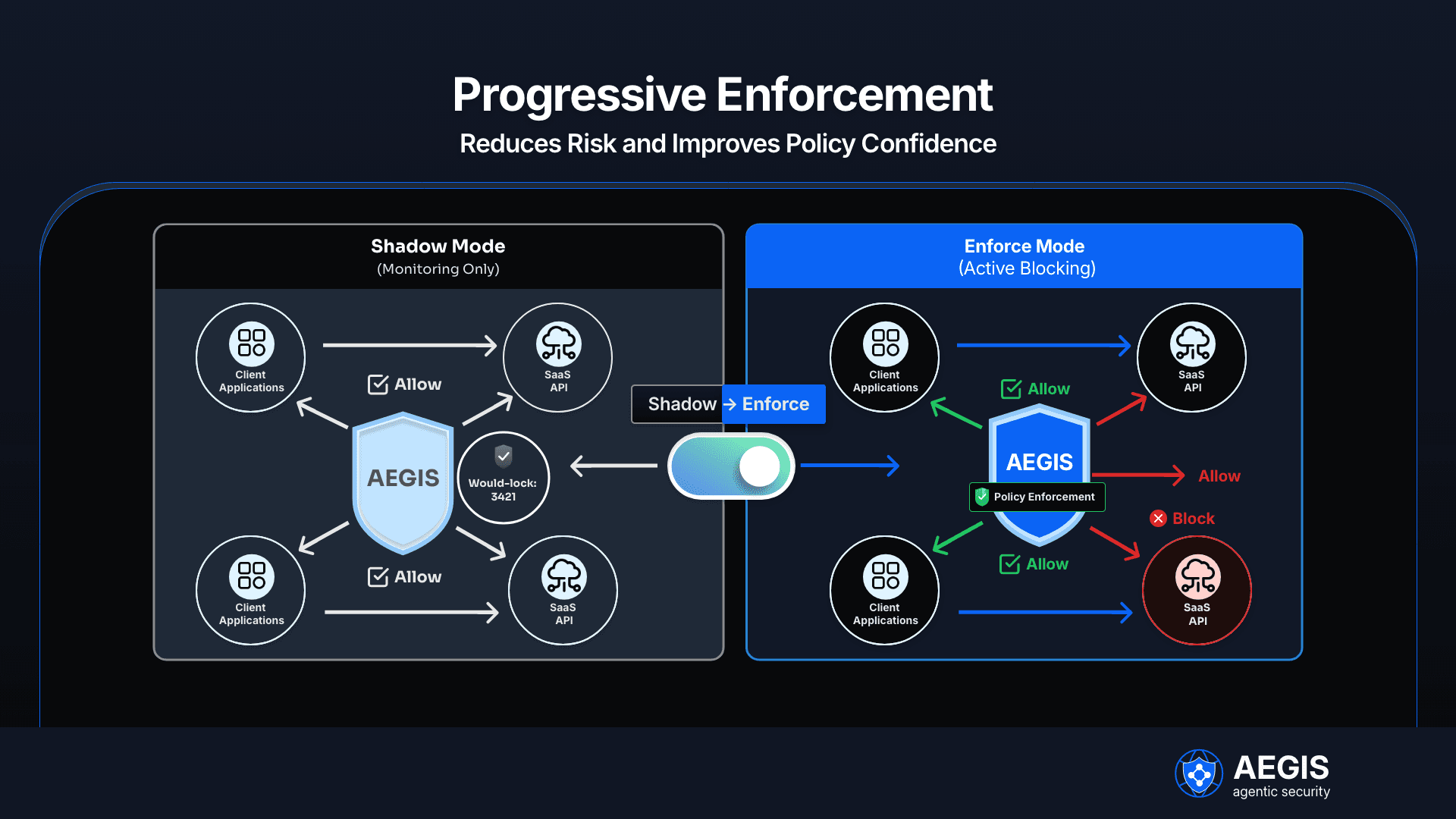
Yes. In shadow mode, policies log “would-block” events without enforcement—helping teams tune configurations safely before activation.
Final Thoughts
Agent protocols such as MCP, A2A, and ACP are defining the next era of machine-to-machine trust. They transform ad-hoc agent interactions into auditable, secure, and interoperable ecosystems. Yet, protocol definition alone isn’t enough—enterprises need enforcement at runtime.
Aegissecurity bridges that gap, turning these emerging standards into operational guarantees. It validates, enforces, and observes every agent message—ensuring that the promise of agentic AI unfolds safely, efficiently, and compliantly.