
Business Model Innovations Enabled by Agentic AI
Practical guide to monetizing agentic AI using runtime governance, policy-as-code, and Aegis for secure production automation.
Monetizing Agentic AI: How Runtime Governance (Aegis) Converts Autonomous Agents into Repeatable Revenue
Introduction
Agentic AI changes what enterprises can productize and bill for: continuous autonomous workflows, per-action usage, and outcome-based SLAs. But without runtime governance the revenue levers are risky or uninsurable. This article explains four monetization patterns, a practical risk/pricing framework, and how a runtime enforcement layer — Aegis — enables safe commercialization at scale. It draws on market signals (McKinsey 2025 adoption figures and Gartner risk forecasts) and operational product design notes for Aegis.
Why agentic AI enables new business models
From task automation to autonomous product features
Traditional automation (RPA, rule engines) delivered internal efficiency and one-off consulting projects. Agentic AI turns workflows into product features: continuously operating agents, API-first endpoints, and measurable outcomes (e.g., reconciliations closed, payments authorized). That shift allows vendors to sell automation-as-a-service, hybrid subscriptions, or outcome guarantees instead of seats.
Market context: 23% of organizations report scaling agentic systems and 39% experimenting (McKinsey State of AI 2025). Gartner warns many projects may fail—implying a winner-takes-most opportunity for platforms that can prove safety,
👉🏻 Quantify the value of multi-agent AI with ROI insights that drive smarter investments
.png&w=3840&q=75)
Four monetization patterns for agentic AI
Metered actions (per-agent-call)
Charge per executed action (e.g., reconciliation processed). Metering aligns cost with consumption and can be combined with per-action rate limits and per-agent budgets for predictable margins.
Outcome SLAs
Price by outcome (tickets closed, payments reconciled) with SLA credits/refunds if human escalation exceeds thresholds. Outcome pricing requires auditable traces and signed policy decisions to justify refunds.
Marketplaces and vertical templates
Offer vertical agent templates (FinTech payment agents, EHR triage agents) via a marketplace. Marketplace templates accelerate GTM and enable revenue share with partners (MSSPs/ISVs).
Data products
Sell anonymized agent telemetry or compliance reports as bounded data products — subject to privacy guardrails and customer consent. This creates recurring analytics revenue tied to operational telemetry.
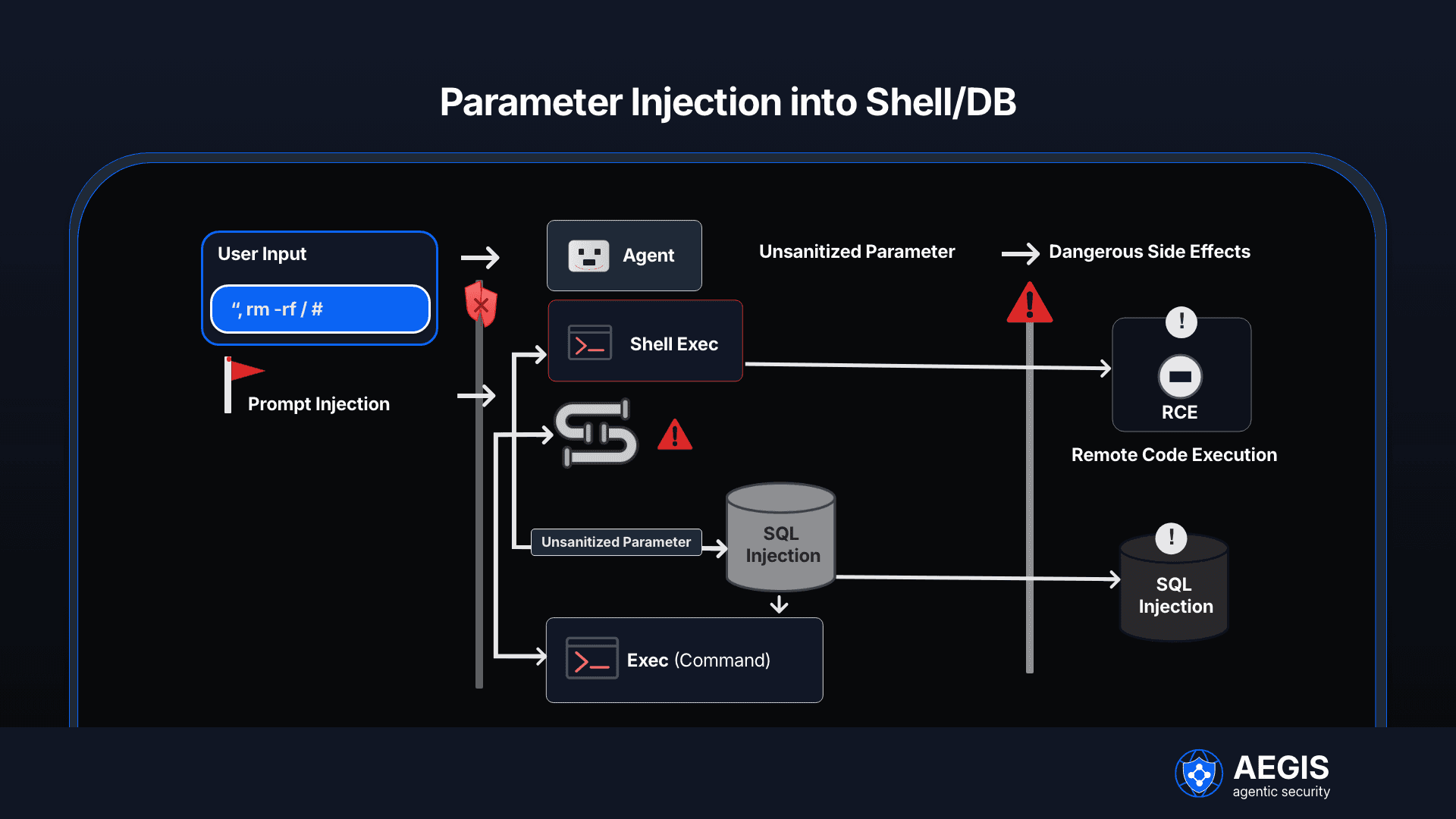
Table: Monetization patterns and operational requirements
Pattern | Operational requirement | Key KPI |
Metered actions | Accurate call metering, per-agent quotas | Revenue per agent |
Outcome SLAs | Signed auditable traces, approval workflow | SLA adherence rate |
Templates/Marketplace | SDKs, documentation, partner revenue share | Marketplace attach rate |
Data products | Anonymization, privacy controls | Revenue from telemetry |
Risk, compliance and pricing – a practical framework
When to automate vs. human-in-loop
Use a risk-to-revenue model: low-risk actions can be fully autonomous and metered; mid/high-risk actions require approval gates or throttled automation. Price risk: actions with residual risk or manual approvals should incorporate a “risk premium” or lower automation attach rate in pricing.
Governing factors:
- Regulatory sensitivity (payments, PHI)
- Financial impact per action (max amount thresholds)
- Observability maturity (are actions traceable and signed?)
Table: Decision matrix for automation vs. human-in-loop
Risk tier | Typical actions | Required controls |
Low | Data lookups, assemble drafts | Budgeting, egress allowlist |
Medium | Low-value payments, infra changes | Approval_needed workflow, parameter checks |
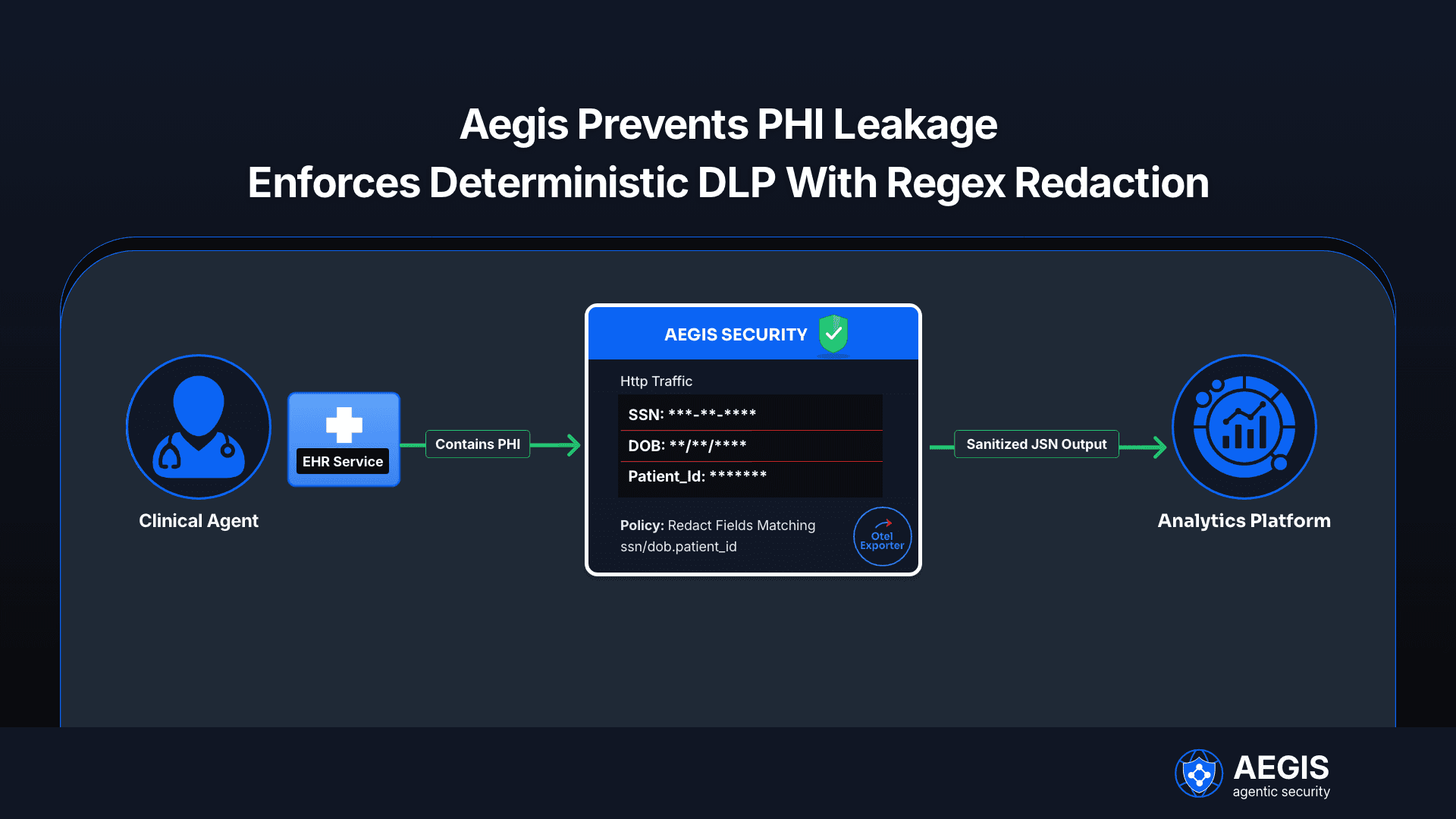
High | High-value transfers, PHI export | Human approval, signed audit, DLP |
KPIs to measure monetization health: revenue per agent, automation attach rate, approval frequency, false-positive enforcement rates, average value per automated action. These align to implementation checklist items: agent identity, quotas, policy templates, billing integration and telemetry export.
👉🏻 Control operational costs while maximizing the efficiency of your AI agents
How runtime governance (Aegis) unlocks monetization
Aegis functions as the runtime policy and observability fabric between orchestrators and tools — the trust layer customers need to buy automation. Key capabilities that enable monetization:
- Agent identity & per-agent budgets: short-lived tokens and quotas prevent runaway spend and enable per-action billing.
- Policy-as-code: YAML/JSON policies compile to fast evaluators (OPA bundles) so pricing rules (e.g., max_amount thresholds) are enforceable at runtime.
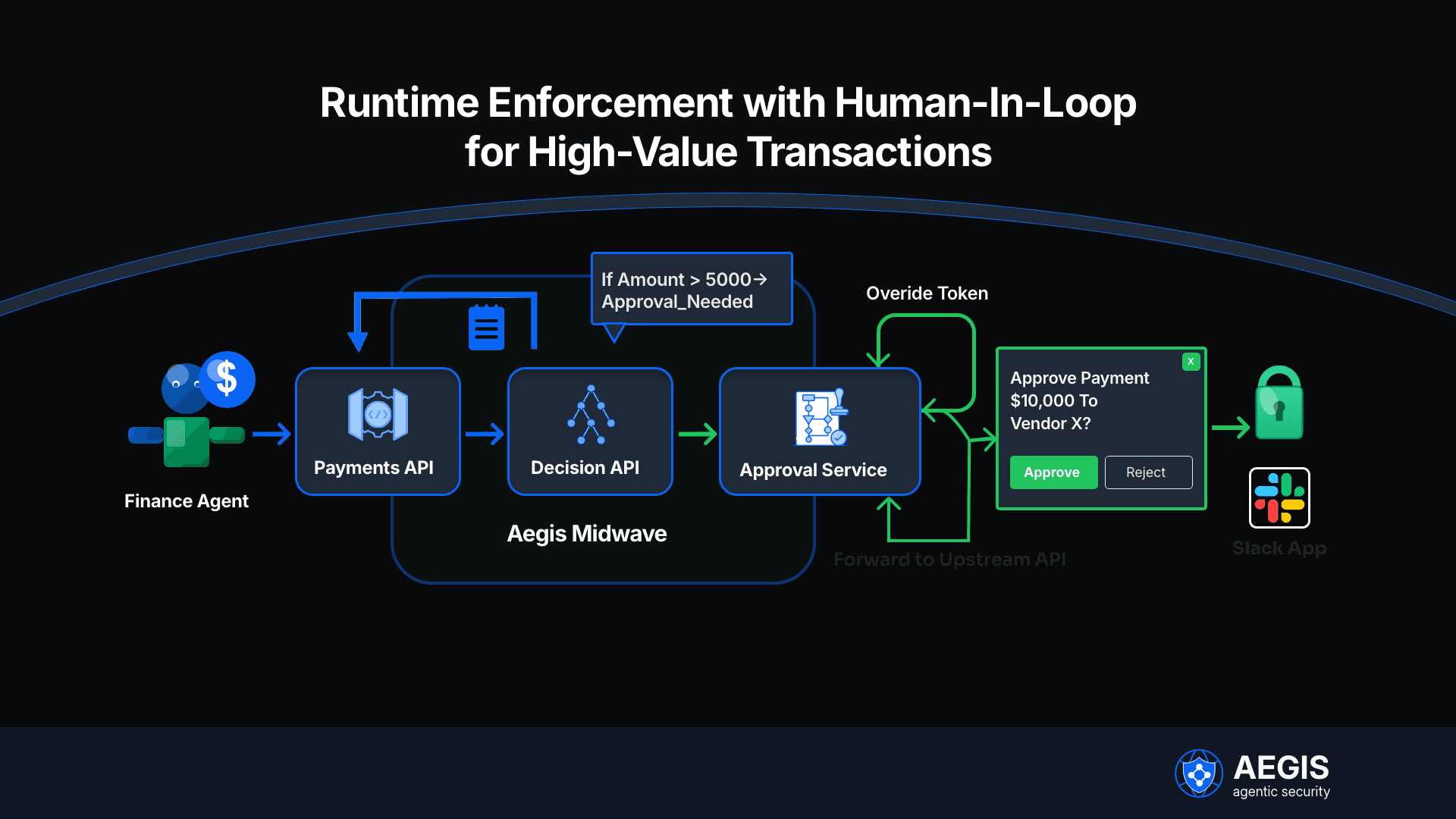
- Approval workflows: For actions requiring human consent, Aegis emits approval events to Slack/Teams and mints one-time override tokens on approval — necessary to offer outcome guarantees while limiting liability.
- Auditable telemetry: OpenTelemetry spans and signed decision logs justify SLA refunds and support compliance audits.
Implementation checklist and KPIs
Aegis's practical checklist for monetization pilots:
- Agent registration & identity (short-lived JWTs).
- Policy templates (payment ceilings, DLP regex).
- Approval workflow integrations (Slack/Teams).
- Billing hooks (per-action metering, usage export).
- Telemetry pipeline to SIEM/FinOps dashboards.
KPIs: cost per action (LLM spend), revenue per agent, approval latency, policy violation rate, budget exhaustion events. The Aegis MVP spec targets P99 decision latency under 20ms and complete traceability for every call — metrics that reduce friction for purchasing outcome-based services.
👉🏻 Build a compelling business case for security investments that scale with AI growth
Case study: Payments automation commercialized
Scenario: Mid-size FinTech sells an AP automation product priced by reconciliations and an outcome SLA for fraud checks. Implementation:
- Agent identity and quotas prevent agents from exceeding per-vendor limits.
- Policy enforces max_amount=5000 for autonomous payments; amounts above trigger approval_needed.
- Approval events posted to Slack; approved transactions include an attestation token and are logged with policy_version.
Result: CFO pilots automation, sees 70% of payments automated, reduced manual headcount, and a predictable per-reconciliation revenue stream. Aegis provides the signed audit trail that enabled the FinTech to offer an SLA and assume liability on low-risk transactions. (See Aegis use cases for similar patterns.)
Product design notes: embedding FinOps and billing
Cost of LLM/API calls requires FinOps for agents: per-agent budgets, throttles, and alerts. Aegis emits cost estimates per call in telemetry so billing systems can attribute per-action costs and support hybrid pricing (subscription + per-action surcharge).
Example pricing lever: Hybrid subscription for base access + $0.02 per reconciliation + a fraud-inspection premium applied where approval_needed occurs. This aligns incentives: vendors keep a fixed base while monetizing incremental automation.
Recommendations and next steps
- Start vertical: Pick a regulated vertical (FinTech, Healthcare) where customers value validated governance.
- Pilot in shadow mode: Deploy policies in dry-run to collect would-deny metrics and adjust thresholds.
- Instrument billing early: Export metering events to billing systems before flipping enforcement to “on.”
- Publish policy templates: Offer vertical templates to reduce buyer friction and accelerate marketplace adoption.
- Measure and iterate: Track revenue per agent, automation attach rate, approval frequency, and budget exhaustion.
Frequently Asked Questions
Q1: What is the minimum control set to start monetizing agentic features?
A: Agent identity, basic policy templates (e.g., payment ceilings), approval hooks, and metering export to billing.
Q2: How do you handle approval volume at scale?
A: Use thresholds, tiered approvals, batching, and policy tuning from shadow-mode telemetry before enabling enforcement.
Q3: Can outcome SLAs be insured?
A: SLA assurance requires tamper-proof traces, signed decisions and clear approval workflows — capabilities that runtime governance provides.
Q4: How does Aegis reduce FinOps surprises?
A: By enforcing per-agent budgets, emitting per-call cost estimates and blocking calls when budgets are exhausted.
Q5: Is marketplace distribution realistic for regulated verticals?
A: Yes — with vetted templates, approval workflows, and certified policy bundles, marketplaces reduce integration friction for buyers.
Q6: What are the common failure modes in agentic monetization pilots?
A: Misconfigured policies causing outages, inadequate auditing for SLAs, and runaway LLM spend due to missing budgets.
Closing
Monetizing agentic AI is practical when revenue models and runtime governance are designed together. Aegis provides the execution primitives — per-agent identity, policy-as-code, approvals, telemetry and FinOps integration — that make metered actions, outcome SLAs, marketplaces and data products commercially viable while limiting systemic risk. For teams building automation products, embedding a governance layer is not optional; it’s the trust instrument that unlocks repeatable revenue.