Building a Culture of Secure Agent Development in Your Organization
Practical guide to shift-left secure agent development, runtime enforcement, and governance using Aegis for audit-ready agentic AI.
.png&w=3840&q=75)
Building a Culture of Secure Agent Development
Adopting agentic AI in production changes not just tooling but culture. Teams spin up agents, connectors and orchestrations rapidly; without secure defaults and reproducible policy, that speed becomes systemic risk. This article explains pragmatic, operational patterns to embed security early (shift-left), how runtime enforcement complements CI/CD checks, and where Aegis — a policy-as-code runtime gateway — fits as a practical solution for enterprises.
Why culture matters
Real incidents and the gap left by speed
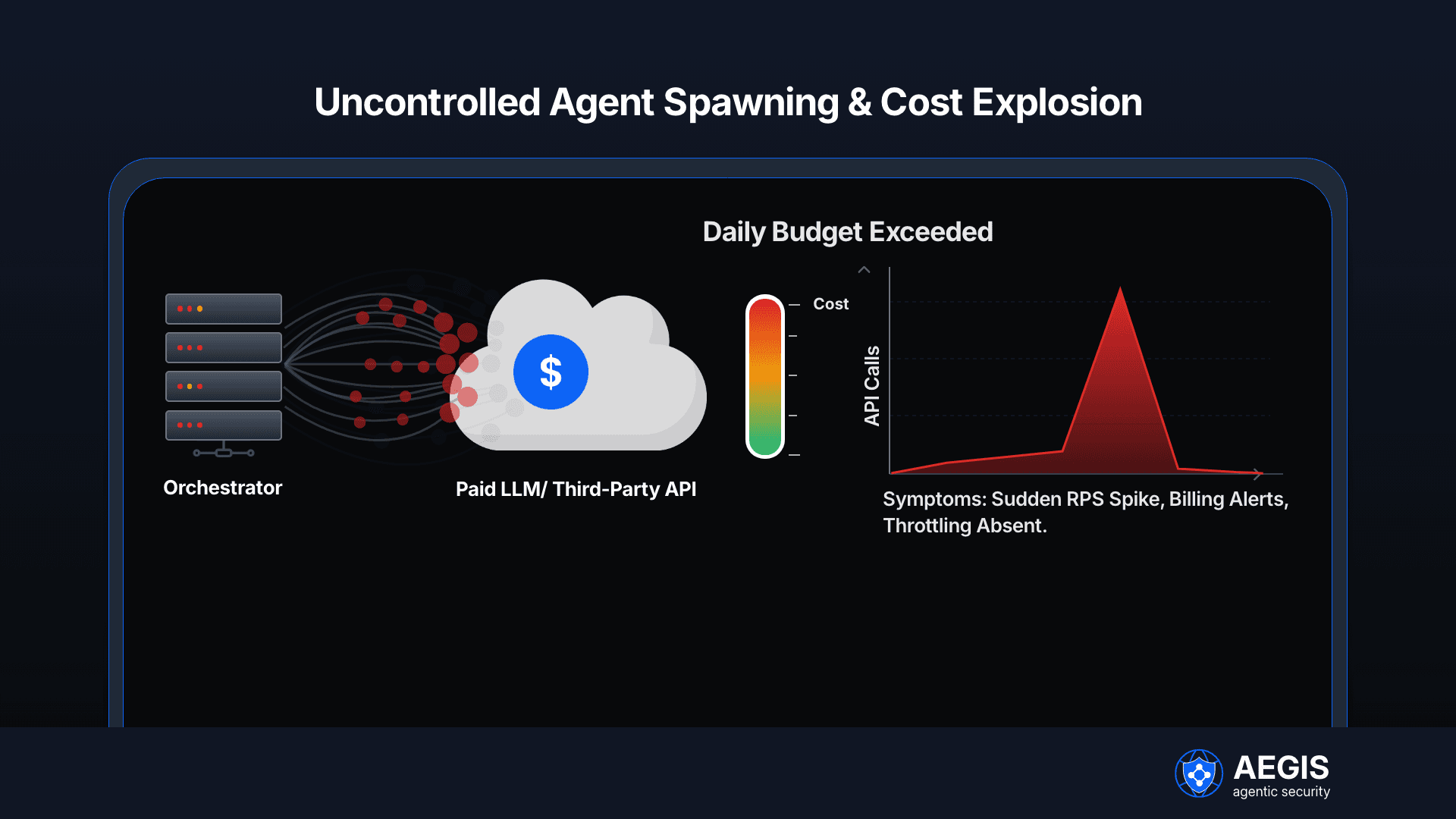
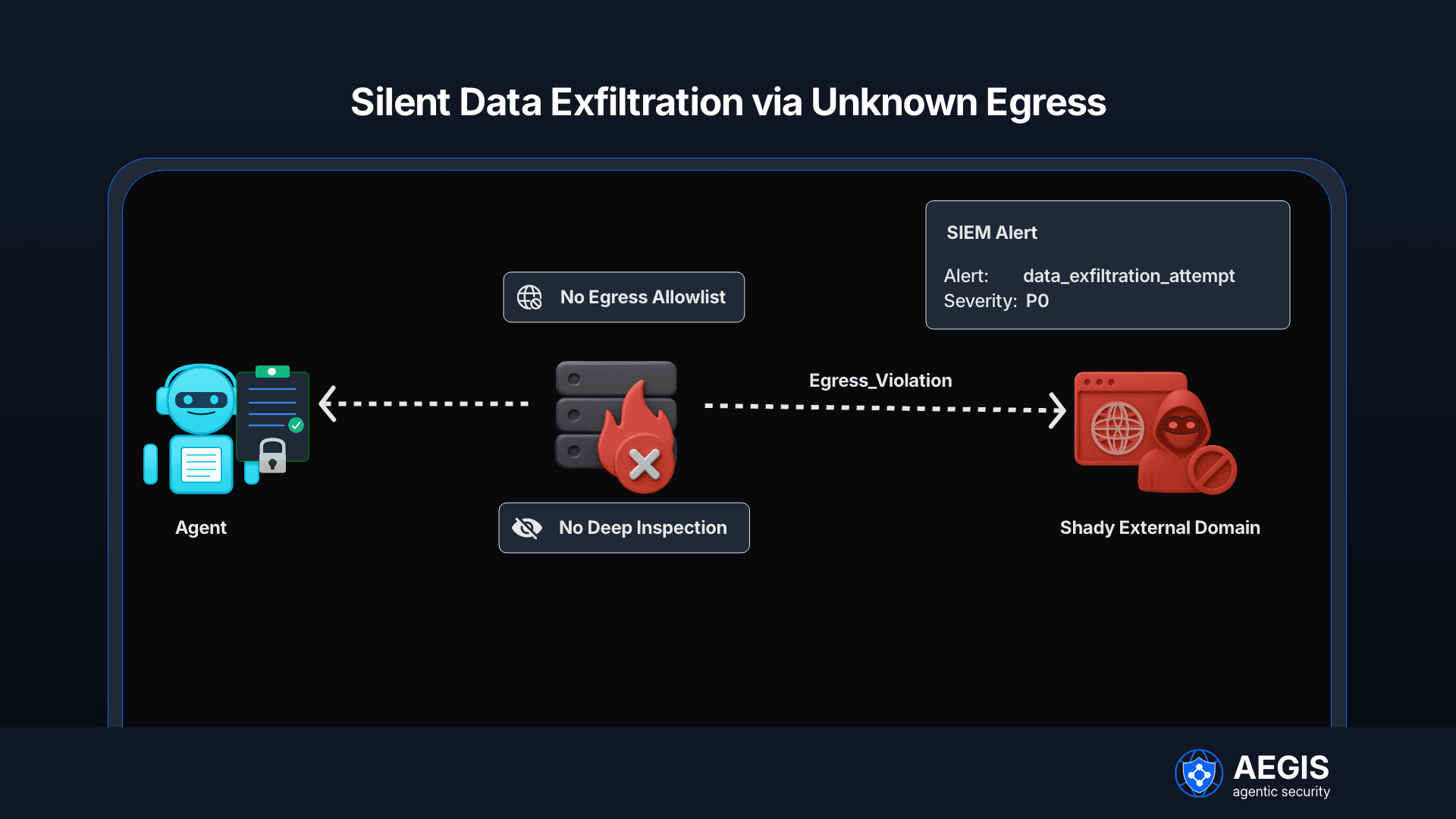
By 2024, 78% of organizations reported using AI — a stark rise that pushed agentic workflows from experiments into business processes. (Stanford HAI) Agent projects can fail fast if security is only a release-gate: planners coercing finance agents to create payments, uncontrolled egress to unknown domains, and silent cost explosions are recurring patterns. Gartner warns many early agentic projects will be scrapped unless governance and clear ROI are enforced. (Reuters)
Security culture matters because policy decisions must be operational — owned by developers, reviewers, and security engineers alike. When policy is scattered (docs, chat threads, private scripts) you lose reproducibility, audit trails, and speed to remediate.
Shift-left patterns for agent development
CI/CD policy gates and developer workflows
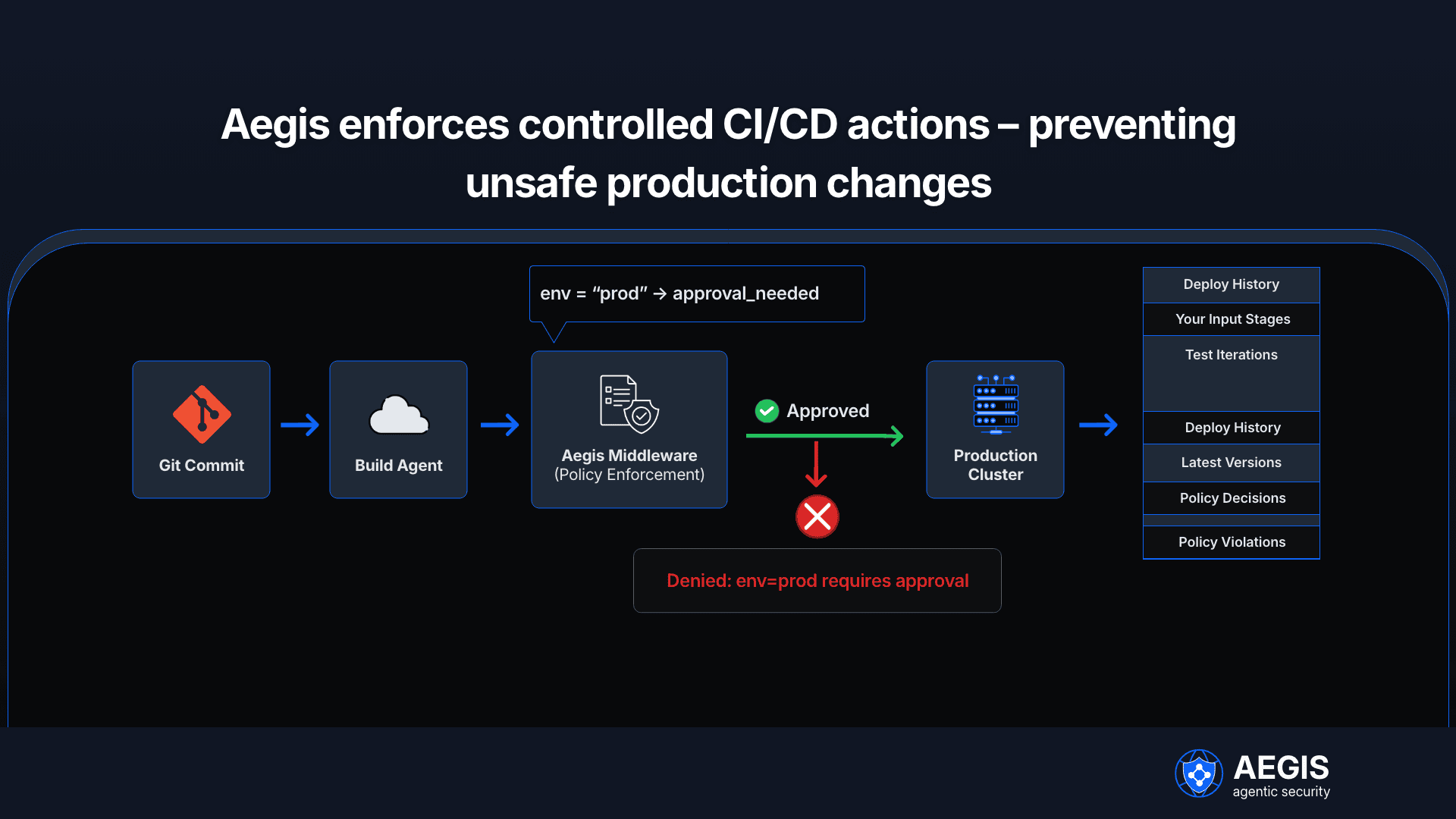
Shift-left for agents means moving policy checks into the developer loop: local linting, pre-commit schema validation, CI dry-runs and shadow mode staging before enforcement. Concrete steps:
• Agent identity taxonomy in repo (roles, capabilities)
• Policy-as-code repo with PR reviews and schema validation in CI
• Developer SDKs that mint short-lived tokens for local testing
• Shadow mode in staging for one week to collect would-deny metrics
Table 1 — Standard shift-left checks for agent pipelines
Stage | Check | Tool / Artifact |
Local dev | Policy lint + unit tests | CLI linter, SDK validators |
Pre-commit | Schema validation | pre-commit hook |
CI | Policy dry-run + risk scoring | CI job: policy dry-run artifacts |
Staging | Shadow mode rollouts | Shadow telemetry, dashboards |
These patterns reduce blast radius and capture policy drift early.
Runtime enforcement: why it’s required
The limits of static checks
Static checks (linting, unit tests) catch malformed policies and simple parameter issues, but cannot enforce least privilege at the moment an agent calls a tool — especially with chained calls and runtime inputs. Runtime enforcement evaluates identity, call context, parameters and call-chain semantics, returning allow/deny/sanitize or approval_needed in real time.
Aegis integration
What Aegis is and where it sits
Aegis is a runtime policy and observability gateway for multi-agent AI systems — a thin enforcement mesh that sits between orchestrators (LangGraph, AgentKit, custom orchestrators) and tools (APIs, connectors, internal services). It enforces least privilege per-agent, inspects parameters, supports human approval workflows, and emits tamper-resistant telemetry for compliance and SOC teams.
Key Aegis capabilities (operational view):
• Agent identity and short-lived JWTs (per-agent scope & expiry)
• Policy-as-code: YAML/JSON policies compiled to fast evaluators (OPA bundles)
• Runtime decision API (allow / deny / sanitize / approval_needed) with <20ms P99 target for evaluations
• Shadow mode for observation, then flip to enforce with minimal disruption
• OpenTelemetry spans and signed audit trails for SOC evidence
Aegis is explicitly designed to be orchestrator-agnostic and to integrate with developer workflows: CLI to register agents, SDKs for LangChain/LangGraph, CI pipeline hooks for dry-run validation, and dashboards for security KPIs.
👉🏻 Empower your workforce with the skills to govern and secure AI agents effectively
Example enforcement flow (operational)
- Orchestrator issues a tool call; includes agent_id and token.
- Aegis Gateway intercepts the call (sidecar/proxy or middleware).
- Policy evaluator checks agent identity, tool, parameters, call chain.
- Decision returned: allow / deny / sanitize / approval_needed.
- Decision and context emitted as OpenTelemetry span + signed log.
Detailed feature table — Aegis core vs expectations
Feature | Expected behavior |
Policy latency | P99 decision ≤ 20 ms |
Policy model | YAML → OPA bundles, hot reload |
Enforcement modes | Shadow, enforce, dry-run |
Auditability | Signed spans, versioned policy logs |
Integrations | SDKs, CLI, SIEM via OTLP |
Aegis addresses the operational problems listed earlier: agent coercion, parameter injection, runaway spend, and lack of audit evidence.
👉🏻 Strengthen your talent pipeline for the future of multi-agent systems
Governance & KPIs
Playbooks and measurable signals
Organizational governance ties culture to metrics. Use a policy lifecycle and these KPIs:
• Policy coverage % (target ≥ 80% for critical connectors)
• Mean time to policy fix (MTPF) — track via ticketing and policy PRs
• Would-block → enforced conversion rate (shadow→enforce)
• Number of approval_needed per day per team (escalation tuning)
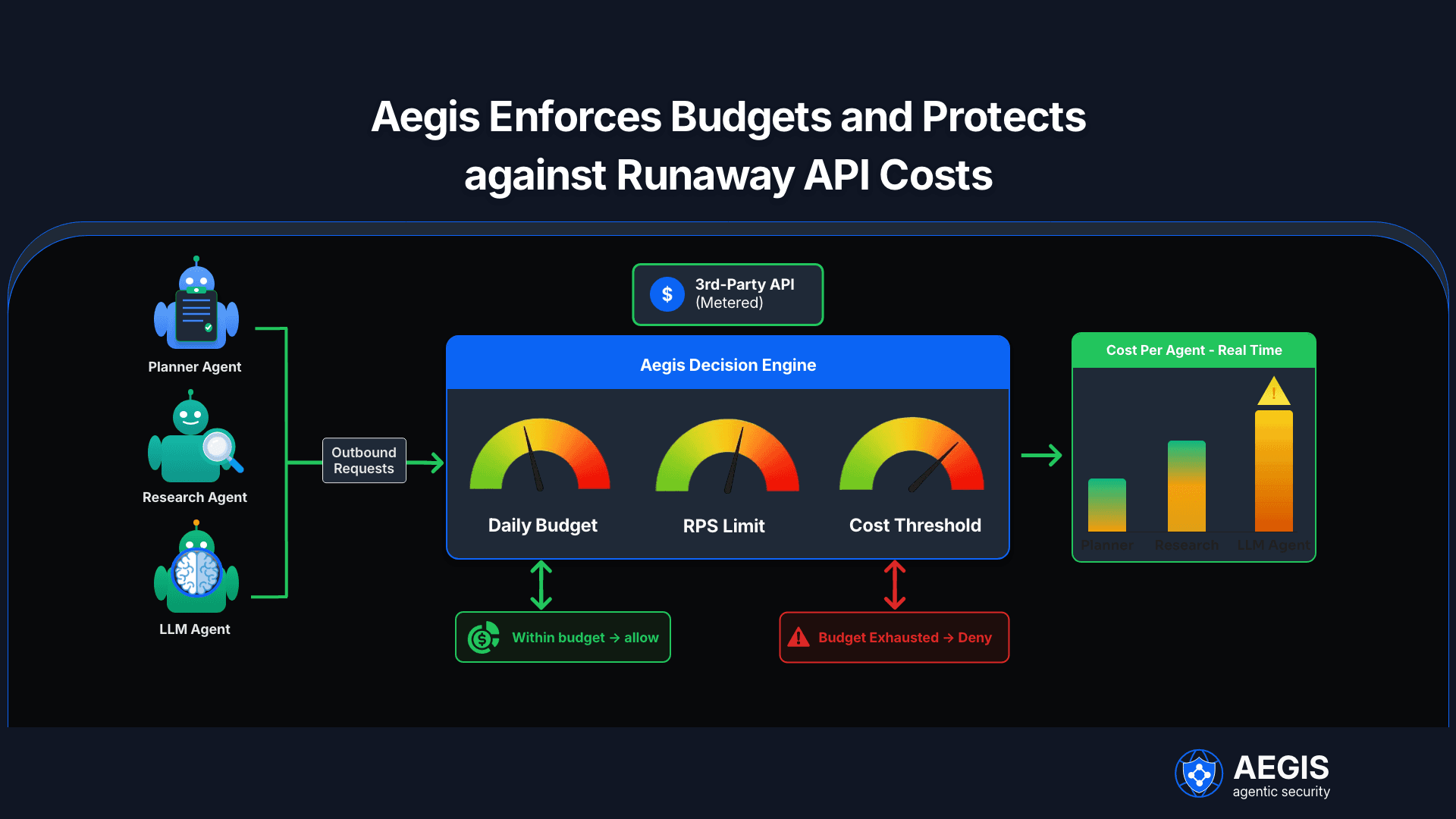
• Per-agent daily spend vs budget
Table 2 — Sample governance KPIs
KPI | Target | Owner |
Policy coverage (critical) | ≥ 80% | Security Eng |
MTPF | < 48 hours | Dev Team + SecOps |
Approval queue depth | < 20 requests | Ops |
False positive rate (policy) | < 5% | Security Eng |
Operational playbooks should define approval escalation, rollback runbooks, and periodic policy audit cycles. Integrate policy telemetry into the SIEM and executive dashboards for compliance evidence.
👉🏻 Apply proven lessons from past AI adoption to accelerate agentic AI success
Practical, repeatable processes
- Define agent identity taxonomy (roles, capabilities).
- Policy-as-code repo with PR reviews.
- CI policy schema validation and dry-run.
- Developer SDKs with short-lived tokens.
- Shadow mode in staging by default.
- Template policies for payments and EHR.
- Approval tokens and override flow.
- Signed audit trails for policy changes.
- Egress allowlists for prototypes.
- Per-agent budgets and rate limits.
- Policy observability: top offenders.
- Executive compliance dashboard.
- Cross-functional policy review board.
- Dev sandboxes with sample policies.
- Integrate telemetry into SIEM.
- Red-team exercises for agent coercion.
- Runbooks for false positives and rollbacks.
- Quarterly policy audit cycle.
- Onboarding modules for engineers.
- Internal policy marketplace.
- Measure MTPF.
- Document approved connector lists.
- Sandbox approval tokens to simulate human approvals.
- Template policies for high-risk domains.
- Postmortems focused on policy drift.
Implementation checklist for pilots
• Start with 1–2 critical connectors (payments, EHR).
• Deploy Aegis in shadow mode for 7–14 days.
• Run CI dry-runs for new policies before PR merge.
• Add human approvals for >threshold high-risk actions.
• Export OTLP spans to existing dashboards.
Frequently Asked Questions
Q1: Why can’t we rely on IAM alone?
IAM controls identity and coarse permissions but does not inspect parameters, call chain context, or enforce per-field constraints — which is essential for agentic workloads.
Q2: What is shadow mode and why use it?
Shadow mode logs would-deny events without blocking calls. Use it to tune regexes, thresholds, and reduce false positives before flipping enforcement.
Q3: How does Aegis support audits?
Aegis emits signed OpenTelemetry spans and versioned policy change logs that provide an immutable trail showing which policy and version made each decision.
Q4: What are common integration points?
Typical integrations: orchestrator middleware (LangGraph/LangChain SDKs), Envoy ext_authz proxies, SIEM, Slack/Teams for approvals, CI pipelines for policy validation.
Q5: How do we prevent approval overload?
Design policies with thresholds and rate limits, classify low-risk flows as auto-approve, and provide batch approval flows for recurring legitimate operations.
Q6: How do we measure success?
Track policy coverage, MTPF, approval queue depth, and conversion of shadow findings to enforced rules.
Final notes
Secure agent development is a combination of culture, automation and runtime controls. Shift-left practices reduce mistakes early; runtime enforcement like Aegis prevents coercion, enforces least privilege, and creates audit-ready telemetry.