
Budgeting and Cost Control in Multi-Agent Deployments
Practical guide to per-agent budgets, rate limits and FinOps controls for multi-agent AI deployments.
Aegis: Runtime Budgeting & Cost Control for Agentic AI
Agentic AI unlocks automation by letting autonomous agents call tools, APIs and billed services on behalf of workflows. That capability also brings a predictable operational risk: unchecked agents can rapidly generate large bills, create compliance gaps and erode trust between engineering and FinOps. This post explains the practical problem, shows why runtime enforcement is necessary, and details how Aegis — a policy and telemetry gateway for multi-agent systems — prevents runaway spend without slowing developer velocity.
The problem: agents make spend unpredictable
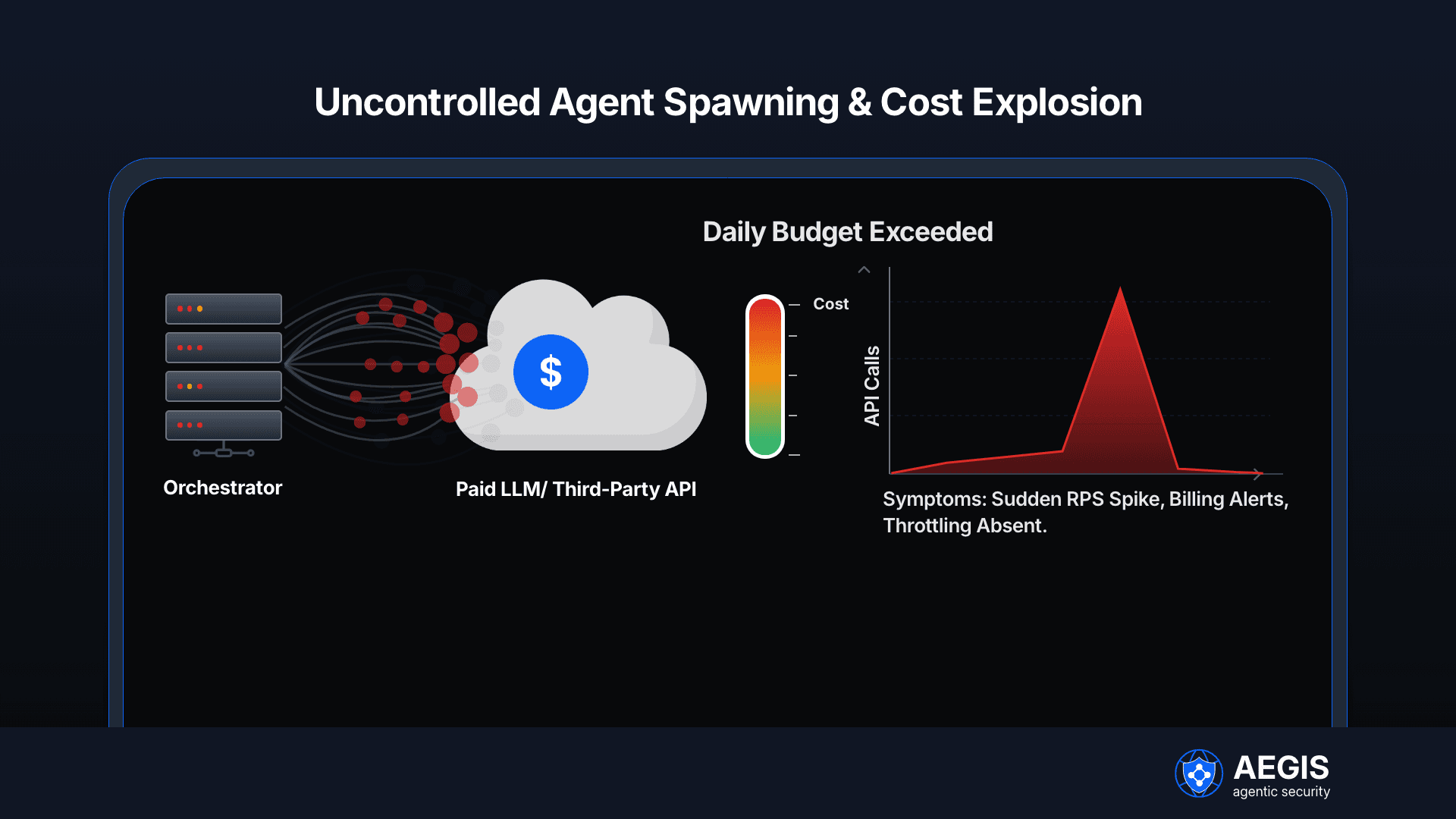
Agentic workflows routinely call billed services (LLM endpoints, third-party connectors, payment APIs). Unlike traditional services, agents can spawn, iterate, and call services autonomously, often in parallel. Organizations report that AI/ML and agent-driven costs have become a FinOps headache: AI workloads are increasingly material to cloud spend and teams cite uncontrolled spend as a major adoption barrier. (FinOps Data)
Three typical failure modes:
- Auto-spawned agents running expensive models with no per-agent cap.
- Chained tool calls (agent → agent → billed API) that multiply cost per user request.
- Lack of tagged call metadata, preventing chargebacks and allocation.
These failures lead to late, post-facto alerts and manual chargebacks — slow and error-prone processes that break trust between engineering and finance.
👉🏻 Control costs and protect resources with effective usage guardrails
Why pre-emptive runtime controls are necessary
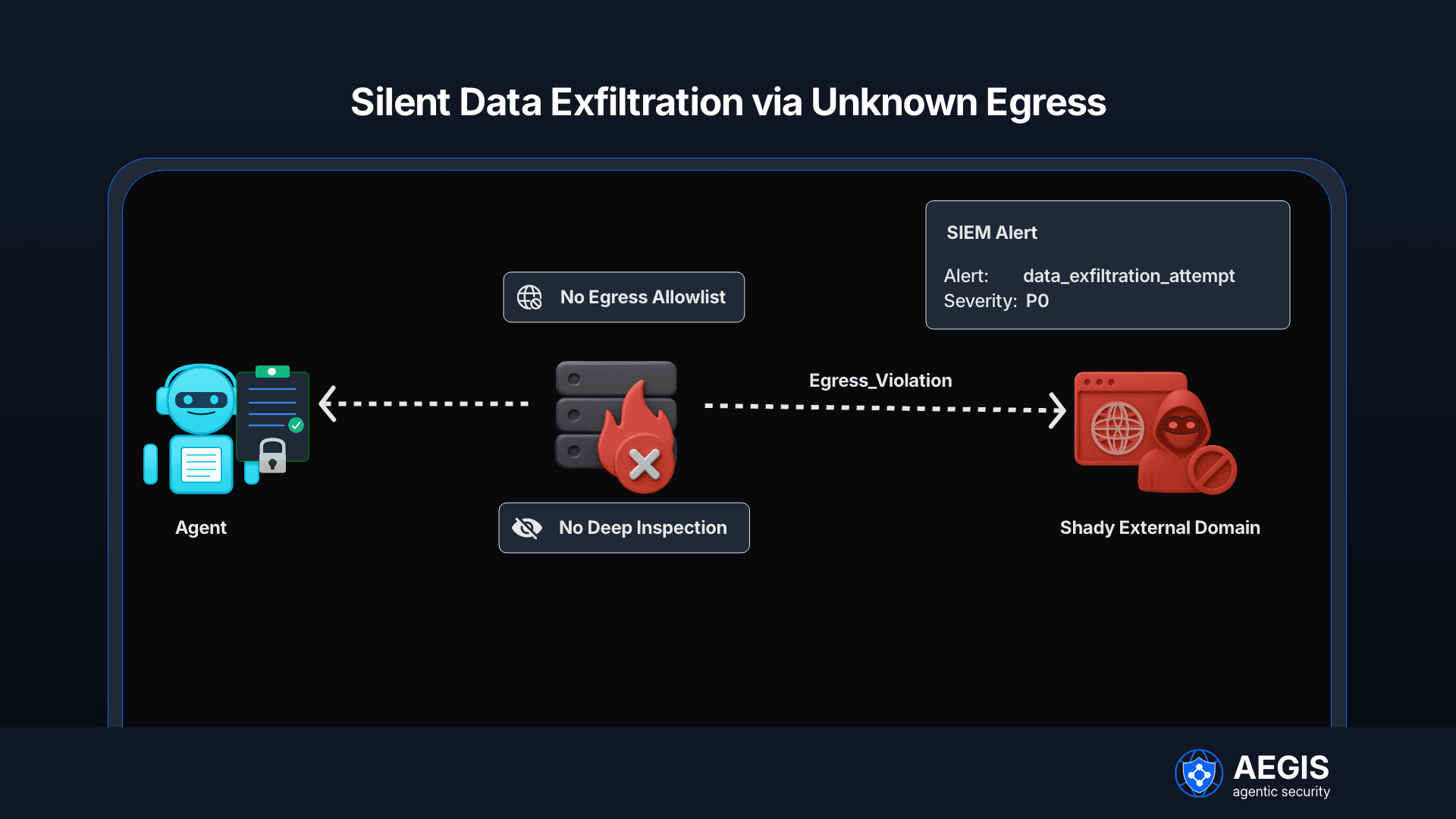
Static policies, IAM and post-billing alerts are insufficient. Budget enforcement must be runtime-aware: check the agent identity, tenant, model or connector cost per call, and decide whether to allow, throttle, or block in real time. FinOps must become part of the enforcement path so decisions are taken before a costly API call executes. Analyst firms and industry reports show many agentic projects are at risk from cost and maturity issues, reinforcing the need for operational controls at runtime. (Reuters)
Key requirements for runtime cost control:
- Per-agent daily budgets and per-tool quotas.
- Rate (RPS) and burst controls per agent/tool.
- Accurate cost estimation per call using pricing heuristics.
- Telemetry to reconcile estimated vs actual spend and enable chargebacks.
Introducing Aegis: what it enforces
Aegis is a lightweight runtime gateway and policy fabric that enforces cost, rate and policy decisions at the agent↔tool boundary. It’s designed to be orchestrator-agnostic (works with AgentKit, LangGraph, LangChain, or custom orchestrators) and to operate with low latency so agent UX is not degraded.
Core Aegis functions:
- Agent identity & registration (per-agent IDs, tenant scoping).
- Per-agent daily budgets and per-tool pricing heuristics that generate an estimated cost per call.
- RPS and burst rate limits with soft-stop (throttle) and hard-stop (block) modes.
- Decision responses: Allow | Throttle | BudgetExceeded | ApprovalNeeded.
- Telemetry: OpenTelemetry spans containing agent_id, decision, policy_version, estimated_cost for reconciliation.
Concrete behaviors:
- On each outgoing tool call Aegis checks budget and rate limits; if the call would exceed budget, Aegis returns a BudgetExceeded decision and emits a trace for FinOps and chargeback. If the agent is near threshold, Aegis can throttle and issue alerts at 70%/90% thresholds.
- For heavy connectors (LLM or premium APIs), Aegis attaches cost-estimate metadata and tags calls by project, cost center and feature flag to enable automated allocation.
- Soft-stop modes allow throttling before hard enforcement; administrators can grant emergency override tokens (with recorded approvals).
Architecture snapshot (how it fits into your stack)
Aegis is implemented as a control plane + data plane pattern:
- Data plane (sidecar/proxy or middleware): intercepts agent calls, calls the decision API, applies rate/budget enforcement.
- Control plane (console & policy compiler): manages agent registry, policies as code (YAML/JSON), pricing heuristics and budgets, and exposes dashboards and simulation tools.
Aegis in practice: operational capabilities
Aegis's operational features are designed to be FinOps-friendly and SOC/audit ready.
Per-agent budgets and spending lifecycle
- Assign daily budgets by agent_id and tenant.
- Emit estimated_cost per call and accumulate against budget.
- Integrate billing feeds to reconcile estimated vs actual spend and show delta in dashboards.
Rate limiting and traffic shaping
- Configurable RPS and burst per agent or per tool.
- Soft modes: exponential backoff recommendations and throttling.
- Hard stops when quotas are exhausted.
Chargeback & tagging
- Automatically tag each call with project, cost center and feature flag.
- Produce chargeback reports and allow automated allocations to departmental budgets.
Approval & emergency workflows
- ApprovalNeeded flow pauses high-risk or over-budget actions, routes to Slack/Teams and mints short-lived override tokens when approved.
- All overrides are audited and signed for post-hoc review.
Simulation, shadow mode & cost planning
- Simulate policy changes to estimate cost impact before enforcement.
- Shadow mode to collect would-block events and tune thresholds.
- Interactive budget simulators for pilot planning and FinOps playbooks for agent incidents.
Example enforcement outcomes and operational actions
Trigger | Aegis decision | Action taken / Telemetry |
Agent exceeds daily budget | BudgetExceeded (block) | Block call, emit span with spend trace, alert FinOps |
Agent at 80% budget | Throttle / Soft-stop | Reduce RPS, notify owner at 70%/90% thresholds |
High-risk payment (> $5k) | ApprovalNeeded | Pause, send Slack approval, mint one-time override on approval |
Sudden spike in LLM calls | RateLimitApplied | Apply burst limit, suggest backoff window |
Typical policy attributes (example)
Attribute | Purpose | Example |
daily_budget | Limit spend per agent | $20/day for testing agents |
rps_limit | Protect connector quotas | 5 RPS, burst 20 |
cost_model | Pricing heuristic per connector | token_cost = tokens * $0.0002 |
tags | Chargeback fields | project=payments, cost_center=finops |
Integrations & deployment notes
- Aegis emits OpenTelemetry traces for each decision and integrates with dashboards (Grafana/Prometheus) and SIEMs for audit trails.
- It supports hot-reloaded policy bundles, shadow vs enforce modes and a CLI/SDK for integration with orchestrators.
- Designed for multi-tenant deployments with per-tenant budgets and MSP-grade alerting.
Measurable outcomes & ROI
Organizations that embed cost controls at runtime reduce surprise bills, improve FinOps trust and reduce wasted spend from unused agents. Industry reports highlight the FinOps shift toward AI-aware cost governance and the maturity gap in agentic projects — underscoring the need for runtime enforcement. (FinOps Data)
👉🏻 Gain visibility into AI spend with accurate cost allocation across teams
Sample KPI targets when deploying Aegis:
- Reduce agent-driven LLM spend variance by 60% in first 90 days.
- Lower number of emergency approvals by 40% through policy tuning and simulation.
- Maintain policy decision latency under 20 ms at P99 (target architecture metric).
Checklist for Implementing AI Security pilot
- Inventory agents and connectors; tag existing high-cost calls.
- Define per-agent sandbox vs prod policies (sandbox unlimited, prod constrained).
- Configure pricing heuristics for each connector and a daily agent budget baseline.
- Deploy Aegis in shadow mode for 7 days; collect would-block traces.
- Tune rules, flip to enforce, and enable alerts at 70%/90% thresholds.
- Run monthly waste analysis to retire unused agents.
-1.png&w=3840&q=75)
Two practical tables to include in an operational playbook
Phase | Activity | Outcome |
Discovery | Tag connectors & identify top 10 cost drivers | Baseline spend per agent/tool |
Shadow Run | Run policies in shadow for 7–14 days | Candidate rules and expected savings |
Enforce | Flip on enforcement with soft-stop thresholds | Immediate spend control & alerts |
Review | Monthly waste analysis | Remove unused agents, adjust policies |
Policy Template | When to use | Example param |
Sandbox Unlimited | Local test agents | daily_budget = unlimited |
Prod Constrained | Customer-facing agents | daily_budget = $50, rps_limit = 5 |
Approval-Gate | High-risk actions | approval_threshold = $2000 |
Frequently Asked Questions
Q: How does Aegis estimate cost per call?
A: Aegis uses connector-specific pricing heuristics (tokens, request tiers) to produce an estimated_cost that is logged and reconciled against billing feeds.
Q: Will enforcement add latency to agent workflows?
A: Aegis targets low overhead (prepared OPA queries, in-memory caches) with P99 decision latency under 20 ms.
Q: Can we simulate policy changes before enforcement?
A: Yes — shadow mode and simulation tools estimate “would-block” effects and cost impact.
Q: How are emergency overrides handled?
A: Overrides are one-time tokens issued after recorded approvals (Slack/Teams) and fully audited.
Q: Does Aegis support multi-tenant MSPs?
A: Yes — per-tenant budgets, separate bundles and tenant-scoped telemetry are supported.
👉🏻 Apply FinOps strategies to maximize efficiency in AI agent operations
Adopt runtime FinOps controls early
Agentic AI delivers value but introduces new operational costs and governance needs. Embedding per-agent budgets, rate limits, cost estimation and telemetry in the enforcement path — not as an afterthought — is practical risk management. Aegis provides the enforcement fabric and observability teams need to operationalize multi-agent deployments with predictable spend and auditable controls.
Further reading: McKinsey discussion on agentic AI adoption and business implications. https://www.mckinsey.com/~/media/mckinsey/business%20functions/quantumblack/our%20insights/seizing%20the%20agentic%20ai%20advantage/seizing-the-agentic-ai-advantage.pdf. (McKinsey & Company)