Real Estate & Property Management Using Multi-Agent Workflows
How Aegis enforces runtime policy, PII protection, and approvals for property automation agents in real estate operations.
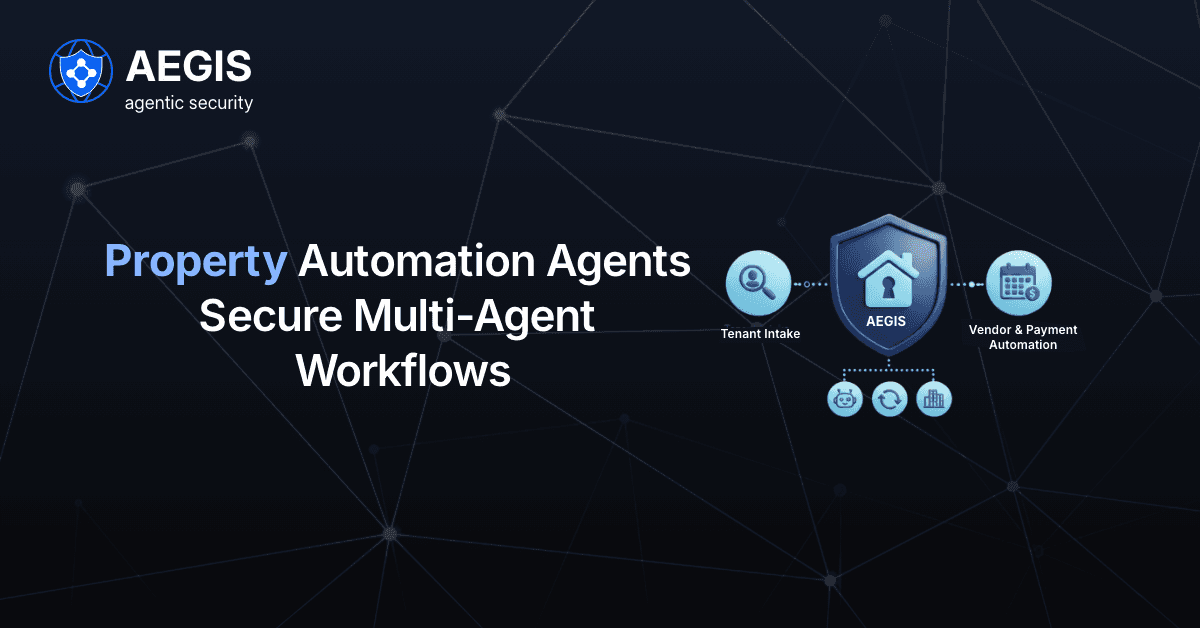
Property Automation Agents — Securing Real-Estate Workflows with Aegis
Property management workflows are ripe for automation: tenant intake, maintenance scheduling, lease generation, vendor payments and regulatory recordkeeping are repetitive, structured, and frequently instrumented today by phone, email and spreadsheets. Agentic AI offers an opportunity to convert those tasks into multi-agent workflows — but only if security, privacy and operational controls are built in at runtime.
This post explains the operational problems property teams face, sketches a safe multi-agent workflow pattern for real-estate operations, and then spends one-third of the article on Aegis — a runtime policy and observability gateway that enforces least-privilege, deterministic DLP, approval gates and auditable traces for multi-agent property automation.
Problem: Why property automation is high value — and high risk
Property ops require handling PII (tenant names, IDs, payment details), contractual legal text (leases), and financial actions (vendor payments). Traditional processes (phone/email ticketing, spreadsheets) are slow and error prone. When you replace human triage with agents — e.g., tenant-intake, scheduling, vendor negotiation, and lease-generation agents — three risk classes emerge:
- Data risk — agents may unintentionally exfiltrate PII when calling analytics or shared connectors.
- Action risk — planner agents can coerce finance agents into payments outside policy.
- Compliance & auditability — regulators and internal SOC teams require tamper-proof evidence of who approved what and when.
These are not theoretical: enterprise surveys show risk and governance are a top barrier to scaling AI projects, and AI-driven attacks and data-privacy concerns have accelerated security investment decisions in 2024–25. (Deloitte)
👉🏻 Improve retail agility with agents that optimize stock and replenishment
Workflow: Multi-agent pattern for real-estate property ops
A secure production workflow must separate duties (identity per agent), validate parameters at the tool boundary, enforce per-action conditions, and record every decision.
Example workflow (high level)
- Tenant Intake Agent receives tenant request (e.g., maintenance request with photo + contact). It creates a ticket and calls Scheduling Agent.
- Scheduling Agent finds vendor availability and books a slot using a vendor connector. Before creating a booking it queries Aegis for allowed vendors and max_payment.
- Vendor Negotiation Agent prepares an estimate. If estimate > policy threshold, it marks the action as approval_needed and pauses.
- Lease Generation Agent drafts a lease; it redacts PII in analytics payloads and flags non-standard clauses for legal review before signature.
.png&w=3840&q=75)
Policy examples (operational)
- finance-agent allowed stripe:create_payment if amount <= 5000; else approval_needed.
- lease-agent may write to /leases/drafts/ but not to /leases/signed/ without human_signature_verified=true.
- scheduling-agent can call vendor connector only for vendor_region == tenant_region.
These policies must be enforceable in real time and produce structured telemetry.
Policy examples: templates and operational checklist
Policy YAML snippet (conceptual)
agent: finance-agent
allowed_tools:
- name: stripe-payments
actions:
- create_payment
conditions:
max_amount: 5000
currency: USD
Operational checklist for property ops
- Register vendor connectors and map vendor regions.
- Define max_payment thresholds per tenant class.
- Restrict agent file writes to tenant-scoped directories.
- Enable deterministic PII redaction before sending text to analytics.
- Retain signed audit logs and policy version history for compliance.
Implementation: Where Aegis fits and how it enforces safety
Aegis is explicitly designed as a runtime policy and observability fabric for multi-agent AI architectures — think “Istio + OPA for agents.” It sits between your orchestrator (AgentKit, LangGraph, etc.) and the downstream tools (payment APIs, document stores, vendor connectors) and enforces policies at the agent↔tool boundary. The next section details Aegis and operational examples for property automation.
👉🏻 Enhance citizen experiences with automated government support systems
What Aegis enforces (summary)
- Agent identity & least privilege — agents are registered with unique identities and scoped permissions.
- Runtime parameter inspection — Aegis inspects call parameters (e.g., payment amount) and redacts or blocks when policies trigger.
- Approval workflows — for approval_needed outcomes Aegis posts an approval request (Slack/Teams) and issues one-time override tokens after human sign-off.
- Deterministic DLP — regex rules redact SSNs, emails or payment card numbers before any analytics or downstream posting.
- Telemetry & tamper-proof audit — OpenTelemetry spans include agent_id, policy_version, decision, and approval_id for SOC review and SIEM ingestion.
Aegis in a property use case (concrete)
Scenario: a Maintenance Agent invokes a vendor payment.
- Maintenance Agent asks Finance Agent to pay $12,000 to emergency vendor. Finance Agent calls Aegis Gateway with agent_id=finance-agent, tool=stripe, amount=12000.
- Aegis evaluates policy: max_amount=5000 → returns approval_needed. It posts to configured Slack channel with the decision payload, blocks the operation until approval, and logs the decision. Once approved, Aegis issues a one-time override token and records the approval as a signed audit event.
This prevents a planner agent from coercing finance into an unauthorized transfer while preserving operational flow for genuine emergencies.
Architecture and deployment notes (ops focused)
Aegis uses a sidecar/forward-proxy model and an external authorization server that evaluates compiled OPA bundles. Key operational expectations:
- Latency: optimized prepared queries and in-memory caches target low overhead (P99 decision latency in single-digit to low-20ms ranges).
- Shadow mode: run policies in shadow to gather would-deny metrics for 7–14 days before enforcing.
- Multi-tenant isolation: per-tenant bundles and token claims ensure tenant policies don’t cross-pollinate.
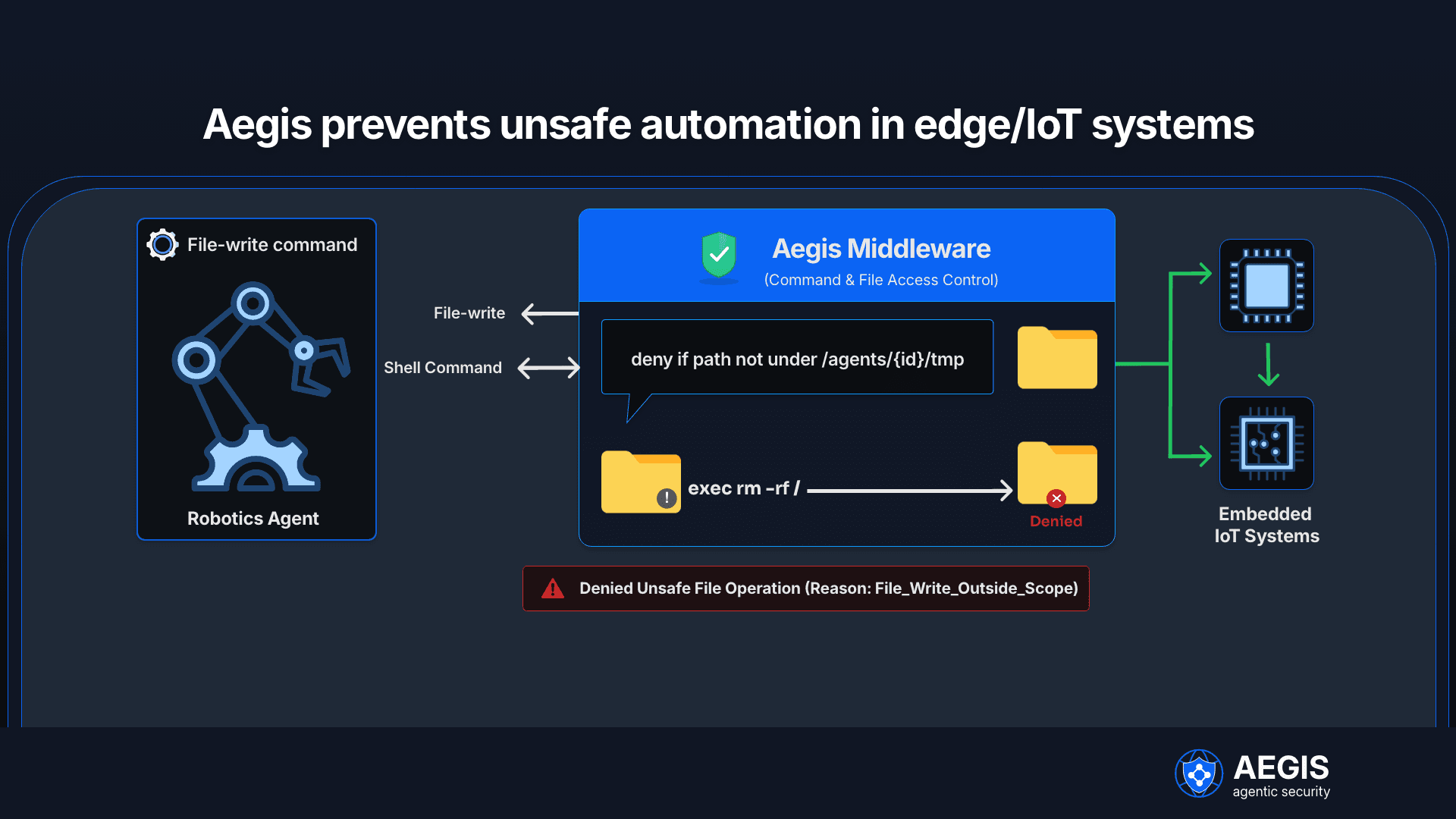
Table 1 — Traditional controls vs Aegis runtime mesh
Concern | Old way (emails/spreadsheets) | Aegis runtime mesh |
Payment control | Manual approvals, slow, error-prone | Policy enforced at call, auto-block, approval workflow |
PII protection | Manual redaction, risky | Deterministic DLP + redact before egress |
Auditability | Disparate logs | Signed, structured OpenTelemetry spans |
Speed to operate | Slow, human bottlenecks | Automated with approval gates for exceptions |
Table 2 — Example policy enforcement outcomes (operational)
Action | Condition | Aegis Decision |
Create payment ($2,000) | amount ≤ 5000 | allow |
Create payment ($12,000) | amount > 5000 | approval_needed (blocked until sign-off) |
Post tenant message to public channel | contains SSN | sanitize (redact) |
Write lease to /signed/ | human_signature_verified != true | deny |
Integrations, governance and MSSP considerations
Aegis is deliberately orchestrator-agnostic. It provides SDKs and middleware for common agent runtimes and exposes a CLI and admin API for policy management, dry runs, and rollbacks. For MSSPs and multi-tenant deployments, Aegis supports per-tenant routing, signed audit chains, and SIEM hooks so SOC and compliance teams can validate policy enforcement for each tenant.
Enterprises should pair Aegis with a serious rollout plan: sample policies for core connectors (payments, document stores), shadow runs, stakeholder training and dashboards for cost and approval metrics.
For sector context: BCG and Deloitte research on enterprise AI readiness and governance provide background on why runtime policy and auditability are now essential to moving beyond pilots. https://www.bcg.com/press/24october2024-ai-adoption-in-2024-74-of-companies-struggle-to-achieve-and-scale-value and Deloitte’s state of generative AI report. (BCG)
👉🏻 Unlock faster insights and better trades with autonomous energy agents
Frequently Asked Questions
Q1 — How does Aegis prevent an agent from bypassing policies?
A: Aegis is placed as a mandatory path for all outbound tool calls (proxy/sidecar or middleware). Tokens identify agent identity and scope; the enforcement plane inspects parameters and enforces allow/deny/sanitize or approval_needed decisions in real time.
Q2 — Can policies be tested without impacting production?
A: Yes — Aegis supports a shadow/dry-run mode that reports would-deny events so teams can tune conditions before flipping enforcement.
Q3 — What approvals channels are supported?
A: Slack and Microsoft Teams integrations are supported for approval requests and override token issuance.
Q4 — Will Aegis add noticeable latency to agent workflows?
A: With prepared OPA queries, in-memory caches and lightweight proxies, P99 decision latency targets are in the low tens of milliseconds; teams should validate in their environment and run shadow mode to measure would-block vs latency tradeoffs.
Q5 — How does Aegis help with tenant PII and data residency?
A: Policies can require redaction of PII and route calls to region-tagged endpoints per tenant. Audit logs and signed spans provide the compliance trail required for regulators.
Closing (operational takeaway)
Property automation agents can materially reduce friction in maintenance, leasing and vendor management — but runtime controls are mandatory to mitigate payment risk, protect tenant PII, and deliver auditability. Aegis offers a pragmatic runtime fabric: identity per agent, policy-as-code, deterministic DLP, human approval workflows, and structured telemetry — the set of controls a security-minded property ops team needs to move from spreadsheets to safe, scalable agentic automation.