
Hardening Agent Control APIs Against Abuse
Practical checklist to harden agent control APIs, token issuance controls, monitoring, and an Aegis-based playbook for runtime protection.
Hardening agent control APIs against abuse: a practical guide for security engineers
Control-plane APIs that create agents or mint agent tokens are one of the highest-impact attack surfaces in multi-agent deployments. A single stolen or abused admin key can spawn thousands of agent identities, issue tokens with broad scopes, or escalate privileges across services. This post defines a concise threat model, a concrete hardening checklist, monitoring/playbook patterns, and shows how Aegis (the Aegissecurity Agent Security Mesh) implements these controls in practice. It targets security engineers, DevOps leads and MSSP decision-makers responsible for bringing multi-agent workflows into production.
👉🏻 Identify and eliminate hidden risks across multi-agent ecosystems before they scale
Threat model: what we’re defending against
High-impact attack vectors
• Mass agent spawning (automation or scripted abuse) that creates many agents tied to a tenant to exhaust quotas or camouflage exfiltration.
• Privilege escalation through control APIs that accept weak or overly permissive parameters.
• Stolen admin keys used to mint long-lived tokens and bypass human approvals.
• Service-account vs human approvals — automated CI tokens versus interactive human flows — treated differently by attackers.
These risks are visible in enterprise reporting and analyst coverage of agentic deployments: several industry reports highlight adoption growth while warning of immature controls and project failures without governance. (Reuters)
👉🏻 Gain real-time visibility into agent behavior and stop anomalies instantly
.png&w=3840&q=75)
Damage scenarios
• A stolen admin key mints 1,000 short-lived tokens and spins agents that call expensive LLM APIs, producing huge bills and data exfiltration.
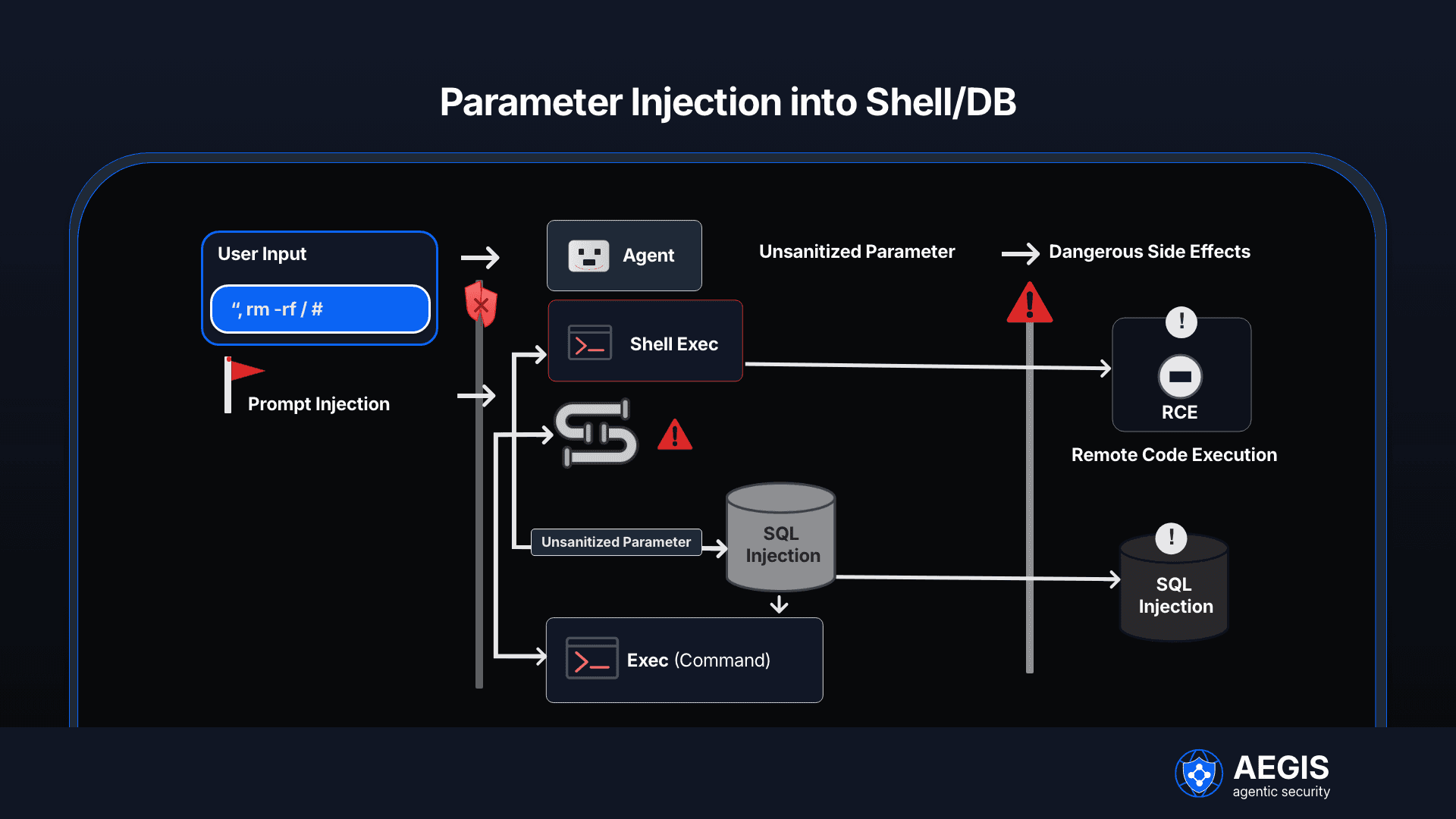
• A planner agent coerces a finance agent into making a high-value payment because control plane API allowed unconstrained parameter values.
• Cross-tenant policy bleed where a shared control plane misapplies policies to the wrong tenant due to bad scoping.
Hardening checklist — control plane and token issuance
Core controls (apply all where feasible)
- Least-privilege API roles: split privileges for agent creation, token issuance, and policy changes. Use role hierarchies and narrow scopes.
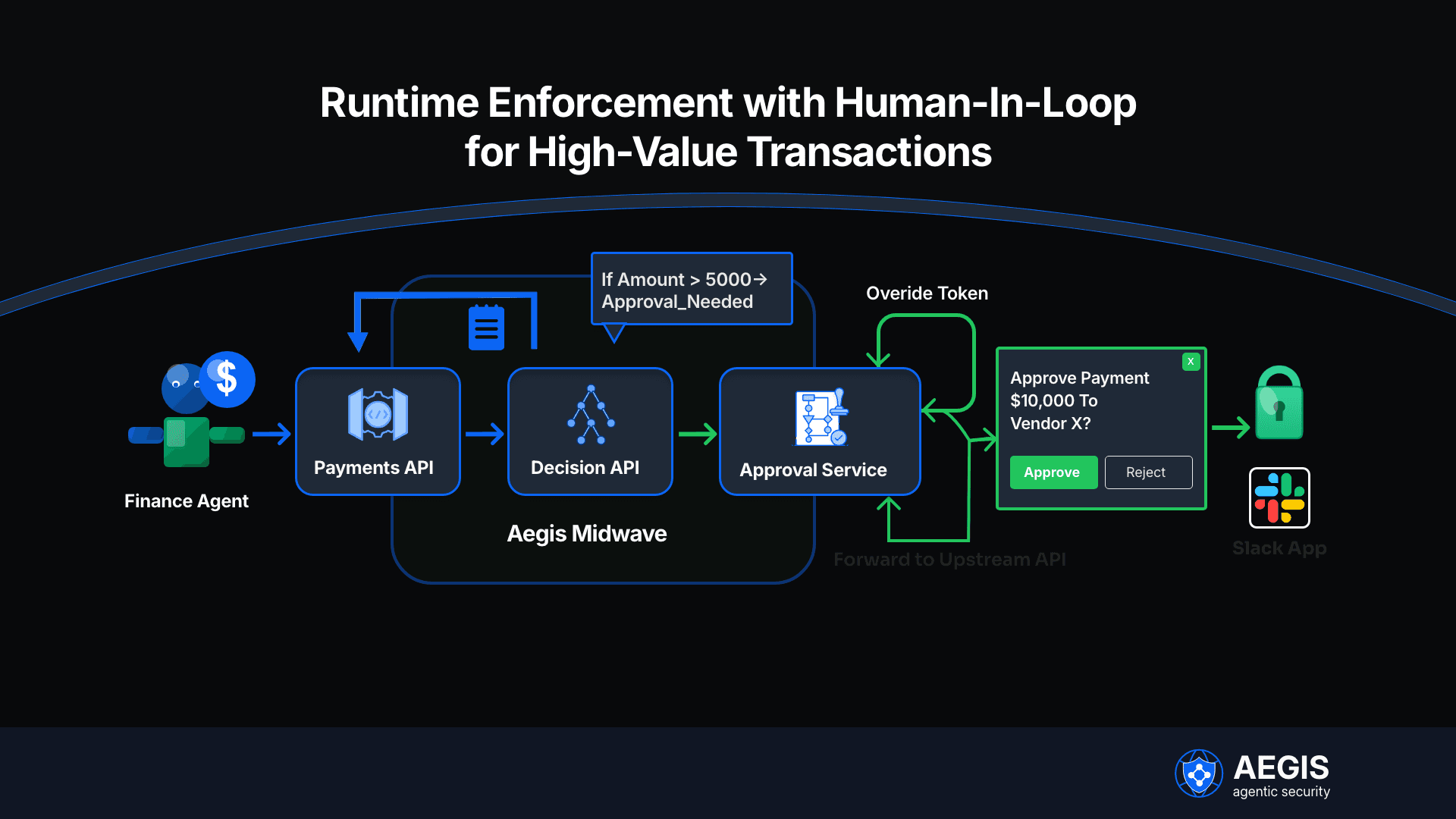
- Approval workflows for high-risk agent registration: require multi-step approvals (policy holds) for agents that bind to sensitive connectors (payments, EHR).
- Short-lived tokens + jti replay protection: issue access tokens with minute-scale expiry and track jti in a revocation store to prevent replay. Best-practice guidance recommends token expiries of minutes/hours and revocation strategies. (Curity)
- Rate limits and per-user creation quotas: throttle agent-create endpoints and implement exponential backoff + cooldowns on anomalies.
- Parameter validation and policy-as-code: disallow free-form parameters on agent creation; validate connectors, allowed scopes, and allowed destinations via schema.
- SSO enforcement and conditional MFA: require SSO for admin API calls and conditional MFA for high-risk operations.
- Audit signing and tamper-proof logs: sign admin actions and approvals (hash chain or signed spans) for compliance.
- Shadow mode and dry-run: allow policies to run in observe mode before enabling enforcement. This reduces operational friction.
API endpoint → risk → required controls (table)
API endpoint | Primary risk | Required controls |
POST /agents | Mass spawning, bad defaults | Rate limit, approval for sensitive connectors, parameter schema, per-user quotas |
POST /tokens | Token theft, replay | Short expiry, jti check, org-bound keys, per-agent scope, issuance audit |
POST /policies | Policy tampering | RBAC, SSO + MFA, policy schema validation, signed versioning |
POST /agents/{id}/bind | Privilege escalation | Two-step approval, parameter validation, restrict connectors by role |
Monitoring & alerts: meaningful signals, not noise
Signals to collect
• Agent creation rate per principal (1-minute and 1-hour windows).
• Token issuance geolocation & source IP anomalies (new region for an org key).
• Unusual agent properties (e.g., agents requesting admin scopes).
• Failed admin actions and repeated approval rejections.
• Budget and billing spikes per agent/tool.
Alerting policy
• Alert for high-severity anomalies (e.g., >X agents created in Y minutes) to SOC with escalation playbook.
• Low-risk anomalies generate tickets and automatic throttles or shadow-mode transitions. Use policy-based auto-approve for low-risk (staging) agents to avoid blocking developer DX.
How Aegis implements these protections
Aegis is a runtime policy and observability fabric for multi-agent systems that implements the controls above as part of its core architecture. It sits between orchestrators and downstream tools as a gateway, enforcing policy-as-code at the agent↔tool boundary, and providing a hardened control plane for agent registration and token minting. Key Aegis features:
• Agent registration lifecycle with approval states: Aegis supports “auto-approved” tiers (staging) and mandatory approval tiers (production). Approvals are plumbed into Slack/Teams and produce a signed approval artefact that the gateway validates before allowing high-risk actions.
• Token service with jti replay protection and short lifetimes: Aegis mints short-lived JWTs containing org, tenant and agent claims, stores jti values in a Redis-backed revocation store, and supports one-time override tokens post-approval. This aligns with recommended token rotation and revocation patterns. (Curity)
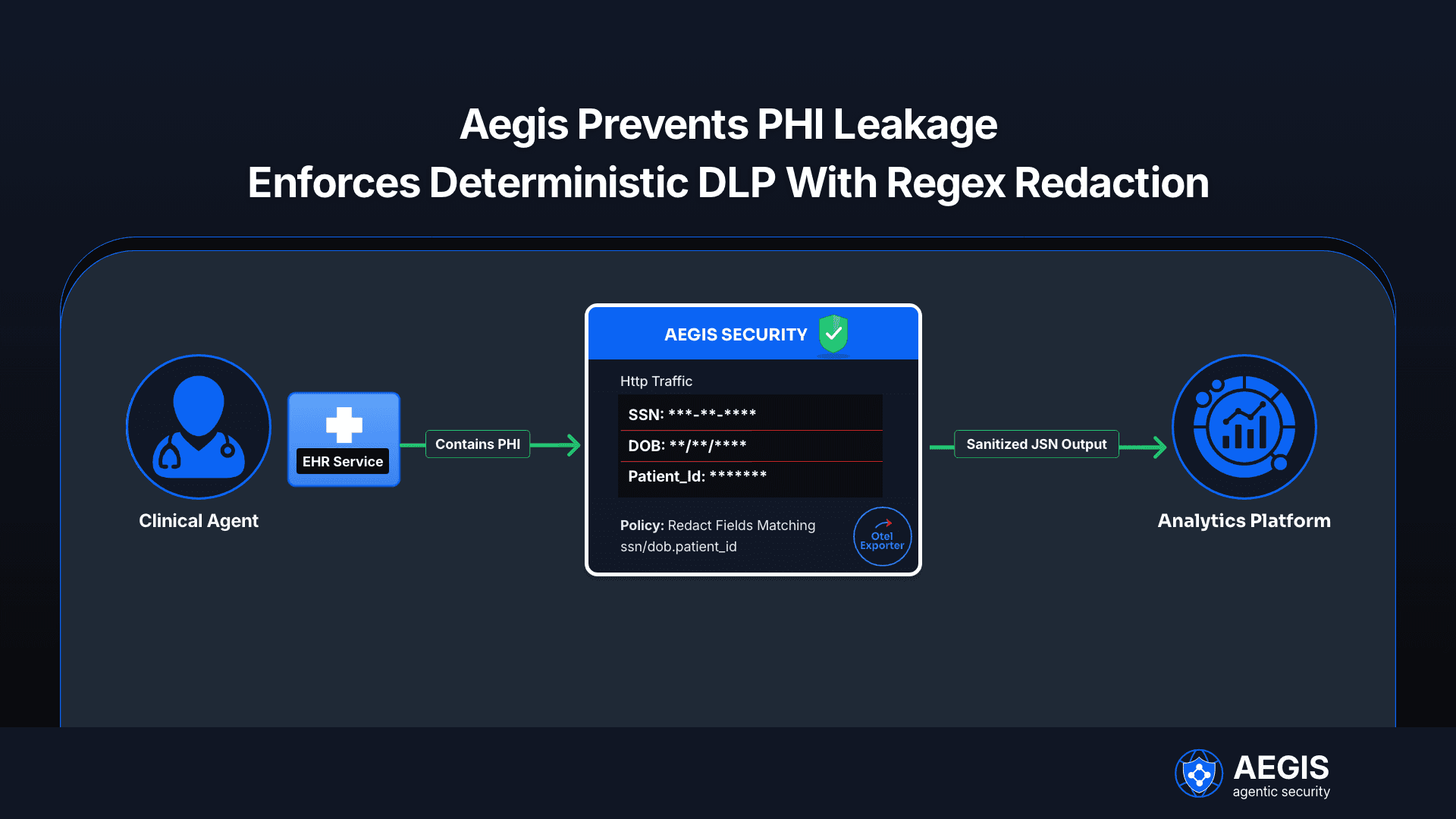
• Runtime enforcement & inspection: The gateway evaluates policy bundles (compiled from YAML) using an embedded policy engine and returns decision outcomes (allow, deny, sanitize, approval_needed). Open Policy Agent (OPA) patterns are used to achieve low-latency evaluations; OPA and proxy tuning are recommended to keep P99 decision latencies low. (Open Policy Agent)
• Telemetry and audit: Aegis emits OpenTelemetry spans for every decision (agent_id, tool, decision, policy_version, approval_id), signs audit records and integrates with SIEMs for compliance reviews. This provides the tamper-resistant evidence required by regulators and MSSPs.
• Developer DX: CLI and SDK primitives let developers register agents with least-privilege defaults, run policy dry-runs, and tail audit logs. Policies are versioned and hot-reloaded, reducing friction while keeping controls strict.
Developer DX and fail-safes
Developer patterns
• Provide CLI defaults that create staging agents with minimal scopes and use policy overrides to promote agents to production.
• Offer policy dry-run and reporting so devs see “would-block” events before enforcement.
• Use short-lived tokens in local dev, rotating automatically via the SDK.
Operational fail-safes
• Automatic cooldowns on heavy agent creation activity (circuit breaker).
• Configurable fail-closed vs fail-open behavior for the data plane (writes default fail-closed; reads can be configured).
• Emergency revocation playbook: revoke org keys, rotate signing keys, force token revocation by recording jti blacklist entries, and run incident audits.
Two comparison tables (controls vs legacy; metrics to monitor)
Controls: legacy vs Aegis model
Capability | Legacy admin APIs | Aegis (recommended) |
Agent creation protection | Static API keys, single RBAC | Approval workflows, quotas, per-agent roles |
Token security | Long-lived tokens | Short-lived JWTs, jti replay protection |
Policy enforcement | App-level checks | Centralized policy-as-code + runtime gate |
Auditability | Basic logs | Signed spans, policy versioning, SIEM integration |
Suggested operational metrics
Metric | What it indicates | Recommended alert |
Agents created / hour per admin | Potential abuse | Alert on sudden spikes |
Failed admin actions | Misconfig or abuse | Investigate > threshold |
Approval queue length | Human bottleneck | Auto-scale approvers or auto-approve low-risk |
Token mint rate / region | Key compromise | Alert if new region appears |
Testing & red teaming
• Fuzz control APIs (parameter fuzzing on agent creation, token minting).
• Simulate privilege escalation attempts by chaining agents and ensuring policy engine blocks cross-tool coercion.
• Chaos-test the token service: revoke org key and validate jti blacklists block previously issued tokens.
Sample policy snippet (risk tiers)
agent_creation_policy:
tiers:
- name: staging
auto_approve: true
allowed_connectors: [ "internal-test-*"]
- name: production
auto_approve: false
required_group: platform-admin
approval_channel: "#approvals"
FAQ
- How do I bootstrap agent identity?
Use short-lived org keys to mint an initial agent registration token; require SSO + group membership to promote to production. Aegis provides CLI helpers for bootstrap flows. - How should CI tokens be handled?
Treat Ci service accounts separately: restrict them to staging scopes, rotate frequently, and use conditional approvals for production actions. - What’s the best token lifetime?
Access tokens measured in minutes; refresh or issue short-lived tokens via secure refresh endpoints. Keep refresh rotation and jti checks. (Curity) - How do I avoid approval delays?
Use policy-based auto-approve for low-risk agents and maintain tiered approvals. Use batching & queueing to reduce human overhead. - What to do after key compromise?
Revoke keys, add affected jti values to revocation store, rotate signing keys, and run an audit of recent approvals and agent creations.
Closing playbook
- Inventory control APIs and map risk tiers.
- Apply least-privilege defaults and enable short-lived tokens with jti replay protection. (Information Security Stack Exchange)
- Deploy policies in shadow mode for one week, collect metrics and tune thresholds.
- Implement SSO + conditional MFA for admin APIs and add approval workflows for production agents.
- Integrate signed telemetry into your SIEM and run regular red-team tests against control APIs.
👉🏻 Build threat models that evolve with your agentic workflows
For organisations building multi-agent systems, protecting the control plane is non-negotiable: apply least-privilege, human approval for risky operations, short token lifetimes and thorough telemetry. Aegis implements these controls as an integrated runtime fabric to reduce both risk and operational friction while producing the audit trail security teams and regulators require.