
Defending Against Memory Poisoning and Prompt Injection Attacks
Practical guide to memory-poisoning and prompt-injection defenses for agentic AI, and how Aegis enforces runtime safety and auditability.
Defending Memory Poisoning & Prompt Injection Attacks: Practical Controls and How Aegis Fits In
Agentic systems increasingly rely on memory stores and retrieval-augmented generation (RAG). That convenience creates attack surfaces: adversaries can poison memory stores or inject malicious prompts to coerce agents into leaking data or taking actions. This post explains the attack mechanics, practical preventive controls, detection and response patterns, and how Aegis — a runtime policy and observability gateway — hardens agent deployments in production.
The technical nature of poisoning & injections
Attack vectors: prompt injection, memory poisoning, backdoor triggers
- Prompt injection: adversary-supplied content (web pages, uploaded files, or user messages) contains embedded directives or crafted phrasing that steers model responses or tool calls. These are active at inference time and exploit parsing and prompt concatenation behavior.
- Memory poisoning: malicious records are inserted into a long-term memory or RAG index so that retrieval returns attacker-controlled context. When agents rely on that context for decisions, an attacker can cause semantic drift or command execution. Research shows this is not theoretical: targeted poisoning can achieve very high retrieval and end-to-end success rates. (NeurIPS Proceedings)
- Backdoor triggers (plan-of-thought / single-token triggers): subtle tokens or patterns that reliably activate malicious behavior when present in memory or prompts. These can be stealthy and survive dataset pruning. (ICLR Proceedings)
.png&w=3840&q=75)
Why these attacks work
RAG and agent memories implicitly trust ingested content. Many pipelines canonicalize and index content automatically, and retrievers surface semantically-similar content without provenance checks. Small poisoning ratios (<<0.1%) can still produce high attack success, because retrievers optimize for similarity and ranking, not intent or signature. AgentPoison and follow-up work report ≥60–80% end-to-end success in realistic setups. (NeurIPS Proceedings)
Preventive controls
Memory hardening & input sanitation
Practical, layered defenses reduce risk substantially:
- Input sanitization & canonicalization
Normalize, strip executable-looking directives, remove or flag embedded “system:” instructions, and canonicalize whitespace/punctuation before ingest. Employ deterministic rewriting rules for sensitive fields. - Source vetting & signed ingestion
Only ingest from vetted repositories or signed sources; tag each memory record with a provenance label and ingestion signature so later retrieval can check origin. Enforce allowlists for third-party sources. - Memory integrity checks
Apply hash-chaining or Merkle-style integrity markers for memory stores so tampering is detectable. Maintain tamper-proof audit trails of who/what wrote each record and when. - Parameter/field constraints & policy checks
Enforce strict schema and regex checks on parameters that agents pass to tools (e.g., payment amount ranges, allowed domain names). Policy-as-code enables fine-grained per-agent and per-field constraints. - Retrieval filtering & provenance-aware RAG
When retrieving documents for a prompt, also return provenance metadata and include heuristics to down-weight records with weak signatures or unknown origins.
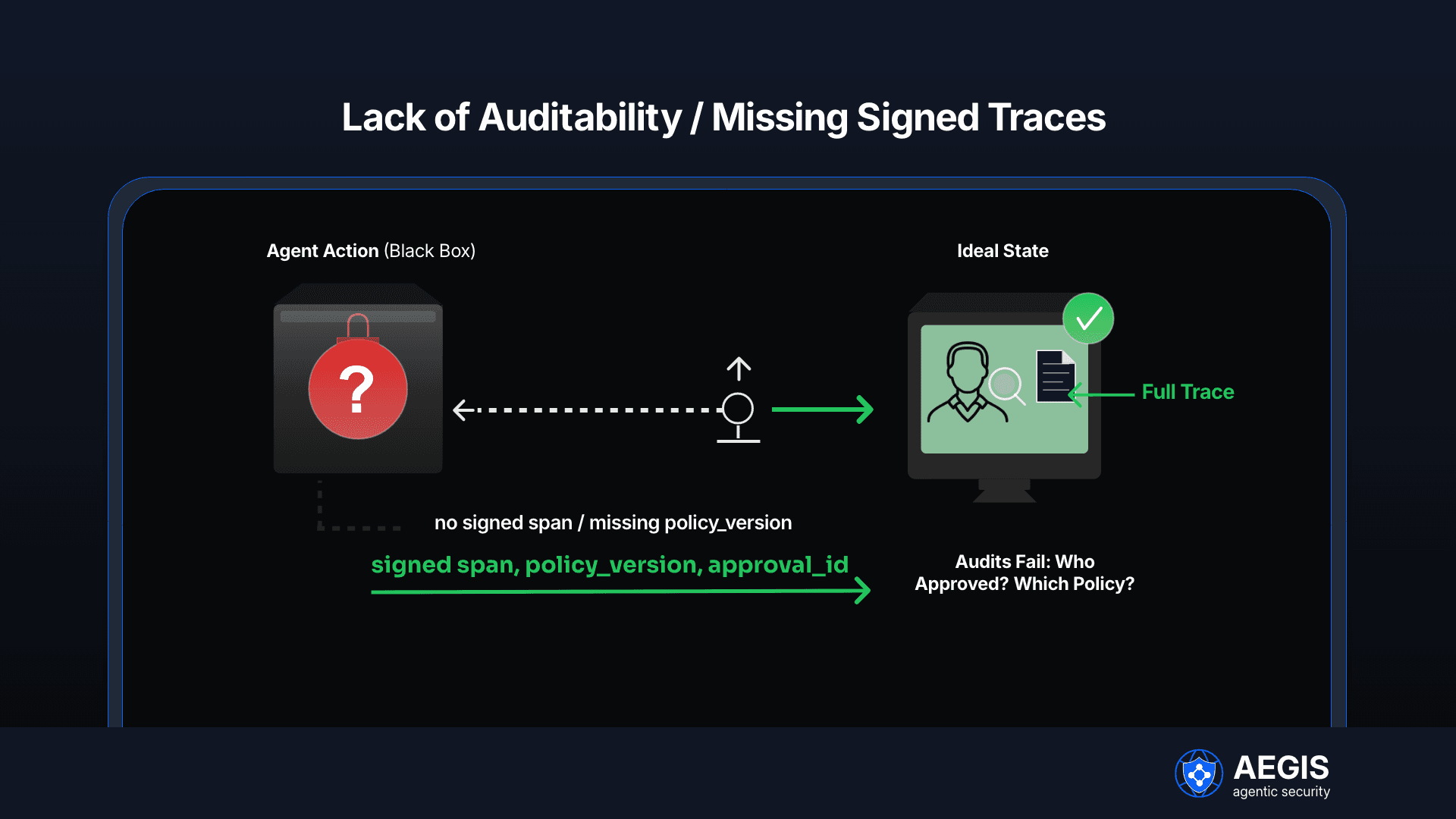
Table: Preventive controls quick reference
Control | Goal | Implementation example |
Input sanitization | Remove embedded directives | Regex strip of "system:" lines; canonicalize quotes |
Signed ingestion | Trustworthy sources only | Only ingest documents with org signature / allowlist |
Integrity checks | Tamper detection | Hash chain per memory shard; verify on read |
Field constraints | Limit dangerous params | Max payment amount policy (e.g., ≤ 5,000) |
Provenance-aware RAG | Trust-weighted retrieval | Penalize unknown-source docs in ranking |
Detection & response
Detection signals
- Sudden semantic drift: agent outputs deviate from normal distribution for a given task or topic.
- Unexpected retrieved docs: retrievals reference external or unvetted sources.
- Anomalous chain-of-calls: new or unusual tool invocations (e.g., planner causing finance tool calls).
- Spike in approval_needed events or repeated retries with overridden tokens.
Runtime mitigations
- Block suspicious memory reads/writes: if a memory record lacks a valid signature or fails integrity checks, treat as untrusted and either sanitize or decline to use it.
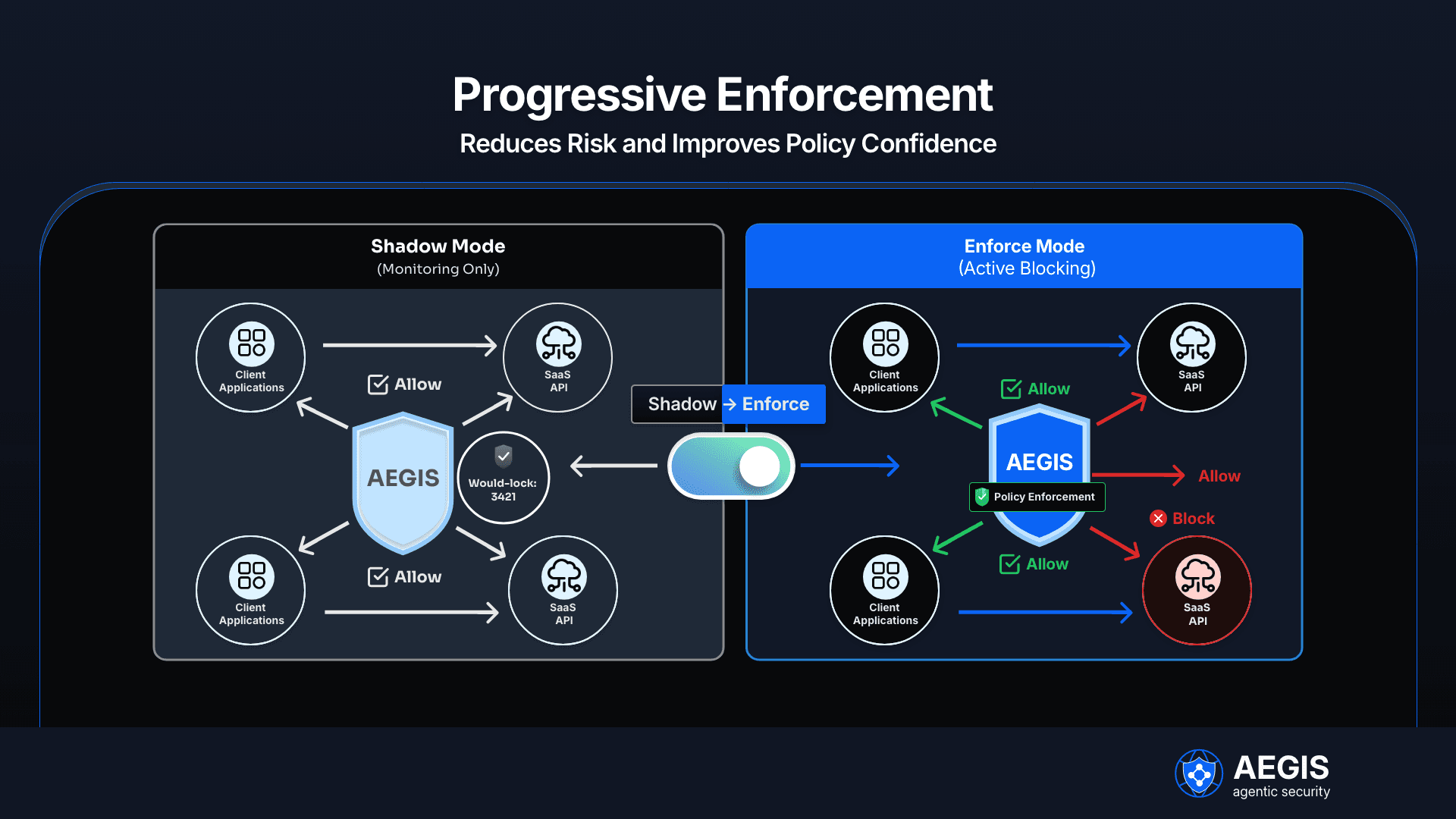
- Sanitize outputs: run deterministic redaction and policy filtering before any agent output reaches an external tool or user.
- Approvals and human-in-the-loop: require human approval for high-risk actions triggered by memory or external content (payments, deployments).
- Fail-safe defaults: fail-closed for writes; configurable fail-open for read-only low-risk paths.
How Aegis enforces these controls (solution-focused; ~1/3 of the article)
Aegis is designed as a runtime policy and observability gateway that sits between orchestrators and tools (sidecar/proxy model). It enforces policies at the agent↔tool boundary and provides tamper-evident telemetry and approval flows — solving the core operational and auditability gaps that make memory poisoning effective. Key capabilities:
- Policy-as-code & per-field constraints: admins write YAML/JSON policies that specify agent identities, allowed tools, parameter constraints, rate limits, budgets, and approval thresholds. Policies compile to fast evaluators (e.g., OPA) and hot-reload without restart.
- Runtime enforcement data plane: Aegis proxies agent calls, inspects agent identity, parameters and call context, then returns allow/deny/sanitize/approval_needed decisions in <20ms P99. This prevents planners from coercing other agents into actions outside policy.
- Memory & ingestion guard rails: by integrating provenance labels and signed ingestion flows in the control plane, Aegis can refuse to use or mark as untrusted any memory records without valid signatures; it can also redact or sanitize content returned to agents at runtime. (Design and requirements documented in product spec.)
- Approval workflows & override tokens: for high-risk actions Aegis emits interactive approval requests to Slack/Teams and issues one-time override tokens post-approval to ensure human accountability and traceability.
- Observability & audit: every decision emits OpenTelemetry spans and structured logs that include agent_id, tool, decision, policy_version and reason. Logs can be signed and chained for tamper-evidence, enabling SOC and compliance workflows.
Table: Aegis feature → security outcome
Aegis feature | Prevents / Detects |
Per-agent identity & policy | Agent privilege escalation, unauthorized tool use |
Field-level conditions & regex | Parameter injection (payments, exec args) |
Signed ingestion & provenance | Memory poisoning via untrusted RAG docs |
Approval flow & override tokens | Unapproved high-risk actions |
OTel + signed logs | Compliance evidence, incident forensics |
Red-team practice and operationalizing defenses
- Build a “prompt adversary” suite that injects poisoned documents, crafted prompts, and backdoor triggers into staging RAG indices. Automate regular poison tests and measure retrieval and end-to-end success rates.
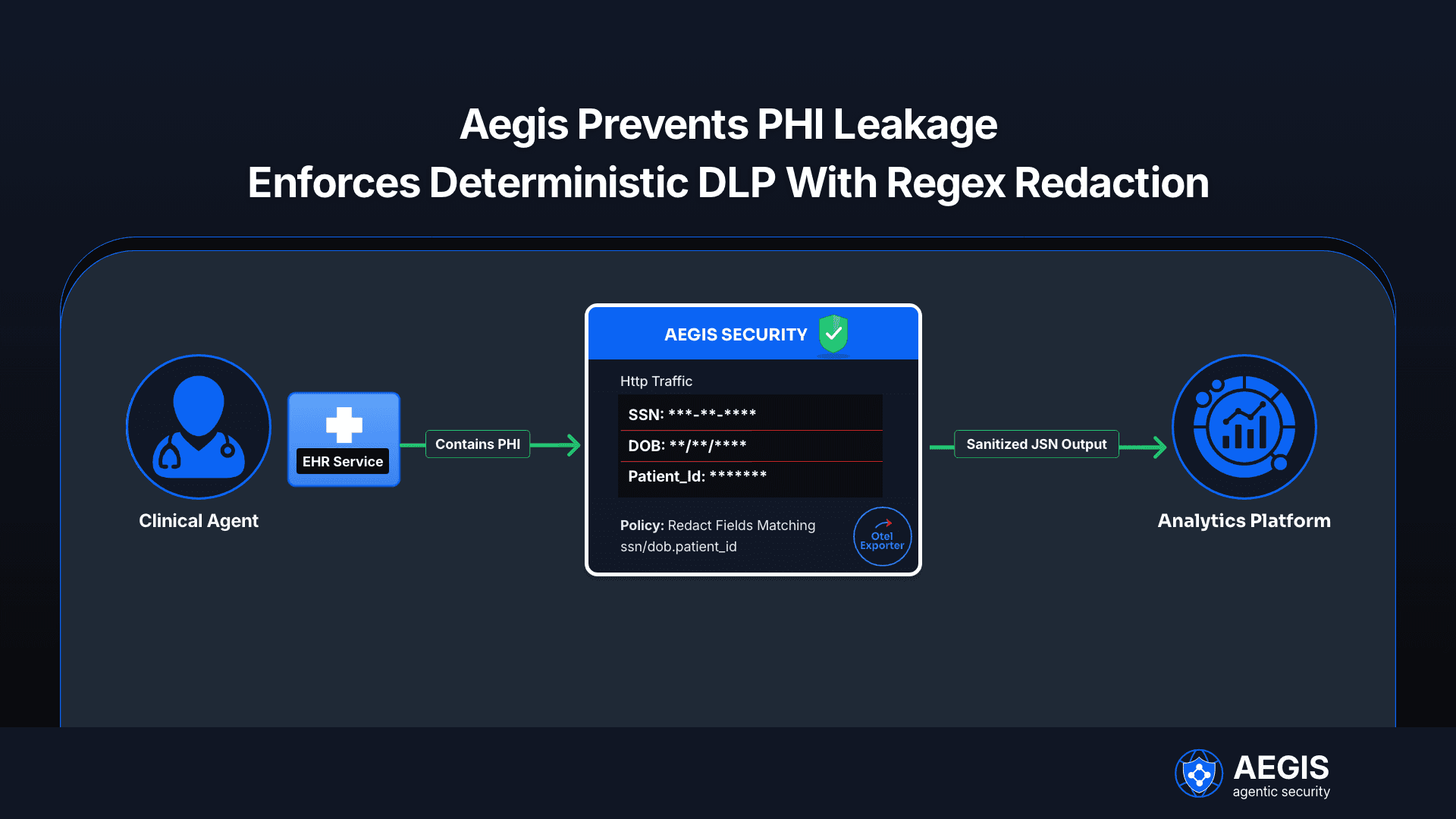
- Shadow mode: run policies in shadow mode for a defined rollout period to collect would-deny telemetry without disrupting workflows. Aegis supports dry-run and shadow modes for safe tuning.
- Integrate red-team test results into policy CI: convert red-team detections into automated policy rules (e.g., block sources, add regex sanitizers).
- Operational thresholds: set approval thresholds and budget limits to reduce human fatigue; use rate limits and budgets to reduce noisy approvals.
👉🏻 Build proactive defenses across your AI lifecycle
Practical checklist for practitioners
- Vet ingestion: add signatures & provenance for any external content.
- Enforce per-field constraints: validate amounts, domains, file paths.
- Run regular RAG/backdoor red-team tests and track ASR (attack success rate).
- Deploy a runtime policy gateway (e.g., Aegis) in shadow mode, iterate, then enforce.
- Instrument OTel spans for every decision and retain signed audit trails.
Industry context & urgency
AgentPoison and subsequent benchmarks demonstrate the high effectiveness of poisoning and prompt injection attacks (≥60–80% end-to-end success in experiments with small poisoning ratios). (NeurIPS Proceedings) Enterprise adoption of agentic systems is accelerating — a recent McKinsey review notes rising scale pilots and deployments — which means these risks will only become more consequential without runtime controls. (McKinsey & Company)
👉🏻 Detect and stop rogue agent actions before they escalate
Frequently Asked Questions
Q1: How does memory poisoning differ from prompt injection?
A: Memory poisoning contaminates persistent stores or RAG indices so that future retrievals include malicious content; prompt injection places malicious directives into input or context at inference time. Both can be chained: injected prompts can seed memory and vice versa.
Q2: Can signatures and provenance fully stop poisoning?
A: No single control is perfect. Signed ingestion and provenance raise the attack cost and are effective in practice, but they need to be paired with runtime checks, sanitization, and detection to achieve robust defense.
Q3: What runtime latency should I expect from a policy gateway?
A: Well-engineered systems using OPA prepared queries and caching aim for P99 decision latency under 20ms. Aegis targets similar budgets while keeping proxy overhead minimal.
Q4: How often should I run red-team poisoning tests?
A: Monthly at minimum for high-risk RAG indices; weekly for public-facing ingestion pipelines or post-update to retrievers or retrieval models.
Q5: Where can I learn more about agent security and Aegis?
Aegis product and use-case overviews are available on the company site: product pages and industry pages provide implementation guidance and sample policies
👉🏻 Protect control APIs from misuse and unauthorized access
Closing
Memory poisoning and prompt injection are high-impact attack classes against agentic AI. The right combination of provenance, field constraints, runtime enforcement, approvals, and observability — implemented via a policy gateway such as Aegis — converts research insights into operational resilience. For teams moving agents into production, prioritise signed ingestion, policy-as-code, and runtime enforcement to keep adversaries out of memory and away from sensitive actions.