Autonomous Utility Management: Energy Grid Optimization via Agents
How Aegis applies policy-as-code, simulation, and signed telemetry to secure agentic workflows in energy and enterprise.
Aegis as Runtime Security for Agentic AI in Energy & Enterprise
Autonomous agents are moving from labs into mission-critical operations — from market bidding and dispatch in utility grids to payment orchestration in fintech. That shift brings new operational value and new risk: unchecked agents can trigger unsafe actions, cascade failures, or silent data exfiltration. This article explains the operator risk model for grid-scale automation, practical policy patterns for safe automation, deployment steps and KPIs, and how Aegis — a runtime policy and observability gateway — enforces safe agentic behavior in production.
Grid operator priorities and the risk model
Grid operators prioritise system stability, deterministic constraints (ramp rates, MW limits), and auditability. Agentic workflows add an optimization layer — proposing generation dispatch, demand response shifts, or market bids — that must be constrained to avoid instability.
Key operator concerns:
- Physical safety: prevent ramp changes that violate generator mechanical constraints or protection settings.
- Cascading risk: automated actions must not create ripple effects (frequency deviation, interconnector stress).
- Governance and audit: every automated decision must be attributable and reviewable for compliance.
Recent industry research shows strong growth in agent experimentation: enterprise reports indicate growing pilot activity and a high proportion of organizations experimenting with AI agents, with security and governance cited as top barriers to scale. (Capgemini)
👉🏻 Maximize market opportunities with autonomous agents built for energy intelligence
Policy patterns for safe automation
The Aegis approach decomposes safety into explicit policy patterns applied at runtime. The two most important patterns for grid automation are thresholding and shadow/simulation validation.
Thresholding: explicit constraints at the call boundary
Define numeric and semantic limits at the agent↔tool boundary:
- max_ramp_rate (MW/minute) per generator or aggregated resource.
- max_delta (%) for load-shift proposals in a single action.
- allowed_time_windows for market activity (e.g., no automated bids in settlement reconciliation windows).
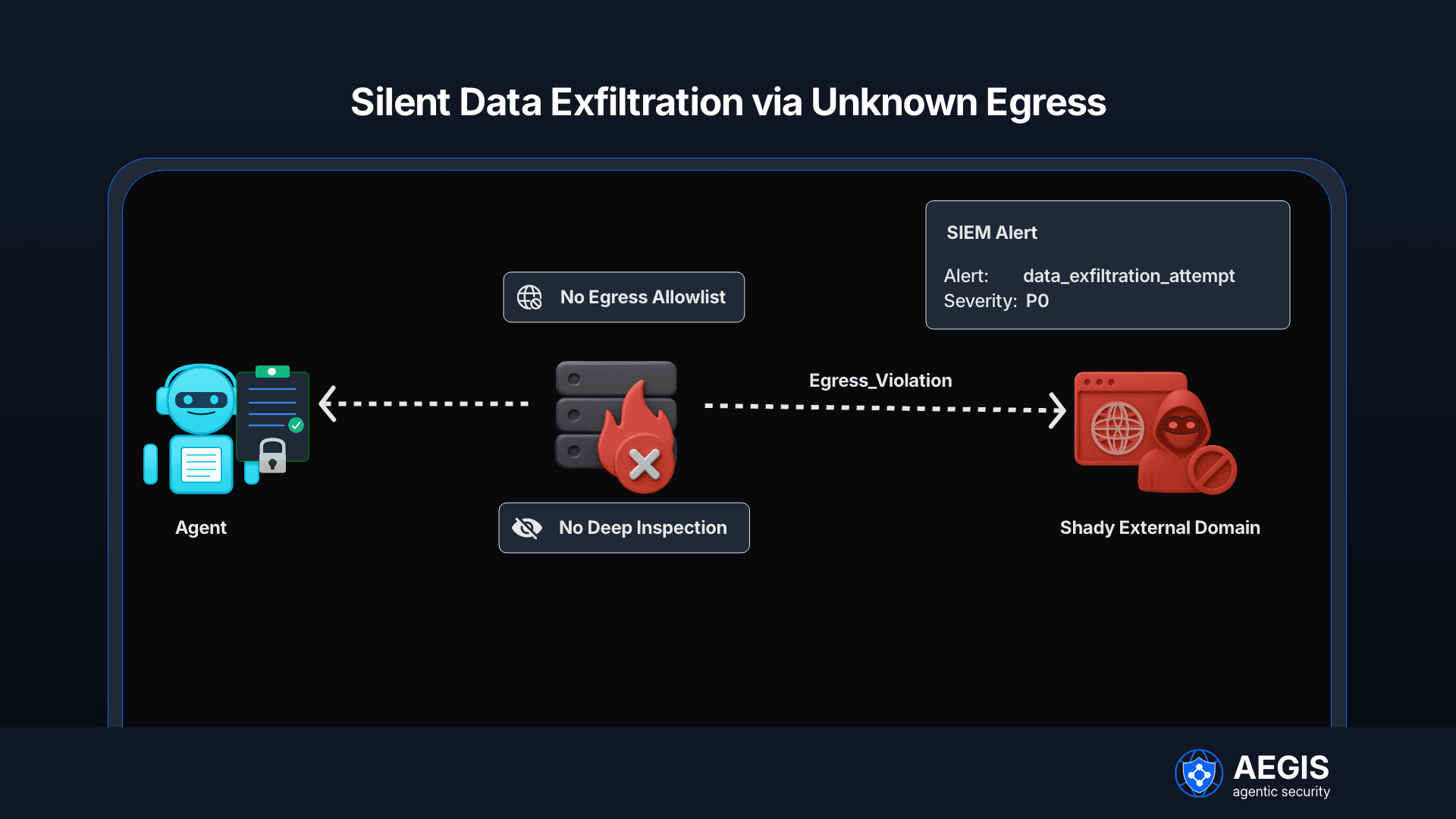
- egress allowlists restricting agents to operational endpoints only.
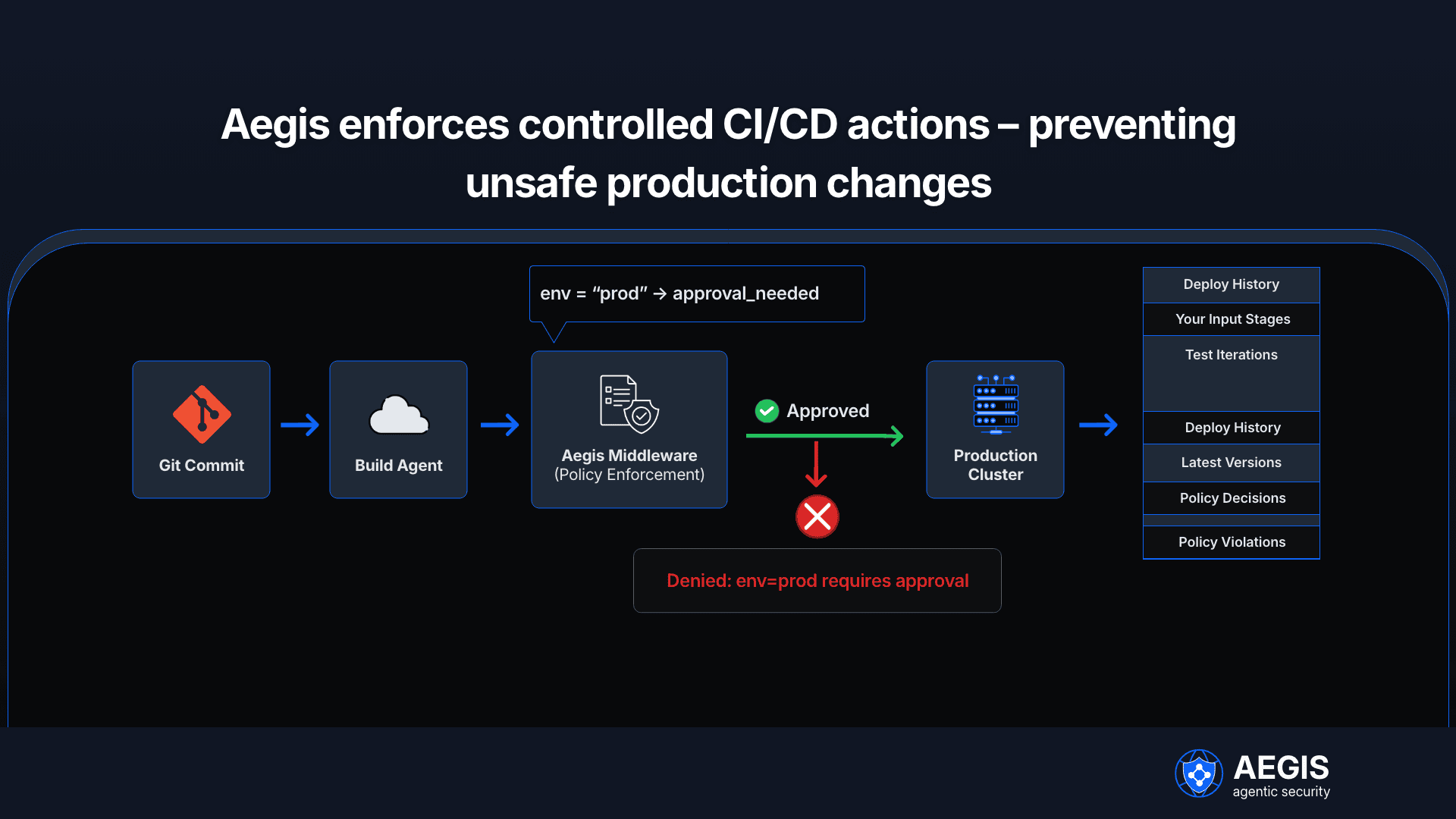
Enforcing these limits centrally prevents an optimization agent from applying a 15% load shift in a single step if the policy caps live shifts at 5%. The gateway evaluates request parameters and returns a deterministic allow/deny or approval_needed response.
Simulation & shadow mode: observe, simulate, then enforce
Policies should support a shadow/simulate mode. When an optimization agent proposes a change, Aegis can:
- Simulate the change in shadow (would-apply) and run deterministic stability checks.
- Emit a signed “would-apply” trace for operators to review.
- Allow the action automatically if simulation passes low-risk checks; otherwise mark approval_needed.
This two-step pattern reduces false positives and gives operators confidence. Capgemini and other industry analyses show utilities prioritising validated simulations and human-in-the-loop approvals during pilot phases. (Capgemini)
How Aegis implements these patterns
Aegis is a lightweight runtime policy & observability gateway designed for multi-agent architectures. It sits as a data-plane layer between orchestrators (AgentKit, LangGraph, etc.) and tools (dispatch APIs, market endpoints, third-party services) and enforces policy-as-code in real time.
Core capabilities
- Agent identity & least privilege: short-lived signed tokens tie actions to agent IDs and tenant context; policies map agents to allowed tools and parameter constraints.
- Parameter inspection & enforcement: the gateway inspects request bodies and parameters, applying range/rule checks (max_amount, max_ramp_rate, allowed regex for account IDs).
- Simulation & shadow mode: policies can require a simulation pass or run in shadow mode to collect would-deny telemetry before enabling enforcement.
- Approval workflows: for high-risk operations, Aegis issues approval_needed decisions and integrates with Slack/MS Teams to capture human overrides and mint one-time override tokens.
Signed, auditable traces: every decision emits OpenTelemetry spans with decision_reason, policy_version, and an optional attestation signature for compliance and SIEM ingestion.
👉🏻 Improve citizen services with AI agents that simplify support and documentation
Operational examples (concrete)
- An optimization agent proposes a 15% load shift. Aegis checks max_ramp_rate and aggregated MW delta. If within thresholds and simulation passes, the action proceeds; if not, Aegis either blocks or routes to human approval.
- Market bid submission: policy requires simulated settlement impact and a manual approval token for bids above a configured size or outside a time window.
- Egress controls: agents can only call internal SCADA endpoints and pre-approved market gateways; all other domains are blocked to prevent exfiltration.
Table 1 — Example policy primitives and their operational meaning
Policy primitive | Example value | Operational meaning |
max_ramp_rate | 5 MW/min | Block or require approval if requested change exceeds physical ramp limits |
max_delta_pct | 5% | Prevent single-action load shifts above 5% of baseline |
approval_needed | true for bids > $50k | Route to human approver via Slack/Teams |
egress_allowlist | scada.myorg, market-gw.myorg | Block outbound network calls to unknown domains |
Deployment steps and monitoring KPIs
A practical rollout path minimises disruption: start in shadow for a set period, tune rules, then enforce.
Recommended steps
- Inventory: map agents, orchestrators, and critical tools (dispatch APIs, market endpoints).
- Baseline in shadow mode: deploy Aegis to collect would-deny telemetry for 7–14 days.
- Tune policies: adjust thresholds, regexes, and approval rules based on telemetry.
- Enforce selectively: flip enforcement for non-production agents first, then critical flows.
- Automate approvals & audits: configure human approval channels with signed override tokens and immutable policy versioning.
KPIs to track
- Would-deny ratio (shadow) → helps tune false positives.
- Policy coverage (% of critical tools with active policies).
- Approval queue latency and approval volume.
- Blocked high-risk events (counts and root causes).
- P99 policy decision latency (target ≤ 20 ms for interactive workflows).
Table 2 — Sample rollout KPIs and targets
KPI | Target (pilot) | Why it matters |
Shadow would-deny rate | < 10% after tuning | Low friction for agents; indicates good rule fit |
Policy coverage | ≥ 80% critical tools | Ensures meaningful protection scope |
P99 decision latency | ≤ 20 ms | Avoids interactive performance regressions |
Approval resolution time | < 15 min (operational) | Keeps automation flow usable |
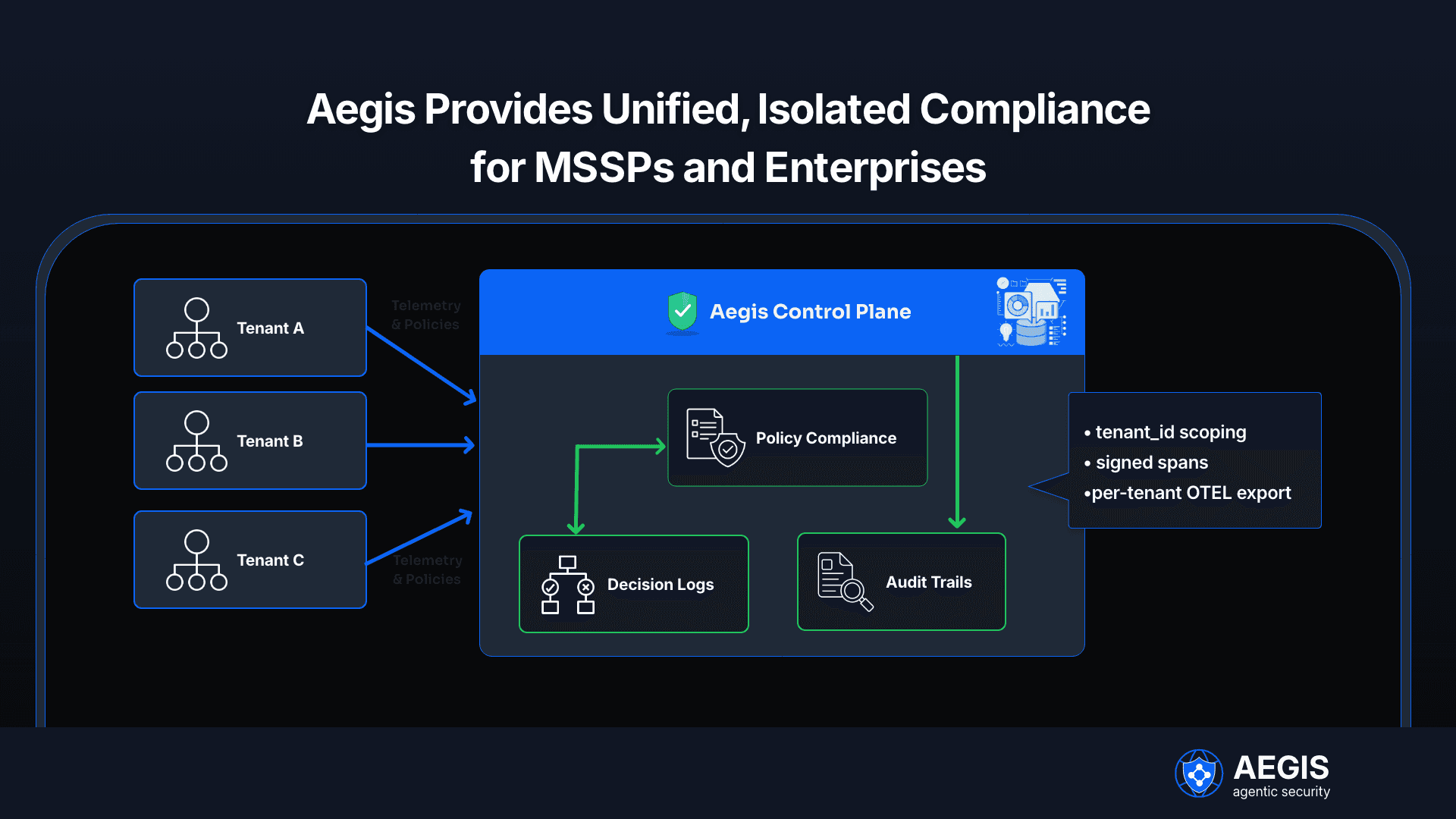
Integration notes for energy operators and MSSPs
Scaling across tenants and regions requires:
- Tenant-scoped bundles and signed manifests to avoid policy bleed.
- Region-tagged routing to meet data residency for certain grid controls.
- Per-agent budgets and rate limits to prevent runaway automation costs or noisy approvals. These are especially relevant for MSSPs managing many customers.
FAQs — Practical operational questions
Q: How does Aegis avoid adding dangerous latency?
A: Use prepared policy queries, in-memory caches, and optional WASM compiled rules. Target P99 < 20 ms for decision calls; proxy overhead is minimised by an Envoy ext_authz pattern.
Q: Can policies require a simulation pass before a live change?
A: Yes — policies can mark actions approval_needed or require a simulation-pass check; shadow mode captures would-deny events for tuning first.
Q: How are approvals recorded?
A: Approvals generate a signed override token and an immutable audit record (policy version, approver identity, timestamp) suitable for SIEM ingestion.
Q: Does Aegis support multi-tenancy?
A: Yes — policy bundles are tenant-scoped; control plane stores versioned bundles and manifests for isolation.
Q: How do I measure if agent automation is safe enough to flip enforcement on?
A: Use shadow metrics (would-deny counts), simulation results, and operational KPIs (grid stability events, approval volumes) to build confidence before enforcing.
Further reading & references
For industry context on agentic AI and utilities, see Capgemini’s research on AI agents and reports on generative AI in energy. (Capgemini) For broader enterprise trends and governance guidance, see McKinsey’s State of AI analysis and Gartner coverage on agent project attrition. (McKinsey & Company)
👉🏻 Optimize inventory decisions in real time with coordinated retail agents
Frequently Asked Questions (5 short items)
- What is the first policy I should write for grid agents? — Start with max_ramp_rate and egress allowlist for dispatch APIs.
- How long should shadow mode run? — Minimum 7 days to capture operational variability; longer for seasonal demand patterns.
- Can approvals scale? — Yes — policies can encode thresholds to limit approvals and route only genuinely high-risk events to humans.
- Is Aegis vendor-specific? — No — designed to be orchestrator-agnostic and integrate via middleware/SDKs.
- How are audit logs protected? — Signed traces and tamper-resistant manifests stored with versioning for compliance review.