Ethics of Autonomous Agents: Designing for Fairness and Accountability
Learn how Aegis enforces fairness and accountability in autonomous AI agents through real-time policy checks, provenance, and human-in-the-loop controls.
Designing Ethical Autonomous Agents: Fairness and Accountability in Practice
As enterprises accelerate the adoption of agentic AI, the ethics of autonomy have moved from abstract debate to urgent operational necessity. Autonomous agents are making decisions that influence hiring, lending, clinical triage, and customer experiences—yet their actions often lack transparency, explainability, or consistent oversight.
Traditional AI governance focused on model-level audits and post-hoc fairness reviews. But in a multi-agent world, those controls arrive too late. What’s needed is per-action accountability—a way to define fairness objectives, instrument decision provenance, and enforce approval flows for high-impact actions in real time.
This is where Aegis, the Agentic AI Security and Policy Gateway by Aegissecurity, introduces a new paradigm: fairness and accountability by design, enforced at the runtime boundary between agents and their tools.
The Fairness Challenge in Autonomous Systems
From Principles to Enforcement
Fairness in AI has long been treated as an afterthought—something measured after deployment through audits or bias reports. However, autonomous agents make thousands of decisions per hour, adapting dynamically to user inputs and environmental contexts. This creates an “operational fairness gap” where harmful or biased actions may propagate faster than human oversight can respond.
A 2024 IT Pro survey found that only 28% of AI developers trust their agents to make fair decisions without human supervision, highlighting the disconnect between model assurance and runtime accountability.
Bias Amplification and Opaque Decision Paths
Agentic systems learn from dynamic prompts, chaining sub-decisions and tool calls. Without per-step visibility, bias can accumulate through reinforcement loops:
- A planner agent routes applicants to a screening model that already exhibits demographic imbalance.
- A financial assistant prioritizes loan candidates based on proxy variables like ZIP codes.fcre
- A medical triage agent allocates resources using prior outcome distributions that reflect systemic disparities.
In each case, the bias doesn’t live in the model alone—it’s in the agent’s orchestration logic, external API calls, and context propagation.
👉🏻 Make AI decisions transparent and easy to understand
Traditional Oversight vs. Policy-Based Accountability
Approach | Description | Limitations |
Post-hoc Audits | Review model outputs after deployment to assess fairness metrics. | Reactive, delayed, and lacks per-decision traceability. |
Central Model Reviews | Perform model-level risk assessments and bias tests. | Ignores dynamic agent behavior and context-dependent workflows. |
Aegis Policy Layer | Enforces per-action fairness and accountability at runtime. | Real-time enforcement with telemetry and human-in-loop control. |
Why the Old Way Fails
In complex AI ecosystems, actions occur across orchestrators, APIs, and data pipelines. Manual reviews cannot scale or guarantee that fairness objectives remain intact after deployment.
Autonomous agents require a continuous enforcement loop, not periodic audits. Policies must evaluate decisions as they happen, comparing them against fairness goals and risk thresholds.
The New Way: Real-Time Ethical Governance with Aegis
Aegis Gateway provides a policy and observability fabric for secure, ethical, multi-agent AI systems. It doesn’t just block malicious activity—it ensures fairness, accountability, and explainability at the level of every agent action.
Core Principles of Ethical Enforcement
1. Define Fairness Per Use Case
Organizations specify what “fairness” means in operational terms:
- Equal outcomes: Similar approval rates across demographics.
- Equal opportunity: Similar chance of being selected for review.
- Process fairness: Transparent justification and consistent handling.
Policies encode these goals using conditions such as:
approval_needed:
when: decision.affects_humans == true
fairness_metric: demographic_parity
2. Identify Sensitive Decision Points
Sensitive actions—loan approvals, patient prioritization, hiring selections—are tagged for enhanced review. Aegis policies require explanations and justification metadata for these actions before execution.
3. Enforce Human-in-the-Loop Controls
When a decision exceeds a predefined ethical risk threshold, Aegis automatically pauses the action and routes it for human approval (e.g., via Slack or Microsoft Teams).
This maintains human judgment in the loop without disrupting low-risk automation.
4. Instrument Provenance and Telemetry
Every agent decision generates structured telemetry:
- Model version and policy version
- Agent identity and chain of calls
- Decision reason and fairness metrics
- Approval ID (if applicable)
This telemetry supports post-event accountability and continuous bias detection.
👉🏻 Maintain clear documentation for audit and compliance
Inside Aegis: How Runtime Fairness Works
Policy-as-Code for Ethical Governance
Aegis allows fairness and accountability to be expressed as code using YAML or JSON. These policies compile into Open Policy Agent (OPA) bundles, delivering deterministic, low-latency enforcement (< 20 ms P99).
Policy Example | Purpose |
approval_needed | Pauses sensitive actions pending human review. |
sanitize | Redacts personally identifiable data before tool calls. |
deny | Blocks unsafe or unfair operations outright. |
allow | Approves routine actions under safe parameters. |
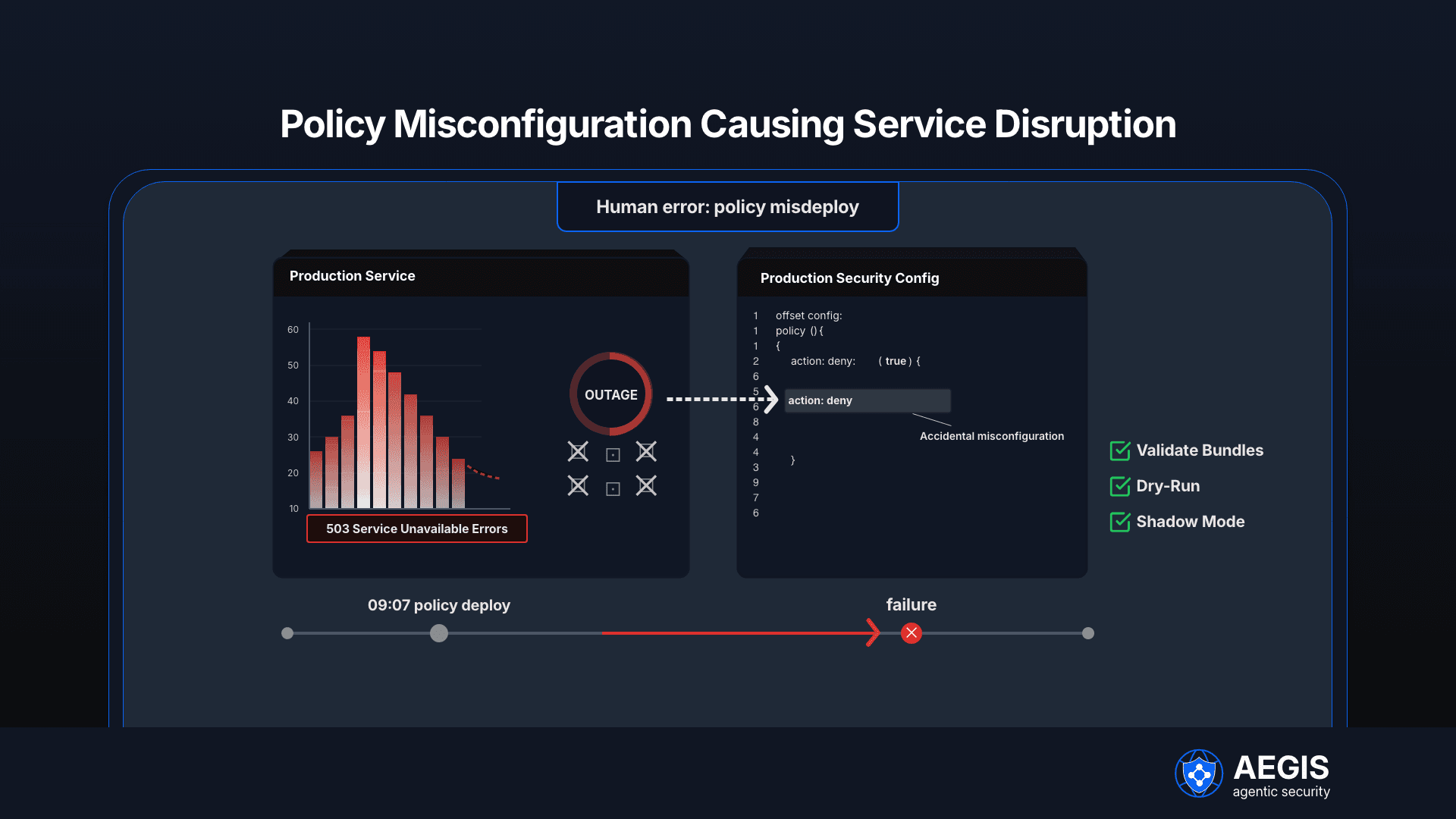
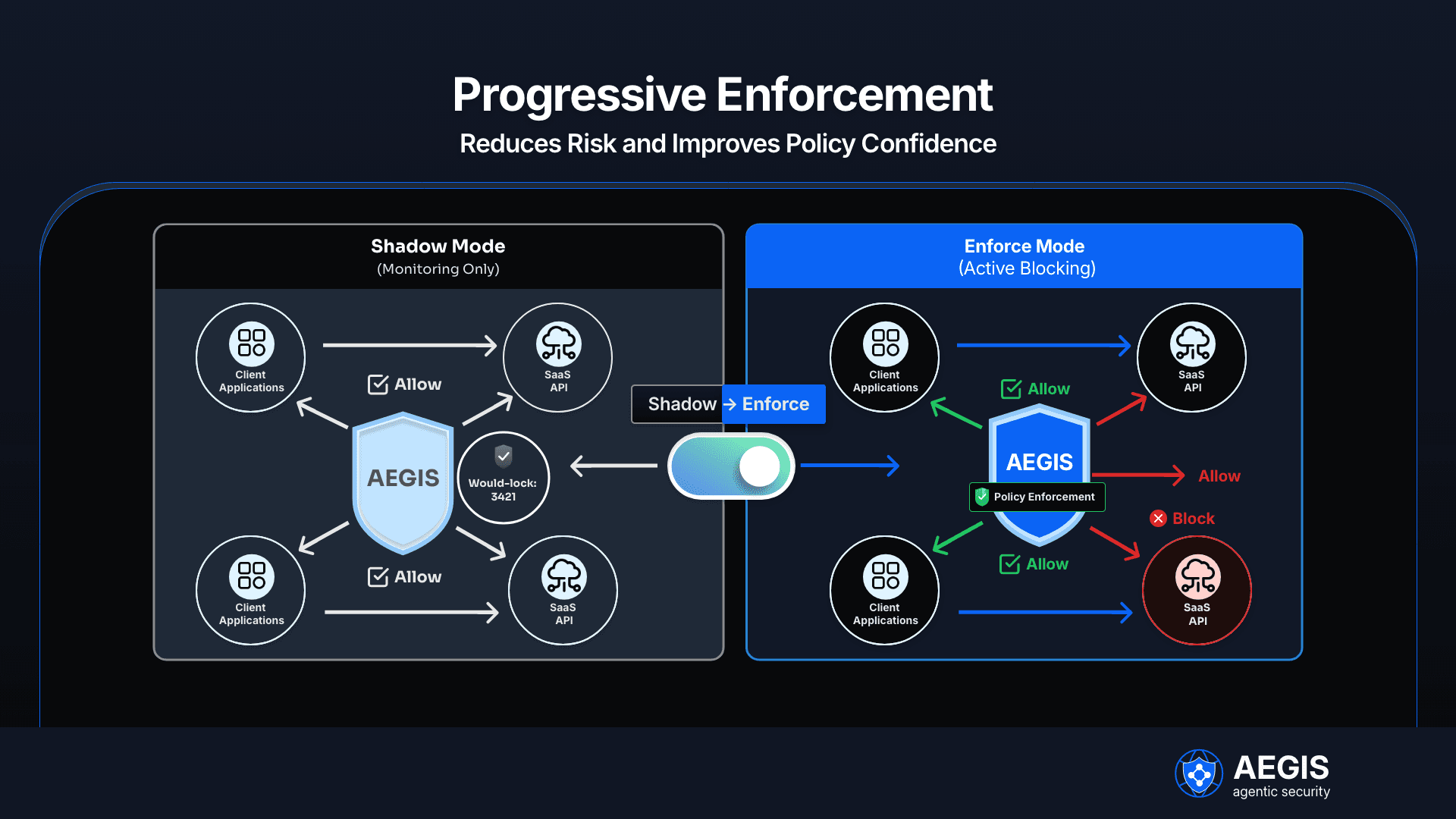
Aegis’s shadow mode allows organizations to collect fairness metrics before enforcement—minimizing disruption during rollout.
Real-Time Enforcement and Telemetry
Each agent call passes through the Aegis Gateway, a secure proxy that evaluates:
- Agent identity (JWT-scoped)
- Tool and parameters
- Policy version
- Decision context
The gateway decides whether to allow, deny, sanitize, or require approval. Every decision emits an OpenTelemetry span, enabling traceability across all actions.
For regulated industries—finance, healthcare, and government—these logs form a tamper-proof record for auditors and compliance teams.
Human Accountability in Agentic Workflows
Embedded Explanation and Contestability
Ethical AI requires not just fairness but contestability—the ability for humans to understand and challenge outcomes.
Aegis supports “right-to-contest” flows by surfacing decision traces (model version, inputs, intermediate calls) for audit or review.
Policy-Driven Data Minimization
To comply with privacy mandates, Aegis enforces data minimization at the tool-call level:
- Only required fields are sent to downstream tools.
- Deterministic DLP removes PII before processing.
- Regional routing ensures data residency compliance.
These privacy features align with global regulations like GDPR and regional guidance from IPC New South Wales on privacy assessments.
👉🏻 Build confidence with reliable and transparent AI systems
Drift Detection and Continuous Fairness Monitoring
Bias and unfair outcomes evolve over time. Aegis enables continuous fairness telemetry to detect drift.
Metric Type | Description | Use |
Outcome Distribution | Compares decision rates across demographics. | Identify imbalance trends. |
Approval Latency | Tracks time between “approval_needed” and final action. | Detect process bottlenecks. |
Fairness Drift | Monitors divergence from baseline fairness goals. | Trigger policy recalibration. |
When drift exceeds thresholds, Aegis alerts administrators and logs a remediation recommendation.
Why Aegis Is Different
Aegis isn’t just an audit layer—it’s an active ethical control plane.
Key differentiators include:
- Agent Identity Boundaries: Prevent privilege escalation through chained calls.
- Human Approval Tokens: Embed accountability for sensitive actions.
- Tamper-Proof Logs: Sign and version policy changes for audit integrity.
- Cross-Tenant Governance: Enforce fairness across multi-tenant environments.
- Shadow + Enforce Modes: Gradual adoption without service disruption.
Aegis turns abstract ethics principles into enforceable, measurable, and reportable controls—bridging the gap between compliance and operational reality.
Use Case Deep Dive: Fairness Enforcement in Financial Decisions
Scenario: Loan Approval Workflow
- Planner Agent: Routes loan applications for scoring.
- Finance Agent: Executes approval or denial based on model output.
Policy Condition:
if: decision.affects_finance == true
then: approval_needed
Aegis pauses approvals where fairness metrics deviate from baseline distributions or when decisions affect protected categories.
Outcome
- Each approval/denial action carries fairness telemetry.
- Regulators can reconstruct the decision chain.
- Finance teams maintain both ethical transparency and audit readiness.
This fairness enforcement model generalizes to other industries—healthcare triage, hiring, insurance underwriting—where accountability is critical.
Operational Benefits for MSSPs and Compliance Teams
Managed security and compliance providers (MSSPs/MSPs) gain strong operational advantages from Aegis:
- Tenant-Scoped Policies: Independent fairness goals per client.
- Signed Telemetry: Chain-of-custody for ethical assurance.
- Auditable Decision Trails: Ready for SOC and DPIA documentation.
- Approval Queue Oversight: Manage fairness exceptions centrally.
These controls reduce the burden of manual reviews while improving transparency across autonomous workflows.
The Future of Ethical AI
As AI systems evolve from assistants to autonomous collaborators, organizations must move from intention to enforcement in their ethical frameworks.
Fairness, accountability, and transparency are not static principles—they’re runtime obligations.
Aegis operationalizes those obligations by integrating fairness policy, explainability, and provenance into the control plane of agentic systems.
The result: trustworthy automation that scales without sacrificing human values.
Frequently Asked Questions
1. How does Aegis detect bias in real time?
Aegis monitors demographic outcome distributions and fairness metrics embedded in telemetry, alerting when they diverge from baseline parity.
2. Can Aegis integrate with existing orchestrators like LangChain or AgentKit?
Yes. Lightweight SDKs and middleware allow Aegis to integrate seamlessly with orchestrators and tools without code rewrites.
3. What happens when a policy requires human approval?
Aegis pauses the action, sends an interactive request (Slack/Teams), and resumes execution once approval is granted with a one-time token.
4. How does Aegis ensure data privacy while enforcing fairness?
It applies deterministic data loss prevention (regex redaction), enforces data minimization, and supports region-based routing to maintain compliance.
5. What’s the latency impact of fairness enforcement?
The policy evaluation overhead is typically under 20 ms at P99 latency due to optimized OPA caching and prepared queries.
6. Can Aegis help with regulatory reporting?
Yes. Its structured telemetry and signed audit trails provide full provenance for compliance frameworks like GDPR, HIPAA, and AI governance audits.