
Building Trust in AI Agents Among End Users
How runtime identity, policy-as-code, provenance and signed audit trails build user trust in agentic AI for regulated enterprises.
Building Trust in Agentic AI: Technical patterns and a practical playbook
Adoption of autonomous, agentic AI in enterprises will hinge less on capability and more on trust. Users and compliance teams accept automation when actions are explainable, attributable, and controllable. This article lays out why trust matters, the technical building blocks that create it, pragmatic UX and governance patterns, and a concrete checklist (plus a case-study-style walkthrough) centered on Aegis — a runtime policy and observability fabric purpose-built to secure multi-agent workflows.
Why trust matters for agent adoption
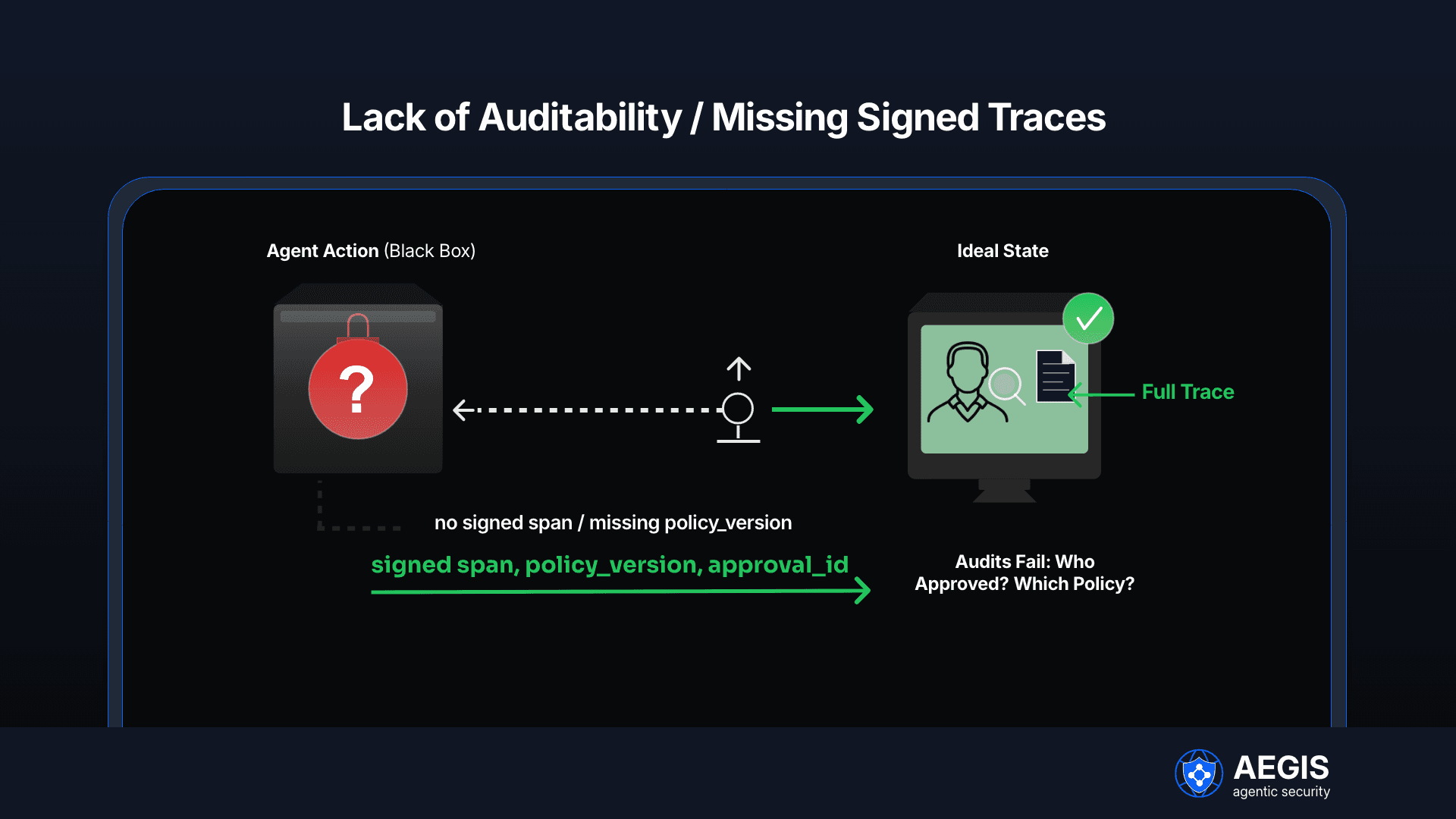
Adoption friction for autonomous agents isn’t just fear of errors — it’s a compound of opaque decisions, missing provenance, and the inability to safely recover from mistakes. Surveys show security and data privacy are not secondary concerns: a recent Cloudera report found 65% of enterprises want stronger data privacy and security features in their AI agents (and nearly all organisations are expanding agent usage). https://www.cloudera.com/content/dam/www/marketing/resources/analyst-reports/the-future-of-enterprise-ai-agents.pdf. Those numbers translate to procurement requirements: signed audit evidence, per-action provenance, and easy human override. Without those primitives, end users — and their compliance teams — will withhold trust, slowing adoption.
From a threat perspective, agents introduce new lateral-chaining risks: one agent can coerce another into performing an unauthorized action unless runtime checks are enforced at the agent↔tool boundary. From an operational perspective, uncontrolled egress, unbounded cost, or silent data exfiltration can all erode user confidence quickly. The technical response must therefore be structural: identity, policy, provenance, deterministic redaction, and human-in-the-loop approvals.
👉🏻 Improve transparency so users can trust how agents make decisions
Technical building blocks for trust
Identity, policy, provenance, and DLP
• Identity per agent: assign each agent a distinct short-lived credential (token with agent_id, tenant, scopes). Treat agents as first-class identities — not just service accounts. This enables least-privilege and traceability. Industry reporting now recommends an identity-first approach for agents; see TechRadar’s guidance on treating agents as separate identities. https://www.techradar.com/pro/how-zero-trust-can-help-organizations-manage-mounting-agentic-ai-security-risk.
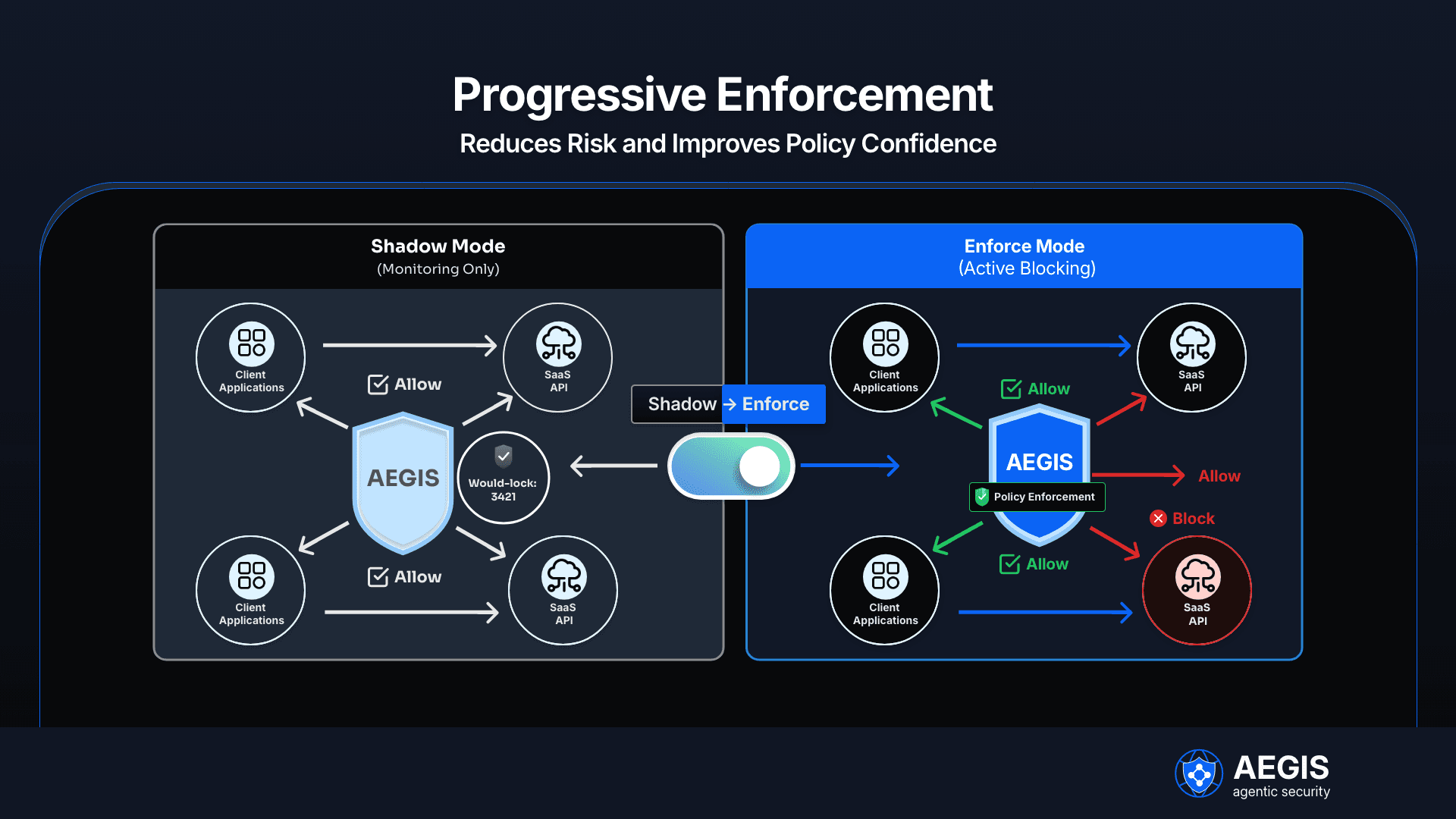
• Policy-as-code: express allowed tools, parameter constraints, budgets and approval thresholds in YAML/JSON policies that compile to a fast evaluator (e.g., OPA bundles). Policies should support dry-run (shadow) mode and hot reloads so teams can measure would-block events before enforcing.
• Provenance & signed traces: emit structured OpenTelemetry spans for every decision that include agent_id, parent chain, policy_version, decision_reason and any sanitized parameter snapshot. Optionally sign manifests/audit bundles to create tamper-resistant chains of custody for regulators.
• Deterministic DLP: perform predictable, policy-driven redaction (e.g., regex or field-level rules) at enforcement time rather than ad-hoc masking later. Redaction rules should be deterministic to support reproducible audits.
Runtime enforcement considerations
The enforcement fabric should sit between orchestrator and tools — a lightweight gateway or sidecar — inspecting each outbound call and returning allow/deny/sanitize/approval_needed decisions in real time. Latency budget is critical; optimized prepared queries and in-memory caching are common techniques to keep decision P99s under tens of milliseconds.
👉🏻 Design autonomous agents with fairness, ethics, and accountability at the core
Table 1 — Core enforcement primitives (example)
Primitive | Purpose | Example policy outcome |
Agent identity token | Tie call to an agent and tenant | token.agent_id = "finance-agent" |
Parameter constraints | Prevent dangerous inputs (amount ranges, regex) | amount <= 5000 → allow |
Approval flow | Human gate for high-risk actions | amount > 5000 → approval_needed |
Redaction/DLP | Remove PII from egress payloads | redact(ssn) before tool call |
UX and governance for end-user confidence
Trust is both technical and experiential. Users need control knobs and clear, contextual explanations for agent actions:
• Action-level provenance in UI: surface “Suggested by: support-agent-v2.1; Reason: matched KB #345; Decision: auto-respond” with links to the signed trace for auditors.
• Consent and consent-scoped actions: offer per-session consent where users can limit which agents can act on their behalf and what classes of data can be accessed.
• Role-based views: SOC teams require raw signed audit artifacts; product teams want summarized provenance. Provide both: an RBAC-driven audit console plus simplified end-user explanations.
• Shadow reports & adoption metrics: publish would-block reports and “shadow” dashboards that show what would have been blocked before enforcement, to build confidence. A net-promoter-like trust score per agent (measuring adoption, false positives, resolution time) helps quantify progress.
.png&w=3840&q=75)
Key Aegis components and how they map to trust primitives:
• Agent registry & identity issuance: Aegis issues short-lived JWTs per agent with agent_id, tenant and scopes. Tokens employ signature verification and jti replay protection.
• Policy compiler & control plane: Security teams author YAML policies (agent, allowed_tools, conditions). Aegis compiles these to OPA bundles with versioning and schema validation; bundles are hot-reloaded to the data plane.
• Runtime gateway (data plane): Deployed as sidecar/forward proxy that intercepts agent tool calls, validates identity, inspects parameters, evaluates policy, and returns allow/deny/sanitize/approval_needed decisions. Decisions are signed and emitted as OTel spans with policy_version and decision_reason.
• Approval service: For approval_needed outcomes, Aegis routes interactive approval requests to Slack/Teams (or an admin console) and issues one-time override tokens after approval.
• Observability & audit: All actions produce structured logs and OpenTelemetry traces; Aegis supports exporting to SIEM and shows dashboards for allow/deny ratios, would-block counts (shadow mode), budget usage, and top agents/tools. Signed manifests and a tamper-evident chain make audits straightforward.
• Developer experience: SDKs and a CLI enable drop-in integration with common orchestrators and allow policy dry-run simulation for safe rollout.
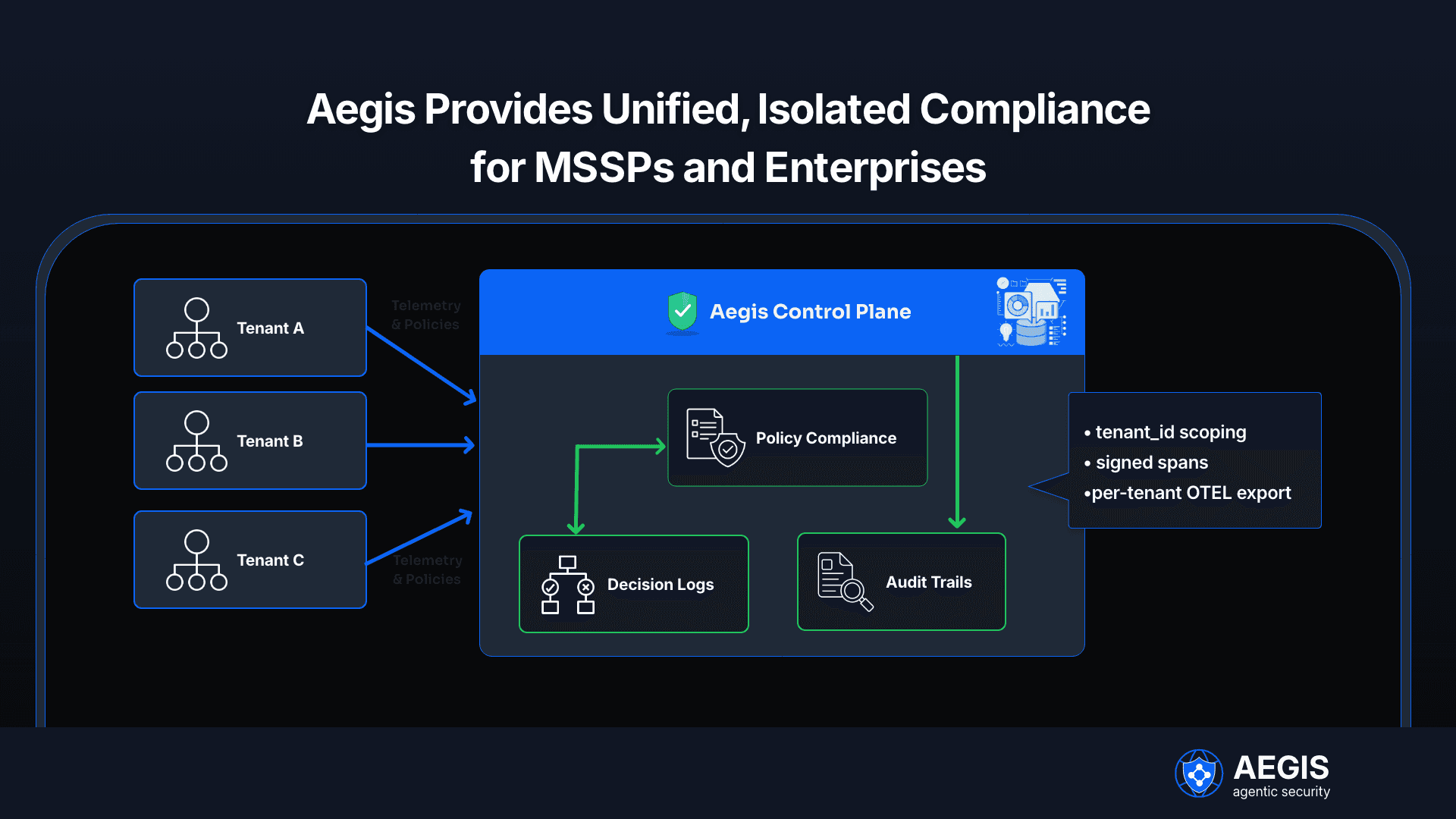
Table 2 — Aegis feature matrix (selected)
Feature | Why it matters for trust | Aegis implementation |
Per-agent identity | Least-privilege & attribution | Short-lived JWTs with agent_id, scopes |
Policy hot-reload | Rapid iteration with low risk | Compile YAML → OPA bundles, hot reload |
Signed traces | Forensic & compliance evidence | Attested OTel spans + audit manifests |
Shadow mode | Safe tuning before enforcement | Would-block reports and dashboards |
Deterministic DLP | Compliant data handling | Policy-run redaction prior to egress |
Aegis also supports practical rollout tactics: begin with non-sensitive agents in shadow mode, publish governance playbooks to buyers (including SLA and audit process), and progressively flip enforcement once shadow metrics meet thresholds. For MSSPs and regulated verticals (healthcare, FinTech), Aegis can emit tenant-scoped signed artifacts suitable for quarterly audits and evidence in incident investigations.
👉🏻 Strengthen accountability with clear documentation of every agent decision
Case study and tactical checklist
Example: Healthcare provider requires audit traces for every EHR interaction. Using Aegis, the deployment enforces:
• Clinical-agent read-only to /patients/{tenant}/records unless purpose=care.
• Deterministic redaction of SSN/DOB in all outgoing payloads.
• Approval for any external export. The compliance team reviews signed traces during quarterly audits and measures time-to-resolution for any incidents.
Checklist for pilot rollout
- Register agents and issue short-lived tokens.
- Write sample policies (shadow mode) covering the top 10 tools/connectors.
- Run a 2-week shadow run; collect would-block metrics.
- Tune regexes/conditions and roll policies to enforce.
- Enable signed manifests for the first regulated workflow.
- Publish SLA + governance playbook for buyer review.
Practical measures, metrics & governance
Measure progress using both technical and adoption metrics:
• % actions with provenance (target: 100% for regulated workflows).
• Shadow → enforce conversion rate (how many would-blocks were tuned to allows).
• Time to resolution after an incident (goal: measurable reduction).
• User adoption velocity (onboarding rate after signed trace demonstrations).
Takeaways
Trust for agentic AI is engineered, not marketed. The combination of agent identity, policy-as-code, deterministic DLP, signed provenance and human approval paths forms a defensible, auditable runtime governance layer. Teams that start in shadow mode, publish governance playbooks, and measure both technical and human-facing metrics will unlock sustainable adoption.
References & further reading
• Cloudera — The Future of Enterprise AI Agents (survey and statistics). https://www.cloudera.com/content/dam/www/marketing/resources/analyst-reports/the-future-of-enterprise-ai-agents.pdf
• TechRadar — Zero Trust and identity approaches for agentic AI. https://www.techradar.com/pro/how-zero-trust-can-help-organizations-manage-mounting-agentic-ai-security-risk
Frequently Asked Questions
Q1 — What is the minimum set of telemetry required to prove an agent action?
A1 — At minimum: agent_id, tenant_id, policy_version, decision (allow/deny/sanitize/approval_needed), parent_agent_id (if present), and a hashed/signed snapshot of relevant parameters. Signed manifests help preserve integrity.
Q2 — Should policies be enforced from day one or run in shadow first?
A2 — Start in shadow mode for non-sensitive workflows. Use would-block metrics to tune policies, then progressively enable enforcement for higher-risk actions.
Q3 — How do you balance transparency with protecting system internals?
A3 — Provide abstracted provenance for non-technical users (plain-language reasons and consent gates) while retaining full signed traces for auditors and SOC teams.
Q4 — Can agent identities be tied to a human owner?
A4 — Yes — mapping agents to human owners or responsible teams improves accountability. However, agents still need independent short-lived credentials to enforce least-privilege.
Q5 — How do approvals scale for high-volume environments?
A5 — Use thresholds to limit approvals to genuinely risky actions, implement batching or group approvals for similar requests, and use override tokens with strict one-time validity to reduce human overhead.
Q6 — What role does redaction play in compliance?
A6 — Deterministic redaction protects PII at enforcement time and produces reproducible audit artifacts for compliance reviews; policies should default to redact-first for sensitive fields.