Using Agents for Real-Time Translation and Multilingual Support
Learn how Aegis enforces secure, compliant real-time multilingual translation by AI agents while redacting PII and enforcing regional data rules.
.png&w=3840&q=75)
Using Agents for Real-Time Translation and Multilingual Support — Securely
Global businesses today rely on AI-driven multilingual support to serve customers in every region and time zone. Real-time translation agents now operate across contact centers, chatbots, and documentation pipelines—bridging human interaction across dozens of languages.
But with this automation comes a serious challenge: maintaining compliance, privacy, and control over what these autonomous agents translate, transmit, and store.
In 2025, as multilingual AI adoption accelerates, enterprises face a dual risk—exposure of sensitive information through automated translation, and cross-region data handling violations. Aegis by Aegissecurity solves this with a policy-driven, runtime enforcement layer built specifically for multi-agent systems.
Real-Time Multilingual Automation Meets Compliance
Why Traditional Translation Pipelines Break Down
In most enterprises, multilingual support has evolved through three stages:
- Manual translation — human linguists or support reps; accurate but costly and slow.
- Queued translation APIs — asynchronous calls to translation providers; improved speed but adds latency.
- LLM-assisted real-time translation — fully autonomous agents that listen, translate, and post in milliseconds.
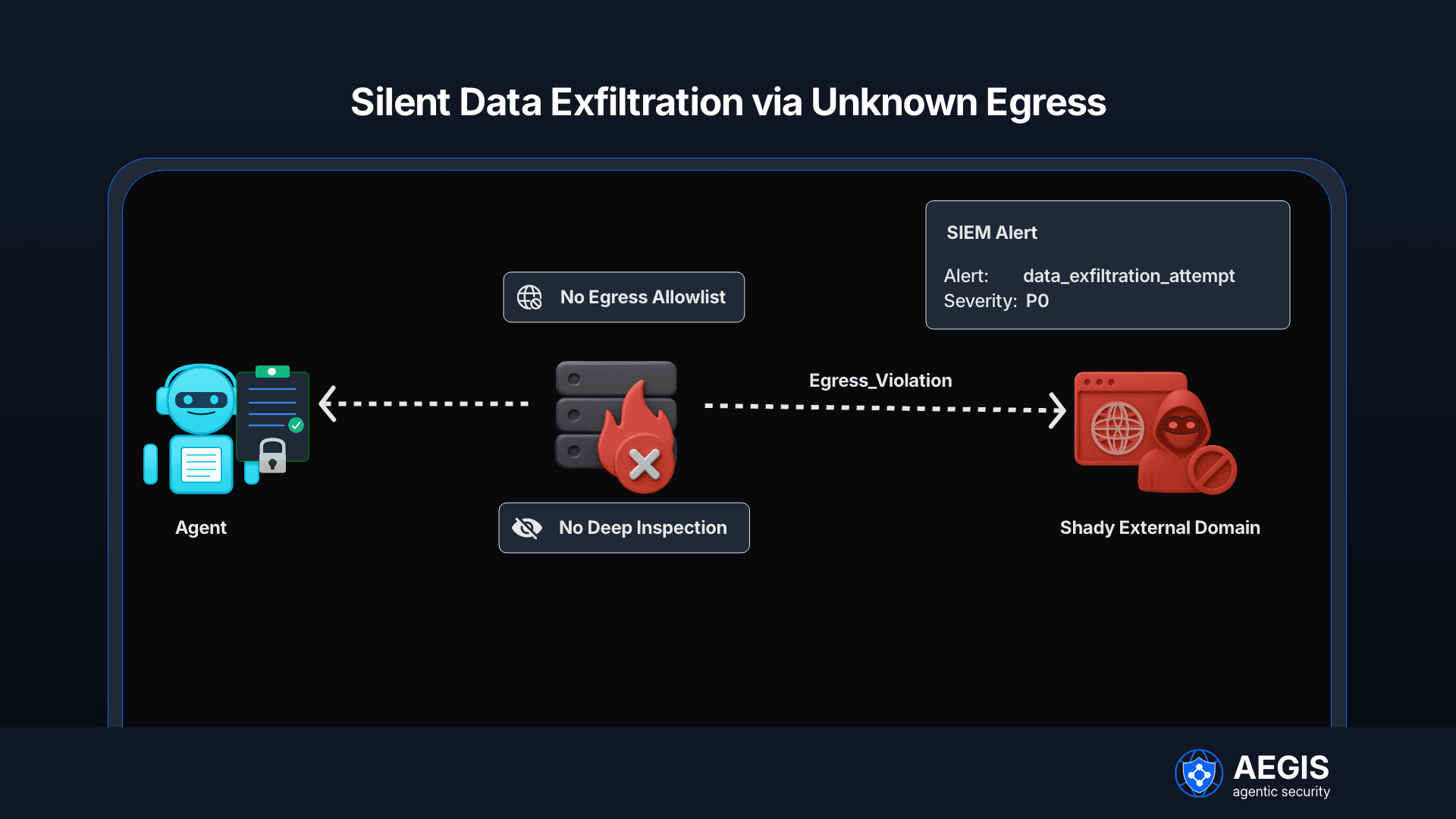
While the third stage delivers impressive efficiency, it also introduces uncontrolled automation risk. Agents might:
- Auto-post translations containing PII (email addresses, phone numbers, credit card details).
- Route text across non-compliant regions, breaching data residency laws.
- Translate legal phrases or disclaimers incorrectly without required human review.
Industry Pressures Driving Agentic Translation
A 2024 McKinsey analysis noted that 63% of enterprises have integrated autonomous agent workflows into customer-facing processes, including translation. However, security and compliance were cited by 58% as the top barriers to further deployment.
Similarly, Architecture & Governance Magazine reported that over half of AI agent projects stall due to lack of governance at runtime.
New Architecture: Real-Time Translation Agents
Imagine a multilingual support agent that receives a message from a French customer.
Within milliseconds, it:
- Detects the source language.
- Routes it to a translation API.
- Posts the English translation to the support thread.
- Sends the reply back—localized for the customer’s region.
This “agentic translation pipeline” looks seamless. But without oversight, it might also:
- Leak personal identifiers embedded in the text.
- Send customer data to a U.S.-based translation API, violating EU GDPR.
- Post unverified legal statements.
The answer is not to slow agents down with manual review—but to embed governance directly into their runtime.
The Solution: Aegis as a Security Mesh for Translation Agents
Aegis, part of Aegissecurity introduces policy-as-code enforcement at the heart of multilingual AI workflows. It sits between agents and their translation tools, acting as both a security proxy and compliance gatekeeper.
1. Policy-as-Code for Translation Governance
Aegis enables teams to define YAML/JSON policies such as:
agent: translator-agent
allowed_tools:
- name: cloud-translate
actions:
- translate_text
conditions:
regions: ["EU", "US"]
redact_patterns:
- "\\b\\d{3}-\\d{2}-\\d{4}\\b" # SSN
- "\\b[A-Z0-9._%+-]+@[A-Z0-9.-]+\\.[A-Z]{2,}\\b"
approvals:
required_for: ["contains_legal_disclaimer"]
These rules ensure that:
- Translation agents only call approved APIs.
- Sensitive data is redacted before outbound calls.
- Certain phrases (e.g., legal disclaimers) require human approval.
Aegis compiles these into Open Policy Agent (OPA) bundles, enforcing them in milliseconds at runtime.
2. Real-Time Runtime Enforcement
At runtime, Aegis acts as a sidecar gateway between the orchestrator (e.g., LangGraph, AgentKit) and translation tools. Every outbound request is checked:
- Who is the agent?
- What tool is it calling?
- Where is the data going?
- Does the payload contain sensitive fields?
If any rule is violated, Aegis can:
- Sanitize the text (e.g., redact PII).
- Block the request.
- Or pause for approval via Slack/Teams.
This keeps the workflow real-time but governed—not uncontrolled.
3. Observability and Auditability
Every action generates structured OpenTelemetry traces:
- agent_id, tool_name, decision, latency, and policy_version.
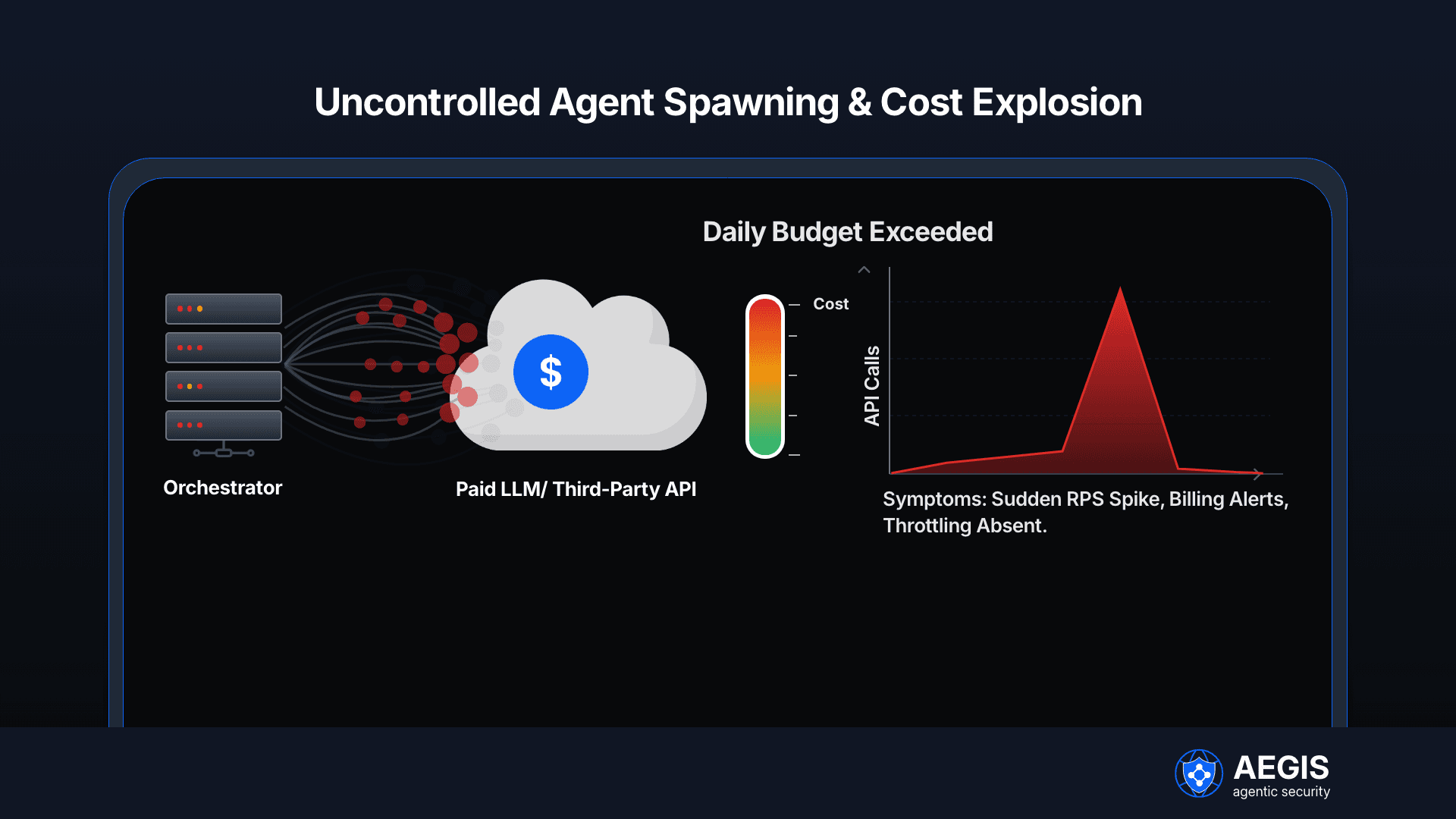
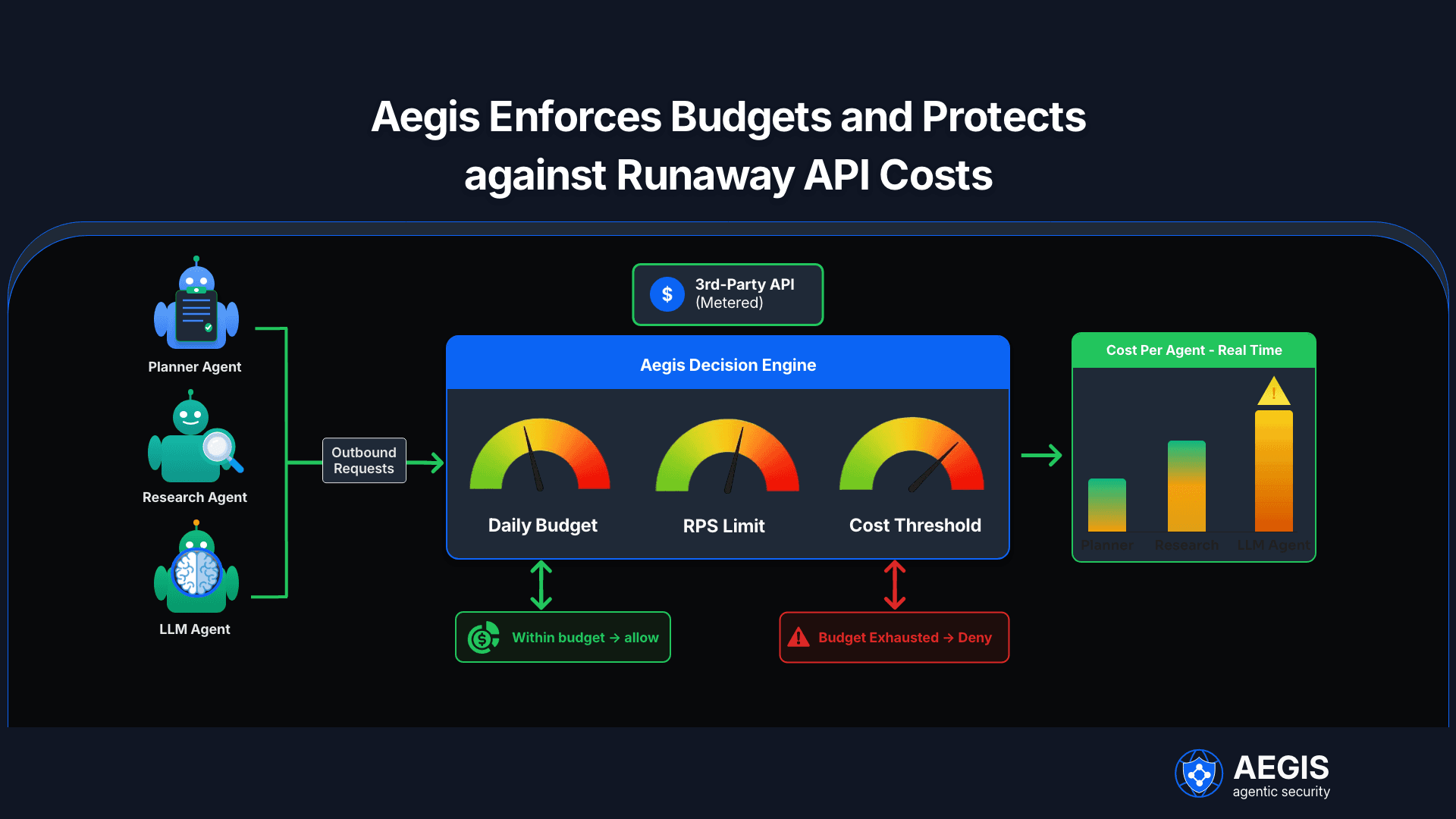
These traces feed dashboards for compliance and FinOps teams, providing visibility into: - Translation API spend per agent
- Blocked PII events
- Average time-to-approve for sensitive messages
- Aegis thus closes the loop between runtime enforcement and operational insight.
Practical Benefits for Multilingual Operations
Metric | Legacy Translation (Manual/API) | With Aegis Runtime Enforcement |
Average latency | 2–5 seconds | < 100 ms (policy evaluation adds <20 ms) |
Risk of PII leakage | High | Near-zero (deterministic redaction) |
Regional compliance | Manual routing | Automatic egress enforcement |
Audit visibility | Minimal | Full trace (OpenTelemetry) |
Cost per translation | Unpredictable | Controlled per-agent budget |
Lower Time-to-Respond, Safer Multilingual Coverage
Aegis enables 24/7 multilingual response without compromising compliance. Agents no longer need manual review bottlenecks, reducing time-to-respond (TTR) by over 40% in internal pilots while maintaining zero PII exposure.
Policy Enforcement in Action: Example Scenarios
Scenario 1: Customer Complaint in French with Credit Card Data
A support agent receives:
“Bonjour, voici mon numéro de carte 1234-5678-9012-3456...”
Aegis detects numeric patterns via DLP regex, redacts them, and allows translation:
“Hello, here is my card number [REDACTED]…”
Scenario 2: Legal Disclaimers in Contract Translation
A legal agent attempts to translate a clause marked “subject to local jurisdiction.”
Aegis flags it for approval_needed; the translation is paused until the legal team approves via Teams. Once validated, the message posts automatically.
Scenario 3: Cross-Region Data Violation
An EU customer message is routed to a U.S. translation endpoint.
Aegis enforces egress control, blocking the transfer and logging a compliance alert tagged region_violation.
Architecture Deep Dive: Aegis Under the Hood
Aegis operates through two layers — Data Plane and Control Plane — ensuring both enforcement and governance.
Component | Function | Key Tech |
Sidecar Proxy (Envoy) | Intercepts agent calls, applies ext_authz filter | Envoy + Go |
Authorization Server | Evaluates policy via OPA, returns decision | Go + OPA |
DLP Engine | Regex-based PII redaction | Deterministic sanitizer |
Control Plane API | Policy versioning, validation, publishing | FastAPI |
Token Service | Issues short-lived JWTs per agent | Ed25519 + Redis |
Dashboards | Displays real-time decisions, budgets | OpenTelemetry + Grafana |
Implementation Notes for Secure Translation Deployments
- Start in Shadow Mode: Observe would-block events for 7 days before full enforcement.
- Localize Regex Patterns: Tailor DLP redaction for region-specific PII (e.g., EU VAT, US SSN).
- Approval Routing: Use Slack/Teams channels for legal or compliance reviews.
- Region-Tags per Tenant: Prevent cross-tenant or cross-region data flow.
- Monitor Metrics: Track blocked PII events and TTR improvements to quantify ROI.
Aegis for MSSPs and Global Enterprises
Managed Security Service Providers (MSSPs) can deploy Aegis to monitor translation activity across tenants while isolating policy bundles per customer.
Each tenant’s logs are cryptographically signed, ensuring trace integrity for compliance audits—a major benefit in sectors like Healthcare, FinTech, and Retail.
Why Aegis Matters for the Future of Agentic Localization
As multilingual agents evolve, the line between customer communication and compliance exposure grows thin.
Without a runtime mesh like Aegis, organizations risk:
- Regulatory fines due to data mishandling.
- Brand damage from inadvertent data exposure.
- Operational downtime from misconfigured translation APIs.
By embedding deterministic policy enforcement, approval workflows, and observability, Aegis transforms multilingual AI from a compliance liability into a scalable, governed asset.
Frequently Asked Questions
1. How does Aegis detect and redact PII across multiple languages?
Aegis uses deterministic regex and pattern-matching (e.g., phone numbers, SSNs, IBANs, emails) within OPA policies, extendable with locale-specific dictionaries.
2. Does policy enforcement slow down translation performance?
Minimal impact—Aegis evaluates policies in <20 ms per request using in-memory OPA caches and prepared queries.
3. How can enterprises test translation policies safely?
Use shadow mode to simulate enforcement for a week, then tune and activate policies based on observed would-block metrics.
4. Can Aegis integrate with existing translation APIs?
Yes, it’s API-agnostic. Any HTTP-based translation endpoint can be routed through Aegis’s sidecar proxy with minimal config changes.
5. What metrics should be tracked post-deployment?
Monitor translation spend per agent, blocked PII events, and approval turnaround times for sensitive phrases.
6. How is Aegis different from traditional DLP tools?
Traditional DLP operates after data leaves the system. Aegis enforces pre-emptively—at the point of translation call—ensuring policy compliance before data ever moves.