
Tourism Industry: Multi-Agent Travel Planning and Booking
Secure agentic travel planning and booking with runtime policy, payment gating, and auditability for enterprise and MSSP deployments.
Aegis: Runtime Security for Agentic Travel Workflows
Travel and tourism are among the earliest verticals adopting multi-agent orchestration: discovery agents, pricing-arbitrage agents, booking agents and compliance agents working together to deliver curated, multi-stop itineraries in real time. That promise comes with concrete risks: unauthorized payments, silent PII exfiltration, vendor spoofing and policy drift. This article explains operational risks in agentic travel stacks, operational patterns for secure itinerary automation, and — in detail — how Aegis, the Agent Privilege & Identity Boundary Enforcement Gateway, mitigates those risks while preserving automation velocity.
Why travel needs runtime agent security
Agentic travel systems work by chaining specialized agents: a discovery agent finds flights and experiences, a pricing agent arbitrages across OTAs, a booking agent executes reservations, and a compliance agent validates visas and local health rules. This chain improves conversion and speed, but introduces new attack surfaces:
- Unauthorized payment flows. A malicious planner can coerce a finance agent into initiating transfers if there are no per-agent limits or identity boundaries.
- Silent data leaks. Passport/visa details or PII can be forwarded to third-party connectors without residency controls.
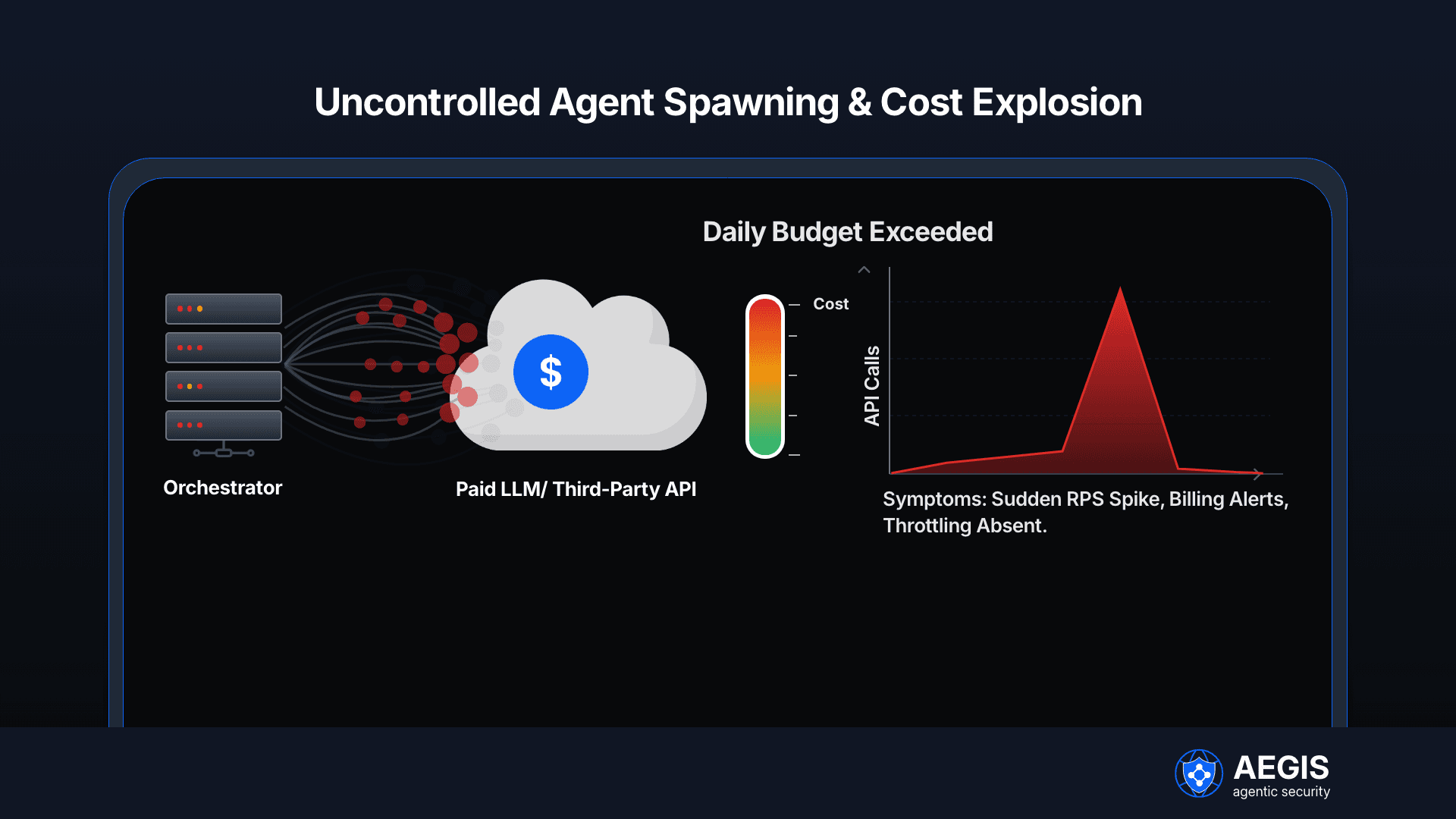
- Cost runaway. Agents can spawn and repeatedly call expensive APIs (LLMs, GDS queries) without per-agent budgets.
Market tailwinds make this urgent: the global AI in tourism market exceeded an estimated US$3.37B in 2024 and is forecast to grow at ~26–28% CAGR toward 2030. This underlines both opportunity and the need for controls. (Grand View Research)
A recent consumer survey shows younger travelers already using AI tools to craft trips, increasing the prevalence of agentic trip planning in production contexts. Consumer expectations now include provenance for pricing and transparent supplier terms. (The Guardian)
Core security and operational requirements for itinerary automation
Operational teams deploying multi-agent travel workflows should treat the orchestrator → agent → tool boundary as a security perimeter.
Key requirements:
- Per-agent identity & short-lived credentials. Each agent has a distinct identity and tokens that expire quickly to prevent impersonation.
- Parameter inspection & policy limits. Evaluate parameters (amounts, destination domains, merchant IDs) against rules before tool calls.
- Approval gating for high-risk actions. Human approval for payments above thresholds or cross-border bookings that trigger compliance checks.
- PII masking and data-residency routing. Strip or redact passport numbers and route egress to region-approved connectors.
- Audit trail & tamper-evident telemetry. Every agent decision must be a signed, queryable trace for SOC and compliance reviews.
These map directly to travel use cases: corporate travel policy enforcement (cost caps, allowed carriers), last-minute rebooking flows where agents act fast but must respect spend limits, and supplier verification for payments.
Aegis in the itinerary stack
Aegis is a runtime policy and observability gateway designed to sit between an orchestrator (AgentKit, LangGraph or similar) and the downstream tools used by agents (payment APIs, OTAs, GDS, EHRs). In travel stacks Aegis enforces least-privilege at the agent↔tool boundary, performing four critical functions:
- Identity & short-lived tokens. Aegis issues per-agent JWTs (tenant/agent claims, expiry, scopes). Tokens bind agent identity to the call and prevent agent-from-agent impersonation. Token minting uses Ed25519 signatures and supports JWKS for stateless verification.
- Policy-as-code & runtime enforcement. Teams write policies in YAML/JSON (compiled to OPA bundles). Policies can specify allowed tools, parameter constraints (e.g., amount <= 5000), required approvals, and egress allowlists. At runtime Aegis evaluates every agent tool call and returns allow/deny/sanitize/approval_needed decisions, blocking risky payments and masking PII before outbound requests.
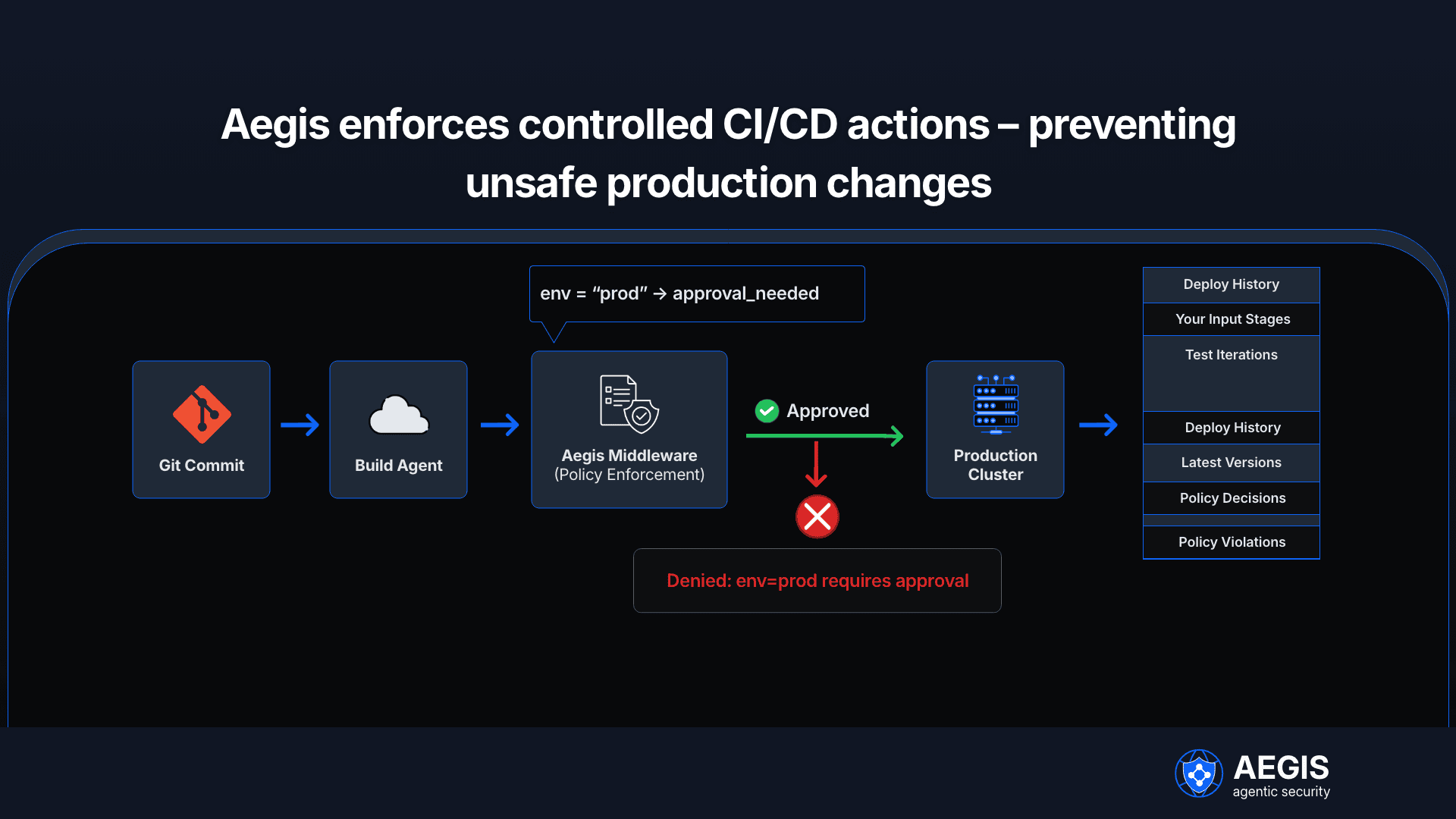
- Approval flows & overrides. For travel, booking agents commonly need human sign-off on high-value corporate bookings or visa-sensitive itineraries. When a policy returns approval_needed, Aegis posts an interactive approval to Slack/Teams. Once approved, Aegis mints a one-time override token for the retry.
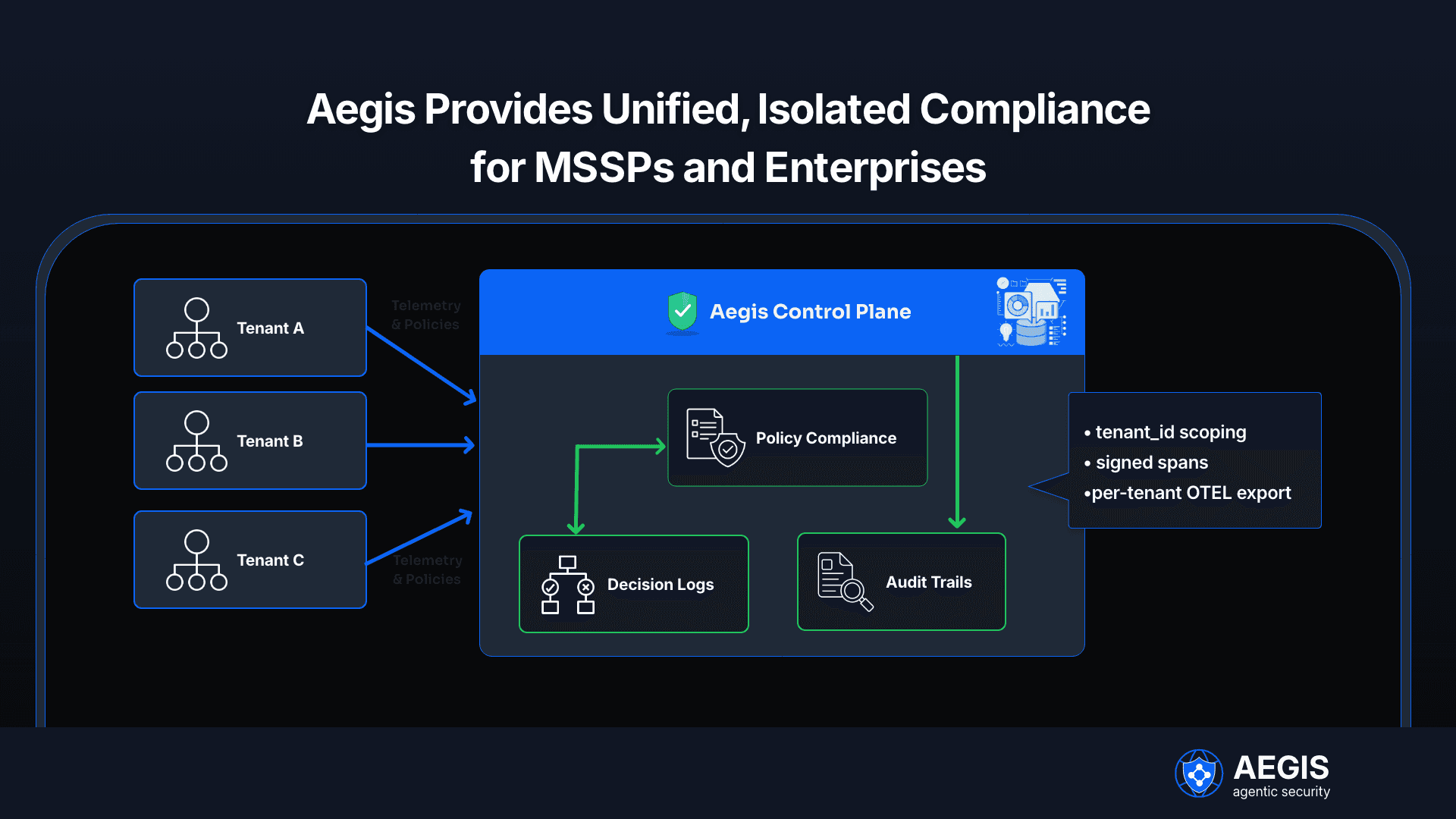
- Observability & auditability. Every decision emits OpenTelemetry spans with agent_id, tool, policy_version, decision_reason and latency. Logs are structured and SIEM-ready for SOC review — essential evidence when regulators ask which agent executed a payment or who approved it.
Operational benefits for travel teams:
- Prevent agent coercion: A planner agent cannot trick the finance agent into unauthorized transfers because Aegis enforces the finance agent’s max_amount policy at runtime.
- Protect traveler PII: Passport and passport images can be deterministically redacted or routed to region-tagged processors.
- Control costs & quotas: Per-agent budgets and RPS limits stop runaway calls to expensive LLMs or paid GDS endpoints.
Aegis is intentionally orchestrator-agnostic and integrates via lightweight middleware or Envoy ext_authz sidecar, enabling drop-in deployment without rewriting agent logic.
Implementation patterns and operational checklist
Practical checklist for a travel pilot:
- Register provider connectors and test direct API vs screen-scrape vs GDS integration patterns (table below).
- Define per-agent policy templates (discovery, booking, finance, compliance).
- Enable shadow mode for 7 days, collect would-deny metrics, tune regexes and thresholds.
- Instrument per-agent budgets and approval routing to Slack/Teams.
- Add data-residency rules for passport/visa storage and ensure SIEM export.
Comparison: OTA integration patterns
Pattern | Latency | Reliability | Security concerns | When to use |
Direct API | Low | High | Requires credential management; supports signed merchant IDs | Preferred for enterprise bookings |
GDS (global distribution) | Medium | High | Complex credentials; channeling rules | Large inventory & corporate rates |
Screen-scrape | High | Low | Fragile; risk of PII leakage; brittle parsing | Last-resort for unintegrated suppliers |
Example policy snippets (conceptual)
Agent | Allowed Tool | Condition |
finance-agent | stripe-payments:create_payment | amount ≤ 5000 OR approval_needed |
booking-agent | ota-booking:create_reservation | merchant_id in verified_list, tokenized_payment=true |
Operational use cases and metrics
Key metrics to track during pilots:
- Conversion rate (itinerary → booking)
- Time-to-quote
- Booking success rate
- Average basket value
- Policy deny rate and approval latency
A pilot should start in a narrow vertical (corporate travel or niche leisure) and instrument the above metrics while running policies in shadow mode for tuning.
Legal & compliance considerations
Payments and PII in travel are regulated (PSD2 in Europe and similar frameworks elsewhere). Aegis supports per-agent tokenization and audit trails needed for compliance evidence. Where required, routing payloads to region-specific processors and enabling tamper-evident logs reduces regulatory friction.
Failure modes and fallbacks
Common edge cases:
- Sold-out items: Agents should surface fallbacks (alternate hotels/transfers); Aegis can annotate responses with provenance so users understand price origins.
- Mass cancellations: Test rate limits and approval workflows under surge; Aegis can fail-closed for writes and allow configurable fail-open for reads to preserve availability.
- Approval overload: Tune policy granularity and use budgets/rate limits to reduce low-value approvals.
Two quick implementation tables
Pilot phase | Focus | Success criteria |
Phase 0 (week 0–2) | Connector registration, shadow policies | Would-deny < 5% of legitimate flows; stable traces |
Phase 1 (week 3–6) | Enable enforcement for payments & budgets | Blocked violations declined; approval latency < 10 min |
Phase 2 (week 7–12) | Multi-tenant rollout for MSSP | Per-tenant isolation; SIEM integration validated |
Tool | Aegis Control | Outcome |
Stripe / PSP | amount checks, merchant verification | Prevents unauthorized transfers |
OTA API | merchant ID allowlist, tokenized payments | Ensures payouts to verified merchants |
LLM provider | per-agent budget, RPS limit | Prevents runaway costs |
Further reading and sources
The tourism market sizing and CAGR are documented by market research (Grand View Research). Consumer adoption trends and use patterns are discussed in recent travel industry coverage. For enterprise guidance on agentic AI risks and market context see surveys and analyst writeups. (Grand View Research)
Frequently Asked Questions
Q: Where does Aegis sit in an agentic travel deployment?
A: Aegis is a runtime gateway (sidecar/proxy or middleware) between the orchestrator and third-party tools, enforcing policies and emitting telemetry.
Q: How are high-value payments handled?
A: Policies can require approval_needed for amounts above thresholds; Aegis posts approvals to Slack/Teams and mints single-use override tokens after human approval.
Q: Can Aegis redact passport/PII?
A: Yes — deterministic regex DLP and sanitization policies support PII redaction and allow region-tagged routing for residency requirements.
Q: How does Aegis affect latency?
A: Aegis uses prepared OPA queries, in-memory caches and short-lived tokens to target low overhead; typical design aims for P99 policy latency well under tens of milliseconds. See OPA performance guidance. (Open Policy Agent)
Q: What are recommended pilot targets?
A: Start with B2B corporate travel or a focused leisure vertical where policy definitions (corporate spend caps, allowed carriers) are straightforward and measurable.