
Shadow AI in the Enterprise: Why Your Security Stack Misses It
Discover why traditional DLP and CASB engines fail to track conversational AI data leakage and how Aegis uses multi-signal correlation to eliminate the risk.
Shadow AI in the Enterprise: What It Is, Why Your Security Stack Misses It, and How to Find It
Executive Hook: I've had this exact same conversation with six enterprise CISOs over the last quarter. Every single one of them assured me their cloud access security brokers (CASBs) and perimeter firewalls had completely blocked unsanctioned AI tool usage inside their networks. Yet, within forty-eight hours of deploying a multi-signal correlation scan, we discovered hundreds of active, out-of-band connections routing sensitive financial models and production source code directly into public large language models (LLMs). The reality is stark: your existing security stack is structurally blind to Shadow AI.
1. Defining the Shadow AI Threat Vector
1.1. What Is Shadow AI?
Shadow AI is the unauthorized use of artificial intelligence tools, platforms, and automated browser extensions by employees within an organization without formal IT approval or security governance. Driven by immediate operational pressure to boost productivity, write code faster, and streamline daily workflows, workers routinely bypass official procurement and risk assessment gates.
The scope of this migration is significant. Research reveals that worker access to AI capabilities rose by 50% recently, with over 56% of enterprise employees actively using unauthorized AI tools at work. Conversely, only 23% of workers utilize AI tools provided and governed by their organization. The vast majority of enterprise AI execution occurs completely outside corporate oversight frameworks, visibility lines, and compliance controls. This is not a theoretical governance problem; it is an immediate financial liability. Data breaches involving shadow AI cost organizations an average of $670,000 more than standard security incidents, with 97% of breached organizations lacking proper AI-dedicated access controls at the time of the compromise.
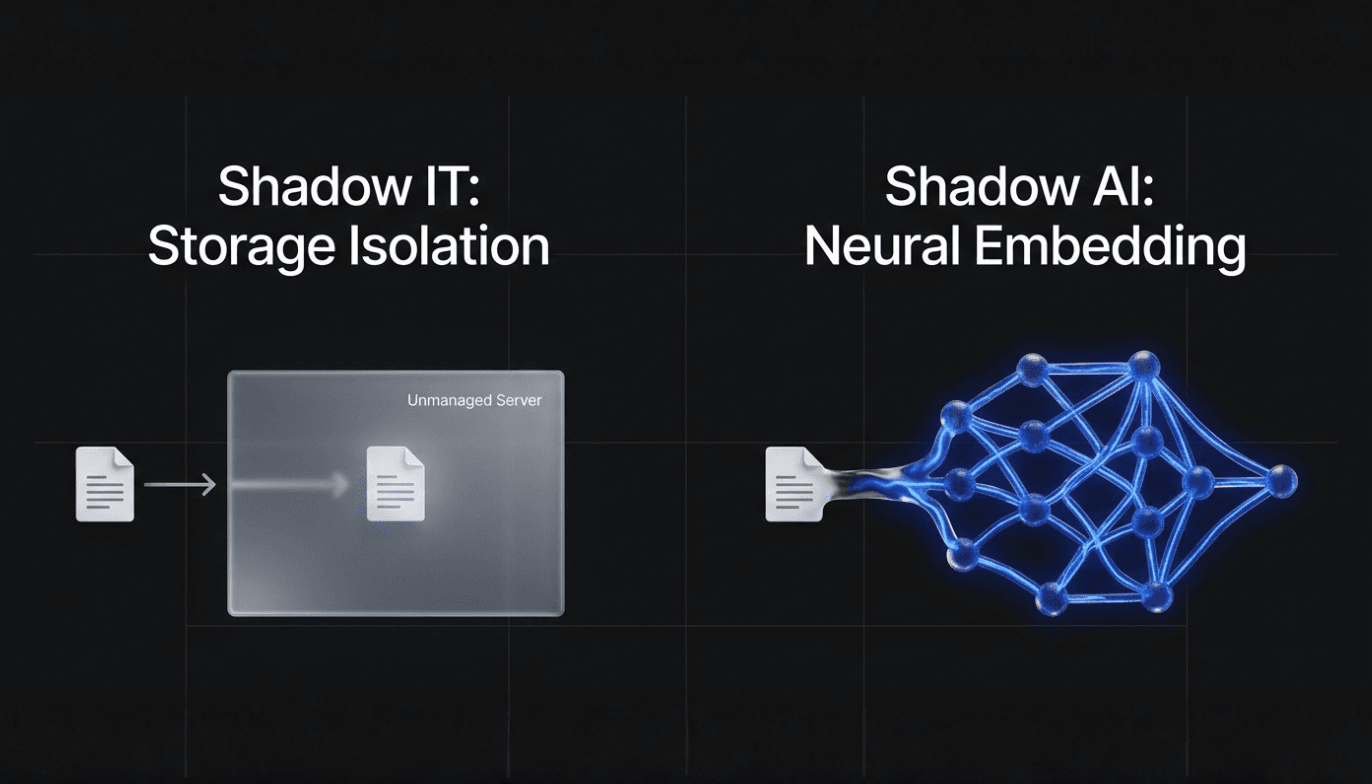
1.2. Shadow AI vs. Shadow IT: The Neural Embedding Problem
While shadow AI represents a subset of traditional shadow IT, treating these two risk categories identically is a critical architectural mistake. Classic shadow IT involves employees using unapproved software-as-a-service (SaaS) utilities or cloud storage buckets. The primary exposure here is a containable data location problem: your files sit on an unmanaged server, but the data remains discrete and physically erasable.
Shadow AI introduces a completely different structural dimension. AI models do not simply store your information; they process it through inference—drawing conclusions, synthesizing contexts, and mathematically embedding elements of user prompts directly into the model’s internal weights and parameters during continuous fine-tuning loops.
Once an engineer pastes proprietary source code into a public chatbot to debug a production issue, that data becomes part of the training material. It can be reproduced in response payloads delivered to external third parties. You cannot request a data deletion or enforce a "right to be forgotten" inside a neural network parameter tree the way you can delete a file from a standard database server. This irrecoverability makes shadow AI a distinct risk category that traditional shadow IT programs cannot remediate.
2. Why Your Existing Security Stack Misses the Signal
Most enterprise security operations centers assume their current Data Loss Prevention (DLP) engines, Secure Web Gateways (SWGs), and Cloud Access Security Brokers (CASBs) catch these interactions. In practice, they are structurally blind to conversational data pipelines.
2.1. Conversational Data Bypasses Traditional Monitoring
Traditional perimeter security tools were built to track structured data transfers—identifying specific file extension movements, database drops, or rigid application usage patterns. When an employee interacts with an unsanctioned AI tool via a standard browser tab, the security stack observes legitimate, fully authenticated HTTPS traffic routing to an established domain. Because streaming queries pass as standard web traffic rather than isolated document uploads, the data movement evades signature matching.
2.2. Pattern-Based DLP Fails Against Natural Language
Legacy DLP engines are engineered to scan for explicit, structured data syntax: Social Security numbers, credit card numbers, or proprietary regex metadata tags. Shadow AI transfers corporate assets via unstructured natural language conversations.
If a financial director prompts a public model to "analyze this raw text and explain why our Q3 earnings dropped," they are exposing highly confidential performance parameters. Because the payload contains no structured file headers or standard regex matches, the legacy DLP engine processes the request completely unhindered.
2.3. Embedded AI Features Evade Detection
The attack surface is further complicated by embedded shadow AI. Third-party SaaS applications continuously introduce autonomous AI features within their existing interfaces without issuing change management notices to enterprise customers. When a worker uses an unvetted browser plugin for grammar correction, document summarization, or text generation, the extension processes data externally via background API calls. To a network monitoring tool, this activity appears as typical application usage, completely masking the data exfiltration channel.
3. The Anatomy of Modern Agentic Risks
The emergence of autonomous capabilities turns shadow AI from an intellectual property exposure point into a high-speed operational amplifier for cyber adversaries.
3.1. Data Exposure and the "Vibe Coding" Trap
As organizations push for rapid application development, engineers leverage unauthorized coding assistants to "vibe code"—building full applications rapidly through natural language prompts. In this environment, structural configuration security takes a back seat to raw deployment velocity.
Without code reviews or data handling agreements, these systems can quietly embed hardcoded secrets into production files or publish databases lacking vital access controls. This vulnerability was demonstrated in early 2026 when researchers discovered a massive breach in Moltbook, a viral network for AI agents. Because the platform was vibe-coded without Row Level Security (RLS), 1.5 million API keys and 35,000 user emails were exposed, allowing anyone to hijack active agents and manipulate connected AWS and OpenAI systems.
3.2. Misinformation and Indirect Prompt Injection
Traditional generative risks focus on outputs. Agentic AI, however, introduces autonomous action execution. These agents use web-browsing capabilities to parse external sites, pull internal database values, and trigger code functions independently without a human in the loop.
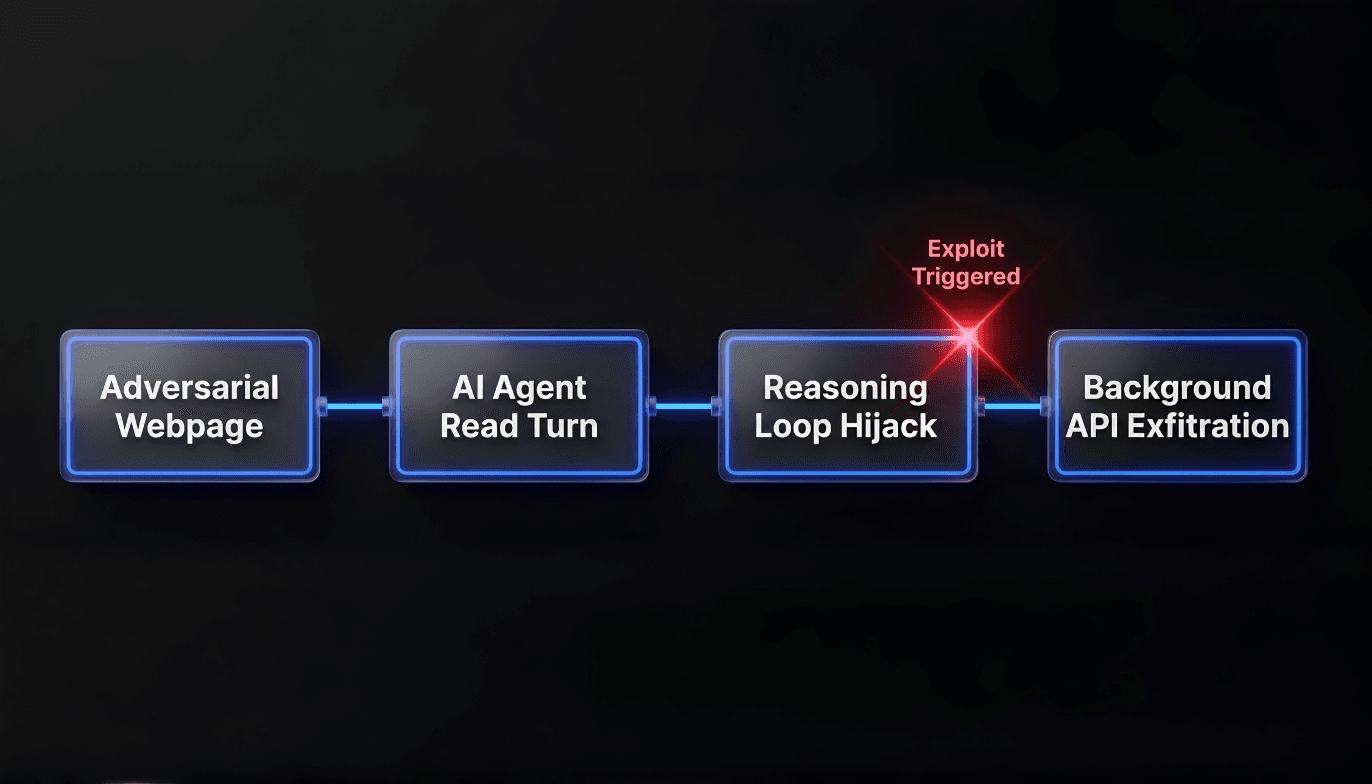
Throughout 2025, security intelligence streams tracked widespread vulnerabilities to Indirect Prompt Injection across agentic browsers like Perplexity and Opera. An adversary can place hidden, malicious instructions on a public webpage; when an unsanctioned AI agent parses that site on behalf of an enterprise user, the embedded instructions hijack the agent's inner reasoning loop, forcing it to quietly leak the user's active session tokens or payment vectors via background API calls.
3. AI-Powered Supply Chain Worms
As machine learning tools mature, malware authors deploy automated packages designed specifically to exploit them. Modern threats no longer just scrape local endpoints; they weaponize the developer’s own local command-line AI utilities to execute cascading supply-chain infections.
This shift materialized in late 2025 during the s1ngularity and Shai-Hulud attacks. This AI-driven malware hijacked active local development agents (such as Claude and Gemini CLI tools), using them to discover and extract highly privileged GitHub and npm authorization tokens. Once exfiltrated, the malware automatically infected and republished thousands of malicious code packages under the developer’s identity, creating a self-propagating worm that bypassed standard static security checks.
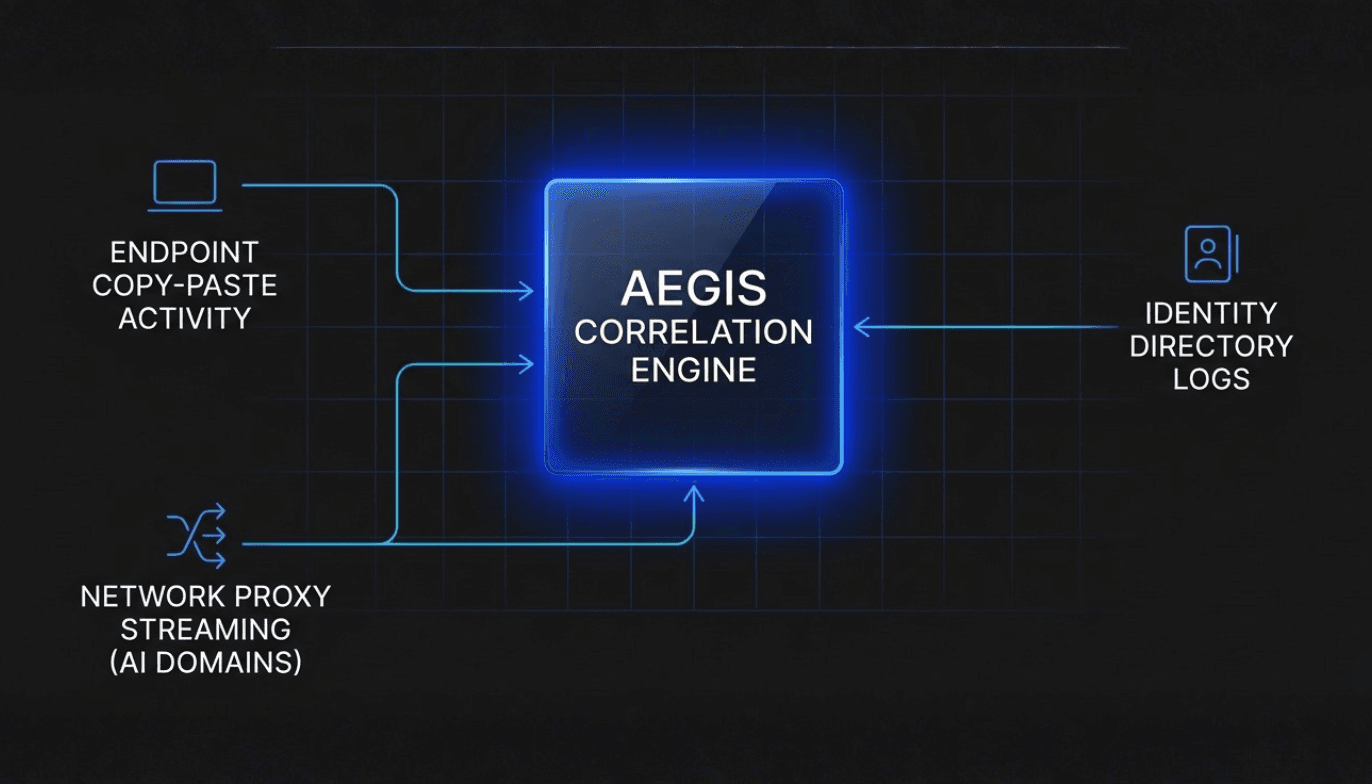
4. The Aegis Solution: Multi-Signal Correlation
Because single-point inspection engines fail to catch unstructured, natural language workflows, organizations must shift to the Aegis Multi-Signal Correlation Engine. Aegis rejects the assumption that a single perimeter boundary can eliminate risk. Instead, it aggregates telemetry signals across identity directories, endpoint event loops, and network proxies to expose unmanaged AI transactions in real time.
Table 1: Single-Tool Detection vs. Aegis Multi-Signal Correlation
Telemetry Vector | Legacy Single-Tool Scanner (CASB/DLP) | Aegis Multi-Signal Correlation Platform |
Data Payload Evaluation | Limited to exact syntax matches (SSNs, specific files). Misses natural language. | Executes continuous semantic intent analysis across unstructured streaming queries. |
Ingestion Latency | Batch processing; often alerts hours or days after a data transfer completes. | Real-time correlation; matches endpoint copy-paste events to outbound proxy streams instantly. |
Identity Visibility | Blind to personal accounts accessed via corporate hardware or embedded SaaS tools. | Tracks non-human identity lifecycles, automated browser extensions, and credential use. |
Remediation Model | Rigid boundary blocking that drives shadow usage further underground. | Dynamic runtime interception; redirects unsanctioned requests to secure enterprise alternatives. |
5. Strategic Implementation: 4 Core Indicators & Execution Pillars
To move your organization from reactive blocking to proactive containment, security leaders must look for five operational indicators and build governance directly into the technical architecture.
5.1. Operational Indicators of Shadow AI Adoption:
- Unusual Outbound Traffic Streams: Consistent HTTPS connections to known model endpoints (api.openai.com, claude.ai, gemini.google.com) that do not match the organization's approved inventory.
- Large Copy-Paste Telemetry Events: Endpoint behavioral data showing massive blocks of unstructured internal code or financial text being copied from local systems and pasted into browser-based tabs.
- Unmanaged Accounts on AI Platforms: Routine credential audits discovering corporate email addresses registered on external model portals without central authorization.
- Unexplained Productivity Accelerations: A business unit suddenly exceeding production metrics without additional headcount, indicating unapproved AI adoption to bridge workflow gaps.
5.2. Implementing the Governance Framework:
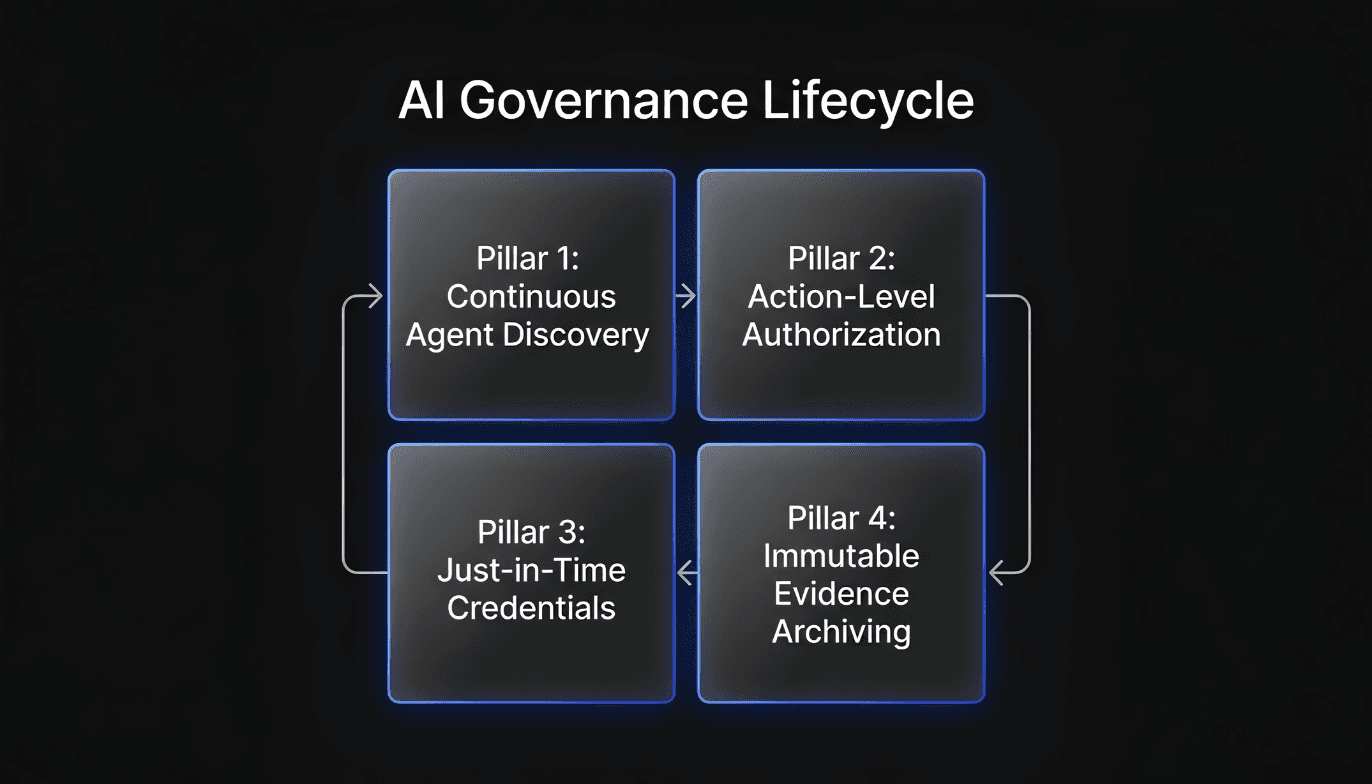
- Establish a Cross-Functional AI Governance Council: Bring together security, GRC, legal, HR, and business leaders. Shadow AI cannot be solved by IT isolation; decisions require balanced evaluations of regulatory constraints, intellectual property risk, and worker productivity.
- Deploy an AI Acceptable Use Policy: Define a concise, human-readable policy specifying which tools are approved, what data classifications are strictly prohibited from leaving the perimeter (e.g., PII, source code, client data), and a streamlined submission process with strict SLAs for new tool adoption.
- Provide Sanctioned AI Alternatives: Eliminate procurement friction at the source. By offering developers and finance teams vetted, corporate-governed alternatives with strict data privacy bounds, the incentive to seek shadow alternatives disappears.
- Enforce Policy at the Execution Layer: Transition from paper-based guidelines to automated, runtime enforcement. The platform must inspect input prompts and output responses stochastically, tracking delegated identities and logging every tool call to provide an auditable trail for global compliance frameworks.
Conclusion: Turning Signal into Control
The future of enterprise security in the age of AI will not be defined by how cleanly you can restrict your network perimeters, but by how accurately you can govern active execution. In a world of infinite signals, passive discovery is merely a map of your vulnerabilities; true resilience demands real-time, enforceable policy.
By shifting from surface-level domain blocking to deep multi-signal correlation, organizations can discover hidden assets, intercept data leakage before it enters a neural network, and turn raw signal into deployable trust. Do not let shadow AI grow silently inside your trusted infrastructure. Secure the action layer, replace policy theater with deterministic controls, and confidently scale the benefits of managed enterprise intelligence.
Frequently Asked Questions (FAQ)
Q1: Why do traditional CASB and SWG tools fail to detect shadow AI data leakage?
A: Legacy tools are engineered to look for structured file formats or explicit syntax codes (such as credit card numbers). Shadow AI transfers critical data using unstructured natural language conversations over legitimate HTTPS connections, allowing sensitive financial models or code logic to flow past standard perimeter filters completely unhindered.
Q2: What is the main structural difference between shadow IT and shadow AI?
A: Shadow IT is a data location problem; your files sit on an unapproved server but remain discrete and physically erasable. Shadow AI introduces the neural embedding problem: data pasted into public chatbots is absorbed via inference and can become permanently embedded within the model's parameters, where it cannot be tracked, recalled, or deleted.
Q3: How does indirect prompt injection affect autonomous browser agents?
A: If an unauthorized agent is instructed to browse the web for data collection, it can parse an external site where a malicious actor has hidden text instructions. These instructions manipulate the agent's inner reasoning loop, tricking it into initiating background API calls that quietly leak your active session tokens or corporate credentials.
Q4: Can organizations use blanket perimeter blocks to eliminate shadow AI risk?
A: No. Blanket perimeter blocks fail because they incentivize workers to find more complex, completely unmonitored workarounds—such as deploying tools over personal devices and mobile networks. True mitigation requires providing secure, corporate-sanctioned alternatives that eliminate procurement friction.
Q5: What does an Aegis Multi-Signal Correlation engine analyze to spot hidden AI use?
A: The platform matches separate endpoint and network indicators in real time. It correlates massive copy-paste telemetry events within local business applications with concurrent streaming HTTPS traffic routing to unmapped external models and unapproved third-party account registration profiles.
Q6: What is "vibe coding" and why does it represent a supply chain risk?
A: Vibe coding is the process of generating application code rapidly via natural language prompts without manual developer validation. It presents a severe supply chain risk because code generated without formal AppSec metrics can introduce critical vulnerabilities, logic errors, or exposed secrets directly into your production environments.
Q7: How often should an enterprise execute an internal shadow AI audit?
A: Organizations should establish a quarterly audit cadence. This is essential because standard SaaS applications constantly introduce new embedded AI features within their existing interfaces without issuing notification updates to the corporate customer, silently creating shadow AI inside tools you already approved.
Q8: How does an immutable evidence vault assist with global AI compliance audits?
A: Compliance frameworks like the EU AI Act and GDPR require organizations to demonstrate ongoing runtime control over active AI workflows. An immutable vault continuously logs point-in-time configuration snapshots, tool access profiles, and trace-linked policy decisions inside write-once-read-many (WORM) storage, providing external auditors with permanent proof of governance.