Security Considerations for Agents Accessing Cloud Services
Learn key security considerations and how Aegis enforces policy, DLP, and runtime control for AI agents accessing cloud services.
Security Considerations for Agents Accessing Cloud Services
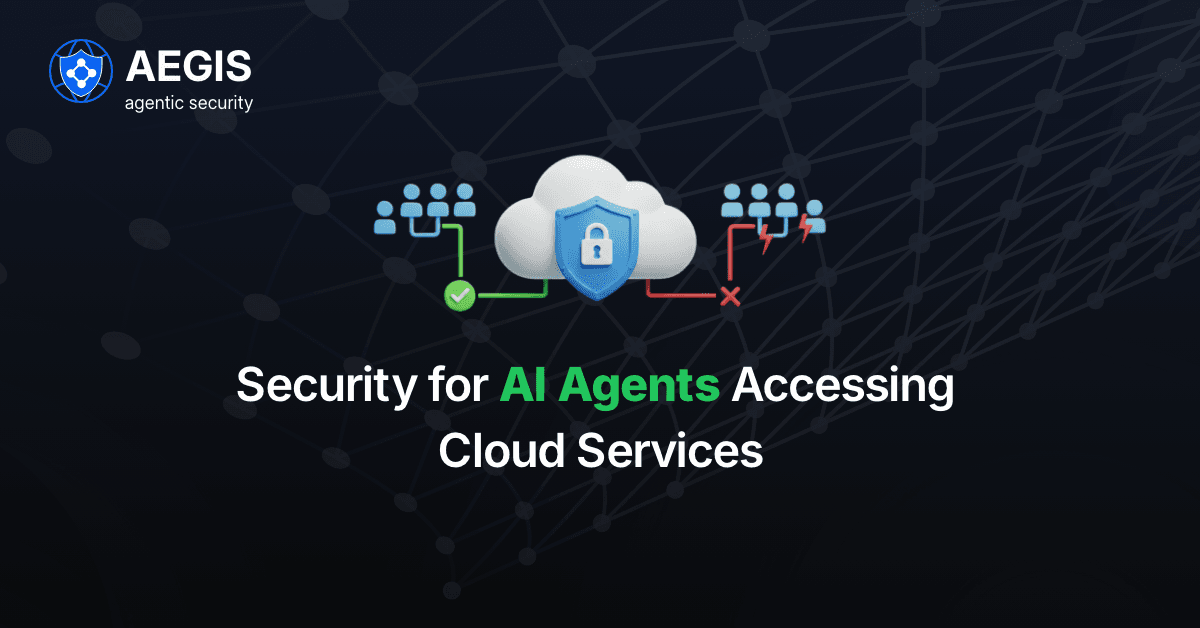
Autonomous and semi-autonomous agents now interact directly with cloud APIs, internal tools, and customer data. This new class of workloads introduces distinct attack surfaces unseen in traditional human-driven traffic. Agentic AI systems can inadvertently leak sensitive data, exceed authorization scopes, or trigger expensive or unsafe operations without proper guardrails.
This blog explores modern security considerations for agents accessing cloud services, the limitations of traditional controls, and how Aegis — \Aegissecurity agentic AI security fabric — enforces deterministic data loss prevention (DLP), runtime policy, and observability to safeguard multi-agent environments.
Agents, Privilege, and Cloud Exposure
From Human Users to Machine Autonomy
Agents today handle API payloads, text, and documents containing personally identifiable information (PII), payment data, and intellectual property. When connected to external tools or APIs, they can unintentionally transmit regulated data — a risk compounded by opaque orchestrator behavior and shared service accounts.
Traditional network and endpoint DLP systems were designed for human workflows. They cannot distinguish between an engineer posting to Slack and an LLM-based “support agent” automating ticket triage. As a result, data egress events by agents often bypass security controls entirely.
Data Leakage and Privilege Escalation Scenarios
Common vulnerabilities include:
- Prompt-driven privilege escalation: A planner agent induces another to perform privileged actions, e.g., initiate a payment via the finance agent.
- Parameter injection: Malicious inputs embedded in prompts result in unsafe API calls.
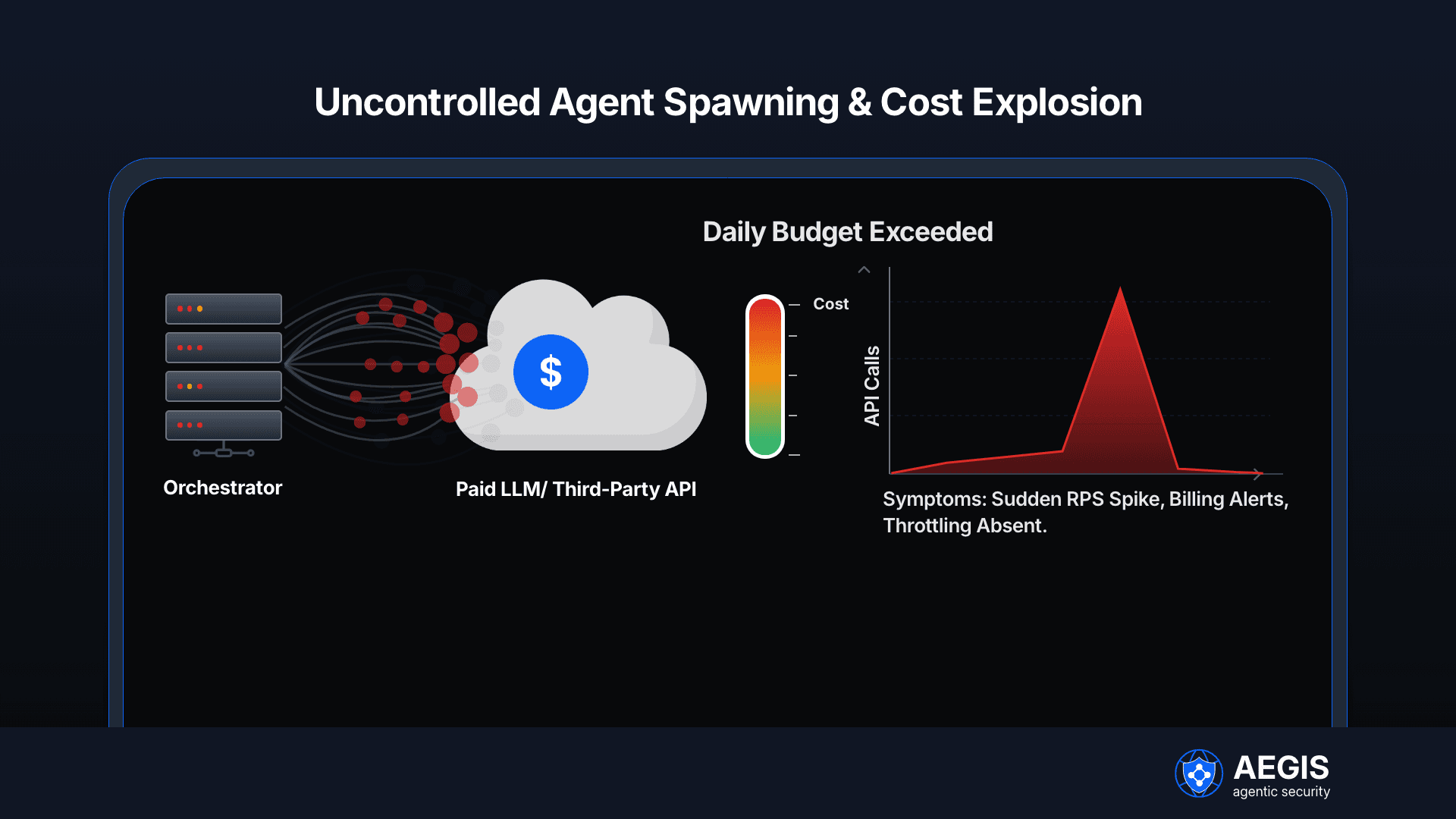
- Shadow agents and unbounded costs: New agents spawn autonomously and access billable APIs without budgets.
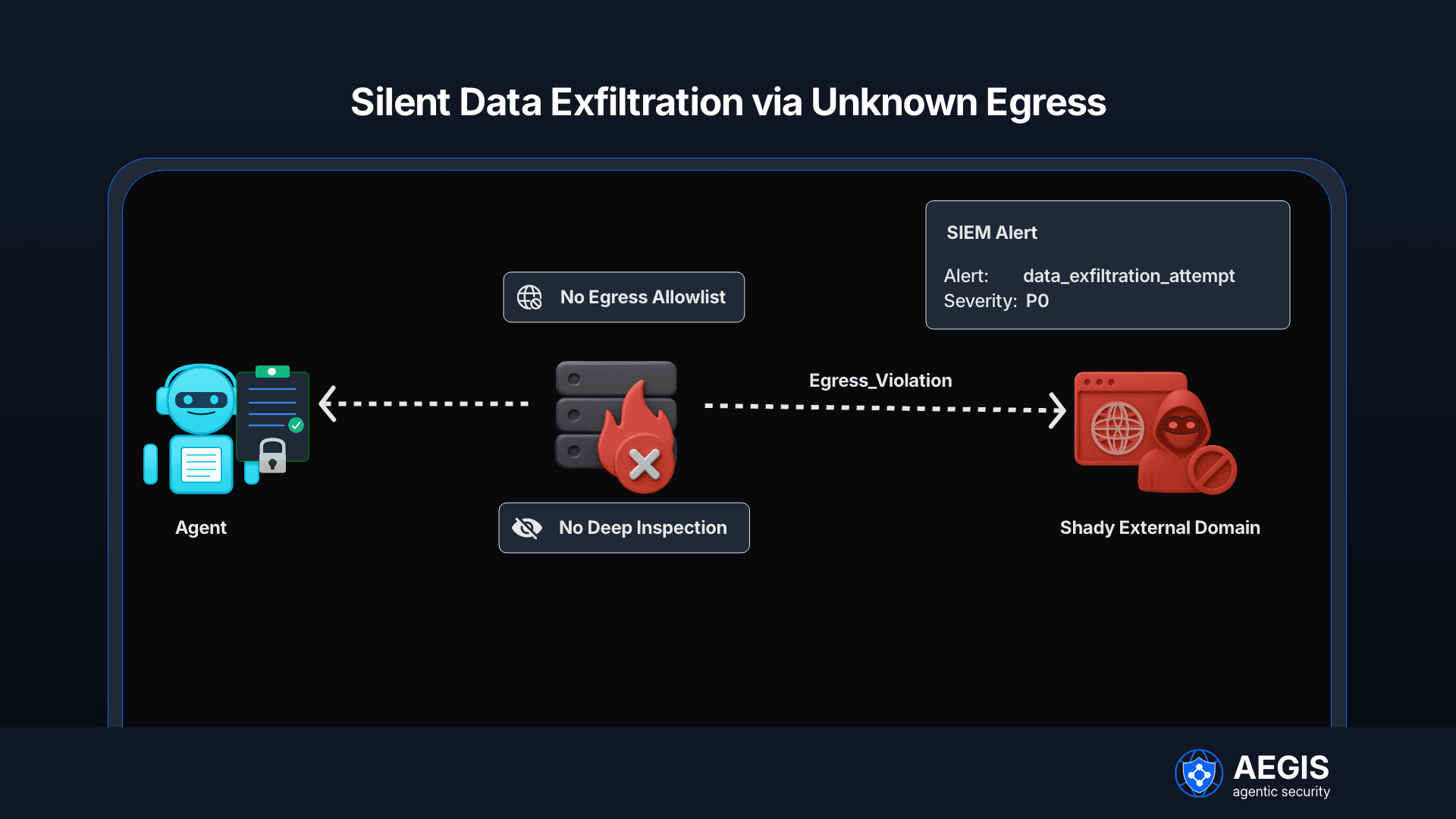
- Silent data exfiltration: Agents send payloads to unapproved domains or public channels.
These scenarios show that agentic architectures require enforcement at the runtime boundary — between the agent and the cloud service.
The Evolving DLP and Cloud Control Landscape
Legacy Controls Are Not Enough
Traditional data loss prevention systems operate on endpoint or network layers, matching regex patterns across human traffic. However, when agentic AI intermediates these interactions, DLP misses the mark because:
- Agent traffic often originates from service accounts, bypassing identity-aware DLP.
- Payloads are generated dynamically, including embeddings and JSON bodies not visible to inline proxies.
- Responses may contain sensitive data that are later reposted by other agents.
The Shift Toward Inline, Deterministic DLP
To close this gap, enterprises are moving toward deterministic, inline DLP embedded at the agent↔tool boundary. According to Netskope’s 2024 Cloud and Threat Report, the use of DLP for GenAI controls rose from 24% in 2023 to over 42% in 2024, as organizations recognize model data leaks as a top compliance risk.
Inline DLP operates not at the human endpoint, but within the AI system’s runtime. This approach allows:
- Field-level redaction of PII/PHI (e.g., SSN, email, patient ID) before payloads leave the trusted network.
- Context-aware rules such as redacting email domains only when posting to public channels.
- Approval flows for high-risk actions involving regulated data.
Technical Enforcement Patterns for Secure Agent Access
Multi-Layer Policy Enforcement
Modern agentic architectures should combine identity, policy, and DLP layers. The enforcement points typically include:
Enforcement Point | Typical Integration | Function |
SDK Middleware | LangChain, LangGraph, or AgentKit integrations | Intercept tool calls and inject identity headers |
Envoy ext_authz Filter | Sidecar proxy with external authorization | Enforce real-time allow/deny/sanitize |
Gateway Proxy | Reverse proxy for API egress | Apply deterministic DLP and redaction |
Policy Engine | OPA/Rego evaluation | Compile YAML/JSON policy into executable bundles |
These components together form a security mesh that protects every agent-tool interaction without developer rewrites.
Approval and Audit Flows
When a policy decision returns approval_needed, the request is paused, and an approval message is sent to Slack or Microsoft Teams. Upon approval, a one-time override token is issued, allowing the agent to retry safely.
All events are logged with OpenTelemetry (OTel) spans — ensuring each decision is observable, traceable, and auditable.
Aegis: Runtime Security and Policy Fabric for Agentic AI
Overview of the Aegis Gateway
Aegis, developed by Aegissecurity, acts as a policy and observability fabric for secure multi-agent systems. It enforces runtime policies at the agent↔tool boundary — ensuring that each agent call is authorized, sanitized, and logged.
Core capabilities include:
- Policy-as-Code: Security teams define YAML/JSON policies specifying which agents may call which tools, parameters, and thresholds.
- Runtime Enforcement: A sidecar proxy and external authorization server intercept requests and evaluate them against compiled OPA bundles.
- Deterministic DLP: Inline regex-based redaction for PII, PHI, and secrets before data egress.
- Identity & Token Control: Short-lived JWTs identify agents, tenants, and scopes.
- Observability: Every decision emits structured OTel spans for dashboards and SIEMs.
Architecture at a Glance
Aegis divides responsibilities between data plane and control plane components:
Plane | Components | Description |
Data Plane | Envoy proxy, external authorization server, embedded OPA evaluator | Intercepts, evaluates, and enforces agent-tool calls |
Control Plane | API, compiler, bundle store, token service, approvals service | Manages policies, tokens, and approval workflows |
The runtime achieves P99 decision latencies below 20 ms using OPA prepared queries and in-memory caching — fast enough for real-time agent interactions.
Practical Applications Across Industries
1. FinTech: Secure Payment Automation
- Policy restricts finance-agent to payments ≤ $5,000.
- Amounts above threshold trigger human approval.
- Aegis logs approval ID, decision reason, and policy version for compliance review.
2. Healthcare: PHI Redaction and EHR Protection
- Deterministic DLP redacts SSN and DOB fields before any export.
- Only allows reads with purpose=care and blocks non-internal destinations.
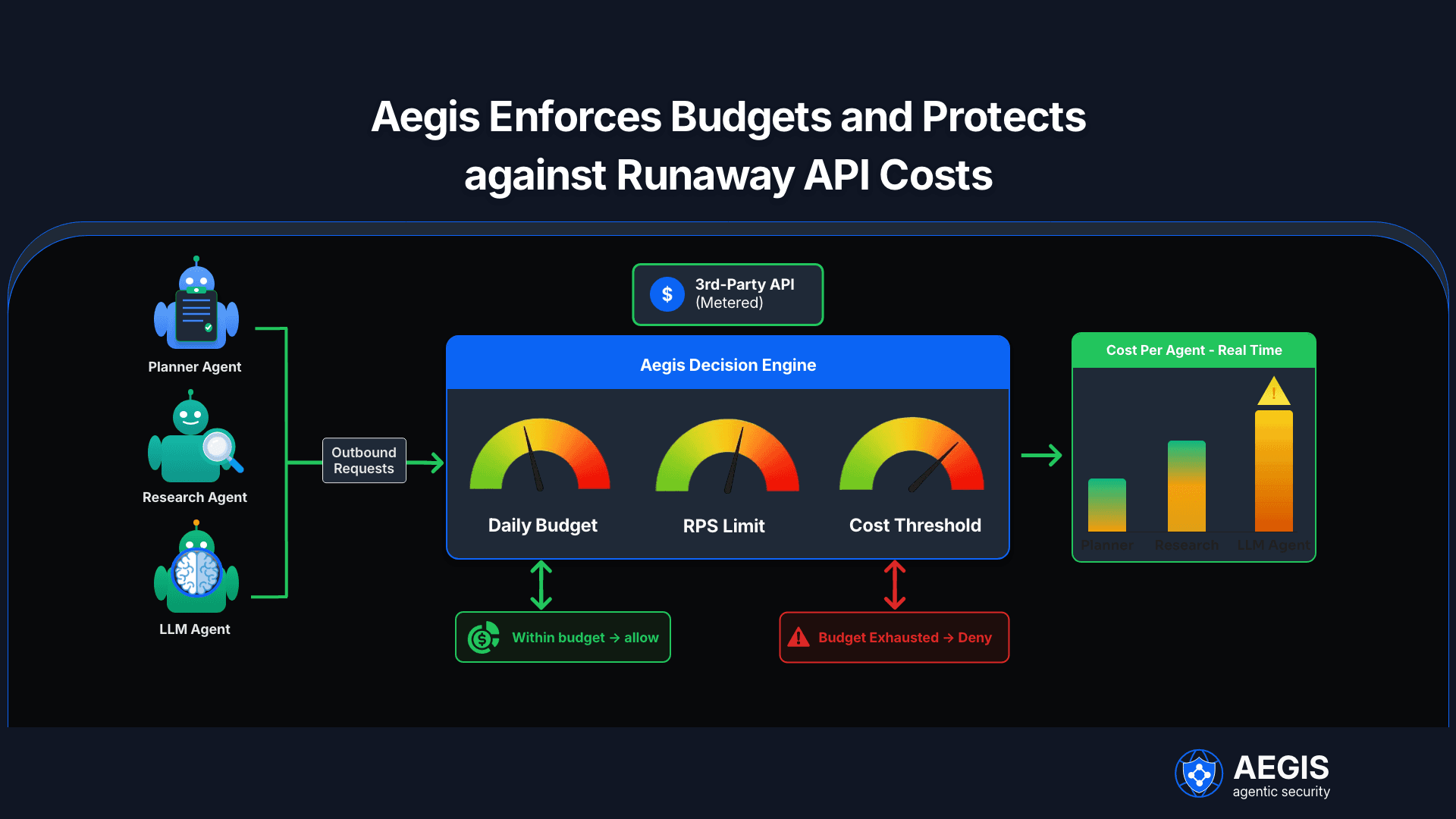
3. SaaS & FinOps: Cost Governance
- Enforces per-agent budgets and rate limits (e.g., $20/day, 5 RPS).
- When thresholds exceed, Aegis blocks calls and surfaces telemetry in dashboards.
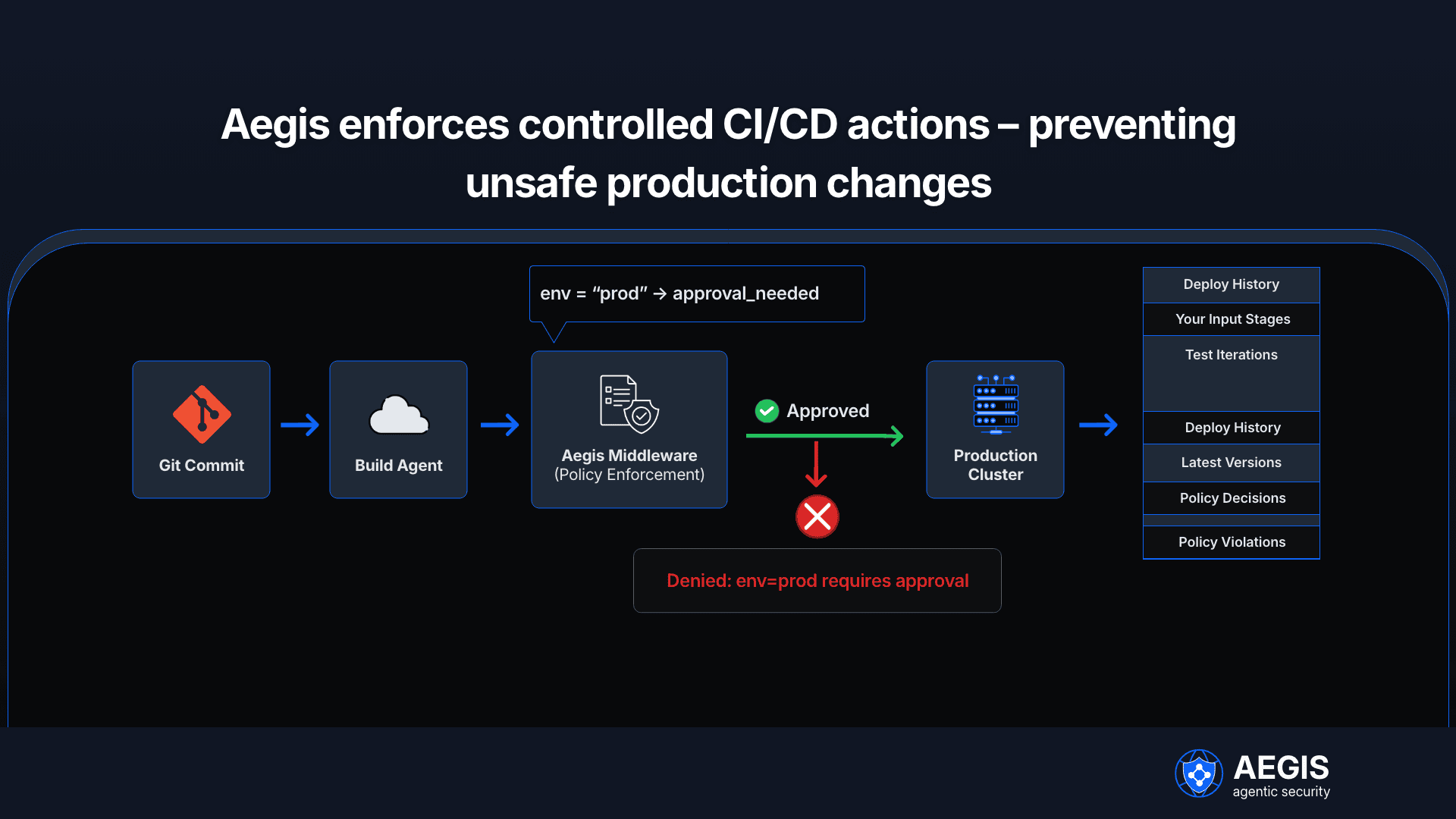
4. DevOps: Controlled Automation
- Deployment actions require approval_needed when targeting production.
- Policies validate image digests and environment names before execution.
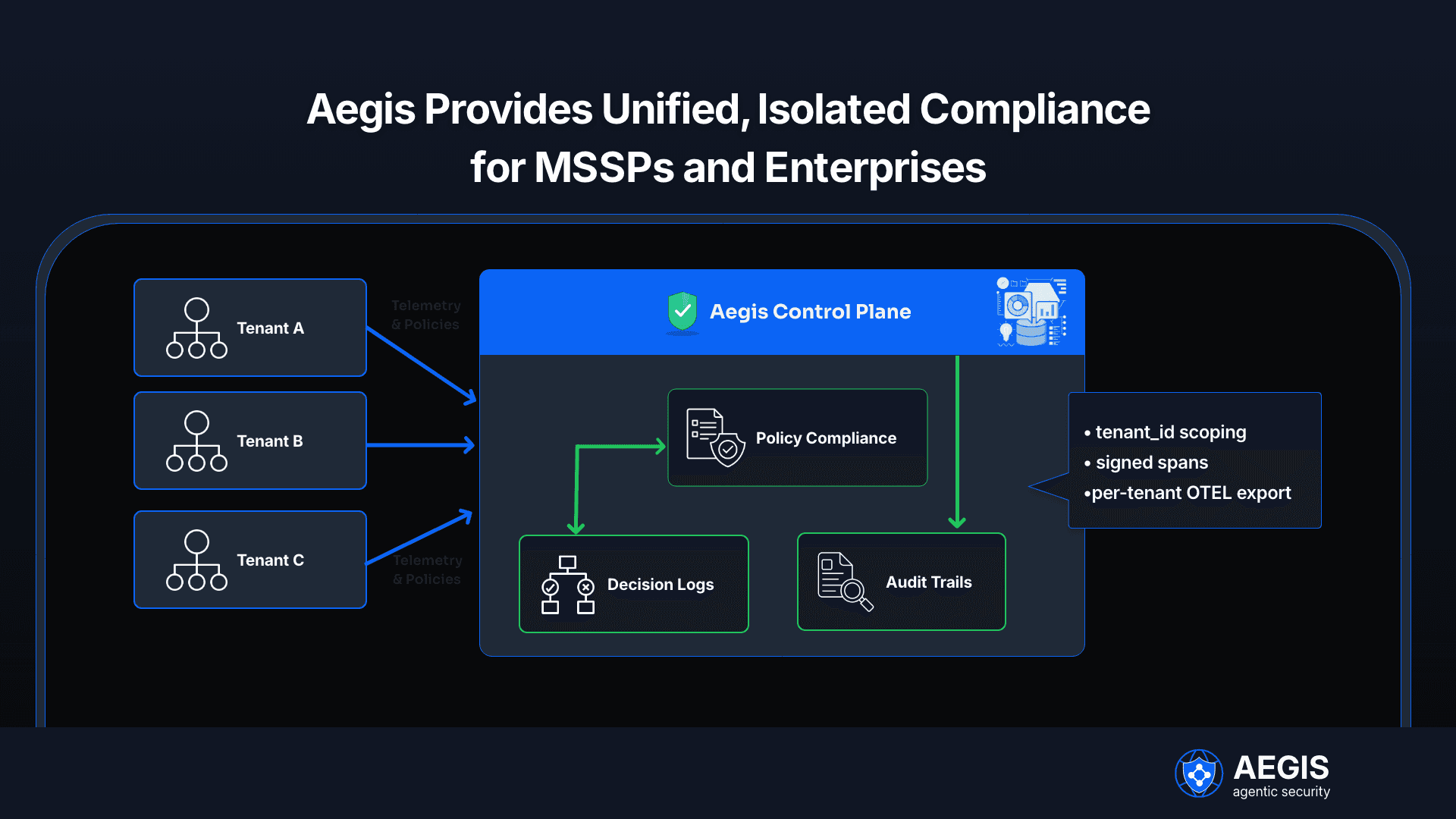
5. MSSPs: Multi-Tenant Compliance and Audit
- Tenant-scoped policies prevent cross-tenant data flow.
- Signed audit spans enable SOC reviews and regional data routing.
Industry | Common Policy Example | Aegis Benefit |
FinTech | Limit payment amount per agent | Prevents fraud and privilege misuse |
Healthcare | Redact PHI in payloads | Ensures HIPAA compliance |
SaaS | Enforce API budget | Controls runaway spend |
DevOps | Gate deployments to prod | Prevents CI/CD abuse |
MSSP | Regional routing and tenant isolation | Enables secure multi-tenant governance |
Operationalizing Security with Aegis
Shadow Mode and Policy Tuning
Aegis supports a shadow mode, capturing “would-block” events without enforcement. This allows teams to measure potential disruption, tune rules, and understand false positives before going live.
Typical tuning metrics include:
- DLP blocked %
- Time-to-redact (ms)
- False positive rate
- Approval volume per day
Once thresholds are optimized, enforcement can be activated with minimal operational risk.
Integration and Developer Experience
Developers can integrate Aegis via Python or Node SDKs that act as middleware for LangChain or LangGraph agents. The SDK automatically attaches identity tokens, routes through the Aegis proxy, and handles retries for approved actions.
Administrators manage policies through CLI or REST API, with versioning, dry-runs, and rollback. For broader deployment, Aegis offers Helm charts and Terraform modules for cloud-native rollout.
Checklist: Building a Secure Agentic Cloud Environment
Category | Recommended Practice |
Data Taxonomy | Classify data (PII, PHI, PCI, secrets, IP) for policy mapping. |
Inspection Modes | Combine deterministic regex, ML classification, and fingerprinting. |
Redaction Options | Redact, mask, tokenize, or hash sensitive fields. |
Approval Flows | Route PHI/PCI exfil attempts for human approval. |
Fail Modes | Fail-closed for high-risk exports; shadow mode for tuning. |
Auditing | Hash both original and redacted payloads for regulators. |
Integration | Forward spans to SIEM/EDR; store logs in secure cloud regions. |
By applying this checklist with a solution like Aegis, security teams can transition from ad-hoc DLP to a structured, automated enforcement fabric.
Why Aegis Stands Out
Unlike conventional IAM or service meshes, Aegis understands agentic context — evaluating the “who,” “what,” and “why” of every call. It brings:
- Granular visibility via OpenTelemetry metrics and spans.
- Real-time enforcement with < 20 ms decision latency.
- Multi-tenant isolation for MSSPs and SaaS providers.
- Compliance readiness through tamper-proof logs and regional routing.
By blending runtime controls, data protection, and observability, Aegis becomes an infrastructure-grade defense layer for enterprise AI.
Frequently Asked Questions
1. How does Aegis differ from traditional IAM or API gateways?
IAM decides who can access an API, but not what they can do per call. Aegis evaluates the runtime context — parameters, payloads, and intent — enforcing policy at the agent↔tool boundary.
2. Does Aegis introduce latency in live agent workflows?
Minimal. Its optimized OPA evaluation and caching keep P99 latency under 20 ms, suitable for conversational or transactional agents.
3. Can Aegis redact data dynamically before it leaves the system?
Yes. It supports deterministic DLP using regex or ML classification to redact or tokenize sensitive data inline.
4. What observability features are available?
Every enforcement decision emits an OpenTelemetry span containing agent ID, tool, decision, and reason. Dashboards visualize allow/deny ratios, latency, and spend.
5. How does Aegis support compliance and auditing?
All policies and actions are versioned and signed; original and redacted payload hashes can be stored for regulator access.
6. Is Aegis multi-tenant and scalable?
Absolutely. It supports tenant-scoped bundles, regional routing, and horizontal scaling up to 10,000 RPS per region.