Multi-Agent Systems for Facilities Management and Maintenance
Secure multi-agent predictive maintenance: runtime policy, approvals, PII redaction, and cost controls for facilities teams.
Securing Agentic Facility Management: How Aegis Controls Predictive Maintenance at Runtime
Buildings are growing more autonomous: sensors, BMS, CAFM and ticketing systems are stitched together by agentic AI that ingests telemetry, diagnoses anomalies, schedules work and coordinates vendors and tenants. That flow cuts labor and downtime — but amplifies new risks: parameter injection, stealth payments, PII leakage and unsafe remote-control actions. This article shows how a runtime policy and observability fabric — Aegis — fits into multi-agent facility automation to keep operations fast, compliant and safe.
The operational risk profile in facilities automation
Harmful outcomes in agentic facilities workflows typically fall into three buckets:
- Safety & control: Agents issuing remote-control commands that affect life-safety equipment or HVAC during an emergency.
- Compliance & privacy: Tenant PII embedded in tickets or complaint text leaking to analytics or third-party services.
- Financial & operational: Agents booking vendors or triggering payments outside SLAs or budget caps.
Common legacy mitigations — manual approvals, spreadsheets, and segregated tools — scale poorly and leave patchy audit trails. Agentic systems demand runtime, per-call enforcement that understands agent identity, parameters and contextual call chains.
How Aegis fits the facilities stack (operational picture)
Aegis is a runtime policy and observability gateway that sits between orchestrators (agent frameworks) and tools (CAFM, BMS, vendor booking APIs, accounts payable). It enforces least-privilege, inspects parameters, emits auditable traces, and implements approval workflows when policy conditions require human involvement. The brief and product design docs describe Aegis as a sidecar/proxy decision layer with OPA-style policy bundles, short-lived JWTs, deterministic DLP and OpenTelemetry traces.
Example facility flow with Aegis gates
- Sensor anomaly → ingestion agent posts event to orchestrator.
- Diagnosis agent runs models and requests a maintenance schedule. Aegis checks: asset class, allowed autonomy, vendor list, cost cap.
- If policy passes, vendor booking agent proceeds; if policy requires approval (high-risk, life-safety, above spend threshold), Aegis returns approval_needed and posts a compact approval request to Slack/Teams. Once approved, Aegis issues a one-time override token allowing the retry.
At-a-glance: maintenance tasks vs allowed agent autonomy
Maintenance task type | Typical allowed autonomy | Aegis enforcement example |
Routine filter replacement | Fully automated | Allow agent to create ticket, schedule standard vendor |
Predictive part swap (non-critical) | Auto-schedule; human review optional | Allow with budget check; record telemetry |
Critical HVAC shutdown (life-safety risk) | Manual approval required | Deny remote shutdown unless multi-party approval |
Emergency gas leak response | Human in loop + authorized vendors | Block direct actuator commands; notify SOC |
Why Aegis for facilities — technical benefits
Aegis is not a monitoring bolt-on. It provides three operational capabilities required by enterprises adopting agentic maintenance:
1) Policy-as-code at the agent↔tool boundary
Security teams author YAML/JSON policies that map agents to allowed tools, parameter constraints (amount ranges, allowed domains, regex for account IDs), budgets and approval rules. Policies compile into OPA bundles and hot-reload into the runtime decision service. This prevents traditional “planner coercion” where a planner agent manipulates a finance agent into an unauthorized payment.
2) Deterministic DLP & PII redaction for tenant privacy
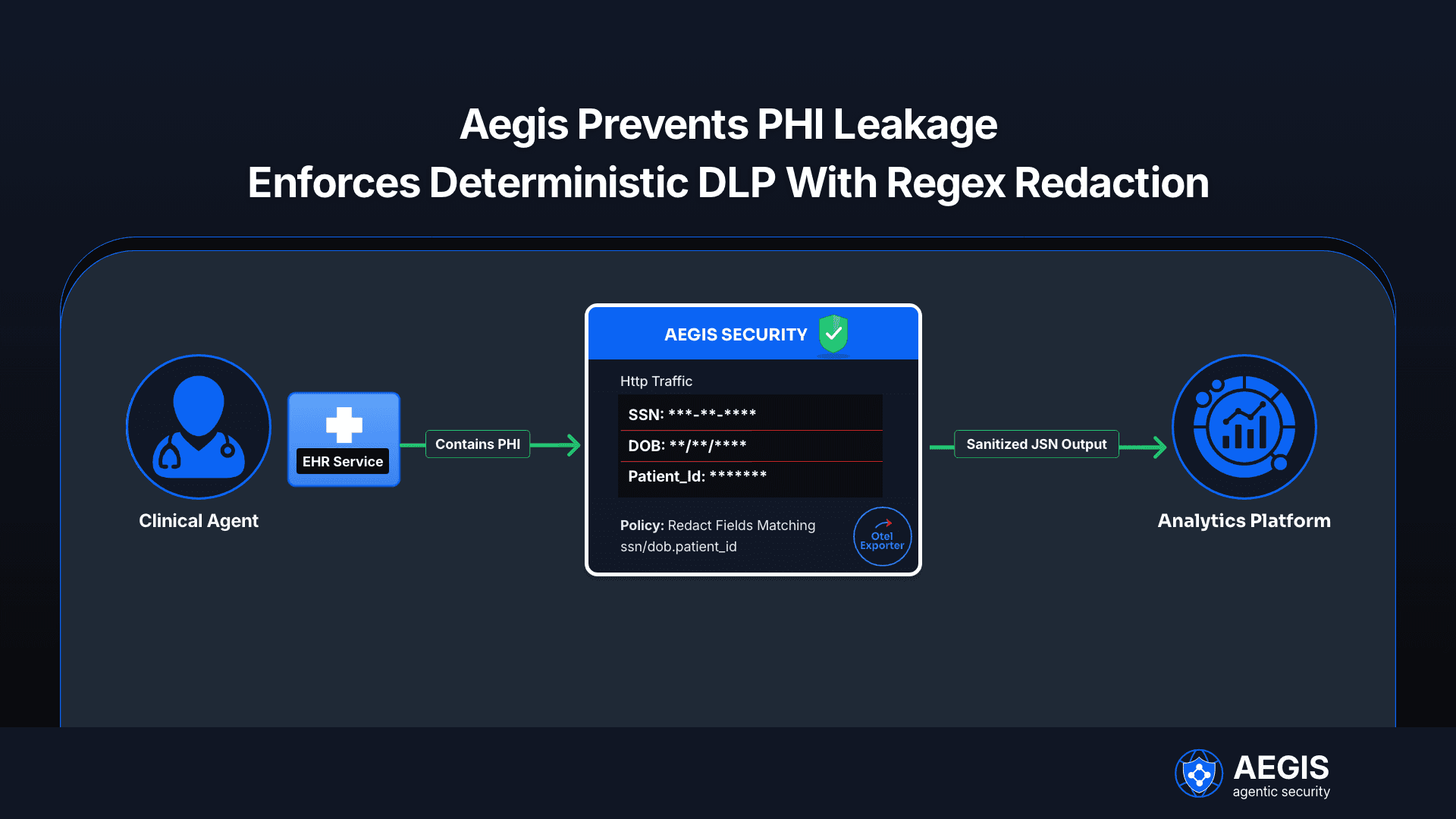
Aegis can sanitize outgoing payloads (redact SSNs, phone numbers or tenant contact info) and enforce that analytics exports use anonymized complaint text only. That supports compliance targets and reduces PHI/PII exposure in third-party connectors.
3) Runtime approvals, budgets and cost governance
For high-risk or high-cost actions (e.g., emergency vendor bookings during incidents), policies can return approval_needed. Aegis posts an approval request to Slack/MS Teams, mints a one-time override token on approval, and writes a signed audit span. Per-agent budgets and rate limits stop runaway spend by agents against LLM or external APIs.
4) Observability & auditability (SOC/Compliance ready)
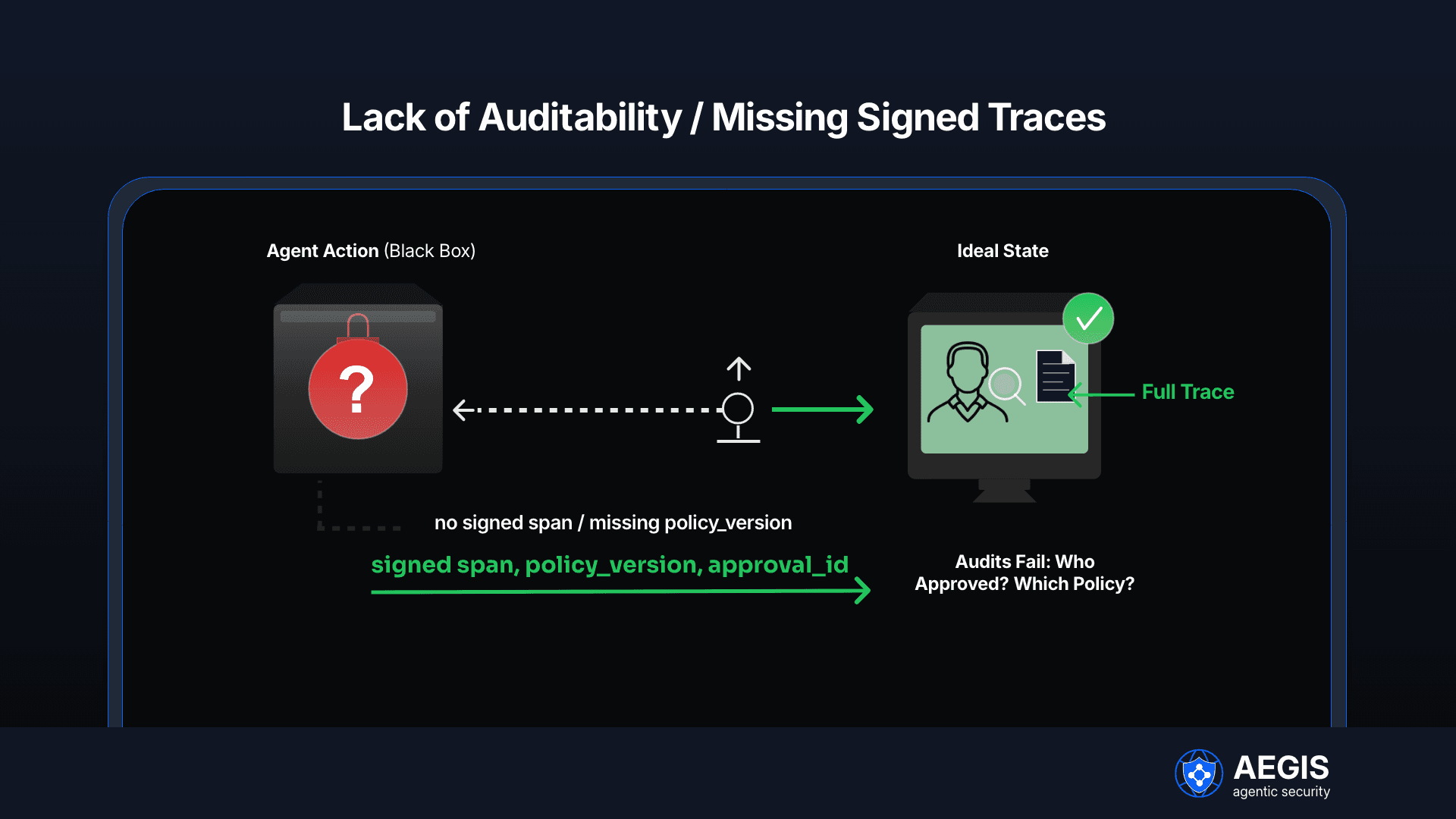
Every decision is traced as OpenTelemetry spans with agent_id, tool, policy_version, decision_reason and estimated cost. Structured logs are ship-ready for SIEM ingestion. This is crucial when auditors ask which policy version blocked or allowed an action during a downtime incident.
Implementation checklist & pilot plan
Start small, reduce blast radius:
- Select non-critical asset class (e.g., water pumps) for pilot.
- Inventory assets and vendor SLAs; map maintenance windows.
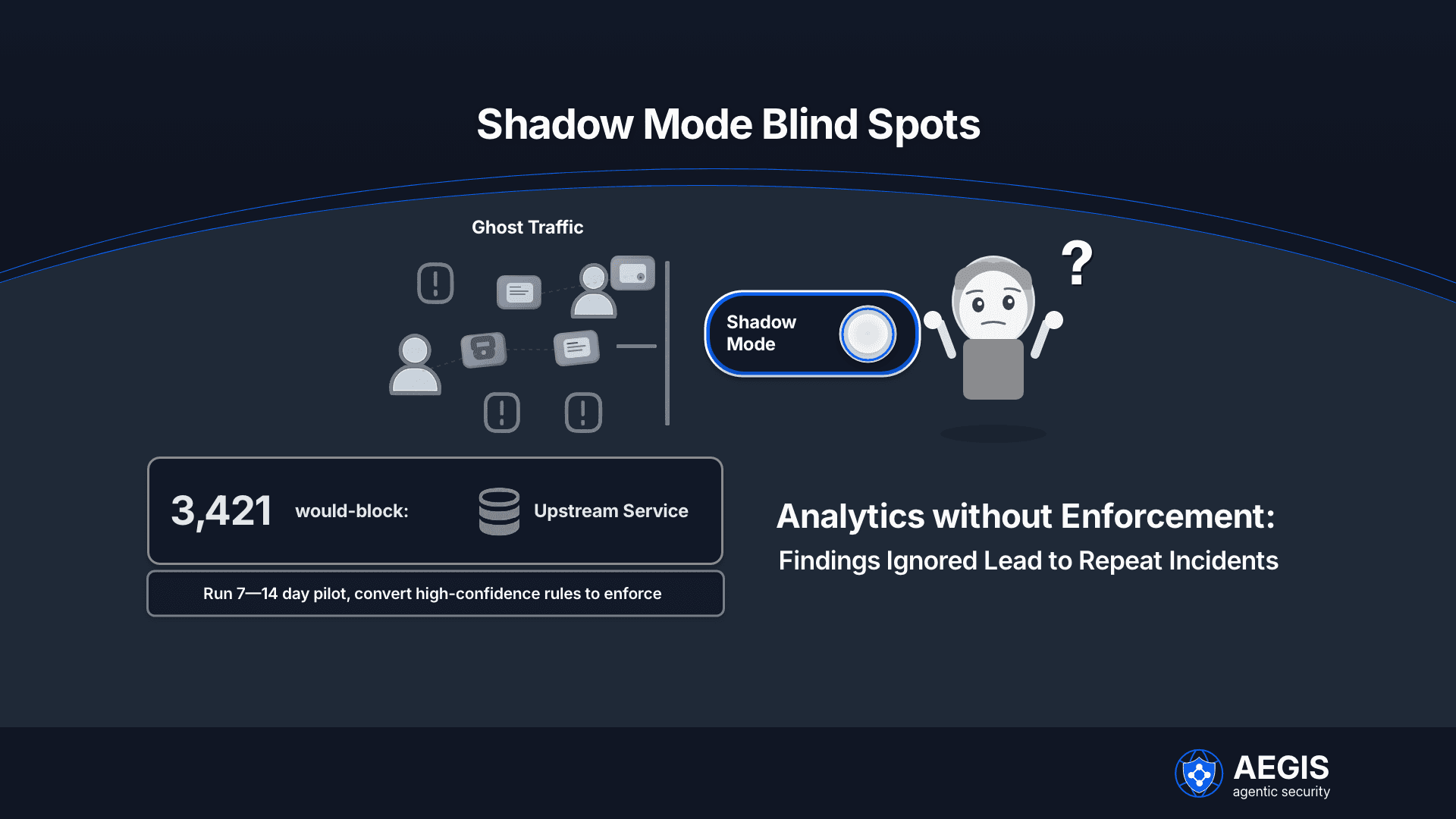
- Deploy Aegis in shadow mode (collect would-block metrics) for 7–14 days.
- Tune parameter regexes and approval thresholds; flip to enforcement.
- Measure KPIs: mean time to repair (MTTR), preventive vs reactive ratio, tenant satisfaction.
Table: pilot KPIs and targets
KPI | Pilot target |
MTTR (after PdM + Aegis) | −25% month-over-month |
Preventive vs Reactive ratio | Increase preventive tasks by 30% |
Emergency vendor spend per incident | Enforced cap; 0 policy breaches |
Shadow-mode would-block rate | <5% after tuning |
Realistic pilots use shadow mode to understand “would-deny” distributions then tighten enforcement. Aegis provides dry-run and rollout controls to avoid accidental outages.
Edge cases, safety and governance
- Life-safety systems: block any agent action that could disable alarms or sprinklers without multi-party sign-off.
- Hazardous materials: require explicit manual approvals and vendor certification checks.
- Multi-tenant collision: isolate policy bundles per tenant and enforce region routing to meet data-residency needs.
Operational examples
- Heatwave HVAC swap: predictive agent identifies failing chiller. It proposes a swap; Aegis enforces vendor vetting and spend cap; the booking agent executes only after policy check — avoiding long tenant outages and uncontrolled payments.
- Alarm cascade: an alarm agent triages multiple sensor inputs, dispatches technicians, and notifies tenants via tenant agent. Aegis redacts tenant PII and ensures no remote commands can disable alarms unless a human approves.
Industry context & caution
Agentic AI projects deliver strong ROI but are not risk-free. Analysts warn many agentic projects will be discontinued without clear governance; Gartner estimates a significant proportion of current projects may be scrapped by 2027 unless controls improve. This makes runtime enforcement and observability a practical prerequisite for scaling agentic maintenance in regulated or multi-tenant environments. (Reuters)
FAQ — Frequently Asked Questions
Q1: Where does Aegis deploy in an agentic facility stack?
A: As a sidecar/forward proxy or middleware decision service between orchestrator and tools; it inspects calls and returns allow/deny/sanitize/approval_needed.
Q2: Can Aegis redact tenant PII automatically?
A: Yes — deterministic DLP rules (regex) can redact fields before payloads reach analytics or external connectors.
Q3: How do approvals scale?
A: Policies can set thresholds to reduce unnecessary approvals, integrate with Slack/MS Teams, and issue one-time override tokens post-approval.
Q4: Will Aegis add latency to agent calls?
A: The design targets low P99 decision latency (≤20 ms) using OPA prepared queries, in-memory caches and optional WASM compilation. Pilot shadow mode helps validate latency impact.
Q5: How should I pilot Aegis for facilities?
A: Start with non-critical asset classes, run policies in shadow mode for 1–2 weeks, tune rules, then move to enforcement while tracking MTTR and preventive ratio improvements.
Closing practical checklist
- Build an asset registry and vendor certification list.
- Define maintenance windows and emergency overrides.
- Create policy templates: allowed_suppliers, spend caps, remote-control scopes.
- Run a shadow pilot and measure would-deny events.
- Integrate Aegis telemetry into SIEM and FinOps dashboards.
Agentic facility management unlocks value — but only when runtime governance, PII protections and cost controls are baked into the control plane. Aegis is designed to be that control plane: a lightweight, policy-as-code gateway that enforces safety, privacy and financial constraints so facilities teams can scale autonomous maintenance with confidence.